
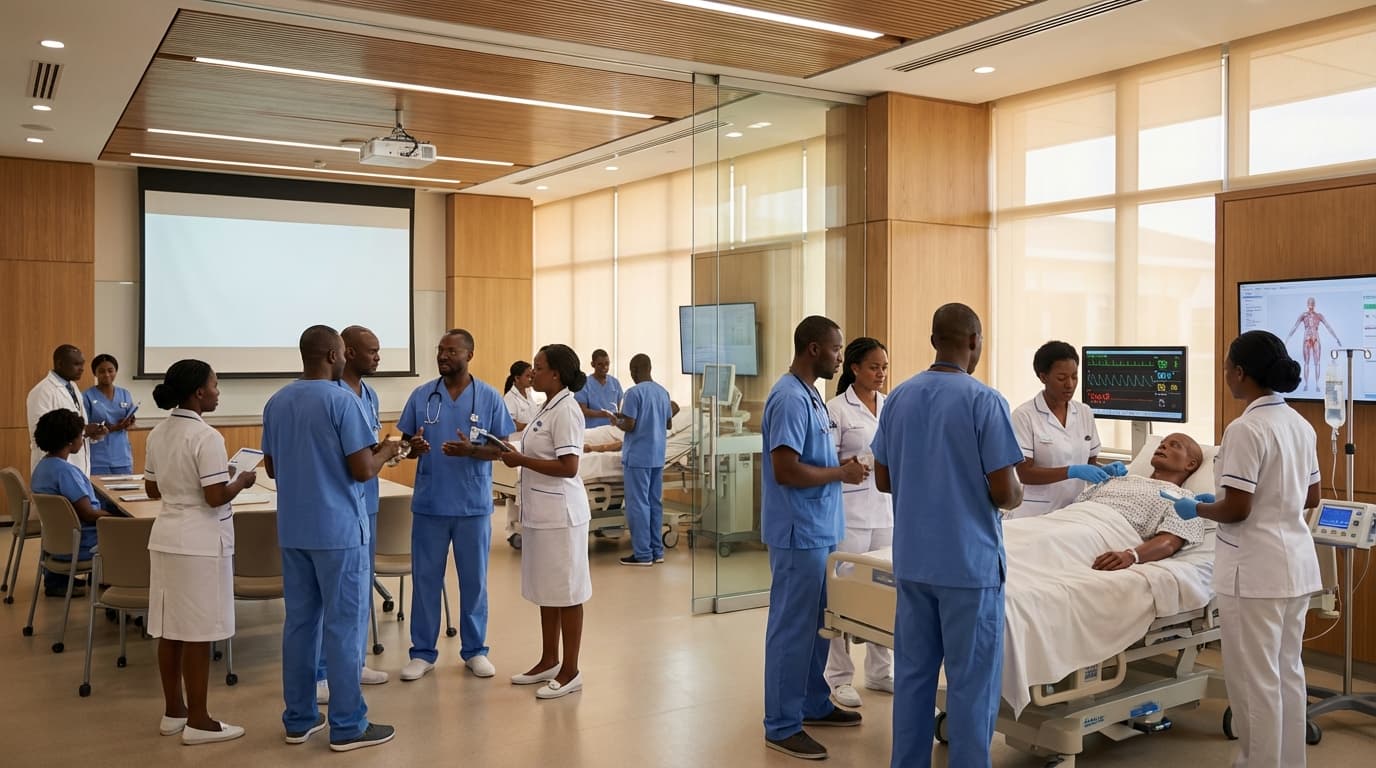
Equipment Training & Education in Liberia
Engineering Excellence & Technical Support
Comprehensive equipment training and certification programs High-standard technical execution following OEM protocols and local regulatory frameworks.
Operator Skill Enhancement Program
Comprehensive training modules designed to elevate the proficiency of heavy equipment operators in Liberia. Focuses on safe operation, preventative maintenance, and fuel efficiency techniques to maximize asset lifespan and productivity.
Maintenance & Repair Technician Certification
A specialized curriculum for aspiring and current maintenance technicians, equipping them with the knowledge and practical skills to diagnose, repair, and maintain a wide range of construction and agricultural machinery prevalent in Liberia.
Safety & Compliance Training for Field Teams
Mandatory safety protocols and best practices training for all field personnel handling equipment. Covers hazard identification, emergency procedures, and adherence to national and international safety standards to ensure a secure working environment.
What Is Equipment Training & Education In Liberia?
Equipment training and education in Liberia refers to the systematic process of imparting knowledge, skills, and competencies required for the safe, efficient, and effective operation, maintenance, and repair of various types of equipment. This service is crucial for optimizing asset utilization, ensuring workplace safety, prolonging equipment lifespan, and enhancing overall productivity across diverse sectors within the Liberian economy. The training encompasses theoretical instruction, practical demonstrations, hands-on exercises, and ongoing assessment to foster a deep understanding of equipment functionality and best practices.
| Who Needs It | Typical Use Cases | ||||||
|---|---|---|---|---|---|---|---|
| Agricultural Workers & Farmers: Individuals operating and maintaining tractors, harvesters, irrigation systems, and processing machinery. | Construction & Infrastructure Personnel: Operators and maintenance technicians for excavators, bulldozers, cranes, concrete mixers, and road-building equipment. | Industrial & Manufacturing Staff: Workers in factories and processing plants requiring training on production lines, machinery, forklifts, and material handling equipment. | Healthcare Professionals & Technicians: Personnel operating medical equipment such as diagnostic imaging devices, laboratory analyzers, and patient monitoring systems. | Mining & Extractive Industry Employees: Operators and mechanics for heavy-duty mining machinery, drills, pumps, and processing equipment. | Transportation & Logistics Providers: Drivers and mechanics for commercial vehicles, heavy trucks, and material handling equipment in ports and warehouses. | IT & Telecommunications Technicians: Individuals responsible for the installation, maintenance, and repair of servers, network hardware, and telecommunication infrastructure. | Educational Institutions & Vocational Schools: Students and instructors in technical and vocational training programs requiring hands-on experience with various machinery and equipment. |
| Enhancing agricultural yields and efficiency. | Ensuring safe and efficient operation of construction machinery on infrastructure projects. | Optimizing production output and minimizing downtime in manufacturing facilities. | Ensuring the accurate functioning and longevity of critical medical equipment. | Facilitating safe and efficient extraction processes in the mining sector. | Improving the reliability and safety of logistics and transportation operations. | Maintaining robust and functional IT and communication networks. | Developing a skilled workforce capable of operating and maintaining modern equipment. |
Key Components of Equipment Training & Education:
- Operational Proficiency: Training on correct startup, shutdown, operation sequences, parameter setting, and routine monitoring of equipment to achieve intended output and quality.
- Preventive Maintenance: Education on scheduled maintenance tasks, lubrication, filter changes, inspections, and basic troubleshooting to minimize downtime and prevent failures.
- Safety Protocols: Comprehensive instruction on hazard identification, risk assessment, lockout/tagout procedures, personal protective equipment (PPE) usage, and emergency response relevant to specific equipment.
- Diagnostic & Repair Skills: Training on identifying malfunctions, using diagnostic tools, and performing basic to advanced repairs, depending on the target audience's technical level.
- Documentation & Record Keeping: Instruction on maintaining accurate logs for operational data, maintenance activities, and repair history for traceability and analysis.
- Regulatory Compliance: Understanding and adherence to national and international standards, regulations, and manufacturer guidelines pertaining to equipment usage and maintenance.
Who Needs Equipment Training & Education In Liberia?
In Liberia, as in many developing nations, robust equipment training and education are crucial for maximizing operational efficiency, ensuring safety, and fostering sustainable economic growth. This need spans across various sectors and directly impacts the performance and longevity of essential machinery and infrastructure. The target customers and departments requiring this specialized knowledge are diverse, encompassing both public and private entities.
| Customer/Department | Key Equipment Areas | Training Needs | Benefits of Training |
|---|---|---|---|
| Ministry of Public Works | Heavy construction machinery (bulldozers, excavators, cranes, graders), road maintenance equipment, concrete mixers, asphalt pavers. | Operator training for safe and efficient use, maintenance and repair workshops, technical skills development for supervisors. | Improved infrastructure quality and lifespan, reduced operational costs, enhanced project delivery timelines, increased safety on work sites. |
| Ministry of Agriculture | Tractors, plows, harvesters, irrigation systems, processing machinery (milling, drying), material handling equipment. | Farm equipment operation and maintenance, small-scale mechanization techniques, troubleshooting common issues, efficient resource utilization. | Increased agricultural productivity, reduced post-harvest losses, improved food security, higher farmer incomes, sustainable farming practices. |
| Ministry of Transport & Communication | Fleet management systems, vehicle maintenance tools, public transport vehicles (buses, trains), port equipment (cranes, forklifts), airport ground support equipment. | Driver training, vehicle maintenance and repair, specialized operator training for port and airport equipment, safety protocols. | Safer and more reliable transportation networks, reduced downtime for vehicles and equipment, efficient cargo handling, improved passenger service. |
| Mining and Extractive Industries (Private Sector) | Drilling rigs, haul trucks, excavators, crushers, conveyor systems, processing plants, specialized safety equipment. | Advanced operator training, specialized maintenance and repair of complex machinery, safety procedures for hazardous environments, emergency response training. | Increased operational efficiency and output, reduced equipment breakdowns, enhanced safety for workers, compliance with international standards, extended equipment lifespan. |
| Construction Companies (Private Sector) | Concrete mixers, scaffolding, power tools, welding equipment, surveying instruments, various building machinery. | Skilled trades training (welding, carpentry, electrical), safe operation of power tools and machinery, construction site safety, project management integration with equipment use. | Improved quality of construction, faster project completion, reduced accidents and injuries, enhanced competitiveness, better resource allocation. |
| Manufacturing and Industrial Sector (Private Sector) | Assembly line machinery, CNC machines, lathes, presses, packaging equipment, forklifts, generators. | Machine operation and programming, preventative maintenance, quality control integration with equipment use, troubleshooting automation systems. | Increased production output, improved product quality, reduced waste and rework, enhanced worker skills, greater operational flexibility. |
| Healthcare Sector (Hospitals and Clinics) | Diagnostic equipment (X-ray, MRI, CT scanners), surgical equipment, laboratory machinery, sterilization equipment, patient care devices. | Technician training for operation and basic maintenance, user training for medical professionals, calibration and troubleshooting. | Accurate diagnoses, effective patient care, extended equipment lifespan, reduced service costs, adherence to medical standards. |
| Non-Governmental Organizations (NGOs) - e.g., in WASH, health, agriculture | Water pumps, boreholes, water treatment systems, agricultural machinery (as mentioned above), community health equipment. | Local capacity building for operation and maintenance, simple repair techniques, safe handling and storage, basic troubleshooting. | Sustainable project delivery, reduced reliance on external support, empowered local communities, improved service delivery in remote areas. |
| Vocational Training Institutes and Technical Colleges | A wide range of workshop equipment (mechanics, electrical, welding, carpentry), computer labs, agricultural simulators, basic engineering tools. | Curriculum development, instructor training, provision of up-to-date training materials, practical hands-on experience for students. | Development of a skilled workforce, graduates equipped with relevant industry skills, improved employability, contribution to national development. |
| International Development Agencies & Projects | Any equipment deployed as part of development projects (infrastructure, energy, health, agriculture). | Train-the-trainer programs, localized training manuals, capacity building for local partners, technical support and knowledge transfer. | Sustainable impact of development projects, local ownership and maintenance of infrastructure, long-term benefits for the Liberian population. |
Target Customers & Departments for Equipment Training & Education in Liberia
- Government Ministries and Agencies
- Private Sector Businesses
- Non-Governmental Organizations (NGOs)
- Educational and Vocational Institutions
- International Development Partners
Equipment Training & Education Process In Liberia
The Equipment Training & Education Process in Liberia typically follows a structured workflow to ensure effective and standardized knowledge transfer regarding the use and maintenance of various equipment. This process begins with an initial inquiry and culminates in the successful execution of training programs, with ongoing support and evaluation.
| Stage | Key Activities | Responsible Parties | Outputs/Deliverables | Considerations for Liberia |
|---|---|---|---|---|
| Receive training request; Identify specific equipment; Determine target audience and skill gaps; Assess existing knowledge levels; Define learning objectives. | Requesting organization/individual, Training department/provider, Equipment manufacturer (if applicable). | Needs assessment report, Clearly defined training objectives, List of required equipment, Target audience profile. | Local language proficiency of trainers, Availability of existing documentation in local context, Understanding of common equipment challenges in Liberia (e.g., power supply, maintenance infrastructure). |
| Design or adapt training modules; Develop training materials (manuals, presentations, practical exercises); Incorporate safety protocols; Translate materials if necessary. | Training department/provider, Subject Matter Experts (SMEs), Technical writers. | Training curriculum, Participant manuals, Trainer guides, Assessment tools (quizzes, practical tests). | Use of visual aids to overcome literacy barriers, Relevance of case studies to Liberian scenarios, Ensuring materials are durable for field use. |
| Identify qualified trainers (internal or external); Assess trainer competency; Provide train-the-trainer sessions if needed; Ensure trainers understand Liberian context. | Training department/provider, HR department (for internal trainers). | List of qualified trainers, Trainer profiles, Completed train-the-trainer feedback. | Prioritizing local trainers for sustainability and cultural understanding, Training on cultural sensitivity and effective communication in diverse Liberian communities. |
| Book training venues (on-site or off-site); Arrange for necessary equipment and consumables; Coordinate participant travel and accommodation (if applicable); Develop a detailed training schedule. | Training coordinator, Administrative staff, Procurement department. | Confirmed training schedule, Secured venue, Arranged equipment and materials, Participant travel/accommodation arrangements. | Reliability of transportation infrastructure, Availability of suitable training venues in different regions, Internet connectivity for remote learning (if applicable). |
| Conduct theoretical sessions (lectures, discussions); Facilitate practical hands-on sessions; Administer assessments to gauge understanding; Address participant questions and concerns. | Certified trainers, Participants. | Completed training sessions, Participant engagement, Initial assessment results. | Hands-on practice is crucial for equipment proficiency, Utilizing local examples for troubleshooting, Encouraging active participation from all trainees regardless of background. |
| Provide access to reference materials; Offer ongoing technical support; Conduct follow-up sessions or site visits; Establish a feedback mechanism for ongoing improvement. | Training department/provider, Technical support team, Supervisors of trainees. | Post-training support plan, Feedback forms, Records of follow-up activities. | Establishing accessible support channels (e.g., dedicated hotlines, local support hubs), Regular follow-up to reinforce learning and address emerging issues. |
| Collect participant feedback; Analyze assessment results; Evaluate the effectiveness of training against objectives; Prepare a comprehensive training report; Recommend improvements for future programs. | Training department/provider, Management, Requesting organization. | Training evaluation report, Participant satisfaction scores, Recommendations for future training. | Measuring the impact of training on operational efficiency and safety in Liberian settings, Documenting lessons learned to continuously improve the training process. |
Equipment Training & Education Workflow in Liberia
- Inquiry & Needs Assessment
- Curriculum Development/Customization
- Trainer Identification & Preparation
- Logistics & Scheduling
- Training Delivery
- Post-Training Support & Follow-up
- Evaluation & Reporting
Equipment Training & Education Cost In Liberia
The cost of equipment training and education in Liberia can vary significantly depending on several factors. These include the type and complexity of the equipment, the duration and depth of the training program, the reputation and accreditation of the training provider, and the location within Liberia. General education and vocational training for basic machinery operation might be relatively affordable, while specialized technical training for advanced industrial equipment, construction machinery, or medical devices will command higher prices. The curriculum, the qualification of instructors, and the provision of hands-on practice with actual equipment also influence costs. Demand and availability of specific training programs within Liberia can also create price differentials. Training delivered by international organizations or private sector companies often reflects higher global standards and associated costs.
| Training Category | Typical Duration | Estimated Cost Range (Liberian Dollar - LRD) | Notes |
|---|---|---|---|
| Basic Machinery Operation (e.g., Generators, Small Construction Tools) | 1-3 Days | 5,000 - 15,000 LRD | Often offered by vocational centers or equipment suppliers. |
| Intermediate Equipment Operation (e.g., Forklifts, Basic Excavators) | 3-7 Days | 10,000 - 30,000 LRD | May include theoretical and practical components. |
| Advanced Construction Equipment Operation (e.g., Bulldozers, Cranes) | 1-2 Weeks | 25,000 - 75,000 LRD | Requires certified instructors and significant practical time. |
| Specialized Industrial Equipment (e.g., Manufacturing Machinery) | 1-4 Weeks (or longer) | 50,000 - 200,000+ LRD | Highly specific to the industry and equipment; can be very costly. |
| Medical Equipment Training (e.g., Diagnostic Tools, Imaging Machines) | Variable (days to weeks) | 75,000 - 300,000+ LRD | Often requires manufacturer-trained personnel and international standards. |
| IT & Software Training (relevant to equipment operation) | Variable (hours to days) | 8,000 - 40,000 LRD | Depends on software complexity and provider. |
| Safety & Compliance Training (e.g., OSHA-equivalent) | 1-3 Days | 7,000 - 20,000 LRD | Essential for many equipment operations. |
Key Pricing Factors for Equipment Training & Education in Liberia
- Equipment Type & Complexity: Simple tools vs. advanced industrial machinery.
- Training Duration & Depth: Short workshops vs. comprehensive certification courses.
- Training Provider Reputation & Accreditation: Government-approved institutions vs. private providers.
- Location: Urban centers (Monrovia) vs. rural areas.
- Curriculum & Instructor Qualifications: Standardized vs. specialized, experienced trainers.
- Hands-on Practice: Availability of actual equipment for practical sessions.
- Demand & Availability: Market demand for specific skills.
- Delivery Method: In-person, online, or blended learning.
Affordable Equipment Training & Education Options
Investing in proper equipment training and education is crucial for safety, efficiency, and long-term operational success. However, the cost can be a significant barrier for many individuals and businesses. Fortunately, there are numerous affordable options available, focusing on value bundles and smart cost-saving strategies. These approaches allow you to acquire the necessary knowledge and skills without breaking the bank.
| Cost-Saving Strategy | Description | Potential Savings |
|---|---|---|
| Value Bundles | Purchasing training courses or educational packages that combine multiple modules or related topics at a discounted price compared to buying them individually. | 20-40% savings on combined modules. |
| Early Bird Discounts | Registering for courses or workshops well in advance of the start date to take advantage of reduced pricing. | 10-25% savings. |
| Group Discounts | Enrolling multiple individuals from the same company or organization, often leading to per-person cost reductions. | 15-30% savings per participant. |
| Bundled with Equipment Purchase | Negotiating training as part of a larger equipment acquisition package, potentially receiving it for free or at a significantly reduced rate. | Can range from 50-100% savings on training costs. |
| Leverage Existing Certifications | Utilizing previously acquired certifications or knowledge to qualify for advanced or specialized courses, potentially skipping introductory modules. | Reduced course duration and cost. |
| Self-Paced vs. Instructor-Led | Opting for self-paced online courses, which are generally cheaper than live, instructor-led sessions, especially if you are a motivated learner. | Up to 50% savings. |
| Free Resources & Trials | Utilizing free introductory courses, webinars, or trial periods offered by training providers to assess content before committing to a paid program. | Zero cost for initial assessment. |
| Employer Sponsorship | Having your employer cover the costs of training as part of professional development or job requirements. | 100% savings for the individual. |
| Subscription Models | For ongoing training needs, subscribing to a platform that offers unlimited access to a library of courses for a monthly or annual fee. | Cost-effective for frequent training. |
Affordable Equipment Training & Education Options
- Online Courses & Webinars: Accessible, often self-paced, and typically more budget-friendly than in-person sessions. Many platforms offer introductory discounts or free trials.
- Community College & Vocational Programs: These institutions offer comprehensive training at significantly lower tuition rates than universities or specialized private schools. Look for specific equipment-focused certifications.
- Manufacturer-Provided Training: Some equipment manufacturers offer basic training as part of the purchase or at a reduced cost for their clients. Inquire about these possibilities.
- Apprenticeships & On-the-Job Training: Learning by doing under the guidance of experienced professionals is a highly effective and often free or low-cost method. This is particularly common for skilled trades.
- Industry Associations & Trade Groups: Many associations provide educational resources, workshops, and conferences at member rates, which can be a substantial saving.
- Peer-to-Peer Learning & Workshops: Informal knowledge sharing within your network or at local industry meetups can provide valuable insights at minimal to no cost.
- Rental Equipment Training Packages: When renting equipment, ask if training is included or available as an add-on. This can be more cost-effective for temporary needs.
- Government & Non-Profit Initiatives: Keep an eye out for grants, subsidies, or free training programs offered by local or national government bodies and non-profit organizations focused on workforce development.
Verified Providers In Liberia
Ensuring access to quality healthcare is paramount, and in Liberia, identifying reliable and credentialed healthcare providers is crucial. Franance Health stands out as a leading organization committed to verifying and promoting healthcare providers that meet the highest standards of excellence. This commitment to verification translates directly into patient safety, improved health outcomes, and greater trust in the Liberian healthcare system. Franance Health's rigorous credentialing process ensures that their network of providers possesses the necessary qualifications, experience, and adherence to ethical practices, making them the best choice for individuals seeking dependable medical care.
| Credentialing Aspect | Franance Health's Approach | Benefit to Patients |
|---|---|---|
| Medical Licenses and Certifications | Thorough verification of all current and valid medical licenses and certifications. | Ensures providers are legally authorized and professionally trained. |
| Professional Experience and Education | Scrutiny of educational background, training, and years of practical experience. | Guarantees that providers have the knowledge and skills to offer effective treatment. |
| Background Checks and Disciplinary Records | Comprehensive checks for any past disciplinary actions or malpractice claims. | Minimizes risk and protects patients from unqualified or unethical practitioners. |
| Specialty Competency | Validation of specialized training and demonstrated proficiency in specific medical fields. | Allows patients to be confident in receiving expert care for their specific health needs. |
| Continuing Professional Development | Encourages and sometimes requires ongoing education and skill enhancement. | Ensures providers stay updated with the latest medical advancements and best practices. |
Why Franance Health Verified Providers are the Best Choice:
- Unwavering commitment to quality assurance through a stringent verification process.
- Access to healthcare professionals with proven expertise and qualifications.
- Enhanced patient safety due to adherence to recognized medical standards.
- Increased trust and confidence in the healthcare services received.
- A network of providers dedicated to ethical practice and patient well-being.
Scope Of Work For Equipment Training & Education
This Scope of Work (SOW) outlines the requirements for providing comprehensive training and educational services for the operation, maintenance, and troubleshooting of [Specify Equipment Name/System] (hereinafter referred to as the "Equipment"). The objective is to ensure that the client's personnel possess the necessary knowledge and skills to effectively utilize and maintain the Equipment, thereby maximizing its operational efficiency, longevity, and safety. The SOW details the technical deliverables, standard specifications, and expected outcomes of the training program. This document serves as the foundation for a mutually agreed-upon training plan.
| Deliverable | Description | Standard Specification / Format | Acceptance Criteria |
|---|---|---|---|
| Training Curriculum | Detailed outline of all training modules, learning objectives, duration, and prerequisites for each module. | Document (PDF/Word) | Curriculum covers all specified modules and learning objectives. Approved by Client within 5 business days of submission. |
| Training Materials (Participant) | Comprehensive set of handouts, user manuals, reference guides, and supplementary materials for each participant. | Digital (PDF) and/or Printed | Materials are clear, accurate, and relevant to the training modules. Provided at least 2 days prior to training commencement. |
| Training Materials (Instructor) | Detailed instructor guide, presentation slides, lesson plans, and facilitator notes. | Digital (PDF/PowerPoint) | Materials are comprehensive, well-structured, and support effective knowledge transfer. Provided at least 2 days prior to training commencement. |
| Hands-on Training Sessions | Practical, supervised sessions utilizing the actual Equipment or a fully functional simulation. | On-site/Remote with Simulation (as agreed) | Participants demonstrate proficiency in key operational and maintenance tasks as per the training curriculum. Successful completion of practical exercises. |
| Knowledge Assessment (Quizzes/Tests) | Evaluations to gauge participant understanding of theoretical concepts and procedures. | Written/Online Tests | Average score of participants meets or exceeds [Specify Percentage, e.g., 85%]. Individual scores reported. |
| Skills Assessment (Practical Evaluation) | Direct observation and assessment of participants' ability to perform specific tasks on the Equipment. | Observation Checklist | All required tasks performed correctly and safely by [Specify Percentage, e.g., 90%] of participants. |
| Training Completion Certificates | Formal certificates awarded to participants who successfully complete the training program. | Printed/Digital (PDF) | Issued upon successful completion of all assessments and attendance requirements. |
| Post-Training Support Plan | Outline of available support mechanisms (e.g., helpdesk, Q&A sessions, remote assistance) for a specified period after training. | Document (PDF/Word) | Support mechanisms are clearly defined, and availability is communicated to the Client. |
| Training Report | Summary of training activities, participant attendance, assessment results, feedback received, and recommendations. | Document (PDF/Word) | Report submitted within 7 business days of training completion. Includes all required data and analysis. |
Key Training Modules & Topics
- Equipment Overview & Fundamentals: System architecture, key components, operating principles, safety features, and environmental considerations.
- Standard Operating Procedures (SOPs): Hands-on training on routine operations, startup, shutdown, calibration, and normal functional checks.
- Preventative Maintenance (PM): Scheduled maintenance tasks, lubrication, inspection procedures, replacement of consumables, and record-keeping.
- Troubleshooting & Diagnostics: Identification of common faults, diagnostic tools and techniques, error code interpretation, and root cause analysis.
- Basic Repair & Replacement: Hands-on training for minor component replacement, adjustments, and reassembly.
- Safety Protocols & Emergency Procedures: Lockout/Tagout (LOTO) procedures, personal protective equipment (PPE) usage, emergency shutdown, and response to incidents.
- Advanced Features & Customization (if applicable): Training on specialized functionalities, programming, or configuration options.
- Documentation & Record Keeping: Proper use of operation manuals, maintenance logs, and reporting procedures.
Service Level Agreement For Equipment Training & Education
This Service Level Agreement (SLA) outlines the guaranteed response times and uptime for Equipment Training & Education services provided by [Your Company Name] to [Client Company Name]. This SLA aims to ensure the reliable and efficient delivery of training and educational resources related to specified equipment.
| Service Component | Response Time Guarantee | Uptime Guarantee | Notes |
|---|---|---|---|
| Technical Support for Training Platform | Within 4 business hours for non-critical issues; within 2 business hours for critical issues (e.g., inability to access training). | 99.5% availability of the online training platform. | Business hours are defined as Monday to Friday, 9:00 AM - 5:00 PM [Your Time Zone]. Critical issues impacting a significant number of users or preventing all access will be prioritized. |
| Response to Training Inquiry/Scheduling Request | Within 1 business day for initial acknowledgment; within 3 business days for proposed scheduling or resolution. | N/A | This applies to requests for new training, rescheduling, or general inquiries about training offerings. |
| Delivery of On-demand Virtual Training | Access to pre-recorded modules will be provided within 24 hours of confirmation of enrollment or request. | N/A | Assumes pre-existing and approved training content is available. Content creation is outside the scope of this SLA. |
| Delivery of Scheduled In-person Training | N/A | N/A | Scheduled in-person training delivery is governed by the Master Service Agreement (MSA) and any specific training contracts, not this SLA for response/uptime. |
| Access to Online Learning Modules and Documentation | N/A | 99.0% availability of the online learning portal. | Downtime for scheduled maintenance will be communicated at least 48 hours in advance and will be performed outside of core business hours whenever possible. |
| Post-training Q&A and Follow-up Support | Responses to submitted questions within 2 business days. | N/A | This applies to follow-up questions directly related to the training content provided. |
Scope of Services
- On-demand virtual training sessions.
- Scheduled in-person training sessions (as per contract).
- Access to online learning modules and documentation.
- Technical support for training platform access and functionality.
- Post-training Q&A and follow-up support.
Frequently Asked Questions

Ready when you are
Let's scope your Equipment Training & Education in Liberia project in Liberia.

Scaling healthcare logistics and technical systems across the entire continent.