
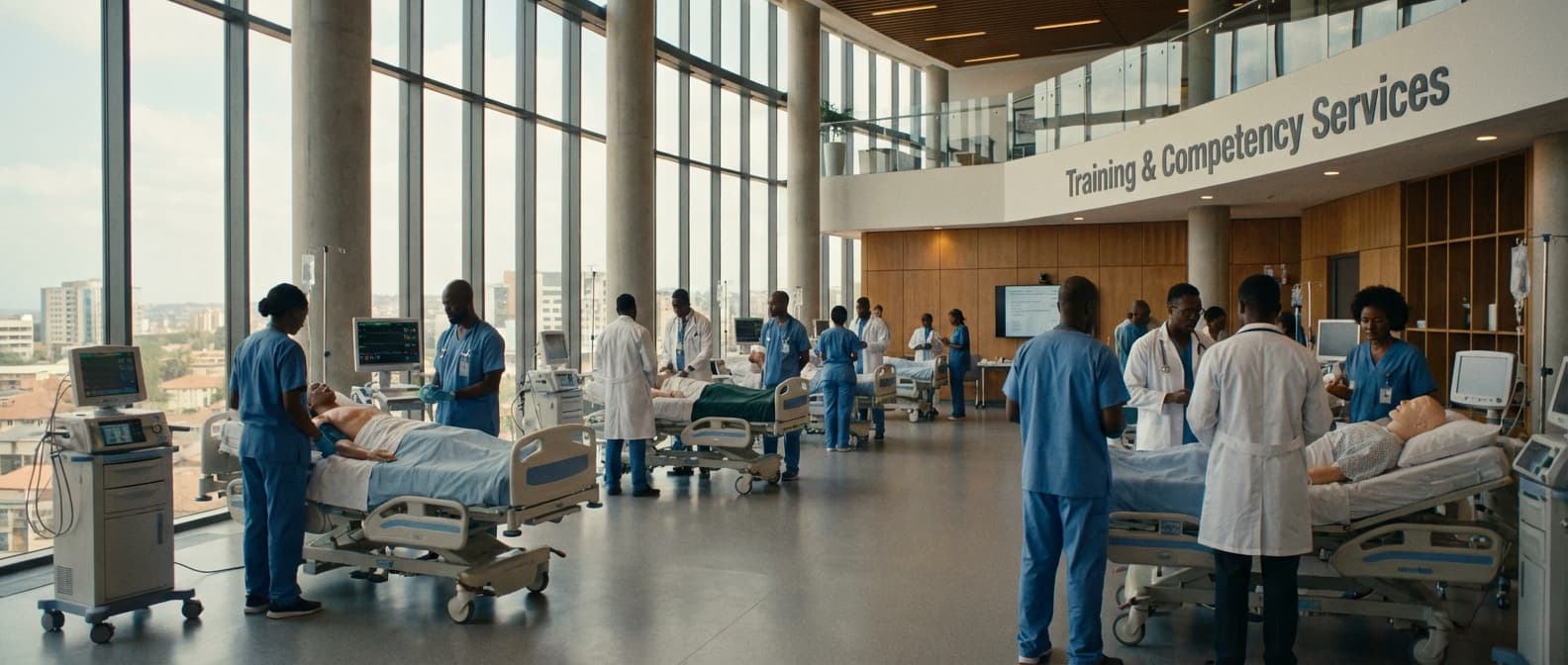
Ventilator User Training Service (Nurses) in Liberia
Engineering Excellence & Technical Support
Ventilator User Training Service (Nurses) High-standard technical execution following OEM protocols and local regulatory frameworks.
Ventilator Settings Mastery
Gain hands-on proficiency in setting up and adjusting critical ventilator parameters (e.g., Tidal Volume, PEEP, FiO2, respiratory rate) based on patient needs and clinical guidelines. Learn to interpret waveform data for optimal respiratory support and patient comfort.
Advanced Patient Monitoring & Troubleshooting
Develop expertise in continuous patient monitoring using ventilators, recognizing early signs of deterioration, and effectively troubleshooting common alarms and equipment malfunctions. Understand how to respond rapidly and appropriately to maintain patient stability.
Safe Ventilation Weaning Protocols
Master the principles and practical application of ventilator weaning protocols. Learn to assess patient readiness for liberation from mechanical ventilation, implement weaning strategies (e.g., T-piece trials, pressure support), and identify potential complications during the weaning process.
What Is Ventilator User Training Service (Nurses) In Liberia?
The Ventilator User Training Service (Nurses) in Liberia is a specialized educational program designed to equip registered nurses with the knowledge and practical skills necessary for the safe and effective operation of mechanical ventilators. This service is crucial for enhancing critical care capabilities within Liberian healthcare facilities, particularly in the context of managing patients with respiratory failure due to various etiologies, including but not limited to infectious diseases, chronic respiratory conditions, and post-surgical complications. The training aims to standardize ventilator management protocols, reduce the incidence of ventilator-associated complications, and improve patient outcomes.
| Target Audience | Purpose | Typical Use Cases |
|---|---|---|
| Registered Nurses (RNs) working in critical care units (ICUs, High Dependency Units) | To ensure competency in operating and managing mechanical ventilators for patients requiring respiratory support. | Management of acute respiratory distress syndrome (ARDS). Management of severe pneumonia and sepsis. Post-operative respiratory support. Acute exacerbations of chronic obstructive pulmonary disease (COPD). Neuromuscular disease affecting respiratory function. Management of COVID-19 patients requiring ventilatory assistance. |
| Nurses transitioning to critical care roles | To bridge knowledge gaps and provide foundational skills for ventilator management. | Preparation for deployment in critical care settings. Cross-training for specialized units. |
| Nurses in facilities anticipating or experiencing increased demand for critical care services | To rapidly expand the trained nursing workforce capable of handling ventilator-dependent patients. | Response to public health emergencies and outbreaks. Expansion of intensive care capacity. |
Key Components of Ventilator User Training Service (Nurses) in Liberia
- Theoretical knowledge of respiratory physiology and pathophysiology.
- Principles of mechanical ventilation and ventilator modes.
- Patient assessment and selection for mechanical ventilation.
- Initiation and management of mechanical ventilation, including settings optimization.
- Monitoring of ventilator parameters and patient response.
- Troubleshooting common ventilator alarms and circuit issues.
- Weaning from mechanical ventilation strategies.
- Infection control protocols related to ventilator use.
- Documentation and record-keeping requirements.
Who Needs Ventilator User Training Service (Nurses) In Liberia?
This document outlines the target customers and departments for Ventilator User Training Services specifically for nurses in Liberia. Effective training is crucial to ensure safe and optimal use of ventilators, improving patient outcomes in critical care settings.
| Department/Unit | Key Responsibilities Related to Ventilators | Training Needs |
|---|---|---|
| Intensive Care Unit (ICU) | Monitoring patient's respiratory status, adjusting ventilator settings, managing alarms, weaning patients from the ventilator. | Comprehensive training on all aspects of mechanical ventilation, troubleshooting, and advanced modes. |
| Cardiac Care Unit (CCU) | Managing post-cardiac surgery patients requiring respiratory support, monitoring hemodynamics and respiratory function. | Specific training on ventilator use in cardiac patients, understanding the interplay between cardiac and respiratory systems. |
| Neonatal Intensive Care Unit (NICU) | Ventilating premature and critically ill neonates, managing sensitive respiratory systems, using specialized neonatal ventilators. | Specialized training on neonatal ventilation principles, appropriate settings for neonates, and understanding developmental considerations. |
| Emergency Department (ED) | Initial stabilization of patients requiring mechanical ventilation, rapid assessment and initiation of ventilation. | Training on emergency intubation and immediate ventilator setup, basic troubleshooting, and safe transport of ventilated patients. |
| Medical/Surgical Wards (with critical care capacity) | Managing patients who are stable but require ongoing or intermittent mechanical ventilation, step-down care. | Training on managing stable ventilated patients, recognizing signs of deterioration, and facilitating safe transfer. |
| Maternal and Neonatal Health Units | Providing care for mothers experiencing respiratory distress during pregnancy or labor, or neonates requiring ventilatory support. | Training focused on respiratory support for obstetric complications and neonatal care. |
Target Customers for Ventilator User Training (Nurses) in Liberia
- Registered Nurses working in critical care units (ICUs, CCUs, NICUs)
- Nurses with a specific interest or assigned responsibility for ventilator management
- Newly graduated nurses entering critical care roles
- Nurses seeking to enhance their skills and knowledge in respiratory care
- Healthcare professionals involved in emergency response and disaster preparedness
Ventilator User Training Service (Nurses) Process In Liberia
This document outlines the standard operating procedure for the Ventilator User Training Service for Nurses in Liberia. The process aims to ensure qualified healthcare professionals are adequately trained to operate and manage ventilators, thereby improving patient outcomes and healthcare capacity in the country.
| Phase | Step | Description | Responsible Party | Key Outputs/Deliverables | Timeline (Indicative) |
|---|---|---|---|---|---|
| Phase 1: Inquiry & Needs Assessment | 1.1 Initial Inquiry | Healthcare facilities, government health ministries, or NGOs express interest in ventilator user training for their nursing staff. | Interested Party | Formal request or expression of interest. | 1-2 Weeks |
| 1.2 Needs Assessment Meeting | Discuss specific training requirements, target audience size, existing skill levels, available equipment, and desired outcomes. Assess the types of ventilators in use or planned for acquisition. | Training Provider, Interested Party | Needs assessment report, identified training gaps. | 2-3 Weeks | |
| Phase 2: Training Program Development & Customization | 2.1 Curriculum Design/Review | Develop or adapt a comprehensive training curriculum covering ventilator basics, modes, settings, troubleshooting, patient monitoring, safety protocols, and infection control. Tailor to specific ventilator models and local context. | Training Provider | Draft training curriculum and modules. | 2-4 Weeks |
| 2.2 Material Preparation | Develop training materials (presentations, manuals, case studies, practical exercises, assessment tools) in appropriate languages. | Training Provider | Finalized training materials. | 2-4 Weeks | |
| Phase 3: Participant Identification & Enrollment | 3.1 Target Audience Identification | The interested party identifies and nominates nurses who will benefit most from the training. | Interested Party | List of nominated participants with contact details and qualifications. | 1 Week |
| 3.2 Enrollment & Confirmation | Formal enrollment of participants. Communication of training dates, location, prerequisites, and any required pre-reading. | Training Provider, Interested Party | Confirmed participant list, pre-training information sent. | 1 Week | |
| Phase 4: Training Delivery | 4.1 Pre-Training Assessment (Optional) | Administer a pre-training assessment to gauge existing knowledge and tailor content delivery. | Training Provider | Pre-assessment results. | During enrollment/start of training |
| 4.2 Theoretical Training | Conduct classroom-based lectures, presentations, and discussions covering all theoretical aspects of ventilator use. | Training Provider | Knowledge acquisition by participants. | 2-5 Days (depending on curriculum) | |
| 4.3 Practical/Hands-on Training | Provide supervised practical sessions using actual or simulated ventilators. Focus on setting up, operating, adjusting, and troubleshooting. | Training Provider | Development of practical skills. | 2-5 Days (depending on curriculum) | |
| 4.4 Case Studies & Simulation | Engage participants in realistic patient scenarios and case studies to apply learned knowledge and skills in a simulated environment. | Training Provider | Enhanced problem-solving and decision-making skills. | Integrated within practical sessions | |
| 4.5 Post-Training Assessment | Evaluate participants' understanding and competence through written exams, practical demonstrations, and scenario-based assessments. | Training Provider | Post-assessment results, identification of knowledge gaps. | End of training | |
| Phase 5: Post-Training Support & Evaluation | 5.1 Certification | Issue certificates of completion to participants who successfully meet the training objectives and pass assessments. | Training Provider | Training certificates. | 1 Week post-assessment |
| 5.2 Follow-up & Mentorship | Provide ongoing support through Q&A sessions, remote consultations, or the establishment of mentorship programs. This can involve periodic check-ins. | Training Provider, Interested Party | Sustained skill development and confidence. | Ongoing (e.g., 1-3 months) | |
| 5.3 Training Evaluation | Collect feedback from participants and their supervisors on the training's effectiveness, relevance, and impact on practice. Evaluate the overall program for continuous improvement. | Training Provider, Interested Party | Training evaluation report, recommendations for future training. | 1-2 Months post-training | |
| 5.4 Data Reporting | Report on training outcomes, participant numbers, and overall impact to relevant stakeholders (e.g., Ministry of Health). | Training Provider | Training impact report. | As required by stakeholders |
Ventilator User Training Service (Nurses) Workflow in Liberia
- Phase 1: Inquiry & Needs Assessment
- Phase 2: Training Program Development & Customization
- Phase 3: Participant Identification & Enrollment
- Phase 4: Training Delivery
- Phase 5: Post-Training Support & Evaluation
Ventilator User Training Service (Nurses) Cost In Liberia
The cost of ventilator user training services for nurses in Liberia can vary significantly due to a number of factors. These include the experience and qualifications of the trainers, the duration and depth of the training program, the location where the training is conducted (e.g., a major hospital versus a more remote clinic), and whether the training is part of a larger medical equipment procurement deal or a standalone service. Additionally, the specific type of ventilators being covered and the complexity of their operation will influence the training duration and cost. The availability of qualified trainers within Liberia can also impact pricing, potentially leading to higher costs if external expertise is required.
| Training Component | Estimated Cost Range (Liberian Dollar - LRD) |
|---|---|
| Basic Ventilator Operation & Troubleshooting (1-2 days) | 30,000 - 75,000 LRD |
| Advanced Ventilator Management & Modes (3-4 days) | 70,000 - 150,000 LRD |
| Comprehensive Program (including simulation/hands-on) (5+ days) | 120,000 - 300,000+ LRD |
| Travel & Accommodation for Trainers (if applicable, per day) | 15,000 - 40,000 LRD |
| Training Materials & Equipment Usage Fees | 10,000 - 30,000 LRD |
Key Pricing Factors for Ventilator User Training in Liberia:
- Trainer Experience and Qualifications
- Training Program Duration and Depth
- Training Location (Urban vs. Rural)
- Scope of Training (Specific Ventilator Models)
- Inclusion in Equipment Procurement
- Availability of Local Expertise
Affordable Ventilator User Training Service (Nurses) Options
This document outlines affordable ventilator user training service options specifically designed for nurses. We understand the critical need for skilled nursing staff to operate and manage ventilators effectively, especially in resource-constrained environments. Our focus is on delivering high-quality, accessible, and cost-effective training solutions. We will explore various value bundles and cost-saving strategies to make this essential training attainable for all healthcare facilities.
| Cost-Saving Strategy | Description | Potential Benefit |
|---|---|---|
| Group Discounts | Reduced per-participant cost when multiple nurses from the same facility enroll. | Significant savings for larger nursing teams. |
| Early Bird Registration | Discounted pricing for registrations completed well in advance of the training date. | Encourages proactive planning and secures lower rates. |
| Online/Blended Learning | Leveraging digital platforms for theoretical components reduces travel, venue, and instructor time costs. | Lower overall training expenditure, increased flexibility for participants. |
| Customizable Packages | Tailoring the training content to specific needs, avoiding unnecessary modules. | Focuses resources on essential skills, reducing overall training duration and cost. |
| Partnerships with Healthcare Systems | Establishing long-term agreements for regular training services at a negotiated rate. | Predictable budgeting and continuous skill development at a preferred price. |
| Grant & Sponsorship Acquisition Assistance | Guidance and support in identifying and applying for relevant grants or sponsorships. | Potential for fully or partially funded training, eliminating out-of-pocket expenses. |
| Bulk Equipment Rental/Purchase Options | Negotiating discounted rates for training-specific ventilators when booked in conjunction with training. | Reduced costs for hands-on practice equipment. |
Key Value Bundles for Affordable Ventilator User Training (Nurses)
- Core Competency Package: Covers fundamental ventilator principles, modes, patient assessment, troubleshooting common alarms, and basic settings. Ideal for newly qualified nurses or those needing a refresher.
- Advanced Critical Care Bundle: Builds upon core competencies, including advanced ventilation modes (e.g., APRV, PAV+), weaning strategies, non-invasive ventilation (NIV), and management of complex respiratory conditions.
- Simulation & Hands-on Lab Module: Integrates theoretical knowledge with practical application through high-fidelity simulation manikins and hands-on ventilator manipulation. Crucial for building confidence and proficiency.
- Train-the-Trainer Program: Equips experienced nurses with the skills and knowledge to train other nursing staff within their facility, creating a sustainable in-house training capacity.
- On-site Facility-Specific Training: Tailored training programs conducted at your facility, utilizing your specific ventilator models and addressing your unique patient population and workflow. Minimizes disruption and maximizes relevance.
- Blended Learning Solutions: Combines flexible online modules (didactic learning) with condensed in-person practical sessions, offering a cost-effective and time-efficient approach.
Verified Providers In Liberia
In Liberia, navigating the healthcare landscape to find reliable and trustworthy providers is paramount. Franance Health stands out as a premier organization, distinguished by its rigorous credentialing process and unwavering commitment to quality care. This dedication ensures that all affiliated providers meet the highest standards of professionalism, expertise, and ethical practice. By choosing Franance Health, individuals gain access to a network of verified medical professionals who are not only skilled but also deeply committed to patient well-being, making them the definitive best choice for healthcare needs in Liberia.
| Key Aspect | Franance Health Advantage | Patient Benefit |
|---|---|---|
| Provider Verification | Multi-stage, in-depth credentialing process. | Guaranteed access to licensed and qualified medical professionals. |
| Quality of Care | Focus on continuous professional development and adherence to best practices. | Receiving evidence-based and up-to-date medical treatment. |
| Trust and Reliability | Transparent credentialing and stringent oversight. | Confidence in the competence and integrity of healthcare providers. |
| Accessibility | A network of verified providers across Liberia. | Easier access to specialized and general medical services. |
Why Franance Health Providers Are the Best Choice:
- Rigorous Credentialing: Every provider undergoes a comprehensive vetting process, verifying their licenses, education, and certifications.
- Experienced Professionals: Franance Health partners with seasoned medical practitioners with a proven track record in their respective fields.
- Patient-Centered Care: Affiliated providers are committed to prioritizing patient needs, offering compassionate and personalized treatment plans.
- Ethical Practice: A strong emphasis is placed on maintaining the highest ethical standards in all medical services.
- Access to Quality Healthcare: Franance Health ensures that patients receive care from competent and trustworthy professionals, fostering peace of mind.
Scope Of Work For Ventilator User Training Service (Nurses)
This Scope of Work outlines the requirements for providing ventilator user training services specifically tailored for nurses. The training will cover theoretical knowledge and practical application of mechanical ventilation, focusing on safe and effective patient management. The training will be delivered by qualified and experienced respiratory therapists or clinical educators with extensive experience in critical care ventilation.
| Deliverable | Description | Standard Specification / Requirement |
|---|---|---|
| Training Curriculum | Detailed breakdown of all modules, learning objectives, and duration. | Curriculum must be developed by certified respiratory therapists or equivalent with a minimum of 5 years of critical care experience. Learning objectives must be SMART (Specific, Measurable, Achievable, Relevant, Time-bound). |
| Training Materials | Presentation slides, handouts, case studies, and assessment tools. | Materials must be clear, concise, up-to-date with current best practices, and accessible in both digital and print formats. Case studies should reflect realistic clinical scenarios. Assessment tools to include pre- and post-training quizzes/exams. |
| Demonstration Ventilator(s) | Functional ventilator units for hands-on practice. | Minimum of one functional ventilator per 5 trainees. Ventilators must be of a make/model commonly used in the client's facility or representative of current technology. Must include necessary accessories (e.g., circuits, humidifiers, filters). |
| Qualified Instructors | Experienced and certified professionals to deliver the training. | Instructors must hold current professional certifications (e.g., RRT, CRT) and possess a minimum of 3 years of direct critical care experience managing ventilated patients. Proof of certification and experience to be provided. |
| Training Schedule | Proposed dates, times, and locations for training sessions. | Flexible schedule to accommodate nursing shift patterns, with sessions offered during days, evenings, and weekends. Sessions to be conducted on-site at the client's facility. |
| Attendance Records | Documentation of participant attendance for each session. | Systematic tracking of attendee names, dates, and session duration. Electronic or paper-based records are acceptable. |
| Competency Assessment | Evaluation of trainee's understanding and practical skills. | Includes written/online quizzes and practical skills demonstration using the provided ventilator. Minimum passing score of 80% for both written and practical components. |
| Training Certificate | Certificate of completion for each successful participant. | Certificates to be issued upon successful completion of the competency assessment, including trainee name, course title, date, and issuing organization. |
| Post-Training Support | Follow-up resources or contact person for questions. | Provision of contact information for a designated clinical educator or respiratory therapist for a period of 30 days post-training for clarification of any issues. |
Key Training Modules
- Introduction to Mechanical Ventilation: Principles, indications, and contraindications.
- Ventilator Modes: Understanding and application of common modes (e.g., AC, SIMV, PSV, APRV).
- Ventilator Setup and Settings: Comprehensive guide to initial setup, parameter selection, and adjustments.
- Monitoring and Assessment: Interpreting ventilator graphics, waveforms, and patient response.
- Troubleshooting Common Issues: Identifying and resolving alarm conditions and equipment malfunctions.
- Ventilator Weaning: Principles, strategies, and patient assessment for liberation from mechanical ventilation.
- Specialized Ventilation Scenarios: Brief overview of ventilation in specific patient populations (e.g., ARDS, pediatrics - optional, depending on scope).
- Infection Control and Hygiene: Maintaining a safe environment during ventilator use.
- Documentation and Communication: Accurate record-keeping and effective communication with the healthcare team.
Service Level Agreement For Ventilator User Training Service (Nurses)
This Service Level Agreement (SLA) outlines the guaranteed response times and uptime for the Ventilator User Training Service specifically designed for nurses. This SLA aims to ensure timely and reliable access to training resources and support.
| KPI | Service Target | Measurement Period |
|---|---|---|
| Response Time for Critical Support Tickets | Within 1 business hour | Per incident |
| Response Time for Standard Support Tickets | Within 4 business hours | Per incident |
| Platform Uptime Guarantee | 99.5% | Monthly |
Key Performance Indicators (KPIs)
- {"item":"Response Time for Critical Support Tickets","description":"This refers to the time taken to acknowledge and begin actively addressing a support request classified as critical, such as an inability to access essential training modules during a scheduled training session."}
- {"item":"Response Time for Standard Support Tickets","description":"This refers to the time taken to acknowledge and begin actively addressing a support request classified as standard, such as a query about training content or a request for clarification."}
- {"item":"Platform Uptime Guarantee","description":"This refers to the percentage of time the Ventilator User Training Service platform is accessible and operational for scheduled training activities and resource access."}
Frequently Asked Questions

Ready when you are
Let's scope your Ventilator User Training Service (Nurses) in Liberia project in Liberia.

Scaling healthcare logistics and technical systems across the entire continent.