
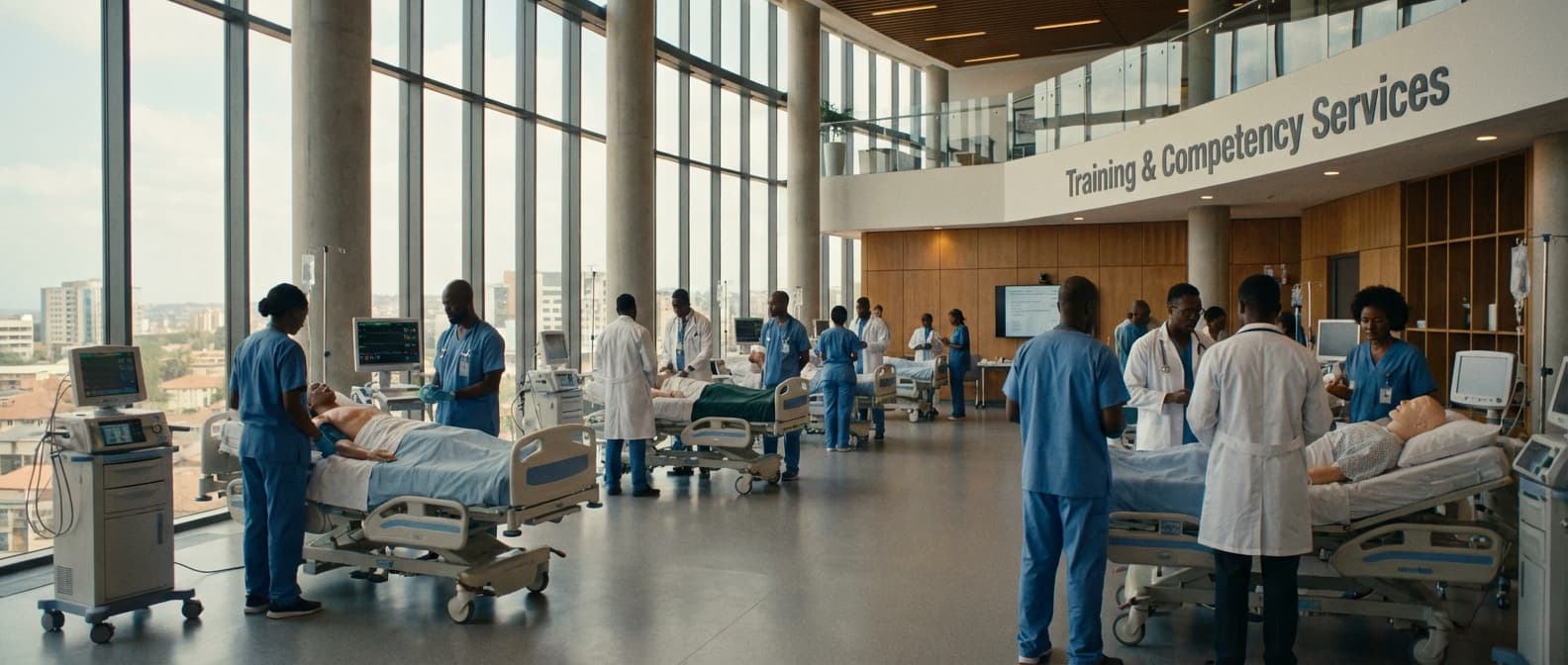
Ultrasound Application Training Service (Protocol-Based) in Liberia
Engineering Excellence & Technical Support
Ultrasound Application Training Service (Protocol-Based) High-standard technical execution following OEM protocols and local regulatory frameworks.
Standardized Protocol Implementation
Empower Liberian healthcare professionals with hands-on training on a comprehensive, evidence-based ultrasound protocol library. Our service ensures consistent, high-quality image acquisition and interpretation, fostering diagnostic confidence and improving patient outcomes across all trained facilities.
Advanced Technique Mastery
Go beyond basic scanning. Our expert-led training delves into advanced ultrasound techniques relevant to common pathologies in Liberia, including obstetric, abdominal, and point-of-care applications. Participants will gain proficiency in optimizing image parameters and recognizing critical findings.
Sustainable Skills Development
We focus on building lasting capacity. Our training emphasizes interactive learning, case-based scenarios, and ongoing support to ensure Liberian professionals not only acquire new skills but can confidently apply and maintain them within their clinical practice, even in resource-limited settings.
What Is Ultrasound Application Training Service (Protocol-based) In Liberia?
Ultrasound Application Training Service (Protocol-Based) in Liberia refers to specialized educational programs designed to equip healthcare professionals with the knowledge and practical skills necessary to perform and interpret diagnostic ultrasound examinations according to established clinical protocols. This service emphasizes a systematic and standardized approach to ultrasound imaging, ensuring consistency in technique, image acquisition, and reporting. The training is delivered in a structured format, adhering to predefined protocols for specific clinical scenarios, thereby optimizing diagnostic accuracy and patient care within the Liberian healthcare context.
| Target Audience | Rationale for Need | Typical Use Cases |
|---|---|---|
| Radiologists and Radiology Residents | To develop expertise in specialized ultrasound applications and adhere to standardized imaging protocols for enhanced diagnostic accuracy and consistency in reporting. | Abdominal ultrasound (hepatobiliary, renal, splenic), obstetric and gynecological ultrasound, small parts (thyroid, breast), Doppler studies for vascular assessment, basic interventional ultrasound guidance. |
| Obstetricians and Gynecologists | To perform point-of-care obstetric scans for maternal and fetal well-being assessment, screening for common gynecological conditions, and to interpret findings based on standardized protocols. | First-trimester screening, anomaly scans, fetal growth monitoring, assessment of pelvic masses, evaluation of intrauterine devices. |
| General Practitioners and Primary Healthcare Providers | To gain foundational ultrasound skills for basic diagnostic imaging at the primary care level, facilitating early detection and referral of critical conditions, thereby improving access to diagnostic services. | Basic abdominal screening for ascites or organomegaly, focused assessment with sonography for trauma (FAST) protocol, limited obstetric assessments. |
| Medical Laboratory Technicians and Sonographers | To acquire standardized scanning techniques and image acquisition skills, ensuring high-quality images for interpretation by radiologists or physicians. | Routine abdominal, pelvic, and obstetric scans; assisting radiologists with specialized examinations. |
| Healthcare Facilities with Limited Access to Advanced Imaging | To enable a wider range of diagnostic capabilities within existing infrastructure, reducing the need for costly referrals and improving patient outcomes. | Screening programs for endemic diseases, initial assessment of suspected pathologies, monitoring of chronic conditions. |
Key Components of Ultrasound Application Training Service (Protocol-Based):
- Protocol Development and Customization: Adapting existing international ultrasound protocols or developing context-specific protocols tailored to the prevalent pathologies and available resources in Liberia.
- Theoretical Instruction: Comprehensive lectures covering ultrasound physics, knobology, anatomical correlations, pathophysiology, and interpretation of findings for various organ systems.
- Practical Skills Development: Hands-on training sessions utilizing ultrasound phantoms and, where feasible and ethically approved, supervised patient examinations to hone probe manipulation, image optimization, and systematic scanning techniques.
- Image Interpretation and Reporting: Training in the systematic evaluation of acquired ultrasound images, identification of abnormalities, and generation of accurate and concise diagnostic reports.
- Case Study Analysis: Review of real-world ultrasound cases to reinforce learning and develop critical thinking skills in diagnosis.
- Competency Assessment: Formal evaluation of trainees' theoretical knowledge and practical skills to ensure proficiency before independent practice.
- Continuous Professional Development: Provision of ongoing support and advanced training opportunities to maintain and enhance skills.
- Resource Optimization: Training focused on maximizing the utility of available ultrasound equipment, considering limitations in power supply and maintenance.
Who Needs Ultrasound Application Training Service (Protocol-based) In Liberia?
Ultrasound Application Training Service (Protocol-Based) is crucial for enhancing diagnostic capabilities and patient care across Liberia. This specialized training ensures healthcare professionals can effectively utilize ultrasound equipment according to established protocols, leading to more accurate diagnoses and improved treatment outcomes. The service is designed for a range of healthcare facilities and professionals who are involved in diagnostic imaging and patient management.
| Department | Role of Ultrasound Application Training | Specific Needs |
|---|---|---|
| Radiology/Diagnostic Imaging | Core diagnostic imaging services | Acquiring comprehensive skills in various ultrasound modalities (e.g., abdominal, pelvic, obstetric, vascular) and protocol adherence for accurate interpretation. |
| Obstetrics and Gynecology (OB/GYN) | Prenatal care, gynecological assessments, and emergency obstetric management | Proficiency in fetal anomaly screening, monitoring pregnancy progression, and diagnosing gynecological conditions. |
| Emergency Medicine | Rapid diagnosis in critical care settings (e.g., FAST scans for trauma) | Skills in point-of-care ultrasound (POCUS) for immediate assessment of trauma, fluid status, and other life-threatening conditions. |
| Internal Medicine/General Practice | Diagnostic support for a range of conditions | Ability to perform basic diagnostic ultrasounds for common ailments, reducing the need for referrals. |
| Pediatrics | Diagnosis of congenital abnormalities, infections, and other pediatric conditions | Specialized training in pediatric ultrasound techniques, adapting protocols for young patients. |
| Surgery | Pre-operative assessment, intra-operative guidance, and post-operative monitoring | Application of ultrasound in surgical planning and management, including guided procedures. |
| Nursing (Advanced Practice) | Expanding scope of practice in primary and community healthcare | Training for nurses in performing basic diagnostic ultrasounds to enhance primary care accessibility. |
Target Customers and Departments for Ultrasound Application Training Service (Protocol-Based) in Liberia
- {"title":"Hospitals (Public and Private)","description":"Hospitals are the primary beneficiaries, requiring trained personnel for various diagnostic imaging needs."}
- {"title":"Clinics and Health Centers","description":"Smaller facilities that may have ultrasound equipment but lack specialized training for their staff."}
- {"title":"Non-Governmental Organizations (NGOs) and Humanitarian Organizations","description":"Organizations involved in healthcare delivery, often in remote or underserved areas, needing to equip their staff with essential diagnostic skills."}
- {"title":"Medical Training Institutions","description":"Universities, colleges, and vocational schools that offer medical and radiography programs, to integrate up-to-date ultrasound training into their curriculum."}
- {"title":"Individual Healthcare Professionals","description":"Radiologists, sonographers, gynecologists, general practitioners, and other medical specialists seeking to upgrade or specialize their ultrasound skills."}
Ultrasound Application Training Service (Protocol-based) Process In Liberia
This document outlines the Ultrasound Application Training Service (Protocol-Based) process in Liberia, detailing the workflow from initial inquiry to the successful execution of the training. This protocol-based approach ensures standardized, high-quality training aligned with established best practices in ultrasound diagnostics.
| Phase | Stage | Description | Key Activities | Deliverables | Responsible Party(ies) |
|---|---|---|---|---|---|
| Inquiry & Needs Assessment | Initial Contact | Prospective clients (e.g., healthcare facilities, NGOs, government health ministries) express interest in ultrasound training. | Contacting the training provider via phone, email, or official request. Initial discussion of training needs and objectives. | Inquiry received. Basic understanding of client's requirements. | Prospective Client, Training Provider |
| Inquiry & Needs Assessment | Needs Assessment | A thorough understanding of the client's specific training requirements is established. | Detailed consultation to identify target audience, specific ultrasound applications to be covered (e.g., obstetrics, general imaging, emergency), existing skill levels, available equipment, and desired outcomes. | Needs Assessment Report, identified training gaps. | Training Provider, Prospective Client |
| Proposal Development & Agreement | Proposal Submission | A tailored training proposal is developed and submitted to the client. | Based on the needs assessment, the provider crafts a detailed proposal outlining curriculum, methodology, duration, trainer profiles, venue requirements, equipment needs, and cost. Proposal is reviewed by the client. | Training Proposal, Quotation. | Training Provider, Prospective Client |
| Proposal Development & Agreement | Contract Negotiation & Signing | Formal agreement is reached and signed, solidifying the training engagement. | Discussion and finalization of terms, conditions, payment schedules, and any specific clauses. Signing of the training contract or Memorandum of Understanding (MOU). | Signed Contract/MOU. | Training Provider, Prospective Client |
| Pre-Training Preparations | Curriculum & Material Customization | Training materials are adapted to align with the agreed-upon protocol and client needs. | Refining the training curriculum, developing or adapting presentations, handouts, case studies, and practical simulation scenarios based on the chosen protocols. Ensuring materials are culturally relevant and language-appropriate (if applicable). | Customized Training Curriculum, Training Manuals, Presentation Slides. | Training Provider |
| Pre-Training Preparations | Logistics & Scheduling | All logistical aspects for the training are arranged. | Confirming training dates, venue booking, participant registration, trainer travel and accommodation arrangements, and ensuring necessary equipment (ultrasound machines, phantoms, consumables) is available and functional. | Confirmed Training Schedule, Venue Secured, Equipment Ready. | Training Provider, Prospective Client (for facility access) |
| Pre-Training Preparations | Participant Notification | Participants are informed about the training details. | Sending out official invitations, registration forms, pre-training questionnaires (to assess baseline knowledge), and any preparatory reading materials to registered participants. | Participant Registration List, Pre-Training Assessments. | Training Provider, Prospective Client (for internal communication) |
| Training Execution | On-Site/Remote Training Delivery | The protocol-based ultrasound training is conducted. | Delivery of theoretical sessions (lectures, discussions), practical demonstrations, hands-on scanning sessions (using simulators and/or actual patients under supervision), case study analysis, and protocol adherence exercises. | Completed Training Sessions, Participant Engagement. | Training Provider (Trainers) |
| Training Execution | Assessment & Feedback | Participants' understanding and skills are assessed, and feedback is gathered. | Conducting knowledge-based assessments (quizzes, exams) and practical skills assessments (observation of scanning techniques). Gathering feedback from participants on the training content, delivery, and trainers. | Assessment Scores, Participant Feedback Forms. | Training Provider (Trainers), Participants |
| Post-Training Evaluation & Support | Evaluation & Reporting | The training's effectiveness is evaluated and documented. | Analyzing assessment results and participant feedback. Developing a comprehensive post-training report detailing attendance, performance, key observations, and recommendations for future improvement. Sharing the report with the client. | Post-Training Report, Performance Metrics. | Training Provider |
| Post-Training Evaluation & Support | Certification | Certificates are issued to successful participants. | Awarding certificates of completion to participants who meet the required attendance and performance standards. This signifies their successful completion of the protocol-based ultrasound training. | Certificates of Completion. | Training Provider |
| Post-Training Evaluation & Support | Follow-up Support | Ongoing support is provided to reinforce learning and address challenges. | Offering post-training consultations, answering queries, providing access to online resources, and potentially scheduling follow-up assessments or refresher courses as agreed upon in the contract. This ensures sustained competency and protocol adherence. | Ongoing Technical Support, Refresher Course Opportunities (if applicable). | Training Provider |
Ultrasound Application Training Service (Protocol-Based) Workflow in Liberia
- Inquiry & Needs Assessment
- Proposal Development & Agreement
- Pre-Training Preparations
- Training Execution
- Post-Training Evaluation & Support
Ultrasound Application Training Service (Protocol-based) Cost In Liberia
This document outlines the cost of Ultrasound Application Training Services in Liberia, specifically focusing on protocol-based training. Understanding the pricing structure is crucial for healthcare institutions and professionals seeking to enhance their diagnostic imaging skills. The cost is influenced by a variety of factors, leading to a range of potential expenditures.
| Training Category | Estimated Cost Range (Liberian Dollar - LRD) | Notes |
|---|---|---|
| Basic Ultrasound Principles (1-2 Days) | 8,000 - 15,000 LRD | Covers fundamental concepts, machine operation, and basic image acquisition. Suitable for introductory training. |
| General Abdominal Ultrasound (3-5 Days) | 15,000 - 30,000 LRD | Focuses on protocols for imaging liver, kidneys, spleen, pancreas, gallbladder, etc. Includes common pathologies. |
| Obstetric Ultrasound (Basic to Intermediate) (3-5 Days) | 20,000 - 40,000 LRD | Covers dating scans, anatomical surveys, and basic fetal anomaly detection. Advanced obstetric ultrasound will be higher. |
| Vascular Ultrasound (Lower Extremity Arterial/Venous) (3-5 Days) | 25,000 - 45,000 LRD | Emphasis on protocols for DVT, arterial insufficiency assessment. Requires specialized equipment and expertise. |
| Specialized Application (e.g., Cardiac, Musculoskeletal) (3-5 Days) | 30,000 - 60,000+ LRD | Highly specialized fields requiring extensive anatomical knowledge and specific protocols. Costs can vary significantly. |
| Comprehensive/Advanced Program (1 Week+ or Multiple Modules) | 50,000 - 150,000+ LRD | Multi-disciplinary training or in-depth specialized programs. Often includes case reviews and simulation. |
| On-site Training (Per Day/Per Group) | Additional 10,000 - 30,000 LRD (on top of base course cost) | Covers instructor travel, accommodation, and potential logistical arrangements for training at the client's facility. Can be negotiated. |
Key Pricing Factors for Ultrasound Application Training in Liberia
- Training Provider: The reputation, experience, and accreditation of the training institution significantly impact costs. Established providers with a proven track record and highly qualified instructors often command higher fees.
- Duration of Training: The length of the training program directly correlates with the cost. Shorter, focused modules will be less expensive than comprehensive, multi-day or multi-week courses.
- Scope of Training (Specific Applications): Training on basic ultrasound principles will generally be cheaper than specialized applications (e.g., obstetric, abdominal, cardiac, musculoskeletal, vascular). The complexity of the anatomy and protocols involved in specialized areas increases training intensity and thus cost.
- Level of Expertise Targeted: Beginner, intermediate, or advanced training levels will have different pricing. Advanced courses often require more in-depth knowledge and may involve more complex case studies.
- Instructor-to-Participant Ratio: A lower instructor-to-participant ratio allows for more personalized attention and hands-on practice, which can increase the overall cost of the training.
- Training Location: Whether the training is conducted at the provider's facility, at the client's institution, or virtually can affect logistical costs. On-site training may incur travel and accommodation expenses for instructors.
- Equipment and Materials: The provision of training equipment (ultrasound machines, phantoms) and training materials (manuals, digital resources) is usually included in the fee, but variations in quality or comprehensiveness can influence pricing.
- Certification: If the training leads to a recognized certification, there might be an additional fee associated with examination and certification processes.
- Group vs. Individual Training: Training large groups or entire departments might offer a discounted per-person rate compared to individual training.
- Customization of Curriculum: Tailoring the training content to specific institutional needs or protocols might incur an additional customization fee.
- Market Demand and Competition: Local demand for specific ultrasound skills and the level of competition among training providers can also influence pricing.
Affordable Ultrasound Application Training Service (Protocol-based) Options
Our Affordable Ultrasound Application Training Service focuses on providing high-quality, protocol-based education at accessible price points. We understand that investing in skilled personnel is crucial for diagnostic accuracy and patient care, and we've designed our offerings to maximize value and minimize costs for individuals and institutions. Our training is structured around established diagnostic protocols, ensuring learners acquire practical, job-ready skills.
| Value Bundle Name | Includes | Target Audience | Cost-Saving Strategy | Price Point (Illustrative) |
|---|---|---|---|---|
| Core Skills Bundle | Basic Abdominal, Pelvic, and OB/GYN Protocols; Hands-on Practice Sessions; Core Ultrasound Physics Module | Entry-level sonographers, medical students, allied health professionals new to ultrasound. | Group discounts, bundled core modules at a reduced rate compared to individual purchases. | $800 - $1200 per participant |
| Advanced Specialization Bundle | Choice of two advanced specialties (e.g., Vascular, Echocardiography, Small Parts); Advanced Protocol Application; Case Study Analysis | Experienced sonographers seeking to specialize or enhance skills in specific areas. | Reduced cost for selecting multiple advanced modules together; access to specialized instructors. | $1500 - $2500 per participant |
| Institutional Comprehensive Package | On-site or remote training for multiple staff members; customizable protocol training based on institutional needs; ongoing access to online learning platform; regular performance reviews and feedback. | Hospitals, clinics, diagnostic imaging centers requiring standardized training for their teams. | Significant volume discounts; tailored training reduces wasted resources; potential for Train-the-Trainer components. | Custom quote based on number of participants and training duration |
| Online Self-Paced Bundle | Access to all core protocol modules online; recorded lectures; digital learning materials; online assessments; limited instructor Q&A forum. | Individuals with flexible schedules; those seeking supplementary learning; remote learners. | Eliminates travel and accommodation costs; lower overhead for online-only delivery; self-paced allows for efficient learning. | $500 - $900 per participant |
Key Features of Our Training Service
- Protocol-Driven Curriculum: Aligned with industry-standard ultrasound protocols for comprehensive skill development.
- Experienced Instructors: Led by certified sonographers with extensive clinical and teaching experience.
- Flexible Learning Formats: Offering in-person workshops, online modules, and blended learning options.
- Hands-on Practice: Opportunities for supervised scanning practice with phantoms and/or peer models.
- Certification Preparation: Designed to equip learners with the knowledge and skills for professional certification exams.
- Ongoing Support: Access to learning resources and instructor support beyond the training sessions.
Verified Providers In Liberia
Finding reliable and credentialed healthcare providers is crucial for individuals and organizations operating in Liberia. Franance Health stands out as a premier provider of verified medical professionals, offering a rigorous vetting process that ensures quality, safety, and ethical practice. Their commitment to excellence makes them the best choice for sourcing healthcare talent.
| Franance Health's Verification Pillars | Key Benefits for Clients |
|---|---|
| Academic & Professional Qualifications: Verification of degrees, diplomas, and specialized training from accredited institutions. | Assurance of Competence: Clients can be confident in the foundational knowledge and specialized skills of the providers. |
| Medical Licensure & Registration: Confirmation of active and valid licenses with relevant medical boards in Liberia and internationally. | Legal & Ethical Practice: Ensures providers operate within legal frameworks and adhere to professional standards. |
| Work History & Reference Checks: Thorough examination of past employment and feedback from previous employers. | Proven Experience: Highlights candidates with a track record of successful practice and positive contributions. |
| Background & Criminal Record Checks: Comprehensive vetting to ensure patient safety and trust. | Enhanced Security & Trust: Minimizes risks associated with hiring healthcare professionals. |
| Skills-Based Assessments (where applicable): Evaluation of practical clinical skills and specific medical proficiencies. | Role-Specific Suitability: Matches providers with the exact requirements of the role or service needed. |
Why Franance Health is the Best Choice for Verified Providers in Liberia:
- Comprehensive Credential Verification: Franance Health goes beyond basic checks, conducting in-depth verification of medical licenses, educational qualifications, work histories, and professional certifications. This meticulous process guarantees that all listed providers meet the highest standards of competence and expertise.
- Rigorous Background Checks: Patient safety is paramount. Franance Health implements thorough background checks, including criminal record and professional conduct reviews, to ensure that all providers are trustworthy and have a clean record.
- Skills and Experience Assessment: Beyond credentials, Franance Health evaluates the practical skills and relevant experience of healthcare professionals. This ensures that providers are not only qualified but also adept at handling the specific healthcare needs within Liberia.
- Commitment to Ethical Standards: Franance Health upholds a strict code of ethics for all its providers, promoting patient-centered care, confidentiality, and professional integrity. This commitment is continuously monitored and enforced.
- Local Market Expertise: With a deep understanding of the Liberian healthcare landscape, Franance Health is adept at identifying and onboarding providers who are familiar with local health challenges, cultural nuances, and regulatory requirements.
- Streamlined Provider Sourcing: Franance Health simplifies the process of finding and engaging verified healthcare professionals. Their platform and services save valuable time and resources for individuals and organizations seeking medical assistance or personnel.
- Ongoing Performance Monitoring: The verification process doesn't end upon onboarding. Franance Health engages in ongoing monitoring of provider performance and patient feedback, ensuring continuous adherence to quality standards.
Scope Of Work For Ultrasound Application Training Service (Protocol-based)
This document outlines the Scope of Work for a Protocol-Based Ultrasound Application Training Service. It details the technical deliverables and standard specifications required to ensure effective and standardized ultrasound application training for healthcare professionals.
| Technical Deliverable | Description | Standard Specification | Verification Method |
|---|---|---|---|
| Standardized Ultrasound Protocols | Comprehensive, step-by-step written protocols for each ultrasound application module. | Protocols must be evidence-based, align with recognized international guidelines (e.g., AIUM, EFSUMB, ASE), and be clearly documented with diagrams and image examples. | Review and approval by a panel of certified sonographers and/or radiologists. |
| Training Manuals and Resources | High-quality printed or digital training manuals, slide decks, and case studies for each module. | Manuals should incorporate the standardized protocols, anatomical illustrations, sono-anatomy correlations, common pathologies, and troubleshooting tips. Digital resources should be interactive where possible. | Content review for accuracy, clarity, and completeness. User feedback mechanisms. |
| Competency Assessment Tools | Structured checklists and evaluation forms for assessing practical scanning skills and image acquisition. | Tools must be directly linked to the standardized protocols and cover critical views, measurements, and image quality parameters. | Pilot testing of assessment tools, correlation with expert evaluations. |
| Simulation-Based Training (Optional) | Access to or integration with ultrasound simulation platforms that utilize standardized protocols. | Simulation scenarios must accurately reflect the anatomical and pathological variations outlined in the protocols. | Performance metrics from simulation software, instructor observation. |
| Image Quality Standards | Clear definitions of acceptable image quality for diagnostic ultrasound examinations. | Specifications will include criteria for resolution, contrast, artifact reduction, and proper annotation, as per established guidelines. | Visual inspection by instructors and peer review of acquired images. |
| Reporting Templates | Standardized reporting templates for each ultrasound application. | Templates should guide trainees in documenting findings systematically, including measurements, qualitative descriptions, and impression, aligning with protocol requirements. | Review of sample reports generated by trainees against template requirements. |
| Training Equipment Specification | Minimum specifications for ultrasound machines and phantoms to be used during training. | Equipment should support the learning objectives and allow for the demonstration of all protocol steps. Phantoms should represent relevant anatomical structures. | Confirmation of equipment model and capabilities against specified requirements. |
| Instructor Qualifications | Defined criteria for the expertise and certification of trainers. | Instructors must be certified sonographers, radiologists, or physicians with demonstrable expertise in the specific ultrasound applications and proficiency in the provided protocols. | Verification of credentials, professional memberships, and teaching experience. |
Key Training Modules and Focus Areas
- Abdominal Ultrasound: Focusing on standard protocols for liver, kidney, gallbladder, pancreas, spleen, and aorta assessment.
- Pelvic Ultrasound (Transabdominal and Transvaginal): Covering uterus, ovaries, bladder, and prostate examinations according to established protocols.
- Obstetric Ultrasound (First, Second, and Third Trimester): Emphasizing standardized measurements, fetal anatomy survey, and anomaly detection protocols.
- Echocardiography (Basic Adult): Introducing core cardiac views and measurements based on established echocardiographic protocols.
- Vascular Ultrasound (Carotid and Peripheral): Training on standard protocol for evaluating carotid arteries and peripheral arterial/venous systems.
- Small Parts Ultrasound (Thyroid, Breast): Focusing on systematic scanning techniques and reporting based on agreed-upon protocols.
- Point-of-Care Ultrasound (POCUS) - General Applications: Introducing basic scanning protocols for emergency, critical care, and primary care settings (e.g., FAST, cardiac, lung).
Service Level Agreement For Ultrasound Application Training Service (Protocol-based)
This Service Level Agreement (SLA) outlines the performance expectations and guarantees for the Ultrasound Application Training Service (Protocol-Based). It defines the response times for support requests and the guaranteed uptime for the training platform. This agreement is effective as of [Effective Date] and remains in effect until [End Date], unless terminated according to the terms of the Master Services Agreement.
| Severity Level | Description | Response Time (within Business Hours) | Target Resolution Time (within Business Hours) | Uptime Guarantee |
|---|---|---|---|---|
| Critical | Complete system outage or severe degradation impacting all users and core training functionality. | 1 hour | 4 business hours | 99.9% (monthly average) |
| High | Significant functional impairment for a substantial number of users or core training modules. | 2 business hours | 8 business hours | 99.9% (monthly average) |
| Medium | Minor functional impairment for a limited number of users or non-critical training modules. | 4 business hours | 2 business days | 99.9% (monthly average) |
| Low | General inquiries, questions about training content, or minor cosmetic issues. | 8 business hours | 5 business days | 99.9% (monthly average) |
Key Definitions
- Training Platform: Refers to the online portal, software, or system provided by the Service Provider for delivering the Ultrasound Application Training Service.
- Support Request: Any communication from the Client to the Service Provider seeking assistance with the Training Platform, including technical issues, access problems, or clarification on training content.
- Downtime: Any period during which the Training Platform is unavailable or inaccessible to the Client for reasons attributable to the Service Provider, excluding scheduled maintenance.
- Scheduled Maintenance: Pre-announced periods during which the Training Platform may be unavailable for updates, upgrades, or routine maintenance. Clients will be notified at least [Notification Period, e.g., 48 hours] in advance of Scheduled Maintenance.
- Business Hours: [Specify Business Hours, e.g., Monday to Friday, 9:00 AM to 5:00 PM Eastern Time], excluding public holidays.
- Response Time: The maximum time within which the Service Provider will acknowledge a Support Request and initiate investigation.
- Resolution Time: The maximum time within which the Service Provider will resolve a reported issue. This is often tiered based on severity.
- Uptime: The percentage of time the Training Platform is available and operational.
- Severity Levels: A classification system for Support Requests based on their impact on the Client's ability to access or utilize the training.
Frequently Asked Questions

Ready when you are
Let's scope your Ultrasound Application Training Service (Protocol-Based) in Liberia project in Liberia.

Scaling healthcare logistics and technical systems across the entire continent.