
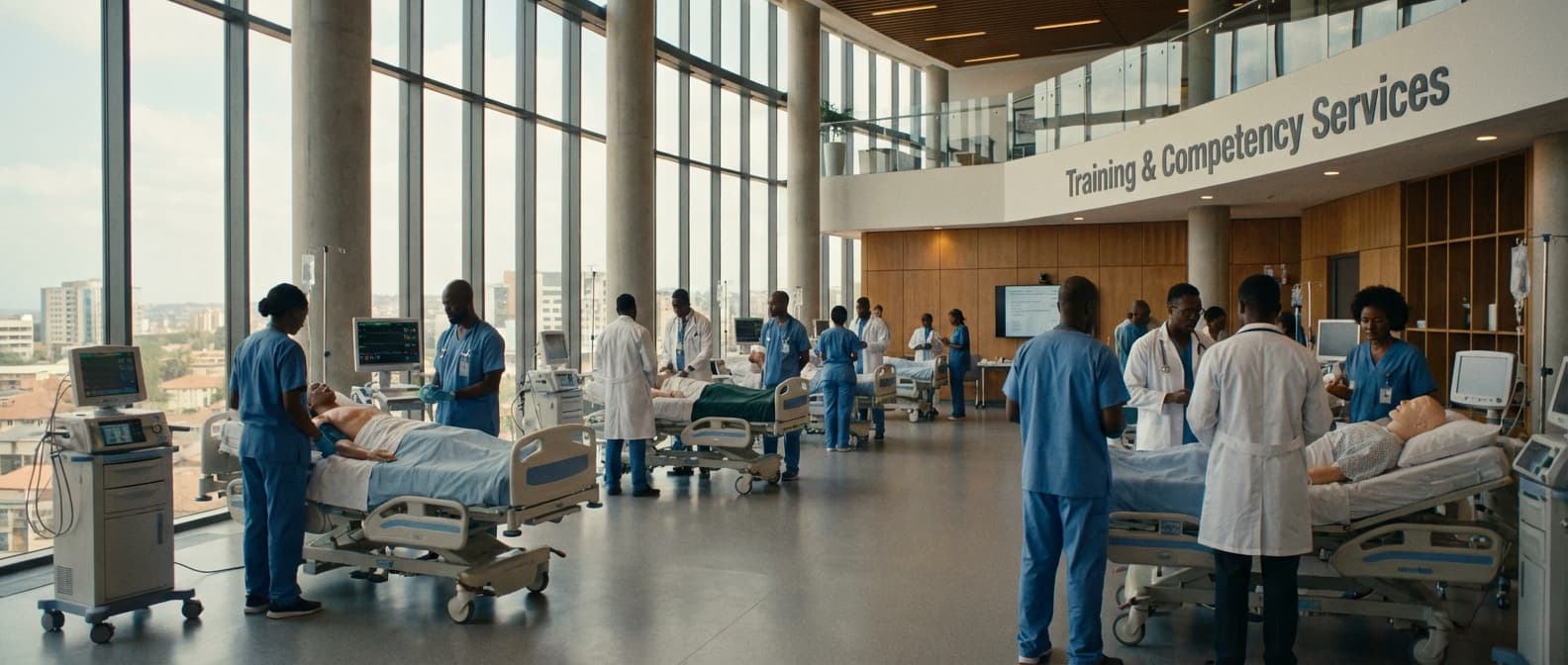
Biomedical Engineering First-Line Support Training Service in Liberia
Engineering Excellence & Technical Support
Biomedical Engineering First-Line Support Training Service High-standard technical execution following OEM protocols and local regulatory frameworks.
Essential Biomedical Device Fundamentals
Gain proficiency in the foundational principles of common biomedical devices encountered in Liberian healthcare settings, including their operation, basic troubleshooting, and preventive maintenance.
Diagnostic Imaging Equipment Support
Develop practical skills in providing first-line support for essential diagnostic imaging equipment, focusing on image acquisition troubleshooting, common error resolution, and ensuring patient safety.
Patient Monitoring Systems Maintenance
Master the upkeep and initial problem-solving for patient monitoring systems, ensuring the continuous availability of critical patient data and the effective functioning of vital signs measurement devices.
What Is Biomedical Engineering First-line Support Training Service In Liberia?
Biomedical Engineering First-Line Support (BME FLS) Training Service in Liberia refers to the foundational training programs designed to equip individuals with the essential knowledge and practical skills to perform initial troubleshooting, basic maintenance, and preliminary diagnostics of biomedical equipment within healthcare facilities. This service focuses on empowering local personnel to address common equipment malfunctions promptly, thereby enhancing operational uptime and patient care. The training emphasizes preventive maintenance procedures, safe operation protocols, and the identification of issues requiring escalation to specialized biomedical engineers. The objective is to create a distributed capacity for immediate equipment support, reducing reliance on centralized or external repair services and improving the overall reliability of medical technology in the Liberian healthcare landscape.
| Who Needs BME FLS Training? | Typical Use Cases for BME FLS | ||||||||
|---|---|---|---|---|---|---|---|---|---|
| Healthcare facility technicians and biomedical support staff | Responding to immediate equipment alarms (e.g., vital signs monitor malfunction) | Performing routine cleaning and disinfection of medical devices | Conducting basic battery replacements or power cord checks | Initiating scheduled preventive maintenance tasks (e.g., filter cleaning on ventilators) | Troubleshooting connectivity issues with networked medical devices | Verifying basic functionality after minor operational interruptions | Documenting all performed support actions and observations | Identifying and reporting suspected equipment defects for further assessment | Assisting higher-level biomedical engineers during complex repairs by performing preparatory tasks |
| Nurses and clinical staff responsible for direct patient care | Ensuring proper setup and connection of equipment before patient use | Recognizing and reporting deviations from normal equipment operation | Performing user-level cleaning and disinfection as per facility protocols | Understanding basic troubleshooting steps for immediate usability issues (e.g., restarting a device) | Promptly notifying the designated first-line support or biomedical department of any equipment problems | ||||
| Hospital administrators and facility managers | Understanding the importance of local technical capacity for equipment uptime | Allocating resources for training and maintaining a skilled support workforce | Monitoring equipment performance metrics and identifying trends that might benefit from FLS intervention | ||||||
| Prospective biomedical technicians and engineering students | Gaining foundational practical experience for entry-level roles | Developing a skill set relevant to the immediate needs of Liberian healthcare infrastructure |
Key Components of BME First-Line Support Training in Liberia
- Introduction to Biomedical Equipment and Safety Standards
- Principles of Operation for Common Medical Devices (e.g., vital signs monitors, infusion pumps, basic laboratory equipment)
- Basic Troubleshooting Methodologies and Diagnostic Techniques
- Routine Preventive Maintenance Procedures (cleaning, lubrication, calibration checks)
- Identification of Component Failures and Reporting Protocols
- Safe Use and Handling of Biomedical Equipment
- Documentation and Record-Keeping for Maintenance Activities
- Introduction to Essential Tools and Test Equipment
- Understanding User Manuals and Technical Documentation
- Escalation Procedures for Complex Issues
Who Needs Biomedical Engineering First-line Support Training Service In Liberia?
Biomedical Engineering First-Line Support Training Service in Liberia is crucial for ensuring the operational integrity and safety of medical equipment across the nation. This training empowers local technicians to handle immediate troubleshooting, routine maintenance, and basic repairs, thereby reducing downtime and enhancing patient care. It also fosters self-sufficiency within the Liberian healthcare system by building a skilled workforce capable of managing a diverse range of medical devices.
| Target Customer Category | Specific Departments/Roles | Key Needs Addressed by Training |
|---|---|---|
| Hospitals (Public & Private) | Biomedical Engineering Department (if established), Technical Support Staff, Maintenance Teams, Nursing Staff (for basic user troubleshooting) | Reducing equipment downtime, ensuring patient safety, extending equipment lifespan, cost savings on external repairs, empowering local expertise. |
| Clinics & Health Centers | Healthcare Workers, Technicians (if any), Clinic Administrators | Basic troubleshooting for common issues, understanding preventive maintenance schedules, safe operation of essential medical devices, immediate resolution of minor problems. |
| Ministry of Health & Regional Offices | Asset Management Units, Procurement Departments, Public Health Program Coordinators, Regional Health Directors | Ensuring a trained workforce for government facilities, standardizing maintenance practices, optimizing resource allocation for equipment upkeep, improving national healthcare infrastructure. |
| NGOs (Healthcare Focus) | Project Managers, Field Technicians, Logistics Officers (involved with medical equipment) | Sustainable operation of donated or procured medical equipment, building local capacity for long-term support, ensuring the effectiveness of health programs. |
| Educational Institutions | Biomedical Engineering/Technology Faculty, Students | Providing practical, hands-on training aligned with industry needs, enhancing curriculum relevance, producing job-ready graduates. |
| Medical Equipment Suppliers & Distributors | Field Service Engineers, Technical Support Staff, Sales Representatives (for basic understanding) | Enhancing customer support capabilities, providing value-added services, reducing reliance on international support for basic issues, improving customer satisfaction. |
Target Customers & Departments for Biomedical Engineering First-Line Support Training Service in Liberia
- Healthcare Facilities: Hospitals (public and private), clinics, health centers, and specialized medical institutions.
- Government Health Agencies: Ministry of Health and its regional offices, national medical stores, and public health programs.
- Non-Governmental Organizations (NGOs): International and local NGOs involved in healthcare delivery, medical equipment provision, and health system strengthening.
- Educational Institutions: Universities and vocational training centers with biomedical engineering or related technical programs.
- Medical Equipment Suppliers & Distributors: Companies that import, sell, and distribute medical devices within Liberia.
Biomedical Engineering First-line Support Training Service Process In Liberia
This document outlines the standard workflow for the Biomedical Engineering First-Line Support Training Service in Liberia. The process ensures efficient and effective delivery of training to biomedical engineering professionals, covering inquiry, needs assessment, curriculum development, training delivery, and post-training evaluation. The goal is to enhance the skills and knowledge of healthcare facility technicians, enabling them to better maintain and repair medical equipment, thereby improving healthcare service delivery.
| Stage | Description | Key Activities | Responsible Party | Deliverables/Outcomes |
|---|---|---|---|---|
| Inquiry & Initial Contact | The process begins when a healthcare facility or organization expresses interest in first-line biomedical engineering support training. | Receive and acknowledge inquiry, understand the general need. | Prospective Client, Training Provider | Acknowledgement of inquiry, preliminary understanding of need. |
| Needs Assessment & Scoping | A detailed understanding of the client's specific needs, existing skill levels, and equipment challenges is established. | Conduct site visits (if applicable), interview stakeholders, assess current technician skill sets, identify target equipment for training. | Training Provider (Technical Team), Client Representatives | Detailed needs assessment report, identified training gaps and objectives. |
| Proposal & Agreement | A formal proposal outlining the training scope, objectives, curriculum, duration, costs, and expected outcomes is presented and agreed upon. | Develop training proposal, negotiate terms, finalize contract/agreement. | Training Provider, Client | Signed training agreement, defined project scope. |
| Curriculum Development & Customization | The training content is designed or adapted to meet the specific requirements identified during the needs assessment. | Develop or customize training modules, prepare training materials (manuals, presentations, practical exercises), schedule training dates and logistics. | Training Provider (Curriculum Developers & Trainers) | Approved training curriculum and materials, training schedule. |
| Training Delivery | The actual training sessions are conducted, involving theoretical instruction and practical hands-on sessions. | Deliver theoretical lectures, conduct practical demonstrations, facilitate hands-on practice, provide immediate feedback to participants. | Training Provider (Certified Trainers) | Trained biomedical engineering technicians, completed training modules, participant attendance records. |
| Post-Training Support & Evaluation | Follow-up support is provided, and the effectiveness of the training is evaluated. | Conduct post-training assessments (written and practical), offer remote or on-site support for initial challenges, collect participant feedback, evaluate training impact. | Training Provider (Trainers & Support Staff), Client | Training evaluation report, participant assessment results, initial support provided. |
| Feedback & Continuous Improvement | Feedback from the training is used to refine future training programs and services. | Analyze feedback and evaluation data, identify areas for improvement in curriculum and delivery, update training modules, archive training records. | Training Provider | Improved training modules, enhanced service delivery, updated training database. |
Workflow Stages
- Inquiry & Initial Contact
- Needs Assessment & Scoping
- Proposal & Agreement
- Curriculum Development & Customization
- Training Delivery
- Post-Training Support & Evaluation
- Feedback & Continuous Improvement
Biomedical Engineering First-line Support Training Service Cost In Liberia
The cost of first-line support training for Biomedical Engineering in Liberia can vary significantly based on several factors. These factors influence the overall pricing structure, making it essential for organizations to consider them when budgeting for such training. The local economic conditions, the level of expertise of the trainers, the duration and intensity of the training program, the specific equipment and curriculum used, and the location of the training (e.g., on-site vs. off-site, specific city) all play a crucial role. Furthermore, the number of participants will also impact the per-person cost, as larger groups might benefit from economies of scale.
Understanding these variables helps in anticipating the potential financial commitment. For instance, specialized training focusing on cutting-edge medical technologies will likely command higher fees than general foundational support training. Similarly, training delivered by international experts might be more expensive than that provided by local instructors, although the quality and relevance to the Liberian context must be considered in either case.
Given the current economic landscape in Liberia, pricing is typically presented in Liberian Dollars (LRD). However, it's not uncommon for providers to also quote in United States Dollars (USD) due to currency stability and international benchmarking. When considering costs, it's important to clarify whether the quoted price includes materials, equipment usage, assessment, certification, and any travel or accommodation expenses for trainers if the training is conducted on-site at a client's facility. Negotiating these aspects upfront can prevent unexpected expenses and ensure a clear understanding of the service provided.
| Service Component | Estimated Cost Range (LRD) | Estimated Cost Range (USD equivalent) |
|---|---|---|
| Basic First-Line Support Workshop (1-2 days) | 15,000 - 40,000 LRD | $75 - $200 USD |
| Intermediate Skills Training (3-5 days, specific equipment focus) | 45,000 - 120,000 LRD | $225 - $600 USD |
| Advanced/Specialized Training Module (e.g., imaging, critical care equipment) | 100,000 - 300,000+ LRD | $500 - $1,500+ USD |
| On-site Training (Additional per day, venue/logistics not included) | 10,000 - 30,000 LRD | $50 - $150 USD |
| Per Participant Fee (for shared workshops) | 5,000 - 15,000 LRD | $25 - $75 USD |
Key Factors Influencing Biomedical Engineering First-Line Support Training Costs in Liberia
- Trainer Expertise and Qualifications
- Training Duration and Depth
- Curriculum and Specific Equipment Covered
- Training Location (On-site vs. Off-site)
- Number of Participants
- Inclusion of Training Materials and Resources
- Assessment and Certification Fees
- Logistical Costs (Travel, Accommodation, Venue Rental)
- Reputation and Accreditation of the Training Provider
- Demand and Market Conditions
Affordable Biomedical Engineering First-line Support Training Service Options
This document outlines affordable first-line biomedical engineering support training service options, focusing on value bundles and cost-saving strategies to empower healthcare facilities with essential technical expertise without exorbitant costs. Effective first-line support is crucial for ensuring medical equipment reliability, patient safety, and operational efficiency, minimizing downtime and the need for expensive third-party interventions.
| Cost-Saving Strategy | Description | Potential Savings Impact |
|---|---|---|
| Leverage Online & Blended Learning: | Utilize pre-recorded modules, webinars, and e-learning platforms for foundational knowledge delivery, reducing the need for extensive in-person sessions. Supplement with practical workshops for hands-on skill development. | Reduces travel, accommodation, and instructor fees associated with full-time on-site training. |
| Group Training & Shared Resources: | Participate in multi-facility training programs or pool resources with nearby healthcare institutions to share the cost of expert trainers and specialized equipment for training purposes. | Significantly lowers per-participant training costs. |
| Focus on High-Impact Equipment First: | Prioritize training on equipment that experiences frequent issues or is critical to patient care, maximizing the return on investment by addressing the most common and impactful problems. | Reduces downtime and repair costs for the most problematic devices. |
| Develop In-House Training Capacity (Train-the-Trainer): | Invest in training a select group of internal biomedical technicians to become trainers, enabling them to conduct ongoing training for new hires and refresher courses. | Eliminates recurring external training fees and builds sustainable internal expertise. |
| Standardize Training Content & Equipment: | When possible, standardize on specific equipment models and training curricula across the facility or network to streamline training delivery and reduce the need for bespoke programs. | Reduces development costs and increases training efficiency. |
| Negotiate Package Deals & Long-Term Contracts: | Secure discounted rates by committing to multiple training modules, bundled services, or extended service agreements with training providers. | Offers significant cost reductions for upfront or long-term commitments. |
| Utilize Manufacturer Training Resources: | Explore free or low-cost training offered directly by medical equipment manufacturers for their specific devices. Often included with equipment purchase or service contracts. | Can provide high-quality, device-specific training at minimal or no additional cost. |
Key Value Bundles for First-Line Biomedical Engineering Support Training
- Basic Equipment Familiarization & Maintenance Bundle: Covers foundational knowledge of common medical devices, including safe operation, routine cleaning, preventative maintenance checks, and basic troubleshooting for low-complexity equipment (e.g., patient monitors, infusion pumps, non-critical diagnostic tools). Ideal for facilities with a large volume of standard equipment.
- Intermediate Troubleshooting & Minor Repair Bundle: Builds upon basic training, equipping technicians with skills to diagnose and resolve more complex issues, perform minor component replacements (e.g., fuses, sensors), and understand diagnostic error codes. Suitable for facilities aiming to reduce reliance on external service for common malfunctions.
- Specialized Device Category Bundle (e.g., Imaging, Anesthesia): Focuses on the specific needs of particular departments, offering in-depth training on the operation, maintenance, and common troubleshooting for high-value or complex equipment within that category. This can be tailored to the facility's existing inventory.
- Safety & Compliance Focused Bundle: Emphasizes regulatory requirements, electrical safety testing procedures, infection control protocols related to equipment, and documentation best practices. Essential for all healthcare facilities to maintain accreditation and ensure patient safety.
- On-Site & Remote Support Hybrid Bundle: Combines practical, hands-on training conducted at the facility with remote support resources, online modules, and expert consultation for ongoing guidance and problem-solving. Offers flexibility and reduces travel costs for trainers.
- Train-the-Trainer Program Bundle: Empowers internal staff to become subject matter experts and trainers, enabling continuous knowledge transfer and cost reduction through in-house training capabilities. A long-term, sustainable solution.
Verified Providers In Liberia
Ensuring access to reliable and qualified healthcare providers is paramount in Liberia. Franance Health stands out as a leader in this regard, distinguished by their rigorous credentialing process and unwavering commitment to quality. This document outlines why Franance Health represents the best choice for verified healthcare providers in Liberia.
| Provider Type | Franance Health Verification Level | Key Benefits for Patients | Why Franance Health Excels |
|---|---|---|---|
| Doctors (General & Specialists) | Tier 1: Full Professional Verification & Peer Review | Access to highly qualified and experienced medical professionals, accurate diagnosis, effective treatment plans. | Rigorous vetting ensures competence and ethical practice, reducing risks of misdiagnosis or malpractice. |
| Nurses (RNs, LPNs, CNAs) | Tier 1: Full Professional Verification & Skills Assessment | Skilled and compassionate nursing care, adherence to best practices, patient safety. | Ensures nurses are properly licensed, trained, and possess the necessary hands-on skills. |
| Laboratory Technicians | Tier 1: Full Professional Verification & Equipment Proficiency | Accurate and reliable diagnostic testing, timely results for effective treatment. | Confirms proficiency with modern laboratory equipment and adherence to quality control standards. |
| Pharmacists | Tier 1: Full Professional Verification & Medication Management Expertise | Safe and accurate dispensing of medications, expert advice on drug interactions and dosages. | Guarantees licensed pharmacists with up-to-date knowledge of pharmaceuticals and patient safety protocols. |
| Allied Health Professionals (Therapists, Technologists) | Tier 1: Full Professional Verification & Specialization Certification | Targeted and effective rehabilitation and diagnostic services, improved patient outcomes. | Confirms specific training and certifications for various allied health disciplines. |
Franance Health's Credentialing Process Highlights:
- Comprehensive Verification: Franance Health meticulously verifies all credentials, including educational degrees, professional licenses, and certifications, from recognized institutions.
- Experience Assessment: Beyond formal qualifications, Franance Health assesses practical experience and track record of healthcare professionals.
- Background Checks: Thorough background checks are conducted to ensure the safety and integrity of their provider network.
- Continuous Monitoring: Provider performance and adherence to ethical standards are continuously monitored to maintain high service quality.
- Specialty Competency Evaluation: For specialized roles, Franance Health ensures providers possess demonstrable expertise and up-to-date knowledge.
Scope Of Work For Biomedical Engineering First-line Support Training Service
This Scope of Work (SOW) outlines the requirements for providing comprehensive first-line support training services for biomedical engineering personnel. The objective is to equip technicians with the essential knowledge, skills, and procedures to effectively diagnose, troubleshoot, and resolve common issues with biomedical equipment, thereby improving uptime, patient safety, and overall operational efficiency. This document details the technical deliverables, standard specifications for training content and delivery, and key performance indicators for the training service.
| Deliverable ID | Deliverable Name | Description | Standard Specifications | Acceptance Criteria |
|---|---|---|---|---|
| TD-001 | Training Curriculum Development | Creation of a comprehensive training curriculum tailored to the organization's biomedical equipment portfolio and typical first-line support issues. | Curriculum must cover core principles of biomedical engineering, common equipment types (e.g., patient monitors, infusion pumps, ventilators), basic diagnostic procedures, safety protocols (electrical, biological), documentation standards, and escalation procedures. Modules should be modular and adaptable. Content to be reviewed and approved by the client's Biomedical Engineering Department lead. | Approved curriculum document, including module outlines, learning objectives, and assessment strategies, signed off by the client's Biomedical Engineering Department lead. |
| TD-002 | Training Materials Creation | Development of all necessary training materials, including presentations, participant guides, handouts, practical exercise guides, and case studies. | Materials must be clear, concise, accurate, and visually engaging. Language should be accessible to the target audience. All materials must incorporate organization-specific policies and procedures where applicable. Materials to be provided in editable digital format (e.g., Microsoft PowerPoint, Word, PDF). | Complete set of training materials in approved digital formats, reviewed and accepted by the client. |
| TD-003 | Trainer Qualification and Preparation | Ensuring trainers are highly qualified and experienced in biomedical engineering and adult learning principles. | Trainers must possess a minimum of [Specify experience, e.g., 5 years] of hands-on experience in biomedical equipment maintenance and repair, and a proven track record of delivering effective technical training. Trainers must be familiar with the organization's specific equipment and support environment. | Biographies and certifications of all proposed trainers submitted and approved by the client. Evidence of trainer experience with relevant equipment types. |
| TD-004 | Training Delivery (On-site/Remote) | Execution of the training program according to the agreed-upon schedule and format. | Training to be delivered in [Specify mode: e.g., interactive classroom sessions, hands-on practical workshops, or a blended approach]. Sessions will be scheduled in coordination with the client. Practical sessions should utilize actual or simulated equipment representative of the organization's inventory. A minimum of [Specify percentage, e.g., 60%] of training time dedicated to practical application and problem-solving. | Completion certificates issued to all participants who successfully pass assessments. Post-training evaluation forms completed by participants and summarized by the vendor. |
| TD-005 | Assessment and Evaluation Tools | Development and administration of tools to assess participant learning and evaluate the effectiveness of the training. | Includes pre- and post-training knowledge assessments (quizzes, tests), practical skill assessments (demonstrations, troubleshooting scenarios), and participant feedback surveys. Assessment tools must align with learning objectives. Results to be compiled and presented in a clear, actionable report. | Validated assessment tools (tests, practical evaluation checklists). Summary report of assessment results and participant feedback, highlighting strengths and areas for improvement. |
| TD-006 | Post-Training Support (Optional/Defined Scope) | Providing limited post-training support to reinforce learning and address immediate challenges. | This may include a dedicated Q&A session, access to an online forum for questions for a defined period (e.g., 30 days), or a single follow-up consultation. Scope to be clearly defined and agreed upon. | Evidence of post-training support mechanisms being provided as agreed. Resolution of participant queries within agreed timeframes. |
| TD-007 | Training Report and Recommendations | Submission of a comprehensive report detailing the training conducted, outcomes, and recommendations for ongoing improvement. | Report to include training attendance records, assessment results, participant feedback analysis, observed impact on participant skills, and recommendations for future training needs, curriculum updates, or process improvements. Report to be presented to the client's Biomedical Engineering leadership. | Final training report submitted and accepted by the client's Biomedical Engineering Department lead. Presentation of findings and recommendations to key stakeholders. |
Key Objectives
- Enhance the technical proficiency of first-line biomedical engineering support staff.
- Reduce equipment downtime through efficient and accurate initial troubleshooting.
- Improve adherence to safety protocols and regulatory compliance in equipment maintenance.
- Foster a proactive approach to equipment maintenance and problem identification.
- Standardize the quality and effectiveness of first-line support across the organization.
Service Level Agreement For Biomedical Engineering First-line Support Training Service
This Service Level Agreement (SLA) outlines the guaranteed response times and uptime for the Biomedical Engineering First-Line Support Training Service. This SLA is designed to ensure prompt and effective technical assistance for users undergoing training on biomedical engineering equipment and systems. It defines the commitment from the service provider to the client regarding the availability and responsiveness of the training support.
| Service Component | Response Time Guarantee | Uptime Guarantee |
|---|---|---|
| First-Line Technical Support (Email/Ticketing System) | Within 2 business hours for acknowledgement, within 4 business hours for initial diagnosis. | 99.5% during scheduled training hours. |
| First-Line Technical Support (Phone) | Within 30 minutes for acknowledgement and initial diagnosis during business hours. | 99.5% during scheduled training hours. |
| Escalation of Complex Issues | Within 4 business hours of identification and agreement on escalation. | N/A (Dependent on the availability of escalated support resources). |
| Access to Training Resources (Online Portal) | 24/7 access with 99.8% availability. | 99.8% availability for the online training resource portal. |
Scope of Service
- Provision of first-line technical support for all software and hardware introduced during Biomedical Engineering training sessions.
- Troubleshooting and resolution of common technical issues encountered during training.
- Guidance on basic operation and configuration of training equipment.
- Escalation of complex issues to higher-tier support or relevant subject matter experts.
- Availability of support during scheduled training hours and specified extended support periods.
Frequently Asked Questions

Ready when you are
Let's scope your Biomedical Engineering First-Line Support Training Service in Liberia project in Liberia.

Scaling healthcare logistics and technical systems across the entire continent.