
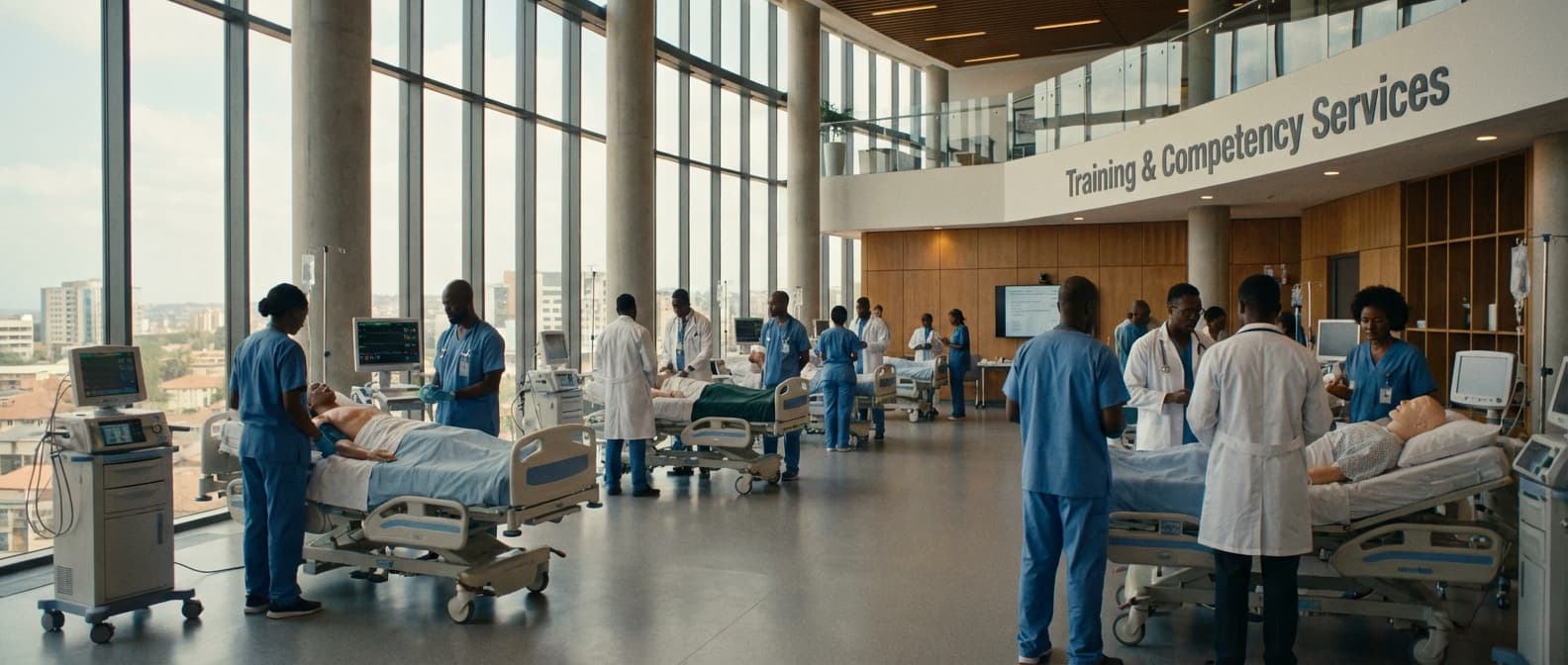
Anesthesia Workstation User Training Service in Liberia
Engineering Excellence & Technical Support
Anesthesia Workstation User Training Service High-standard technical execution following OEM protocols and local regulatory frameworks.
Mastering Anesthesia Workstation Fundamentals
Gain hands-on proficiency in operating your anesthesia workstation, covering essential functions, safety features, and optimal parameter settings for critical care scenarios in Liberian healthcare settings.
Advanced Ventilation Modes & Troubleshooting
Explore advanced ventilation strategies tailored to local patient populations and common respiratory challenges, with practical training on troubleshooting and maintaining the workstation for uninterrupted patient care.
Data Management & Quality Improvement Integration
Learn to effectively utilize the workstation's data logging capabilities for patient monitoring and quality improvement initiatives, enhancing clinical decision-making and contributing to better patient outcomes in Liberia.
What Is Anesthesia Workstation User Training Service In Liberia?
The Anesthesia Workstation User Training Service in Liberia refers to a specialized educational program designed to equip healthcare professionals with the necessary knowledge and practical skills to operate anesthesia workstations safely and effectively. This service is crucial for ensuring optimal patient care during surgical and other medical procedures requiring anesthetic management. It encompasses theoretical instruction on the workstation's components, physiological principles of anesthesia delivery, and comprehensive hands-on training with specific models of anesthesia machines. The training emphasizes proper setup, calibration, gas delivery, monitoring, ventilation modes, and emergency protocols. It also covers preventive maintenance, troubleshooting common issues, and adhering to infection control standards. The service aims to mitigate risks associated with anesthesia delivery, improve procedural efficiency, and ensure compliance with national and international healthcare standards within the Liberian context.
| Target Audience | Rationale for Training | Typical Use Cases |
|---|---|---|
| Anesthesiologists | To ensure advanced proficiency in operating complex anesthesia workstations, manage critical care scenarios, and utilize sophisticated monitoring and ventilation features. | Complex surgical procedures, intensive care unit (ICU) support, management of patients with severe respiratory compromise, and utilization of advanced anesthetic techniques. |
| Anesthesia Residents and Trainees | To build foundational knowledge and practical skills in basic and intermediate anesthesia workstation operation, adhering to established safety guidelines. | Routine surgical cases (e.g., appendectomy, hernia repair), basic anesthetic induction and maintenance, and learning fundamental ventilation strategies. |
| Certified Registered Nurse Anesthetists (CRNAs) / Certified Anesthetists | To enable independent and safe administration of anesthesia using workstations, including selection of appropriate settings and patient monitoring. | Obstetric anesthesia, pediatric anesthesia, outpatient surgery, and providing anesthesia in diverse clinical settings. |
| Biomedical Engineers and Technicians | To provide a comprehensive understanding of workstation operation for accurate installation, calibration, maintenance, and repair. | On-site setup and commissioning of new equipment, routine preventive maintenance schedules, diagnostic troubleshooting, and repair of faulty components. |
| Nursing Staff (Recovery Room/Post-Anesthesia Care Unit - PACU) | To understand basic workstation functionality for patient monitoring during immediate post-anesthesia recovery and to identify potential issues before handover. | Monitoring patients transitioning from the operating room, recognizing early signs of airway obstruction or respiratory distress, and ensuring continued safe ventilation and oxygenation. |
Key Components of Anesthesia Workstation User Training Service
- Theoretical understanding of anesthesia workstation architecture and functionality.
- Principles of gas flow, vaporizers, and anesthetic delivery systems.
- Operation of mechanical ventilators and various breathing circuits.
- Proficiency in patient monitoring parameters (e.g., SpO2, EtCO2, NIBP, ECG).
- Management of different ventilation modes and settings.
- Emergency procedures and troubleshooting of common equipment malfunctions.
- Anesthetic gas scavenging systems (AGSS) and safety protocols.
- Infection control and sterilization procedures for workstation components.
- Basic preventive maintenance and user-level servicing.
- Integration with patient safety checklists and clinical protocols.
Who Needs Anesthesia Workstation User Training Service In Liberia?
Anesthesia Workstation User Training Service is crucial for healthcare facilities in Liberia to ensure the safe and effective operation of vital anesthesia equipment. This service is designed to equip medical professionals with the knowledge and practical skills needed to utilize advanced anesthesia workstations, minimizing risks and optimizing patient care during surgical procedures. The training focuses on equipment setup, calibration, monitoring capabilities, troubleshooting, and emergency procedures. It is particularly relevant in a context where access to specialized technical support may be limited, empowering local staff to handle a wider range of operational and maintenance aspects.
| Department/Role | Specific Needs | Training Focus |
|---|---|---|
| Anesthesiology Department | Primary users of anesthesia workstations. Need comprehensive understanding of all features, patient monitoring, ventilation modes, and drug delivery systems. | In-depth operational procedures, advanced ventilation strategies, troubleshooting common alarms, safety protocols, and maintenance best practices. |
| Operating Room (OR) Nurses | Assist anesthesiologists, manage equipment during procedures, and respond to alarms. Require knowledge of basic operation, setup, and immediate response protocols. | Anesthesia machine setup and pre-use checks, basic monitoring functions, alarm identification and initial response, airway management support. |
| Biomedical Engineering Department | Responsible for maintenance, repair, and calibration of medical equipment. Need technical understanding for troubleshooting and preventative maintenance. | Detailed technical specifications, diagnostic procedures, calibration protocols, preventative maintenance schedules, basic repair and parts identification. |
| Medical Directors/Administrators | Oversee hospital operations and resource allocation. Need to understand the importance of such training for patient safety, staff competency, and equipment longevity. | Overview of training benefits, impact on patient safety, return on investment, and compliance with standards. |
| New Medical Graduates/Residents | Individuals entering or in training for anesthesia. Require foundational knowledge and hands-on experience with current technology. | Basic principles of anesthesia delivery, workstation components, fundamental monitoring, and safe operating practices. |
Target Customers and Departments in Liberia
- Hospitals (Public and Private)
- Surgical Centers
- Referral Hospitals
- Teaching Hospitals
Anesthesia Workstation User Training Service Process In Liberia
This document outlines the user training service process for Anesthesia Workstations in Liberia, from initial inquiry to successful execution. The process is designed to be clear, efficient, and ensure that healthcare professionals receive comprehensive training on the safe and effective operation of these critical medical devices. The workflow is divided into distinct phases, each with specific activities and deliverables.
| Phase | Key Activities | Responsible Party | Deliverables | Timeline (Indicative) |
|---|---|---|---|---|
| Initial contact from healthcare facility/institution. Discussion of training needs (number of trainees, specific workstation models, existing knowledge levels). Site visit (if required) to assess training environment and equipment availability. Clarification of objectives and desired learning outcomes. | Client (Healthcare Facility), Service Provider (Training Company) | Needs Assessment Report. List of identified training requirements. | 1-3 Business Days |
| Development of a detailed training proposal outlining scope, curriculum, duration, trainers, costs, and schedule. Presentation of the proposal to the client. Negotiation of terms and conditions. Signing of a formal training agreement/contract. | Service Provider, Client | Formal Training Proposal. Signed Training Agreement. | 3-5 Business Days |
| Finalization of the training curriculum and materials (presentations, manuals, hands-on exercises). Scheduling of training sessions, considering client availability and logistical constraints. Confirmation of training venue and necessary equipment (workstations, simulation tools). Pre-training communication to participants (date, time, location, pre-reading materials). Logistics coordination (travel, accommodation for trainers if applicable). | Service Provider | Finalized Training Curriculum & Materials. Confirmed Training Schedule. Participant Communication. Logistics Plan. | 5-10 Business Days |
| On-site or remote delivery of the training program. Theoretical sessions covering workstation principles, safety features, and functionalities. Hands-on practical sessions with the anesthesia workstation, including simulation scenarios. Q&A sessions and interactive discussions. Assessment of learning through quizzes, practical demonstrations, or case studies. | Service Provider (Trainer), Client (Trainees) | Delivered Training Sessions. Participant Engagement. Completed Assessments. | Duration varies based on training scope (e.g., 2-5 Days) |
| Provision of post-training support (e.g., email, phone, limited on-site follow-up). Collection of participant feedback through evaluation forms. Analysis of training effectiveness and achievement of learning objectives. Issuance of certificates of completion to participants. Final reporting on training delivery and outcomes. | Service Provider, Client | Feedback Summary. Training Effectiveness Report. Certificates of Completion. Final Invoice. | 7-14 Business Days post-training |
Anesthesia Workstation User Training Service Process Flow in Liberia
- Phase 1: Inquiry & Needs Assessment
- **Phase 2: Proposal & Agreement
- Phase 3: Training Planning & Preparation
- Phase 4: Training Delivery
- Phase 5: Post-Training Support & Evaluation
Anesthesia Workstation User Training Service Cost In Liberia
Providing comprehensive user training for anesthesia workstations in Liberia involves several cost considerations. The pricing for such a service is not a fixed global rate but is influenced by a variety of factors specific to the Liberian context. These include the complexity and type of anesthesia workstation being trained on, the duration and depth of the training program, the qualifications and experience of the trainers, the location within Liberia where the training will be conducted, and the number of participants. Travel and accommodation expenses for trainers, particularly if they are external to Liberia, will also significantly impact the overall cost. Furthermore, the inclusion of hands-on practice sessions with actual equipment, or the use of simulators, can affect the pricing. Local market dynamics, the demand for specialized technical training, and potential government or NGO subsidies can also play a role in determining the final cost.
| Training Component | Estimated Cost Range (Liberian Dollar - LRD) | Notes |
|---|---|---|
| Per Day Trainer Fee (Local Expert) | 5,000 - 15,000 LRD | Varies based on experience and specialization. |
| Per Day Trainer Fee (International Expert - excluding travel) | 15,000 - 50,000+ LRD | Significantly higher due to specialized knowledge and global rates. |
| Basic 1-2 Day Training (per participant) | 10,000 - 30,000 LRD | Covers fundamental operations and safety for a small group. |
| Comprehensive 3-5 Day Training (per participant) | 30,000 - 75,000 LRD | Includes advanced features, troubleshooting, and potentially hands-on practice. |
| Travel & Accommodation (Local Trainer, per day) | 2,000 - 7,000 LRD | Covers transportation, meals, and basic lodging for trips outside their city. |
| Travel & Accommodation (International Trainer, estimated) | 50,000 - 200,000+ LRD | Highly variable; includes flights, visas, accommodation, and per diem for the entire trip. |
| Training Materials & Supplies (per participant) | 1,000 - 3,000 LRD | Manuals, handouts, and any consumable supplies for practice. |
| Simulator Usage Fee (if applicable, per session) | 5,000 - 20,000 LRD | Cost for renting or using simulation equipment. |
| Full Anesthesia Workstation Training Package (e.g., 3 days for 10 staff) | 150,000 - 500,000+ LRD | An aggregate estimate; can be significantly higher with international trainers or extensive customization. |
Key Factors Influencing Anesthesia Workstation User Training Costs in Liberia
- Anesthesia Workstation Model and Complexity: Training for advanced, multi-functional anesthesia machines will naturally be more expensive than for simpler models.
- Training Program Duration and Depth: The number of days, hours per day, and the specific modules covered (e.g., basic operation, advanced features, troubleshooting, emergency protocols) will dictate cost.
- Trainer Qualifications and Experience: Highly skilled and experienced trainers, especially those with international certification or extensive practical experience, command higher fees.
- Location of Training: Training conducted in major cities like Monrovia might have different logistics costs compared to remote areas. Travel to remote locations will increase expenses.
- Number of Participants: While a per-participant fee might exist, larger groups can sometimes benefit from economies of scale, but a significantly large group might necessitate more trainers or longer sessions.
- Trainer Travel and Accommodation: If trainers are from outside Liberia or need to travel within the country, their flight, visa (if applicable), accommodation, and per diem expenses are significant cost drivers.
- Equipment Availability and Simulation: Access to actual anesthesia workstations for hands-on practice or the use of high-fidelity simulators will influence the training methodology and associated costs.
- Customization of Training: Tailoring the curriculum to specific hospital protocols or existing staff skill levels can add to the development or adaptation costs.
- Logistics and Administrative Costs: This includes materials, printing, venue rental (if applicable), and administrative support.
- Market Demand and Competition: The availability of local training providers and the general demand for this specialized skill set will affect pricing.
- Potential Subsidies or Grants: Funding from international organizations, NGOs, or government initiatives could potentially reduce the out-of-pocket cost for institutions.
Affordable Anesthesia Workstation User Training Service Options
This document outlines affordable anesthesia workstation user training service options, focusing on value bundles and cost-saving strategies to ensure comprehensive and accessible training for healthcare professionals. We understand that budget constraints are a significant factor, and our tiered service packages are designed to maximize your return on investment while maintaining the highest quality of education.
| Service Tier | Description | Key Features | Value Proposition | Estimated Cost Savings (vs. individual services) |
|---|---|---|---|---|
| Basic Value Bundle | Foundational training for new users and essential updates. | Access to on-demand modules, 1 VILT session, basic troubleshooting guide. | Cost-effective entry point for essential competency. | 15-20% |
| Standard Value Bundle | Comprehensive training covering core functionalities and common clinical scenarios. | All Basic Bundle features + 2 VILT sessions, access to advanced modules, 1 Train-the-Trainer light session. | Balances affordability with in-depth knowledge acquisition. | 25-35% |
| Premium Value Bundle | In-depth training with specialized modules, advanced troubleshooting, and ongoing support. | All Standard Bundle features + unlimited VILT access, specialized clinical application modules, 1 full Train-the-Trainer program, 3 months of prioritized email support. | Maximizes expertise and self-sufficiency for long-term cost reduction. | 40-50% |
| Custom Training Solutions | Tailored training programs designed to meet unique institutional needs and workflows. | Bespoke curriculum development, on-site or virtual delivery, flexible scheduling. | Optimizes training ROI by addressing specific organizational requirements. | Variable (dependent on scope) |
Key Cost-Saving Strategies for Anesthesia Workstation Training
- On-Demand Digital Training Modules: Access pre-recorded, self-paced modules available 24/7. This reduces scheduling conflicts and travel expenses.
- Group Training Discounts: Encourage multiple users from your facility to attend a single training session for significant per-person savings.
- Train-the-Trainer Programs: Empower internal staff to become subject matter experts, capable of training new hires and providing ongoing support, reducing reliance on external trainers.
- Bundled Training Packages: Combine foundational, advanced, and specialized training into cost-effective packages.
- Virtual Instructor-Led Training (VILT): Participate in live, interactive sessions remotely, eliminating travel and accommodation costs while providing real-time Q&A opportunities.
- Customized Training Curricula: Tailor training content to your specific equipment and clinical workflows, avoiding redundant information and maximizing efficiency.
- Early Bird Registration Incentives: Secure discounted pricing by registering for training sessions well in advance.
- Annual Training Subscriptions: For facilities with ongoing training needs, an annual subscription can offer substantial cost reductions.
- Leveraging Existing Resources: Integrate training with your institution's existing IT infrastructure and learning management systems (LMS) where possible.
- Post-Training Support Packages: Opt for bundled support services that can reduce the cost of individual ad-hoc consultations.
Verified Providers In Liberia
In the rapidly evolving landscape of healthcare access, discerning trustworthy and reliable service providers is paramount. In Liberia, "Verified Providers" signifies a commitment to quality, ethical practice, and patient-centered care. Franance Health stands at the forefront of this movement, offering a comprehensive suite of services backed by rigorous credentialing and a dedication to excellence. This document outlines why Franance Health's credentials make them the optimal choice for your healthcare needs in Liberia.
| Service Area | Franance Health's Verified Offerings | Why it's the Best Choice |
|---|---|---|
| General Healthcare | Qualified General Practitioners, comprehensive health screenings, and preventative care. | Accessible, reliable primary care to address a wide range of health concerns, ensuring early detection and management of illnesses. |
| Specialty Consultations | Access to specialists in areas like pediatrics, internal medicine, obstetrics & gynecology, and more, all rigorously vetted. | Expert diagnosis and treatment for complex conditions, reducing the need for overseas referrals and improving patient outcomes. |
| Diagnostic Services | State-of-the-art laboratory and imaging facilities with trained technicians. | Accurate and timely diagnostic results, crucial for effective treatment planning and monitoring. |
| Emergency Services | 24/7 availability of emergency medical personnel and resources. | Immediate and competent care during critical situations, potentially saving lives. |
| Maternal & Child Health | Specialized care for pregnant women, newborns, and children by certified professionals. | Ensuring the health and well-being of mothers and children through evidence-based care and support. |
Franance Health Credentials & Why They Matter:
- {"title":"Licensed and Certified Professionals","description":"All healthcare professionals at Franance Health undergo thorough background checks and hold valid licenses and certifications recognized by Liberian health authorities. This ensures they meet the minimum standards for competence and ethical conduct."}
- {"title":"Specialized Training and Expertise","description":"Beyond basic licensing, Franance Health prioritizes continuous professional development. Our team comprises specialists with advanced training in various medical fields, ensuring you receive expert care tailored to your specific condition."}
- {"title":"Adherence to International Standards","description":"Franance Health is committed to aligning its practices with globally recognized healthcare standards. This includes stringent protocols for patient safety, infection control, and data privacy, offering peace of mind."}
- {"title":"Patient Feedback and Quality Assurance","description":"We actively solicit and incorporate patient feedback into our service improvement processes. Regular internal audits and quality assurance measures ensure consistent delivery of high-quality care."}
- {"title":"Ethical Practice and Patient Rights Advocacy","description":"Franance Health champions ethical medical practices and is a staunch advocate for patient rights. Our commitment to transparency and informed consent ensures you are an active participant in your healthcare journey."}
- {"title":"Technological Integration and Innovation","description":"We embrace modern healthcare technologies to enhance diagnostic accuracy, treatment effectiveness, and patient convenience. This includes robust electronic health record systems and access to up-to-date medical information."}
Scope Of Work For Anesthesia Workstation User Training Service
This Scope of Work (SOW) outlines the requirements for providing comprehensive user training services for anesthesia workstations. The training aims to equip healthcare professionals with the necessary knowledge and skills to operate the anesthesia workstations safely and effectively, ensuring optimal patient care and workflow efficiency. The training will cover theoretical concepts, practical hands-on sessions, and troubleshooting common issues.
| Deliverable | Description | Standard Specification | Target Audience | Format |
|---|---|---|---|---|
| Training Curriculum Document | Detailed outline of all training modules, learning objectives, and session timings. | Comprehensive, clear, and modular structure. Aligned with workstation features and user roles. | Training Department, Project Manager | Digital Document (PDF) |
| Participant Training Manuals | Printed or digital manuals for each participant, covering theoretical aspects and step-by-step procedures. | High-resolution diagrams, clear language, indexed for easy reference. Content aligned with the curriculum. | Anesthesiologists, Nurse Anesthetists, Anesthesia Technicians | Printed Manuals / Digital Document (PDF) |
| Hands-on Training Sessions | Practical sessions utilizing actual or simulated anesthesia workstations. | Sufficient workstation units for practical training (e.g., 1 workstation per 2-3 participants). Realistic simulation scenarios. | Anesthesiologists, Nurse Anesthetists, Anesthesia Technicians | In-person Practical Session |
| Competency Assessment Forms | Tools to evaluate participant understanding and practical skills post-training. | Includes both written and practical assessment components. Objective scoring criteria. | Anesthesiologists, Nurse Anesthetists, Anesthesia Technicians | Digital Forms / Paper Forms |
| Training Certification | Formal certificates issued to participants who successfully complete the training and assessments. | Includes participant name, training date, workstation model, and issuing organization. Unique identifier. | Anesthesiologists, Nurse Anesthetists, Anesthesia Technicians | Digital Certificate (PDF) / Printed Certificate |
| Train-the-Trainer Program (Optional) | Training for designated personnel who will then be able to train other users. | Focuses on adult learning principles, effective training delivery techniques, and advanced troubleshooting. | Selected Clinical Educators, Senior Anesthesia Staff | In-person Workshop / Digital Resources |
| Post-Training Support Documentation | Resources for ongoing reference and support, such as FAQs, troubleshooting guides, and quick reference cards. | Accessible, up-to-date, and easily navigable. Addresses common issues and user queries. | All Trained Users | Digital Platform / Printed Cards |
Key Training Modules
- Anesthesia Workstation Overview and Design Principles
- System Setup and Pre-use Checks
- Ventilator Modes and Settings (e.g., Volume Control, Pressure Control, PSV Pro)
- Anesthetic Gas Delivery and Monitoring (e.g., Agent analysis, CO2 monitoring)
- Vaporizer Operation and Maintenance
- Anesthesia Breathing System (ABS) Components and Functionality
- Alarm Management and Troubleshooting
- Patient Monitoring Integration and Data Management
- Cleaning and Disinfection Protocols
- Advanced Features and Customization Options
- Emergency Scenarios and Contingency Planning
Service Level Agreement For Anesthesia Workstation User Training Service
This Service Level Agreement (SLA) outlines the response times and uptime guarantees for the Anesthesia Workstation User Training Service provided by [Your Company Name]. This SLA is an attachment to the Master Service Agreement (MSA) between [Your Company Name] and [Client Name].
| Service Component | Response Time Target (Business Hours) | Uptime Guarantee |
|---|---|---|
| Critical Incidents (e.g., complete unavailability of training platform, inability to access core training modules) | 1 Hour | 99.5% |
| High Priority Issues (e.g., partial functionality loss impacting a specific training module, significant performance degradation) | 4 Business Hours | 99.0% |
| Medium Priority Issues (e.g., minor bugs, cosmetic issues, requests for information not impacting core functionality) | 8 Business Hours | 98.0% |
| Low Priority Issues (e.g., general inquiries, feature suggestions, non-urgent requests) | 2 Business Days | N/A (Support focus on timely communication and inclusion in future updates) |
Key Service Metrics
- Response Time: The maximum allowable time for [Your Company Name] to acknowledge and begin addressing a reported incident or request.
- Uptime Guarantee: The percentage of time the Anesthesia Workstation User Training Service is available and operational for scheduled training sessions and access to training materials.
Frequently Asked Questions

Ready when you are
Let's scope your Anesthesia Workstation User Training Service in Liberia project in Liberia.

Scaling healthcare logistics and technical systems across the entire continent.