
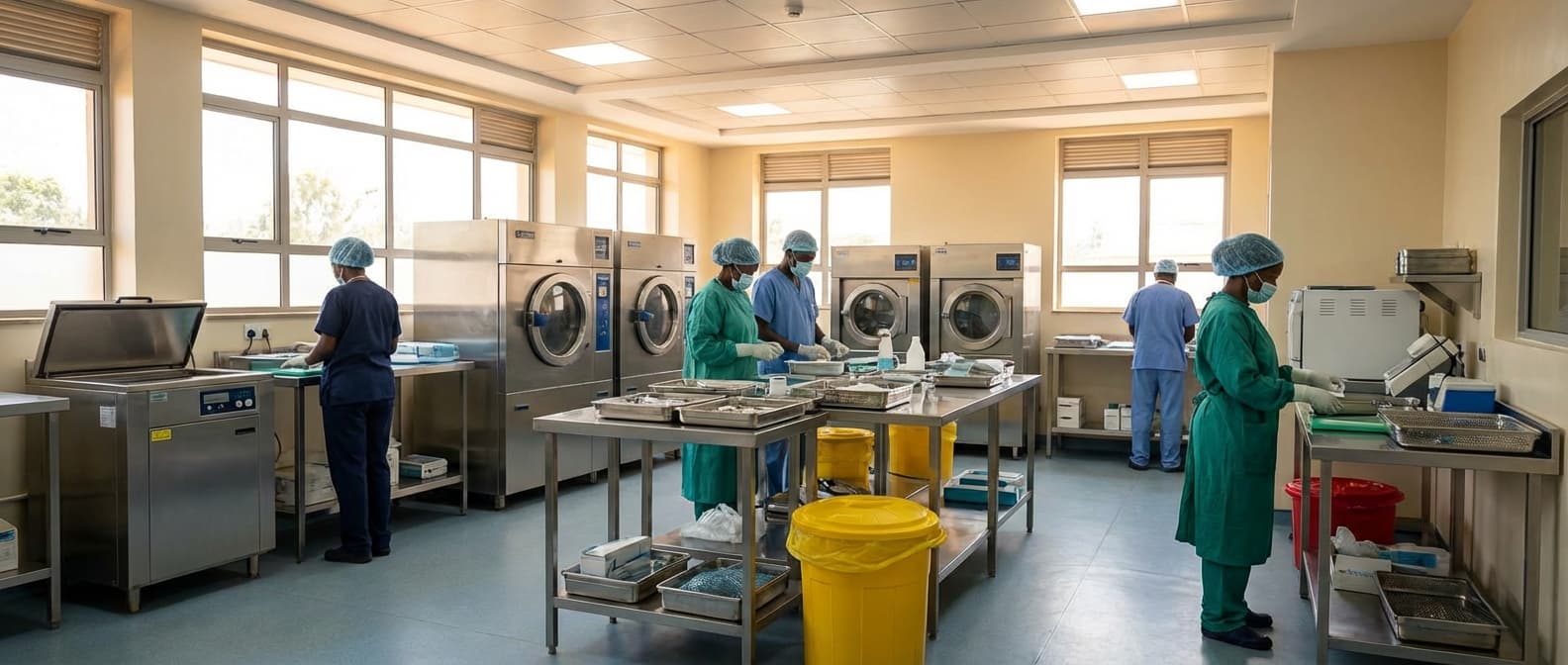
Medical Equipment Decontamination Service (Pre-Repair/Pre-Relocation) in Liberia
Engineering Excellence & Technical Support
Medical Equipment Decontamination Service (Pre-Repair/Pre-Relocation) High-standard technical execution following OEM protocols and local regulatory frameworks.
Sterile Foundations for Surgical Success
Ensuring all medical equipment is thoroughly decontaminated and sterilized *before* repair or relocation, guaranteeing a safe and infection-free environment for critical medical interventions and the protection of healthcare workers in Liberia.
Seamless Relocation, Zero Contamination Risk
Our specialized pre-relocation decontamination process eliminates biohazards and chemical residues, safeguarding the integrity of your valuable medical assets and preventing cross-contamination during transit within Liberia.
Extending Lifespan, Enhancing Performance
By meticulously decontaminating medical equipment prior to repair, we create a pristine workspace for technicians, reducing the risk of introducing new contaminants, and ultimately extending the operational lifespan and accuracy of vital medical devices in Liberian healthcare facilities.
What Is Medical Equipment Decontamination Service (Pre-repair/pre-relocation) In Liberia?
Medical Equipment Decontamination Service (Pre-Repair/Pre-Relocation) in Liberia refers to the specialized process of cleaning, disinfecting, and/or sterilizing medical devices and equipment prior to them being sent for repair or being moved to a new location within a healthcare facility or to another facility. This service is critical for preventing the transmission of infectious agents, ensuring the safety of maintenance personnel, and maintaining the integrity of the equipment during transit and subsequent handling. The decontamination process aims to reduce or eliminate microbial contamination to a level that is no longer a threat to health, thereby safeguarding both healthcare workers and patients.
| Who Needs This Service? | Typical Use Cases | |||||||
|---|---|---|---|---|---|---|---|---|
| Hospitals and Clinics (public and private) | Equipment being sent to external repair depots for servicing (e.g., faulty defibrillators, malfunctioning patient monitors). | Diagnostic imaging centers (e.g., X-ray machines, ultrasound probes requiring maintenance). | Surgical centers and operating theaters (e.g., specialized surgical instruments, endoscopes scheduled for repair or internal transfer). | Laboratories and diagnostic facilities (e.g., centrifuges, analytical instruments undergoing maintenance). | Medical equipment suppliers and distributors (receiving equipment for refurbishment or repair). | Healthcare facilities undergoing relocation or renovation. | Ambulance services and emergency medical response units (transferring equipment to maintenance workshops or new vehicles). | Non-governmental organizations (NGOs) and international aid organizations managing medical assets in Liberia. |
| Sending equipment to an external biomedical engineering workshop for complex repairs. | Relocating a diagnostic imaging suite to a new wing of a hospital. | Transferring patient monitoring systems from an intensive care unit to a general ward undergoing decommissioning. | Returning rented or loaned medical equipment after use. | Shipping medical devices for routine maintenance or calibration. | Inventory management requiring equipment to be moved between storage and clinical areas. | Disposing of or decommissioning medical equipment that has reached its end-of-life. | Preparing equipment for donation or export. |
Key Aspects of Medical Equipment Decontamination (Pre-Repair/Pre-Relocation)
- Objective: To render medical equipment safe for handling by repair technicians, transport personnel, and to prevent cross-contamination between different environments.
- Scope: Encompasses a range of medical devices, from small diagnostic tools to larger imaging systems and surgical instruments.
- Methodology: Involves a systematic approach of cleaning (removal of visible soil and organic debris), disinfection (killing most pathogenic microorganisms) and/or sterilization (killing all microorganisms, including spores), depending on the equipment's nature and intended use.
- Compliance: Adherence to relevant national and international guidelines and standards for infection control and medical device reprocessing.
- Documentation: Meticulous record-keeping of decontamination processes, including methods used, agents applied, and personnel involved.
Who Needs Medical Equipment Decontamination Service (Pre-repair/pre-relocation) In Liberia?
Ensuring the safety and functionality of medical equipment is paramount in any healthcare setting. Before medical devices undergo repair or relocation, a thorough decontamination process is essential. This service is crucial to prevent the spread of infections, protect technicians, and maintain the integrity of the equipment itself. In Liberia, where healthcare infrastructure is developing, robust decontamination protocols are particularly vital to safeguard both patient and staff well-being, and to ensure the longevity of valuable medical assets.
| Target Customer | Relevant Departments/Units | Reasons for Decontamination (Pre-Repair/Pre-Relocation) |
|---|---|---|
| Hospitals (Public & Private) | Operating Rooms, Intensive Care Units (ICUs), Emergency Departments, Sterilization Units, Biomedical Engineering Departments, Central Sterile Supply Departments (CSSD) | To prevent cross-contamination during repair, protect repair technicians from biohazards, ensure sterile environments for subsequent procedures, comply with infection control standards. |
| Clinics and Health Centers | Treatment Rooms, Minor Procedure Rooms, Diagnostic Areas, Pharmacy | To safeguard patients during treatment, protect healthcare workers, ensure equipment is safe for continued use or transport to repair facilities. |
| Diagnostic Laboratories | Microbiology, Pathology, Hematology, Chemistry Labs | To prevent contamination of samples, protect lab personnel from infectious agents, ensure accurate test results, and maintain the integrity of sensitive diagnostic equipment. |
| Surgical Centers | Operating Theaters, Recovery Rooms | To maintain a sterile surgical environment, protect surgical teams and patients from pathogens, and ensure equipment is decontaminated before leaving the facility for repair. |
| Ambulatory Care Facilities | Procedure Rooms, Consultation Rooms | To ensure a safe patient environment, prevent transmission of infections, and prepare equipment for transport to repair centers without introducing external contaminants. |
| Medical Equipment Repair and Maintenance Companies | Workshop/Service Bay | To protect their technicians from biohazardous materials, prevent the spread of infections within their facility, and ensure they are not introducing contaminants into their repair processes. |
| Medical Equipment Suppliers and Distributors | Warehouse, Showroom, Logistics/Delivery | To ensure equipment being returned for warranty work or replacement is decontaminated, to protect their staff during handling and transport, and to maintain the reputation of their products. |
Who Needs Medical Equipment Decontamination Service (Pre-Repair/Pre-Relocation) in Liberia?
- Hospitals (both public and private)
- Clinics and Health Centers
- Diagnostic Laboratories
- Surgical Centers
- Ambulatory Care Facilities
- Medical Equipment Repair and Maintenance Companies
- Medical Equipment Suppliers and Distributors
Medical Equipment Decontamination Service (Pre-repair/pre-relocation) Process In Liberia
This document outlines the workflow for the Medical Equipment Decontamination Service (Pre-Repair/Pre-Relocation) in Liberia. This service is crucial for ensuring the safety of personnel and preventing cross-contamination before medical equipment undergoes repair or relocation. The process is designed to be efficient, transparent, and to adhere to safety protocols.
| Stage | Description | Key Activities | Responsible Party | Deliverables |
|---|---|---|---|---|
| The process begins when a healthcare facility or individual expresses interest in the decontamination service. | Contacting the service provider, providing basic information about the equipment (type, condition, intended purpose for decontamination - repair/relocation), and initial discussion of needs. | Client (Healthcare Facility/Individual) | Initial understanding of service requirements. |
| Formalizing the service request and gathering necessary details for planning. | Client submits a formal service request form. Service provider assesses the equipment information provided. Client may be asked to provide equipment manuals or schematics if available. Discussion of pricing and service scope. | Client & Service Provider | Completed Service Request Form, Preliminary Equipment Assessment, Service Agreement/Quote. |
| Planning the date, time, and resources required for the decontamination. | Service provider schedules the decontamination based on client availability and service provider's capacity. Arrangements for transportation of equipment (if applicable, e.g., to a dedicated decontamination facility). Confirmation of site access and any specific requirements for the decontamination environment. | Service Provider | Confirmed Decontamination Schedule, Logistics Plan (transport, personnel, materials). |
| The physical process of cleaning and disinfecting the medical equipment. | Personnel arrive at the designated location with necessary decontamination agents, equipment, and personal protective equipment (PPE). Visual inspection of equipment for gross contamination. Thorough cleaning and disinfection of all surfaces, accessible internal components (as per protocol), and accessories using approved disinfectants. Drying of equipment. Segregation of contaminated waste. | Decontamination Team (Service Provider) | Decontaminated Medical Equipment, Properly Disposed Contaminated Waste. |
| Verifying the successful decontamination and providing official records. | Issuance of a Decontamination Certificate confirming the successful completion of the service, including date, equipment details, and disinfectants used. Detailed internal records of the decontamination process. | Service Provider | Decontamination Certificate, Internal Service Report. |
| Finalizing the service and ensuring all parties have necessary documentation. | Client reviews and accepts the decontaminated equipment and certificate. Service provider updates their records with all transaction details. Collection of payment (if applicable). | Client & Service Provider | Signed Acceptance of Service, Final Invoices/Receipts, Archived Service Records. |
Process Workflow: Medical Equipment Decontamination Service (Pre-Repair/Pre-Relocation)
- Inquiry and Initial Assessment
- Service Request and Documentation
- Scheduling and Logistics
- On-Site Decontamination Execution
- Certification and Documentation
- Handover and Record Keeping
Medical Equipment Decontamination Service (Pre-repair/pre-relocation) Cost In Liberia
The cost of medical equipment decontamination services in Liberia, particularly for pre-repair or pre-relocation purposes, can vary significantly due to several factors. These factors influence the overall pricing structure and the ranges observed in the local currency (Liberian Dollar - LRD). It's crucial for healthcare facilities and equipment vendors to understand these elements to budget effectively and ensure compliance with safety protocols. The primary goal of decontamination is to eliminate biohazardous materials, chemical contaminants, or radioactive isotopes that could pose a risk to personnel, the environment, or the integrity of the equipment during subsequent handling.
| Equipment Category | Estimated Decontamination Cost Range (LRD) | Notes |
|---|---|---|
| Small Diagnostic Tools (e.g., Stethoscope, BP Cuff) | 500 - 2,000 | Simple disinfection, low complexity. |
| Medium-Sized Equipment (e.g., Infusion Pumps, Ventilators) | 3,000 - 15,000 | Requires thorough cleaning and disinfection, potentially specialized agents. |
| Large/Complex Imaging Equipment (e.g., X-ray Machines, Ultrasound) | 15,000 - 75,000+ | Significant time, specialized protocols, potential for partial disassembly. |
| Laboratory Analyzers (e.g., Blood Analyzers, Microscopes) | 5,000 - 30,000+ | Depends on biohazard levels and chemical exposure. May require manufacturer-specific cleaning. |
| Surgical Instruments (Large Sets) | 2,000 - 10,000 | Autoclaving or chemical sterilization, depending on material. |
Key Pricing Factors for Medical Equipment Decontamination in Liberia
- {"title":"Type and Complexity of Equipment","description":"Larger, more complex, or specialized medical equipment (e.g., CT scanners, MRI machines, large laboratory analyzers) require more time, specialized knowledge, and potentially more robust decontamination agents and techniques. Simple items like basic diagnostic tools will be less expensive."}
- {"title":"Level of Contamination","description":"The nature and extent of the contamination are paramount. Biohazardous materials (blood, bodily fluids, infectious agents) often require specific sterilization protocols. Chemical spills or radioactive contamination necessitate different, often more stringent, procedures and safety measures, impacting cost."}
- {"title":"Decontamination Method Used","description":"Various methods exist, including chemical disinfection, autoclaving (steam sterilization), dry heat sterilization, ethylene oxide (EtO) sterilization, and irradiation. The choice of method depends on the equipment's material compatibility and the type of contaminant. Some methods require specialized equipment or consumables, thus influencing cost."}
- {"title":"Required Turnaround Time","description":"Expedited decontamination services, when needed for urgent repairs or relocations, typically command a premium. Standard service levels will be more cost-effective."}
- {"title":"Provider's Expertise and Certifications","description":"Service providers with specialized training, certifications (e.g., in handling biohazards or specific decontamination technologies), and a proven track record may charge higher rates. However, this often translates to higher quality and reliability."}
- {"title":"Location of Service","description":"Whether the decontamination is performed on-site at the healthcare facility or at the service provider's facility can affect pricing due to transportation, logistics, and setup costs. Services in major urban centers like Monrovia might have different pricing than in more remote areas."}
- {"title":"Consumables and Waste Disposal","description":"The cost of disinfectants, sterilizing agents, protective gear for technicians, and the proper disposal of contaminated waste are significant components of the overall service cost."}
- {"title":"Ancillary Services","description":"Some providers may bundle decontamination with other services such as minor repairs, packaging, or transportation, which will affect the final price."}
Affordable Medical Equipment Decontamination Service (Pre-repair/pre-relocation) Options
Our affordable medical equipment decontamination service provides a crucial pre-repair and pre-relocation step, ensuring safety, compliance, and cost-effectiveness. By thoroughly cleaning and disinfecting equipment before it enters a repair facility or undergoes relocation, we minimize the risk of cross-contamination, protect technicians, and prevent delays. This proactive approach can save significant time and resources by avoiding the need for secondary decontamination by repair depots or during the relocation process itself. We offer flexible value bundles and cost-saving strategies tailored to your needs.
| Strategy | Description | Benefit |
|---|---|---|
| Volume Discounts: | Receive reduced per-unit pricing when decontaminating a larger quantity of equipment at once. | Significant cost savings for facilities with ongoing decontamination needs. |
| Scheduled Services: | Book recurring decontamination appointments (e.g., monthly, quarterly) for predictable budgeting and priority scheduling. | Ensures equipment readiness, avoids emergency fees, and simplifies inventory management. |
| Bundled Services with Repair/Relocation: | Integrate decontamination as part of a larger repair or relocation package with our trusted partners. | Streamlined process, single point of contact, and potential package discounts. |
| Tiered Service Packages: | Choose the level of decontamination that best suits the equipment's risk profile and intended use. | Avoids overpaying for unnecessary services and ensures appropriate level of safety. |
| Pre-Payment Discounts: | Inquire about discounts for pre-paying for a block of decontamination services. | Improved cash flow for the provider and upfront cost savings for the client. |
Value Bundles for Decontamination Services
- Basic Decontamination: Standard surface cleaning and disinfection for low-risk equipment.
- Standard Decontamination: Includes basic decontamination plus more thorough cleaning of accessible components and disinfection of high-touch surfaces.
- Advanced Decontamination: Comprehensive cleaning and disinfection of all accessible components, including specialized protocols for sensitive equipment and bioburden reduction.
- Comprehensive Decontamination + Reporting: All features of Advanced Decontamination plus detailed documentation, including chain of custody and certificates of decontamination for regulatory compliance.
- On-Site Mobile Decontamination: Our team brings our specialized equipment and protocols directly to your facility for maximum convenience, especially for large volumes or critical equipment.
Verified Providers In Liberia
In Liberia, ensuring access to high-quality healthcare is paramount. The landscape of healthcare providers is diverse, and identifying those who consistently deliver reliable and effective services is crucial. This is where the concept of 'verified providers' becomes essential. Verified providers have undergone a rigorous vetting process, assuring patients of their adherence to established standards of care, ethical practices, and professional competence. Franance Health stands out as a leading example of such a verified provider, offering a compelling case for why they represent the best choice for healthcare needs in Liberia.
| Verification Aspect | Franance Health's Approach | Patient Benefit |
|---|---|---|
| Professional Licensing & Certification | Thorough checks of all medical licenses and board certifications. | Ensures practitioners are legally qualified and specialized. |
| Clinical Experience & Competence | Evaluation of past performance, peer reviews, and ongoing training. | Provides confidence in the skill and expertise of providers. |
| Adherence to Standards of Care | Regular audits and reviews against national and international medical guidelines. | Guarantees care aligns with current best practices. |
| Ethical Conduct & Patient Rights | Strict policies on patient confidentiality, informed consent, and non-discrimination. | Upholds patient dignity and ensures a safe, respectful environment. |
| Facility & Equipment Standards | Verification of well-maintained facilities and functional medical equipment. | Ensures a safe and effective environment for diagnosis and treatment. |
Why Franance Health is the Best Choice for Verified Healthcare in Liberia
- Rigorous Credentialing and Verification: Franance Health meticulously verifies the qualifications, licenses, and certifications of all their healthcare professionals. This ensures that patients are treated by competent and authorized medical practitioners.
- Commitment to Ethical Practices: Adherence to the highest ethical standards is a cornerstone of Franance Health's operations. This translates to transparent communication, patient-centered care, and respect for individual rights.
- Evidence-Based Medicine and Quality Care: Franance Health is dedicated to providing care that is informed by the latest medical research and best practices. Their commitment to quality ensures optimal patient outcomes.
- Patient Safety and Continuous Improvement: Patient safety is a top priority. Franance Health implements robust safety protocols and actively seeks feedback for continuous improvement of their services.
- Accessibility and Comprehensive Services: Franance Health strives to make quality healthcare accessible to a wide range of patients, offering a comprehensive suite of medical services to meet diverse needs.
- Technological Integration and Modern Facilities: Leveraging modern medical technologies and maintaining well-equipped facilities allows Franance Health to deliver advanced diagnostic and treatment options.
- Community Engagement and Trust: Franance Health actively engages with the Liberian community, building trust and fostering strong relationships based on reliable and compassionate care.
Scope Of Work For Medical Equipment Decontamination Service (Pre-repair/pre-relocation)
This Scope of Work (SOW) outlines the requirements for a Medical Equipment Decontamination Service, specifically for equipment requiring decontamination prior to repair or relocation. The objective is to ensure the safety of personnel, prevent cross-contamination, and prepare equipment for subsequent handling. This document details the technical deliverables and standard specifications for the decontamination process.
| Section | Description | Technical Deliverables | Standard Specifications/Requirements |
|---|---|---|---|
| 1.0 Pre-Decontamination Assessment | Initial evaluation of the equipment to identify the type of equipment, its intended use, potential contaminants, and accessibility for decontamination. | Decontamination assessment report, including equipment identification, potential hazards, and recommended decontamination protocol. | Assessment conducted by trained personnel. Report to be submitted within 24 hours of initial assessment. Records of equipment type, model, serial number, and potential contaminants shall be maintained. |
| 2.0 Decontamination Procedure | The physical and chemical process of removing contaminants from the equipment surfaces and accessible internal components. | Validated decontamination procedures for various equipment types and contaminants. Documentation of the specific cleaning agents and methods used for each piece of equipment. | Use of EPA-approved disinfectants and sterilants as appropriate. Procedures to be validated for efficacy against common healthcare-associated pathogens. Cleaning to be performed in a designated, controlled environment. Personnel to wear appropriate Personal Protective Equipment (PPE). |
| 3.0 Decontamination Agents & Methods | Selection and application of appropriate cleaning and disinfecting agents and methods. | List of approved decontamination agents and their Material Safety Data Sheets (MSDS). Detailed description of cleaning techniques (e.g., manual wiping, immersion, ultrasonic cleaning). | Agents to be selected based on manufacturer's recommendations for the equipment and efficacy against identified contaminants. Methods to be non-damaging to equipment materials. Dilution and contact times to be strictly adhered to. |
| 4.0 Waste Management | Safe handling, collection, and disposal of contaminated materials and waste generated during the decontamination process. | Properly labeled biohazardous waste containers. Documentation of waste disposal records. | Compliance with local, state, and federal regulations for biohazardous waste disposal. Waste to be segregated and disposed of through a licensed medical waste disposal service. |
| 5.0 Post-Decontamination Verification | Confirmation that the decontamination process has been successful. | Verification checklist signed by technician. Visual inspection for cleanliness. Potentially, microbial testing (if specified). | Visual inspection to confirm absence of visible soil and residue. Where applicable, manufacturer's recommended cleaning procedures to be followed. If specified, microbial swab testing to confirm absence of specific pathogens. |
| 6.0 Documentation & Certification | Providing evidence that the equipment has been decontaminated. | Decontamination Certificate for each piece of equipment, including details of the procedure, agents used, date, and technician. Decontamination Log. | Certificate to include equipment identification, date of service, technician name/ID, agents/methods used, and a statement of successful decontamination. Log to be maintained for a minimum of [Specify Duration, e.g., 5 years]. |
| 7.0 Safety Protocols | Ensuring the safety of personnel involved in the decontamination process. | Written safety procedures. Training records for decontamination personnel. | Strict adherence to PPE requirements (gloves, gowns, masks, eye protection). Emergency procedures for chemical spills or exposures. Training to cover hazard recognition and safe handling of chemicals and biohazards. |
| 8.0 Equipment Handling Post-Decontamination | Proper handling and packaging of decontaminated equipment for transport to repair or relocation. | Equipment to be packaged in a manner that prevents re-contamination during transit. | Use of clean, sealed bags or containers. Equipment to be clearly labeled as 'Decontaminated'. |
Objectives
- To effectively remove and neutralize biological and chemical contaminants from medical equipment.
- To ensure the safety of repair technicians, relocation personnel, and subsequent users of the equipment.
- To comply with relevant health and safety regulations and industry best practices.
- To provide documented proof of decontamination for traceability and regulatory compliance.
- To minimize the risk of cross-contamination between different pieces of equipment or departments.
Service Level Agreement For Medical Equipment Decontamination Service (Pre-repair/pre-relocation)
This Service Level Agreement (SLA) outlines the response times and uptime guarantees for the decontamination of medical equipment prior to repair or relocation. This service is critical to ensuring the safety of both patients and healthcare personnel, as well as preventing cross-contamination during the handling and movement of sensitive medical devices. The objective is to provide a timely and effective decontamination process that minimizes downtime and disruption to clinical operations.
| Service Level | Description | Target Response Time | Uptime Guarantee |
|---|---|---|---|
| Standard Decontamination Request | Routine decontamination of equipment for scheduled repair or relocation. | Within 4 business hours of confirmed request submission. | 98% uptime during scheduled service windows. Downtime exceeding 2% will be credited as per the penalties clause. |
| Expedited Decontamination Request (Emergency/Urgent) | Decontamination required due to suspected biohazard, outbreak, or critical equipment failure requiring immediate repair/relocation. | Within 1 business hour of confirmed request submission. Prioritization is given to all expedited requests. | 100% availability for all confirmed expedited requests. Any failure to meet this will result in immediate escalation and corrective action. |
| Weekend/Holiday Decontamination | Decontamination services required outside of standard business hours. | Within 6 business hours of confirmed request submission (for scheduled requests). Expedited requests retain their 1-hour response time. | 95% uptime for pre-scheduled weekend/holiday services. Unscheduled requests will be handled on a best-effort basis with priority given to emergency situations. |
Key Service Metrics and Guarantees
- Response Time: The time elapsed from the confirmed submission of a decontamination request to the commencement of decontamination activities at the client's site or designated decontamination facility.
- Uptime Guarantee: The assurance that decontamination services will be available and performed according to the agreed-upon schedule, minimizing delays that could impact equipment repair or relocation timelines.
- Decontamination Standards: All decontamination processes will adhere to recognized industry standards and manufacturer guidelines for the specific equipment being serviced, as documented in Appendix A (Scope of Services and Standards).
- Reporting: Regular reports detailing decontamination completion, any challenges encountered, and adherence to response time targets will be provided.
- Escalation Procedure: A defined process for escalating issues that may impact response times or service delivery.
Frequently Asked Questions

Ready when you are
Let's scope your Medical Equipment Decontamination Service (Pre-Repair/Pre-Relocation) in Liberia project in Liberia.

Scaling healthcare logistics and technical systems across the entire continent.