
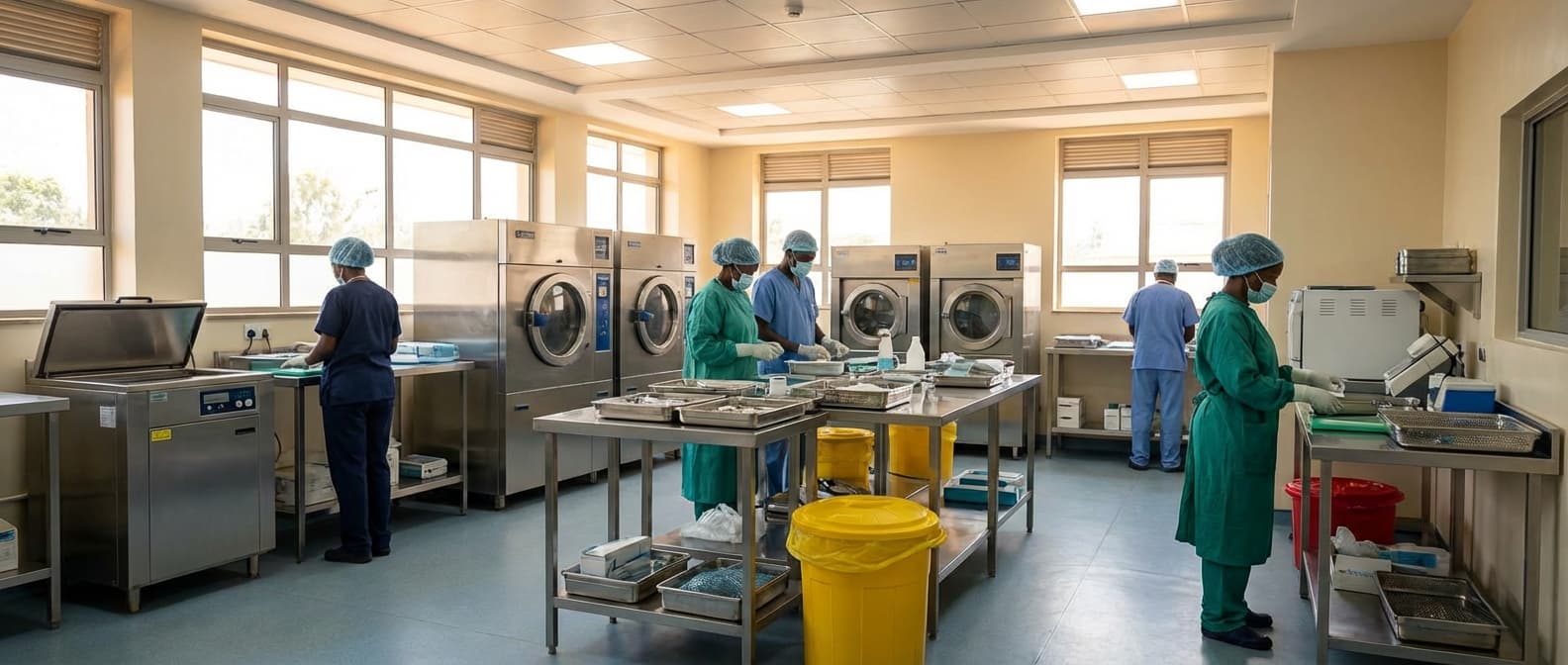
Endoscope Reprocessing Equipment Support Service in Liberia
Engineering Excellence & Technical Support
Endoscope Reprocessing Equipment Support Service High-standard technical execution following OEM protocols and local regulatory frameworks.
Expert On-Site Technical Support
We provide rapid and reliable on-site technical support for all endoscope reprocessing equipment across Liberia. Our certified technicians are equipped to diagnose, repair, and maintain your systems, minimizing downtime and ensuring continuous operational readiness for critical healthcare procedures.
Proactive Maintenance & Calibration
Our comprehensive preventative maintenance programs and precision calibration services are designed to extend the lifespan of your reprocessing equipment and guarantee optimal performance. We help you adhere to strict regulatory standards and prevent costly failures through scheduled inspections and adjustments.
Remote Troubleshooting & Training
Leveraging advanced diagnostic tools, we offer remote troubleshooting to quickly resolve many technical issues. Additionally, we provide specialized training for your in-house staff on equipment operation, maintenance best practices, and troubleshooting, empowering your team for greater self-sufficiency.
What Is Endoscope Reprocessing Equipment Support Service In Liberia?
Endoscope reprocessing equipment support service in Liberia refers to the provision of specialized technical assistance, maintenance, repair, and calibration services for the automated and manual equipment used in the cleaning, disinfection, and sterilization of reusable medical endoscopes. This service is critical for ensuring the safety and efficacy of endoscopic procedures by preventing cross-contamination and healthcare-associated infections (HAAs). The service encompasses a range of activities designed to maintain the operational integrity, performance, and compliance of endoscope reprocessing systems with established infection control guidelines and manufacturer specifications.
| Who Needs Endoscope Reprocessing Equipment Support Service? | Typical Use Cases |
|---|---|
| Hospitals and large clinics in Liberia performing endoscopic procedures (e.g., gastroenterology, pulmonology, urology, gynecology). | Ensuring the continuous availability and proper functioning of Automated Endoscope Reprocessors (AERs) for high-volume reprocessing. |
| Surgical centers and specialized medical facilities utilizing flexible and rigid endoscopes. | Maintaining the efficacy of manual cleaning stations, drying cabinets, and leak detection devices. |
| Government health ministries and regulatory bodies responsible for healthcare quality and patient safety oversight. | Facilitating compliance with national and international infection control standards for endoscopic equipment. |
| Medical device distributors and service providers that offer endoscope reprocessing solutions in Liberia. | Providing comprehensive after-sales support and service agreements to end-users. |
| Healthcare facilities lacking in-house biomedical engineering expertise for specialized equipment. | Accessing external technical proficiency for complex repairs and troubleshooting of advanced reprocessing systems. |
Key Components of Endoscope Reprocessing Equipment Support Service
- Preventive maintenance: Scheduled inspections, cleaning, lubrication, and replacement of wear-and-tear components to avert equipment failures.
- Corrective maintenance and repair: Diagnosis and resolution of malfunctions and breakdowns to restore equipment functionality.
- Calibration and performance verification: Ensuring that automated systems (e.g., automated endoscope reprocessors - AERs) and associated equipment (e.g., ultrasonic cleaners, drying cabinets) consistently achieve the required disinfection/sterilization parameters.
- Validation and testing: Performing tests to confirm the effectiveness of the reprocessing cycle according to regulatory standards and manufacturer protocols (e.g., leak testing, flow rate verification).
- Technical consultation and training: Providing expertise on equipment operation, troubleshooting, and best practices for endoscope reprocessing staff.
- Spare parts management: Ensuring the availability and timely supply of genuine or equivalent spare parts for repairs and maintenance.
- Documentation and record-keeping: Maintaining comprehensive logs of all maintenance, repair, and validation activities for regulatory compliance and traceability.
Who Needs Endoscope Reprocessing Equipment Support Service In Liberia?
The need for endoscope reprocessing equipment support services in Liberia is critical for ensuring patient safety and the efficient operation of healthcare facilities. Proper reprocessing of endoscopes is paramount to prevent the transmission of infections and maintain the integrity and longevity of expensive medical equipment. This service is essential for any institution that utilizes flexible endoscopes in diagnostic and therapeutic procedures.
| Customer Type | Relevant Departments | Specific Needs |
|---|---|---|
| Public Hospitals | Gastroenterology, Pulmonology, Urology, Endoscopy Unit, Infection Control | Routine maintenance, repair of reprocessing machines (e.g., automated endoscope reprocessors - AERs), parts replacement, calibration, technical training for staff, emergency repair services. |
| Private Hospitals | Gastroenterology, Pulmonology, Urology, Endoscopy Unit, Central Sterile Supply Department (CSSD), Infection Control | Similar to public hospitals, with a potential emphasis on preventative maintenance contracts to minimize downtime, upgrades to newer reprocessing technologies, and efficient service response times. |
| Surgical Centers | Gastroenterology, Urology, Pulmonology, Endoscopy Suite, CSSD | Ensuring rapid turnaround times for equipment to support high patient volumes, service for specialized endoscopes and associated reprocessing equipment, staff training on new equipment or procedures. |
| Specialty Clinics | Gastroenterology, Pulmonology, Urology, Endoscopy Procedure Rooms | Maintenance of smaller-scale or individual reprocessing units, advice on best practices for reprocessing, training for limited staff, readily available spare parts. |
| Medical Training Institutions | Departments utilizing endoscopes for training, Simulation Centers | Ensuring all equipment used for training is fully functional and safely reprocessed, technical support for a range of equipment that may be used by trainees, educational support on equipment maintenance and safety protocols. |
Target Customers and Departments in Liberia Requiring Endoscope Reprocessing Equipment Support Service
- Hospitals (Public and Private)
- Surgical Centers
- Specialty Clinics (Gastroenterology, Pulmonology, Urology, etc.)
- Medical Training Institutions with Clinical Affiliations
Endoscope Reprocessing Equipment Support Service Process In Liberia
This document outlines the workflow for Endoscope Reprocessing Equipment Support Services in Liberia, from initial inquiry to the successful execution of the service. It aims to provide a clear, standardized process for efficient and effective service delivery, ensuring the optimal functioning of vital medical equipment.
| Phase | Key Activities | Responsible Party | Deliverables/Outcomes | Notes |
|---|---|---|---|---|
| Customer contacts service provider with a need for support (e.g., routine maintenance, repair, installation). | Customer, Service Provider (Sales/Support) | Understanding of customer's requirement, preliminary problem diagnosis. | Gather detailed information about the equipment model, serial number, and nature of the issue. |
| Formal service request submitted by the customer. | Service Provider (Technical Team/Admin) | Detailed service quotation including scope of work, parts, labor, travel costs, and estimated timeline. | Ensure transparency and accuracy in quotation. Obtain customer approval. |
| Agreed upon service date and time. | Service Provider (Dispatch/Logistics) | Confirmation of service schedule, arrangement of travel and accommodation for technicians, procurement of necessary parts and tools. | Consider accessibility and availability of the facility in Liberia. |
| Technician arrives at the facility and performs the agreed-upon service (maintenance, repair, installation). | Service Provider (Field Technician) | Service performed according to best practices and manufacturer guidelines. | Adhere to all safety protocols and local regulations. Communicate any unexpected findings to the customer. |
| Post-service testing to ensure equipment functionality and performance. | Service Provider (Field Technician), Customer Representative | Verification of successful service completion. Calibration and performance validation reports. | Customer sign-off is crucial at this stage. |
| Completion of service reports and handover of documentation to the customer. | Service Provider (Field Technician, Admin) | Signed service report, equipment manual, warranty information, any training materials. | Provide clear explanations of the service performed and any recommendations. |
| Post-service follow-up to ensure customer satisfaction and timely billing. | Service Provider (Customer Service, Finance) | Customer feedback gathered, invoice issued to the customer, payment processed. | Address any post-service queries or concerns promptly. |
Endoscope Reprocessing Equipment Support Service Workflow in Liberia
- Inquiry & Initial Assessment
- Service Request & Quotation
- Scheduling & Logistics
- On-site Service Execution
- Testing & Validation
- Documentation & Handover
- Follow-up & Billing
Endoscope Reprocessing Equipment Support Service Cost In Liberia
Providing reliable endoscope reprocessing equipment support services in Liberia is crucial for healthcare facilities to maintain patient safety and operational efficiency. The cost of these services is influenced by several key factors, and can vary significantly depending on the specific needs and the service provider. These factors include the type and complexity of the endoscope being serviced, the extent of the required maintenance (preventive vs. corrective), the availability of specialized spare parts locally, the technician's expertise and travel, and the overall market demand for such specialized services within Liberia. Due to the developing nature of specialized medical equipment support in many African nations, including Liberia, pricing can be less standardized compared to more developed economies. Service contracts are often negotiated on an individual basis, making definitive price ranges challenging to establish without direct quotes from local service providers.
| Service Type | Estimated Price Range (Liberian Dollar - LRD) | Notes |
|---|---|---|
| Preventive Maintenance (Annual Contract per Unit) | 150,000 - 400,000 LRD | Covers routine checks, cleaning, calibration, and minor adjustments. Price dependent on endoscope type and contract duration. |
| Corrective Maintenance (Per Call-Out) | 100,000 - 350,000 LRD (plus parts) | Includes diagnosis, repair of malfunctions, and replacement of minor components. Excludes major part replacement costs. |
| Major Component Repair/Replacement | 500,000 LRD onwards | Costs can escalate significantly for complex repairs or replacement of critical parts (e.g., image sensors, articulated sections, pump mechanisms). Often involves quoting after diagnosis and part sourcing. |
| On-Site Training for Staff (per session) | 80,000 - 200,000 LRD | Focuses on proper operation, cleaning, and basic maintenance of reprocessing equipment. |
| Emergency Service Call (after hours/weekend) | 150,000 - 400,000 LRD (plus labor and parts) | Premium charges for immediate response outside of standard working hours. |
Key Factors Influencing Endoscope Reprocessing Equipment Support Service Costs in Liberia
- Type and Complexity of Endoscope: Different endoscope models (e.g., flexible, rigid, video, fiber optic) and their associated reprocessing equipment (e.g., automated reprocessors, disinfectors, leak testers) have varying maintenance requirements and associated costs. Advanced or newer models may require more specialized skills and parts.
- Scope of Service: Preventive maintenance, routine servicing, and calibration are generally less expensive than corrective maintenance for unexpected breakdowns or repairs of significant components. Emergency service calls will also typically command higher rates.
- Availability of Spare Parts: The cost of importing specialized endoscope reprocessing equipment spare parts into Liberia can be a significant contributor to the overall service cost. Customs duties, shipping fees, and potential delays in sourcing parts will impact pricing.
- Technician Expertise and Travel: The level of training and certification of the service technician is a primary cost driver. If local technicians are not readily available with the necessary expertise, international technicians may need to be contracted, incurring substantial travel and accommodation expenses.
- Service Provider and Contractual Agreements: Costs can vary between different service providers, including original equipment manufacturers (OEMs) and independent third-party service companies. Long-term service contracts may offer discounted rates compared to ad-hoc service calls.
- Geographic Location within Liberia: While most major healthcare facilities are concentrated in urban areas like Monrovia, servicing remote locations may incur additional travel costs for technicians and logistics.
- Market Demand and Competition: The level of demand for these specialized services and the number of competing service providers in Liberia will influence pricing dynamics.
Affordable Endoscope Reprocessing Equipment Support Service Options
Maintaining a safe and compliant endoscope reprocessing workflow is crucial for patient safety and hospital accreditation. However, the initial investment in high-quality reprocessing equipment, along with ongoing maintenance and service, can represent a significant financial burden for healthcare facilities. This document outlines affordable endoscope reprocessing equipment support service options, focusing on value bundles and cost-saving strategies to help optimize your budget without compromising quality or compliance.
| Service Model | Description | Value Proposition | Cost-Saving Potential |
|---|---|---|---|
| Per-Service Contract: | Pay for individual services (PM, CM) as needed. | Flexibility to only pay for services utilized. Good for facilities with low service needs or predictable maintenance schedules. | Can be more expensive if unexpected breakdowns occur frequently. Potentially higher per-incident costs. |
| Comprehensive Service Contract: | All-inclusive coverage for PM, CM, parts, labor, and sometimes software updates. | Predictable annual cost, reduces risk of large unexpected repair bills, often includes priority service. | Higher upfront cost. Can be cost-effective if equipment experiences frequent issues or requires extensive maintenance. |
| Managed Services/Outsourcing: | An external vendor manages the entire reprocessing department, including equipment maintenance, staffing, and consumables. | Reduces administrative burden, guarantees compliance, allows focus on patient care, often leverages economies of scale. | Can offer significant cost savings through optimized workflows, bulk purchasing, and reduced capital expenditure on equipment maintenance staff. Requires careful vendor selection and contract negotiation. |
| Bundled Equipment and Service Packages: | Manufacturers or third-party providers offer discounted pricing when purchasing new equipment along with a service contract. | Lower initial cost for both equipment and ongoing support, streamlined procurement process. | Requires commitment to a specific vendor for both equipment and service, potentially limiting negotiation power for future upgrades. |
| Shared Service Agreements: | Multiple facilities in a region or network share a centralized service team or equipment. | Distributes costs, provides access to specialized expertise, potentially lower per-facility cost. | Requires strong coordination and agreement between participating facilities. May involve logistical challenges. |
Understanding Endoscope Reprocessing Equipment Support Services
- Preventive Maintenance (PM): Scheduled servicing to inspect, clean, and calibrate equipment, preventing potential breakdowns and extending its lifespan.
- Corrective Maintenance (CM): Emergency repairs and troubleshooting to address equipment malfunctions and minimize downtime.
- Parts and Labor Coverage: Includes the cost of replacement parts and the technician's time for repairs.
- Software Updates and Calibration: Ensuring equipment operates with the latest software and remains accurately calibrated for optimal performance.
- Training and Education: Providing staff with the necessary knowledge to operate and maintain equipment correctly.
- Regulatory Compliance Support: Assistance in ensuring reprocessing procedures and equipment meet current healthcare standards and guidelines.
Verified Providers In Liberia
In Liberia's evolving healthcare landscape, identifying and trusting verified providers is paramount for accessing quality medical services. Franance Health stands out as a beacon of reliability, offering a comprehensive network of credentialed healthcare professionals and institutions. This document outlines Franance Health's credentials and elucidates why they represent the best choice for your healthcare needs in Liberia.
| Credential Category | Franance Health Verification Standard | Implication for Patients |
|---|---|---|
| Professional Licensing | Verification of current and valid medical licenses with the Liberian Medical and Dental Council. | Ensures providers are legally qualified and authorized to practice medicine. |
| Education and Training | Scrutiny of medical school diplomas, residency certificates, and specialized training credentials. | Confirms that providers possess the foundational knowledge and specialized expertise required for their practice. |
| Professional Experience | Review of past work history, including tenure at reputable institutions and roles held. | Indicates a track record of practical application of medical knowledge and experience with patient care. |
| Clinical Competence and Peer Review | Inclusion of mechanisms for peer review and assessment of clinical outcomes where available. | Provides an additional layer of assurance regarding the quality of medical decision-making and treatment efficacy. |
| Ethical Conduct and Malpractice History | Background checks, including review of any disciplinary actions or malpractice claims. | Safeguards patients from providers with a history of unethical behavior or negligence. |
| Facility Accreditation (for Institutions) | Verification of accreditation status with relevant national or international bodies for hospitals and clinics. | Confirms that healthcare facilities meet established standards for infrastructure, equipment, and patient safety. |
Why Franance Health is the Best Choice:
- Rigorous Vetting Process: Franance Health employs a stringent and multi-faceted credentialing process for all its partner providers, ensuring adherence to the highest standards of medical practice and ethical conduct.
- Comprehensive Provider Network: Our network includes a wide array of specialists, general practitioners, hospitals, clinics, and diagnostic centers, catering to diverse medical requirements.
- Commitment to Quality: We prioritize providers who demonstrate a consistent commitment to patient-centered care, advanced medical knowledge, and the utilization of modern healthcare technologies.
- Accessibility and Convenience: Franance Health aims to make healthcare accessible by partnering with providers in various geographic locations, minimizing travel burdens for patients.
- Patient Advocacy: We act as a patient advocate, working to ensure that our members receive appropriate, timely, and effective medical treatment.
- Continuous Monitoring: Franance Health continuously monitors the performance and feedback of its providers, ensuring ongoing quality assurance and swift resolution of any concerns.
Scope Of Work For Endoscope Reprocessing Equipment Support Service
This Scope of Work outlines the requirements for Endoscope Reprocessing Equipment Support Service, focusing on technical deliverables and standard specifications. The service aims to ensure the optimal performance, reliability, and compliance of endoscope reprocessing equipment.
| Deliverable | Description | Standard Specification / Requirement |
|---|---|---|
| Preventive Maintenance (PM) Schedule | Regularly scheduled maintenance activities to prevent equipment failure and maintain performance. | PM performed according to manufacturer recommendations and industry best practices (e.g., APIC guidelines). Specific PM checklists to be provided by the Service Provider. |
| PM Report | Detailed report documenting all PM activities performed, including checks, adjustments, and any parts replaced. | Report to include equipment identification, date of service, technician's name, tasks performed, parts used, and any recommendations. Report to be submitted within 5 business days of PM completion. |
| Corrective Maintenance (CM) Response Time | Timeframe within which the Service Provider will acknowledge and begin addressing a reported equipment malfunction. | For critical equipment (e.g., AERs, washer-disinfectors), response time of < 4 business hours for initial contact and < 24 business hours for on-site service dispatch. |
| CM Diagnosis and Resolution | Identification of the root cause of a malfunction and implementation of corrective actions. | Technicians to be factory-trained or equivalent on the specific equipment models. Repair to be performed using OEM or equivalent parts. Aim for first-time fix rate of > 90%. |
| Service Report (CM) | Comprehensive report detailing the corrective maintenance performed. | Report to include equipment identification, date of service, technician's name, reported issue, diagnosis, actions taken, parts used, and verification of functionality. Report to be submitted within 5 business days of CM completion. |
| Calibration Certificate | Documentation verifying that equipment has been calibrated to meet specified performance standards. | Calibration performed using NIST-traceable calibration equipment. Certificate to include equipment identification, calibration date, calibration results, acceptable tolerance limits, and technician's signature. Adherence to manufacturer specifications and relevant regulatory standards (e.g., FDA, ISO). |
| Performance Verification Report | Documentation confirming that equipment is operating within acceptable parameters post-maintenance or repair. | Verification to include specific tests relevant to the equipment's function (e.g., cleaning efficacy tests for AERs, temperature/cycle verification for washer-disinfectors). Results to be compared against manufacturer specifications and historical data. |
| Equipment Logbook / History | Centralized record of all service activities performed on each piece of equipment. | Maintained either digitally or physically. Includes all PM, CM, calibration, and verification records. Accessible by authorized facility personnel. |
| Parts and Consumables Quality | Ensuring the quality and compatibility of parts and consumables used in servicing. | Only OEM or equivalent, certified parts and consumables to be used. Documentation of part origin and certification may be required. |
| Technician Qualification | Demonstrated competence and training of service personnel. | Technicians to possess relevant certifications, factory training for specific equipment models, and a minimum number of years of experience in endoscope reprocessing equipment repair. |
| Compliance with Standards | Adherence to relevant industry standards and regulations. | Compliance with manufacturer guidelines, ISO 13485, FDA regulations (e.g., 21 CFR Part 820), AAMI ST91, and relevant local/national healthcare facility policies. |
Key Service Areas
- Preventive Maintenance (PM)
- Corrective Maintenance (CM) / Repair Services
- Calibration and Performance Verification
- Documentation and Reporting
- Parts and Consumables Management
Service Level Agreement For Endoscope Reprocessing Equipment Support Service
This Service Level Agreement (SLA) outlines the terms and conditions for the support services provided for Endoscope Reprocessing Equipment. It specifies response times for technical support and uptime guarantees for the equipment, ensuring operational efficiency and patient safety.
| Service Level | Response Time (Business Hours) | Response Time (24/7 Emergency) | Uptime Guarantee (Monthly) |
|---|---|---|---|
Key Performance Indicators
- Response Time: The maximum allowable time from initial contact to the initiation of troubleshooting by a qualified technician.
- Resolution Time: The maximum allowable time from initial contact to the resolution of a reported issue, restoring full functionality.
- Uptime Guarantee: The minimum percentage of time the endoscope reprocessing equipment is expected to be operational and available for use.
Frequently Asked Questions

Ready when you are
Let's scope your Endoscope Reprocessing Equipment Support Service in Liberia project in Liberia.

Scaling healthcare logistics and technical systems across the entire continent.