
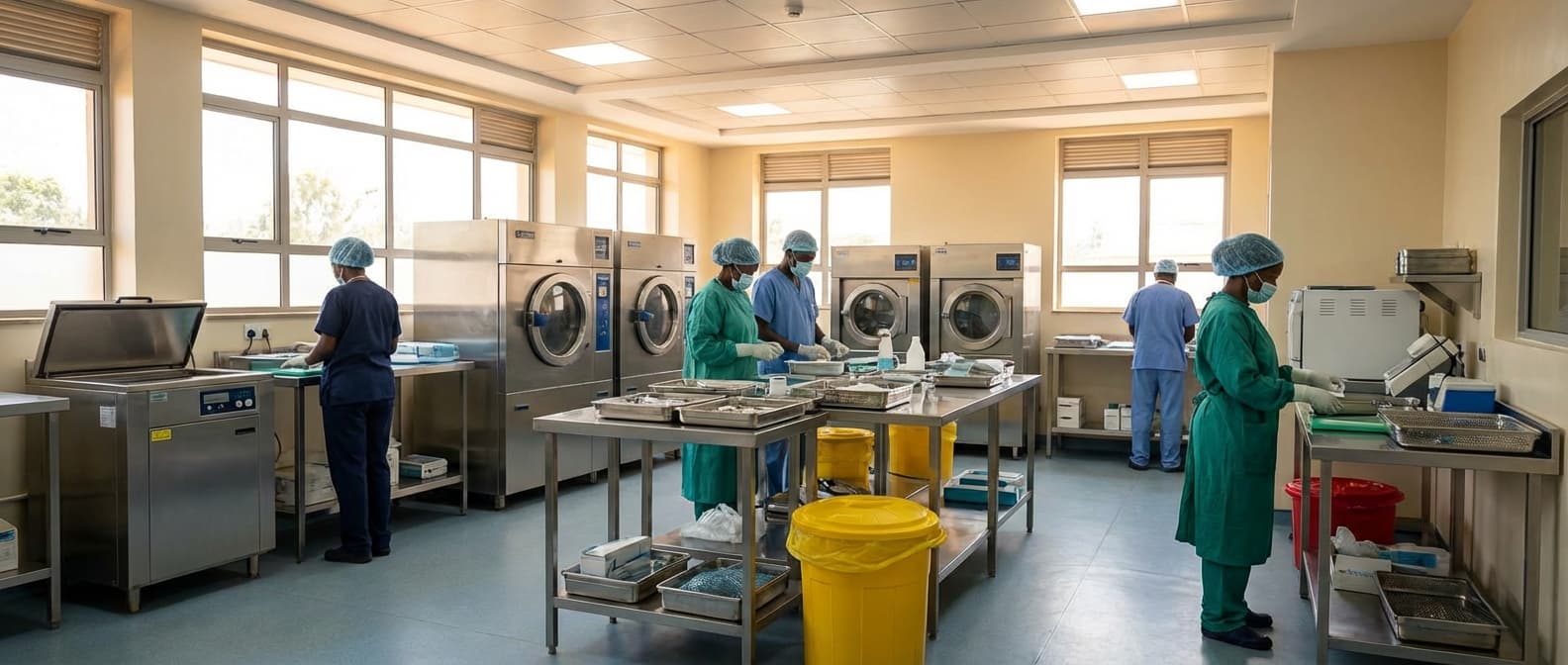
Autoclave Validation Support Service in Liberia
Engineering Excellence & Technical Support
Autoclave Validation Support Service High-standard technical execution following OEM protocols and local regulatory frameworks.
Expert Autoclave Sterilization Validation
Leveraging advanced techniques and industry-leading protocols to ensure your autoclaves consistently achieve the required sterilization parameters. Our comprehensive validation services in Liberia guarantee microbial inactivation and compliance with international standards for medical device reprocessing and laboratory sterility.
Regulatory Compliance & Certification Assurance
Navigate Liberia's evolving healthcare regulations with confidence. We provide meticulous documentation and validation reports essential for regulatory audits, quality assurance, and obtaining or maintaining certifications for your sterilization processes.
On-Site & Remote Technical Support
Receive prompt and efficient support for your autoclave validation needs across Liberia. Our experienced technicians offer both on-site interventions and remote troubleshooting, minimizing downtime and ensuring your sterilization equipment operates at peak performance.
What Is Autoclave Validation Support Service In Liberia?
Autoclave validation support services in Liberia refer to the comprehensive set of technical activities and expertise provided to ensure that steam sterilization (autoclaving) processes consistently and reliably achieve the required level of microbial inactivation. This involves a systematic approach to verify and document that the autoclave equipment and its operational parameters effectively eliminate viable microorganisms from medical devices, laboratory equipment, and other susceptible materials. The core objective is to guarantee the sterility assurance level (SAL) and maintain the integrity and safety of sterilized items, thereby preventing healthcare-associated infections (HAAs) and ensuring the accuracy of laboratory results.
| Who Needs Autoclave Validation Support Service? | Typical Use Cases | ||||||||||||
|---|---|---|---|---|---|---|---|---|---|---|---|---|---|
| Healthcare Facilities (Hospitals, Clinics, Dental Practices): For sterilization of surgical instruments, medical devices, and other reusable healthcare items to prevent cross-contamination and HAAs. | Sterilization of surgical instruments, anesthesia equipment, endoscopic devices, and general medical supplies. | Sterilization of dental instruments, handpieces, and other reusable dental materials. | Sterilization of laboratory glassware, media, and contaminated waste. | Sterilization of laboratory equipment and consumables. | Sterilization of materials in research and development settings. | Pharmaceutical Manufacturing: For sterilization of equipment, vials, stoppers, and sterile filtration components to ensure product integrity and patient safety. | Sterilization of fermentation vessels, transfer lines, and aseptic processing equipment. | Sterilization of packaging materials for sterile pharmaceutical products. | Biotechnology Laboratories: For sterilization of laboratory equipment, reagents, and cell culture supplies to maintain aseptic conditions. | Sterilization of bioreactors, filtration systems, and chromatography columns. | Veterinary Clinics and Animal Research Facilities: For sterilization of surgical instruments and equipment. | Cosmetic and Personal Care Industry: For sterilization of instruments and equipment used in sterile product manufacturing. | Any facility utilizing steam sterilization for critical items where regulatory compliance and patient/product safety are paramount. |
Key Components of Autoclave Validation Support Service
- Installation Qualification (IQ): Verification that the autoclave is installed correctly according to manufacturer specifications and relevant regulatory standards.
- Operational Qualification (OQ): Testing to confirm that the autoclave operates within its designed parameters under various conditions and loads.
- Performance Qualification (PQ): Studies to demonstrate that the autoclave consistently sterilizes a representative range of loads effectively and reproducibly over time.
- Validation Protocol Development: Creation of detailed, documented procedures outlining the validation methodology, parameters, acceptance criteria, and sampling plans.
- Installation and Calibration of Monitoring Devices: Setting up and calibrating critical monitoring instruments (e.g., temperature probes, pressure sensors, biological indicators, chemical indicators).
- Process Parameter Monitoring and Data Collection: Real-time or post-cycle measurement and recording of critical sterilization parameters such as temperature, pressure, time, and steam penetration.
- Biological Indicator (BI) Testing: Utilization of highly resistant bacterial spores to challenge the sterilization process and confirm lethality.
- Chemical Indicator (CI) Testing: Employing devices that change color to indicate exposure to the sterilization process, assessing the effectiveness of steam penetration.
- Dye Penetration Tests: Evaluating the effectiveness of steam penetration into lumens and complex devices.
- Validation Report Generation: Comprehensive documentation of all validation activities, results, deviations (if any), and conclusions, demonstrating compliance with regulatory requirements.
- Revalidation and Periodic Monitoring: Planning and execution of periodic revalidation studies and ongoing monitoring to ensure continued system efficacy.
- Troubleshooting and Optimization: Identification of process failures or deviations and recommendations for corrective actions and process improvements.
Who Needs Autoclave Validation Support Service In Liberia?
Autoclave validation support services are crucial for ensuring the safety, efficacy, and regulatory compliance of sterilization processes in Liberia's healthcare and laboratory sectors. These services are essential for any facility that relies on autoclaves for sterilizing medical instruments, laboratory equipment, or other critical materials. The primary goal is to guarantee that the sterilization cycle effectively eliminates all viable microorganisms, thus preventing infections and ensuring the integrity of research and diagnostic procedures. Without proper validation, there's a significant risk of reintroducing pathogens, leading to adverse patient outcomes, compromised research findings, and potential legal repercussions.
| Target Customer Type | Key Departments Requiring Support | Specific Needs Addressed |
|---|---|---|
| Hospitals and Clinics | Operating Rooms, Central Sterile Supply Department (CSSD), Dental Clinics, Emergency Departments | Validation of sterilization cycles for surgical instruments, dental tools, endoscopes, and other reusable medical devices to prevent hospital-acquired infections (HAIs). |
| Diagnostic and Medical Laboratories | Microbiology Labs, Pathology Labs, Biochemistry Labs, Molecular Biology Labs | Validation of sterilization for glassware, pipettes, media, and equipment to ensure accurate diagnostic results and prevent cross-contamination. |
| Research Institutions and Universities | Biology Departments, Chemistry Departments, Medical Schools, Research Laboratories | Validation of sterilization for diverse laboratory equipment and materials for experimental integrity and biosafety. |
| Pharmaceutical and Biotechnology Companies | Manufacturing Departments, Quality Control (QC) Labs, Research & Development (R&D) Labs | Validation of sterilization for production equipment, packaging materials, and lab consumables to meet stringent regulatory standards for product safety and efficacy. |
| Veterinary Clinics and Animal Health Facilities | Surgical Suites, Treatment Rooms | Validation of sterilization for veterinary surgical instruments and equipment. |
| Government and Public Health Agencies | Disease Surveillance Units, Public Health Laboratories, Emergency Response Teams | Ensuring sterilization capabilities are functional and validated for public health preparedness and response. |
Target Customers and Departments for Autoclave Validation Support Services in Liberia:
- {"description":"Facilities of all sizes, from large national hospitals to smaller community clinics, that perform surgical procedures, dental treatments, or any medical intervention requiring sterilized instruments.","customerType":"Hospitals and Clinics"}
- {"description":"Laboratories involved in medical testing, research, and development that sterilize glassware, reagents, and other equipment to maintain sample integrity and prevent contamination.","customerType":"Diagnostic and Medical Laboratories"}
- {"description":"Academic and scientific research facilities that utilize autoclaves for sterilizing laboratory equipment, media, and waste, ensuring the reproducibility and validity of their experiments.","customerType":"Research Institutions and Universities"}
- {"description":"Companies involved in drug manufacturing, vaccine production, or other biotechnological processes that require sterile environments and validated sterilization of equipment and materials.","customerType":"Pharmaceutical and Biotechnology Companies"}
- {"description":"Facilities that sterilize surgical instruments and equipment used in animal healthcare.","customerType":"Veterinary Clinics and Animal Health Facilities"}
- {"description":"Agencies responsible for public health initiatives, disease control, and outbreak management that may operate their own sterilization facilities or oversee the compliance of other institutions.","customerType":"Government and Public Health Agencies"}
Autoclave Validation Support Service Process In Liberia
This document outlines the Autoclave Validation Support Service process implemented in Liberia, detailing the workflow from initial client inquiry to the successful execution and completion of the validation service. This structured approach ensures that autoclaves in healthcare and laboratory settings meet stringent performance standards for effective sterilization, thereby safeguarding public health and ensuring research integrity.
| Phase | Key Activities | Responsible Party | Deliverables/Outcomes | Estimated Timeline |
|---|---|---|---|---|
| 1: Inquiry and Initial Assessment | Client contacts service provider with a request for autoclave validation. Provider gathers basic information about the autoclave (type, size, intended use, location) and client's specific needs and regulatory requirements. Initial site assessment may be conducted or requested. | Client, Service Provider (Sales/Inquiry Team) | Understanding of client needs, preliminary scope definition, initial qualification of service suitability. | 1-3 Business Days |
| 2: Proposal and Agreement | Service provider develops a detailed proposal outlining the scope of work, validation protocols, methodologies, equipment to be used, validation parameters, deliverables, pricing, and terms. Client reviews and negotiates the proposal. Upon agreement, a formal contract or service agreement is signed. | Service Provider (Technical Team, Sales), Client | Formal proposal, signed service agreement/contract. | 3-7 Business Days |
| 3: Planning and Preparation | Service provider schedules the validation activities with the client, ensuring minimal disruption to operations. Site access, safety protocols, and necessary clearances are confirmed. Calibration status of validation equipment is verified. Client prepares the autoclave as per provider's instructions (e.g., cleaning, availability of consumables). | Service Provider (Project Manager, Validation Engineers), Client | Scheduled date and time for validation, confirmed site access and safety, calibrated validation equipment, prepared autoclave. | 1-2 Weeks (depending on scheduling and client readiness) |
| 4: On-Site Execution of Validation | Validation engineers arrive on-site and perform the pre-defined validation tests. This typically includes Installation Qualification (IQ), Operational Qualification (OQ), and Performance Qualification (PQ). Tests involve monitoring temperature, pressure, time, and steam penetration using calibrated data loggers and biological/chemical indicators. | Service Provider (Validation Engineers) | Raw validation data, completed test logs, immediate feedback on test results. | 1-3 Days (per autoclave, depending on complexity) |
| 5: Data Analysis and Reporting | Validation engineers analyze the collected raw data. A comprehensive validation report is generated, detailing the methodology, results, deviations (if any), and conclusions. The report will confirm whether the autoclave meets the specified performance criteria for sterilization. The report is reviewed by the service provider's technical lead. | Service Provider (Validation Engineers, Technical Lead) | Comprehensive Autoclave Validation Report, including IQ, OQ, PQ documentation. | 3-7 Business Days post-execution |
| 6: Post-Validation Support and Follow-up | The validation report is submitted to the client. A debriefing session may be held to discuss the results and any recommendations. If the autoclave fails to meet validation criteria, recommendations for corrective actions or re-validation are provided. Service provider maintains records and offers ongoing support for future validation needs. | Service Provider (Project Manager, Technical Support), Client | Final validated report delivery, recommendations for improvements, potential for re-validation scheduling, client satisfaction. | Ongoing (as needed) |
Autoclave Validation Support Service Process in Liberia
- Phase 1: Inquiry and Initial Assessment
- Phase 2: Proposal and Agreement
- Phase 3: Planning and Preparation
- Phase 4: On-Site Execution of Validation
- Phase 5: Data Analysis and Reporting
- Phase 6: Post-Validation Support and Follow-up
Autoclave Validation Support Service Cost In Liberia
Autoclave validation is a critical process for ensuring the sterility of medical and laboratory equipment in Liberia. The cost of this service can vary significantly based on several factors. Understanding these factors is essential for budgeting and selecting appropriate service providers. The pricing in Liberia is typically quoted in United States Dollars (USD) but will be converted to Liberian Dollars (LRD) at the prevailing exchange rate at the time of billing. This report outlines the key pricing factors and provides estimated cost ranges for autoclave validation support services in Liberia.
Key Pricing Factors:
- Type of Autoclave: Different autoclave sizes and types (e.g., gravity displacement, pre-vacuum, high-vacuum) require varying levels of expertise, specialized equipment, and time for validation. Larger or more complex systems generally incur higher costs.
- Number of Validation Cycles: Standard validation typically involves multiple cycles (e.g., three consecutive successful cycles) to demonstrate consistent performance. The more cycles required or performed, the higher the cost.
- Scope of Validation: Full validation encompasses installation qualification (IQ), operational qualification (OQ), and performance qualification (PQ). The inclusion of all three phases will increase the overall cost. Some clients may only require OQ/PQ for existing equipment.
- Geographic Location within Liberia: Travel and accommodation expenses for the validation team can add to the cost, especially for remote locations or areas with challenging infrastructure. Major cities like Monrovia may have more readily available services, potentially impacting price competitiveness.
- Frequency of Validation: While initial validation is a one-time cost, re-validation (typically annual or biannual) might have a slightly different pricing structure. Service contracts for regular validation can sometimes offer discounted rates.
- Service Provider Expertise and Reputation: Highly experienced and reputable validation companies with specialized knowledge and certified technicians may command higher fees due to their proven track record and the assurance of quality they provide.
- Additional Services: Some providers may offer additional services alongside validation, such as equipment calibration, maintenance, or training. These will be itemized and added to the total cost.
- Urgency of Service: Expedited validation services, requiring immediate attention and potentially overtime for the technicians, will likely incur premium charges.
- Consumables and Materials: The cost of biological indicators, chemical indicators, data loggers, and other validation consumables will be factored into the overall price.
| Factor | Impact on Cost | Estimated Range (USD) |
|---|---|---|
| Type of Autoclave | Higher complexity/size = higher cost | $500 - $4,000+ |
| Number of Validation Cycles | More cycles = higher cost | Included in overall service fee |
| Scope of Validation | Full validation (IQ/OQ/PQ) = higher cost | $500 - $4,000+ |
| Geographic Location | Remote areas may incur travel costs | $100 - $500+ (travel/accommodation) |
| Service Provider | Expertise and reputation can influence price | Variable, generally higher for reputable providers |
| Additional Services | Calibration, maintenance, training add cost | Itemized, additional cost per service |
Estimated Cost Ranges for Autoclave Validation Support Services in Liberia (USD)
- Basic Validation (e.g., small to medium-sized autoclaves, OQ/PQ only): $500 - $1,500 USD
- Full Validation (IQ, OQ, PQ for small to medium-sized autoclaves): $1,000 - $2,500 USD
- Full Validation (IQ, OQ, PQ for large or complex autoclaves): $2,000 - $4,000+ USD
- Re-validation (annual/biannual, OQ/PQ focus): $400 - $1,200 USD
Affordable Autoclave Validation Support Service Options
Securing reliable and compliant autoclave validation is crucial for many industries, from healthcare and pharmaceuticals to food processing. However, the cost of expert validation services can be a significant concern, especially for smaller organizations or those with budget constraints. This document outlines affordable autoclave validation support service options, focusing on value bundles and cost-saving strategies to make essential validation accessible.
| Service Offering | Description | Typical Value Proposition | Cost-Saving Potential | |
|---|---|---|---|---|
| Basic Validation Package (IQ/OQ Only) | Focuses on the initial setup and operational parameters of the autoclave. Suitable for new installations or after significant repairs. | Ensures proper installation and fundamental operational integrity. Lower initial investment. | Ideal for businesses with less stringent PQ requirements or those performing periodic PQ independently. Reduced scope of service. | Suitable for: Facilities with well-established sterilization protocols and minimal product variation. |
| Standard Validation Package (IQ/OQ/PQ - Basic) | Includes Installation Qualification, Operational Qualification, and a foundational Performance Qualification. Addresses common sterilization cycles. | Comprehensive initial validation to meet most regulatory requirements. Provides a baseline for performance. | Offers a good balance of cost and coverage. Bundling services often provides a discount compared to individual components. | Suitable for: Most small to medium-sized facilities, including clinics, dental offices, and smaller labs. |
| Comprehensive Validation Package (IQ/OQ/PQ - Enhanced) | Includes full IQ, OQ, and PQ, often with multiple challenging cycles, challenging load configurations, and extended monitoring. Designed for high-risk industries or complex validation needs. | Highest assurance of sterilization effectiveness across a wide range of conditions. Meets the most rigorous regulatory expectations. | While a higher upfront cost, it can prevent costly re-validation, product failures, and regulatory issues in the long run. May include ongoing support or discounted future services. | Suitable for: Pharmaceutical manufacturers, large hospitals, research institutions with critical applications. |
| Annual Re-qualification/Maintenance Support | Scheduled periodic re-validation (often PQ) to ensure the autoclave continues to perform effectively after a year of operation or after maintenance. | Maintains ongoing compliance and operational reliability. Detects drift in performance before critical failures occur. | Bundled annual contracts often offer preferential rates. Proactive maintenance reduces the risk of costly emergency validation or equipment failure. | Suitable for: All facilities with autoclaves requiring regular compliance checks. |
| Remote Support & Consulting | Offered as an add-on or standalone service for guidance, troubleshooting, protocol development, or review of in-house validation efforts. | Provides expert advice without the full cost of an on-site technician for every interaction. Empowers internal teams. | Significantly cheaper than full on-site services. Can help avoid costly mistakes and optimize validation strategies. | Suitable for: Organizations with in-house technical staff who need expert oversight or specific guidance. |
Understanding Autoclave Validation Support Services
- What is Autoclave Validation? Autoclave validation is a documented process to provide a high degree of assurance that a specific autoclave will consistently perform within predefined specifications and will effectively sterilize materials according to established standards (e.g., FDA, ISO).
- Why is it Important? Essential for regulatory compliance, patient safety, product integrity, and operational efficiency. Failure to validate can lead to costly recalls, regulatory fines, and reputational damage.
- Typical Validation Components: Installation Qualification (IQ), Operational Qualification (OQ), and Performance Qualification (PQ).
- Who Needs It? Hospitals, clinics, dental practices, veterinary clinics, pharmaceutical manufacturers, biotechnology companies, food and beverage producers, research laboratories, and any facility using autoclaves for sterilization.
Verified Providers In Liberia
Navigating healthcare in Liberia requires trust and confidence in the providers you choose. 'Verified Providers in Liberia' aims to highlight the paramount importance of credentialing and how organizations like Franance Health stand out as beacons of quality and reliability. This section will delve into what makes a provider 'verified,' the rigorous credentialing processes involved, and the specific advantages of partnering with Franance Health, showcasing why they represent the best choice for healthcare services in Liberia.
| Feature | Franance Health's Approach | Patient Benefits |
|---|---|---|
| Credential Verification | Rigorous and ongoing verification of all medical licenses, certifications, and professional backgrounds. | Guaranteed access to qualified and competent healthcare professionals. |
| Quality Assurance | Implementation of strict internal quality control measures and adherence to international healthcare standards. | Confidence in receiving safe, effective, and high-quality medical care. |
| Transparency | Clear communication regarding provider qualifications and service offerings. | Informed decision-making and peace of mind for patients. |
| Ethical Practice | Mandatory adherence to a comprehensive code of ethics and professional conduct. | Trustworthy and patient-centered medical services. |
| Continuous Professional Development | Encouraging and supporting ongoing training and skill enhancement for all staff. | Access to healthcare providers who are up-to-date with the latest medical advancements. |
Key Aspects of Verified Providers and Franance Health's Strengths
- What constitutes a 'Verified Provider': This signifies that a healthcare professional or facility has undergone a thorough vetting process, confirming their qualifications, licenses, and adherence to established healthcare standards. This verification is crucial for patient safety and ensuring competent medical care.
- The Importance of Credentialing: Credentialing involves evaluating a provider's education, training, experience, and professional background. It's a systematic approach to ensure that healthcare professionals are qualified and competent to deliver the services they offer.
- Franance Health's Commitment to Excellence: Franance Health prioritizes stringent credentialing for all its healthcare professionals. This commitment ensures that every individual associated with Franance Health meets the highest standards of medical practice and ethical conduct.
- Benefits of Choosing Verified Providers: Patients benefit from increased trust, assurance of quality care, reduced risk of medical errors, and access to genuinely qualified professionals. This transparency builds confidence in the healthcare system.
- Franance Health: A Benchmark for Quality: By consistently upholding rigorous verification and credentialing processes, Franance Health sets a benchmark for healthcare delivery in Liberia. Their dedication to these standards makes them a trusted and preferred choice for individuals and organizations seeking reliable medical services.
Scope Of Work For Autoclave Validation Support Service
This Scope of Work (SOW) outlines the services to be provided by the Autoclave Validation Support Service Provider (hereinafter referred to as "the Provider") to the Client. The objective of this service is to ensure the autoclave systems operate reliably, reproducibly, and effectively meet defined performance criteria and regulatory requirements.
| Aspect | Standard Specification / Requirement | Verification Method |
|---|---|---|
| Temperature Accuracy and Uniformity | ± 1.0°C (or as per specific cycle requirements). Uniformity within ± 2.0°C across the chamber. | Calibrated temperature probes placed at critical locations within the chamber during OQ and PQ runs. |
| Pressure Accuracy | ± 0.1 bar (or as per specific cycle requirements). | Calibrated pressure gauges and sensors monitored during OQ and PQ runs. |
| Cycle Time | Consistent adherence to pre-defined cycle times (e.g., sterilization hold time, total cycle time) within ± 5% tolerance. | Chart recorders and/or data logging systems used to record and verify cycle times during OQ and PQ runs. |
| Sterilization Efficacy (e.g., Sterility Assurance Level - SAL) | Achieves the required SAL (e.g., 10⁻⁶ for bioburden reduction) as determined by biological indicators (BIs) and/or chemical indicators (CIs). | Use of appropriately selected and incubated BIs and documented performance of CIs during PQ runs. |
| Drying Efficiency | Achieves defined drying levels for specific load types (e.g., visual inspection, weight loss measurement). | Visual inspection and/or gravimetric analysis of loads after the drying phase during PQ runs. |
| Re-contamination Prevention | Ensures proper sealing and operational integrity to prevent re-contamination after sterilization. | Visual inspection of seals, functional checks of door interlocks, and absence of external contamination during OQ and PQ runs. |
| Material Compatibility | Autoclave materials must be compatible with the sterilization medium (e.g., steam) and not introduce contaminants to the load. | Review of autoclave material specifications and no visible signs of corrosion or degradation during inspections. |
| Safety Features | All safety interlocks, pressure relief valves, and emergency stop functions operate correctly. | Functional testing of all safety mechanisms during OQ. |
| Data Integrity and Traceability | All validation data is accurately recorded, stored, and traceable. | Review of data logs, reports, and audit trails for completeness and accuracy. |
Technical Deliverables
- Autoclave Validation Master Plan (VMP) - a comprehensive document detailing the overall validation strategy, including scope, responsibilities, schedule, and deliverables for all validation activities.
- Installation Qualification (IQ) Protocol and Report - confirming the autoclave is installed correctly according to manufacturer specifications and regulatory requirements.
- Operational Qualification (OQ) Protocol and Report - verifying the autoclave operates within the defined operational parameters and limits.
- Performance Qualification (PQ) Protocol and Report - demonstrating the autoclave consistently delivers the required performance for the intended sterilization cycles.
- Requalification Protocol and Report - executed at scheduled intervals or after significant changes/repairs to confirm continued validation status.
- Validation Summary Report - a consolidated document summarizing all validation activities, results, and conclusions.
- Calibration Certificates for all critical instrumentation used during validation.
- Risk Assessment Report related to autoclave operation and validation.
- Standard Operating Procedures (SOPs) for Autoclave Operation, Maintenance, and Calibration (if applicable or to be reviewed/updated).
- Training Materials and Records for Client personnel on autoclave operation and basic troubleshooting.
Service Level Agreement For Autoclave Validation Support Service
This Service Level Agreement (SLA) outlines the response times and uptime guarantees for the Autoclave Validation Support Service provided by [Your Company Name]. This SLA is intended to ensure reliable and efficient support for our clients' critical sterilization processes.
| Issue Priority | Response Time Target (during Business Hours) | Resolution Time Target (during Business Hours) | Extended Support Availability (outside Business Hours) | Extended Support Response Time Target |
|---|---|---|---|---|
| Critical Issue | 1 Hour | 4 Business Hours (Initial Diagnosis & Action Plan) | 24/7 | 2 Hours |
| High Priority Issue | 2 Business Hours | 8 Business Hours (Ongoing effort) | Available on demand (with pre-arranged agreement) | 4 Hours |
| Medium Priority Issue | 4 Business Hours | 2 Business Days | Not Guaranteed | N/A |
| Low Priority Issue | 1 Business Day | 3 Business Days | Not Guaranteed | N/A |
Definitions
- Autoclave Validation Support Service: Refers to the remote and on-site technical support, troubleshooting, and consultation services provided for autoclave validation procedures and equipment.
- Critical Issue: An event that renders the autoclave non-operational, significantly impacts patient safety or regulatory compliance, or causes a complete loss of validated sterilization cycles.
- High Priority Issue: An event that degrades the performance of the autoclave, increases the risk of process failure, or necessitates immediate attention to prevent a potential Critical Issue.
- Medium Priority Issue: An event that causes a minor malfunction, requires investigation, or needs scheduled attention but does not immediately impact the autoclave's operational status.
- Low Priority Issue: A general inquiry, request for information, or non-urgent request for assistance.
- Business Hours: [Specify your business hours, e.g., Monday to Friday, 9:00 AM to 5:00 PM Eastern Time, excluding public holidays].
- Uptime: The percentage of time the Autoclave Validation Support Service is available and accessible to the client.
- Downtime: The percentage of time the Autoclave Validation Support Service is unavailable or inaccessible to the client.
Frequently Asked Questions

Ready when you are
Let's scope your Autoclave Validation Support Service in Liberia project in Liberia.

Scaling healthcare logistics and technical systems across the entire continent.