
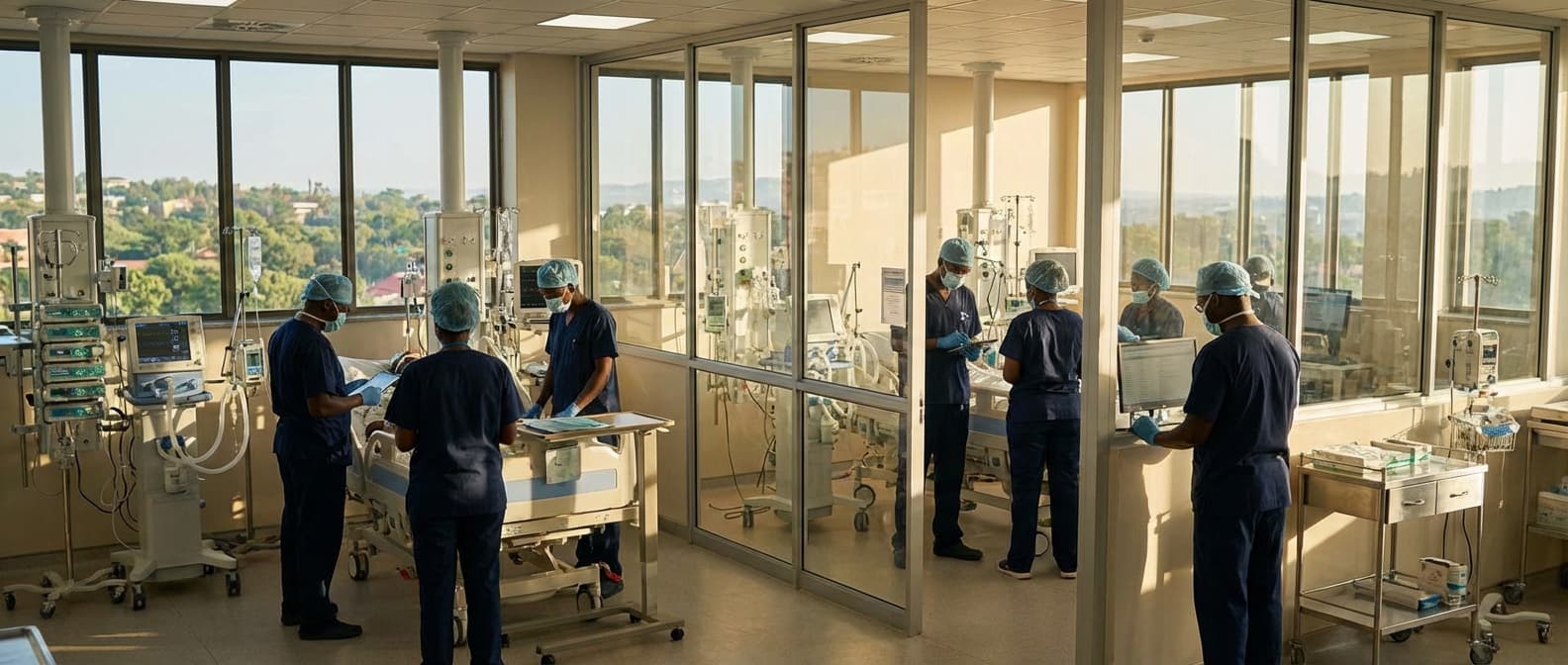
Ventilator Fleet Management & PM in Liberia
Engineering Excellence & Technical Support
Preventive maintenance and fleet management for ICU ventilators High-standard technical execution following OEM protocols and local regulatory frameworks.
Centralized Fleet Monitoring & Real-time Status
Implemented a digital platform for real-time tracking of the entire ventilator fleet across Liberia, enabling immediate identification of equipment status, location, and operational readiness. This proactive approach minimizes downtime and ensures critical equipment is available when and where it's needed most.
Predictive Maintenance & Optimized PM Scheduling
Leveraging historical data and manufacturer recommendations, we've established a predictive maintenance framework. This allows for proactive servicing based on usage and component wear, moving beyond reactive repairs and significantly extending equipment lifespan while ensuring consistent performance.
Streamlined Technician Dispatch & Skills Matching
Integrated a dispatch system that intelligently assigns trained biomedical technicians to ventilator maintenance tasks based on their certifications, location, and the specific equipment's needs. This optimizes resource allocation, reduces response times, and ensures repairs are performed by the most qualified personnel.
What Is Ventilator Fleet Management & Pm In Liberia?
Ventilator Fleet Management and Preventative Maintenance (PM) in Liberia refers to the comprehensive operational and upkeep processes for mechanical ventilation devices within healthcare facilities. This service encompasses the procurement, deployment, calibration, routine servicing, repair, and eventual decommissioning of ventilators to ensure their optimal functionality, availability, and safety for patient care. It is a critical component of critical care infrastructure, particularly in resource-constrained environments where equipment reliability is paramount. The objective is to maximize the lifespan and efficacy of these life-sustaining medical devices, thereby supporting robust respiratory support services.
| Stakeholder/Entity | Need for Ventilator Fleet Management & PM | Typical Use Cases |
|---|---|---|
| Hospitals (Public and Private) | Ensure availability of functional ventilators for critical care patients (e.g., ICUs, EDs, Operating Rooms). Reduce capital expenditure through extended equipment lifespan. Maintain patient safety and quality of care. Meet accreditation and regulatory requirements. | Management of ventilators during routine operations, patient transfers, and emergency response. Implementation of PM schedules to prevent in-service failures. Troubleshooting and repair of units during patient use. Forecasting future needs based on patient demographics and disease prevalence. |
| Ministry of Health (Liberia) | Ensure equitable distribution and accessibility of critical care equipment across the nation. Monitor the condition and utilization of national ventilator assets. Inform procurement strategies and budget allocations. Establish national standards for medical equipment maintenance. | Developing national guidelines for ventilator deployment and maintenance protocols. Conducting national audits of healthcare facility equipment. Coordinating large-scale procurement and donation management. Facilitating training programs for biomedical technicians. |
| Non-Governmental Organizations (NGOs) & International Aid Organizations | Support the provision and maintenance of essential medical equipment in healthcare facilities they partner with. Ensure sustainability of donated equipment. Uphold the quality and safety standards of their supported programs. | Providing technical expertise and resources for PM and repair services. Training local biomedical engineering staff. Establishing and managing spare parts inventory for supported facilities. Implementing fleet management systems for their deployed assets. |
| Biomedical Engineering Departments/Technicians | The core service providers responsible for the technical execution of fleet management and PM. Ensuring equipment reliability and safety through skilled maintenance. | Performing scheduled PM checks and calibrations. Diagnosing and repairing equipment malfunctions. Conducting performance testing. Documenting all maintenance activities. Recommending equipment repairs or replacements. |
| Clinical Healthcare Providers (Physicians, Nurses) | Reliance on functional ventilators for patient treatment. Need for reliable equipment to deliver effective respiratory support. Understanding of basic operational procedures and ability to report issues. | Daily operation of ventilators on patients. Reporting equipment malfunctions or anomalies to biomedical engineering. Participating in basic user training. Ensuring proper setup and connection of the ventilator to the patient. |
Key Components of Ventilator Fleet Management & PM
- Asset Inventory and Tracking: Maintaining a detailed database of all ventilators, including serial numbers, acquisition dates, location, and maintenance history.
- Deployment and Allocation: Strategizing and implementing the distribution of ventilators to areas of greatest need and clinical demand.
- Calibration and Performance Verification: Regularly ensuring ventilators meet manufacturer specifications and international standards for accuracy and safety.
- Preventative Maintenance (PM): Conducting scheduled inspections, cleaning, lubrication, and replacement of worn parts to prevent failures.
- Corrective Maintenance and Repair: Promptly diagnosing and resolving malfunctions or breakdowns to minimize downtime.
- User Training and Competency Assessment: Ensuring clinical staff are proficient in the operation, basic troubleshooting, and maintenance of specific ventilator models.
- Consumables Management: Stockpiling and managing essential disposable components (e.g., filters, circuits, humidifiers).
- Decommissioning and Replacement Strategy: Planning for the end-of-life of ventilators and initiating the procurement of replacements.
- Regulatory Compliance and Documentation: Adhering to national health regulations and maintaining thorough service records.
- Data Analytics and Reporting: Utilizing fleet data to identify trends, predict maintenance needs, and optimize resource allocation.
Who Needs Ventilator Fleet Management & Pm In Liberia?
In Liberia, robust ventilator fleet management and preventative maintenance (PM) are crucial for ensuring the readiness and reliability of critical respiratory support equipment, especially in the face of public health emergencies and the ongoing need for quality healthcare. This infrastructure is vital for maintaining patient safety, optimizing resource allocation, and minimizing costly equipment downtime. The target customers and departments for these services span both public and private healthcare sectors, as well as organizations involved in disaster preparedness and response.
| Customer/Department | Key Responsibilities & Needs | Impact of Effective Management |
|---|---|---|
| Hospitals (Public & Private) | Operating and maintaining a diverse fleet of ventilators for various patient needs (ICU, ER, transport). Ensuring equipment is functional, calibrated, and readily available for immediate use. Managing inventory, procurement, and disposal of aging equipment. | Reduced patient mortality and morbidity, improved patient outcomes, enhanced hospital operational efficiency, significant cost savings through extended equipment lifespan and reduced emergency repairs. |
| Ministry of Health | Overseeing national healthcare infrastructure, setting standards for medical equipment, coordinating responses to health crises, managing national stockpiles of critical medical devices. Ensuring equitable distribution of resources across the country. | Nationwide improved healthcare system resilience, effective public health emergency preparedness, standardized quality of care, optimized national resource allocation, data-driven policy making. |
| Emergency Medical Services (EMS) | Providing pre-hospital care and transport, requiring reliable ventilators for critically ill or injured patients during transit. Ensuring mobile units are equipped with functional and well-maintained respiratory support. | Improved survival rates for patients requiring immediate respiratory support en route to facilities, enhanced patient safety during transport, increased reliability of critical equipment in mobile environments. |
| Non-Governmental Organizations (NGOs) with Healthcare Focus | Operating clinics and hospitals in underserved areas, often relying on donated or procured medical equipment. Managing fleets with limited in-house technical expertise. Implementing PM programs to ensure sustainability of their services. | Sustained and reliable delivery of essential healthcare services in remote and resource-limited settings, enhanced impact of humanitarian aid, improved patient access to critical respiratory care. |
| Disaster Management Agencies | Planning and responding to natural disasters and public health emergencies, which often lead to surges in demand for ventilators. Ensuring surge capacity and readiness of critical equipment stockpiles. | Effective and rapid response to health crises, minimized disruption to healthcare services during emergencies, preservation of life through timely access to respiratory support. |
| Tertiary Care Facilities | Housing specialized units with high-acuity patients requiring advanced ventilator support. Managing complex fleets and ensuring access to specialized PM services and parts. | Optimal patient care for complex respiratory conditions, reduced risk of equipment failure in critical care settings, advanced capabilities for treating severe illnesses. |
Target Customers & Departments for Ventilator Fleet Management & PM in Liberia
- Hospitals (Public & Private)
- Ministry of Health
- Emergency Medical Services (EMS)
- Non-Governmental Organizations (NGOs) with Healthcare Focus
- Disaster Management Agencies
- Military Medical Units (if applicable)
- Tertiary Care Facilities
- District Hospitals
- Rural Health Clinics (with advanced capabilities)
Ventilator Fleet Management & Pm Process In Liberia
Effective ventilator fleet management and preventative maintenance (PM) are critical for ensuring consistent patient care in Liberia, especially given potential resource constraints. This process outlines the workflow from an initial inquiry about a ventilator's status or need, through the execution of maintenance or deployment activities.
| Stage | Description | Responsible Party (Typical) | Key Inputs | Key Outputs | Potential Challenges in Liberia |
|---|---|---|---|---|---|
| Inquiry & Request Initiation | Initial contact is made regarding a specific ventilator's status, a need for a ventilator, or a report of a malfunction. This could be from a clinician, hospital administrator, or inventory manager. | Clinician, Nurse Manager, Hospital Administrator, Biomedical Technician | Clinical need, observed malfunction, inventory check, planned maintenance schedule reminder | Formal or informal request for assessment/action | Communication barriers, lack of immediate contact points, inconsistent reporting mechanisms |
| Assessment & Triage | The request is received and evaluated. The urgency and nature of the issue are determined. This may involve a preliminary remote assessment or immediate dispatch of a technician. | Biomedical Technician, Clinical Engineer, Senior Nurse | Initiated request, ventilator model, reported issue, location | Diagnosis (preliminary), prioritization level (urgent, routine), recommended action (PM, CM, deployment) | Limited availability of trained personnel for assessment, geographical distance to facilities, lack of diagnostic tools |
| Work Order Generation | A formal work order is created based on the assessment. This document details the task, required parts, estimated time, and technician assigned. | Biomedical Technician, Maintenance Supervisor | Assessment findings, recommended action, ventilator ID, location, required parts (if known) | Generated work order with unique ID | Paper-based systems leading to delays, lack of standardized templates, difficulty tracking work orders |
| Resource Allocation & Scheduling | Technicians are assigned to work orders, and tasks are scheduled based on priority, technician availability, and location. Parts are identified and procured if necessary. | Maintenance Supervisor, Logistics Officer | Work order, technician availability, location of ventilator, required parts inventory, urgency level | Scheduled maintenance/repair, allocated technician, identified/ordered parts | Limited number of trained technicians, unreliable transportation, spare parts scarcity/import delays, competing demands for technicians' time |
| Preventative Maintenance (PM) Execution | Scheduled, routine checks and servicing performed on ventilators to prevent breakdowns. This includes cleaning, calibration, and replacement of wear-and-tear parts. | Biomedical Technician | Scheduled PM work order, PM checklist, required tools and parts | Completed PM checklist, functional ventilator, updated maintenance log | Lack of standardized PM protocols, insufficient tools and calibration equipment, difficulty accessing facilities for scheduled PM |
| Corrective Maintenance (CM) Execution | Repair work undertaken when a ventilator malfunctions or breaks down. This involves diagnosing the fault and replacing or repairing faulty components. | Biomedical Technician | CM work order, diagnostic tools, spare parts, technical manuals | Repaired ventilator, functional status confirmed, updated maintenance log | Difficulty diagnosing complex issues, unavailability of critical spare parts, limited technical expertise for certain brands/models |
| Testing & Quality Assurance | After PM or CM, the ventilator is tested to ensure it is functioning according to specifications and is safe for patient use. | Biomedical Technician, Clinical End-User (e.g., Nurse) | Repaired/serviced ventilator, test equipment, patient safety checklists | Verified functional ventilator, sign-off on work order, patient readiness confirmation | Lack of proper testing equipment, subjective assessment of functionality, pressure to return equipment quickly |
| Documentation & Reporting | All activities, including PM, CM, parts used, and testing results, are meticulously documented. Reports are generated for oversight and planning. | Biomedical Technician, Maintenance Supervisor | Completed work orders, parts requisition forms, test results, technician notes | Updated maintenance records, incident reports, PM compliance reports, inventory adjustments | Inconsistent or missing documentation, manual record-keeping errors, difficulty generating comprehensive reports |
| Fleet Status Update & Inventory Management | The central inventory system is updated with the current status of each ventilator (in use, under maintenance, awaiting repair, available for deployment). | Biomedical Technician, Inventory Manager, Maintenance Supervisor | Completed work orders, status changes, new acquisitions, decommissions | Accurate fleet inventory, real-time status updates, optimized deployment readiness | Lack of a centralized inventory system, manual tracking leading to inaccuracies, difficulty in real-time updates |
| Closure & Follow-up | The work order is formally closed upon successful completion and documentation. A follow-up may be conducted to ensure long-term functionality and user satisfaction. | Maintenance Supervisor, Hospital Administrator | Closed work order, documented completion, user feedback | Resolved issue, feedback for process improvement, finalized record | Lack of formal closure procedures, no mechanism for feedback collection, insufficient follow-up on critical repairs |
Key Stages in Ventilator Fleet Management & PM Process
- Inquiry & Request Initiation
- Assessment & Triage
- Work Order Generation
- Resource Allocation & Scheduling
- Preventative Maintenance (PM) Execution
- Corrective Maintenance (CM) Execution
- Testing & Quality Assurance
- Documentation & Reporting
- Fleet Status Update & Inventory Management
- Closure & Follow-up
Ventilator Fleet Management & Pm Cost In Liberia
Managing a ventilator fleet in Liberia involves a complex interplay of factors influencing both operational costs and preventative maintenance (PM) expenses. The pricing is highly sensitive to the specific ventilator model, its age and condition, the availability of spare parts, the expertise of local technicians, and the overall demand for these critical medical devices. Given the unique economic landscape of Liberia, local currency (Liberian Dollar, LRD) pricing is subject to fluctuations and often involves informal negotiations, making precise figures challenging to establish. However, we can outline the key pricing factors and provide estimated ranges for both fleet management and PM costs.
| Cost Category | Key Influencing Factors | Estimated Monthly Range (LRD) | Estimated Annual Range (LRD) |
|---|---|---|---|
| Ventilator Fleet Management (Overall Operations) | Number of ventilators, staff salaries, utilities (power, AC), training, administrative costs, insurance (if applicable). | 200,000 - 800,000 LRD | 2,400,000 - 9,600,000 LRD |
| Preventative Maintenance (PM) - Per Ventilator | Ventilator model, age, complexity, manufacturer recommendations, technician hourly rate, cost of basic consumables (filters, batteries). | 20,000 - 50,000 LRD | 240,000 - 600,000 LRD |
| Major Component Replacement/Repair (Per Instance) | Specific component (e.g., compressor, sensor, circuit board), availability, shipping costs, technician expertise, urgency. | 100,000 - 1,000,000+ LRD (highly variable) | Variable, depends on frequency and nature of repairs. |
| Annual PM Contract (for a fleet of 10-20 ventilators) | Negotiated SLA, number of site visits, scope of work, included spare parts. | N/A (typically quoted as an annual lump sum) | 5,000,000 - 15,000,000+ LRD |
Key Pricing Factors for Ventilator Fleet Management & PM in Liberia
- {"title":"Ventilator Acquisition & Depreciation:","description":"The initial cost of ventilators, their age, and the rate of depreciation significantly impact overall fleet value and potential replacement needs."}
- {"title":"Spare Parts Availability & Cost:","description":"The accessibility and cost of original or compatible spare parts are critical. Imported parts often incur higher shipping, customs, and handling fees."}
- Technician Training & Expertise:
- Service Level Agreements (SLAs) with Manufacturers/Suppliers:
- Geographical Location & Accessibility:
- Frequency and Scope of Preventative Maintenance:
- Emergency Repair Needs & Downtime:
- Logistics & Transportation:
- Import Duties & Taxes:
- Exchange Rate Fluctuations (for imported goods/services):
- Administrative Overhead & Management Staff:
Affordable Ventilator Fleet Management & Pm Options
Effective ventilator fleet management is crucial for healthcare facilities to ensure patient safety, operational efficiency, and financial sustainability. This involves proactive maintenance, timely repairs, and strategic procurement. Affordable options for ventilator fleet management and preventative maintenance (PM) can significantly reduce capital expenditure and ongoing operational costs. Value bundles offer a consolidated approach to these services, providing predictable costs and enhanced support. Cost-saving strategies focus on maximizing equipment lifespan, optimizing resource allocation, and leveraging technology.
| Value Bundle Components | Description | Cost-Saving Strategy |
|---|---|---|
| Comprehensive PM & Repair Contract | Includes scheduled preventative maintenance, unscheduled repairs, parts, and labor. Often offered with guaranteed response times. | Predictable Operating Expenses: Shifts from variable repair costs to a fixed annual fee. Reduced Downtime: Proactive PM minimizes emergency repairs. Extended Equipment Lifespan: Regular maintenance prevents premature failure. |
| Lease with Integrated Maintenance | Leasing new ventilators that include full maintenance and PM services as part of the lease agreement. | Lower Upfront Capital Investment: Avoids large purchase costs. Bundled Service Costs: Maintenance is included, simplifying budgeting. Access to Latest Technology: Regular upgrades through leasing cycles. |
| Managed Services for Biomedical Departments | Outsourcing some or all aspects of biomedical equipment management, including ventilator PM and repair. | Specialized Expertise: Access to highly trained technicians and advanced diagnostic tools. Economies of Scale: Service providers can achieve cost efficiencies through a larger client base. Focus on Core Clinical Operations: Frees up internal resources. |
| Extended Warranty Packages | Purchasing extended warranties beyond the manufacturer's initial warranty period to cover repairs and PM. | Long-Term Cost Certainty: Protects against unexpected repair expenses. Negotiated Rates: Often more cost-effective than ad-hoc repair contracts. |
| Third-Party Service Provider Agreements | Partnering with specialized third-party providers for PM and repair services, often at competitive rates compared to OEM. | Competitive Pricing: Multiple providers offer flexibility and negotiation power. Flexible Service Options: Tailored service plans to meet specific needs. |
Key Components of Affordable Ventilator Fleet Management & PM
- Preventative Maintenance (PM) Programs: Regular, scheduled maintenance to identify and address potential issues before they lead to breakdowns.
- Repair and Calibration Services: Efficient and cost-effective repair of malfunctioning ventilators, including calibration to ensure accuracy.
- Asset Tracking and Management: Systems to monitor ventilator location, usage, maintenance history, and end-of-life status.
- Parts and Consumables Management: Optimized inventory control for essential parts and consumables to minimize stockouts and reduce waste.
- Staff Training and Competency: Ensuring biomedical technicians and clinical staff are adequately trained in ventilator operation, maintenance, and troubleshooting.
- Technology Integration: Utilizing software solutions for PM scheduling, work order management, and data analytics.
- Service Level Agreements (SLAs): Clearly defined performance metrics and response times for maintenance and repair services.
- Refurbishment and Reconditioning: Extending the life of existing ventilators through professional refurbishment processes.
Verified Providers In Liberia
In Liberia's evolving healthcare landscape, identifying trusted and verified health providers is paramount for individuals seeking quality care. Franance Health stands out as a leading organization, recognized for its rigorous credentialing processes and unwavering commitment to patient well-being. This document outlines why Franance Health credentials represent the best choice for healthcare in Liberia, detailing their comprehensive vetting, ethical standards, and the tangible benefits of choosing a Franance Health-verified provider.
| Credentialing Aspect | Franance Health Standard | Benefit to Patients |
|---|---|---|
| Educational Verification | Confirmation of accredited medical and nursing school diplomas, specialist certifications, and continuing education units. | Ensures providers possess the foundational knowledge and specialized skills required for their practice. |
| Licensing and Registration | Verification of current and valid licenses issued by the Liberian Medical and Dental Council, and other relevant regulatory bodies. | Confirms legal authorization to practice and adherence to national healthcare standards. |
| Professional Experience Assessment | Review of work history, references, and potentially peer assessments to evaluate practical competency and application of knowledge. | Guarantees that providers have practical experience in managing various health conditions and performing procedures. |
| Background and Disciplinary Checks | Thorough checks for any history of malpractice claims, disciplinary actions by licensing boards, or criminal convictions. | Safeguards patients from practitioners with a history of unethical or harmful behavior. |
| Ethical Conduct and Compliance | Mandatory adherence to a code of conduct emphasizing patient rights, confidentiality, and non-discrimination. | Promotes a respectful and trustworthy healthcare experience where patient dignity is paramount. |
| Continuous Improvement Commitment | Requirement for participation in ongoing medical education and adherence to evolving best practices. | Ensures patients receive care that is up-to-date with the latest medical knowledge and techniques. |
Why Franance Health Credentials Matter:
- Rigorous Vetting and Verification: Franance Health employs a multi-stage verification process that goes beyond basic licensing. This includes thorough background checks, validation of educational qualifications, and assessment of practical experience and competency.
- Commitment to Ethical Practice: Providers must adhere to a strict code of ethics, ensuring patient confidentiality, informed consent, and equitable treatment for all individuals, regardless of their background.
- Continuous Professional Development: Franance Health encourages and often requires its affiliated providers to engage in ongoing training and education, keeping them at the forefront of medical advancements and best practices.
- Patient Safety and Quality Assurance: The credentialing process is designed to identify providers who consistently demonstrate a commitment to patient safety, infection control, and the delivery of high-quality healthcare services.
- Accessibility and Trust: By identifying verified providers, Franance Health aims to build a trusted network that empowers patients to make informed decisions about their health, reducing the risk of encountering unqualified or unethical practitioners.
- Improved Health Outcomes: Partnering with credentialed providers contributes to better health outcomes through accurate diagnoses, effective treatments, and personalized care plans.
Scope Of Work For Ventilator Fleet Management & Pm
This document outlines the Scope of Work (SOW) for the comprehensive management and preventive maintenance (PM) of the organization's ventilator fleet. The objective is to ensure optimal performance, reliability, and compliance of all ventilators through scheduled maintenance, prompt repairs, and meticulous record-keeping. The SOW details the technical deliverables and standard specifications required to achieve these goals. It encompasses all aspects of ventilator lifecycle management, from initial onboarding to end-of-life considerations.
| Component | Technical Deliverable | Standard Specification / Requirement | Frequency / Trigger |
|---|---|---|---|
| Ventilator Unit Maintenance | Preventive Maintenance (PM) Service | Adherence to manufacturer's PM schedule and protocols. Includes cleaning, calibration, functional testing, battery replacement (as per manufacturer guidelines), and software updates. PM kits to be used as specified by the manufacturer. Record of all PM activities logged in the CMMS. | As per manufacturer's recommended interval (e.g., every 6 months, annually) or per operational hours. |
| Ventilator Unit Maintenance | Corrective Maintenance (CM) Service | Diagnosis, repair, and testing of malfunctioning ventilators. Use of genuine OEM parts or approved equivalent. All repairs documented with root cause analysis and resolution. Post-repair testing to ensure full functionality. | Upon equipment failure or reported malfunction. |
| Ventilator Unit Maintenance | Calibration | Annual calibration of all critical parameters (e.g., flow, pressure, volume, FiO2) traceable to national standards. Calibration certificates to be maintained. | Annually, or as per manufacturer's recommendation. |
| Ventilator Unit Maintenance | Electrical Safety Testing | Annual electrical safety testing in accordance with IEC 60601 standards. Test reports to be provided and maintained. | Annually. |
| Ventilator Unit Maintenance | Software Updates & Patches | Installation of all manufacturer-recommended software updates and security patches to maintain optimal performance and security. | As released by the manufacturer, or as identified during PM. |
| Data Management | Centralized CMMS Database | Maintenance of a comprehensive Computerized Maintenance Management System (CMMS) for all ventilators. Includes asset tagging, location tracking, maintenance history, service reports, and spare parts inventory. | Continuous update as activities are performed. |
| Data Management | Performance & Uptime Reporting | Monthly reports detailing fleet status, uptime percentage, number of PMs performed, number of CMs performed, average repair time, and cost analysis. | Monthly. |
| Data Management | Compliance & Audit Support | Provision of all necessary documentation for internal and external audits, including PM records, calibration certificates, and electrical safety test reports. | As required for audits. |
| Spare Parts Management | Inventory Management | Management of a critical spare parts inventory to minimize repair lead times. Includes forecasting, procurement, and stocking of essential components as per manufacturer recommendations and historical data. | Continuous monitoring and adjustment. |
| Spare Parts Management | Parts Sourcing & Quality Control | Sourcing of genuine OEM parts or approved equivalent. Verification of part quality and authenticity before installation. | For every part procurement and before installation. |
| Training & Support | Technical Training | Provision of specialized training for internal biomedical technicians on the specific ventilator models within the fleet, covering maintenance, troubleshooting, and repair procedures. | Upon introduction of new models or as needed for skill development. |
| Training & Support | On-Demand Technical Support | Availability of expert technical support for complex issues or critical failures, providing remote assistance or on-site support as necessary. | 24/7 availability for critical issues. |
| Fleet Integration | New Equipment Onboarding | Seamless integration of new ventilator units into the fleet management system, including asset tagging, initial inspection, and scheduling of first PM. | Upon acquisition of new equipment. |
| Fleet Integration | End-of-Life Management | Recommendations for ventilator decommissioning, disposal, or refurbishment based on age, condition, and cost-effectiveness. Compliance with environmental regulations. | As ventilators approach end-of-life. |
Key Objectives
- Ensure 99.5% ventilator uptime.
- Minimize unscheduled downtime through proactive preventive maintenance.
- Maintain compliance with all relevant regulatory standards (e.g., FDA, manufacturer guidelines).
- Optimize resource allocation for maintenance and repair activities.
- Provide accurate and timely reporting on fleet status and maintenance activities.
- Facilitate efficient management of spare parts inventory.
- Support the integration of new ventilator models into the fleet management system.
Service Level Agreement For Ventilator Fleet Management & Pm
This Service Level Agreement (SLA) outlines the terms and conditions for the comprehensive management and preventative maintenance (PM) of the client's ventilator fleet. It defines response times for service requests and guarantees a minimum uptime for the managed equipment. This SLA is intended to ensure the reliable operation of critical medical devices and minimize disruptions to patient care.
| Service Level | Description | Target Response Time | Target Resolution Time | Uptime Guarantee |
|---|---|---|---|---|
| Critical Failure (Device Non-Operational) | Complete failure of a ventilator rendering it unusable for patient care. | 2 hours | 8 business hours | 98% (averaged monthly) |
| Major Malfunction (Device Impaired) | A significant malfunction that impairs the full functionality of the ventilator but does not render it completely unusable. | 4 business hours | 24 business hours | 98% (averaged monthly) |
| Minor Issue (Performance Degradation) | Minor operational issues, error messages, or performance degradation that does not immediately impact patient safety but requires attention. | 8 business hours | 48 business hours | 98% (averaged monthly) |
| Preventative Maintenance (PM) | Scheduled, routine maintenance and calibration as per manufacturer recommendations. | As scheduled | As scheduled | N/A (scheduled downtime is excluded from uptime calculations) |
Key Service Metrics
- Response Time: The time taken by the service provider to acknowledge and initiate action on a reported issue.
- Resolution Time: The time taken to fully resolve a reported issue and restore the equipment to operational status.
- Uptime Guarantee: The percentage of time the managed ventilator fleet is expected to be operational and available for use.
Frequently Asked Questions

Ready when you are
Let's scope your Ventilator Fleet Management & PM in Liberia project in Liberia.

Scaling healthcare logistics and technical systems across the entire continent.