
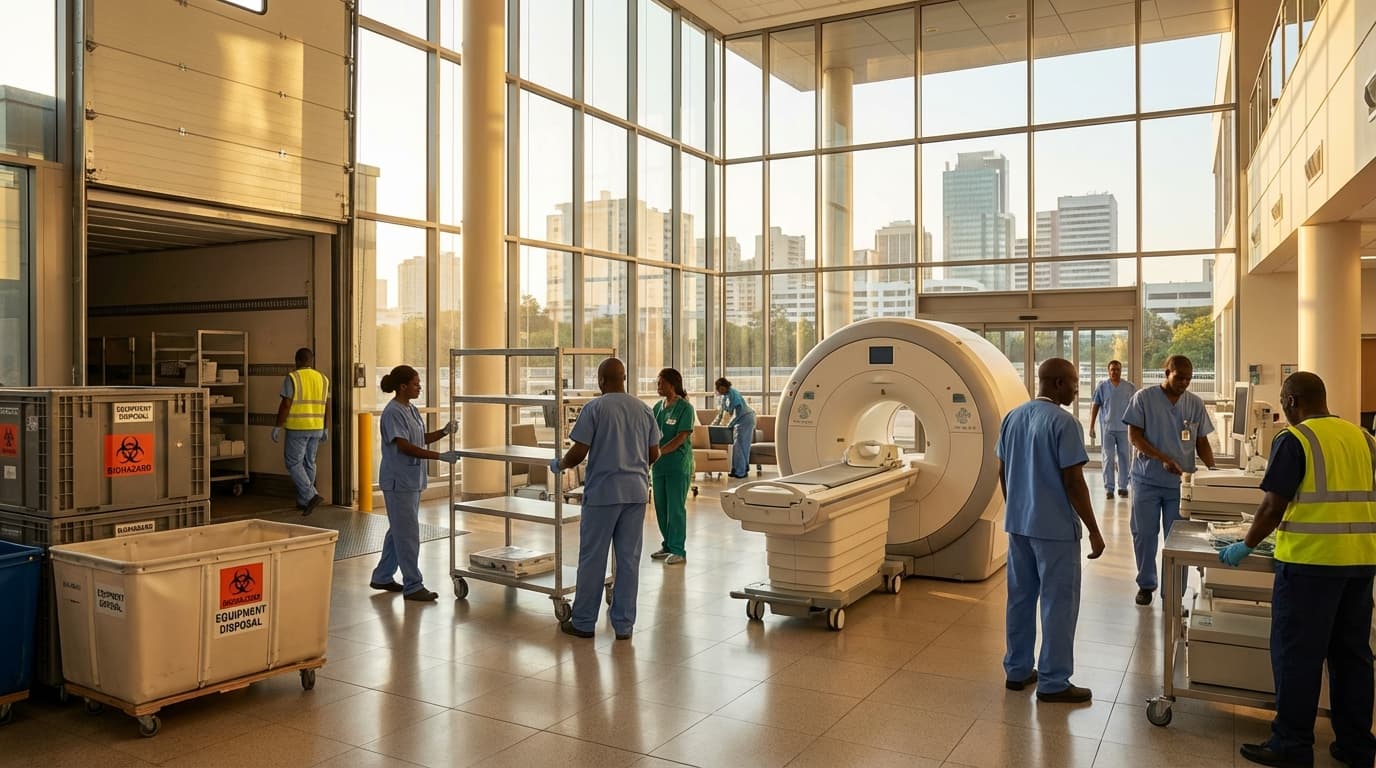
Site Restoration Service After Equipment Removal in Liberia
Engineering Excellence & Technical Support
Site Restoration Service After Equipment Removal High-standard technical execution following OEM protocols and local regulatory frameworks.
Precision Site Grading & Contour Restoration
Expertly re-contouring land to original topography and hydrological patterns, mitigating erosion and water runoff challenges specific to Liberia's diverse terrain and seasonal rainfall.
Native Vegetation Re-establishment
Implementing tailored revegetation strategies using indigenous plant species to promote ecological recovery, biodiversity enhancement, and long-term soil stabilization across Liberian landscapes.
Contaminant Remediation & Soil Health Restoration
Safely identifying, assessing, and remediating any residual contaminants from equipment operation, ensuring soil health and ecological safety for future land use in Liberia.
What Is Site Restoration Service After Equipment Removal In Liberia?
Site Restoration Service after Equipment Removal in Liberia refers to the comprehensive process of returning a disturbed land area to its pre-disturbance state or an agreed-upon post-operational condition following the deconstruction and removal of industrial, commercial, or infrastructure equipment. This service is essential for mitigating environmental impacts, ensuring land usability for future purposes, and complying with regulatory requirements.
| Who Needs Site Restoration? | Typical Use Cases | |||||
|---|---|---|---|---|---|---|
| Mining operations (e.g., open-pit mines, processing plants) | Oil and gas facilities (e.g., well sites, processing plants, pipelines) | Construction and infrastructure projects (e.g., temporary construction sites, bridge components) | Industrial manufacturing facilities (e.g., factories, storage depots) | Agricultural operations (e.g., former processing plants, large-scale equipment removal) | Government and military installations (e.g., decommissioned bases, former equipment storage) | Telecommunications infrastructure (e.g., cell tower sites, data centers) |
| End-of-life decommissioning of large-scale industrial equipment and facilities. | Removal of temporary structures and equipment following major construction projects. | Closure of mining sites to return them to a safe and environmentally sound condition. | Remediation of contaminated land after removal of oil and gas extraction equipment. | Restoring land used for temporary industrial staging or storage. | Reclaiming areas impacted by infrastructure development for future use (e.g., agriculture, conservation, residential). |
Key Components of Site Restoration:
- Site Assessment and Characterization: Initial survey to document existing conditions, identify contaminants (if any), and delineate the extent of disturbance.
- Demolition and Decommissioning: Safe dismantling and removal of all installed equipment, structures, and associated utilities.
- Hazardous Material Abatement: Identification, containment, and disposal of any hazardous substances present (e.g., asbestos, lead paint, petroleum products).
- Decontamination: Cleaning of surfaces and soil to remove residual contaminants.
- Grading and Earthwork: Reshaping the land to achieve desired contours, manage drainage, and stabilize slopes.
- Soil Remediation: Treatment or removal of contaminated soil to meet established environmental standards.
- Revegetation and Landscaping: Re-establishment of native or appropriate vegetation to prevent erosion, restore ecological function, and enhance aesthetic appeal.
- Infrastructure Reinstatement: Repair or replacement of any damaged or removed infrastructure (e.g., roads, fences, utilities) as specified.
- Waste Management: Proper collection, transportation, and disposal or recycling of all demolition debris and removed materials.
- Environmental Monitoring: Ongoing checks to ensure restoration efforts are effective and environmental parameters are within acceptable limits.
Who Needs Site Restoration Service After Equipment Removal In Liberia?
When heavy machinery, industrial equipment, or large operational assets are removed from a site in Liberia, the landscape is often left scarred. This is where Site Restoration Services become crucial. These services are essential for returning the land to a safe, usable, and environmentally sound condition. The need for such services spans across various sectors and entities operating within Liberia, particularly those undertaking projects with a significant physical footprint.
| Target Customer Type | Relevant Departments/Roles | Specific Needs Addressed |
|---|---|---|
| Mining and Extractive Industries | Environmental Management, Operations, Decommissioning Teams, Legal/Compliance | Reclamation of open-pit mines, removal of mining infrastructure, soil stabilization, re-vegetation of disturbed land. |
| Construction and Infrastructure Companies | Project Management, Site Operations, Health & Safety, Environmental Compliance | Demolition of temporary structures, removal of unused materials, grading and leveling of the site, ensuring safe public access. |
| Manufacturing and Industrial Plants | Plant Management, Facilities Management, Environmental Health & Safety (EHS), Procurement/Asset Disposal | Removal of old machinery foundations, cleaning of contaminated soil, grading, and preparing the site for sale, redevelopment, or environmental remediation. |
| Government Agencies (Public Works, Environmental Protection Agencies) | Public Works Department, Environmental Protection Agency (EPA) Liberia, Land Management Authorities | Ensuring public safety after project completion, restoring land for public use, meeting environmental regulations, managing legacy sites. |
| Agricultural Sector (Large-scale Farming/Agribusiness) | Farm Management, Operations, Land Development | Removal of large agricultural machinery, land leveling after significant clearing, soil restoration for optimal crop production. |
| Energy Sector (Power Plants, Oil & Gas Facilities) | Operations & Maintenance, Decommissioning Units, Environmental Compliance Officers | Removal of turbines, generators, pipelines, tanks; remediation of potential spills; site grading and stabilization. |
Who Needs Site Restoration Service After Equipment Removal in Liberia?
- Companies involved in resource extraction (mining, oil & gas) who have decommissioned operational sites.
- Construction and infrastructure development firms that have completed large-scale projects and need to clear temporary structures or excess materials.
- Manufacturing and industrial plants that have relocated or closed down, leaving behind former operational areas.
- Government agencies managing public lands or infrastructure projects that require post-project remediation.
- Agricultural enterprises that have utilized heavy machinery for land clearing or preparation and need to restore the land for future use.
- Logistics and warehousing facilities that have dismantled large structures or removed extensive racking systems.
- Port authorities and shipping companies that have removed port infrastructure or cargo handling equipment.
- Power generation companies that have decommissioned power plants or removed large energy infrastructure.
Site Restoration Service After Equipment Removal Process In Liberia
This document outlines the comprehensive workflow for site restoration services following equipment removal in Liberia. The process is designed to ensure that all disturbed land is returned to a safe, stable, and environmentally sound condition, meeting local regulations and client expectations. The workflow progresses systematically from the initial client inquiry to the final site handover and reporting.
| Stage | Key Activities | Deliverables/Outcomes | Responsible Party | Estimated Timeline |
|---|---|---|---|---|
| Inquiry & Initial Assessment | Receive client request, understand scope of equipment removal and restoration needs. Conduct preliminary site visit (if feasible) to assess initial conditions, potential hazards, and immediate restoration requirements. | Understanding of client needs, preliminary site condition assessment report. | Client, Restoration Service Provider (RSP) | 1-3 days |
| Proposal Development & Negotiation | Develop a detailed proposal outlining scope of work, methodology, timelines, cost estimates, and required resources. Present proposal to client and address any queries or concerns. Negotiate terms and conditions. | Detailed restoration proposal, agreed scope of work. | RSP | 3-7 days |
| Contracting & Permitting | Formalize the agreement with a signed contract. Identify and obtain all necessary permits and approvals from Liberian environmental agencies and local authorities. | Signed contract, all required permits and approvals. | RSP, Client | 5-15 days (permit dependent) |
| Pre-Restoration Survey & Planning | Conduct a comprehensive baseline survey of the site. Document existing conditions, soil types, vegetation, drainage patterns, and any pre-existing environmental issues. Develop a detailed restoration plan based on survey findings and regulatory requirements. | Detailed baseline survey report, comprehensive restoration plan. | RSP (Environmental Specialist, Surveyors) | 7-14 days |
| Site Preparation | Clear debris, remove any remaining non-hazardous equipment remnants, and establish temporary erosion control measures. Mark out restoration zones and ensure site safety. | Cleared and secured restoration zones, installed erosion controls. | RSP (Field Crew) | 2-5 days |
| Remediation & Decontamination (if applicable) | Address any soil or groundwater contamination resulting from equipment operation or spills. This may involve excavation, treatment, or containment measures. | Contaminated materials removed or treated, clean soil/water status confirmed. | RSP (Environmental Specialists, Remediation Crew) | Variable (depending on contamination level) |
| Grading & Landscaping | Restore the site to its original or agreed-upon topographical contours. Grade the land to ensure proper drainage and stability. Import or redistribute topsoil as needed. | Restored topography, stable landforms, appropriate drainage. | RSP (Heavy Equipment Operators, Landscapers) | 5-10 days |
| Vegetation Establishment | Replant native vegetation, re-seed, or re-sod the disturbed areas to promote natural recovery and prevent erosion. Select species appropriate for the local climate and ecosystem. | Established vegetation cover, stabilized soil. | RSP (Horticulturists, Landscaping Crew) | 10-30 days (establishment period) |
| Post-Restoration Monitoring & Reporting | Conduct regular monitoring to assess vegetation survival, erosion control effectiveness, and overall site stability. Prepare interim and final reports detailing all activities, monitoring results, and adherence to the restoration plan. | Monitoring reports, photographic evidence, final restoration report. | RSP (Environmental Specialists, Project Manager) | Ongoing (as per contract, typically 3-6 months) |
| Client Sign-off & Project Closeout | Present the final report and site to the client for review and approval. Address any final outstanding issues. Officially close out the project and archive all documentation. | Client acceptance of restored site, project closure documentation. | Client, RSP | 1-3 days |
Site Restoration Workflow Stages
- Inquiry & Initial Assessment
- Proposal Development & Negotiation
- Contracting & Permitting
- Pre-Restoration Survey & Planning
- Site Preparation
- Remediation & Decontamination (if applicable)
- Grading & Landscaping
- Vegetation Establishment
- Post-Restoration Monitoring & Reporting
- Client Sign-off & Project Closeout
Site Restoration Service After Equipment Removal Cost In Liberia
Site restoration after equipment removal in Liberia is a crucial step in ensuring land is returned to a safe and usable state. The cost associated with this service can vary significantly due to a multitude of factors. These factors influence the labor, materials, equipment, and regulatory requirements involved. Understanding these elements is vital for accurate budgeting and planning for businesses undertaking such projects. Key considerations include the scale and nature of the equipment removed, the environmental impact of its operation, the topography and accessibility of the site, and the specific restoration standards mandated by Liberian environmental regulations. The expertise and reputation of the service provider also play a role in pricing.
| Service Component | Description | Estimated Cost Range (Liberian Dollar - LRD) |
|---|---|---|
| Site Assessment & Planning | Initial evaluation of the site, identification of hazards, and development of a restoration plan. | 50,000 - 150,000 LRD |
| Demolition & Debris Removal | Dismantling and removal of any residual structures or foundations related to the equipment. | 100,000 - 500,000 LRD (highly variable based on size) |
| Soil Remediation & Stabilization | Addressing contaminated soil, compaction, or erosion issues. May involve soil testing, excavation, treatment, or replacement. | 150,000 - 1,000,000+ LRD (depending on severity) |
| Landscaping & Re-vegetation | Regrading, topsoil spreading, planting of native vegetation, and erosion control measures. | 75,000 - 300,000 LRD |
| Water Management & Drainage | Ensuring proper water flow and preventing erosion through drainage systems or contouring. | 30,000 - 100,000 LRD |
| Waste Disposal | Proper disposal of removed equipment, debris, and any hazardous materials according to regulations. | 50,000 - 250,000 LRD (depends on volume and type of waste) |
| Permitting & Regulatory Fees | Costs associated with obtaining necessary permits and adhering to environmental regulations. | 20,000 - 80,000 LRD |
| Labor Costs | Wages for skilled and unskilled labor involved in all restoration activities. | Variable, estimated at 30-50% of total project cost |
| Equipment Rental/Operation | Costs for heavy machinery (excavators, dozers, trucks) and operational expenses. | Variable, estimated at 20-40% of total project cost |
| Contingency | A buffer for unforeseen issues or changes in scope. | 10-15% of estimated total project cost |
| Total Estimated Project Cost (Small to Medium Scale) | A general range for typical smaller-scale restoration projects. | 500,000 - 3,000,000 LRD |
| Total Estimated Project Cost (Large Scale/Complex) | A general range for more significant and complex restoration projects. | 3,000,000 - 10,000,000+ LRD |
Factors Influencing Site Restoration Costs in Liberia:
- Size and complexity of the removed equipment.
- Type of equipment and potential environmental contamination (e.g., oil, chemicals).
- Duration and nature of the equipment's operation on the site.
- Site topography and accessibility for restoration equipment and personnel.
- Extent of soil disturbance and potential need for soil remediation or replacement.
- Vegetation recovery requirements and landscaping needs.
- Water management and drainage considerations.
- Disposal costs for removed equipment and any contaminated materials.
- Permitting and regulatory compliance costs (environmental impact assessments, etc.).
- Labor costs (skilled and unskilled), including wages and benefits.
- Equipment rental or ownership costs (excavators, trucks, etc.).
- Material costs (e.g., topsoil, gravel, seeds, fertilizers).
- Timeframe for restoration (urgent vs. standard).
- Geographic location within Liberia (transportation and logistics).
- Reputation and experience of the restoration service provider.
Affordable Site Restoration Service After Equipment Removal Options
When heavy equipment is removed from a site, it often leaves behind a disturbed landscape. Our affordable site restoration service focuses on returning your property to its pre-disturbance state efficiently and cost-effectively. We offer flexible options and value bundles designed to meet your specific needs and budget. Our expertise ensures proper grading, soil replenishment, debris removal, and vegetation re-establishment, minimizing environmental impact and restoring functionality.
| Cost-Saving Strategy | Description | Benefit |
|---|---|---|
| Early Planning & Assessment | Engaging our team for an assessment before equipment removal allows for proactive planning and identification of potential restoration needs. | Reduces unexpected costs and ensures a more streamlined restoration process. |
| Bundle Discounts | Purchasing our pre-defined value bundles offers significant savings compared to individual service pricing. | Lower overall project cost and simplified billing. |
| Phased Restoration | Breaking down the restoration into manageable phases can help spread costs over time and allows for adjustments based on immediate needs. | Improved cash flow management and flexibility. |
| Recycling & Salvage | We prioritize recycling and salvaging materials whenever possible, reducing landfill fees and material disposal costs. | Lower waste management expenses and environmental benefits. |
| Material Sourcing | We leverage local and sustainable sources for soil, mulch, and vegetation, minimizing transportation costs and supporting local economies. | Reduced material procurement expenses and quicker availability. |
| Multi-Site Discounts | If you have multiple sites requiring restoration, we offer tiered discounts for larger projects. | Economies of scale leading to significant savings. |
Site Restoration Value Bundles
- {"title":"Basic Restoration Bundle","description":"Ideal for minor disturbances. Includes debris removal, basic grading, and seed dispersal for quick ground cover."}
- {"title":"Standard Restoration Bundle","description":"Suitable for moderate disturbances. Includes comprehensive debris removal, professional grading, soil amendment, and hydroseeding for enhanced vegetation establishment."}
- {"title":"Premium Restoration Bundle","description":"For significant disturbances. Encompasses full site cleanup, expert grading and compaction, topsoil replenishment, advanced erosion control measures, and custom landscaping options."}
- {"title":"Customizable Add-ons","description":"Tailor your package with services like specialized planting, hardscaping repairs, irrigation system checks, and long-term maintenance plans."}
Verified Providers In Liberia
In Liberia's evolving healthcare landscape, identifying trusted and credentialed providers is paramount for ensuring quality patient care. Franance Health stands out as a leading organization, distinguished by its rigorous credentialing process and commitment to excellence. This document outlines what makes Franance Health a superior choice, detailing their verification standards and the benefits they bring to both patients and the healthcare system in Liberia.
| Credentialing Aspect | Franance Health Standard | Benefit to Patients |
|---|---|---|
| Educational Background Verification | Thorough review of diplomas, degrees, and certifications from accredited institutions. | Ensures providers have received foundational medical training from recognized sources. |
| Professional Experience Validation | Verification of past employment, clinical experience, and references from previous healthcare settings. | Confirms practical application of knowledge and skills in real-world medical scenarios. |
| Licensing and Regulatory Compliance | Confirmation of valid and active licenses with Liberian medical boards and regulatory bodies. | Guarantees providers are legally authorized to practice and adhere to national healthcare regulations. |
| Clinical Competency Assessment | May involve peer review, case studies, or specific skill certifications where applicable. | Assesses the provider's ability to accurately diagnose and treat a wide range of conditions. |
| Background Checks | Comprehensive checks for any disciplinary actions, malpractice claims, or criminal history. | Protects patients from unqualified or unethical practitioners. |
| Continuing Medical Education (CME) Review | Verification of ongoing professional development and updated medical knowledge. | Ensures providers are up-to-date with the latest medical advancements and treatment protocols. |
Why Franance Health Credentials Matter
- Comprehensive Verification: Franance Health employs a multi-faceted verification process that goes beyond basic licensing. This includes scrutiny of educational backgrounds, professional experience, certifications, and a thorough background check.
- Commitment to Competency: Our credentialing ensures that all affiliated providers possess the necessary skills, knowledge, and ethical standards to deliver safe and effective healthcare.
- Patient Safety Focus: The core of our credentialing is to safeguard patient well-being by partnering with providers who have a proven track record of excellent patient care and adherence to best practices.
- Transparency and Trust: Franance Health provides a transparent system for verifying provider credentials, fostering trust and confidence among patients seeking healthcare services.
- Continuous Quality Improvement: We engage in ongoing monitoring and evaluation of our credentialed providers to ensure sustained adherence to high standards.
- Access to Specialized Care: By vetting a diverse range of medical professionals, Franance Health facilitates access to specialized and niche healthcare services within Liberia.
Scope Of Work For Site Restoration Service After Equipment Removal
This Scope of Work (SOW) outlines the requirements for site restoration services following the removal of equipment from the project site. The objective is to return the site to a safe, stable, and environmentally compliant condition, meeting all applicable regulatory standards and project specifications.
| Task | Description | Technical Deliverables | Standard Specifications |
|---|---|---|---|
| Site Assessment and Planning | Conduct a thorough assessment of the site post-equipment removal to identify areas requiring restoration. Develop a detailed restoration plan. | Site assessment report, Restoration plan (including grading plan, erosion control plan, revegetation plan). | ASTM D5254 (Standard Practice for Site Assessments), ISO 14001 (Environmental Management Systems) principles. |
| Debris and Contaminant Removal | Excavate and remove all remaining equipment parts, foundations, disturbed soil, and any identified contaminants (e.g., oils, greases, fuels) from the site. | Waste disposal manifests, Analytical reports for soil and water samples (if contamination is suspected or confirmed). | RCRA (Resource Conservation and Recovery Act) regulations, Local hazardous waste disposal regulations, Relevant soil and groundwater quality standards (e.g., EPA, state-specific criteria). |
| Grading and Earthwork | Regrade the site to match existing or intended contours, ensuring proper drainage and stability. Compact fill materials to required densities. | Final grading survey, Compaction test reports. | ASTM D1556 (Standard Test Method for Density of Soil In-Place by the Sand-Cone Method) or ASTM D6938 (Standard Test Method for In-Place Density and Water Content of Soil and Soil-Aggregate by Nuclear Methods), Project-specific grading requirements. |
| Erosion and Sediment Control | Install and maintain temporary and permanent erosion and sediment control measures during and after restoration activities. | Erosion and Sediment Control Plan (ESCP), Inspection logs for control measures. | EPA's Construction General Permit (if applicable), State and local stormwater management guidelines. |
| Revegetation and Landscaping | Install appropriate ground cover (e.g., native seed mix, sod, mulch) to stabilize the soil and promote natural recovery. This may include planting trees or shrubs as specified. | Revegetation plan, Material submittals (seed mix, sod type, mulch), Post-restoration vegetation establishment report. | Native plant species lists for the region, Minimum ground cover percentage requirements, USDA NRCS recommendations for erosion control. |
| Site Inspection and Acceptance | Conduct a final site walk-through with the client to verify that all restoration work is complete and meets the agreed-upon specifications. | Punch list, Final acceptance certificate. | Project-specific quality control checklist, Client satisfaction criteria. |
Key Objectives of Site Restoration
- Removal of all residual equipment, debris, and contaminated materials.
- Restoration of disturbed soil profiles to their original or intended grade.
- Stabilization of slopes and surfaces to prevent erosion.
- Revegetation or other appropriate ground cover installation.
- Mitigation of any environmental impacts caused by the equipment and its removal.
- Ensuring the site is safe for future use and occupation.
- Compliance with all local, state, and federal environmental regulations.
Service Level Agreement For Site Restoration Service After Equipment Removal
This Service Level Agreement (SLA) outlines the response times and uptime guarantees for the Site Restoration Service provided by [Your Company Name] after the removal of [Client Company Name]'s equipment. The goal is to ensure a swift and efficient return of the site to its agreed-upon condition following the removal process.
| Service Level Objective | Target | Measurement Method | Remedy for Failure |
|---|---|---|---|
Key Definitions
- {"item":"Site Restoration Service","description":"The process of repairing, cleaning, and returning the site to a pre-defined condition after the removal of client equipment."}
- {"item":"Equipment Removal","description":"The physical act of detaching and removing designated equipment from the client's premises."}
- {"item":"Uptime Guarantee","description":"The guaranteed period during which the site will be accessible and usable by the client, specifically referring to the restoration process being actively worked on or completed within the defined timelines."}
- {"item":"Response Time","description":"The maximum time allowed from the initiation of a restoration request (following equipment removal confirmation) to the commencement of restoration activities or the dispatch of a restoration team."}
- {"item":"Scheduled Restoration Window","description":"A pre-agreed period during which the site restoration activities will take place."}
- {"item":"Service Credit","description":"A monetary credit applied to the client's account as compensation for failure to meet the agreed-upon SLAs."}
Frequently Asked Questions

Ready when you are
Let's scope your Site Restoration Service After Equipment Removal in Liberia project in Liberia.

Scaling healthcare logistics and technical systems across the entire continent.