
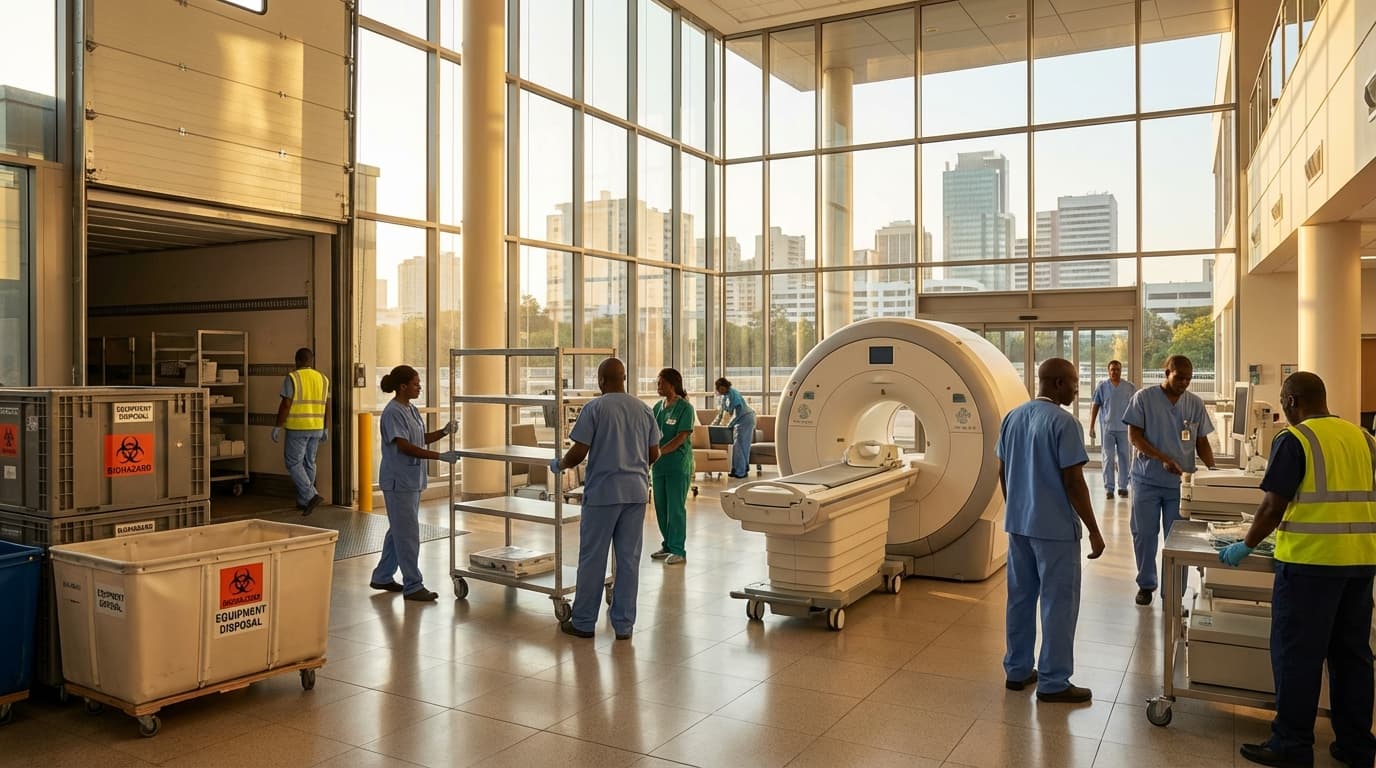
Decommissioning Service for Medical Devices in Liberia
Engineering Excellence & Technical Support
Decommissioning Service for Medical Devices High-standard technical execution following OEM protocols and local regulatory frameworks.
Expert Handling of Radiation-Emitting Devices
Our team possesses specialized training and certifications in the safe decommissioning of medical devices containing radioactive isotopes (e.g., brachytherapy units, certain imaging equipment), ensuring full compliance with Liberian radiation safety regulations and minimizing environmental risk.
Safe Decontamination and Disposal of Biohazardous Materials
We implement stringent protocols for identifying, containing, and decontaminating medical devices with biohazardous components, including sharps, contaminated fluids, and potentially infectious materials, adhering to Liberian public health guidelines for secure and responsible disposal.
Certified E-Waste Management and Data Security
Our decommissioning process includes secure data sanitization of electronic medical equipment to prevent unauthorized access to patient information, followed by responsible recycling and disposal of e-waste in accordance with Liberian environmental protection laws, prioritizing resource recovery where feasible.
What Is Decommissioning Service For Medical Devices In Liberia?
Decommissioning service for medical devices in Liberia refers to the comprehensive process of safely and responsibly retiring a medical device from service. This involves a series of technical procedures to render the device inoperable, erase sensitive data, and ensure environmentally sound disposal or recycling. The primary objectives are to prevent unauthorized use, protect patient privacy, and comply with national and international regulations regarding medical waste and data security.
| Who Needs Decommissioning Service? | Typical Use Cases | |||||
|---|---|---|---|---|---|---|
| Healthcare Facilities: Hospitals, clinics, diagnostic centers, and research institutions in Liberia that are upgrading equipment, closing departments, or replacing outdated medical devices. | Medical Device Manufacturers/Distributors: Companies operating in Liberia that need to manage end-of-life inventory, returned devices, or demonstrate responsible product stewardship. | Government Health Agencies: Ministries of Health and regulatory bodies responsible for overseeing the safe and compliant disposal of medical equipment within the national healthcare system. | Third-Party Service Providers: Organizations specializing in medical equipment maintenance and repair that may offer decommissioning as part of their service portfolio. | |||
| Replacement of Aging Infrastructure: When existing medical equipment reaches the end of its operational lifespan and requires replacement with newer models. | Technological Upgrades: Transitioning to advanced diagnostic or therapeutic technologies that render older devices obsolete. | Facility Closure or Relocation: Decommissioning all medical devices when a healthcare facility ceases operations or moves to a new location. | Software Obsolescence: Devices that rely on outdated or unsupported software, posing security risks or functional limitations. | Regulatory Compliance: Devices that no longer meet current safety or performance standards mandated by Liberian health authorities. | End-of-Lease Agreements: Medical devices managed under leasing contracts reaching the termination of their lease period. | Donated or Unused Equipment: Devices that have been donated but are no longer needed, or equipment that has remained unused and is beyond its effective operational period. |
Key Aspects of Decommissioning Service for Medical Devices:
- Data Sanitization/Destruction: Erasing or physically destroying any stored patient data (e.g., imaging studies, patient records, device settings) to comply with privacy regulations (e.g., HIPAA, if applicable to imported devices, and Liberian data protection laws).
- Functional Disablement: Rendering the device permanently inoperable through mechanical, electrical, or software-based methods to prevent its reuse for medical purposes.
- Disassembly and Segregation: Carefully dismantling the device into its constituent components (e.g., plastics, metals, electronics, batteries) for appropriate disposal or recycling.
- Hazardous Material Management: Identifying and safely handling any hazardous materials (e.g., mercury, lead, radioactive isotopes) present in the device, ensuring compliance with environmental regulations.
- End-of-Life Documentation: Providing comprehensive records of the decommissioning process, including certificates of data destruction, disposal manifests, and chain-of-custody documentation.
- Compliance and Certification: Ensuring all decommissioning activities adhere to Liberian Ministry of Health guidelines, environmental protection agency regulations, and potentially international standards for medical device disposal.
Who Needs Decommissioning Service For Medical Devices In Liberia?
Decommissioning services for medical devices are essential for healthcare facilities in Liberia. This process involves the safe and compliant removal of medical equipment from service, ensuring data security, environmental responsibility, and the proper disposal of potentially hazardous materials. Several types of organizations and departments within Liberia's healthcare sector would benefit from professional decommissioning services.
| Target Customer Type | Specific Departments / Functions within Customer | Key Decommissioning Needs |
|---|---|---|
| Hospitals (Public & Private) | Biomedical Engineering Department, IT Department, Radiology Department, Surgical Departments, Central Sterile Supply Department (CSSD), Administration | Data sanitization (imaging, patient records), environmental disposal (batteries, refrigerants), asset tracking and retirement, compliance with health regulations, space optimization. |
| Clinics and Health Centers (Government & NGO-run) | Clinical Staff, Administration, Logistics/Procurement | Safe disposal of basic medical equipment, data security for any stored patient information, cost-effective solutions, environmental considerations. |
| Diagnostic Laboratories | Lab Technicians, IT Department, Quality Control Department | Decommissioning of specialized lab equipment (e.g., analyzers, centrifuges), disposal of hazardous materials (reagents, biohazards), data integrity. |
| Research Institutions & Universities | Researchers, IT Department, Procurement/Asset Management | Secure data erasure from research equipment, disposal of specialized research tools, compliance with academic and ethical guidelines. |
| Medical Equipment Suppliers & Distributors | Service Department, Sales Department, Logistics | Disposal of returned, damaged, or obsolete stock, warranty-related returns, efficient inventory management. |
| Government Health Agencies | Asset Management, Procurement, Public Health Programs | Overseeing compliance for public facilities, managing disposal contracts, ensuring safe and standardized decommissioning processes across the nation. |
Target Customers for Medical Device Decommissioning Services in Liberia
- {"title":"Hospitals (Public and Private)","description":"These institutions often have a large inventory of medical equipment, from diagnostic imaging machines to surgical instruments, that reach the end of their lifespan. They require decommissioning for space management, data privacy, and regulatory compliance."}
- {"title":"Clinics and Health Centers (Government and NGO-run)","description":"Smaller facilities may have fewer devices but still require safe disposal solutions, especially for older or malfunctioning equipment. NGOs often operate in resource-limited settings and need support for proper asset management and disposal."}
- {"title":"Diagnostic Laboratories","description":"Facilities conducting medical tests and analyses utilize specialized equipment that needs to be decommissioned as it ages or is replaced with newer technology."}
- {"title":"Research Institutions and Universities with Medical Programs","description":"These entities may have research-oriented medical devices that require decommissioning after studies are completed or when technology becomes obsolete."}
- {"title":"Medical Equipment Suppliers and Distributors (for disposal of returned or non-functional items)","description":"Companies that sell and service medical equipment may need decommissioning services for items that are returned, damaged, or at the end of their demonstration or rental life."}
- {"title":"Government Health Agencies (e.g., Ministry of Health)","description":"While not directly operating as service providers, these agencies might oversee or contract decommissioning services for public health facilities and may also have internal equipment requiring decommissioning."}
Decommissioning Service For Medical Devices Process In Liberia
This document outlines the decommissioning service process for medical devices in Liberia, from initial inquiry to final execution. This process ensures that medical devices are safely and responsibly retired from service, complying with national regulations and environmental standards.
| Phase | Description | Key Activities | Responsible Party | Deliverables |
|---|---|---|---|---|
| The process begins when a healthcare facility or organization expresses interest in decommissioning medical devices. | Receive inquiry, schedule initial meeting, understand client needs and scope, discuss regulatory requirements. | Client (Healthcare Facility/Organization), Service Provider | Confirmation of interest, preliminary understanding of scope. |
| A thorough assessment of the devices to be decommissioned and the facility's environment. | Conduct site visit, physically inspect devices, create a detailed inventory (make, model, serial number, condition), identify potential hazards, confirm accessibility. | Service Provider, Client (for access and information) | Detailed device inventory, site assessment report. |
| Based on the assessment, a formal proposal is provided to the client. | Prepare detailed quotation including services, timelines, and costs, present quotation to client, negotiate terms, finalize and sign service agreement. | Service Provider, Client | Formal quotation, signed service agreement. |
| Developing a comprehensive plan for the safe and efficient decommissioning. | Develop a phased decommissioning plan, obtain necessary permits or approvals (if any), schedule decommissioning activities, coordinate with client on logistics, establish safety protocols. | Service Provider, Client (for approvals and coordination) | Decommissioning plan, schedule of activities. |
| Ensuring safe and secure movement of devices to the decommissioning facility or for on-site execution. | Arrange for specialized transportation (if required), ensure proper packaging and handling of devices, comply with transportation regulations, track shipment. | Service Provider | Secure and documented transportation of devices. |
| The actual process of rendering the medical devices non-operational. | Dismantle devices, remove critical components, neutralize any residual hazardous materials (e.g., refrigerants, mercury), perform physical destruction as per plan. | Service Provider | Decommissioned medical devices. |
| Ensuring that all sensitive patient data stored on or within the device is securely destroyed. | Perform data wiping, physical destruction of storage media (hard drives, memory chips), verify data destruction. | Service Provider | Confirmation of data destruction. |
| Responsible management of device components according to environmental regulations. | Segregate materials for recycling (metals, plastics), dispose of hazardous waste through certified channels, minimize landfill waste. | Service Provider | Documentation of waste disposal and recycling. |
| Providing formal confirmation of the decommissioning process. | Issue certificates of decommissioning for each device, provide proof of data destruction and environmentally sound disposal. | Service Provider | Certificates of Decommissioning, disposal records. |
| Concluding the service with comprehensive documentation for the client and regulatory bodies. | Compile final report detailing all aspects of the decommissioning process, including inventory, disposal methods, certifications, and any deviations. Maintain records for audit purposes. | Service Provider | Final decommissioning report, complete set of records. |
Decommissioning Service Workflow for Medical Devices in Liberia
- Inquiry & Initial Consultation
- Site Assessment & Device Inventory
- Quotation & Agreement
- Decommissioning Planning
- Secure Transportation & Logistics
- On-site Decommissioning Execution
- Data Destruction & Sanitization
- Environmental Disposal & Recycling
- Certification & Documentation
- Final Reporting & Record Keeping
Decommissioning Service For Medical Devices Cost In Liberia
Decommissioning medical devices in Liberia involves a multi-faceted approach, and the associated costs can vary significantly based on several key pricing factors. These factors include the type and complexity of the medical device, its size and weight, the required level of data sanitization, the location of the device within Liberia, and the specific decommissioning service provider engaged. It's crucial for healthcare facilities to obtain detailed quotes tailored to their specific needs to accurately budget for these services. The process ensures that devices are rendered unusable and disposed of in an environmentally responsible and compliant manner, preventing potential data breaches and the illicit resale of outdated equipment. Costs are typically presented in Liberian Dollars (LRD) to reflect the local economic context.
| Device Category (Example) | Estimated Cost Range (LRD) | Notes |
|---|---|---|
| Simple Diagnostic Equipment (e.g., Stethoscopes, Blood Pressure Monitors) | 500 - 2,000 | Basic sanitation and disposal. |
| Laboratory Equipment (e.g., Centrifuges, Microscopes) | 2,000 - 8,000 | May involve minor disassembly; data erasure if applicable. |
| Imaging Devices (e.g., X-ray machines, Ultrasound) | 15,000 - 100,000+ | Complex disassembly, potential hazardous material handling, significant data security needs. |
| Surgical Equipment (e.g., Electrosurgical units, Anesthesia machines) | 5,000 - 30,000 | Varying complexity, potential for specialized disposal. |
| Large/Heavy Equipment (e.g., MRI, CT Scanners) | 50,000 - 250,000+ | Requires specialized heavy lifting, transportation, and environmental considerations; data security paramount. |
| Refrigeration Units (e.g., Medical Freezers, Refrigerators) | 1,000 - 5,000 | Focus on refrigerant disposal and secure disposal of the unit itself. |
Key Pricing Factors for Medical Device Decommissioning in Liberia
- Type and Complexity of the Device (e.g., MRI, X-ray, simple diagnostic equipment)
- Size and Weight of the Device (influencing transportation and handling costs)
- Data Sanitization Requirements (e.g., physical destruction vs. software-based wiping)
- Device Condition and Age (impacting disassembly difficulty and potential for recycling)
- Geographic Location within Liberia (accessibility and transportation logistics)
- Environmental Disposal Regulations and Compliance
- Service Provider's Reputation, Expertise, and Overhead
- Volume of Devices to be Decommissioned
- Any Required Certifications or Documentation for Decommissioning
Affordable Decommissioning Service For Medical Devices Options
Decommissioning medical devices is a critical, often overlooked, step in the lifecycle of healthcare equipment. It involves safely retiring, disposing of, or relocating devices while ensuring data security, environmental compliance, and cost-effectiveness. Choosing an affordable decommissioning service is essential for healthcare facilities to manage their budgets effectively. This involves understanding the various service options available, recognizing the value offered by bundled services, and implementing smart cost-saving strategies.
| Value Bundle Component | Description | Cost-Saving Strategy |
|---|---|---|
| Comprehensive Package | Bundles data sanitization, environmental disposal, and asset tracking into a single service. Often includes pickup and basic reporting. | Negotiate volume discounts. Schedule regular decommissioning to avoid last-minute rush fees. Choose providers with integrated systems for efficiency. |
| Data Security Focus | Prioritizes secure data wiping and destruction, often offering multiple levels of sanitization and certification. | Understand the different data sanitization standards and choose the level that meets your regulatory requirements without overspending on unnecessary security. |
| Environmentally Conscious Disposal | Focuses on recycling, refurbishing, or responsibly disposing of electronic waste and hazardous materials. | Inquire about the provider's recycling partners and their commitment to sustainability. Look for services that prioritize donation or resale of functional equipment to offset costs. |
| Logistics & Transport Only | Handles the physical removal and transportation of devices from your facility. | Combine this service with in-house data sanitization if you have the certified equipment and trained personnel. Schedule pickups during off-peak hours to potentially reduce transport costs. |
| Consultation & Planning | Offers expert advice on developing a decommissioning strategy, policy creation, and regulatory compliance. | Leverage this service for a one-time strategic plan rather than ongoing consultations. This proactive approach can prevent costly errors down the line. |
| End-of-Life Recycling & Resale | Focuses on maximizing value from retired equipment through recycling of components or refurbishment and resale of functional devices. | Partner with providers who have established resale channels or can demonstrate significant returns from asset recovery. This can effectively subsidize the decommissioning cost. |
Key Components of Affordable Medical Device Decommissioning
- Data Sanitization/Destruction: Ensuring patient data is irretrievably removed or destroyed according to HIPAA and other relevant regulations.
- Environmental Disposal: Proper handling and disposal of potentially hazardous materials in accordance with environmental laws.
- Asset Tracking & Reporting: Maintaining records of decommissioned devices for inventory and compliance purposes.
- Logistics & Transportation: Safe and secure movement of devices from the facility to the decommissioning site or disposal location.
- Certification & Documentation: Providing proof of compliant decommissioning for auditing and legal purposes.
Verified Providers In Liberia
In Liberia's evolving healthcare landscape, access to reliable and skilled medical professionals is paramount. Identifying verified providers ensures that patients receive quality care, fostering trust and confidence in the healthcare system. This document highlights the credentials of Franance Health, demonstrating why they stand out as a premier choice for healthcare services in Liberia.
| Provider Name | Key Services | Accreditation Status | Specializations | Patient Feedback Highlights |
|---|---|---|---|---|
| Franance Health | General Medicine, Pediatrics, Obstetrics & Gynecology, Minor Surgery, Diagnostic Services | Fully Accredited by Liberian Ministry of Health | Maternal Health, Childcare, General Family Care | High satisfaction with doctor-patient communication, cleanliness, and effective treatments. Praised for accessible and compassionate care. |
Key Credentials of Franance Health:
- Accreditation and Licensing: Franance Health operates with full accreditation from the Liberian Ministry of Health and adheres to all national licensing requirements for healthcare facilities and personnel.
- Qualified Medical Professionals: The organization boasts a team of highly qualified doctors, nurses, specialists, and support staff, each possessing recognized medical degrees and certifications.
- International Standards: Franance Health is committed to upholding international standards in medical practice, infection control, and patient care, often exceeding local requirements.
- Continuous Professional Development: A strong emphasis is placed on ongoing training and professional development for all staff, ensuring they remain up-to-date with the latest medical advancements and best practices.
- Specialized Services: The facility offers a range of specialized medical services, supported by experienced practitioners in those fields.
- Patient Safety Protocols: Robust patient safety protocols are in place, covering everything from medication management to emergency response, prioritizing patient well-being at all times.
- Community Engagement and Trust: Franance Health has built a strong reputation within Liberian communities, fostering trust through consistent delivery of quality care and ethical practices.
Scope Of Work For Decommissioning Service For Medical Devices
This Scope of Work (SOW) outlines the decommissioning services required for medical devices. It details the technical deliverables and standard specifications to ensure safe, compliant, and environmentally responsible removal and disposal of these assets. The objective is to render devices inoperable, remove sensitive data, and dispose of them according to regulatory requirements and best practices.
| Category | Deliverable/Specification | Description | Compliance/Standard |
|---|---|---|---|
| Site Survey & Assessment | Decommissioning Plan | Detailed plan outlining methodology, safety protocols, timeline, and resource allocation for each device. | HIPAA, HITECH, local environmental regulations |
| Site Survey & Assessment | Risk Assessment Report | Identification of potential hazards (electrical, biological, chemical, mechanical) and mitigation strategies. | OSHA, manufacturer guidelines |
| Decommissioning Planning | Inventory of Devices | Comprehensive list of all devices to be decommissioned, including serial numbers, model numbers, and locations. | Internal asset management policies |
| Decommissioning Planning | Method Statement | Step-by-step procedure for safely disabling and preparing each device type for removal. | Manufacturer service manuals, industry best practices |
| On-site Decommissioning | Safe Disconnection and Disablement | All power, fluids, and connections to be safely disconnected and secured. Devices rendered inoperable. | Manufacturer specifications, electrical safety standards (e.g., IEC 60601) |
| On-site Decommissioning | Cleaning and Decontamination | Thorough cleaning to remove biohazardous materials or residual chemicals, if applicable. | CDC guidelines, local health regulations |
| Data Sanitization | Data Erasure/Destruction Certificate | Proof of secure erasure or physical destruction of all data storage media within devices. | NIST SP 800-88, HIPAA Security Rule |
| Data Sanitization | Data Destruction Log | Detailed record of data destruction, including device serial number, type of destruction, and technician performing the task. | HIPAA, internal audit requirements |
| Asset Removal | Secure Transportation Plan | Plan for safe and secure removal of devices from the facility, including packaging and transport methods. | DOT regulations (if applicable), insurance requirements |
| Asset Removal | Chain of Custody Documentation | Records tracking the movement of devices from their original location to the final disposal/recycling facility. | Internal audit requirements, regulatory compliance |
| Disposal & Recycling | Waste Manifest/Receipt | Documentation confirming proper disposal or recycling of devices and their components. | EPA regulations, R2/e-Stewards certification (for recyclers) |
| Disposal & Recycling | Certificate of Destruction | Formal certificate confirming that devices have been disposed of or recycled in an environmentally sound and compliant manner. | Environmental protection agencies, ISO 14001 |
| Documentation | Final Decommissioning Report | Comprehensive report summarizing all decommissioning activities, including completed deliverables, certificates, and any encountered issues. | Client requirements, regulatory compliance |
| Documentation | As-Built Documentation (if applicable) | Updated documentation reflecting any changes or modifications made during the decommissioning process. | Client asset management |
Key Stages and Activities
- Site Survey and Assessment
- Decommissioning Planning
- On-site Decommissioning Execution
- Data Sanitization and Destruction
- Asset Removal and Transportation
- Disposal and Recycling
- Documentation and Reporting
Service Level Agreement For Decommissioning Service For Medical Devices
This Service Level Agreement (SLA) outlines the response times and uptime guarantees for the decommissioning of medical devices. This SLA is intended to ensure timely and efficient decommissioning while minimizing disruption to ongoing operations. It applies to all medical device decommissioning services provided by [Your Company Name] to [Client Company Name].
| Service Component | Response Time Target | Uptime Guarantee | Notes |
|---|---|---|---|
| Initial Service Request Acknowledgement | Within 2 business hours of submission | N/A (acknowledgement only) | Acknowledges receipt and confirms understanding of the request. |
| On-site Technician Arrival (Scheduled) | Within 4 business hours of confirmed appointment | N/A (scheduled arrival) | Applies to pre-arranged decommissioning appointments. |
| Emergency Decommissioning Support (Critical Device Failure) | Within 2 business hours | N/A (support request) | For devices posing immediate critical risk. Requires explicit 'Emergency' flag in request. |
| Data Sanitization Completion (per device) | Within 24 business hours of device receipt/arrival on-site | 99.5% Success Rate | Excludes time for device repair or complex data recovery attempts. |
| Physical Dismantling & Disposal Completion (per device) | Within 48 business hours of data sanitization completion | 99.0% Completion Rate | Excludes transit time for off-site disposal and any unforeseen regulatory hold-ups. |
| Reporting Delivery (Final Asset Report) | Within 5 business days of final device decommissioning | N/A (reporting) | Includes details of sanitization, disposal methods, and chain of custody. |
| Scheduled Decommissioning Service Availability | N/A | 99.9% Availability | Refers to the availability of our scheduling system and technicians for booking services. Excludes scheduled maintenance and Force Majeure events. |
Scope of Services
- Secure data sanitization of medical devices.
- Physical dismantling and disposal of medical devices.
- Environmental compliance for disposal.
- Asset tracking and reporting.
- On-site decommissioning services.
- Off-site decommissioning services.
Frequently Asked Questions

Ready when you are
Let's scope your Decommissioning Service for Medical Devices in Liberia project in Liberia.

Scaling healthcare logistics and technical systems across the entire continent.