
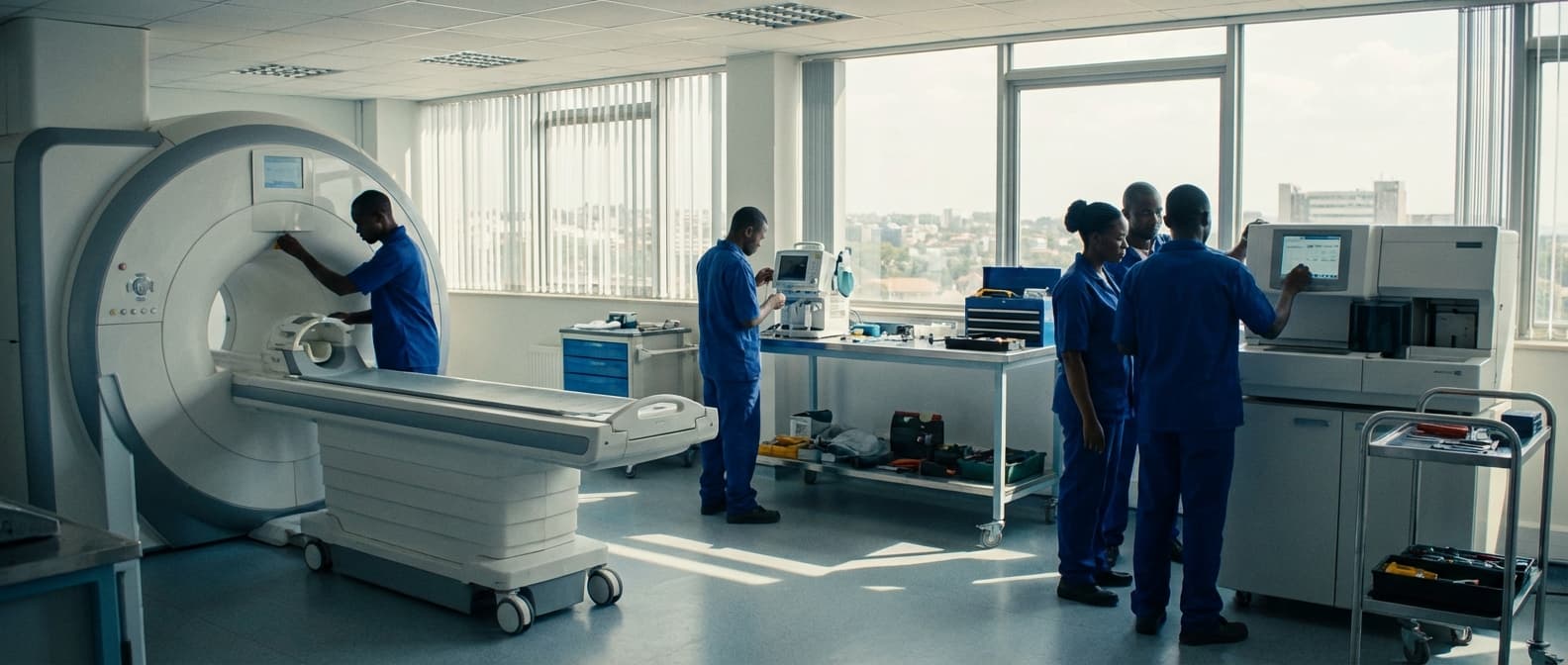
Planned Shutdown Coordination Service for Critical Equipment in Liberia
Engineering Excellence & Technical Support
Planned Shutdown Coordination Service for Critical Equipment High-standard technical execution following OEM protocols and local regulatory frameworks.
Optimized Maintenance Scheduling
Leveraging advanced predictive analytics and real-time operational data, our service precisely identifies optimal shutdown windows for critical equipment. This minimizes production downtime and ensures maximum asset availability while adhering to Liberian operational constraints.
Comprehensive Risk Mitigation
We conduct detailed failure mode and effects analysis (FMEA) and develop robust contingency plans, including spare parts management and expert technician deployment. This proactive approach significantly reduces the risk of unexpected failures and costly delays during planned shutdowns in Liberia.
Seamless Stakeholder Collaboration
Our service facilitates transparent communication and integrated planning with all relevant stakeholders, from internal engineering teams to local regulatory bodies in Liberia. This ensures efficient resource allocation, timely approvals, and a smooth execution of shutdown activities.
What Is Planned Shutdown Coordination Service For Critical Equipment In Liberia?
The Planned Shutdown Coordination Service for Critical Equipment in Liberia is a specialized operational support function designed to manage and optimize the scheduled deactivation of essential infrastructure and machinery. This service is crucial for ensuring that planned downtimes, necessary for maintenance, upgrades, or decommissioning, are executed with minimal disruption to critical national services and economic activities. It encompasses a multi-faceted approach involving meticulous planning, resource allocation, stakeholder communication, risk mitigation, and execution oversight. The objective is to transition critical equipment from an operational state to a safe, inactive state and subsequently back to operational status with maximum efficiency and safety, while adhering to stringent regulatory and operational requirements specific to Liberia's infrastructure landscape.
| Service Recipient | Critical Equipment Examples | Typical Use Cases | |||||||||||||||
|---|---|---|---|---|---|---|---|---|---|---|---|---|---|---|---|---|---|
| National Power Utility (e.g., Liberia Electricity Corporation) | Power Generation Units (e.g., turbines, generators), Substations, Transmission Lines, Distribution Networks | Scheduled maintenance and overhauls, Installation of new equipment, Decommissioning of aging assets, Integration of renewable energy sources, Emergency infrastructure repairs (planned coordination for non-emergency scope) | Telecommunications Providers | Core Network Infrastructure, Base Transceiver Stations (BTS), Data Centers | Software/firmware upgrades, Hardware replacements, Network expansion, Data center migration | Water and Sanitation Authority (e.g., Liberia Water & Sewer Corporation) | Water Treatment Plants, Pumping Stations, Distribution Pipelines, Sewerage Treatment Facilities | Major equipment overhauls (e.g., pumps, filters), Pipeline rehabilitation, Expansion of treatment capacity, Introduction of new purification technologies | Transportation Infrastructure Operators (e.g., Ports, Airports, Road Agencies) | Port Cranes, Runway Lighting Systems, Navigational Aids, Ferry Terminals, Bridge Structures | Structural inspections and repairs, Dredging operations, Air traffic control system upgrades, Terminal renovations, Safety system overhauls | Large Industrial Facilities (e.g., Mining, Manufacturing, Oil & Gas) | Processing Plants, Heavy Machinery, Storage Tanks, Industrial Control Systems | Routine major maintenance, Equipment upgrades for efficiency, Compliance with safety regulations, Debottlenecking production lines | Government Ministries and Agencies (responsible for critical infrastructure) | National Data Archives, Centralized IT Systems, Communication Networks | System upgrades, Data center maintenance, Security enhancements, Disaster recovery planning and testing |
Key Components of Planned Shutdown Coordination Service
- Scope Definition and Objective Setting: Clearly defining the reasons for shutdown, the specific equipment involved, and the desired outcomes (e.g., improved reliability, compliance, capacity enhancement).
- Detailed Planning and Scheduling: Developing comprehensive timelines, outlining all tasks, dependencies, and required resources (personnel, materials, specialized tools, permits).
- Risk Assessment and Mitigation: Identifying potential hazards and operational risks associated with the shutdown and implementing proactive strategies to prevent accidents, environmental incidents, and service interruptions.
- Stakeholder Management and Communication: Establishing clear communication channels with all relevant parties, including asset owners, maintenance teams, regulatory bodies, utility providers, and the public, to inform them of schedules, impacts, and progress.
- Resource Mobilization and Logistics: Ensuring the availability and timely deployment of skilled labor, equipment, spare parts, and any external contractors or specialists.
- Permitting and Regulatory Compliance: Securing all necessary permits and approvals from Liberian authorities and ensuring adherence to national and international safety and environmental standards.
- Execution and Supervision: Overseeing the physical shutdown process, ensuring adherence to established procedures, and providing on-site technical support and troubleshooting.
- Post-Shutdown Verification and Restoration: Conducting thorough inspections, testing, and commissioning of equipment to ensure it is safe and fully operational before returning it to service.
- Documentation and Reporting: Maintaining detailed records of all activities, including deviations, incidents, and final performance reports for future analysis and improvement.
Who Needs Planned Shutdown Coordination Service For Critical Equipment In Liberia?
Planned shutdown coordination for critical equipment in Liberia is essential for organizations that rely heavily on the continuous operation of their machinery and infrastructure. Unexpected downtime can lead to significant financial losses, safety hazards, and disruptions to essential services. A well-coordinated shutdown minimizes these risks by ensuring that maintenance, repairs, or upgrades are performed efficiently and with minimal impact on operations.
| Customer Type | Relevant Departments for Coordination |
|---|---|
| Energy and Power Generation | Operations, Maintenance, Engineering, Safety, Transmission & Distribution |
| Mining and Extractive Industries | Mine Operations, Maintenance, Engineering, Health & Safety, Logistics |
| Telecommunications | Network Operations, Field Maintenance, Engineering, IT Infrastructure, Security |
| Water and Sanitation Services | Operations, Maintenance, Engineering, Water Treatment, Distribution Management |
| Transportation and Logistics | Port Authority Operations, Maintenance, Logistics Management, Security, Terminal Operations |
| Manufacturing and Industrial Plants | Production, Maintenance, Engineering, Quality Control, Supply Chain |
| Healthcare Facilities | Biomedical Engineering, Facilities Management, IT Department, Clinical Operations |
| Financial Institutions | IT Operations, Data Center Management, Infrastructure Maintenance, Security |
| Government Agencies | IT Department, Facilities Management, Infrastructure Maintenance, Security Operations |
Target Customers and Departments in Liberia Requiring Planned Shutdown Coordination:
- Energy and Power Generation (e.g., Liberia Electricity Corporation - LEC, independent power producers)
- Mining and Extractive Industries (e.g., ArcelorMittal Liberia, other mineral extraction companies)
- Telecommunications (e.g., Lonestar Cell MTN, Orange Liberia)
- Water and Sanitation Services (e.g., Liberia Water and Sewer Corporation - LWSC)
- Transportation and Logistics (e.g., ports, major transportation hubs, large logistics companies)
- Manufacturing and Industrial Plants (e.g., food processing, cement production, assembly lines)
- Healthcare Facilities (e.g., major hospitals and clinics with critical medical equipment)
- Financial Institutions (e.g., central bank, large commercial banks with data centers)
- Government Agencies with critical infrastructure (e.g., national security, data management centers)
Planned Shutdown Coordination Service For Critical Equipment Process In Liberia
This document outlines the workflow for the Planned Shutdown Coordination Service for Critical Equipment in Liberia, encompassing the entire process from initial inquiry to successful execution. The service aims to ensure that planned shutdowns of critical equipment are managed efficiently, safely, and with minimal disruption to operations, adhering to Liberian regulatory requirements and best practices.
| Phase | Key Activities | Responsible Parties | Deliverables/Outcomes | Key Considerations (Liberia) |
|---|---|---|---|---|
| Receive and acknowledge shutdown request from client. Conduct initial site visit and preliminary assessment of equipment and operational impact. Identify primary stakeholders and their immediate concerns. | Client (Equipment Owner), Coordination Service Provider | Confirmation of request, preliminary feasibility report, initial stakeholder list. | Understanding of local operational context, potential impact on national utilities or critical infrastructure. |
| Collaborate with the client to define precise shutdown scope, objectives, and duration. Develop a detailed shutdown plan, including specific tasks, timelines, and dependencies. Identify critical path activities and potential risks. Establish communication protocols and reporting structure. | Coordination Service Provider, Client Engineering/Maintenance, Safety Officers | Approved shutdown scope document, detailed project schedule, risk assessment matrix, communication plan. | Adherence to Liberian safety regulations (e.g., Ministry of Labour standards), environmental impact assessments. |
| Identify and secure necessary personnel (internal and external technicians, specialists). Procure required materials, spare parts, and specialized tools. Coordinate logistics for personnel and equipment transportation. | Coordination Service Provider (Procurement, Logistics), Client Procurement | Confirmed resource availability, procured materials and equipment, logistical arrangements. | Local sourcing opportunities, import regulations for specialized equipment, driver licensing and vehicle safety standards. |
| Identify all required permits and licenses from Liberian authorities (e.g., Environmental Protection Agency, Ministry of Mines and Energy, local government). Prepare and submit permit applications. Liaise with regulatory bodies to ensure timely approval. | Coordination Service Provider (Regulatory Affairs), Client Legal Department | All necessary permits and approvals, documented compliance records. | Familiarity with specific Liberian environmental, health, and safety (EHS) regulations, building permits, operational licenses. |
| Conduct pre-shutdown safety briefings and training for all involved personnel. Perform pre-shutdown inspections of equipment and work areas. Implement safety barriers and signage. Ensure all necessary safety equipment and procedures are in place. | Coordination Service Provider (Safety Manager), Client Site Management, All Personnel | Completed safety briefings, pre-shutdown inspection reports, established safety zones, readiness checklist. | Awareness of local customs and communication styles during safety briefings, emergency response plan integration with local services. |
| Isolate and de-energize critical equipment according to the plan. Supervise and manage all shutdown activities, ensuring adherence to the schedule and safety procedures. Conduct quality control checks throughout the execution. Communicate progress and any deviations to stakeholders regularly. | Coordination Service Provider (Site Manager, Supervisors), Client Technicians, Specialist Contractors | Executed shutdown tasks, completed maintenance/repair work, real-time progress updates, issue logs. | Effective communication across diverse workforces, managing potential impacts on surrounding communities, adherence to any local curfews or operational restrictions. |
| Re-energize and test critical equipment to ensure full functionality. Conduct post-shutdown inspections and performance verification. Compile a comprehensive shutdown report, including lessons learned, deviations, and recommendations. Demobilize personnel and equipment. | Coordination Service Provider, Client Operations and Maintenance | Operational equipment, post-shutdown inspection reports, final shutdown report, closed-out project. | Documenting any unique operational challenges encountered in Liberia, feedback mechanisms for local workforce engagement. |
| Review the shutdown report and lessons learned with stakeholders. Identify areas for improvement in future shutdown planning and execution. Update procedures and best practices based on the experience. | Coordination Service Provider, Client Management | Updated operational procedures, documented improvement initiatives, enhanced future planning. | Incorporating feedback from Liberian regulatory bodies, adapting to evolving local operational landscapes. |
Planned Shutdown Coordination Service Workflow
- Inquiry and Initial Assessment
- Scope Definition and Planning
- Resource Allocation and Procurement
- Permitting and Regulatory Compliance
- Pre-Shutdown Preparations
- Execution of the Planned Shutdown
- Post-Shutdown Activities and Reporting
- Continuous Improvement
Planned Shutdown Coordination Service For Critical Equipment Cost In Liberia
Coordinating planned shutdowns for critical equipment in Liberia involves a complex interplay of factors influencing the overall cost. These factors range from the complexity of the equipment and the duration of the shutdown to the specific service provider's expertise, the availability of specialized personnel, and logistical considerations within Liberia. Effective coordination ensures minimal disruption, safety, and efficient execution, ultimately impacting the bottom line. Pricing is typically structured on a per-shutdown basis, with variations based on the aforementioned elements. Understanding these components is crucial for budgeting and securing reliable service providers.
| Service Component / Scenario | Estimated Price Range (Liberian Dollar - LRD) | Notes |
|---|---|---|
| Basic Shutdown Coordination (Small Equipment, Short Duration) | 150,000 - 400,000 LRD | Includes basic planning, on-site supervision for a few days, and essential safety checks. |
| Standard Shutdown Coordination (Medium Equipment, Medium Duration) | 400,000 - 1,000,000 LRD | Covers comprehensive planning, multi-day on-site management, safety coordination, and basic logistics. |
| Advanced Shutdown Coordination (Large/Critical Equipment, Extended Duration) | 1,000,000 - 5,000,000+ LRD | Involves detailed risk assessment, specialized technical supervision, extensive logistics, rigorous safety protocols, and potential expatriate personnel. |
| On-Site Project Management Fee (Daily) | 25,000 - 100,000 LRD | This is a component that can be added for extended on-site presence of a project manager. |
| Safety Officer / Supervisor (Daily) | 15,000 - 50,000 LRD | Cost for dedicated safety personnel during the shutdown period. |
| Technical Supervisor (Daily) | 20,000 - 70,000 LRD | For specialized technical oversight of the equipment being worked on. |
| Logistics & Mobilization (Variable) | 50,000 - 500,000+ LRD | Highly dependent on distance, transportation methods, and volume of materials. |
| Contingency Fund (Percentage of Total) | 5% - 15% of Total Cost | Recommended for unforeseen issues and scope changes. |
Key Pricing Factors for Planned Shutdown Coordination Services in Liberia
- Equipment Complexity and Criticality: More intricate or strategically vital equipment (e.g., power generators, heavy industrial machinery) necessitates higher coordination costs due to increased technical requirements, risk assessment, and specialized personnel.
- Shutdown Duration: The planned length of the shutdown directly impacts labor costs, equipment rental, and the overall project management overhead. Longer durations generally translate to higher costs.
- Scope of Services: The extent of coordination required – from initial planning and risk assessment to on-site supervision, safety management, and post-shutdown reporting – will influence the price. Comprehensive packages are more expensive.
- Service Provider Expertise and Reputation: Established providers with a proven track record, specialized knowledge of Liberian operational environments, and strong safety protocols will command higher fees.
- Personnel Requirements: The number and specialization of personnel needed (e.g., project managers, safety officers, technical supervisors, skilled laborers) are significant cost drivers. Sourcing qualified local or expatriate staff can affect pricing.
- Logistics and Mobilization: Transportation of personnel, specialized tools, and equipment to and from the shutdown site, especially in remote areas of Liberia, contributes to the overall cost.
- Safety and Environmental Compliance: Implementing rigorous safety procedures and adhering to environmental regulations requires dedicated resources, training, and potentially specialized equipment, adding to the cost.
- Contingency Planning and Risk Management: The effort invested in developing robust contingency plans for unexpected issues or potential risks during the shutdown is factored into the pricing.
- Reporting and Documentation: The level of detail and frequency of reporting required for the shutdown's progress, outcomes, and lessons learned can influence the cost.
- Geographical Location within Liberia: Accessibility and infrastructure at the shutdown site will impact logistical costs. Projects in major urban centers might be less expensive than those in remote regions.
Affordable Planned Shutdown Coordination Service For Critical Equipment Options
Implementing an 'Affordable Planned Shutdown Coordination Service for Critical Equipment' is crucial for minimizing downtime, ensuring safety, and optimizing operational efficiency. This service focuses on meticulous planning and execution of scheduled maintenance, repairs, or upgrades for essential machinery and systems. The core value lies in its proactive approach, preventing costly reactive emergency repairs and the associated disruption. We offer flexible value bundles designed to meet diverse operational needs and budgets, alongside cost-saving strategies that enhance the overall economic benefit of planned shutdowns.
| Cost-Saving Strategy | Description | Impact on Planned Shutdowns |
|---|---|---|
| Optimized Scheduling & Phasing | Strategic scheduling to group non-critical tasks with critical ones, minimizing overall downtime and leveraging shared resources. Phased shutdowns can also be employed for complex operations. | Reduces total days of operational interruption. Maximizes workforce and equipment utilization. |
| Predictive & Condition-Based Maintenance Integration | Utilizing data from sensors and historical trends to predict equipment failure. Maintenance is performed only when needed, not on a fixed schedule. | Prevents unnecessary shutdowns, reduces parts replacement frequency, and allows for pre-ordering of parts, potentially at lower costs. |
| Consolidated Procurement & Vendor Negotiation | Leveraging the scale of multiple planned shutdowns to negotiate bulk discounts on parts, materials, and specialized services. Establishing long-term relationships with preferred vendors. | Lower acquisition costs for critical components and services. Improved lead times and guaranteed availability. |
| Lean Workforce Management | Accurate assessment of labor needs, minimizing overstaffing. Cross-training of personnel to handle multiple tasks. Efficient shift management to avoid overtime. | Reduced labor costs. Improved productivity and flexibility of the maintenance team. |
| Advanced Planning & Simulation | Utilizing sophisticated planning software and simulation tools to identify bottlenecks, optimize workflows, and test different scenarios before execution. | Minimizes unexpected delays and rework during the shutdown, saving time and resources. Improved execution accuracy. |
| Shared Resource Utilization | Coordinating shutdowns across different departments or even collaborating with neighboring facilities to share specialized equipment, tooling, and skilled personnel. | Reduces capital expenditure on underutilized equipment. Increases access to specialized expertise. |
| Risk Mitigation & Preventative Actions | Thorough risk assessments and proactive implementation of safety measures and contingency plans to avoid accidents and costly damages. | Prevents costly incident-related downtime, repairs, and potential legal liabilities. Ensures a safer working environment. |
Value Bundles Explained
- {"title":"Essential Coordination Package","description":"Our foundational offering. Includes comprehensive planning, resource allocation (personnel and materials), scheduling, on-site supervision during the shutdown, and basic post-shutdown reporting. Ideal for organizations with established internal maintenance teams but seeking external expertise for optimized coordination."}
- {"title":"Proactive Maintenance Integration Package","description":"Builds upon the Essential package by incorporating predictive and condition-based maintenance analysis. We integrate with your existing monitoring systems to identify potential issues before they necessitate a shutdown, optimizing the shutdown scope and timing. Includes advanced diagnostic support and detailed risk assessment."}
- {"title":"Turnkey Shutdown Management Package","description":"Our most comprehensive solution. Encompasses all aspects of planned shutdown coordination, from initial assessment and long-term strategic planning to full execution, including external contractor management, specialized equipment rental, safety compliance oversight, and detailed performance analysis. Designed for organizations requiring end-to-end support."}
- {"title":"Customizable Solutions","description":"We understand that no two operations are identical. Clients can select specific services from our portfolio to create a tailored value bundle that precisely matches their requirements and budget, ensuring maximum return on investment."}
Verified Providers In Liberia
In Liberia's burgeoning healthcare sector, the assurance of quality and trustworthiness is paramount. Verified providers stand out, offering a crucial layer of confidence for patients seeking reliable medical services. Among these, Franance Health has emerged as a leading force, distinguished by its rigorous credentialing processes and unwavering commitment to patient care. This document explores what makes Franance Health's credentials so significant and why they represent the best choice for healthcare in Liberia.
| Aspect of Verification | Franance Health's Commitment | Benefit to Patients |
|---|---|---|
| Regulatory Compliance | Adherence to all Liberian Ministry of Health regulations and guidelines. | Ensures services meet national safety and quality standards, protecting patient well-being. |
| Professional Expertise | Rigorous screening and continuous professional development for all medical staff. | Access to highly qualified and up-to-date medical professionals for accurate diagnosis and effective treatment. |
| Infrastructure & Technology | Investment in modern medical equipment and well-maintained facilities. | Provides access to advanced diagnostic tools and treatment options, leading to better health outcomes. |
| Patient-Centric Care | Implementation of robust patient safety protocols and responsive feedback mechanisms. | Offers a safe and supportive environment where patient concerns are addressed, and care is personalized. |
| Trust & Transparency | Commitment to clear communication, ethical practices, and transparent billing. | Empowers patients with knowledge and confidence in their healthcare provider, fostering a strong doctor-patient relationship. |
Key Franance Health Credentials and Their Significance:
- Accreditation by National Health Authorities: Franance Health undergoes regular inspections and audits by the Liberian Ministry of Health and other relevant national regulatory bodies. This ensures adherence to established standards for facilities, equipment, and professional conduct.
- International Certifications: Pursuing and maintaining international healthcare accreditations (e.g., Joint Commission International, ISO certifications) signifies a commitment to global best practices in patient safety, quality improvement, and operational efficiency.
- Physician and Staff Qualifications: All medical professionals at Franance Health are rigorously vetted. This includes verification of their medical degrees, licenses to practice, specialized training, and ongoing professional development. Continuous training programs ensure staff remain up-to-date with the latest medical advancements.
- Advanced Technology and Equipment: Franance Health invests in state-of-the-art medical technology and equipment, regularly maintained and calibrated to ensure accuracy and reliability in diagnostics and treatment. This commitment is often a prerequisite for higher accreditation levels.
- Patient Safety Protocols: The organization adheres to stringent patient safety protocols, including infection control measures, medication management systems, and emergency response plans. These protocols are regularly reviewed and updated.
- Transparent Pricing and Billing: Verified providers like Franance Health prioritize transparency in their services and associated costs. Clear billing practices build trust and allow patients to make informed decisions about their healthcare.
- Patient Feedback and Satisfaction: A commitment to patient well-being is often demonstrated through mechanisms for collecting and acting on patient feedback. High patient satisfaction scores are a strong indicator of quality care.
- Ethical Practice and Compliance: Franance Health operates with a strong ethical framework, ensuring compliance with all relevant laws and regulations, and maintaining the highest standards of patient privacy and confidentiality.
Scope Of Work For Planned Shutdown Coordination Service For Critical Equipment
This Scope of Work (SOW) outlines the services required for the planned shutdown coordination of critical equipment. The objective is to ensure a safe, efficient, and well-managed shutdown process, minimizing downtime and associated risks. This service will encompass all phases of the shutdown, from pre-planning to post-execution review. The technical deliverables will be in accordance with industry best practices and applicable standard specifications.
| Phase | Key Activities | Deliverables | Standard Specifications/Considerations |
|---|---|---|---|
| Define shutdown scope and objectives, identify critical equipment, develop detailed shutdown schedule, risk assessment, resource planning (personnel, materials, tools), pre-mobilization of vendors, safety plan development, communication plan development. | Shutdown scope document, detailed work breakdown structure (WBS), Gantt chart schedule, risk register, resource allocation plan, vendor mobilization plan, safety plan, communication plan, pre-shutdown meeting minutes. | ISO 31000 (Risk Management), NECA 110 (Safety Codes for Electricians), OSHA 29 CFR 1910.119 (Process Safety Management), Company specific safety standards, relevant industry codes (e.g., ASME, API for mechanical equipment). |
| Isolation of equipment, execution of planned maintenance/inspections, troubleshooting and repair, quality control, progress monitoring and reporting, daily coordination meetings, adherence to safety protocols, management of changes. | Daily progress reports, deviation reports, incident reports (if any), quality inspection reports, toolbox talk records, updated schedule (if deviations occur). | Lockout/Tagout (LOTO) procedures, Permit to Work (PTW) system, Job Safety Analysis (JSA) for specific tasks, relevant equipment manuals and OEM guidelines, emergency response procedures. |
| Reinstatement of equipment, functional testing and commissioning, final documentation compilation, performance verification, lessons learned session, post-shutdown review meeting, final reporting. | Commissioning reports, functional test results, final shutdown report, lessons learned document, post-shutdown review meeting minutes. | Manufacturer's recommendations for commissioning, relevant performance testing standards (e.g., IEC standards for electrical equipment), project closure procedures. |
| Overall project management, stakeholder communication, coordination of internal and external resources, budget monitoring, change management, documentation control, ensuring adherence to quality and safety standards. | Regular progress reports (weekly/bi-weekly), stakeholder meeting minutes, budget status updates, change order documentation, controlled document register. | Project Management Institute (PMI) standards (e.g., PMBOK Guide), ISO 9001 (Quality Management), applicable company policies and procedures. |
Key Objectives of Planned Shutdown Coordination Service
- Minimize unplanned downtime and associated production losses.
- Ensure the safety of all personnel involved in the shutdown activities.
- Optimize resource allocation (personnel, materials, equipment).
- Facilitate timely completion of all planned maintenance and inspection tasks.
- Ensure compliance with all relevant safety regulations and company policies.
- Provide clear communication channels between all stakeholders.
- Capture lessons learned to improve future shutdown planning and execution.
Service Level Agreement For Planned Shutdown Coordination Service For Critical Equipment
This Service Level Agreement (SLA) outlines the terms and conditions for the Planned Shutdown Coordination Service for Critical Equipment. It defines response times for critical events and uptime guarantees for the coordination platform.
| Service Component | Uptime Guarantee | Response Time (Critical Event) |
|---|---|---|
| Planned Shutdown Coordination Platform | 99.9% Monthly Availability | N/A (Platform is for scheduled events) |
| Emergency Coordination Activation (for unscheduled critical events impacting planned shutdowns) | N/A | 15 minutes to acknowledge and initiate contact |
| Communication Channel Access (during scheduled shutdown windows) | 99.9% Monthly Availability | N/A (Active during scheduled windows) |
| Post-Shutdown Report Generation | N/A | Within 48 business hours of shutdown completion |
Scope of Service
- Coordination of planned downtime for critical equipment to minimize operational impact.
- Facilitation of communication between relevant stakeholders (Operations, Maintenance, Engineering, etc.).
- Scheduling and tracking of shutdown activities.
- Provision of a dedicated coordination platform for real-time updates and documentation.
- Post-shutdown review and reporting.
Frequently Asked Questions

Ready when you are
Let's scope your Planned Shutdown Coordination Service for Critical Equipment in Liberia project in Liberia.

Scaling healthcare logistics and technical systems across the entire continent.