
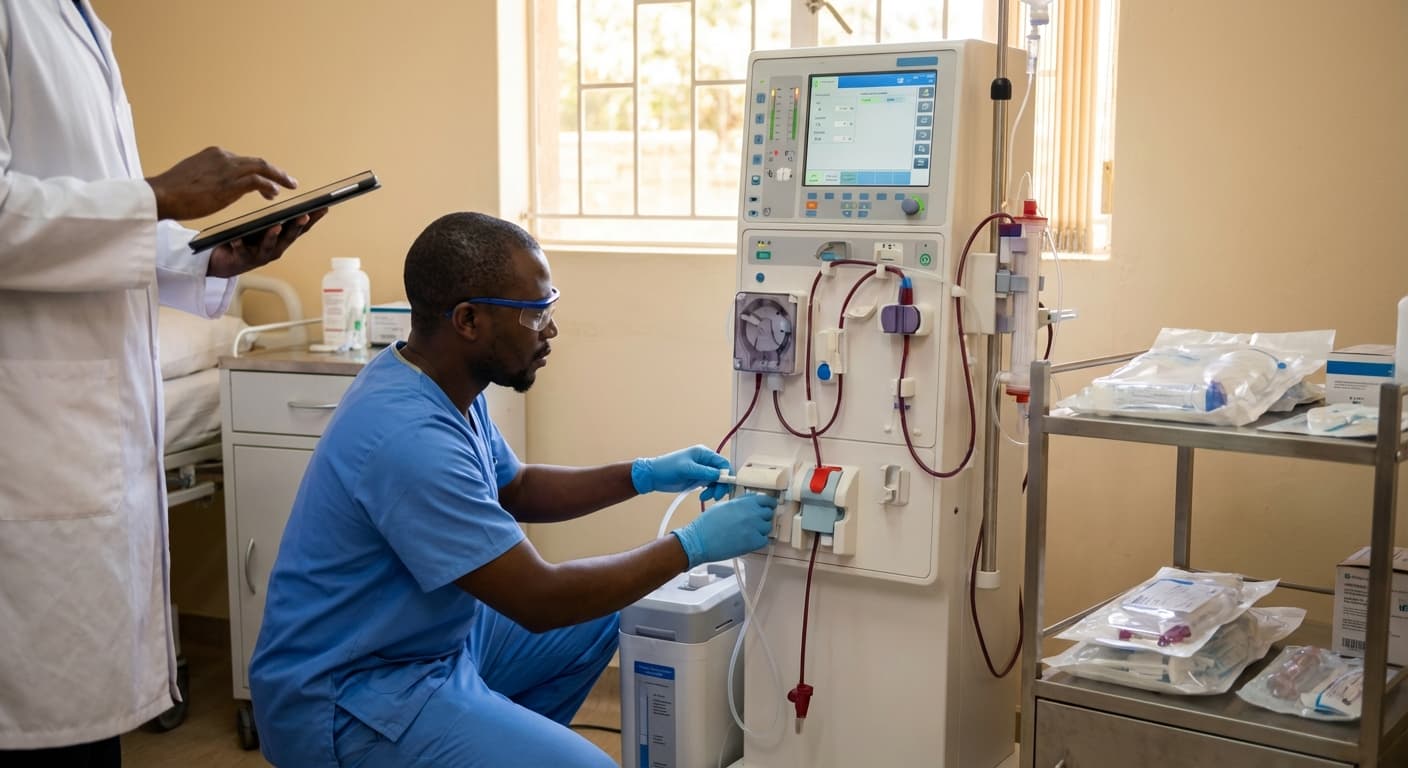
Hemodialysis Machine Installation Service in Liberia
Engineering Excellence & Technical Support
Hemodialysis Machine Installation Service High-standard technical execution following OEM protocols and local regulatory frameworks.
Expert On-Site Installation & Calibration
Our certified technicians provide meticulous on-site installation of hemodialysis machines across Liberia, ensuring precise calibration and adherence to international standards for optimal patient safety and treatment efficacy.
Comprehensive Equipment Integration & Testing
We offer seamless integration of your hemodialysis machines with existing hospital infrastructure, including water treatment systems and power supply. Rigorous testing is conducted to guarantee full functionality and reliability.
In-Depth User Training & Support
Beyond installation, our service includes comprehensive training for your medical staff on machine operation, basic troubleshooting, and preventive maintenance, empowering your team for efficient and effective dialysis care.
What Is Hemodialysis Machine Installation Service In Liberia?
Hemodialysis Machine Installation Service in Liberia refers to the specialized process of setting up, configuring, and validating hemodialysis equipment within healthcare facilities across Liberia. This service ensures that the machines are operational, calibrated according to manufacturer specifications, and meet all relevant safety and efficacy standards for patient use. It encompasses a range of technical procedures essential for the safe and effective delivery of hemodialysis therapy.
| Who Needs This Service? | Typical Use Cases | |||
|---|---|---|---|---|
| Hospitals (Public and Private): Acute care facilities requiring in-house dialysis capabilities for critically ill patients or those with chronic kidney disease. | Establishment of new dialysis centers or expansion of existing ones. | Replacement or upgrade of outdated or malfunctioning hemodialysis machines. | Setting up hemodialysis units in remote or underserved areas as part of public health initiatives. | Research institutions conducting studies involving hemodialysis. |
| Public and private hospitals | Specialized dialysis clinics | Non-governmental organizations (NGOs) involved in healthcare delivery | Government health ministries implementing national dialysis programs | Tertiary care facilities |
Key Components of Hemodialysis Machine Installation Service
- Site Assessment and Preparation: Evaluating the intended installation location for adequacy of space, power supply (voltage, grounding), water quality and supply, waste disposal, and environmental conditions.
- Unpacking and Physical Setup: Carefully unpacking the hemodialysis machine, accessories, and any ancillary equipment, followed by their precise placement according to design and workflow requirements.
- Electrical and Plumbing Connections: Establishing secure and compliant connections to the facility's power grid and water supply systems. This often involves specialized filters and purification systems for the water used in dialysis.
- System Configuration and Calibration: Programming the machine's operational parameters, including flow rates, pressures, dialysate composition, and alarm settings. This stage requires meticulous calibration to ensure accuracy and patient safety.
- Ancillary Equipment Integration: Connecting and testing associated equipment such as dialysate delivery systems, water treatment units, patient monitoring devices, and waste management systems.
- Functional Testing and Validation: Conducting comprehensive operational tests, including priming the machine, simulating dialysis treatments (e.g., using saline or phantom models), and verifying all safety features and alarm responses.
- User Training and Handover: Providing thorough training to biomedical engineers, nurses, and technicians on the operation, basic maintenance, and troubleshooting of the installed hemodialysis machine.
- Documentation and Certification: Completing all necessary installation logs, calibration certificates, and compliance documentation as required by regulatory bodies and the manufacturer.
- Post-Installation Support: Offering initial troubleshooting and support immediately following installation to address any emergent issues.
Who Needs Hemodialysis Machine Installation Service In Liberia?
Ensuring access to life-saving hemodialysis treatment requires reliable and properly installed equipment. In Liberia, the need for specialized hemodialysis machine installation services is critical for various healthcare facilities and organizations aiming to combat kidney disease. This service ensures that these complex medical devices are set up correctly, calibrated, and ready for operation, minimizing downtime and maximizing patient care.
| Customer Type | Primary Departments Involved | Key Needs/Considerations |
|---|---|---|
| Hospitals (Governmental, Private, Faith-Based) | Nephrology Department, Biomedical Engineering Department, Facilities Management, Procurement Department | Need for reliable installation to support existing or new dialysis units, ensuring patient safety and compliance with medical standards. Require integration with existing hospital infrastructure (water purification, power). |
| Dialysis Centers (Standalone & Hospital-Affiliated) | Clinical Operations, Biomedical Engineering, Patient Care Services, Administration | Primary focus is on efficient and safe operation of dialysis machines for a dedicated patient population. Require expert installation for immediate patient treatment and minimal disruption to services. |
| Non-Governmental Organizations (NGOs) | Program Management, Healthcare Delivery Teams, Logistics and Procurement | Often involved in establishing or expanding dialysis services in underserved areas. Require comprehensive installation and potential training components to ensure sustainability of the service. |
| International Aid Organizations | Project Management, Health Sector Specialists, Procurement and Logistics | Focused on capacity building and providing essential medical equipment. Require installation services that meet international standards and contribute to long-term healthcare improvements. |
| Government Health Ministries/Agencies | Public Health Department, Medical Supplies and Equipment Unit, Policy and Planning | Responsible for national healthcare strategies and infrastructure development. Need installation services for public health facilities and to ensure equitable access to dialysis across the country. |
Target Customers and Departments for Hemodialysis Machine Installation Service in Liberia
- Hospitals (Governmental, Private, and Faith-Based)
- Dialysis Centers (Standalone and Hospital-Affiliated)
- Non-Governmental Organizations (NGOs) involved in healthcare provision
- International Aid Organizations supporting healthcare infrastructure
- Government Health Ministries and Agencies
Hemodialysis Machine Installation Service Process In Liberia
This document outlines the comprehensive workflow for Hemodialysis Machine Installation Services in Liberia, from the initial customer inquiry to the final execution and handover. The process is designed to ensure a smooth, efficient, and compliant installation, meeting the specific needs of healthcare facilities in the country.
| Phase | Stage | Description | Key Activities | Responsible Party |
|---|---|---|---|---|
| Phase 1: Pre-Installation | Inquiry & Consultation | The process begins with a healthcare facility or individual expressing interest in installing a hemodialysis machine. |
| Service Provider (Sales/Technical Team) |
| Site Assessment & Planning | A thorough evaluation of the installation site is crucial to ensure all requirements are met. |
| Service Provider (Technical Team) | |
| Quotation & Contract | Based on the assessment, a formal proposal and agreement are presented. |
| Service Provider (Sales/Admin Team), Client | |
| Phase 2: Execution | Logistics & Delivery | Ensuring the safe and timely arrival of the hemodialysis machine at the facility. |
| Service Provider (Logistics/Technical Team), Client |
| Pre-Installation Preparation | Setting up the installation environment according to the plan. |
| Client, Service Provider (Technical Team - supervision) | |
| Machine Installation & Setup | The physical installation and configuration of the hemodialysis machine. |
| Service Provider (Certified Technicians) | |
| Testing & Calibration | Verifying the machine's functionality and accuracy. |
| Service Provider (Certified Technicians) | |
| User Training | Equipping healthcare professionals with the knowledge to operate the machine effectively and safely. |
| Service Provider (Application Specialist/Trainer), Client Staff | |
| Phase 3: Post-Installation | Handover & Documentation | Formal completion of the installation and provision of essential documents. |
| Service Provider (Project Manager), Client Representative |
| Post-Installation Support & Maintenance | Ongoing support to ensure continued optimal performance. |
| Service Provider (Technical Support/Service Team) |
Hemodialysis Machine Installation Service Process in Liberia
- Initial Inquiry and Consultation
- Site Assessment and Planning
- Quotation and Contract Agreement
- Logistics and Machine Delivery
- Pre-Installation Preparation
- Machine Installation and Setup
- Testing and Calibration
- User Training
- Handover and Documentation
- Post-Installation Support and Maintenance
Hemodialysis Machine Installation Service Cost In Liberia
Installing a hemodialysis machine is a critical step for establishing or expanding dialysis services in Liberia. The cost associated with this service can fluctuate significantly due to various factors. Understanding these elements is crucial for accurate budgeting and procurement. This overview will discuss the primary pricing factors and provide an estimated cost range in Liberian Dollars (LRD).
| Installation Service Type | Estimated Cost Range (LRD) | Notes |
|---|---|---|
| Basic Machine Setup (Local Technician) | 150,000 - 300,000 | Includes basic connection to existing utilities, initial functional check. |
| Standard Installation (Local Technician) | 300,000 - 750,000 | Includes minor site adjustments, connection to power and water, initial calibration, and basic training. |
| Complex Installation (Local Technician) | 750,000 - 1,500,000+ | Involves significant site preparation, basic water treatment setup, and more comprehensive training. |
| Full-Service Installation (International Technicians) | 1,000,000 - 5,000,000+ | Includes international technician fees, travel, accommodation, extensive site preparation, advanced water treatment integration, and in-depth training. |
| Water Treatment System Installation (RO/DI) | 500,000 - 2,000,000+ | This is a significant separate cost, often bundled with machine installation for a comprehensive solution. Prices vary greatly based on system capacity and features. |
Key Factors Influencing Hemodialysis Machine Installation Costs in Liberia:
- Type and Brand of Hemodialysis Machine: High-end, technologically advanced machines from reputable international brands generally command higher installation fees compared to more basic models. Features like integrated water treatment, advanced monitoring capabilities, and user-friendly interfaces contribute to cost.
- Installation Complexity: This encompasses the scope of work required. Factors include the existing infrastructure (e.g., availability of suitable power outlets, plumbing, and ventilation), the need for structural modifications, and the distance from the point of delivery to the installation site within the facility.
- Site Preparation and Infrastructure: The cost can increase substantially if the facility requires significant upgrades. This might include: * Electrical Upgrades: Ensuring a stable and adequate power supply is paramount. This could involve installing new circuits, surge protectors, or even backup generators. * Plumbing and Water Treatment: Hemodialysis requires specific water quality. Installation may necessitate specialized plumbing, reverse osmosis (RO) systems, and deionization units, which are substantial investments. * Ventilation and Air Conditioning: Proper air circulation and temperature control are important for patient comfort and machine longevity. * Flooring and Wall Preparation: The installation area might need reinforced flooring or specific wall finishes to withstand the machine's weight and potential spills.
- Technician Expertise and Travel: The qualifications and experience of the installation technicians are crucial. International technicians flown in for the installation will incur travel, accommodation, and per diem costs, which will be passed on. Local technicians may be more cost-effective but their availability and expertise might vary.
- Ancillary Equipment and Consumables: While not strictly installation service costs, the initial purchase of essential consumables (e.g., dialyzers, tubing, disinfectants) and any necessary ancillary equipment (e.g., trolleys, chairs) that accompany the installation will be part of the overall project budget.
- Warranty and Maintenance Agreements: The terms of the warranty and any initial maintenance contracts included with the installation can influence the upfront service cost.
- Logistics and Shipping: The cost of transporting the machine from the port of entry to the installation site within Liberia can vary based on distance and accessibility. This is often a separate charge but closely tied to the overall project.
- Permits and Approvals: Depending on local regulations, obtaining necessary permits for the installation of medical equipment might incur administrative fees.
Affordable Hemodialysis Machine Installation Service Options
Setting up a hemodialysis machine is a critical step for dialysis centers, and finding affordable installation services is paramount. This guide outlines valuable service options and effective cost-saving strategies to ensure a smooth and economical setup process. We'll explore how value bundles can provide comprehensive solutions and detail practical tips for minimizing expenses without compromising quality.
| Value Bundle Option | Included Services | Potential Cost Savings | Ideal For |
|---|---|---|---|
| Basic Installation Package | Machine delivery, placement, basic electrical and plumbing hookups, initial testing. | Lower upfront cost, good for centers with existing, well-maintained infrastructure. | New clinics with minimal existing infrastructure, or centers replacing older machines with similar configurations. |
| Comprehensive Installation & Training | Includes basic package plus water treatment system setup, advanced safety checks, and extensive staff training sessions. | Reduces need for separate training vendors, ensures staff proficiency from day one, potentially lower long-term operational costs due to reduced errors. | Newly established centers, centers expanding their dialysis services, or those with new staff members. |
| Full-Service Turnkey Solution | Includes all services from the comprehensive package, plus site assessment, minor renovations if needed, and initial supply stocking. | Maximizes convenience and minimizes project management overhead, predictable all-inclusive pricing. | Centers prioritizing speed and ease of setup, or those with limited in-house project management capacity. |
| Equipment Leasing with Installation | Leasing the hemodialysis machine with installation costs bundled into the lease agreement. | Spreads costs over time, often includes maintenance and upgrade options within the lease. | Centers with budget constraints who prefer operational expenses over capital expenditure, or those who frequently upgrade equipment. |
Key Components of Hemodialysis Machine Installation
- Site Assessment and Preparation: Evaluating the location, ensuring proper plumbing, electrical, and ventilation systems are in place.
- Machine Delivery and Placement: Safely transporting the hemodialysis machine to its designated spot.
- Plumbing and Water Treatment System Integration: Connecting the machine to the water supply and ensuring a high-quality purified water system.
- Electrical Connections and Safety Checks: Ensuring secure and safe electrical hookups, including backup power considerations.
- Testing and Calibration: Thoroughly testing the machine's functionality and calibrating it to meet specific patient needs and regulatory standards.
- Staff Training: Providing essential training for clinical staff on machine operation, maintenance, and troubleshooting.
- Ongoing Maintenance and Support: Establishing a plan for regular servicing and access to technical support.
Verified Providers In Liberia
In Liberia's evolving healthcare landscape, identifying truly verified and competent providers is paramount for ensuring quality patient care. Franance Health stands out as a leader, distinguished by its rigorous credentialing process and unwavering commitment to excellence. This document outlines Franance Health's credentials and explains why they represent the best choice for healthcare services in Liberia.
| Credential/Feature | Franance Health's Assurance | Why it Matters for Patients |
|---|---|---|
| Ministry of Health Licensing | Fully compliant and licensed facilities and professionals. | Guarantees legal operation and adherence to national healthcare regulations, ensuring a safe environment for treatment. |
| Board Certifications | Verification of all specialists' relevant board certifications. | Confirms that our doctors have met rigorous standards of knowledge and expertise in their respective fields. |
| Continuous Medical Education (CME/CPD) | Mandatory participation and documentation of ongoing professional development. | Ensures patients receive care based on the latest medical knowledge, research, and treatment protocols. |
| Advanced Diagnostic Equipment | Investment in modern, well-maintained diagnostic tools (e.g., digital X-ray, ultrasound). | Leads to more accurate and timely diagnoses, reducing the need for repeat tests and improving treatment outcomes. |
| Quality Assurance Protocols | Implementation of stringent internal quality control measures and patient feedback mechanisms. | Demonstrates a proactive approach to identifying and addressing any potential shortcomings, consistently striving for improvement in service delivery. |
| Experienced Medical Teams | Selection of professionals with proven track records and extensive clinical experience. | Provides patients with confidence in the competence and reliability of the healthcare providers treating them. |
Franance Health's Key Credentials and Differentiators
- Accreditation and Licensing: Franance Health facilities and professionals hold all necessary national and international accreditations and licenses mandated by the Liberian Ministry of Health and relevant global health bodies. This ensures adherence to the highest standards of medical practice and patient safety.
- Rigorous Professional Vetting: All healthcare professionals at Franance Health undergo an extensive vetting process. This includes verification of academic qualifications, medical board certifications, prior work experience, and professional conduct records. We go beyond basic checks to ensure our team comprises highly skilled and ethical practitioners.
- Continuous Professional Development (CPD): Franance Health mandates and actively supports ongoing training and development for its entire medical staff. This commitment to CPD ensures that our providers remain at the forefront of medical advancements, utilizing the latest techniques and technologies.
- State-of-the-Art Infrastructure and Equipment: Our commitment to quality extends to our facilities. Franance Health invests in modern infrastructure, advanced diagnostic equipment, and well-equipped surgical suites, all maintained to international standards. This allows for accurate diagnoses and effective treatment.
- Patient-Centric Approach: While technical expertise is crucial, Franance Health prioritizes a patient-centered approach. Our credentialing process includes assessing communication skills, empathy, and a dedication to patient comfort and dignity. We believe that the human element of care is as important as clinical proficiency.
- Compliance with Ethical Standards: Franance Health adheres to a strict code of ethical conduct, promoting transparency, patient confidentiality, and equitable access to care. Our providers are trained to uphold these ethical principles in all their interactions.
- International Partnerships and Collaborations: Franance Health actively engages with international healthcare organizations and institutions. This fosters knowledge exchange, facilitates access to specialized expertise, and allows for the implementation of best practices observed globally.
Scope Of Work For Hemodialysis Machine Installation Service
This Scope of Work (SOW) outlines the services required for the professional installation of hemodialysis machines at [Client Facility Name] located at [Client Facility Address]. The objective is to ensure the safe, efficient, and compliant integration of the hemodialysis machines into the existing healthcare infrastructure, ready for patient use. This SOW details the technical deliverables, standard specifications, and responsibilities of both the service provider and the client.
| Item | Description | Standard Specification/Deliverable | Client Responsibilities | Provider Responsibilities |
|---|---|---|---|---|
| Site Assessment | Initial survey of the installation location to verify space, power, water, and drainage requirements. | Detailed site report including measurements, power outlet availability, plumbing access points, and any potential obstructions. | Provide access to the proposed installation site, facility blueprints, and relevant technical personnel. | Conduct thorough on-site assessment, identify any site-specific challenges, and provide recommendations for necessary modifications. |
| Machine Delivery & Unpacking | Safe transport of hemodialysis machines from the supplier to the client facility and careful unpacking. | Machines delivered intact, free from cosmetic or structural damage. All accessories and manuals accounted for. | Designated safe and accessible receiving area. Personnel available to assist with immediate visual inspection. | Coordinate delivery logistics, unload machines at the designated area, and perform initial visual inspection for shipping damage. |
| Physical Installation | Positioning and secure mounting of the hemodialysis machines. | Machines positioned according to manufacturer guidelines and facility layout. Securely mounted if required. | Clear and adequate workspace around the installation points. Ensure pathways are clear for machine movement. | Physically place machines in their designated locations, ensuring stability and accessibility for operation and maintenance. |
| Electrical & Plumbing Connections | Connecting the machines to the facility's power supply and water/drainage systems. | All connections made to code, utilizing appropriate surge protectors, GFCI outlets, and dedicated circuits as per manufacturer specifications. Proper grounding established. Water inlet connections to meet required flow rates and pressure. Drainage connections capable of handling wastewater discharge without backup. | Ensure dedicated, correctly rated electrical circuits are available and meet required amperage. Provide access to water supply valves and drainage points. | Connect machines to existing, compliant electrical outlets. Connect water inlet and drain lines to pre-existing facility infrastructure. Verify proper functionality of electrical and plumbing systems post-connection. |
| Water Treatment System Integration | Connecting the hemodialysis machines to the facility's water purification system (e.g., RO system). | Seamless integration with the existing water treatment system, ensuring water quality meets AAMI/ISO standards. Pressure and flow rates from the water treatment system are sufficient for machine operation. | Provide documentation of the existing water treatment system's capabilities and specifications. Ensure the water treatment system is operational and meets required standards. | Connect machines to the water treatment system outlet. Perform flow and pressure tests to ensure compatibility and adequate water supply. |
| Testing & Calibration | Comprehensive testing of all machine functions and calibration to ensure optimal performance. | Successful completion of all self-tests, diagnostic routines, and calibration procedures as outlined in the manufacturer's manual. Verified alarm functions, dialysate preparation, and fluid dynamics. | Provide access to the machines for testing and calibration. A qualified biomedical engineer or equivalent to oversee and verify. | Perform all manufacturer-recommended tests and calibration procedures. Provide printouts or digital records of test results. Troubleshoot and resolve any identified issues. |
| Operator Training | Training for clinical staff on the operation, basic troubleshooting, and maintenance of the hemodialysis machines. | Competency demonstration by trained staff on machine operation, initiation and completion of dialysis treatments, and basic user-level troubleshooting. Understanding of safety features and alarms. | Availability of designated clinical staff for training sessions. Provide a suitable training environment. | Conduct hands-on training sessions covering machine setup, operation, patient monitoring, alarm management, disinfection procedures, and basic troubleshooting. Provide training materials. |
| Documentation & Handover | Provision of all necessary documentation and formal handover of the installed machines. | Completed installation checklist, test reports, calibration certificates, as-built diagrams (if applicable), user manuals, and service logs. Formal sign-off by both parties. | Review and accept all provided documentation. Designate a point of contact for the handover process. | Compile and provide all required documentation. Conduct a formal handover meeting, ensuring the client is satisfied with the installation and trained staff. |
Key Stages of Installation
- Site Assessment and Preparation
- Delivery and Unpacking
- Physical Installation and Mounting
- Electrical and Plumbing Connections
- Water Treatment System Integration
- Testing and Calibration
- Operator Training
- Documentation and Handover
Service Level Agreement For Hemodialysis Machine Installation Service
This Service Level Agreement (SLA) outlines the terms and conditions for the installation of hemodialysis machines, including response times for service requests and uptime guarantees for the installed equipment. This SLA is effective as of [Start Date] and will remain in effect for a period of [Duration] unless terminated earlier in accordance with the terms of the Master Service Agreement.
| Service Level | Target | Measurement Period | Remedy/Credit |
|---|---|---|---|
| Installation Service Response Time (Critical Issue) | 2 Business Hours | Per Service Request | N/A (Priority is immediate resolution) |
| Installation Service Response Time (Non-Critical Issue) | 8 Business Hours | Per Service Request | N/A (Priority is prompt resolution) |
| Uptime Guarantee (Per Machine) | 98.5% | Monthly | For every 0.5% downtime below the guaranteed uptime, Customer will receive a credit equivalent to 5% of the monthly service fee for that machine. Maximum credit not to exceed 20% of the monthly service fee. |
| Preventive Maintenance Scheduling Response | 2 Business Days | Per Scheduled Maintenance | N/A |
Definitions
- Installation Service: The service of setting up and configuring a new hemodialysis machine at the Customer's designated location, ensuring it is operational and meets manufacturer specifications.
- Service Request: A documented request submitted by the Customer to the Service Provider for installation support or troubleshooting related to the installed hemodialysis machine.
- Response Time: The maximum time allowed for the Service Provider to acknowledge and begin working on a Service Request after it has been officially logged.
- Resolution Time: The maximum time allowed for the Service Provider to resolve a Service Request and restore the hemodialysis machine to full operational status.
- Downtime: The period during which the hemodialysis machine is non-operational and unable to perform its intended function due to a fault or defect, excluding scheduled maintenance or planned upgrades.
- Uptime Guarantee: The percentage of time the hemodialysis machine is expected to be operational and available for use over a given period.
- Business Hours: [Specify Business Hours, e.g., Monday to Friday, 9:00 AM to 5:00 PM Local Time, excluding public holidays].
Frequently Asked Questions

Ready when you are
Let's scope your Hemodialysis Machine Installation Service in Liberia project in Liberia.

Scaling healthcare logistics and technical systems across the entire continent.