
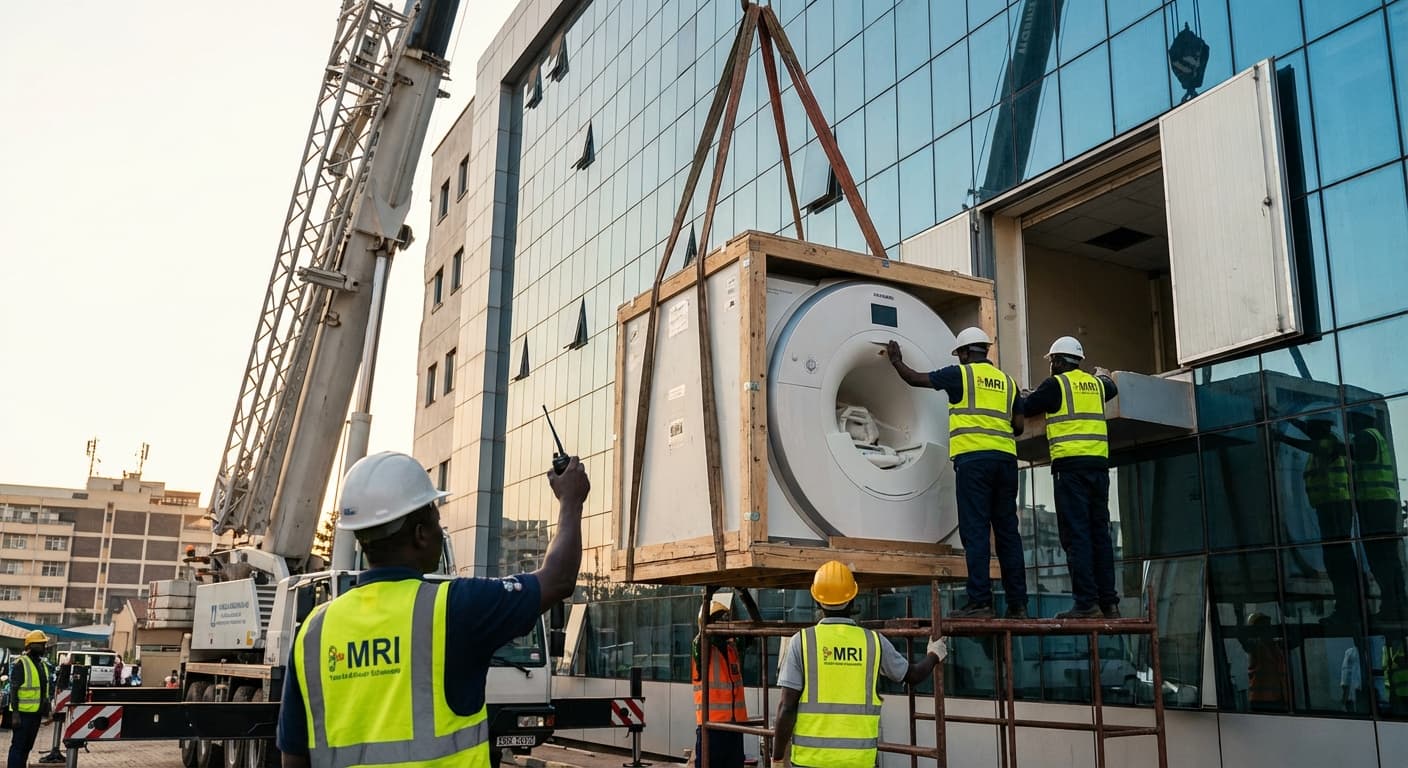
Cranage & Rigging Supervision Service in Liberia
Engineering Excellence & Technical Support
Cranage & Rigging Supervision Service High-standard technical execution following OEM protocols and local regulatory frameworks.
Precise Load Management
Our certified supervisors utilize advanced load charting and rigging techniques to ensure the safe and accurate lifting and positioning of heavy equipment and materials, minimizing operational risks and maximizing efficiency on complex industrial projects.
Uncompromising Safety Protocols
We implement rigorous site-specific safety plans, conducting thorough pre-lift inspections, continuous monitoring of lifting operations, and ensuring strict adherence to international safety standards, fostering a zero-accident work environment.
Expert Equipment Optimization
Leveraging extensive experience with diverse lifting machinery and rigging gear, our supervisors meticulously plan and execute operations to optimize equipment utilization, reduce downtime, and achieve project timelines effectively in challenging Liberian terrains.
What Is Cranage & Rigging Supervision Service In Liberia?
Cranage & Rigging Supervision Service in Liberia refers to the professional oversight and management of lifting operations involving cranes and associated rigging equipment. This service ensures that all lifting activities are conducted safely, efficiently, and in compliance with relevant Liberian regulations, international standards (e.g., ASME, LOLER), and project-specific requirements. The core objective is to mitigate risks associated with heavy lifting, such as equipment failure, structural damage, and personnel injury or fatality.
| Who Needs Cranage & Rigging Supervision Service? | Typical Use Cases in Liberia |
|---|---|
| Industrial Sector: Companies involved in manufacturing, processing, and heavy industry that frequently handle large or heavy components, machinery, or raw materials. | Infrastructure Projects: Construction and maintenance of bridges, roads, tunnels, power plants, and other large-scale civil engineering works. |
| Oil & Gas Sector: Support for offshore and onshore exploration, production, and refining operations, including the installation and maintenance of drilling equipment, pipelines, and processing modules. | Mining Sector: Lifting and moving heavy equipment, ore, and materials at mining sites, including the installation of processing plants and machinery. |
| Port & Maritime Operations: Loading and unloading of cargo, containers, and heavy machinery onto and off ships and vessels. | Construction Industry: Erecting structural steel, placing pre-fabricated components, and lifting heavy building materials on commercial and residential construction sites. |
| Power Generation & Utilities: Installation, maintenance, and repair of turbines, generators, transformers, and other large electrical equipment. | Heavy Manufacturing & Fabrication: Assembly of large industrial machinery, structural components, and specialized equipment. |
| Emergency & Disaster Relief: Deployment of heavy lifting equipment for debris removal, infrastructure repair, and the placement of essential supplies in post-disaster scenarios. | Specialized Projects: Any project requiring the precise and safe movement of exceptionally heavy or sensitive loads. |
Key Components of Cranage & Rigging Supervision Service:
- Pre-Operation Planning & Assessment: This involves a thorough review of the lift plan, including load weight, center of gravity, lifting points, crane capacity, rigging selection, environmental conditions (wind, visibility), and exclusion zones. Hazard identification and risk assessment (HIRA) are paramount.
- Equipment Inspection & Certification: Verification of the integrity, functionality, and certification status of all lifting equipment, including cranes (mobile, crawler, tower), hoists, slings, shackles, spreader beams, and other rigging hardware. Inspections may be pre-use, periodic, or following a significant event.
- Qualified Personnel Deployment: Ensuring that all personnel involved in the lifting operation – including crane operators, riggers, signal persons, and supervisors – are adequately trained, certified, and competent for their respective roles.
- On-Site Supervision & Monitoring: Direct on-site presence of a qualified supervisor to oversee the entire lifting process, from rigging the load to its final placement. This includes direct communication with the crane operator and riggers, ensuring adherence to the lift plan and safety protocols.
- Communication Protocols: Establishing clear and effective communication channels between all parties involved in the lift, typically utilizing hand signals, radio communication, or other agreed-upon methods.
- Environmental Monitoring: Continuous monitoring of environmental factors that could impact the safety of the lift, such as wind speed, precipitation, and visibility, and making real-time decisions to halt or postpone operations if conditions become hazardous.
- Load Integrity & Securing: Supervising the correct attachment and securing of rigging to the load to prevent slippage, shifting, or damage to the load itself. This includes verifying the load's stability and balance.
- Emergency Response Planning: Having pre-defined procedures in place to address potential emergencies, such as dropped loads, equipment malfunction, or personnel incidents, and ensuring the availability of appropriate emergency response equipment and personnel.
- Documentation & Reporting: Maintaining accurate records of all lifting operations, including inspection reports, lift plans, incident reports, and post-operation reviews, for compliance and continuous improvement.
Who Needs Cranage & Rigging Supervision Service In Liberia?
Cranage & Rigging Supervision Service in Liberia is crucial for a wide range of industries and projects that involve the lifting, moving, and placement of heavy or complex loads. Proper supervision ensures safety, efficiency, and adherence to stringent industry standards, minimizing risks of accidents, equipment damage, and project delays. Without expert oversight, even the most sophisticated lifting operations can become precarious.
| Target Customer Segment | Typical Departments Requiring Service |
|---|---|
| Construction Industry | Project Management, Site Operations, Health & Safety, Engineering |
| Oil & Gas | Operations, Project Engineering, Maintenance, Safety & Environment |
| Mining | Mine Operations, Engineering, Maintenance, Health & Safety |
| Logistics & Port Operations | Terminal Operations, Cargo Handling, Safety & Security |
| Manufacturing | Production Management, Plant Engineering, Maintenance, Operations |
| Energy Sector (Power Generation) | Project Management, Plant Operations, Maintenance, Safety |
| Infrastructure Development | Project Management, Engineering, Site Supervision, Quality Control |
Who Needs Cranage & Rigging Supervision Service in Liberia?
- Companies undertaking large-scale construction projects.
- Oil and gas exploration and production companies.
- Mining operations requiring heavy equipment relocation.
- Port authorities and logistics companies handling oversized cargo.
- Manufacturing facilities involved in plant relocation or equipment installation.
- Power generation companies during plant construction or maintenance.
- Infrastructure development projects (e.g., bridges, dams).
- Any organization with specialized lifting requirements or in high-risk environments.
Cranage & Rigging Supervision Service Process In Liberia
The Cranage & Rigging Supervision Service Process in Liberia is designed to ensure the safe, efficient, and compliant lifting and movement of heavy or oversized loads. This process involves a series of coordinated steps, from the initial client inquiry to the final execution and handover. The objective is to provide expert oversight, risk assessment, and operational guidance, minimizing potential hazards and ensuring project timelines are met.
| Stage | Description | Key Activities | Deliverables/Outcomes |
|---|---|---|---|
| The process begins when a client contacts the service provider with a need for cranage and rigging supervision. This stage focuses on understanding the client's requirements and objectives. | Receive and acknowledge inquiry, understand load details (weight, dimensions, center of gravity), identify project location, discuss preliminary timelines and budget, clarify client expectations. | Understanding of client needs, preliminary service feasibility assessment. |
| A thorough evaluation of the project site is conducted to identify potential challenges and define the exact scope of supervision required. | Site visit, access route analysis, ground condition assessment, identification of overhead obstructions, assessment of existing infrastructure, confirmation of load handling points, definition of specific supervision needs (e.g., lift planning, rigging inspection, personnel oversight). | Detailed site report, clearly defined service scope, identification of potential risks. |
| A comprehensive risk assessment is performed, followed by the development of a detailed Method Statement outlining how the lifting operations will be conducted safely. | Identify hazards associated with the lift (e.g., equipment failure, environmental factors, personnel error), develop control measures, create a detailed step-by-step method statement for the operation, obtain necessary permits (if applicable). | Approved RAMS document, documented safety procedures, identified mitigation strategies. |
| Based on the RAMS and scope, the necessary personnel, equipment, and resources are planned and mobilized to the site. | Selection and confirmation of qualified supervisors, riggers, and operators; verification of crane and rigging equipment certifications and suitability; procurement of necessary tools and safety gear; development of a mobilization schedule. | Mobilized qualified personnel, verified equipment, readiness for operation. |
| Before commencing any lifting operation, a briefing session is held to ensure all personnel involved are aware of the plan and safety procedures. | Review of the RAMS with all on-site personnel, discussion of roles and responsibilities, identification of communication protocols, confirmation of emergency procedures, Q&A session. | Informed and coordinated team, understanding of safety protocols. |
| This is the core stage where the lifting and rigging operations are actively supervised by qualified personnel. | Continuous monitoring of the lift, ensuring adherence to the method statement, direct supervision of rigging and crane operations, real-time hazard identification and mitigation, communication with all relevant parties, quality control of rigging connections and load security. | Safe and efficient lifting operations, incident prevention, adherence to schedule. |
| Following the completion of the lifting operations, a review is conducted, and a comprehensive report is generated. | Debriefing with the client and operational team, review of operational logs and any incidents (if applicable), assessment of performance against objectives, preparation of a detailed post-operation report including photos and recommendations. | Operational feedback, documented performance, lessons learned. |
| The final stage involves administrative closure of the service contract. | Final invoicing, obtaining client sign-off on completed services, archiving of project documentation, client relationship management. | Completed contract, satisfied client, comprehensive project record. |
Workflow Steps
- Client Inquiry & Initial Consultation
- Site Assessment & Scope Definition
- Risk Assessment & Method Statement (RAMS) Development
- Resource Planning & Mobilization
- Pre-Operation Briefing & Toolbox Talk
- Execution & Supervision
- Post-Operation Review & Reporting
- Project Closure
Cranage & Rigging Supervision Service Cost In Liberia
The cost of Cranage & Rigging Supervision services in Liberia is influenced by several key factors, making it challenging to provide a single definitive price. These factors include the complexity and duration of the lifting operation, the type and capacity of cranes and rigging equipment required, the level of expertise and experience of the supervision team, and the specific location within Liberia. Higher risk or more specialized operations will naturally command higher rates. Furthermore, the prevailing economic conditions and demand for these services in the Liberian market also play a role in pricing. Clients can expect costs to be quoted in Liberian Dollars (LRD).
| Service Component | Estimated Cost Range (LRD - Daily Rate) | Notes |
|---|---|---|
| Junior Rigging Supervisor | 10,000 - 25,000 | Suitable for less complex lifts, experienced but not highly specialized. |
| Senior Rigging Supervisor | 25,000 - 50,000 | Experienced in a wide range of operations, capable of managing complex lifts and teams. |
| Certified Lifting Operations Manager (CLOM) | 50,000 - 100,000+ | Highest level of expertise, responsible for overall lifting strategy, safety, and compliance. Rates can be significantly higher for specialized projects. |
| Crane Operator Supervision (if separate) | 8,000 - 20,000 | Focus on ensuring safe and efficient crane operation according to the plan. |
| Rigging Crew Supervision | Included in supervisor rates, but can be broken down if direct management is needed. | Ensuring proper rigging techniques and safety protocols are followed by the crew. |
| Project-Specific Technical Advisor | Negotiable based on expertise and project scope | For highly specialized equipment or challenging lifts, may require external technical input. |
Key Pricing Factors for Cranage & Rigging Supervision in Liberia
- Complexity of the lifting operation (e.g., lifting heavy, oversized, or delicate loads)
- Duration of the project (hourly, daily, weekly, or project-based rates)
- Type and capacity of cranes and rigging equipment involved
- Required level of supervisor expertise and certifications
- Geographical location of the project within Liberia (e.g., remote sites may incur additional logistics costs)
- Safety and risk assessment requirements
- Client's specific insurance and compliance needs
- Market demand and availability of qualified personnel
Affordable Cranage & Rigging Supervision Service Options
Securing professional cranage and rigging supervision is essential for safe and efficient heavy lifting operations. Finding affordable solutions without compromising safety is achievable through understanding value bundles and implementing strategic cost-saving measures. This service caters to a range of projects, from small-scale lifts to complex industrial installations, ensuring your assets are handled with expertise and care.
| Value Bundle Option | Description | Cost-Saving Benefits | Ideal For |
|---|---|---|---|
| Basic Lift Supervision | Essential on-site supervision for standard lifts, ensuring adherence to safety protocols. | Minimizes risk of accidents and associated costs (damage, delays, insurance premiums). | Small to medium-sized projects with predictable lifting requirements. |
| Comprehensive Project Planning & Supervision | Includes detailed pre-lift planning, risk assessment, load calculations, and full on-site supervision. | Proactive problem-solving reduces costly rework and unexpected issues. Optimized rigging and crane use. | Complex projects, critical lifts, or projects with tight deadlines. |
| Customized Rigging Consultation | Expert advice on selecting the most efficient and cost-effective rigging equipment for specific tasks. | Avoids over-specifying or under-specifying equipment, leading to optimal resource utilization. | Projects with unique or challenging lifting configurations. |
| Retainer & Long-Term Partnership | Ongoing access to supervision and consultation services for multiple projects or extended durations. | Volume discounts and preferential scheduling. Reduced administrative overhead per project. | Companies with regular or recurring lifting needs. |
Key Cranage & Rigging Supervision Service Components
- On-site supervision by certified rigging professionals.
- Pre-lift planning and risk assessment.
- Load calculations and rigging selection.
- Crane selection consultation and coordination.
- Communication management during lifting operations.
- Post-lift debrief and reporting.
- Compliance with safety regulations and industry standards.
Verified Providers In Liberia
In Liberia's evolving healthcare landscape, identifying trustworthy and qualified medical professionals is paramount for individuals seeking reliable health services. 'Verified Providers in Liberia' aims to shed light on such essential entities. This article specifically highlights Franance Health, examining their credentials and outlining why they stand out as an exemplary choice for healthcare needs in the region.
| Credential Type | Description | Franance Health Compliance |
|---|---|---|
| Medical Licenses | Official authorization to practice medicine granted by the Liberian Medical and Dental Association. | All Franance Health physicians and specialists hold current and valid Liberian medical licenses. |
| Academic Qualifications | Degrees and certifications from recognized medical institutions. | Franance Health requires proof of graduation from accredited medical schools and specialized training programs. |
| Professional Memberships | Affiliations with reputable medical organizations, indicating professional engagement and adherence to ethical standards. | Many Franance Health practitioners are active members of national and international medical associations. |
| Continuing Medical Education (CME) | Ongoing training and education to stay updated with the latest medical advancements and practices. | Franance Health mandates that its medical staff participate in regular CME activities to maintain their expertise. |
| Background Checks | Verification of professional conduct and absence of disciplinary actions. | Franance Health conducts thorough background checks to ensure the integrity and trustworthiness of its providers. |
Why Franance Health is the Best Choice:
- Rigorous Credentialing Process: Franance Health employs a stringent vetting system for all its medical practitioners. This involves verifying academic qualifications, professional licenses, and ongoing professional development to ensure practitioners meet the highest standards of care.
- Experienced and Specialized Medical Staff: The health professionals at Franance Health possess a wealth of experience across various medical specialties. This ensures that patients receive expert care tailored to their specific health concerns, from general practice to complex surgical procedures.
- Commitment to Patient-Centric Care: Franance Health prioritizes the well-being and satisfaction of its patients. This translates into a compassionate approach, clear communication, and personalized treatment plans designed to address individual needs and promote holistic health.
- Adherence to International Healthcare Standards: Franance Health is dedicated to upholding international best practices in healthcare delivery. This includes maintaining high standards of hygiene, employing advanced medical technologies where applicable, and continuously seeking to improve service quality.
- Community Engagement and Health Education: Beyond clinical services, Franance Health actively participates in community outreach programs and health education initiatives. This commitment to public health empowers individuals with knowledge and resources for preventative care and healthier lifestyles.
Scope Of Work For Cranage & Rigging Supervision Service
This Scope of Work (SOW) outlines the requirements for Cranage & Rigging Supervision Services. The service provider will be responsible for providing experienced and qualified personnel to supervise all cranage and rigging operations, ensuring safety, efficiency, and adherence to project specifications and industry best practices. This includes planning, execution, and monitoring of lifting activities to prevent accidents and damage to equipment and personnel.
| Technical Deliverable | Description | Standard Specification / Reference |
|---|---|---|
| Lift Plans | Detailed plans for each lifting operation, including load weight, center of gravity, lift radius, crane capacity, rigging configuration, personnel involved, and risk assessment. | Project-specific lift plan template, API RP 2D, LEEA Code of Practice for the Safe Use of Lifting Equipment |
| Pre-Lift Checklist | A comprehensive checklist to be completed before each lift, covering crane, rigging gear, ground conditions, and personnel readiness. | Industry best practices, company-specific safety procedures |
| Daily Activity Reports | Reports detailing all lifting activities conducted on a given day, including hours worked, personnel involved, any deviations from the plan, and safety observations. | Project-specific report template |
| Incident/Near Miss Reports | Detailed reports documenting any accidents or near misses that occur during lifting operations, including root cause analysis and corrective actions. | Project-specific incident reporting form, OSHA 301 |
| Equipment Inspection Logs | Records of inspections and certifications for all cranes, hoists, slings, shackles, and other rigging equipment. | Manufacturer's recommendations, regulatory requirements (e.g., LOLER in UK, OSHA in US), certification bodies' standards |
| Personnel Competency Records | Documentation of the qualifications, certifications, and training of all personnel involved in lifting operations. | Relevant industry certifications (e.g., NCCCO, ITBA), project-specific qualification matrix |
| Lift Supervision Sign-off | Formal sign-off by the supervisor confirming a lift has been conducted according to the approved plan and safely. | Project-specific sign-off form |
Key Responsibilities of Cranage & Rigging Supervision Service
- Development and review of lift plans for all critical and complex lifts.
- On-site supervision of all lifting and rigging operations, ensuring compliance with approved lift plans and safety regulations.
- Verification of crane and rigging equipment suitability, certifications, and condition prior to use.
- Ensuring proper rigging techniques and load securing methods are employed.
- Conducting pre-lift safety briefings and toolbox talks with all involved personnel.
- Monitoring environmental conditions (wind, visibility, etc.) and advising on safe operational limits.
- Identifying and mitigating potential hazards associated with lifting operations.
- Ensuring proper communication protocols are followed during lifting operations.
- Recording and reporting of all lifting activities, including any incidents or near misses.
- Providing recommendations for improvement in cranage and rigging procedures.
- Liaising with project management, engineers, and other relevant stakeholders.
Service Level Agreement For Cranage & Rigging Supervision Service
This Service Level Agreement (SLA) outlines the response times and uptime guarantees for Cranage & Rigging Supervision services provided by [Provider Name] to [Client Name]. This agreement is effective as of [Start Date] and will continue until [End Date], unless terminated earlier as per the terms of the main service contract.
| Service Component | Response Time Target (Business Hours) | Response Time Target (Outside Business Hours/Emergency) | Uptime Guarantee | Measurement Method | Remedy for Failure |
|---|---|---|---|---|---|
| Initial Response to Non-Critical Service Request (e.g., scheduling, planning) | 4 Business Hours | 8 Business Hours (next business day) | N/A | Timestamp of request receipt vs. timestamp of acknowledgment | N/A |
| Initial Response to Critical Incident (e.g., equipment failure impacting ongoing operation, safety concern requiring immediate attention) | 1 Business Hour | 30 Minutes | N/A | Timestamp of incident notification vs. timestamp of initial contact | N/A |
| On-Site Presence (for scheduled operations) | As per agreed schedule in main contract | N/A | 100% | Scheduled start time vs. actual arrival time of supervisor | If arrival is more than 30 minutes late, client may deduct X% of the supervisor's daily rate for that day. |
| On-Site Presence (for unscheduled emergency response) | Within 2 Business Hours of confirmed dispatch | Within 1 Business Hour of confirmed dispatch | N/A | Timestamp of dispatch confirmation vs. timestamp of supervisor arrival | If arrival is more than 1 hour late, client may deduct Y% of the supervisor's emergency call-out fee. |
| Availability of Supervision Expertise (for contracted periods) | N/A | N/A | 98% within contracted operational periods | Monitoring of supervisor's availability during scheduled/contracted hours. | For every 1 hour of unplanned unavailability below the 98% guarantee within a calendar month, a service credit of Z% of the monthly fee for supervision will be applied. |
| Resolution of Minor Issues (requiring supervisor's assessment/guidance) | Within 4 Business Hours of identification | Within 8 Business Hours of identification (next business day) | N/A | Timestamp of issue identification vs. timestamp of resolution confirmation | N/A |
Service Objectives
- To ensure prompt and efficient response to service requests and incidents.
- To maintain a high level of availability for the cranage and rigging supervision services.
- To minimize downtime and its impact on client operations.
- To clearly define responsibilities and expectations for both parties.
- To establish a framework for performance measurement and reporting.
Frequently Asked Questions

Ready when you are
Let's scope your Cranage & Rigging Supervision Service in Liberia project in Liberia.

Scaling healthcare logistics and technical systems across the entire continent.