
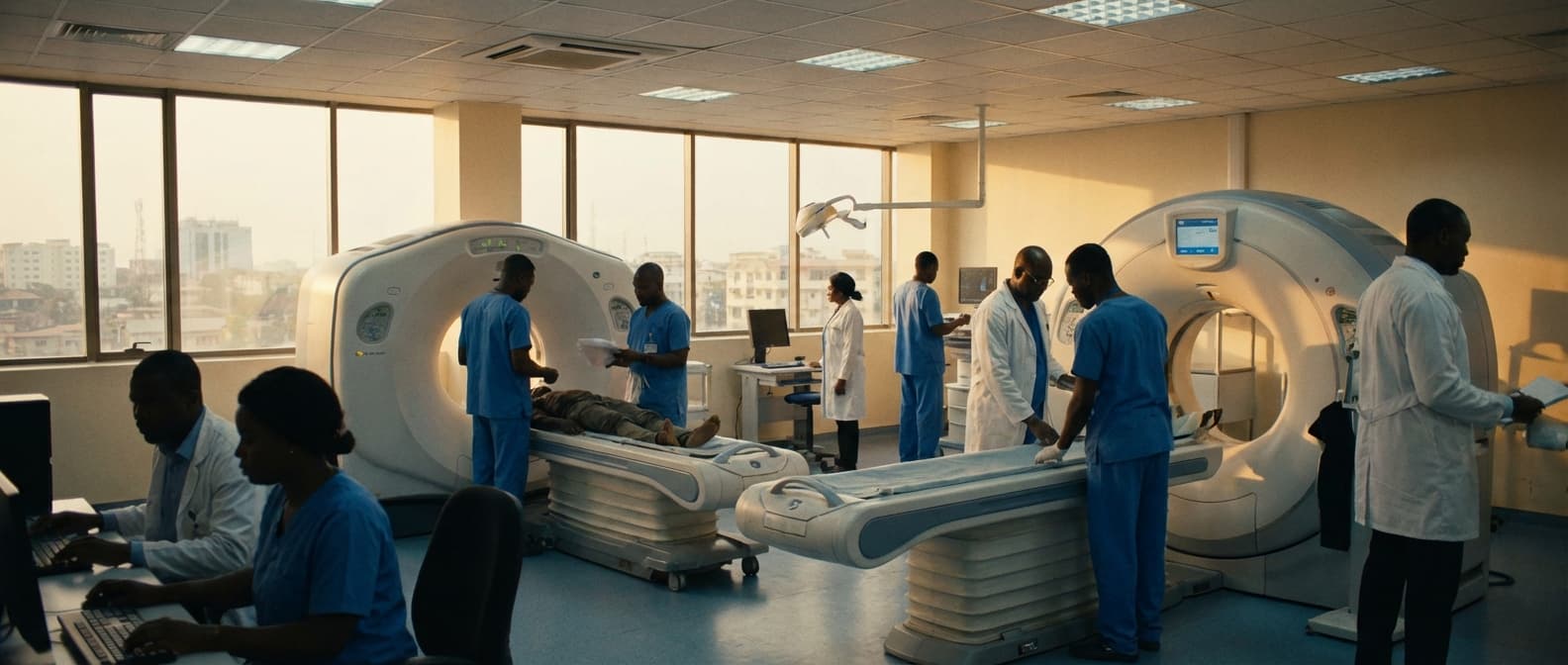
Radiology Room Design & Shielding Calculation in Liberia
Engineering Excellence & Technical Support
Turnkey room planning, shielding drawings and approvals for imaging suites. High-standard technical execution following OEM protocols and local regulatory frameworks.
Optimized Lead Shielding Design for ALARA Compliance
Engineered precise lead shielding calculations for radiology suites in Liberia, ensuring adherence to ALARA (As Low As Reasonably Achievable) principles and minimizing radiation exposure to patients and staff in diverse clinical settings.
Ergonomic Layout and Workflow Efficiency
Developed comprehensive room layout designs for diagnostic imaging facilities, prioritizing patient comfort, staff ergonomics, and efficient patient throughput to maximize operational effectiveness within the Liberian healthcare infrastructure.
Context-Aware Material Selection and Procurement Strategy
Conducted thorough assessments of locally available construction materials and international procurement options for radiation shielding and specialized finishes, ensuring cost-effectiveness and sustainability in the design and implementation of radiology rooms across Liberia.
What Is Radiology Room Design & Shielding Calculation In Liberia?
Radiology room design and shielding calculation in Liberia refers to the specialized engineering and architectural process of planning and constructing rooms that house medical imaging equipment, ensuring the safety of patients, staff, and the public from ionizing radiation. This service is critical for facilities utilizing X-ray, CT, MRI, or other radiation-producing modalities. The design process encompasses architectural layout, equipment placement, ventilation, and accessibility, while the shielding calculation specifically determines the precise thickness and type of materials (e.g., lead, concrete, barytes concrete) required for walls, floors, ceilings, and doors to attenuate radiation to acceptable regulatory limits.
| Who Needs This Service? | Typical Use Cases | Specific Considerations in Liberia | |||||
|---|---|---|---|---|---|---|---|
| Hospitals and Clinics: Public and private healthcare facilities acquiring or upgrading diagnostic imaging departments (X-ray, CT, Fluoroscopy, Mammography). | Installation of new diagnostic imaging equipment. | Adherence to Ministry of Health regulations and international best practices for radiation safety. | Assessment of existing facilities for compliance and potential upgrades. | Construction of new healthcare facilities with integrated imaging suites. | Ensuring local availability and cost-effectiveness of specified shielding materials. | Training of local technicians and engineers on safety protocols and maintenance. | Establishing robust quality assurance programs for imaging equipment and shielding integrity. |
| Diagnostic Imaging Centers: Standalone facilities dedicated to medical imaging services. | Establishing or expanding services requiring ionizing radiation. | Independent radiologists and medical imaging professionals. | Veterinary clinics and animal hospitals utilizing diagnostic X-ray equipment. | Research institutions conducting studies involving medical imaging. | |||
| Government Health Agencies: Regulatory bodies responsible for setting and enforcing radiation safety standards. | Licensing and inspection of medical facilities. | Development and review of radiation protection policies and guidelines. |
Key Components and Considerations
- Architectural Planning: Layout optimization for workflow, patient privacy, and equipment access.
- Equipment Specification Integration: Accommodation of specific device footprints, power, cooling, and radiation output.
- Radiation Shielding Design: Calculation of attenuation requirements based on equipment type, workload, occupancy factors, and regulatory dose limits.
- Material Selection: Choosing appropriate shielding materials (lead, concrete, steel, etc.) based on efficacy, cost, and structural compatibility.
- Door and Window Design: Incorporating shielded doors, windows, and viewing panels.
- Ventilation and HVAC: Ensuring adequate airflow and temperature control for equipment and patient comfort.
- Electrical and Data Infrastructure: Provision for power, grounding, and network connectivity.
- Compliance with Standards: Adherence to national (if any) and international radiation safety guidelines (e.g., IAEA recommendations, ICRP publications).
Who Needs Radiology Room Design & Shielding Calculation In Liberia?
In Liberia, the need for expert radiology room design and shielding calculations is critical for ensuring the safety of patients and medical personnel, as well as complying with international radiation safety standards. As the nation's healthcare infrastructure develops, so does the demand for advanced diagnostic imaging services, which inherently involve the use of ionizing radiation. Therefore, specialized design and shielding are paramount to mitigate radiation exposure risks.
| Department | Key Services/Equipment | Need for Design & Shielding |
|---|---|---|
| Radiology/Medical Imaging Department | X-ray (general radiography, fluoroscopy, mammography), CT Scans, potentially MRI/Ultrasound (though MRI is non-ionizing, shielding may still be relevant for magnetic fields) | Essential for patient and staff safety from ionizing radiation. Proper design ensures workflow efficiency and image quality. |
| Emergency Department (ER) | Portable X-ray machines for immediate patient assessment | Shielding needed for temporary setups or if diagnostic imaging is performed within the ER space. Design for rapid access and patient throughput. |
| Surgical Departments | Intraoperative fluoroscopy (C-arms) | Shielding is crucial for surgeons, nurses, and other staff in close proximity to the radiation source during procedures. Room layout needs to accommodate equipment. |
| Oncology Centers | CT Scanners for treatment planning and follow-up, potentially X-ray for diagnostic purposes | High volume of imaging procedures necessitates robust shielding and optimized room design to manage cumulative radiation doses. |
| Pediatric Departments | X-ray and CT imaging of children | Specific design considerations to minimize patient dose and anxiety. Shielding is equally important for young patients and staff. |
| Cardiology Departments | Fluoroscopy for interventional procedures (angiography, angioplasty) | Significant radiation exposure risk for staff during lengthy procedures. Advanced shielding and room design are vital. |
Target Customers and Departments in Liberia Requiring Radiology Room Design & Shielding Calculation:
- Hospitals (Public and Private)
- Specialty Clinics (e.g., Oncology, Cardiology)
- Diagnostic Imaging Centers
- Mobile X-ray Units
- Research Institutions with Imaging Facilities
- Government Health Agencies (for standards and oversight)
Radiology Room Design & Shielding Calculation Process In Liberia
Designing and implementing radiology rooms, including the critical aspect of radiation shielding, in Liberia involves a structured workflow to ensure safety, compliance, and operational efficiency. This process typically begins with an initial inquiry and culminates in a fully functional and shielded radiology suite. The workflow is designed to address local regulations, resource availability, and the specific requirements of the healthcare facility.
| Phase | Key Activities | Deliverables | Key Stakeholders | Considerations for Liberia |
|---|---|---|---|---|
| 1. Inquiry and Initial Consultation | Receive inquiry from the healthcare facility (hospital, clinic, etc.). Conduct initial meetings to understand the facility's needs, desired imaging modalities (X-ray, CT, MRI, etc.), budget, and project timeline. Discuss preliminary regulatory requirements and potential challenges. | Initial project scope document. Understanding of facility's needs and constraints. Agreement on preliminary project approach. | Healthcare Facility Management, Radiology Department Head, Project Initiator. | Establish clear communication channels. Understand existing infrastructure limitations. Gauge familiarity with international standards. |
| 2. Site Assessment and Requirements Gathering | Conduct a detailed site visit to the proposed radiology room location. Assess structural integrity, existing utilities (power, ventilation), room dimensions, and proximity to other sensitive areas. Gather specific technical requirements for imaging equipment (e.g., power consumption, space, cooling). Identify potential shielding needs based on room layout and adjacent occupied areas. | Detailed site survey report. Equipment technical specifications. Preliminary shielding requirements assessment. Room layout sketches. | Architectural Team, Radiology Physicist/Consultant, Biomedical Engineers, Facility Maintenance Staff. | Availability of skilled labor for structural modifications. Access to reliable power and ventilation systems. Potential for existing building materials to be repurposed. |
| 3. Design Development (Architectural & Shielding) | Develop architectural plans for the radiology room, including layout, workflow, door placement, and patient/staff access. Perform detailed radiation shielding calculations using appropriate software and considering: - Imaging modality and typical workload. - X-ray tube voltage (kVp) and beam current (mA). - Distance from the source to occupied areas (control room, corridors, adjacent rooms). - Type and thickness of shielding materials (lead, concrete, drywall). - Local radiation safety regulations (if any, or adopting international standards like ICRP/NCRP). Specify materials and thicknesses for walls, floors, ceilings, and doors. | Detailed architectural drawings. Radiation shielding design report with calculations and material specifications. Bill of quantities for materials. | Architectural Team, Radiology Physicist/Consultant, Equipment Vendor, Regulatory Liaison (if applicable). | Access to specialized shielding calculation software. Availability of expert physicists familiar with local context. Adherence to internationally recognized safety standards. |
| 4. Procurement and Material Sourcing | Identify and select suppliers for construction materials, lead shielding, specialized doors, and other components. Procure materials based on the Bill of Quantities and approved specifications. Ensure quality control of procured materials, especially lead sheeting. | Purchase orders. Material delivery records. Quality inspection reports. | Procurement Department, Project Manager, Suppliers. | Availability and cost of lead shielding and specialized construction materials. Reliability of local and international suppliers. Logistics and transportation challenges. |
| 5. Construction and Installation | Prepare the site according to architectural plans. Install shielding materials precisely as per the design specifications. Construct walls, ceilings, and install specialized doors and windows. Install all necessary infrastructure (electrical, ventilation, data). | Completed room construction. Installed shielding elements. Integrated building services. | Construction Team, Specialized Installers (for shielding), Project Manager. | Skilled labor for precise lead installation. Supervision to ensure adherence to shielding specifications. Quality control during construction. |
| 6. Shielding Verification and Commissioning | Conduct radiation surveys to verify the effectiveness of the installed shielding. Measure radiation levels in adjacent areas during simulated or actual operational use. Commission imaging equipment to ensure it functions correctly within the designed environment. Adjustments to shielding or equipment may be necessary. | Radiation survey report confirming adequate shielding. Commissioning report for imaging equipment. Final acceptance of the radiology room. | Radiology Physicist/Consultant, Equipment Vendor, Healthcare Facility Management. | Availability of calibrated radiation detection equipment. Competency of physicists to perform accurate surveys. Collaboration with equipment vendors for integrated testing. |
| 7. Final Handover and Training | Formally hand over the completed radiology room to the healthcare facility. Provide training to radiology staff on the safe and efficient operation of the equipment and the room. Provide documentation, including as-built drawings and maintenance manuals. Establish ongoing maintenance and quality assurance protocols. | Signed handover documents. Training certificates. Operation and maintenance manuals. QA/QC protocols. | Project Manager, Healthcare Facility Management, Radiology Staff, Maintenance Team. | Development of locally relevant training materials. Establishing a sustainable maintenance plan. Ensuring long-term regulatory compliance. |
Radiology Room Design & Shielding Calculation Process in Liberia
- Phase 1: Inquiry and Initial Consultation
- Phase 2: Site Assessment and Requirements Gathering
- Phase 3: Design Development (Architectural & Shielding)
- Phase 4: Procurement and Material Sourcing
- Phase 5: Construction and Installation
- Phase 6: Shielding Verification and Commissioning
- Phase 7: Final Handover and Training
Radiology Room Design & Shielding Calculation Cost In Liberia
Designing and calculating shielding for radiology rooms in Liberia involves a combination of professional expertise, material costs, and specific project requirements. The pricing can vary significantly due to factors such as the complexity of the room, the type of imaging equipment, and the availability of specialized materials. It's crucial to engage qualified local or international consultants who understand Liberian building codes and safety regulations to ensure compliance and optimal radiation protection.
| Service/Component | Estimated Range (Liberian Dollar - LRD) |
|---|---|
| Architectural & Medical Physics Consultation (Design & Shielding Calculation) | 5,000,000 - 25,000,000 LRD+ |
| Lead Sheeting (per square meter, 1-3mm thickness) | 500,000 - 1,500,000 LRD+ |
| High-Density Concrete (per cubic meter) | 200,000 - 500,000 LRD+ |
| Barytes (per ton) | 1,000,000 - 2,500,000 LRD+ |
| Labor (Skilled for shielding installation) | 20,000 - 50,000 LRD per day per worker |
| General Construction & Room Fit-out (per square meter) | 1,000,000 - 3,000,000 LRD+ |
| Permits & Regulatory Fees | 1,000,000 - 5,000,000 LRD+ |
Key Pricing Factors for Radiology Room Design & Shielding in Liberia
- Professional Fees (Design & Consultation): This is a primary cost, encompassing architectural design, medical physics consultation for shielding calculations, and project management. Fees are often based on a percentage of the total project cost or a fixed hourly/daily rate.
- Shielding Material Costs: Lead is the most common shielding material, but its price can fluctuate. Other materials like concrete (density and thickness), barytes, or specialized composites may also be used. The quantity and thickness required are determined by the shielding calculations.
- Construction & Labor Costs: This includes the cost of skilled labor for installing shielding, constructing the room according to design specifications, and any necessary structural modifications.
- Equipment Requirements: The type and energy output of the radiology equipment (e.g., X-ray, CT scanner, mammography unit) directly influence the required shielding thickness and thus the material costs.
- Room Size & Layout: Larger rooms require more materials and more complex design, leading to higher costs. The layout also impacts shielding needs, especially for adjacent occupied areas.
- Regulatory Compliance & Approvals: Costs associated with obtaining permits, inspections, and certifications from Liberian health and safety authorities.
- Contingency: It's advisable to include a contingency buffer for unforeseen expenses or design adjustments.
- Transportation & Logistics: For imported specialized materials (if not locally available), transportation and import duties will add to the overall cost.
Affordable Radiology Room Design & Shielding Calculation Options
Designing an affordable radiology room requires a strategic approach to both the physical layout and the crucial shielding calculations. The goal is to achieve regulatory compliance and operational efficiency without unnecessary expenditure. This involves understanding 'value bundles' – integrated packages of services and materials that offer cost savings – and implementing smart cost-saving strategies throughout the design and construction process.
| Value Bundle Type | Description | Cost-Saving Strategies | Benefits |
|---|---|---|---|
| Integrated Design & Shielding Packages | A single vendor or firm provides both architectural design services and specialized shielding calculations and material recommendations for the radiology suite. | Streamlined communication, early identification of potential conflicts, bulk purchasing of materials, standardized calculation methodologies. | Reduced design errors, faster project timelines, potentially lower overall project cost due to bundled pricing and efficiencies. |
| Equipment & Shielding Consultation | A package combining consultation on optimal equipment selection with corresponding shielding requirements, often from the equipment manufacturer or a specialized consultant. | Aligning shielding needs with actual equipment specifications, avoiding over-specification, leveraging manufacturer expertise. | Ensures accurate shielding, prevents unnecessary material costs, and can lead to discounts if bundled with equipment purchase. |
| Pre-fabricated Shielding Solutions | Pre-fabricated lead-lined panels or modular shielding rooms that can be quickly assembled on-site. | Reduced on-site labor, faster installation, predictable material costs, less waste. | Shorter construction times, lower labor costs, consistent quality, minimal disruption. |
| Comprehensive Project Management | A service that oversees all aspects of the radiology room construction, from initial design and permitting to final inspection, including cost control and contractor management. | Centralized decision-making, proactive risk management, competitive bidding for trades, efficient resource allocation. | Reduced project delays and cost overruns, improved quality control, focused accountability. |
| Software & Simulation Packages | Utilizing specialized software for radiation shielding calculations and room design simulations to optimize material usage and identify potential issues before construction. | Minimizing physical mock-ups, accurate prediction of shielding needs, identification of optimal material thickness and placement. | Reduced design iteration costs, optimized material procurement, enhanced safety and compliance. |
Key Considerations for Affordable Radiology Room Design & Shielding
- Understanding Regulatory Requirements: Familiarize yourself with all local, state, and federal regulations pertaining to radiation safety and room design for your specific imaging modality (X-ray, CT, MRI, etc.). This is non-negotiable and forms the foundation of any cost-effective design.
- Modality-Specific Needs: Different imaging modalities have varying radiation outputs and shielding requirements. Tailoring the design to the specific equipment is crucial to avoid over-shielding and unnecessary costs.
- Room Layout Optimization: Efficient use of space minimizes the overall footprint, reducing construction costs. Consider workflow, equipment placement, patient access, and staff convenience.
- Shielding Material Selection: While lead is the most common shielding material, explore alternative or complementary materials like concrete, baryte plaster, or specialized composites where appropriate and compliant.
- Ventilation and HVAC: Proper ventilation is essential for equipment longevity and staff comfort. Integrating these systems early in the design can prevent costly retrofits.
- Electrical and Data Infrastructure: Plan for adequate power, data cabling, and potential future technology upgrades to avoid expensive re-wiring later.
- Acoustics and Comfort: While not directly radiation-related, a well-designed room with good acoustics and comfortable lighting contributes to a positive patient and staff experience, indirectly impacting operational efficiency.
Verified Providers In Liberia
In Liberia, ensuring access to reliable and high-quality healthcare is paramount. This is where the importance of verified healthcare providers, such as those credentialed by Franance Health, becomes critical. Franance Health's rigorous credentialing process sets a benchmark for excellence, assuring patients that they are receiving care from competent and ethical professionals. Choosing a Franance Health-verified provider means opting for a healthcare experience built on trust, expertise, and a commitment to patient well-being.
| Credentialing Aspect | Franance Health Verification | Benefit for Patients |
|---|---|---|
| Educational Background | Verification of degrees, diplomas, and transcripts from accredited institutions. | Ensures providers have a strong theoretical foundation in medicine. |
| Licensure and Certifications | Confirmation of valid medical licenses and specialized certifications. | Guarantees providers are legally permitted to practice and are proficient in their fields. |
| Professional Experience | Thorough review of past employment and practice history. | Assesses practical application of knowledge and skills. |
| Continuous Professional Development | Checks for participation in ongoing training and education programs. | Confirms providers stay updated with the latest medical advancements. |
| Background Checks | Screening for any disciplinary actions or malpractice claims. | Prioritizes patient safety and ethical practice. |
Why Franance Health Credentials Represent the Best Choice in Liberia:
- Rigorous Vetting Process: Franance Health employs a comprehensive screening of medical professionals, examining their education, training, licenses, certifications, and work history.
- Commitment to Competence: The credentialing ensures that providers possess the necessary skills and knowledge to deliver safe and effective medical care.
- Upholding Ethical Standards: Franance Health verifies that providers adhere to the highest ethical principles and professional conduct.
- Enhanced Patient Trust and Safety: Patients can have greater confidence in the quality of care received from Franance Health-verified providers, leading to improved health outcomes.
- Access to Quality Healthcare: By identifying and promoting qualified professionals, Franance Health contributes to the overall improvement of the healthcare landscape in Liberia.
Scope Of Work For Radiology Room Design & Shielding Calculation
This Scope of Work outlines the requirements for the design and shielding calculations of a radiology room. It details the technical deliverables expected from the vendor and the standard specifications to be adhered to throughout the project.
| Category | Standard/Specification | Description |
|---|---|---|
| Radiation Safety | NCRPM Report No. 147 (or equivalent national/local regulations) | Recommendations for shielding design, exposure limits, and quality assurance. |
| Radiation Safety | ACR Guidelines (American College of Radiology) | Recommendations for facility design and shielding for various imaging modalities. |
| Architectural | Local Building Codes and Fire Regulations | Compliance with all applicable building and safety codes for healthcare facilities. |
| Mechanical (HVAC) | ASHRAE Standards | Ensuring adequate air exchange rates, temperature, and humidity control for patient comfort and equipment performance. |
| Electrical | NFPA 70 (National Electrical Code) / Local Electrical Codes | Safe and reliable power distribution, grounding, and emergency power provisions. |
| Lighting | IES (Illuminating Engineering Society) Recommendations | Appropriate lighting levels for diagnostic tasks and patient comfort. |
| Acoustics | ASTM Standards for Sound Transmission Class (STC) and Noise Reduction Coefficient (NRC) | Minimizing noise transmission and reverberation within the radiology suite. |
| Equipment Integration | Manufacturer's Specifications for all Radiology Equipment | Ensuring the design accommodates the spatial, power, and ventilation requirements of all installed equipment. |
Technical Deliverables
- Detailed Architectural and Mechanical Drawings of the radiology room, including layout, door swings, equipment placement, and ventilation.
- Comprehensive Radiation Shielding Calculations for all relevant areas (walls, ceiling, floor, doors, windows) based on accepted regulatory guidelines and equipment specifications.
- Shielding Material Specification Report, detailing the type, thickness, and properties of all shielding materials required.
- Electrical and Data Cabling Layout Drawings, indicating power, network, and specialized equipment connections.
- Lighting Design Plan, specifying illumination levels and fixture types.
- Acoustic Design Report, addressing noise control measures within the room.
- Final Report summarizing design decisions, calculations, and compliance with all specified standards.
Service Level Agreement For Radiology Room Design & Shielding Calculation
This Service Level Agreement (SLA) outlines the expected response times and uptime guarantees for radiology room design and shielding calculation services provided by [Your Company Name] to [Client Name]. This agreement ensures timely and reliable delivery of critical design and safety services essential for the operation of radiology facilities.
| Service Component | Target Response Time | Uptime Guarantee |
|---|---|---|
| Initial Consultation & Scope Definition | 2 Business Days | N/A |
| Preliminary Design Deliverables (Draft) | [Number] Business Days | N/A |
| Design Revisions | [Number] Business Days | N/A |
| Urgent Inquiries & Clarifications | 4 Business Hours | N/A |
| Client Portal/Communication Platform | N/A | 99.5% |
| Shielding Calculation Accuracy | N/A (Verification & Correction Process) | N/A |
Key Service Level Objectives
- Response Time for Initial Consultation & Scope Definition: [Your Company Name] guarantees a response to initiate consultation and scope definition within 2 business days of receiving a formal request.
- Response Time for Design Deliverables (e.g., Preliminary Layouts, Shielding Reports): [Your Company Name] guarantees initial draft deliverables for approved projects within [Number] business days of receiving all necessary input data and client approvals. Subsequent revisions will be addressed within [Number] business days.
- Response Time for Urgent Inquiries & Clarifications: For urgent inquiries or clarifications required during active design or construction phases, [Your Company Name] will provide a response within 4 business hours during standard business operations.
- Uptime Guarantee for Client Portal/Communication Platform: [Your Company Name] guarantees a 99.5% uptime for its designated client portal or communication platform used for document sharing and project updates.
- Accuracy Guarantee for Shielding Calculations: [Your Company Name] guarantees the accuracy of shielding calculations based on industry-standard methodologies and regulatory guidelines. Any verified discrepancies due to error will be rectified at no additional cost.
Frequently Asked Questions

Ready when you are
Let's scope your Radiology Room Design & Shielding Calculation in Liberia project in Liberia.

Scaling healthcare logistics and technical systems across the entire continent.