
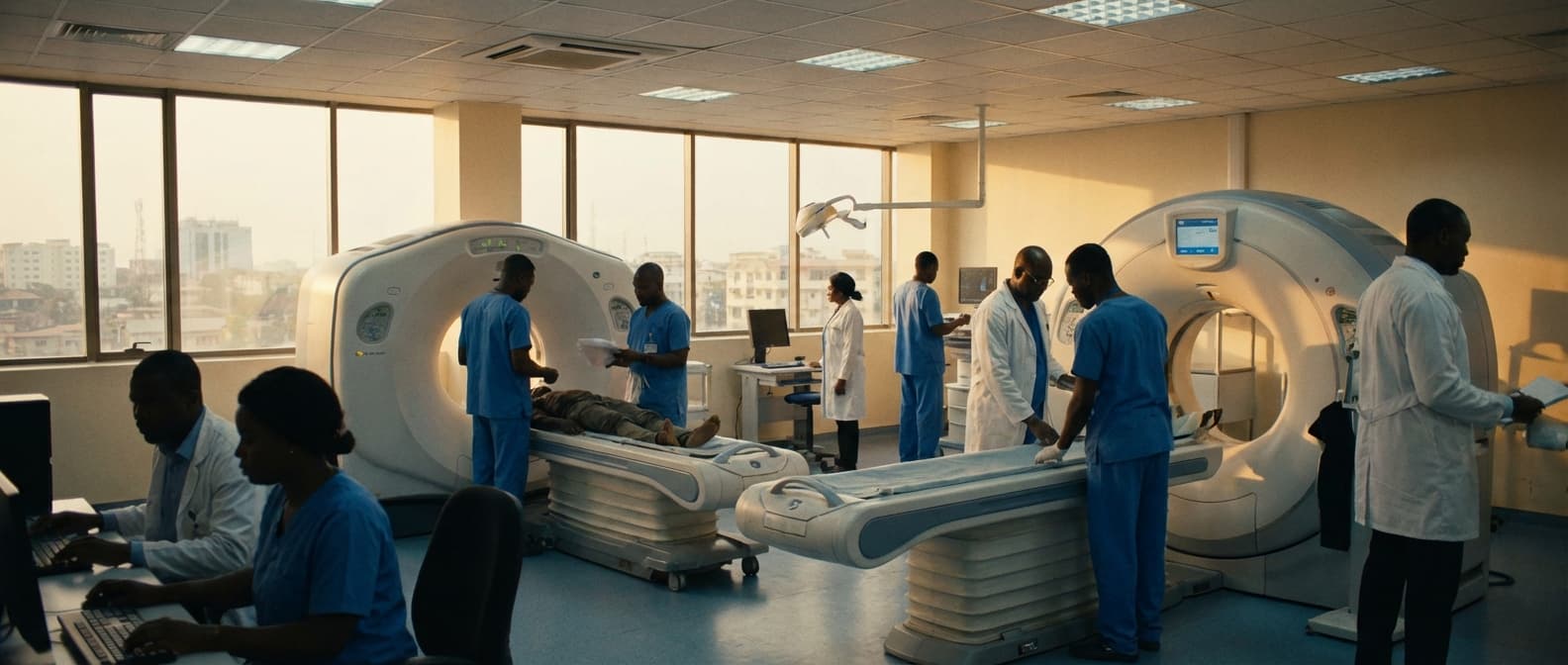
Imaging Acceptance Testing & QA in Liberia
Engineering Excellence & Technical Support
Commissioning and periodic QA for CT/MRI/X‑ray/US/Mammo. High-standard technical execution following OEM protocols and local regulatory frameworks.
Ensuring Image Quality Standards
Implemented rigorous imaging acceptance testing protocols to verify adherence to international quality standards (e.g., DICOM compliance, image resolution, contrast, and noise levels) for all newly acquired medical imaging equipment, guaranteeing diagnostic accuracy and patient safety.
Advanced QA for Diagnostic Accuracy
Established a comprehensive quality assurance framework for existing imaging modalities, including regular phantom testing, image artifact analysis, and performance benchmarking, to proactively identify and rectify issues that could compromise diagnostic interpretation.
Streamlined Equipment Validation Process
Developed and deployed standardized checklists and automated testing scripts for imaging equipment acceptance, significantly reducing validation time while increasing the consistency and reliability of test results, facilitating faster deployment of essential medical imaging services.
What Is Imaging Acceptance Testing & Qa In Liberia?
Imaging Acceptance Testing & QA in Liberia refers to the rigorous processes and methodologies employed to ensure that medical imaging systems and their associated data adhere to predefined quality standards, functional requirements, and regulatory compliance within the Liberian healthcare context. This service encompasses a broad spectrum of activities aimed at validating the performance, accuracy, reliability, and security of imaging modalities (e.g., X-ray, CT, MRI, Ultrasound) and Picture Archiving and Communication Systems (PACS), as well as the integrity and usability of the resulting image data.
| Who Needs Imaging Acceptance Testing & QA | Typical Use Cases | ||||||||
|---|---|---|---|---|---|---|---|---|---|
| Healthcare Facilities: Hospitals, clinics, diagnostic imaging centers, and specialized medical institutions in Liberia that acquire, store, or interpret medical images. | New System Implementation: Validating the performance and functionality of newly installed imaging equipment (e.g., a new CT scanner) or PACS before full clinical deployment. | System Upgrades: Ensuring that software updates or hardware enhancements to existing imaging systems do not negatively impact image quality, workflow, or data integrity. | Periodic Quality Assurance Programs: Conducting regular testing to maintain ongoing quality standards, identify degradation in performance, and ensure continued compliance. | Vendor Performance Evaluation: Assessing the reliability and adherence to specifications of imaging equipment and software provided by vendors. | Troubleshooting and Problem Resolution: Investigating and resolving issues related to image quality, system performance, or data accessibility. | Regulatory Compliance Audits: Providing documented evidence of system quality and compliance for internal or external audits. | Training and Competency Assessment: Verifying that healthcare professionals can effectively and safely operate imaging equipment and utilize associated IT systems. | Mergers and Acquisitions: Integrating imaging systems and data from newly acquired facilities into existing infrastructure. | Post-Maintenance Verification: Confirming that imaging systems function correctly after scheduled maintenance or repairs. |
Key Components of Imaging Acceptance Testing & QA
- System Functionality Verification: Ensuring all hardware and software components of imaging systems operate as per specifications, including image acquisition parameters, patient data input, and system controls.
- Image Quality Assessment: Evaluating the diagnostic quality of captured images, considering factors such as spatial resolution, contrast, noise, artifacts, and anatomical accuracy. This often involves objective measurements and subjective expert review.
- Data Integrity and Archiving Validation: Confirming that patient demographic data, imaging parameters, and image files are accurately stored, retrieved, and maintained within PACS and other storage solutions, with attention to data corruption and loss prevention.
- Workflow and Usability Testing: Assessing the efficiency and intuitiveness of the imaging workflow from patient registration to image interpretation and report generation, identifying potential bottlenecks or user interface issues.
- Interoperability and Connectivity Testing: Verifying seamless integration and data exchange with other healthcare information systems, such as Electronic Health Records (EHRs) and Laboratory Information Systems (LIS), often adhering to standards like DICOM and HL7.
- Security and Privacy Audits: Ensuring compliance with data protection regulations and implementing robust security measures to safeguard patient confidentiality and prevent unauthorized access to imaging data.
- Performance and Load Testing: Evaluating system responsiveness, throughput, and stability under various operational loads to ensure reliable performance during peak usage periods.
- Compliance and Regulatory Adherence: Confirming that systems and processes meet national and international standards for medical devices and healthcare IT, including any specific Liberian healthcare regulations.
- Disaster Recovery and Business Continuity Planning: Testing backup and recovery procedures to ensure minimal disruption to imaging services in the event of system failures or unforeseen incidents.
Who Needs Imaging Acceptance Testing & Qa In Liberia?
Ensuring the quality and reliability of medical imaging equipment is paramount for accurate diagnosis and effective patient care. In Liberia, where healthcare infrastructure is developing, robust Acceptance Testing and Quality Assurance (QA) are critical for every organization acquiring or utilizing medical imaging technology. This ensures that equipment performs to specified standards from the moment it's installed and continues to do so throughout its operational life.
| Target Customer/Department | Key Needs & Benefits of Imaging Acceptance Testing & QA |
|---|---|
| Hospitals (Public & Private) | Ensures diagnostic accuracy, reduces patient misdiagnosis, improves workflow efficiency, minimizes equipment downtime, enhances patient safety, facilitates compliance with national/international standards. |
| District & Rural Clinics | Maximizes the effectiveness of limited resources, provides reliable diagnostic tools in underserved areas, builds patient trust, supports primary healthcare initiatives. |
| Specialty Diagnostic Centers (e.g., Radiology, Cardiology) | Guarantees the performance of advanced imaging modalities (CT, MRI, Ultrasound, X-ray), supports specialized diagnostic capabilities, ensures data integrity for complex analyses. |
| Ministry of Health & Social Welfare | Upholds national healthcare quality standards, ensures efficient allocation of public funds for medical equipment, supports national health programs, enables evidence-based decision-making for equipment procurement and replacement. |
| NGOs & International Aid Organizations | Validates the functionality and suitability of donated equipment for the local context, maximizes the impact of humanitarian aid, ensures long-term sustainability of healthcare projects, fulfills donor requirements for accountability. |
| Medical Equipment Suppliers & Distributors | Confirms proper installation and calibration, provides pre-delivery assurance to clients, reduces post-installation service calls, builds reputation for reliability, supports warranty obligations. |
| Medical Training Institutions | Ensures equipment is functional and accurate for realistic training scenarios, provides students with hands-on experience on reliable technology, supports the development of skilled healthcare professionals. |
| Radiology Departments | Verifies image quality, radiation dose accuracy, and equipment performance specific to radiological procedures. Essential for diagnostic interpretation. |
| Cardiology Departments | Confirms the functionality of ultrasound (echocardiography), ECG, and other cardiac imaging equipment for accurate heart assessments. |
| Laboratory Departments (with imaging components) | Ensures accuracy of imaging components within diagnostic laboratory equipment, if applicable. |
Who Needs Imaging Acceptance Testing & QA in Liberia? Target Customers & Departments
- Healthcare Facilities: Hospitals, clinics, and diagnostic centers are the primary beneficiaries of imaging acceptance testing and QA.
- Government Health Ministries & Agencies: Responsible for setting standards, regulating healthcare providers, and ensuring the public receives quality medical services.
- Non-Governmental Organizations (NGOs) & International Aid Organizations: Often involved in equipping and supporting healthcare facilities in Liberia, requiring assurance of the quality of donated or procured equipment.
- Medical Equipment Suppliers & Distributors: Those responsible for the sale, installation, and maintenance of imaging equipment.
- Training & Educational Institutions: Medical schools and training programs that utilize imaging equipment for education and simulation.
Imaging Acceptance Testing & Qa Process In Liberia
This document outlines the Imaging Acceptance Testing & Quality Assurance (QA) Process within Liberia. The workflow details the structured steps from initial inquiry to the final execution of tests, ensuring the reliability and accuracy of imaging systems and their associated data.
| Phase | Description | Key Activities | Deliverables | Responsible Parties |
|---|---|---|---|---|
| The initial stage where a need for imaging system testing or validation is identified and articulated. This involves understanding the specific imaging modality, software, and desired outcomes. | Receive and acknowledge inquiry. Discuss and document specific imaging requirements (e.g., image quality standards, data format, resolution, workflow integration). Identify stakeholders and their expectations. Determine scope of testing. | Requirements Document. Initial Stakeholder Communication Log. | Requestor, Project Manager, Imaging Specialist, IT Department. |
| Based on gathered requirements, a comprehensive test plan is created to guide the entire testing process. This plan outlines objectives, scope, resources, schedule, and methodologies. | Define test objectives and success criteria. Identify test scenarios and use cases. Determine testing types (e.g., functional, performance, usability, security). Allocate resources (personnel, equipment, software). Develop test schedule and milestones. Define entry and exit criteria for each testing phase. | Test Plan Document. Test Cases (high-level). Resource Allocation Plan. | QA Lead, Project Manager, Imaging Specialist, Subject Matter Experts (SMEs). |
| The necessary hardware, software, and network infrastructure are prepared and configured to simulate the production environment for testing. | Procure or allocate required hardware (imaging devices, workstations, servers). Install and configure imaging software (PACS, RIS, viewers). Set up network connectivity and security protocols. Prepare test data (anonymized patient data, synthetic images). Validate the integrity of the test environment. | Configured Test Environment. Test Data Sets. Environment Verification Report. | IT Department, Imaging Specialist, QA Team. |
| The systematic execution of predefined test cases against the imaging system to identify defects and verify functionality against requirements. | Execute functional tests (e.g., image acquisition, storage, retrieval, display, manipulation). Perform performance tests (e.g., loading times, processing speed). Conduct usability tests (user interface, ease of use). Execute security tests (access controls, data privacy). Document test results (pass/fail status, observed behavior). | Executed Test Cases. Test Execution Logs. Observed Results and Evidence (screenshots, logs). | QA Team, End-Users (for UAT), Imaging Specialist. |
| The process of identifying, documenting, prioritizing, and resolving any issues or deviations found during test execution. | Log defects with detailed descriptions, severity, and steps to reproduce. Prioritize defects based on impact and urgency. Assign defects to development or support teams for resolution. Retest resolved defects to verify fixes. Track defect status throughout the lifecycle. | Defect Log. Defect Status Reports. | QA Team, Development Team, Project Manager. |
| Formal reporting of test results to stakeholders and obtaining their approval to proceed or accept the system. | Compile comprehensive test summary reports including test coverage, defect summary, and pass/fail rates. Present test results to stakeholders. Discuss any outstanding issues or risks. Obtain formal sign-off from stakeholders for acceptance. | Test Summary Report. Acceptance Sign-off Document. | QA Lead, Project Manager, Key Stakeholders. |
| A review conducted after the imaging system has been implemented to assess its performance in the live environment and identify lessons learned. | Monitor system performance and user feedback in production. Gather lessons learned from the testing and implementation phases. Identify areas for future improvement in the QA process. Conduct a final project review. | Post-Implementation Review Report. Lessons Learned Document. | Project Manager, QA Team, Operations Team. |
Imaging Acceptance Testing & QA Process Workflow in Liberia
- Inquiry & Requirements Gathering
- Test Plan Development
- Test Environment Setup
- Test Execution
- Defect Management
- Reporting & Sign-off
- Post-Implementation Review
Imaging Acceptance Testing & Qa Cost In Liberia
Acceptance testing and Quality Assurance (QA) for imaging systems in Liberia involves a range of costs influenced by several factors. These factors are crucial for businesses to budget effectively when implementing or upgrading their imaging technology. The complexity of the imaging system, the scope of testing required, the expertise of the QA team, and the duration of the testing process are all significant determinants of the overall cost. Additionally, the specific type of imaging technology (e.g., medical imaging, industrial X-ray, document scanning) will have its own unique testing requirements and associated expenses. The local economic conditions, including currency fluctuations and the availability of skilled QA professionals, also play a vital role in shaping the pricing landscape in Liberia.
| Service Component | Estimated Cost Range (Liberian Dollar - LRD) | Notes |
|---|---|---|
| Initial System Audit & Requirement Analysis | 15,000 - 40,000 LRD | Basic review of system specifications and initial testing needs. |
| Functional Testing (per module/feature) | 20,000 - 60,000 LRD | Verifying core functionalities against specifications. Varies by feature complexity. |
| Performance Testing | 30,000 - 100,000 LRD | Assessing system speed, stability, and resource usage under load. Depends on system scale. |
| Usability Testing | 25,000 - 70,000 LRD | Evaluating ease of use and user-friendliness. Often involves end-user feedback. |
| Integration Testing (per integration point) | 25,000 - 80,000 LRD | Testing the interaction between the imaging system and other software/hardware. |
| Security Testing (basic) | 30,000 - 90,000 LRD | Checking for common vulnerabilities. More in-depth security audits will be higher. |
| Regression Testing (per test cycle) | 15,000 - 50,000 LRD | Ensuring new changes haven't negatively impacted existing functionality. |
| Documentation & Reporting | 10,000 - 30,000 LRD | Comprehensive test plans, execution reports, and defect logs. |
| Daily QA Consultant/Engineer Rate | 5,000 - 15,000 LRD | This is a general estimate and can vary significantly based on experience and specialization. |
| Project Management (for testing phase) | 15,000 - 40,000 LRD | Coordinating the testing activities and resources. |
| Specialized Compliance Testing (e.g., medical) | 50,000 - 200,000+ LRD | Highly dependent on specific regulatory standards and the complexity of achieving compliance. |
Key Pricing Factors for Imaging Acceptance Testing & QA in Liberia
- System Complexity: More sophisticated imaging systems with advanced features require more in-depth and specialized testing, leading to higher costs.
- Scope of Testing: This includes the number of tests to be performed, the types of scenarios to be covered (e.g., performance, security, usability, functional), and the depth of each test.
- QA Team Expertise: The experience and specialized skills of the QA engineers directly impact the pricing. Highly skilled professionals command higher rates.
- Testing Duration: The longer the testing phase, the higher the overall cost. This is often determined by the system's complexity and the thoroughness of the testing required.
- Type of Imaging Technology: Different imaging modalities have distinct validation and testing protocols. Medical imaging, for instance, often involves stringent regulatory compliance testing.
- Software Integration: If the imaging system requires integration with other software or hardware, the testing for these interfaces will add to the cost.
- Reporting Requirements: Detailed and comprehensive test reports can contribute to the overall QA cost.
- Third-Party Tools & Equipment: The need for specialized testing tools or equipment can also influence pricing.
- Location and Travel: If the QA team needs to travel to different sites for testing, associated travel and accommodation expenses will be factored in.
- Project Management Overhead: The coordination and management of the testing process also incur costs.
Affordable Imaging Acceptance Testing & Qa Options
Ensuring the accuracy and reliability of medical imaging equipment is paramount for patient care. However, comprehensive Acceptance Testing (AT) and Quality Assurance (QA) can often be perceived as prohibitively expensive. This document outlines affordable imaging AT & QA options, focusing on value bundles and cost-saving strategies to help healthcare facilities meet regulatory requirements and maintain optimal equipment performance without breaking the bank.
| Strategy | Description | Potential Cost Savings | Considerations |
|---|---|---|---|
| Value Bundling (Vendor/Third-Party) | Purchasing a package of AT and QA services together, often at a discounted rate compared to individual services. | 10-25% reduction compared to a la carte pricing. | Ensure the bundle covers essential regulatory requirements. Understand what's included and excluded. |
| Phased AT/QA Implementation | Conducting essential AT upon installation and prioritizing core QA tests initially, with less critical tests deferred or phased in later. | Spreads costs over time, reduces upfront investment. | Requires careful planning to ensure compliance with immediate regulatory needs. |
| In-House QA Training | Training existing technical staff (biomedical engineers, technologists) to perform routine QA checks. | Reduces reliance on external service providers for daily/weekly QA, saving on per-visit fees. | Requires investment in training, standardized procedures, and potentially basic QA equipment. |
| Risk-Based QA Prioritization | Focusing QA efforts on tests that have the highest impact on image quality, patient safety, and diagnostic confidence. | Optimizes resource allocation, reduces unnecessary testing. | Requires a thorough understanding of equipment performance characteristics and clinical impact. |
| Third-Party vs. OEM Pricing | Comparing quotes from independent service organizations (ISOs) versus original equipment manufacturers for AT and QA services. | ISOs can often be 15-30% cheaper than OEMs. | Verify ISO accreditation, experience, and ability to handle specific equipment models. |
| Automated QA Software | Utilizing software solutions to automate image analysis, data collection, and reporting for QA tasks. | Reduces manual labor and potential for human error, can streamline the process. | Initial software investment and training are required. Compatibility with existing systems is crucial. |
| Negotiated Service Contracts | Leveraging purchasing power to negotiate favorable terms for AT and ongoing QA within larger service agreements. | Can secure lower annual QA costs and more favorable AT pricing. | Requires strong negotiation skills and a clear understanding of market rates. |
Affordable Imaging AT & QA Options
- Understanding the Core Components of AT & QA: AT verifies new equipment meets specifications before clinical use. QA involves ongoing monitoring and testing to ensure consistent image quality and performance.
- Identifying Cost Drivers in Traditional AT & QA: Factors include specialized personnel, expensive calibration equipment, vendor-specific protocols, and potentially lengthy downtime.
- Leveraging Vendor-Provided AT/QA Packages: Many equipment manufacturers offer tiered AT/QA packages. Explore basic, essential services that cover critical parameters, opting out of optional enhancements.
- Partnering with Third-Party Service Providers: Independent medical imaging service companies often offer more competitive pricing than original equipment manufacturers (OEMs). Look for providers with a strong track record and accreditations.
- Exploring Regional or Shared Service Models: For smaller facilities, consider pooling resources with neighboring institutions to share the costs of specialized personnel and equipment.
- Implementing a Phased AT/QA Approach: Prioritize critical tests for initial AT and focus on essential QA parameters. Defer less critical or more expensive tests to future budgets or until they become a regulatory mandate.
- Utilizing Automated QA Tools and Software: Investigate software solutions that can automate certain QA tasks, reducing manual effort and the need for expensive on-site calibration equipment for specific tests.
- Training In-House Personnel for Basic QA: Empowering your biomedical engineering or imaging technologists to perform routine QA checks can significantly reduce reliance on external services for everyday monitoring.
- Negotiating Service Contracts for Bundled Services: When purchasing new equipment or renewing contracts, negotiate for bundled AT and QA services at a discounted rate.
- Focusing on Risk-Based QA: Not all QA tests carry the same weight. Prioritize tests based on their impact on image quality, patient safety, and diagnostic accuracy.
- Regularly Reviewing and Optimizing QA Protocols: Continuously assess the effectiveness and necessity of your QA procedures. Eliminate redundant tests and streamline workflows to reduce time and resource expenditure.
- Considering Remote Monitoring and Diagnostics: Some modern equipment allows for remote monitoring, which can identify potential issues before they require an on-site visit, saving time and travel costs.
Verified Providers In Liberia
In Liberia, ensuring access to reliable and quality healthcare is paramount. Verified providers stand as a beacon of trust, offering peace of mind and ensuring patients receive the best possible care. Among these distinguished entities, Franance Health has consistently demonstrated its commitment to excellence, making it a standout choice for individuals and families seeking dependable medical services. This document outlines the credentials that solidify Franance Health's position as a leader and explores why their verification represents the optimal healthcare solution in Liberia.
| Credential Type | Description | Impact on Patient Care |
|---|---|---|
| National Health Ministry Certification | Official recognition by the Liberian Ministry of Health, signifying compliance with national healthcare regulations and standards. | Ensures adherence to local medical laws, quality benchmarks, and patient safety protocols specific to Liberia. |
| International Healthcare Accreditation (e.g., ISO, Joint Commission International - if applicable) | Voluntary accreditation from global bodies that assess healthcare organizations against internationally recognized standards for quality and safety. | Demonstrates a commitment to world-class healthcare practices, potentially leading to better patient outcomes and reduced medical errors. |
| Professional Licenses for Medical Staff | Valid licenses held by all physicians, nurses, and allied health professionals, confirming their qualifications and competence to practice. | Guarantees that patients are treated by qualified and authorized healthcare providers, ensuring safe and effective medical interventions. |
| Partnerships with Reputable Medical Institutions | Collaborations with established hospitals, research centers, or specialized clinics, both domestically and internationally. | Facilitates access to specialized expertise, advanced treatments, and opportunities for continuous learning and improvement for their medical team. |
| Positive Patient Feedback and Testimonials | Accumulated evidence of satisfactory patient experiences, as reflected in surveys, reviews, and direct testimonials. | Provides tangible proof of patient satisfaction, highlighting the quality of care, patient service, and overall experience offered by Franance Health. |
Franance Health Credentials and Why They Represent the Best Choice
- {"title":"Accreditation and Certifications","description":"Franance Health has undergone rigorous vetting processes, earning accreditations from recognized national and international health bodies. These certifications are not merely badges but represent adherence to stringent quality standards, safety protocols, and ethical practices in healthcare delivery."}
- {"title":"Experienced and Qualified Medical Staff","description":"The core strength of Franance Health lies in its team of highly skilled and experienced medical professionals. Doctors, nurses, and support staff are not only licensed and certified but also possess a deep understanding of local health needs and global best practices. Continuous professional development ensures they remain at the forefront of medical advancements."}
- {"title":"Comprehensive Service Offerings","description":"Franance Health provides a wide spectrum of medical services, catering to diverse healthcare requirements. From primary care and specialist consultations to advanced diagnostics and surgical procedures, their integrated approach ensures patients can receive comprehensive care under one roof."}
- {"title":"State-of-the-Art Facilities and Technology","description":"Investment in modern medical equipment and facilities is a hallmark of Franance Health. This commitment to technology enables accurate diagnoses, effective treatments, and improved patient outcomes. They prioritize maintaining a clean, safe, and technologically advanced environment for all patients."}
- {"title":"Patient-Centric Approach and Ethical Practices","description":"At Franance Health, patient well-being is the utmost priority. They foster an environment of trust, transparency, and respect, ensuring patients are actively involved in their healthcare decisions. Adherence to the highest ethical standards is a non-negotiable aspect of their operations."}
- {"title":"Community Engagement and Outreach","description":"Beyond clinical services, Franance Health is dedicated to improving the overall health of the Liberian community. Through health education programs, outreach initiatives, and partnerships, they strive to promote preventive care and address public health challenges."}
Scope Of Work For Imaging Acceptance Testing & Qa
This Scope of Work (SOW) outlines the requirements for Imaging Acceptance Testing and Quality Assurance (QA) to ensure the successful deployment and operation of the new imaging system. The objective is to verify that the system meets all specified functional, performance, and technical requirements, and integrates seamlessly with existing infrastructure. This SOW details the technical deliverables expected from the vendor and the standard specifications against which the system will be evaluated.
| Specification Category | Standard/Requirement | Verification Method | Acceptance Criteria |
|---|---|---|---|
| Image Acquisition | DICOM Conformance Statement compliance | Review of DICOM Conformance Statement, testing with various DICOM objects | System successfully sends and receives all specified DICOM object types without errors. |
| Image Storage & Archiving | HL7 V3/FHIR integration for patient demographics and study metadata | Testing with integrated RIS/HIS, verification of data exchange | Accurate and timely transfer of patient and study information to and from the imaging system. |
| Image Display & Viewing | Support for industry-standard image compression algorithms (e.g., JPEG2000, RLE) | Testing with compressed and uncompressed images, subjective visual inspection | No perceptible image degradation due to compression; ability to decompress and view all image types. |
| Performance | Image loading time < 5 seconds for standard resolution images | Benchmarking of image loading times across various network conditions and server loads | Average image loading time meets or exceeds the specified threshold. |
| Performance | System availability > 99.9% | Monitoring of system uptime over a defined period | Achieves the specified availability percentage without unscheduled downtime. |
| Security | Compliance with HIPAA/GDPR data privacy regulations | Security audit, vulnerability assessment, penetration testing | No identified security vulnerabilities that pose a risk to patient data. |
| Interoperability | Integration with PACS and VNA (if applicable) via DICOM network services | Testing of DICOM send/receive, C-FIND, C-MOVE operations | Successful bidirectional exchange of images and study information with connected systems. |
| User Interface | Intuitive and user-friendly interface for radiologists and technicians | User acceptance testing with representative end-users | Users can efficiently perform core tasks with minimal training. |
| Reporting | Generation of DICOM SR (Structured Reports) for key modalities | Testing of SR generation and validation against DICOM standards | Accurate and compliant DICOM SR objects are generated. |
Technical Deliverables
- System Architecture and Design Documentation
- Installation and Configuration Guides
- User Manuals and Training Materials
- API Documentation and Integration Specifications
- Performance Test Reports
- Security Assessment Report
- Data Migration Plan and Validation Report (if applicable)
- Disaster Recovery and Business Continuity Plan
- Test Cases and Test Scripts
- Defect Tracking and Resolution Log
Service Level Agreement For Imaging Acceptance Testing & Qa
This Service Level Agreement (SLA) outlines the performance expectations and guarantees for Imaging Acceptance Testing and Quality Assurance (QA) services provided by [Provider Name] to [Client Name]. It covers response times for critical issues and guaranteed uptime for the testing environments and associated tools.
| Service Component | Uptime Guarantee | Response Time (Critical Issue) | Resolution Time (Target) | Response Time (Non-Critical Issue) | Resolution Time (Target) |
|---|---|---|---|---|---|
| IAT Platform Availability | 99.8% | 1 Hour | 4 Business Hours | 4 Business Hours | 2 Business Days |
| QA Environment Access | 99.5% | 2 Hours | 8 Business Hours | 8 Business Hours | 3 Business Days |
| Testing Tools & Infrastructure Support | N/A (Issue-driven) | 1 Business Hour | 8 Business Hours | 4 Business Hours | 2 Business Days |
Scope of Services
- Imaging Acceptance Testing (IAT) platform availability and performance.
- Quality Assurance (QA) environment access and stability.
- Support for testing tools and infrastructure related to imaging workflows.
- Response to reported issues impacting testing execution.
Frequently Asked Questions

Ready when you are
Let's scope your Imaging Acceptance Testing & QA in Liberia project in Liberia.

Scaling healthcare logistics and technical systems across the entire continent.