
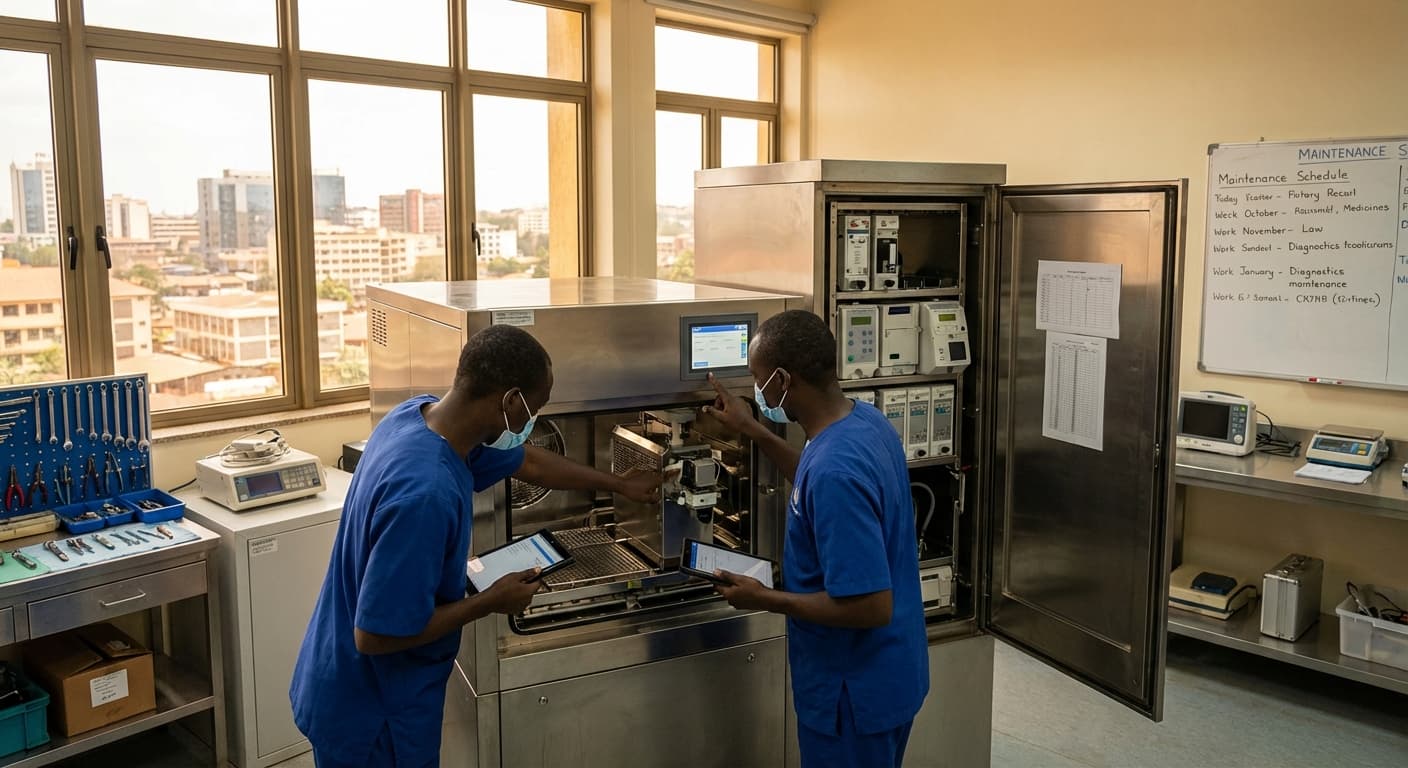
Total Cost of Ownership (TCO) & Lifecycle Budgeting Service in Liberia
Engineering Excellence & Technical Support
Total Cost of Ownership (TCO) & Lifecycle Budgeting Service High-standard technical execution following OEM protocols and local regulatory frameworks.
Optimized Infrastructure Investment
Leverage our TCO & Lifecycle Budgeting expertise to make informed, data-driven decisions on infrastructure projects in Liberia. We analyze acquisition, operational, maintenance, and disposal costs, ensuring optimal allocation of capital for long-term value and resilience against market fluctuations.
Predictive Cost Modeling & Risk Mitigation
Our service employs advanced predictive modeling to forecast future expenditures for your assets and operations in Liberia. By identifying potential cost escalations and operational risks early, we empower you to implement proactive mitigation strategies, safeguarding your budget and ensuring project continuity.
Sustainable Lifecycle Management
We go beyond initial procurement, embedding sustainability into your entire asset lifecycle. Our TCO & Lifecycle Budgeting service in Liberia focuses on maximizing asset lifespan, minimizing environmental impact, and reducing waste, thereby contributing to both your financial objectives and Liberia's sustainable development goals.
What Is Total Cost Of Ownership (Tco) & Lifecycle Budgeting Service In Liberia?
Total Cost of Ownership (TCO) and Lifecycle Budgeting Service in Liberia refers to a comprehensive financial and management framework applied to assets, projects, or systems throughout their entire existence, from initial acquisition to eventual disposal. It moves beyond the upfront purchase price to encompass all direct and indirect costs incurred over the asset's lifespan. This service aims to provide a holistic financial perspective, enabling informed decision-making regarding investment, operational efficiency, and long-term financial planning within Liberian economic and operational contexts.
| Who Needs It? | Typical Use Cases | |||||
|---|---|---|---|---|---|---|
| Government Agencies (National & Local): For infrastructure projects (roads, utilities, public buildings), vehicle fleets, IT systems, and public service delivery mechanisms. | Large Corporations & Industrial Enterprises: For capital equipment, manufacturing facilities, fleet management, IT infrastructure, and supply chain logistics. | Non-Governmental Organizations (NGOs) & Development Partners: For program assets, operational infrastructure (offices, vehicles, equipment), and long-term project sustainability. | Financial Institutions & Investors: For evaluating investment proposals, assessing asset-backed loans, and managing portfolio risk. | Utility Companies (Water, Electricity, Telecommunications): For infrastructure planning, network upgrades, and operational efficiency improvements. | Educational Institutions (Universities, Schools): For campus infrastructure, IT systems, research equipment, and facilities management. | Healthcare Providers (Hospitals, Clinics): For medical equipment, facility maintenance, and operational technology investments. |
| Infrastructure Development Projects: Analyzing the TCO of different road construction materials or bridge designs over their expected lifespan. | Fleet Management: Determining the most cost-effective vehicle acquisition and operational strategy for government or private fleets. | IT System Procurement: Evaluating the total cost of ownership for server infrastructure, software licenses, and cloud services over a 5-10 year period. | Energy Infrastructure Investments: Assessing the lifecycle costs of renewable energy projects versus traditional power generation, including maintenance and fuel costs. | Real Estate Development & Management: Understanding the long-term costs associated with building materials, energy efficiency, and ongoing maintenance of commercial or residential properties. | Agricultural Equipment Acquisition: Evaluating the TCO of different farm machinery based on purchase price, operating expenses, and expected lifespan. | Public Transportation Systems: Analyzing the lifecycle costs of buses, trains, and associated infrastructure to optimize service delivery and fare structures. |
Key Components of TCO & Lifecycle Budgeting Service
- Acquisition Costs: Includes purchase price, shipping, installation, initial training, and any associated fees.
- Operating Costs: Encompasses energy consumption, maintenance, repairs, consumables, personnel required for operation, and routine servicing.
- Downtime & Productivity Loss Costs: Quantifies the financial impact of asset failures, maintenance interruptions, and reduced operational output.
- Upgrade & Modification Costs: Accounts for planned or necessary enhancements, retrofits, and adaptations over the asset's life.
- Decommissioning & Disposal Costs: Includes dismantling, removal, environmental remediation, and disposal fees at the end of the asset's useful life.
- Financing Costs: If applicable, includes interest on loans, depreciation, and opportunity costs.
- Risk Assessment & Mitigation: Identifying and quantifying potential risks (e.g., obsolescence, regulatory changes, unexpected repairs) and their financial implications.
- Benchmarking & Performance Metrics: Establishing key performance indicators (KPIs) to track actual costs against budgeted lifecycle costs.
Who Needs Total Cost Of Ownership (Tco) & Lifecycle Budgeting Service In Liberia?
In Liberia, understanding and managing the Total Cost of Ownership (TCO) and implementing robust Lifecycle Budgeting are crucial for organizations aiming for long-term financial stability and operational efficiency. These services are not just for large corporations; they are essential for a wide range of entities, from government bodies to growing businesses, enabling them to make informed decisions about asset acquisition, maintenance, and eventual disposal, thereby maximizing return on investment and minimizing hidden expenditures. Without a clear TCO and lifecycle perspective, organizations risk unexpected costs, inefficient resource allocation, and premature asset failure, all of which can significantly impede progress and development in the Liberian context.
| Target Customer Type | Key Departments Benefiting | Primary Benefits of TCO & Lifecycle Budgeting |
|---|---|---|
| Government Ministries/Agencies | Procurement, Finance, Planning, Public Works, IT | Optimized public spending, enhanced asset longevity, improved service delivery, reduced long-term operational costs, transparent budgeting. |
| State-Owned Enterprises (SOEs) | Finance, Operations, Engineering, Asset Management, Strategy | Improved profitability, strategic investment decisions, efficient resource allocation, risk mitigation, enhanced operational efficiency. |
| Large Private Sector Corporations | Finance, Operations, Procurement, Engineering, Asset Management, IT | Reduced total operating expenses, increased ROI, informed capital expenditure decisions, competitive advantage, enhanced asset performance. |
| NGOs & International Development Agencies | Finance, Procurement, Project Management, Logistics | Maximizing donor impact, ensuring project sustainability, accountable use of funds, efficient resource deployment, long-term project viability. |
| Financial Institutions | Credit Analysis, Risk Management, Investment Banking | Accurate project viability assessment, informed lending decisions, reduced financial risk, enhanced portfolio performance. |
| Educational & Healthcare Institutions | Finance, Facilities Management, IT, Procurement, Department Heads | Efficient budget allocation for critical assets, extended asset lifespan, reduced unexpected maintenance costs, improved service continuity. |
| Construction & Infrastructure Companies | Finance, Operations, Fleet Management, Project Management, Estimating | Accurate project cost forecasting, improved bidding accuracy, enhanced profitability, optimized equipment utilization, reduced downtime. |
Who Needs TCO & Lifecycle Budgeting Services in Liberia? Target Customers and Departments
- {"item":"Government Ministries and Agencies","description":"Responsible for public infrastructure, procurement of large-scale assets (vehicles, equipment, IT systems), and long-term service delivery. TCO and lifecycle budgeting ensure public funds are used effectively and assets are maintained to serve the populace for their intended lifespan."}
- {"item":"State-Owned Enterprises (SOEs)","description":"Operating in sectors like energy, telecommunications, and transportation, SOEs often manage critical infrastructure and large capital investments. TCO helps them justify expenditures, optimize operational costs, and ensure long-term viability."}
- {"item":"Large Private Sector Corporations","description":"Companies with significant asset bases (manufacturing, mining, agriculture, telecommunications) can benefit from TCO to reduce operational expenditures, improve profitability, and make strategic investment decisions."}
- {"item":"Non-Governmental Organizations (NGOs) & International Development Agencies","description":"Managing projects that involve substantial equipment and infrastructure investments. TCO and lifecycle budgeting ensure project sustainability, donor fund accountability, and efficient utilization of resources over the project's life."}
- {"item":"Financial Institutions","description":"In their role as lenders and investors, financial institutions can use TCO analysis to assess the financial viability of projects and the long-term sustainability of businesses seeking loans, especially for asset-heavy ventures."}
- {"item":"Educational and Healthcare Institutions","description":"Universities, hospitals, and research centers often have a mix of expensive and long-lived assets (laboratory equipment, medical machinery, campus facilities). TCO helps in budgeting for acquisition, maintenance, and replacement to ensure continuity of services."}
- {"item":"Construction and Infrastructure Development Companies","description":"Directly involved in acquiring and managing heavy machinery, vehicles, and project-specific assets. Accurate TCO is vital for project profitability and bidding."}
Total Cost Of Ownership (Tco) & Lifecycle Budgeting Service Process In Liberia
This document outlines the typical workflow for engaging a Total Cost of Ownership (TCO) and Lifecycle Budgeting service provider in Liberia. The process is designed to be comprehensive, from initial client inquiry to the final execution and delivery of the TCO and lifecycle budget analysis. This structured approach ensures all client needs are understood, accurate data is collected, and the final deliverables are actionable and valuable for decision-making.
| Phase | Stage | Activities | Key Deliverables/Outcomes | Typical Duration (Estimates) |
|---|---|---|---|---|
| 1 | Inquiry & Initial Consultation | Client initiates contact (email, phone, referral). Service provider responds and schedules an introductory meeting. Discussion of client's general needs, potential project scope, and service provider's capabilities. | Understanding of client's preliminary needs. Agreement to proceed to the next stage. | 1-3 Business Days |
| 2 | Needs Assessment & Scope Definition | In-depth discussions with client stakeholders. Identification of specific assets, systems, or projects requiring TCO and lifecycle budgeting. Clarification of objectives, desired outcomes, and key performance indicators (KPIs). Definition of the project's boundaries (what's in scope, what's out). | Detailed project brief. Defined scope of work. Agreement on specific deliverables and timelines. Formal proposal outlining services, methodology, and fees. | 3-7 Business Days |
| 3 | Data Collection & Analysis | Collaborative data gathering from the client (historical costs, operational data, maintenance records, usage patterns, purchase prices, disposal costs, inflation rates, discount rates, etc.). Data validation and cleaning. Preliminary analysis to identify cost drivers and trends. | Comprehensive dataset. Identified data gaps and assumptions made. Initial cost breakdown and trend analysis. | 1-4 Weeks (highly variable based on project complexity and data availability) |
| 4 | TCO & Lifecycle Budget Development | Application of TCO methodologies (e.g., acquisition costs, operating costs, maintenance costs, upgrade costs, disposal costs). Development of lifecycle cost models. Forecasting future costs based on historical data and projected changes. Risk assessment and sensitivity analysis. | Developed TCO models. Detailed lifecycle budget projections. Identification of key cost influencing factors and potential risks. | 2-5 Weeks (highly variable based on project complexity and number of assets) |
| 5 | Reporting & Presentation | Preparation of a comprehensive TCO and lifecycle budget report. Creation of clear and concise visualizations (charts, graphs). Presentation of findings and recommendations to client stakeholders. Explanation of methodologies and assumptions. | Final TCO and lifecycle budget report. Presentation deck. Clear understanding of findings and implications for decision-making. | 1-2 Weeks |
| 6 | Review, Refinement & Finalization | Client reviews the report and presentation. Discussions to address any questions or concerns. Incorporation of client feedback and necessary revisions to the report and budget. Final sign-off on deliverables. | Revised report based on feedback. Final approved TCO and lifecycle budget. Client satisfaction with deliverables. | 3-7 Business Days |
| 7 | Post-Engagement Support & Implementation Guidance | Follow-up discussions to assist with the implementation of recommendations. Providing ongoing advice or training if required. Post-project review to assess the effectiveness of the TCO and lifecycle budget in informing decisions. | Successful implementation of recommendations. Enhanced client capability in TCO and lifecycle budgeting. Long-term client relationship. | Ongoing as needed |
TCO & Lifecycle Budgeting Service Process Workflow in Liberia
- Phase 1: Inquiry & Initial Consultation
- Phase 2: Needs Assessment & Scope Definition
- Phase 3: Data Collection & Analysis
- Phase 4: TCO & Lifecycle Budget Development
- Phase 5: Reporting & Presentation
- Phase 6: Review, Refinement & Finalization
- Phase 7: Post-Engagement Support & Implementation Guidance
Total Cost Of Ownership (Tco) & Lifecycle Budgeting Service Cost In Liberia
The Total Cost of Ownership (TCO) and Lifecycle Budgeting services in Liberia are crucial for businesses and organizations to accurately forecast and manage all expenses associated with an asset or project over its entire lifespan. These services move beyond initial purchase price to encompass acquisition, operation, maintenance, and disposal costs. In Liberia, the pricing for these services is influenced by several dynamic factors, leading to a range of potential costs when expressed in Liberian Dollars (LRD).
| Service Scope/Complexity | Estimated Cost Range (LRD) | Indicative Notes |
|---|---|---|
| Basic TCO for a single, standard asset (e.g., office equipment, light vehicle) | 15,000 - 40,000 LRD | Assumes readily available data, straightforward lifecycle, and standard maintenance assumptions. |
| Detailed TCO for multiple assets or a moderately complex system (e.g., small fleet, basic IT network) | 40,000 - 120,000 LRD | Requires more data consolidation, vendor engagement, and potentially scenario planning. |
| Comprehensive Lifecycle Budgeting for a significant project or infrastructure (e.g., small construction, industrial equipment) | 120,000 - 500,000+ LRD | Involves in-depth analysis of operational, maintenance, energy, and disposal costs over many years. Often includes risk assessment and optimization strategies. |
| Advanced TCO/Lifecycle Modeling with bespoke software integration or extensive scenario analysis | 300,000 - 1,000,000+ LRD | For very large-scale projects, complex industrial operations, or entities requiring highly customized analytical frameworks and ongoing support. |
Key Pricing Factors for TCO & Lifecycle Budgeting Services in Liberia:
- Complexity of the asset/project: Larger, more intricate, or technologically advanced assets (e.g., heavy machinery, extensive IT infrastructure, large construction projects) will naturally incur higher TCO analysis costs.
- Data availability and quality: The ease with which historical data, operational logs, maintenance records, and vendor information can be accessed and validated directly impacts the effort required for accurate budgeting. Poor data quality necessitates more investigative work.
- Scope of analysis: Whether the service covers a single asset, a fleet, an entire facility, or a multi-year project will dictate the duration and depth of the engagement.
- Level of detail required: The granularity of the TCO breakdown (e.g., by individual component, by function, or by operational phase) influences the time and resources needed.
- Consultant expertise and experience: Highly specialized consultants with a proven track record in TCO analysis within Liberia or similar emerging markets may command higher fees.
- Market demand and competition: The number of service providers offering these specialized services in Liberia can influence pricing. Higher competition might lead to more competitive rates.
- Economic conditions and inflation: Fluctuations in the Liberian economy, currency exchange rates, and inflation can impact the cost of labor, materials, and overhead for the service providers.
- Client-specific requirements: Any unique reporting formats, integration needs with existing systems, or custom analytical tools requested by the client will affect pricing.
- Duration of the lifecycle being analyzed: Longer lifecycle assessments (e.g., 20+ years for infrastructure) generally require more extensive data collection and forecasting, thus increasing costs.
- Travel and logistics: If the consultant needs to conduct site visits or travel to different locations within Liberia, associated travel expenses will be factored in.
Affordable Total Cost Of Ownership (Tco) & Lifecycle Budgeting Service Options
Our Affordable Total Cost of Ownership (TCO) & Lifecycle Budgeting Service helps organizations optimize their spending by considering all costs associated with an asset, from acquisition through disposal. We offer flexible value bundles and implement proven cost-saving strategies to ensure maximum return on investment and predictable financial planning.
| Value Bundle Name | Description | Included Services | Target Audience | Cost-Saving Strategies Emphasized |
|---|---|---|---|---|
| Essential TCO Assessment | Provides a foundational understanding of an asset's lifecycle costs. | Initial TCO analysis, data collection, basic reporting. | Small to medium-sized businesses, individual asset evaluations. | Bulk purchasing recommendations, energy efficiency considerations. |
| Integrated Lifecycle Planning | Encompasses TCO analysis with long-term planning and budgeting. | Comprehensive TCO modeling, operational cost forecasting, maintenance scheduling, disposal planning. | Growing businesses, organizations with multiple asset classes, project-based investments. | Preventative maintenance optimization, extended asset lifespan strategies, vendor negotiation for service contracts. |
| Strategic TCO Optimization Suite | A premium service focused on continuous improvement and maximizing long-term savings. | Advanced TCO analytics, risk assessment, total lifecycle cost optimization, performance benchmarking, technology refresh strategies, sustainability integration. | Large enterprises, asset-intensive industries, organizations seeking competitive advantage through cost leadership. | Leasing vs. buying analysis, total supplier cost management, obsolescence mitigation, energy and resource efficiency programs, end-of-life value recovery. |
Key Benefits of TCO & Lifecycle Budgeting Services
- Reduced overall expenses through informed purchasing decisions.
- Improved accuracy in long-term financial forecasting and budgeting.
- Proactive identification of potential cost overruns and risks.
- Enhanced asset management and performance optimization.
- Support for sustainable procurement and environmental responsibility.
Verified Providers In Liberia
Finding reliable and credentialed healthcare providers is crucial for ensuring quality medical care in any region. In Liberia, identifying "Verified Providers" is paramount, and understanding the significance of their credentials can lead to informed decisions about your health. This document outlines what it means for a provider to be verified, with a specific focus on Franance Health, and why their accredited professionals represent the best choice for medical services.
| Criteria | Franance Health's Commitment | Why it's the Best Choice |
|---|---|---|
| Licensing and Registration | All Franance Health practitioners hold valid and current licenses from the relevant Liberian medical regulatory bodies. | Ensures legal practice and adherence to national medical regulations, providing a fundamental layer of trust. |
| Educational Background and Specialization | Franance Health meticulously verifies the degrees, certifications, and specialized training of all its medical staff. | Guarantees that patients are treated by highly qualified individuals with the expertise suited to their specific medical needs. |
| Professional Experience | A stringent review of past employment and clinical experience is conducted for every provider. | Confirms a proven track record of successful patient care and practical application of medical knowledge. |
| Ethical Conduct and Professionalism | Franance Health upholds a strict code of ethics and conducts background checks to ensure professional integrity and patient-centered care. | Provides assurance of respectful, honest, and compassionate treatment, prioritizing patient well-being above all else. |
| Continuous Medical Education (CME) | Franance Health mandates and supports ongoing professional development for its entire medical team. | Ensures that patients benefit from the most up-to-date medical knowledge, advanced diagnostic tools, and innovative treatment approaches. |
| Patient Feedback and Performance Review | Regular performance reviews and mechanisms for patient feedback are integrated into Franance Health's operational framework. | Demonstrates a commitment to quality improvement and responsiveness to patient experiences, fostering a culture of excellence. |
What it Means to be a Verified Provider in Liberia
- {"title":"Rigorous Credentialing Process","description":"Verified providers have undergone a thorough vetting process to confirm their qualifications, licenses, and professional standing. This often includes verification of educational background, completion of required training, and adherence to ethical standards."}
- {"title":"Adherence to Standards of Care","description":"Verification implies that providers consistently meet or exceed established national and international standards for medical practice, patient safety, and quality of care."}
- {"title":"Commitment to Continuous Professional Development","description":"Verified providers are typically engaged in ongoing education and training to stay abreast of the latest medical advancements, techniques, and best practices."}
- {"title":"Patient Safety and Trust","description":"The verification process is designed to build trust by ensuring that patients are receiving care from competent and ethical practitioners, thereby enhancing patient safety and outcomes."}
Scope Of Work For Total Cost Of Ownership (Tco) & Lifecycle Budgeting Service
This Scope of Work (SOW) outlines the services to be provided for a comprehensive Total Cost of Ownership (TCO) and Lifecycle Budgeting analysis. The objective is to establish a detailed understanding of all costs associated with an asset, project, or system throughout its entire lifespan, from acquisition to disposal. This analysis will inform strategic decision-making, optimize resource allocation, and facilitate long-term financial planning.
| Phase | Key Activities | Deliverables | Standard Specifications |
|---|---|---|---|
| Phase 1: Project Initiation & Planning | Define scope and objectives Identify key stakeholders Establish data collection methodology Develop project plan and timeline Conduct initial risk assessment | Project Charter Stakeholder Register Data Collection Plan Project Management Plan Risk Register | Clear definition of the asset/project being analyzed. Identification of all relevant cost categories (e.g., capital, operational, maintenance, disposal). Defined data sources and collection methods (e.g., historical data, vendor quotes, expert interviews). Agreed-upon project timeline with key milestones. |
| Phase 2: Data Collection & Analysis | Gather historical cost data Collect current operational costs Obtain vendor quotes and estimates Research market trends and inflation rates Analyze energy consumption and maintenance logs Identify regulatory and compliance costs | Raw Data Repository Cost Breakdown Reports (per category) Inflation & Market Trend Analysis Initial TCO Model | Data integrity and accuracy verification. Standardized data templates for consistent collection. Use of industry-standard cost accounting principles. Documentation of all assumptions made during data analysis. |
| Phase 3: TCO Modeling & Calculation | Develop TCO model structure Input collected data into the model Calculate costs for each lifecycle stage Perform sensitivity analysis and scenario planning Validate model outputs with stakeholders | Developed TCO Model Detailed TCO Calculation Report Sensitivity Analysis Report Scenario Planning Scenarios | Use of established TCO methodologies (e.g., weighted average cost of capital, net present value). Clear documentation of model formulas and logic. Presentation of TCO results in a clear and understandable format. Inclusion of a discount rate for future costs. |
| Phase 4: Lifecycle Budgeting | Translate TCO findings into a lifecycle budget Forecast future expenditures with contingency planning Align budget with strategic objectives Identify cost optimization opportunities Develop budget allocation strategies | Lifecycle Budget Document Contingency Plan Cost Optimization Recommendations Budget Allocation Proposal | Budget presented in a multi-year format aligned with the asset/project lifecycle. Clear identification of capital vs. operational expenditure. Inclusion of realistic contingency reserves based on risk assessment. Recommendations supported by TCO analysis. |
| Phase 5: Reporting & Recommendations | Summarize TCO and lifecycle budget findings Provide strategic recommendations for cost management Present findings and recommendations to stakeholders Develop a plan for ongoing TCO and budget monitoring | Final TCO & Lifecycle Budgeting Report Executive Summary Strategic Recommendations Document Monitoring & Control Plan | Comprehensive report detailing methodology, findings, and recommendations. Clear and actionable recommendations for cost reduction and optimization. Presentation tailored to different stakeholder audiences. A defined process for regular review and update of TCO and lifecycle budget. |
| Phase 6: Post-Implementation Support (Optional) | Assist with implementation of recommendations Provide ongoing data collection and analysis support Regularly update TCO and lifecycle budget | Implementation Support Documentation Updated TCO & Lifecycle Budget Reports | Defined scope and duration for post-implementation support. Clear reporting cadence for updates. |
Objectives of TCO & Lifecycle Budgeting Service
- To accurately identify and quantify all direct and indirect costs across the asset/project lifecycle.
- To develop a robust lifecycle budget that accounts for all anticipated expenditures.
- To benchmark current costs against industry best practices and identify areas for improvement.
- To provide data-driven insights for strategic investment and operational decisions.
- To forecast future financial requirements and mitigate potential budget overruns.
- To support informed procurement and vendor selection processes.
- To establish a framework for ongoing cost monitoring and management.
Service Level Agreement For Total Cost Of Ownership (Tco) & Lifecycle Budgeting Service
This Service Level Agreement (SLA) outlines the performance expectations, response times, and uptime guarantees for the Total Cost of Ownership (TCO) & Lifecycle Budgeting Service (the "Service").
| Service Component | Availability Guarantee (Uptime) | Target Response Time (Critical Issue) | Target Response Time (Major Issue) | Target Response Time (Minor Issue) | Resolution Time Objective (Critical Issue) |
|---|---|---|---|---|---|
| Core TCO & Lifecycle Budgeting Platform | 99.9% Uptime (excluding scheduled maintenance) | 15 minutes | 1 hour | 4 business hours | 4 business hours |
| Data Ingestion & Processing | 99.5% Uptime | 30 minutes | 2 hours | 8 business hours | 8 business hours |
| Reporting & Analytics Engine | 99.9% Uptime | 15 minutes | 1 hour | 4 business hours | 4 business hours |
| Dedicated Support Line & Ticketing System | N/A (Focus on response times) | 10 minutes (acknowledgement) | 30 minutes (acknowledgement) | 2 business hours (acknowledgement) | N/A |
Service Overview
- The Service provides comprehensive tools and expertise to assist clients in understanding, managing, and optimizing the Total Cost of Ownership (TCO) of their assets and projects throughout their entire lifecycle.
- Key features include TCO modeling, lifecycle cost analysis, budgeting projections, financial risk assessment, and performance reporting.
- This SLA applies to all active clients utilizing the Service.
Frequently Asked Questions

Ready when you are
Let's scope your Total Cost of Ownership (TCO) & Lifecycle Budgeting Service in Liberia project in Liberia.

Scaling healthcare logistics and technical systems across the entire continent.