
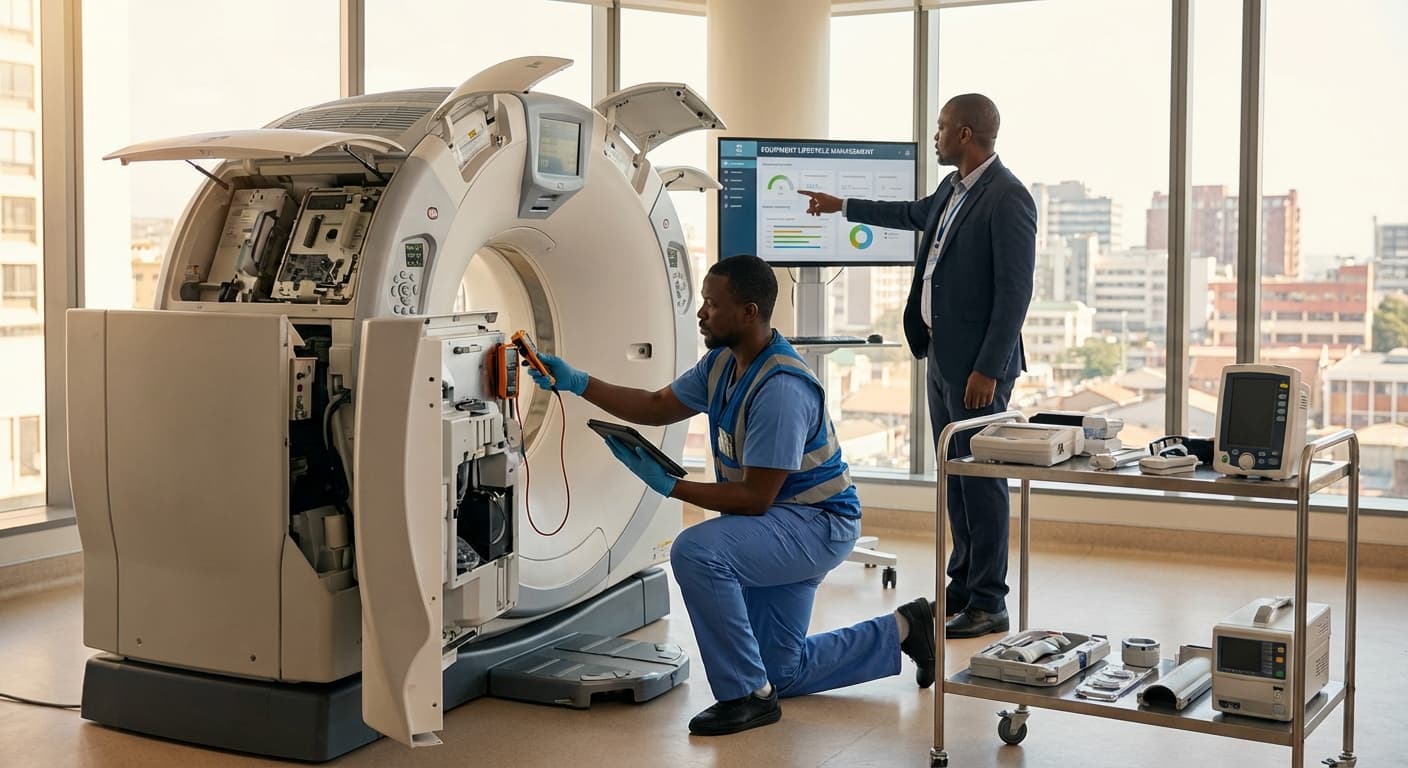
Equipment Replacement Planning & Obsolescence Strategy Service in Liberia
Engineering Excellence & Technical Support
Equipment Replacement Planning & Obsolescence Strategy Service High-standard technical execution following OEM protocols and local regulatory frameworks.
Predictive Replacement Forecasting
Leverage advanced analytics and historical data to forecast optimal equipment replacement cycles. Our service identifies critical failure points and minimizes costly unplanned downtime, ensuring business continuity for Liberian industries.
Proactive Obsolescence Mitigation
Strategically manage end-of-life equipment and components. We implement robust obsolescence management strategies, sourcing alternatives and planning phased replacements to prevent operational disruptions and maintain compliance in Liberia's evolving industrial landscape.
Cost-Optimized Capital Allocation
Develop data-driven capital expenditure plans for equipment modernization. Our service ensures that replacement decisions are aligned with financial objectives and operational needs, maximizing return on investment for Liberian businesses.
What Is Equipment Replacement Planning & Obsolescence Strategy Service In Liberia?
Equipment Replacement Planning & Obsolescence Strategy Service in Liberia is a specialized consulting offering focused on proactively managing the lifecycle of industrial, operational, and IT assets within Liberian organizations. It encompasses the systematic evaluation of existing equipment to determine optimal replacement schedules, mitigate the risks associated with technological obsolescence, and ensure operational continuity and cost-efficiency. The service is not merely about replacing old items but involves a data-driven approach to asset management, considering factors such as performance degradation, maintenance costs, technological advancements, regulatory compliance, and the economic impact of continued operation versus replacement.
| Who Needs This Service | Typical Use Cases |
|---|---|
| Manufacturing Companies: Organizations relying on machinery and production lines that are approaching the end of their useful life or are inefficient compared to modern alternatives. | Replacing aging production machinery to improve output, reduce energy consumption, and meet new quality standards. |
| Mining and Extractive Industries: Businesses operating heavy machinery, vehicles, and processing equipment in demanding environments. | Developing a strategy for replacing specialized mining equipment that is costly to maintain and has limited availability of spare parts. |
| Telecommunications Providers: Companies managing network infrastructure, base stations, and IT systems. | Planning the upgrade of outdated network hardware to support higher bandwidth and new service offerings, preventing service degradation due to obsolescence. |
| Power Generation and Utilities: Organizations responsible for critical energy infrastructure and distribution networks. | Strategizing the replacement of aging power generation units or substation equipment to ensure grid stability and meet increasing demand. |
| Transportation and Logistics Companies: Businesses operating fleets of vehicles, cargo handling equipment, and related infrastructure. | Optimizing the replacement cycle for trucks, forklifts, and warehousing systems to reduce downtime and improve operational efficiency. |
| Information Technology (IT) Departments: Enterprises managing servers, workstations, network devices, and software. | Creating a roadmap for refreshing end-of-life IT hardware and software to maintain cybersecurity, improve performance, and ensure compatibility with evolving business needs. |
| Government Agencies and Public Sector Entities: Departments managing public infrastructure, vehicles, and IT systems. | Developing a structured plan for replacing aging public service vehicles, IT infrastructure, or essential operational equipment to ensure service delivery and budget adherence. |
| Financial Institutions: Banks and other financial service providers managing IT infrastructure and operational equipment. | Ensuring that critical IT systems and hardware are regularly updated to maintain security, compliance, and customer service levels. |
Key Components of the Service:
- Asset Inventory and Condition Assessment: Comprehensive cataloging of all relevant equipment, coupled with a thorough evaluation of their current operational status, performance metrics, and potential failure modes.
- Obsolescence Risk Analysis: Identification of equipment nearing end-of-life, facing supply chain disruptions for spare parts, or superseded by significantly more efficient or compliant technologies.
- Total Cost of Ownership (TCO) Analysis: Calculation and comparison of the TCO for continuing to operate existing equipment versus investing in new or upgraded assets, factoring in acquisition, operation, maintenance, and disposal costs.
- Replacement Strategy Development: Formulation of phased replacement plans, prioritizing assets based on risk, criticality, and return on investment (ROI). This includes defining replacement timelines, budget allocation, and procurement strategies.
- Technology Roadmap Integration: Alignment of equipment replacement with broader technological advancements and industry best practices relevant to the Liberian context.
- Risk Mitigation and Business Continuity Planning: Development of strategies to minimize operational disruptions during the replacement process and ensure continued service delivery.
- Vendor and Supplier Management: Assistance in identifying, vetting, and negotiating with suitable equipment vendors and service providers within or accessible to Liberia.
- End-of-Life Management and Sustainability: Planning for the responsible disposal or recycling of decommissioned equipment in compliance with environmental regulations.
Who Needs Equipment Replacement Planning & Obsolescence Strategy Service In Liberia?
Effective equipment replacement planning and obsolescence strategy are critical for organizations in Liberia to maintain operational efficiency, control costs, mitigate risks, and ensure compliance. This service is particularly vital for sectors with high capital investment, complex machinery, and stringent regulatory requirements. By proactively addressing the lifecycle of their assets, businesses can avoid costly downtime, capitalize on technological advancements, and extend the lifespan of their investments. A well-defined strategy also allows for better budgeting, resource allocation, and a competitive edge in the Liberian market.
| Industry Sector | Typical Equipment/Assets Requiring Planning | Key Obsolescence Concerns | Primary Departmental Stakeholders |
|---|---|---|---|
| Mining & Extractive | Heavy machinery (excavators, haul trucks, crushers), processing equipment, vehicles, drilling rigs | Mechanical wear and tear, lack of spare parts availability, safety risks, outdated control systems | Operations, Maintenance & Engineering, Procurement, Finance |
| Agriculture & Agribusiness | Tractors, harvesters, processing machinery (e.g., rubber mills, palm oil presses), irrigation systems | Deterioration due to environmental factors, unavailability of specialized parts, energy inefficiency | Operations, Maintenance & Engineering, Procurement, Finance |
| Manufacturing & Processing | Production lines, specialized machinery, packaging equipment, laboratory instruments | Technological advancements, reduced efficiency, lack of trained personnel for older systems, regulatory changes | Operations, Production Management, Maintenance & Engineering, Quality Control, Procurement |
| Energy & Utilities | Generators, turbines, transformers, pumps, control systems, distribution networks | Ageing infrastructure, performance degradation, regulatory compliance (e.g., emissions), cybersecurity threats | Engineering, Operations, Maintenance, Compliance, Finance |
| Telecommunications | Network equipment (switches, routers, antennas), transmission systems, IT infrastructure | Rapid technological evolution, security vulnerabilities, diminishing vendor support, increased data demands | IT Operations, Network Engineering, Procurement, Security, Finance |
| Transportation & Logistics | Fleet vehicles (trucks, buses), port cranes, material handling equipment, IT systems | Wear and tear, fuel efficiency, safety standards, software obsolescence, tracking systems | Fleet Management, Operations, Maintenance, IT, Procurement |
| Construction & Infrastructure | Heavy construction equipment (cranes, bulldozers), specialized tools, project management software | Durability, safety standards, efficiency improvements, regulatory compliance | Project Management, Operations, Maintenance, Procurement |
| Healthcare | Medical imaging equipment, diagnostic tools, laboratory analyzers, surgical instruments, IT systems | Technological obsolescence leading to reduced diagnostic accuracy, patient safety concerns, data security, lack of software updates | Clinical Engineering, IT, Procurement, Finance, Risk Management |
| Government & Public Services | Public works machinery, defense equipment, IT infrastructure, vehicles, specialized systems | Budgetary constraints, long procurement cycles, safety and security, operational continuity, public trust | Public Works, Defense, IT, Procurement, Finance, Planning |
Target Customers and Departments in Liberia Requiring Equipment Replacement Planning & Obsolescence Strategy Services
- {"items":["Mining and Extractive Industries (e.g., iron ore, gold)","Agriculture and Agribusiness (e.g., rubber plantations, palm oil)","Manufacturing and Processing (e.g., food and beverage, textiles)","Energy and Utilities (e.g., power generation, water treatment)","Telecommunications","Transportation and Logistics (e.g., port operations, fleet management)","Construction and Infrastructure Development","Healthcare (hospitals, clinics)","Government and Public Services (e.g., public works, defense)"],"title":"Industries"}
- {"items":["Large-scale industrial operations with extensive machinery.","Companies operating in remote or challenging environments where timely replacement is difficult.","Organizations facing rapid technological changes in their sector.","Businesses with aging infrastructure and equipment.","Companies with stringent safety and environmental regulations.","Public sector entities responsible for critical national infrastructure.","International companies operating in Liberia with global asset management standards."],"title":"Specific Customer Archetypes"}
- {"items":["Operations Management","Maintenance and Engineering Departments","Procurement and Supply Chain Management","Finance and Budgeting Departments","Asset Management Teams","Risk Management","Compliance and Regulatory Affairs","IT Departments (for technology-related obsolescence)","Senior Leadership (CEOs, COOs, CFOs)"],"title":"Key Departments / Roles within Target Organizations"}
Equipment Replacement Planning & Obsolescence Strategy Service Process In Liberia
This service process outlines the workflow for Equipment Replacement Planning & Obsolescence Strategy in Liberia, guiding clients from initial inquiry to the successful execution of their strategic plans. It emphasizes a structured, data-driven approach to ensure optimal asset management, minimize downtime, and maximize return on investment for their equipment.
| Stage | Key Activities | Deliverables | Key Stakeholders (Client) | Timeline (Indicative) |
|---|---|---|---|---|
| Inquiry & Consultation | Initial discussion, understanding needs, scope definition | Service Request Document, Initial Project Scope | Senior Management, Operations Managers, Procurement Team | 1-2 Business Days |
| Needs Assessment & Data Gathering | Equipment inventory audit, performance data collection, site surveys | Equipment Register, Performance Data Report, Site Assessment Summary | Operations Team, Maintenance Team, IT Department (if applicable) | 1-3 Weeks |
| Obsolescence Risk Analysis | Review of equipment lifespan, technology trends, market availability | Obsolescence Risk Report, SWOT Analysis (per equipment category) | Technical Managers, Engineering Department | 1-2 Weeks |
| Replacement Strategy Development | Defining replacement options, phasing, and prioritization | Equipment Replacement Strategy Document, Prioritized List of Equipment | Senior Management, Finance Department, Operations Managers | 1-2 Weeks |
| Financial Modeling & Cost-Benefit Analysis | Developing financial models, ROI calculations, budget proposals | Financial Impact Report, Cost-Benefit Analysis, Budget Proposal | Finance Department, Senior Management | 1-2 Weeks |
| Technology & Market Research | Identifying suitable equipment, vendors, and local support | Market Research Report, Vendor Shortlist, Technology Recommendations | Procurement Team, Technical Managers | 1-2 Weeks |
| Risk Mitigation & Contingency Planning | Identifying potential challenges and developing mitigation strategies | Risk Assessment Report, Mitigation & Contingency Plan | Project Management Team, Operations Managers | 1 Week |
| Strategy Presentation & Recommendation | Presenting the strategy, gathering feedback, obtaining approval | Final Strategy Presentation Deck, Approved Replacement Plan | All Key Stakeholders | 1-3 Business Days |
| Procurement & Implementation Planning | Vendor selection, contract negotiation, detailed implementation schedule | Procurement Contracts, Detailed Implementation Plan, Logistics Plan | Procurement Team, Project Managers, Legal Department | 2-4 Weeks |
| Execution & Project Management | Equipment procurement, delivery, installation, commissioning | Project Status Reports, Commissioning Certificates, Installed Equipment | Project Managers, Site Engineers, Procurement Team | Varies (depending on equipment complexity and lead times) |
| Training & Knowledge Transfer | Training sessions for operational and maintenance staff | Training Materials, Trained Personnel List, Competency Assessments | Operations Team, Maintenance Team, Training Department | Ongoing during and post-implementation |
| Post-Implementation Review & Optimization | Performance evaluation, identification of areas for improvement | Post-Implementation Review Report, Optimization Recommendations, Final Project Report | Senior Management, Operations Managers, Finance Department | 1-2 Weeks (after commissioning) |
Equipment Replacement Planning & Obsolescence Strategy Service Process in Liberia
- 1. Inquiry & Initial Consultation: The process begins with a client expressing interest in equipment replacement planning and obsolescence strategy. This involves an initial consultation to understand their specific needs, current equipment inventory, operational context in Liberia, and overall business objectives. Key stakeholders from the client's organization will participate.
- 2. Needs Assessment & Data Gathering: A comprehensive assessment of the client's existing equipment fleet is conducted. This includes collecting detailed information on make, model, age, condition, maintenance history, operational performance, expected remaining useful life, and current market value. Information regarding regulatory compliance and environmental considerations relevant to Liberia will also be gathered.
- 3. Obsolescence Risk Analysis: Utilizing the gathered data and industry best practices, an analysis of obsolescence risks is performed for each piece of equipment. This considers factors such as technological advancements, availability of spare parts, maintenance support, safety regulations, and potential for future operational inefficiencies.
- 4. Replacement Strategy Development: Based on the obsolescence risk analysis and the client's objectives, a tailored replacement strategy is developed. This may include options for outright replacement, phased replacement, refurbishment, or alternative technology adoption. The strategy will consider the economic feasibility and operational impact within the Liberian context.
- 5. Financial Modeling & Cost-Benefit Analysis: Detailed financial models are created to evaluate the costs associated with different replacement scenarios, including capital expenditure, installation, training, and ongoing operational costs. A thorough cost-benefit analysis is performed, highlighting the return on investment (ROI) and payback periods for each recommended strategy.
- 6. Technology & Market Research: Research is conducted on available replacement equipment, innovative technologies, and reputable suppliers operating in or serving Liberia. This ensures that the recommended solutions are appropriate for the local environment, infrastructure, and available support services.
- 7. Risk Mitigation & Contingency Planning: Potential risks associated with the replacement process, such as supply chain disruptions, installation challenges, or unexpected operational impacts in Liberia, are identified. Mitigation strategies and contingency plans are developed to address these risks.
- 8. Strategy Presentation & Recommendation: The developed strategy, including financial projections, risk assessments, and recommended actions, is presented to the client. This session allows for discussion, feedback, and alignment on the chosen path forward.
- 9. Procurement & Implementation Planning: Once the strategy is approved, a detailed procurement plan is established, including vendor selection, contract negotiation, and logistics for equipment acquisition and delivery to Liberia. An implementation plan is also developed, outlining installation, commissioning, testing, and initial training schedules.
- 10. Execution & Project Management: The procurement and implementation phases are managed actively. This involves overseeing the delivery, installation, and integration of new equipment, ensuring adherence to project timelines, budgets, and quality standards. Regular progress reports are provided to the client.
- 11. Training & Knowledge Transfer: Comprehensive training is provided to the client's operational and maintenance staff on the new equipment. This ensures smooth adoption and maximizes the lifespan and efficiency of the replacements. Knowledge transfer sessions are conducted to empower internal teams.
- 12. Post-Implementation Review & Optimization: Following the successful implementation, a post-implementation review is conducted to assess performance against objectives. Recommendations for ongoing maintenance, operational optimization, and future strategic planning are provided to ensure sustained benefits.
Equipment Replacement Planning & Obsolescence Strategy Service Cost In Liberia
Equipment Replacement Planning & Obsolescence Strategy Service Cost In Liberia
In Liberia, the cost of Equipment Replacement Planning & Obsolescence Strategy services can vary significantly based on several key factors. These services are crucial for businesses to ensure operational efficiency, minimize downtime, and avoid the risks associated with using outdated or unreliable equipment. Understanding these pricing determinants is essential for accurate budgeting and strategic decision-making.
Key Pricing Factors:
- Scope and Complexity of Services: This is the most significant driver of cost. Services can range from a basic inventory and age assessment to a comprehensive, multi-year replacement plan involving detailed financial modeling, risk analysis, and integration with supply chain management.
- Size and Type of Equipment Portfolio: The sheer number of assets to be assessed, their diversity (e.g., IT hardware, heavy machinery, vehicles, manufacturing equipment), and their criticality to operations will directly impact the time and expertise required.
- Data Availability and Quality: The ease with which service providers can access accurate data on existing equipment (purchase dates, maintenance records, operational history, current condition) will affect the effort involved. Poor or incomplete data may necessitate additional investigative work.
- Consultant Expertise and Reputation: Highly experienced consultants with specialized knowledge in asset management, financial planning, and specific industry sectors will command higher fees. The reputation and track record of the service provider also play a role.
- Project Duration and Timeline: Longer-term projects or those requiring expedited delivery may incur higher costs due to sustained resource allocation or the need for overtime.
- Geographic Location and Logistics: While the service is delivered in Liberia, any on-site assessments requiring travel to remote locations or across the country can add to logistical expenses.
- Customization Requirements: The degree to which the service needs to be tailored to a client's specific business processes, risk appetite, and financial constraints will influence the overall cost.
- Technology and Tools Utilized: Some providers may leverage advanced software or analytical tools, which can be factored into their pricing.
Pricing Ranges In Liberian Dollars (Lrd):
Given the nascent stage of specialized asset management consulting in Liberia and the dynamic economic landscape, providing definitive, universally applicable price ranges is challenging. However, based on general industry practices and local economic considerations, we can offer estimated ranges. These are indicative and should be confirmed with service providers.
For a small to medium-sized enterprise (SME) with a moderate equipment portfolio (e.g., 50-200 assets) and a basic to intermediate level of service (e.g., inventory, age assessment, initial replacement prioritization), the cost could range from LRD 150,000 to LRD 500,000. This might cover a few weeks to a couple of months of consultancy.
For larger corporations with extensive and diverse equipment portfolios (e.g., 500+ assets) requiring a comprehensive, multi-year obsolescence strategy, including detailed financial planning, risk assessment, and scenario modeling, costs could range significantly higher, from LRD 750,000 to LRD 3,000,000+. Such projects are typically longer-term, spanning several months or even a year, and involve senior-level expertise.
Note: These figures are estimations and can be influenced by the specific provider's fee structure (hourly, daily, project-based) and the negotiated scope of work. It's highly recommended to obtain detailed proposals from multiple service providers for an accurate cost assessment.
| Business Size | Service Level | Estimated Price Range (LRD) |
|---|---|---|
| SME (50-200 assets) | Basic to Intermediate | 150,000 - 500,000 |
| Large Corporation (500+ assets) | Comprehensive, Multi-year Strategy | 750,000 - 3,000,000+ |
Key Factors Influencing Service Cost
- Scope and Complexity of Services
- Size and Type of Equipment Portfolio
- Data Availability and Quality
- Consultant Expertise and Reputation
- Project Duration and Timeline
- Geographic Location and Logistics
- Customization Requirements
- Technology and Tools Utilized
Affordable Equipment Replacement Planning & Obsolescence Strategy Service Options
Our Affordable Equipment Replacement Planning & Obsolescence Strategy Service helps businesses proactively manage their asset lifecycle, minimize downtime, and optimize capital expenditures. We offer flexible value bundles and cost-saving strategies tailored to your specific operational needs and budget. By understanding the nuances of your equipment's expected lifespan, maintenance history, and the evolving technological landscape, we develop a strategic roadmap to ensure you're always operating with efficient, reliable, and cost-effective solutions. This service is crucial for avoiding costly emergency replacements, mitigating the risks associated with outdated technology, and maximizing the return on your equipment investments.
| Value Bundle | Included Services | Target Audience | Key Cost-Saving Strategies Enabled | Estimated ROI Potential |
|---|---|---|---|---|
| Essential Replacement Planning | Basic equipment lifecycle assessment, identification of critical assets, initial replacement timeline recommendations, risk assessment for immediate threats. | Small to medium-sized businesses with limited capital, focusing on essential operational equipment. | Prioritized replacements to avoid critical failures, bulk purchasing discounts for planned upgrades, reduced emergency repair costs. | Moderate (1.5x - 2.5x investment) |
| Strategic Obsolescence Management | Comprehensive asset inventory and condition analysis, obsolescence forecasting, technology trend monitoring, phased replacement strategy development, supplier relationship management assistance. | Growing businesses and enterprises with diverse equipment portfolios, seeking long-term operational stability and efficiency. | Negotiated long-term service agreements, strategic sourcing for end-of-life equipment, leveraging new technologies for improved efficiency and reduced operating costs, avoiding costly software/hardware compatibility issues. | High (2.5x - 4x investment) |
| Comprehensive Asset Lifecycle Solution | All services from Strategic Obsolescence Management, plus preventative maintenance optimization, disposal and recycling strategy, integration with existing ERP/CMMS systems, ongoing performance monitoring and strategy refinement. | Large enterprises and organizations with complex, high-value asset bases and a focus on total cost of ownership. | Maximized asset utilization, minimized total cost of ownership through optimized maintenance and disposal, potential for asset redeployment, avoidance of future costly redesigns due to technology shifts. | Very High (4x - 6x+ investment) |
Key Benefits of Our Service
- Proactive risk mitigation for equipment failures.
- Optimized capital expenditure planning and budgeting.
- Reduced operational downtime and associated costs.
- Enhanced operational efficiency through modern technology.
- Extended equipment lifespan through informed maintenance.
- Improved negotiation power with suppliers.
- Compliance with industry standards and regulations.
- Streamlined asset management and tracking.
Verified Providers In Liberia
Ensuring access to quality healthcare in Liberia is paramount. The presence of 'Verified Providers' signifies a commitment to excellence and patient safety. Among these, Franance Health stands out due to its rigorous credentialing process and unwavering dedication to providing top-tier medical services. This document details Franance Health's credentials and outlines why they represent the best choice for healthcare in Liberia.
| Credential/Aspect | Franance Health's Commitment | Benefit to Patients |
|---|---|---|
| MOHSW Verification | Fully compliant with all MOHSW regulations and standards. | Guarantees that services meet national healthcare quality benchmarks. |
| Medical Staff Expertise | Employs highly qualified and experienced doctors, nurses, and specialists, many with international training. | Ensures accurate diagnoses, effective treatments, and specialized care. |
| Patient Safety Focus | Implements comprehensive protocols for infection control, medication safety, and patient identification. | Minimizes risks and ensures a safe healing environment. |
| Infrastructure and Technology | Invests in modern medical equipment and facilities that meet international standards. | Provides access to advanced diagnostic tools and treatment modalities for better outcomes. |
| Ethical Practices | Upholds the highest ethical standards in patient care and professional conduct. | Builds trust and ensures patients receive respectful and transparent care. |
| Community Engagement | Actively participates in community health initiatives and public health awareness programs. | Contributes to the overall well-being of the Liberian population. |
Franance Health Credentials
- Accreditation from the Liberian Ministry of Health and Social Welfare (MOHSW)
- Partnerships with internationally recognized medical organizations
- Board certification of all physicians and specialists
- Adherence to strict patient safety protocols
- Regular internal and external quality assurance reviews
- Commitment to continuous professional development for all staff
- Utilization of advanced medical technology and equipment
Scope Of Work For Equipment Replacement Planning & Obsolescence Strategy Service
This Scope of Work (SOW) outlines the services to be provided for Equipment Replacement Planning and Obsolescence Strategy. The objective is to develop a comprehensive, data-driven strategy to proactively manage equipment lifecycle, minimize operational disruptions due to obsolescence, and optimize capital expenditure for replacements. This will involve assessing the current equipment inventory, forecasting future needs, identifying obsolescence risks, and recommending replacement strategies and timelines.
| Deliverable | Description | Standard Specifications / Format |
|---|---|---|
| Current Equipment Inventory Report | Detailed listing of all relevant equipment, including manufacturer, model, serial number, installation date, purchase date, current condition, criticality rating, and maintenance history. | Excel spreadsheet or CSV file with standardized column headers. |
| Equipment Lifespan Analysis Report | Analysis of expected operational life for each equipment category based on manufacturer data, usage patterns, and historical performance. | PDF document detailing methodologies, assumptions, and projected lifespans per equipment type. |
| Obsolescence Risk Register | Identification of equipment at risk of obsolescence (e.g., end-of-life support, availability of spare parts, technological advancements) with associated risk scores. | Excel spreadsheet or CSV file with columns for equipment ID, risk factor, risk score, and potential impact. |
| Obsolescence Mitigation Recommendations | Proposed strategies for mitigating obsolescence risks, including proactive replacement, refurbishment, or alternative solutions. | PDF document outlining specific recommendations for each high-risk equipment item. |
| Equipment Replacement Strategy Plan | A comprehensive plan detailing recommended replacement cycles, prioritization of replacements, and strategic considerations. | PDF document including executive summary, methodology, detailed plan, and appendices. |
| Five-Year Capital Expenditure Forecast (Equipment Replacement) | Projected budget requirements for planned equipment replacements over a five-year period, broken down by year and equipment category. | Excel spreadsheet or CSV file with detailed cost breakdowns and assumptions. |
| Obsolescence Management Policy Framework (Optional) | A proposed framework for ongoing obsolescence management, including roles, responsibilities, and review processes. | PDF document outlining policy elements and governance structure. |
| Project Final Report and Presentation | A summary of the entire project, including findings, recommendations, and the implementation roadmap. A presentation to key stakeholders. | PDF document for the report and a PowerPoint presentation file (.pptx). |
Key Activities and Deliverables
- Phase 1: Assessment and Analysis
- Phase 2: Obsolescence Risk Identification and Prioritization
- Phase 3: Replacement Strategy Development
- Phase 4: Implementation Roadmap and Financial Planning
- Phase 5: Documentation and Knowledge Transfer
Service Level Agreement For Equipment Replacement Planning & Obsolescence Strategy Service
This Service Level Agreement (SLA) outlines the guaranteed response times and uptime for the Equipment Replacement Planning & Obsolescence Strategy Service. It defines the expected performance standards and the remedies available to the Client in the event of a failure to meet these standards.
| Service Component | Response Time Guarantee (Business Hours) | Uptime Guarantee |
|---|---|---|
| Critical Service Impacting Request (e.g., platform outage, critical data access issue) | 1 Hour | 99.5% |
| High Priority Request (e.g., urgent strategic recommendation needed, significant planning roadblock) | 4 Business Hours | 99.5% |
| Medium Priority Request (e.g., standard inquiry, report generation request, minor configuration change) | 8 Business Hours | 99.5% |
| Low Priority Request (e.g., general information request, feedback submission) | 24 Business Hours | 99.5% |
Service Scope and Objectives
- The Service provides proactive planning and strategic guidance to minimize the impact of equipment obsolescence and ensure timely replacement.
- Key objectives include optimizing asset lifecycle management, reducing operational disruptions due to end-of-life equipment, and identifying cost-effective replacement solutions.
- The Service encompasses analysis of current equipment inventory, forecasting obsolescence risks, developing replacement roadmaps, and recommending mitigation strategies.
- This SLA specifically addresses the response times for support requests related to the Service and the uptime of any client-facing platforms or tools provided as part of the Service.
Frequently Asked Questions

Ready when you are
Let's scope your Equipment Replacement Planning & Obsolescence Strategy Service in Liberia project in Liberia.

Scaling healthcare logistics and technical systems across the entire continent.