
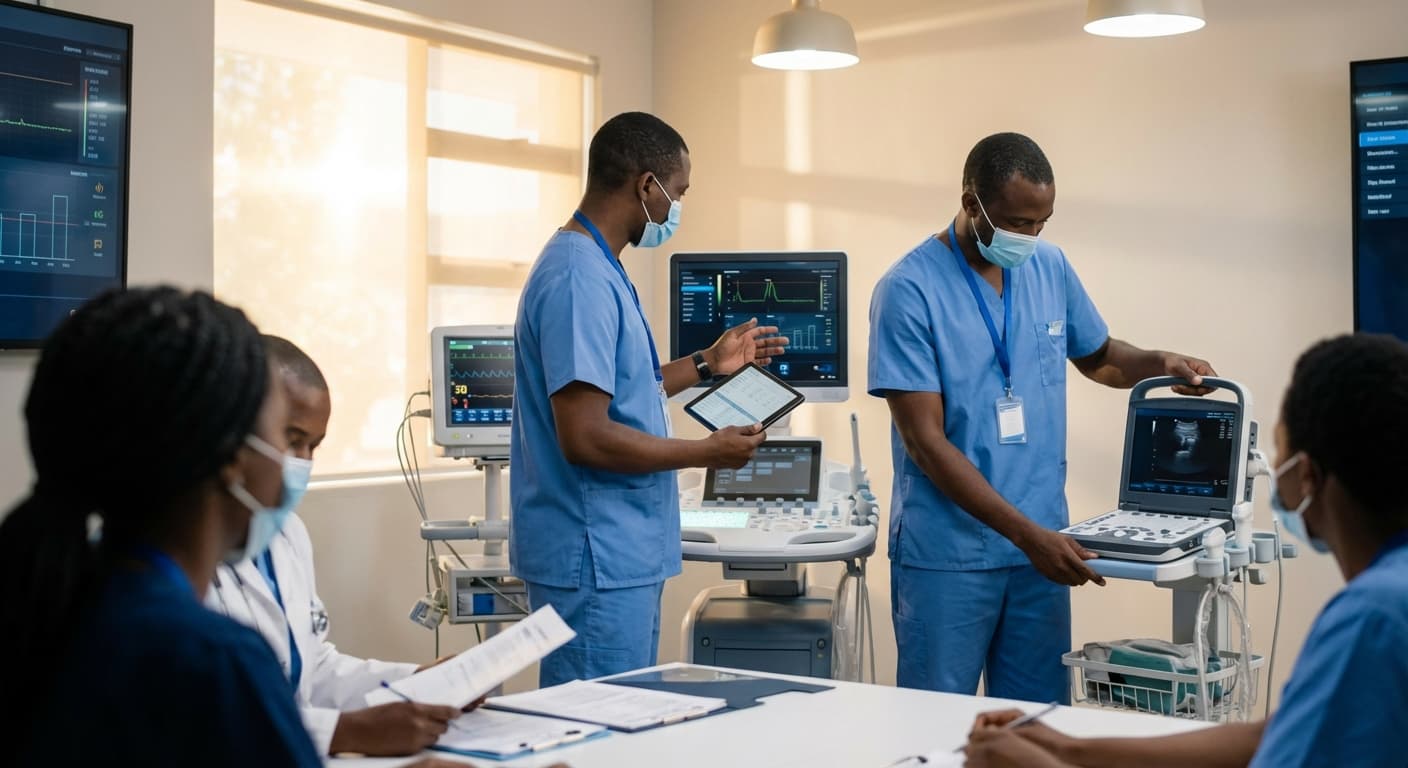
Clinical Needs Assessment for Medical Equipment in Liberia
Engineering Excellence & Technical Support
Clinical Needs Assessment for Medical Equipment High-standard technical execution following OEM protocols and local regulatory frameworks.
Comprehensive Needs Gap Analysis
Leveraging national health data, facility audits, and stakeholder consultations to identify critical gaps in essential medical equipment availability, functionality, and maintenance across Liberia's healthcare infrastructure.
Prioritized Equipment Procurement Lists
Developing evidence-based, prioritized lists of medical equipment, detailing specifications, quantities, and estimated costs, aligned with disease burden, service delivery levels, and existing infrastructure capacity.
Sustainability and Training Framework Integration
Incorporating robust plans for user training, technical maintenance support, spare parts management, and infrastructure readiness as integral components of the needs assessment to ensure long-term equipment usability and impact.
What Is Clinical Needs Assessment For Medical Equipment In Liberia?
A Clinical Needs Assessment for Medical Equipment in Liberia is a systematic process designed to identify, prioritize, and quantify the medical equipment requirements of healthcare facilities and the broader healthcare system within Liberia. It involves a comprehensive evaluation of existing infrastructure, current clinical practices, patient demographics, disease prevalence, and anticipated future healthcare demands. The objective is to ensure that available and future medical equipment resources are strategically aligned with the actual clinical needs, thereby optimizing patient care, resource utilization, and public health outcomes. This service is crucial for effective healthcare planning, investment, and sustainability in a resource-constrained environment.
| Who Needs This Service? | Typical Use Cases |
|---|---|
| Ministry of Health (MoH) Liberia: For national health policy development, resource allocation, and strategic planning of healthcare infrastructure and equipment procurement. | Developing the National Health Sector Strategy and its equipment-specific components. Planning for the rollout of new health programs (e.g., maternal health, infectious disease control). Guiding national procurement tenders and funding applications. |
| Healthcare Facility Administrators (Public and Private Hospitals, Clinics, Health Centers): To optimize departmental budgets, improve service delivery, and justify equipment requests. | Planning for the establishment or renovation of new departments (e.g., Intensive Care Unit, Radiology). Replacing outdated or malfunctioning equipment. Justifying budget requests for capital equipment purchases. Implementing quality improvement initiatives. |
| Non-Governmental Organizations (NGOs) and International Development Partners: For targeted interventions, project planning, and effective deployment of donated or funded medical equipment. | Designing and implementing health-focused projects in specific regions or for particular diseases. Ensuring donated equipment aligns with actual needs and can be sustained. Evaluating the impact and sustainability of existing equipment programs. |
| Medical Equipment Manufacturers and Suppliers: To understand the specific market demands and tailor their product offerings and support services to Liberian healthcare settings. | Identifying market gaps and opportunities for product development. Developing sales and distribution strategies based on assessed needs. Planning for after-sales service and maintenance infrastructure. |
| Academic and Research Institutions: For educational purposes, training healthcare professionals, and conducting health systems research. | Developing curricula for biomedical engineering and health sciences programs. Identifying equipment needs for research projects. Assessing training gaps for equipment operation and maintenance. |
Key Components of a Clinical Needs Assessment for Medical Equipment:
- Facility-Level Inventory and Assessment: Cataloging existing equipment, assessing its condition, functionality, maintenance status, and utilization rates.
- Clinical Services Analysis: Evaluating the range and scope of medical services provided, including diagnostic, therapeutic, surgical, and emergency care.
- Staffing and Training Evaluation: Assessing the availability of trained personnel to operate, maintain, and repair specific equipment.
- Infrastructure Review: Examining power supply, water, and physical space requirements for new or upgraded equipment.
- Disease Burden and Epidemiological Data Analysis: Identifying prevalent diseases and health conditions to prioritize equipment for diagnosis and treatment.
- Patient Flow and Demand Projections: Estimating patient volumes and service demands to forecast equipment needs.
- Technology Assessment and Standardization: Evaluating appropriate and sustainable technologies, considering local context, cost, and maintenance capabilities.
- Stakeholder Consultation: Engaging with healthcare professionals, administrators, policymakers, and community representatives.
- Gap Analysis: Identifying discrepancies between current equipment availability/suitability and identified clinical needs.
- Prioritization Framework Development: Establishing criteria for ranking equipment needs based on impact, urgency, cost-effectiveness, and feasibility.
- Budgetary and Procurement Strategy Formulation: Developing realistic financial plans and procurement approaches.
Who Needs Clinical Needs Assessment For Medical Equipment In Liberia?
A comprehensive clinical needs assessment for medical equipment in Liberia is crucial for a wide range of stakeholders. It ensures that healthcare facilities are equipped with the appropriate, functional, and sufficient medical technology to deliver effective patient care. This process is not a one-size-fits-all solution and requires tailoring to the specific context of Liberian healthcare. The assessment helps in prioritizing investments, optimizing resource allocation, identifying training needs, and ultimately improving health outcomes for the Liberian population.
| Customer/Department | Key Needs Addressed by Assessment | Impact on Service Delivery |
|---|---|---|
| Ministry of Health (MoH) | National health policy alignment, resource allocation strategy, infrastructure development, national disease burden planning. | Ensures equitable distribution of equipment, supports national health priorities, and prevents duplication of resources. |
| County Health Teams (CHTs) | Regional planning, identification of specific county needs, coordination of procurement and distribution, monitoring of equipment functionality. | Tailors equipment to local disease prevalence and geographical challenges, improving healthcare access and quality at the sub-national level. |
| Public Hospitals (Central, Referral, General) | Upgrading existing infrastructure, identifying critical gaps in specialized equipment, ensuring availability of consumables, assessing maintenance capacity. | Enhances diagnostic and treatment capabilities, improves patient outcomes for complex conditions, and reduces referral burdens. |
| District Hospitals and Health Centers | Basic essential equipment for primary and secondary care, availability of diagnostic tools for common ailments, essential surgical and obstetric equipment. | Strengthens primary healthcare services, reduces the need for patients to travel long distances for basic care, and improves maternal and child health outcomes. |
| Mission/Faith-Based Hospitals and Clinics | Identifying equipment needs based on community demographics and specific health programs, resource mobilization, capacity building. | Extends healthcare reach to underserved populations, complements public health efforts, and provides specialized services. |
| Non-Governmental Organization (NGO) Health Facilities | Targeted equipment for specific project interventions (e.g., HIV/AIDS, malaria, reproductive health), program sustainability, integration with national health system. | Addresses specific public health challenges, provides specialized services to vulnerable groups, and enhances program effectiveness. |
| Medical Training Institutions | Simulation equipment, diagnostic tools for hands-on training, laboratory equipment for research and education, modern teaching aids. | Improves the quality of medical education, produces a skilled healthcare workforce, and fosters innovation in healthcare delivery. |
| Surgical Departments | Surgical instruments, anesthesia machines, operating room lights, sterilization equipment, patient monitoring devices. | Enables a wider range of surgical procedures, reduces surgical complications, and improves patient safety during operations. |
| Maternity and Neonatal Units | Incubators, radiant warmers, fetal monitors, ultrasound machines, essential neonatal resuscitation equipment. | Reduces neonatal and maternal mortality rates, improves the care of premature and sick newborns, and ensures safer deliveries. |
| Radiology and Imaging Departments | X-ray machines, ultrasound scanners, CT scanners (if applicable), PACS systems (if applicable), darkroom equipment (for traditional X-rays). | Facilitates accurate diagnosis of a wide range of conditions, aids in treatment planning, and improves the efficiency of diagnostic services. |
Target Customers and Departments for Clinical Needs Assessment in Liberia
- Ministry of Health (MoH)
- County Health Teams (CHTs)
- Public Hospitals (Central, Referral, General)
- District Hospitals and Health Centers
- Mission/Faith-Based Hospitals and Clinics
- Non-Governmental Organization (NGO) Health Facilities
- Tertiary and Specialized Medical Centers
- Medical Training Institutions (for teaching equipment)
- Diagnostic Laboratories
- Surgical Departments
- Emergency and Trauma Units
- Maternity and Neonatal Units
- Pediatric Wards
- Internal Medicine Departments
- Radiology and Imaging Departments
- Anesthesiology Departments
- Intensive Care Units (ICUs)
- Rehabilitation Services
- Pharmacy Departments (for compounding/dispensing equipment)
Clinical Needs Assessment For Medical Equipment Process In Liberia
This document outlines the clinical needs assessment process for medical equipment in Liberia, detailing the workflow from initial inquiry to the final execution of procuring and implementing the necessary equipment. The process is designed to be comprehensive, transparent, and responsive to the actual healthcare needs of Liberian communities. It involves multiple stakeholders and sequential steps to ensure that the right equipment is identified, procured, and effectively utilized to improve healthcare delivery. The assessment emphasizes evidence-based decision-making and considers factors such as existing infrastructure, human resources, maintenance capacity, and sustainability.
| Phase | Key Activities | Primary Stakeholders | Deliverables |
|---|---|---|---|
| Initiation | Identify need, form assessment team, plan assessment | Healthcare Facilities, MoH departments, Partners, Assessment Team | Assessment Plan, Terms of Reference |
| Data Collection & Analysis | Conduct surveys, interviews, site visits, analyze data, identify gaps | Assessment Team, Healthcare Providers, Patients, MoH | Needs Assessment Report, Gap Analysis Findings |
| Planning & Specification | Prioritize needs, develop technical specifications, budget, secure funding | Assessment Team, MoH, Clinical Experts, Finance Department, Donors | Prioritized Equipment List, Technical Specifications, Budget, Funding Commitments |
| Procurement | Develop tender documents, solicit bids, evaluate proposals, award contract | Procurement Unit, MoH, Ministry of Finance, Suppliers | Awarded Contracts, Purchase Orders |
| Implementation | Delivery, installation, commissioning, training, handover | Logistics Team, Technical Experts, Healthcare Staff, MoH | Installed Equipment, Trained Staff, Handover Certificates |
| Post-Implementation | Monitoring, evaluation, maintenance, sustainability planning | MoH, Healthcare Facilities, Biomedical Engineers, Users | Performance Reports, Maintenance Schedules, Sustainability Plan |
Clinical Needs Assessment Workflow for Medical Equipment in Liberia
- {"step":1,"title":"Inquiry and Initial Request","description":"The process begins with an inquiry from a healthcare facility, a Ministry of Health department, or a partner organization identifying a perceived need for specific medical equipment or a broader assessment. This initial request outlines the general area of concern and the desired outcome."}
- {"step":2,"title":"Needs Assessment Planning","description":"A dedicated team, often comprising representatives from the Ministry of Health, healthcare professionals, and potential implementing partners, is formed. They develop a detailed plan for the needs assessment, including objectives, scope, methodology, timelines, and required resources."}
- {"step":3,"title":"Data Collection and Site Visits","description":"Information is gathered through various methods, including surveys, interviews with healthcare providers and administrators, review of existing health data, and direct site visits to healthcare facilities. This stage focuses on understanding current service delivery, patient populations, existing equipment inventory, and any operational challenges."}
- {"step":4,"title":"Equipment Gap Analysis","description":"The collected data is analyzed to identify specific equipment gaps that hinder effective healthcare delivery. This involves comparing current capacity with national health standards and best practices. Consideration is given to equipment that is broken, outdated, insufficient, or entirely missing."}
- {"step":5,"title":"Prioritization of Needs","description":"Based on the gap analysis, the identified equipment needs are prioritized. Factors influencing prioritization include the impact on patient outcomes, public health significance, cost-effectiveness, and alignment with national health priorities and strategies."}
- {"step":6,"title":"Specification Development","description":"For each prioritized equipment need, detailed technical specifications are developed. This includes defining performance requirements, safety standards, power sources, consumables, and any necessary accessories. Collaboration with clinical end-users is crucial at this stage."}
- {"step":7,"title":"Budgeting and Funding Mobilization","description":"Accurate cost estimates are generated for the prioritized equipment, including acquisition, installation, training, and initial maintenance. Efforts are then made to secure funding from government budgets, international donors, or other partners."}
- {"step":8,"title":"Procurement Process","description":"A transparent and competitive procurement process is initiated. This typically involves tendering, supplier evaluation based on technical and financial proposals, and contract negotiation, adhering to national and international procurement guidelines."}
- {"step":9,"title":"Delivery, Installation, and Commissioning","description":"Once procured, the medical equipment is delivered to the designated facilities. Professional installation and commissioning are conducted to ensure the equipment is operational and meets the specified standards."}
- {"step":10,"title":"Training and Capacity Building","description":"Healthcare professionals who will operate and maintain the new equipment receive comprehensive training. This ensures proper utilization, basic troubleshooting, and preventative maintenance, thereby enhancing the lifespan and effectiveness of the equipment."}
- {"step":11,"title":"Monitoring and Evaluation","description":"The utilization and impact of the new medical equipment are regularly monitored. This includes tracking performance, identifying any challenges, and assessing the improvement in healthcare service delivery. Feedback mechanisms are established for ongoing assessment and adjustments."}
- {"step":12,"title":"Maintenance and Sustainability Planning","description":"A sustainable maintenance plan is established, including spare parts management, regular servicing schedules, and the identification of local technicians for repairs. This ensures the long-term functionality of the equipment."}
Clinical Needs Assessment For Medical Equipment Cost In Liberia
This document outlines a clinical needs assessment for medical equipment costs in Liberia, focusing on pricing factors and typical ranges in Liberian Dollars (LRD). The objective is to provide a foundational understanding for procurement, budgeting, and resource allocation within the Liberian healthcare sector. Accurate pricing information is crucial for ensuring access to essential medical devices and improving patient care.
The cost of medical equipment in Liberia is influenced by a complex interplay of global and local factors. International market prices form the baseline, but these are significantly modified by import duties, taxes, shipping and logistics costs, currency exchange rates, supplier markups, and the availability of local distributors or service providers. Furthermore, the specific clinical need, the complexity and technological sophistication of the equipment, and the volume of purchase can also impact pricing. Factors like local infrastructure (e.g., reliable electricity, maintenance capabilities) can also indirectly influence the perceived value and thus the pricing of certain equipment.
It is important to note that the LRD is subject to fluctuations, and reported prices can vary. The ranges provided are indicative and should be confirmed with multiple suppliers for precise, up-to-date quotations. The assessment categorizes equipment based on common clinical areas to provide a structured overview of potential costs.
| Equipment Category | Example Equipment | Indicative Price Range (LRD) | Notes on Pricing |
|---|---|---|---|
| Basic Diagnostic Equipment | Stethoscope | 500 - 2,500 | Varies by brand and quality. |
| Basic Diagnostic Equipment | Blood Pressure Monitor (Manual) | 1,000 - 4,000 | Digital models are generally higher. |
| Basic Diagnostic Equipment | Thermometer (Digital) | 800 - 3,000 | Infrared models can be more expensive. |
| Laboratory Equipment (Basic) | Microscope (Student/Basic) | 15,000 - 50,000 | Higher magnification and features increase cost. |
| Laboratory Equipment (Basic) | Centrifuge (Basic Clinical) | 30,000 - 100,000 | Speed and capacity are key determinants. |
| Patient Monitoring | Pulse Oximeter (Handheld) | 5,000 - 20,000 | Features like trend data add cost. |
| Patient Monitoring | Vital Signs Monitor (Basic) | 50,000 - 200,000 | Includes NIBP, SpO2, HR. More parameters increase price. |
| Surgical Instruments (Basic Set) | General Surgery Instrument Set | 20,000 - 100,000 | Number and type of instruments vary. |
| Maternal and Child Health | Infant Warmer | 40,000 - 150,000 | Features like servo-control and phototherapy units. |
| Maternal and Child Health | Delivery Bed | 30,000 - 120,000 | Adjustability and material quality are factors. |
| Imaging Equipment (Basic) | Portable Ultrasound Machine (Entry-level) | 300,000 - 1,500,000 | Number of probes and image quality significantly affect price. |
| Sterilization Equipment | Autoclave (Small/Medium) | 50,000 - 250,000 | Size, cycle time, and automation level matter. |
| Mobility Aids | Wheelchair (Standard) | 5,000 - 25,000 | Lightweight and adjustable models are more expensive. |
| Consumables (per unit/pack) | Syringes (10ml) | 50 - 200 | Sterility, brand, and packaging. |
| Consumables (per unit/pack) | Gloves (Box of 100) | 1,000 - 4,000 | Latex vs. nitrile, brand, and thickness. |
Key Pricing Factors for Medical Equipment in Liberia
- International Market Price: The base cost of the equipment globally.
- Import Duties and Taxes: Government levies on imported goods.
- Shipping and Logistics: Costs associated with transportation, customs clearance, and delivery within Liberia.
- Currency Exchange Rates: Fluctuations between USD (often used for international sourcing) and LRD.
- Supplier Markups: Profit margins added by local distributors or agents.
- Equipment Complexity and Technology: More advanced or specialized equipment will be more expensive.
- Volume of Purchase: Bulk orders may offer discounts.
- After-Sales Service and Warranty: Inclusion of these services can impact upfront cost.
- Local Infrastructure: Availability of power, trained technicians for maintenance.
- Demand and Supply: Local availability and demand can influence pricing.
- Financing Costs: If purchasing through loans or credit facilities.
Affordable Clinical Needs Assessment For Medical Equipment Options
Conducting a thorough clinical needs assessment is crucial for healthcare facilities to ensure they acquire the most appropriate and cost-effective medical equipment. This process involves evaluating current patient care demands, existing technological capabilities, and future strategic goals. Instead of piecemeal purchases, adopting a value-bundle approach, where multiple related equipment and services are procured together, can unlock significant cost savings. Furthermore, implementing strategic cost-saving measures throughout the equipment lifecycle, from acquisition to disposal, maximizes return on investment and ensures operational efficiency.
| Value Bundle Component | Cost-Saving Strategy | Explanation |
|---|---|---|
| Integrated Imaging Systems | Bulk Purchasing Discounts | Acquiring a suite of interconnected imaging devices (e.g., MRI, CT, X-ray) from a single vendor often secures lower per-unit prices and streamlined installation. |
| Surgical Suite Package | Negotiated Service Contracts | Bundling surgical lights, tables, booms, and instrumentation with a comprehensive service and maintenance agreement can provide predictable costs and prevent downtime. |
| Patient Monitoring & Infusion Therapy | Long-Term Leases & Buy-Back Options | Leasing integrated patient monitoring systems and infusion pumps, often with built-in upgrade paths or buy-back guarantees, reduces upfront capital expenditure and ensures access to current technology. |
| Rehabilitation Equipment & Training | Strategic Partnerships with Manufacturers | Collaborating with equipment manufacturers for bundled packages that include installation, on-site training for staff, and initial consumables can enhance adoption and reduce the need for external training services. |
| Diagnostic Lab Automation | Software & Consumable Integration | Purchasing automated laboratory analyzers alongside recommended reagents and software licenses from the same provider ensures compatibility and may unlock volume-based discounts on consumables. |
| End-of-Life Equipment Management | Trade-In Programs & Refurbishment | Negotiating attractive trade-in values for old equipment when purchasing new, or utilizing manufacturer-led refurbishment programs, can offset acquisition costs and reduce disposal expenses. |
Key Components of an Affordable Clinical Needs Assessment
- Current State Analysis: Documenting existing equipment, its condition, utilization rates, and maintenance history.
- Future Demand Projection: Forecasting patient volume, service line expansion, and technological advancements.
- Clinical Workflow Optimization: Identifying bottlenecks and areas where new equipment can improve efficiency and patient outcomes.
- Technology Readiness Assessment: Evaluating IT infrastructure, staff training needs, and integration capabilities.
- Budgetary Constraints & Funding Sources: Establishing realistic financial limits and exploring available grants or financing options.
Verified Providers In Liberia
In Liberia's healthcare landscape, identifying trusted and competent healthcare providers is paramount. Franance Health stands out as a beacon of quality and reliability, offering a comprehensive suite of services backed by verifiable credentials. This document outlines why Franance Health represents the best choice for your healthcare needs in Liberia.
| Credential Type | Franance Health's Commitment/Verification | Why it Matters to Patients |
|---|---|---|
| Medical Licensure | All Franance Health physicians and specialists hold valid Liberian medical licenses, rigorously verified by the Liberian Medical and Dental Council. | Ensures all practitioners are legally authorized and meet the minimum standards of competency and ethical conduct. |
| Specialty Board Certifications | Where applicable, our specialists possess board certifications from recognized Liberian and international medical boards, indicating advanced training and expertise. | Guarantees that your care is provided by professionals with specialized knowledge in their respective fields, leading to more accurate diagnoses and effective treatments. |
| Continuous Professional Development (CPD) | Franance Health mandates and supports ongoing CPD for all its staff, including workshops, conferences, and advanced training programs. | Keeps our medical teams updated with the latest medical advancements, technologies, and treatment protocols, ensuring you receive cutting-edge care. |
| Accreditation and Quality Standards | While formal accreditation bodies are evolving in Liberia, Franance Health internally adheres to stringent quality assurance protocols and strives to align with international best practices in patient safety and care delivery. | Provides confidence in the quality and safety of the services you receive, with a focus on minimizing risks and maximizing positive patient outcomes. |
| Professional Affiliations | Many of our medical professionals are affiliated with esteemed Liberian and international medical associations. | Demonstrates their commitment to their profession, adherence to ethical codes, and engagement with a wider medical community for knowledge sharing and best practice adoption. |
| Patient Feedback Mechanisms | Franance Health actively solicits and utilizes patient feedback to continuously improve services. Surveys and direct feedback channels are in place. | Empowers patients by giving them a voice and ensuring that their experiences directly contribute to service enhancements, making healthcare more patient-centric. |
Why Franance Health is the Best Choice:
- Unwavering commitment to patient well-being and ethical practices.
- Highly qualified and experienced medical professionals.
- State-of-the-art facilities and diagnostic capabilities.
- Comprehensive range of medical services, from primary care to specialized treatments.
- Affordable and transparent pricing structures.
- Strong community engagement and health education initiatives.
- Adherence to international healthcare standards and best practices.
- Positive patient testimonials and proven track record of successful outcomes.
Scope Of Work For Clinical Needs Assessment For Medical Equipment
This Scope of Work (SOW) outlines the activities required for a comprehensive clinical needs assessment for medical equipment. The assessment will identify the current and future medical equipment requirements across various clinical departments, ensuring alignment with patient care objectives, technological advancements, and budget constraints. The outcome will be a detailed report with prioritized equipment recommendations, technical specifications, and a strategic procurement plan.
| Deliverable | Description | Format | Timeline (Weeks from SOW Approval) |
|---|---|---|---|
| Project Kick-off Meeting Minutes | Summary of initial meeting, outlining project goals, stakeholders, communication plan, and initial work plan. | Document (PDF/Word) | 1 |
| Stakeholder Engagement Report | Summary of interviews and workshops with clinical staff, documenting current equipment status, needs, and challenges. | Document (PDF/Word) | 4 |
| Existing Equipment Inventory Analysis Report | Detailed analysis of current equipment, including age, maintenance history, utilization rates, and obsolescence assessment. | Document (PDF/Word) with supporting data (Excel) | 5 |
| Future Equipment Demand Projections | Forecast of equipment needs based on patient demographics, service volume projections, and clinical trends. | Document (PDF/Word) with supporting data (Excel) | 6 |
| Equipment Technology Review and Gap Analysis | Overview of relevant medical technologies and identification of gaps between current capabilities and desired future state. | Document (PDF/Word) | 7 |
| Prioritized Equipment Needs List | Ranked list of medical equipment required, categorized by department and urgency. | Document (PDF/Word) | 8 |
| Detailed Technical Specifications (per equipment type) | Comprehensive specifications for prioritized equipment, covering functional, performance, safety, and interoperability requirements. (See Standard Specifications section below). | Document (PDF/Word) | 10 |
| Vendor Research Summary | Overview of potential vendors for key equipment, including general market availability. | Document (PDF/Word) | 11 |
| Final Clinical Needs Assessment Report | Comprehensive report summarizing all findings, including prioritized equipment recommendations, technical specifications, and a high-level procurement strategy. | Document (PDF/Word) | 12 |
Standard Specifications (for Medical Equipment)
- General Requirements:
- Compliance with relevant national and international safety standards (e.g., IEC 60601 series, ISO 13485).
- CE marking or FDA approval, where applicable.
- User-friendly interface and intuitive operation for clinical staff.
- Robust construction suitable for a healthcare environment.
- Energy efficiency and low power consumption.
- Availability of comprehensive user manuals and service documentation.
- Compliance with data privacy and security regulations (e.g., HIPAA, GDPR).
- Performance Specifications:
- Defined accuracy, precision, and resolution for critical measurements.
- Operating range and environmental tolerance (temperature, humidity).
- Throughput and processing speed, where applicable.
- Specific clinical functionalities and modes of operation.
- Battery life and charging capabilities for portable devices.
- Safety Features:
- Electrical safety (e.g., leakage current limits, protection against electric shock).
- Mechanical safety (e.g., pinch point protection, secure locking mechanisms).
- Radiation safety, where applicable.
- Alarm systems with clear audibility and visual indicators.
- Emergency stop functions.
- Interoperability and Integration:
- Compatibility with existing hospital IT infrastructure (e.g., EMR/EHR systems, PACS).
- Support for standard communication protocols (e.g., HL7, DICOM).
- Integration capabilities with other medical devices.
- Data export and import functionalities.
- Maintenance and Serviceability:
- Availability of qualified service personnel and readily accessible spare parts.
- Recommended preventative maintenance schedule and procedures.
- Diagnostic capabilities for troubleshooting.
- Warranty period and service level agreements.
- Ergonomics and Usability:
- Ease of cleaning and disinfection.
- Mobility and maneuverability, where applicable.
- Adjustable height, tilt, or other ergonomic features.
- Clear labeling and intuitive controls.
Service Level Agreement For Clinical Needs Assessment For Medical Equipment
This Service Level Agreement (SLA) outlines the response times and uptime guarantees for the Clinical Needs Assessment service provided for medical equipment. This service is crucial for ensuring that healthcare facilities acquire and maintain equipment that optimally meets their clinical requirements, thereby enhancing patient care and operational efficiency.
| Service Component | Response Time (Business Hours) | Uptime Guarantee (for assessment tools/platforms) |
|---|---|---|
| Initial Consultation & Scope Definition | 4 Business Hours | N/A |
| Draft Needs Assessment Report Submission | 5 Business Days | N/A |
| Review & Revision of Needs Assessment Report | 2 Business Days (per revision cycle) | N/A |
| Equipment Specification Development | 7 Business Days | N/A |
| Vendor Evaluation Support (request for information/clarification) | 1 Business Day | N/A |
| Implementation Planning Assistance (initial draft) | 3 Business Days | N/A |
| Access to Cloud-Based Assessment Tools/Platforms | N/A | 99.5% |
Key Service Components
- Clinical Needs Assessment: A comprehensive evaluation of current and future clinical requirements, patient demographics, procedure volumes, and technological advancements to determine the most suitable medical equipment.
- Equipment Specification Development: Creation of detailed specifications for required medical equipment, including technical features, performance criteria, and integration capabilities.
- Vendor Evaluation Support: Assistance in evaluating potential equipment vendors and their offerings against defined clinical needs and specifications.
- Implementation Planning Assistance: Support in planning the procurement, installation, and integration of new medical equipment into existing clinical workflows.
Frequently Asked Questions

Ready when you are
Let's scope your Clinical Needs Assessment for Medical Equipment in Liberia project in Liberia.

Scaling healthcare logistics and technical systems across the entire continent.