
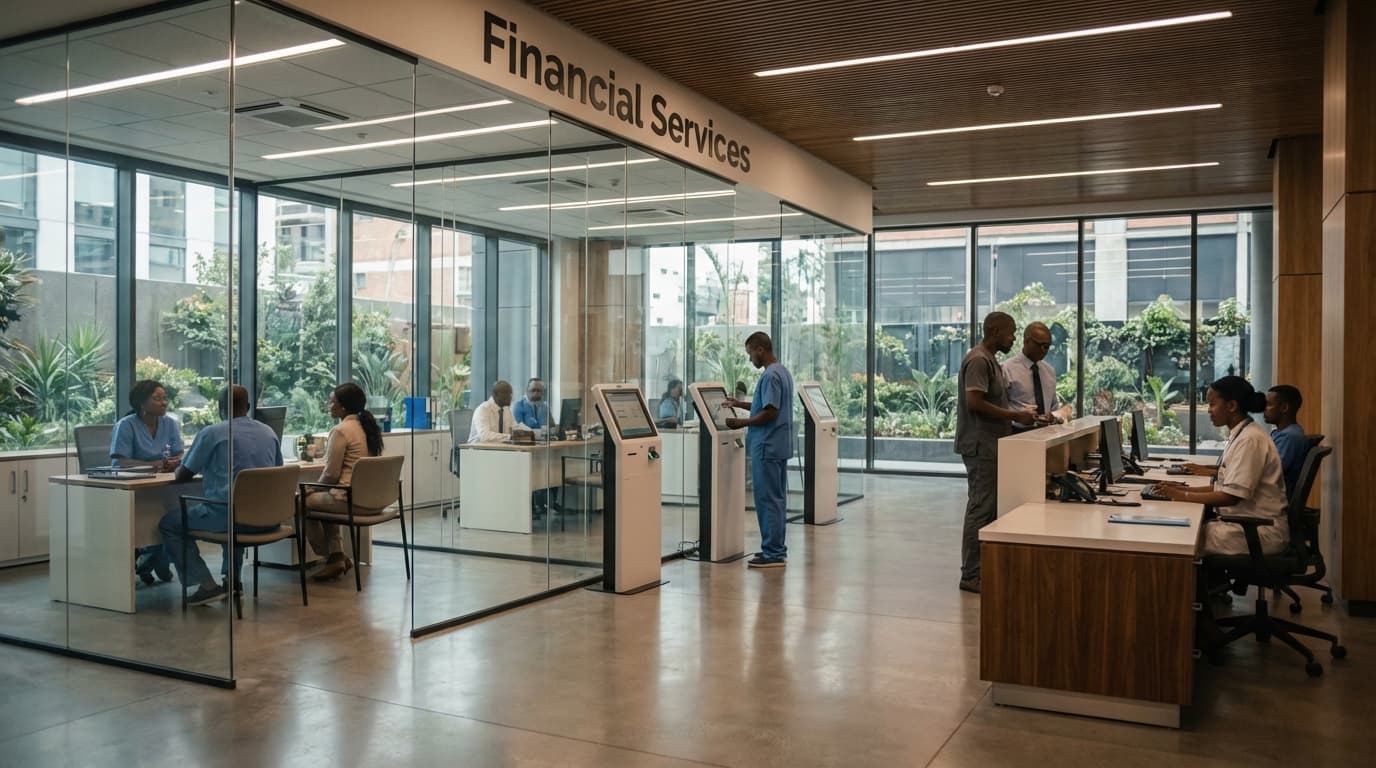
Medical Equipment Financing in Liberia
Engineering Excellence & Technical Support
Leasing and financing solutions for medical equipment High-standard technical execution following OEM protocols and local regulatory frameworks.
Accessible Financing for Essential Medical Equipment
Providing Liberian healthcare providers with tailored financing solutions for critical medical equipment, from diagnostic tools to surgical instruments, enabling improved patient care and expanded service offerings.
Strategic Partnerships for Infrastructure Growth
Collaborating with local and international partners to facilitate the acquisition of advanced medical technologies and infrastructure upgrades, strengthening Liberia's healthcare capacity and resilience.
Flexible Repayment Structures for Sustainable Operations
Offering adaptable repayment plans designed to align with the revenue cycles of Liberian healthcare facilities, ensuring financial sustainability and long-term access to vital medical equipment.
What Is Medical Equipment Financing In Liberia?
Medical equipment financing in Liberia refers to the provision of capital by financial institutions or specialized lenders to healthcare providers for the acquisition of medical devices, machinery, and technology. This service facilitates the procurement of essential and advanced medical equipment that healthcare facilities may otherwise be unable to afford through direct capital expenditure. The financing structure typically involves loans, leases, or other credit facilities, with repayment schedules tailored to the cash flow and revenue generation of the borrowing entity. The objective is to enhance diagnostic capabilities, treatment efficacy, and overall patient care quality within the Liberian healthcare system.
| Who Needs Medical Equipment Financing? | Typical Use Cases for Financed Equipment | ||||||||
|---|---|---|---|---|---|---|---|---|---|
| Hospitals (public and private): Requiring large-scale diagnostic imaging, surgical, and life-support systems. | Diagnostic Imaging Equipment: X-ray machines, CT scanners, MRI machines, ultrasound devices. | Government Health Agencies & Ministries of Health: To equip public health facilities and implement national healthcare initiatives. | Surgical Equipment: Operating tables, surgical lights, anesthetic machines, laparoscopic systems. | Clinics and Private Practices: Needing specialized diagnostic or treatment apparatus for specific medical disciplines. | Laboratory Equipment: Automated analyzers, microscopes, centrifuges, PCR machines. | Non-Governmental Organizations (NGOs) and International Aid Organizations: Undertaking healthcare projects and capacity building in underserved areas. | Therapeutic Equipment: Dialysis machines, physiotherapy equipment, radiotherapy units. | Medical Training Institutions: To equip teaching hospitals and simulation centers for healthcare professional education. | Essential Life Support Systems: Ventilators, defibrillators, cardiac monitors, incubators. |
Key Aspects of Medical Equipment Financing in Liberia
- Loan Structures: Inclusion of term loans, equipment leases (operating and finance leases), and potential vendor financing agreements.
- Collateral Requirements: Typically secured by the financed equipment itself, or by other assets of the healthcare institution.
- Eligibility Criteria: Assessment of the financial health, operational capacity, and creditworthiness of the healthcare provider.
- Repayment Terms: Amortization schedules, interest rates (fixed or variable), and potential grace periods aligned with equipment depreciation and revenue cycles.
- Risk Mitigation: Due diligence processes to verify equipment specifications, vendor reliability, and market demand for associated services.
Who Needs Medical Equipment Financing In Liberia?
Medical equipment financing in Liberia plays a critical role in enabling healthcare providers to acquire essential machinery and technology necessary for delivering quality patient care. This financing is particularly vital given the often-limited capital budgets of many Liberian healthcare institutions. It allows for upgrades, expansion of services, and the introduction of new medical procedures, ultimately improving health outcomes for the population.
| Healthcare Provider Type | Primary Departments Benefiting | Key Equipment Needs (Examples) |
|---|---|---|
| Public Healthcare Facilities | Maternity, Pediatrics, Surgery, ER, Diagnostics, Labs | Infant warmers, delivery tables, surgical instruments, basic X-ray machines, microscopes, centrifuges |
| Non-Profit / Mission Hospitals | MCH, HIV/AIDS, TB, General Medicine | Diagnostic test kits, ultrasound machines, basic laboratory equipment, patient monitoring systems |
| Private Healthcare Providers | Cardiology, Neurology, Oncology, Advanced Diagnostics, Dentistry | ECG machines, advanced ultrasound, endoscopes, dental chairs, specialized surgical tools |
| Specialized Medical Centers | Ophthalmology, Rehabilitation, Mental Health | Ophthalmic surgical microscopes, physiotherapy equipment, diagnostic tools for mental health assessment |
| Government Health Agencies | Procurement, Public Health Programs, Centralized Labs | Large-scale diagnostic equipment for public health surveillance, fleet of mobile clinic equipment |
Target Customers and Departments for Medical Equipment Financing in Liberia
- {"title":"Public Healthcare Facilities","subItems":["Maternity and Obstetrics Units","Pediatric Wards","General Surgery Departments","Emergency Rooms / Accident & Emergency Units","Diagnostic Imaging Departments (X-ray, Ultrasound)","Laboratory Services"],"description":"These include government-owned hospitals, rural health clinics, and public health centers across Liberia. They often face the greatest funding challenges and rely heavily on financing to maintain and upgrade their medical equipment. Key departments within these facilities that would benefit include:"}
- {"title":"Non-Profit / Mission Hospitals and Clinics","subItems":["HIV/AIDS Care and Treatment Centers","Tuberculosis Clinics","Maternal and Child Health Programs","Nutrition and Rehabilitation Centers"],"description":"Many faith-based organizations and NGOs operate healthcare facilities in Liberia, often serving underserved communities. While they may receive some grants, equipment financing is crucial for sustained operations and expansion. Departments benefiting are similar to public facilities but may also include specialized clinics focusing on areas like:"}
- {"title":"Private Healthcare Providers","subItems":["Cardiology Departments","Neurology Departments","Oncology Units","Specialized Surgical Units","Advanced Diagnostic Imaging Centers (CT Scans, MRI - if available or planned)","Dental Clinics"],"description":"A growing sector of private clinics and hospitals are emerging in Liberia, catering to a segment of the population with higher disposable income. These institutions often seek to offer advanced medical services and require modern equipment. Key departments include:"}
- {"title":"Specialized Medical Centers","subItems":["Eye Care Centers","Rehabilitation Centers","Mental Health Facilities","Diagnostic Laboratories (offering a wider range of tests)"],"description":"This category encompasses facilities focusing on specific medical disciplines. They require specialized and often high-cost equipment. Departments would be defined by their specialization, such as:"}
- {"title":"Government Health Agencies and Ministry of Health","description":"While not direct equipment users, these entities may utilize financing for large-scale public health initiatives, centralized diagnostic hubs, or for equipping new facilities as part of national health strategies. Departments involved in planning, procurement, and public health programs would be relevant."}
Medical Equipment Financing Process In Liberia
The medical equipment financing process in Liberia involves a structured workflow, starting with an initial inquiry and culminating in the successful execution of the financing agreement. This process typically involves medical facilities, equipment suppliers, financial institutions (banks, microfinance institutions, or specialized lenders), and potentially regulatory bodies. The primary goal is to enable healthcare providers to acquire necessary medical equipment, thereby enhancing healthcare services. The workflow can be broken down into several key stages, each with its specific activities and participants.
| Stage | Description | Key Participants | Key Activities | Potential Challenges |
|---|---|---|---|---|
| Inquiry and Needs Assessment | The initial stage where a healthcare provider expresses interest in financing medical equipment. | Healthcare Provider (Hospital, Clinic, etc.), Equipment Supplier | Identifying the specific equipment needed, understanding its cost, and the provider's funding requirements. | Lack of clarity on equipment specifications, unrealistic budget expectations. |
| Information Gathering and Documentation | The healthcare provider submits necessary documents to the financial institution. | Healthcare Provider, Financial Institution | Providing financial statements, business plans, ownership details, equipment quotes, and any required licenses/accreditations. | Incomplete or inaccurate documentation, difficulty in obtaining timely financial records. |
| Credit Assessment and Risk Evaluation | The financial institution assesses the provider's creditworthiness and the risk associated with the financing. | Financial Institution | Analyzing financial history, cash flow projections, market reputation, and the economic viability of the healthcare provider. | Limited credit history of healthcare providers, unstable economic environment. |
| Proposal and Negotiation | The financial institution presents a financing proposal to the healthcare provider. | Financial Institution, Healthcare Provider | Outlining loan amount, interest rates, repayment terms, collateral requirements, and any other conditions. Negotiation of terms. | Disagreement on interest rates, repayment schedules, or collateral. |
| Appraisal and Due Diligence | Verification of the equipment's value and the healthcare provider's operational capacity. | Financial Institution, Equipment Supplier (potentially), Independent Appraisers | Appraising the proposed medical equipment, assessing the provider's ability to operate and maintain the equipment, site visits. | Overvaluation or undervaluation of equipment, concerns about operational capacity. |
| Approval and Commitment | Formal approval of the financing request by the financial institution. | Financial Institution (Credit Committee) | Internal review and approval process. Issuance of a letter of commitment. | Delays in internal approval processes, changing financial institution policies. |
| Contracting and Legal Documentation | Drafting and signing of the formal financing agreement. | Financial Institution, Healthcare Provider, Legal Representatives | Preparing loan agreements, security documents (e.g., chattel mortgages), and ensuring compliance with Liberian legal frameworks. | Complex legal clauses, delays in legal reviews, differing interpretations of contracts. |
| Disbursement | Release of funds to the equipment supplier. | Financial Institution, Equipment Supplier, Healthcare Provider | Transferring the approved loan amount to the supplier upon confirmation of order and agreed terms. May involve a phased disbursement. | Delays in fund transfer, discrepancies in payment amounts. |
| Equipment Delivery and Installation | The supplier delivers and installs the financed medical equipment. | Equipment Supplier, Healthcare Provider, Financial Institution (monitoring) | Ensuring timely delivery, proper installation, and initial functionality checks of the equipment. | Shipping delays, installation issues, equipment defects. |
| Monitoring and Repayment | Ongoing management of the loan and collection of repayments. | Financial Institution, Healthcare Provider | Regular monitoring of equipment usage and maintenance, timely collection of loan installments, addressing any repayment challenges. | Default on payments, equipment obsolescence, operational challenges for the provider affecting revenue. |
Medical Equipment Financing Process in Liberia: Workflow Stages
- Inquiry and Needs Assessment
- Information Gathering and Documentation
- Credit Assessment and Risk Evaluation
- Proposal and Negotiation
- Appraisal and Due Diligence
- Approval and Commitment
- Contracting and Legal Documentation
- Disbursement
- Equipment Delivery and Installation
- Monitoring and Repayment
Medical Equipment Financing Cost In Liberia
Financing medical equipment in Liberia involves a complex interplay of factors influencing costs and presenting a range of pricing within the local currency, the Liberian Dollar (LRD). These factors are crucial for healthcare providers and institutions seeking to acquire essential machinery. Understanding these elements is vital for accurate budgeting and sustainable investment in healthcare infrastructure. The cost is not a fixed figure but rather a dynamic outcome of various economic, logistical, and financial considerations.
| Equipment Category | Estimated Financing Range (LRD per unit) | Notes/Assumptions |
|---|---|---|
| Basic Diagnostic (e.g., Ultrasound, X-ray Machine) | 500,000 - 3,000,000 LRD | Assumes standard models, moderate loan term, and includes estimated import/logistics. Interest rates can add 10-30% over the loan life. |
| Laboratory Equipment (e.g., Hematology Analyzer, Microscope) | 200,000 - 1,500,000 LRD | Covers a range of common lab equipment. Financing costs will vary based on specific models and supplier terms. |
| Surgical Instruments/Basic Operating Room Setup | 750,000 - 5,000,000 LRD | Includes a set of instruments and perhaps basic OR furniture. Financing will depend heavily on the quality and quantity of items. |
| Advanced Imaging (e.g., Digital X-ray, CT Scanner) | 5,000,000 - 50,000,000+ LRD | This is a broad range. Financing for these high-value assets will involve significant down payments, longer terms, and potentially specialized financing models. Interest and fees can add substantial amounts. |
| Hospital Beds (Manual/Semi-Electric) | 50,000 - 250,000 LRD per bed | Costs are for individual beds, but bulk purchases for a ward or hospital will have different negotiated terms. Financing for a large number can be substantial. |
Key Pricing Factors for Medical Equipment Financing in Liberia
- Equipment Type and Sophistication: The inherent cost of the medical equipment itself is the primary driver. Advanced diagnostic imaging machines (e.g., MRI, CT scanners) will inherently be more expensive than basic laboratory equipment or patient beds.
- Financing Institution and Terms: The specific bank, microfinance institution, or leasing company will have its own interest rates, loan durations, and administrative fees. Longer loan terms generally mean higher overall interest paid, even if monthly payments are lower. Upfront down payment requirements also significantly impact the financed amount.
- Import Duties and Taxes: Liberia imposes import duties and taxes on various goods, including medical equipment. These can add a substantial percentage to the landed cost of the equipment.
- Logistics and Transportation: The cost of shipping the equipment from its origin country to Liberia, including freight charges, insurance, and local transportation from the port to the facility, needs to be factored in.
- Installation and Training: Many sophisticated medical devices require professional installation and specialized training for medical personnel to operate them effectively. These costs are often separate from the equipment's purchase price but are integral to its financing.
- Currency Exchange Rates: Since much medical equipment is imported, fluctuations in the exchange rate between the LRD and major international currencies (e.g., USD, EUR) can significantly impact the LRD cost of financing.
- Risk Premium: Lenders may incorporate a risk premium into their interest rates, reflecting perceived economic instability, political risk, or the creditworthiness of the borrower.
- Market Demand and Supplier Power: Limited availability of certain specialized equipment or strong negotiating power of suppliers can influence pricing. Conversely, competitive markets might offer slightly more favorable terms.
- Maintenance and Service Contracts: While not directly a financing cost, the need for ongoing maintenance and service contracts, which can be substantial, influences the overall affordability and thus the perceived 'cost' of acquiring and utilizing the equipment.
Affordable Medical Equipment Financing Options
Accessing essential medical equipment is crucial for healthcare providers, but the upfront cost can be a significant barrier. Fortunately, several affordable financing options exist, coupled with smart value bundles and cost-saving strategies. This guide explores how to acquire the medical equipment your practice needs without breaking the bank.
| Value Bundle Component | Description | Cost-Saving Strategy |
|---|---|---|
| Package Deals | Financing companies or manufacturers often bundle multiple pieces of equipment together at a discounted price. | Negotiate a comprehensive package to receive volume discounts compared to purchasing items individually. |
| Service & Maintenance Contracts | Includes routine servicing, repairs, and sometimes even parts replacement as part of the financing agreement. | Integrate maintenance into your financing to avoid unexpected repair bills and ensure equipment longevity. Often cheaper when bundled. |
| Training & Implementation Support | Provides staff training on using the new equipment and assistance with integration into existing workflows. | Reduces the need for costly external training and minimizes downtime, increasing operational efficiency from day one. |
| Extended Warranties | Offers coverage beyond the standard manufacturer's warranty. | Provides peace of mind and protects against expensive repair costs for a longer period, especially for critical equipment. |
| Refurbished Equipment Options | Financing for high-quality, pre-owned equipment that has been professionally serviced and certified. | Significantly lower acquisition cost compared to new equipment, while still offering reliable performance and often coming with a warranty. |
Affordable Medical Equipment Financing Options
- Equipment Loans: Traditional loans from banks or credit unions offer a straightforward way to finance equipment purchases. These are typically secured by the equipment itself, leading to potentially lower interest rates.
- Leasing: Leasing allows you to use equipment for a fixed period with monthly payments, without the burden of ownership. This can be ideal for rapidly evolving technology or for practices with limited capital.
- Sale-Leaseback Agreements: If you own existing equipment outright, a sale-leaseback allows you to sell it to a financing company and then lease it back. This frees up capital for other investments.
- Medical Equipment Financing Companies: Specialized lenders focus on healthcare equipment and may offer more flexible terms than traditional banks.
- Government Grants and Programs: Explore federal, state, and local grants or loan programs designed to support healthcare providers, especially those in underserved areas or focusing on specific medical needs.
Verified Providers In Liberia
In Liberia's evolving healthcare landscape, identifying trustworthy and competent healthcare providers is paramount for patient safety and optimal health outcomes. Franance Health stands out as a leader, distinguished by its rigorous credentialing process and unwavering commitment to quality care. This document outlines why Franance Health's verified providers represent the best choice for individuals seeking reliable medical services in Liberia.
| Provider Type | Franance Health Verification Criteria | Benefits to Patients |
|---|---|---|
| Physicians (GPs & Specialists) | Medical degree from accredited institution, valid Liberian medical license, peer review of clinical performance, proof of ongoing medical education, background check. | Accurate diagnosis, effective treatment plans, access to specialized care, reduced risk of misdiagnosis. |
| Nurses (RNs & ENs) | Nursing diploma/degree from recognized school, valid Liberian nursing license, verification of clinical competencies, training in emergency care and patient management. | Compassionate and skilled bedside care, accurate medication administration, effective patient monitoring, assistance with recovery. |
| Pharmacists | Pharmacy degree from accredited institution, valid Liberian pharmacy license, knowledge of drug interactions and safe dispensing practices, ongoing pharmaceutical education. | Safe and accurate prescription fulfillment, expert advice on medication use, prevention of adverse drug reactions. |
| Laboratory Technicians | Certification/diploma in medical laboratory science, proficiency in laboratory techniques, adherence to quality control standards, regular calibration of equipment. | Accurate and reliable diagnostic test results, crucial for timely and effective treatment decisions. |
| Allied Health Professionals (e.g., Physiotherapists, Radiologists) | Relevant degree/diploma, professional certification, practical skills assessment, understanding of ethical practice and patient care. | Specialized rehabilitation services, accurate diagnostic imaging interpretation, improved patient mobility and quality of life. |
Why Franance Health Providers Are the Best Choice:
- Rigorous Verification Process: Franance Health employs a multi-faceted vetting system that goes beyond basic licensing. This includes thorough background checks, verification of educational qualifications from accredited institutions, and assessment of practical experience and clinical skills.
- Commitment to Continuous Professional Development: Verified Franance Health providers are mandated to participate in ongoing training and education. This ensures they remain up-to-date with the latest medical advancements, technologies, and best practices in their respective fields.
- Adherence to Ethical Standards: Franance Health enforces a strict code of conduct for all its accredited professionals. This emphasizes patient-centered care, respect for patient autonomy, and the highest levels of professional integrity.
- Patient Safety as a Top Priority: Through comprehensive credentialing and ongoing monitoring, Franance Health significantly minimizes the risk of medical errors and ensures that patients are treated by qualified and capable individuals.
- Access to Specialized Expertise: Franance Health's network includes a diverse range of specialists, ensuring that patients can access the specific expertise they need for complex or niche medical conditions.
- Improved Patient Trust and Confidence: Knowing that a provider has been meticulously verified by Franance Health instills a greater sense of trust and confidence in the quality of care received.
Scope Of Work For Medical Equipment Financing
This Scope of Work (SOW) outlines the technical deliverables and standard specifications required for medical equipment financing. It defines the requirements for the equipment to be financed, ensuring compliance with industry standards, regulatory requirements, and the operational needs of the acquiring healthcare facility. This document serves as a basis for vendor proposals, financing agreements, and equipment acceptance.
| Category | Item | Standard Specification Requirements | Acceptance Criteria |
|---|---|---|---|
| Imaging Equipment | MRI Scanner (e.g., 1.5T) | Field strength, spatial resolution, signal-to-noise ratio (SNR), gradient performance, bore diameter, magnet quench handling, patient weight limit. | Achieve specified SNR and resolution in test scans, pass all safety checks, provide documentation of all required certifications. |
| Imaging Equipment | CT Scanner (e.g., 64-slice) | Slice acquisition speed, spatial resolution, radiation dose management features, table travel speed, contrast injection system compatibility. | Achieve specified spatial resolution with phantoms, demonstrate dose reduction capabilities, pass imaging quality tests. |
| Surgical Equipment | Laparoscopic Surgical System | Image quality (resolution, color fidelity), instrument articulation range, insufflation control, light source intensity and color temperature. | High-definition video output, smooth instrument articulation, stable insufflation pressure, color rendering within defined parameters. |
| Patient Monitoring | ECG/SpO2/NIBP Monitor | Accuracy and range of vital signs measurement, waveform display clarity, alarm functionality, battery backup duration. | Meet specified accuracy for ECG, SpO2, and NIBP within the defined range, demonstrate reliable battery operation, pass alarm system tests. |
| Laboratory Equipment | Automated Hematology Analyzer | Throughput (samples/hour), assay parameters (CBC, diff), precision and accuracy of results, sample volume requirements, reagent compatibility. | Achieve specified throughput, meet CLIA/ISO accuracy and precision standards for all reported parameters, demonstrate compatibility with specified reagents. |
| Therapy Equipment | Ventilator (Adult/Pediatric) | Ventilation modes (e.g., AC, SIMV, CPAP), tidal volume range, respiratory rate range, PEEP capability, FiO2 control, patient interface compatibility. | Accurate delivery of set parameters across all supported modes, stable FiO2 control, compatibility with standard patient circuits and masks. |
| General | All Equipment | Compliance with relevant ISO, IEC, FDA, and local regulatory standards. Robustness for clinical environment. Adequate cybersecurity measures (if connected to network). | Successful installation and commissioning. Provision of all required documentation. Verification of network security protocols. Adherence to warranty and service level agreements. |
Technical Deliverables
- Detailed Technical Specifications for each piece of medical equipment.
- Equipment Operation and Maintenance Manuals (in English, digital and hard copy).
- Installation and Calibration Reports, signed by certified technicians.
- Performance Validation Reports demonstrating adherence to specified parameters.
- User Training Materials and Sessions for designated facility staff.
- Software Licenses and Updates (if applicable).
- Warranty Certificates and Service Agreements.
- Regulatory Compliance Documentation (e.g., FDA 510(k) clearance, CE marking).
- Safety and Electrical Certification Reports.
- Equipment Asset Tagging and Inventory Integration Plan.
Service Level Agreement For Medical Equipment Financing
This Service Level Agreement (SLA) outlines the response times and uptime guarantees for the maintenance and support of medical equipment financed through [Financing Company Name]. This SLA is an integral part of the financing agreement between [Financing Company Name] and [Healthcare Provider Name] for the specified medical equipment listed in Appendix A.
| Equipment Category/Criticality | Priority Level | Response Time (Initial Contact) | Resolution Time (Target) | Uptime Guarantee (Monthly) |
|---|---|---|---|---|
| High-Criticality (e.g., Life Support, Imaging Systems) | P1 - Critical Failure | 1 Hour | 4-8 Business Hours | 99.5% |
| High-Criticality (e.g., Life Support, Imaging Systems) | P2 - Major Malfunction | 2 Hours | 1 Business Day | 99.5% |
| Medium-Criticality (e.g., Diagnostic, Monitoring) | P1 - Critical Failure | 2 Hours | 4-8 Business Hours | 99.0% |
| Medium-Criticality (e.g., Diagnostic, Monitoring) | P2 - Major Malfunction | 4 Hours | 2 Business Days | 99.0% |
| Low-Criticality (e.g., Non-essential, Ancillary) | P1 - Critical Failure | 4 Hours | 1 Business Day | 98.0% |
| Low-Criticality (e.g., Non-essential, Ancillary) | P2 - Major Malfunction | 8 Business Hours | 3 Business Days | 98.0% |
Key Service Commitments
- Response Time: The maximum time allowed for the service provider to acknowledge and begin addressing a reported issue.
- Resolution Time: The maximum time allowed for the service provider to resolve a reported issue, restoring the equipment to full operational status.
- Uptime Guarantee: The minimum percentage of time the medical equipment is expected to be operational and available for use, excluding scheduled maintenance.
- Exclusions: Situations or events that are not covered by this SLA, such as user-induced damage or acts of God.
Frequently Asked Questions

Ready when you are
Let's scope your Medical Equipment Financing in Liberia project in Liberia.

Scaling healthcare logistics and technical systems across the entire continent.