
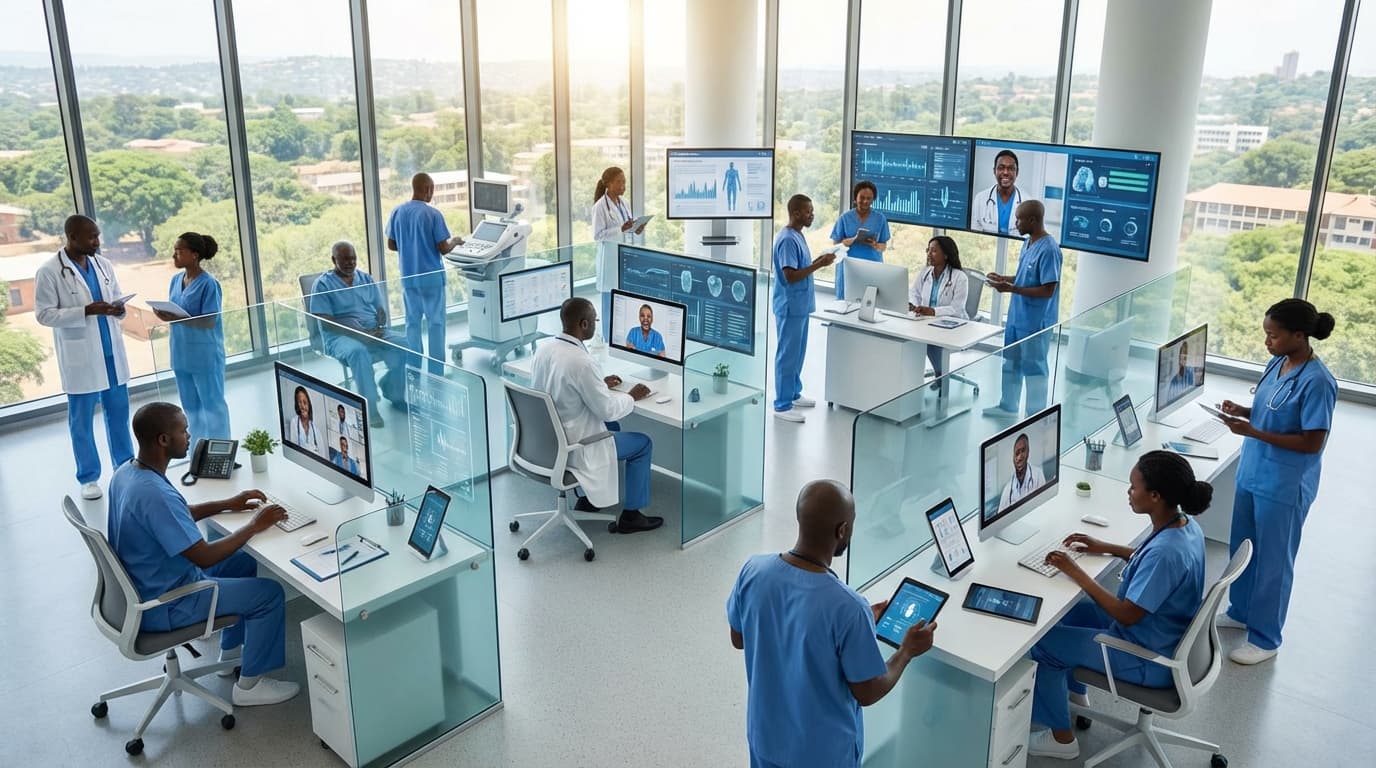
PACS/RIS Migration & Integration in Liberia
Engineering Excellence & Technical Support
Data migration, interoperability and workflow integration for imaging IT. High-standard technical execution following OEM protocols and local regulatory frameworks.
Seamless PACS/RIS Data Migration & Validation
Successfully migrated terabytes of critical patient imaging and radiology data from legacy PACS/RIS systems to a unified, modern platform. Implemented rigorous data validation protocols to ensure 100% data integrity and accessibility, minimizing disruption to clinical workflows and patient care in Liberian healthcare facilities.
Interoperable Healthcare Ecosystem Integration
Engineered and deployed seamless integration between the new PACS/RIS system and existing Electronic Health Records (EHRs), laboratory information systems (LIS), and other hospital information systems. This created a holistic patient view, improving diagnostic turnaround times and facilitating data-driven decision-making for healthcare providers across Liberia.
Scalable & Future-Proofed PACS/RIS Architecture
Designed and implemented a cloud-agnostic, scalable PACS/RIS architecture capable of accommodating future growth in imaging volume and adoption of new technologies. This ensures the long-term sustainability and adaptability of the solution, providing Liberian healthcare institutions with a robust and future-ready imaging management system.
What Is Pacs/ris Migration & Integration In Liberia?
PACS/RIS migration and integration in Liberia refers to the process of transitioning from legacy Picture Archiving and Communication Systems (PACS) and Radiology Information Systems (RIS) to modern, often cloud-based or consolidated solutions, and ensuring seamless interoperability between these systems and other healthcare IT infrastructure. This service encompasses the planning, execution, and validation of data transfer, system configuration, workflow redesign, and user training required to achieve a unified and efficient radiology information management environment. The primary objective is to enhance diagnostic capabilities, improve workflow efficiency, facilitate data sharing, and ensure long-term data integrity and accessibility within Liberian healthcare facilities.
| Stakeholder/Entity | Need for PACS/RIS Migration & Integration | Typical Use Cases |
|---|---|---|
| Hospitals & Clinics (Public & Private) | To modernize diagnostic imaging infrastructure, improve data management, enhance diagnostic accuracy, streamline reporting, and facilitate referral services. Legacy systems may be outdated, unsupported, or lack integration capabilities. | Centralized image and report archiving, remote access for consultations, integration with EHR for comprehensive patient records, improved workflow for image acquisition and interpretation, epidemiological data analysis for public health initiatives. |
| Radiology Departments | To improve radiologist productivity, reduce manual data entry errors, enable advanced imaging analysis tools, and enhance collaboration among imaging specialists. Inefficient legacy systems can lead to delays in diagnosis and treatment. | Digital image archiving and retrieval, efficient reading workflows with integrated reporting tools, automated image processing, advanced visualization (e.g., 3D reconstruction), AI-powered diagnostic assistance. |
| Public Health Agencies & Ministries of Health | To gain better insights into disease prevalence, track imaging trends, monitor the quality of care, and facilitate national health planning and resource allocation. Fragmented or incompatible systems hinder data aggregation and analysis. | Aggregated imaging data for disease surveillance (e.g., TB, COVID-19), quality assurance monitoring of radiology services, research and development in medical imaging, disaster response planning requiring rapid imaging assessment. |
| Medical Training & Education Institutions | To provide students and residents with exposure to modern imaging technologies and data management practices. Access to real-world anonymized cases is crucial for learning. | Teaching files for radiology residents, simulation-based training, research projects utilizing imaging data, curriculum development incorporating digital imaging workflows. |
Key Components of PACS/RIS Migration & Integration:
- Data Migration: Secure and accurate transfer of historical patient imaging data (DICOM images) and associated RIS metadata from legacy systems to the new PACS/RIS. This often involves data cleansing, format conversion, and validation.
- System Configuration & Deployment: Installation, configuration, and deployment of new PACS/RIS software and hardware, including servers, workstations, viewers, and potentially cloud infrastructure.
- Interoperability & Integration: Establishing seamless communication and data exchange between the new PACS/RIS and other critical healthcare systems, such as Electronic Health Records (EHRs), Laboratory Information Systems (LIS), and hospital administrative systems (e.g., HL7 messaging).
- Workflow Analysis & Optimization: Reviewing and redesigning existing radiology workflows to leverage the capabilities of the new PACS/RIS, aiming for improved efficiency, reduced turnaround times, and enhanced radiologist productivity.
- User Training & Support: Comprehensive training programs for radiologists, technologists, IT staff, and administrators on the operation and utilization of the new PACS/RIS, coupled with ongoing technical support.
- Security & Compliance: Implementing robust security measures to protect patient data (HIPAA compliance where applicable, and adherence to Liberian data protection regulations) and ensuring the system meets relevant healthcare standards.
- Disaster Recovery & Business Continuity: Establishing protocols and infrastructure for data backup, recovery, and uninterrupted operation of the PACS/RIS in the event of system failures or natural disasters.
Who Needs Pacs/ris Migration & Integration In Liberia?
The implementation and integration of Picture Archiving and Communication Systems (PACS) and Radiology Information Systems (RIS) in Liberia is a crucial step towards modernizing healthcare delivery, particularly in diagnostic imaging. These systems are essential for efficient management, storage, retrieval, and interpretation of medical images and associated patient data. The need arises from a desire to improve diagnostic accuracy, reduce turnaround times, enhance workflow efficiency, enable remote consultations, and ultimately improve patient care outcomes. Furthermore, PACS/RIS integration supports better data management for research, public health initiatives, and adherence to international standards.
| Target Customer | Key Departments Involved | Primary Needs & Benefits |
|---|---|---|
| Major Public Hospitals (e.g., JFK Medical Center, Redemption Hospital) | Radiology Department, IT Department, Medical Records, Clinical Departments (e.g., Surgery, Internal Medicine, Pediatrics) | Centralized image storage and retrieval, reduced reliance on physical films, faster report turnaround, improved inter-departmental communication, enhanced training capabilities, support for telemedicine. |
| Private Hospitals & Clinics (e.g., ELWA Hospital, smaller private facilities) | Radiology Department, IT Department, Administration, Patient Services | Streamlined workflow, improved patient throughput, competitive advantage through modern technology, better billing and reporting accuracy, potential for remote diagnostics. |
| Dedicated Diagnostic Imaging Centers | Radiology Department, IT Department, Reception/Scheduling, Billing | Optimized image archiving and retrieval, efficient study management, seamless integration with reporting radiologists, improved client (referring physicians) satisfaction. |
| Ministry of Health & Social Welfare (Liberia) | Planning and Statistics Unit, Public Health Surveillance, Training & Capacity Building Departments | National health data repository for imaging, tracking disease prevalence, resource allocation optimization, standardization of imaging practices, supporting public health initiatives and research. |
| Academic & Medical Training Institutions | Radiology Training Programs, Research Departments, IT Infrastructure | Educational resources for radiology trainees, platform for research studies on imaging trends and outcomes, fostering a culture of evidence-based medicine. |
Target Customers & Departments for PACS/RIS Migration & Integration in Liberia
- Hospitals (Public & Private)
- Diagnostic Imaging Centers
- Specialty Clinics with Imaging Services
- Government Health Ministries & Agencies
- Research Institutions
Pacs/ris Migration & Integration Process In Liberia
This document outlines the workflow for a PACS/RIS (Picture Archiving and Communication System/Radiology Information System) migration and integration project in Liberia. The process is structured to ensure a smooth transition, encompassing initial inquiries, assessment, planning, execution, and post-implementation support. This workflow is designed to be adaptable to the specific needs and existing infrastructure of healthcare facilities in Liberia.
| Stage | Key Activities | Deliverables | Responsible Parties | Timeline (Indicative) |
|---|---|---|---|---|
| Inquiry & Initial Contact | Healthcare facility expresses interest in PACS/RIS migration or implementation. Initial discussions to understand basic requirements and objectives. | Interest documented, preliminary understanding of needs. | Healthcare Facility, Vendor/Consultant | 1-2 Weeks |
| Needs Assessment & Feasibility Study | Detailed analysis of existing IT infrastructure, current workflows, hardware, software, and data volume. Assessment of network capacity, power stability, and technical expertise. Identification of specific functional requirements (e.g., modalities to integrate, reporting needs). | Needs Assessment Report, Feasibility Study Report, Technical Requirements Document. | Vendor/Consultant, Healthcare Facility IT Staff, Radiologists, Technicians. | 2-4 Weeks |
| System Design & Planning | Development of a comprehensive solution design based on the needs assessment. Selection of appropriate PACS/RIS software and hardware. Creation of a detailed project plan, including scope, budget, timeline, resource allocation, risk management, and communication strategy. Data migration strategy defined. | Solution Design Document, Project Plan, Budget Proposal, Data Migration Plan, Risk Assessment. | Vendor/Consultant, Healthcare Facility Management, IT Department. | 4-6 Weeks |
| Procurement & Infrastructure Setup | Acquisition of chosen PACS/RIS software licenses, servers, storage, workstations, and any necessary network upgrades. Installation and configuration of new hardware and network components. Ensuring reliable power supply and cooling solutions. | Procured hardware and software, installed and configured infrastructure. | Vendor/Consultant, Healthcare Facility IT Staff, Procurement Department. | 6-12 Weeks |
| Data Migration & Integration | Extraction of legacy imaging data (DICOM) and patient/radiology data from existing systems. Transformation and loading of data into the new PACS/RIS. Integration with existing hospital information systems (HIS/EMR) and medical imaging modalities (CT, MRI, X-ray, Ultrasound, etc.). | Migrated and validated imaging/patient data, integrated modalities and HIS/EMR. | Vendor/Consultant, Healthcare Facility IT Staff, Modality Engineers. | 8-16 Weeks (depending on data volume and complexity) |
| System Deployment & Configuration | Installation and configuration of the PACS/RIS software on servers and workstations. Setting up user accounts, roles, and permissions. Customization of workflows, templates, and reporting tools. | Configured and deployed PACS/RIS system. | Vendor/Consultant, Healthcare Facility IT Staff. | 4-8 Weeks |
| User Training & Go-Live | Comprehensive training for radiologists, technicians, IT staff, and administrators on using the new PACS/RIS. Conducting user acceptance testing (UAT). Phased or full go-live of the new system. Initial on-site support during the go-live period. | Trained users, successful go-live, initial support provided. | Vendor/Consultant, Healthcare Facility Staff (all users). | 2-4 Weeks (training and initial go-live support) |
| Post-Implementation Support & Optimization | Ongoing technical support, troubleshooting, and system maintenance. Performance monitoring and optimization. Periodic system reviews and updates. Planning for future enhancements and scalability. | Stable and optimized PACS/RIS system, ongoing support, maintenance plan. | Vendor/Consultant, Healthcare Facility IT Staff. | Ongoing |
PACS/RIS Migration & Integration Workflow Stages
- Inquiry & Initial Contact
- Needs Assessment & Feasibility Study
- System Design & Planning
- Procurement & Infrastructure Setup
- Data Migration & Integration
- System Deployment & Configuration
- User Training & Go-Live
- Post-Implementation Support & Optimization
Pacs/ris Migration & Integration Cost In Liberia
Migrating and integrating Picture Archiving and Communication Systems (PACS) and Radiology Information Systems (RIS) in Liberia presents unique cost considerations. These costs are influenced by several factors, ranging from the complexity of the existing infrastructure to the specific requirements of the healthcare facilities. Understanding these pricing drivers is crucial for accurate budgeting and successful implementation. While definitive price lists are scarce due to the bespoke nature of such projects and the developing market in Liberia, we can outline the key cost components and provide estimated ranges in Liberian Dollars (LRD). It's important to note that these are estimates and will vary significantly based on vendor, scope, and negotiation.
| Cost Component | Estimated Range (LRD) | Notes |
|---|---|---|
| PACS/RIS Software Licensing (per modality/user) | 1,500,000 - 15,000,000+ | Highly variable depending on vendor, features, and license type (perpetual vs. subscription). |
| Server & Storage Hardware | 2,000,000 - 10,000,000+ | Depends on the scale of the facility and data storage requirements. Includes servers, SAN/NAS. |
| Workstation Hardware (PACS Viewers) | 300,000 - 1,500,000+ per workstation | For dedicated high-performance viewing workstations. Standard PCs may suffice for basic access. |
| Network Infrastructure Upgrades | 500,000 - 5,000,000+ | If existing network is insufficient for image transfer speeds and reliability. |
| Integration with HIS/LIS | 1,000,000 - 8,000,000+ | Complexity of integration, need for middleware, and custom API development. |
| Data Migration Services | 750,000 - 6,000,000+ | Based on data volume, complexity, and required data validation/cleansing. |
| Implementation & Configuration Services | 2,000,000 - 10,000,000+ | Includes vendor professional services for setup, customization, and workflow design. |
| User Training | 300,000 - 2,500,000+ | For various user groups, depending on the number of trainees and duration of training. |
| Annual Support & Maintenance | 10% - 25% of initial software cost annually | Covers software updates, technical support, and bug fixes. |
| Travel & Accommodation (for external teams) | Variable (per diem, flights) | Significant if implementation teams are from outside Liberia. |
| Contingency (10-20%) | Calculated as a percentage of the total estimated cost | Recommended for unforeseen challenges and scope changes. |
Key Pricing Factors for PACS/RIS Migration & Integration in Liberia
- Scope of Work: The total number of workstations, imaging modalities (e.g., X-ray, CT, MRI, Ultrasound), user licenses, and the volume of historical data to be migrated directly impact costs.
- Hardware Infrastructure: This includes the need for new servers, storage devices, network upgrades, and potentially workstations for PACS viewing. Existing infrastructure assessment is critical.
- Software Licensing: The cost of the PACS and RIS software itself, including modules for AI analysis, advanced visualization, or specific reporting tools, will vary significantly. Perpetual licenses versus subscription models also affect upfront and ongoing costs.
- Integration Complexity: Integrating with existing hospital information systems (HIS), laboratory information systems (LIS), or other departmental systems can be complex and require custom development or middleware solutions.
- Data Migration: The volume, format, and condition of existing image and patient data will determine the effort and tools required for migration, potentially involving data cleansing and validation.
- Implementation & Configuration: This covers the setup, configuration, and customization of the PACS/RIS to meet specific workflow needs, including user training.
- Training: Comprehensive training for radiologists, technicians, IT staff, and administrators is essential for successful adoption and efficient system use.
- Support & Maintenance: Ongoing support agreements, software updates, and hardware maintenance contribute to the total cost of ownership.
- Vendor Expertise & Reputation: More established vendors with a proven track record and specialized expertise in developing markets may command higher prices.
- Geographic Location & Logistics: Costs associated with travel, accommodation for implementation teams, and potential import duties on hardware can add to the overall expense.
- Customization & Development: If significant customization or development of new features is required to meet unique Liberian healthcare needs, this will increase costs.
- Network Bandwidth & Reliability: Adequate and reliable internet connectivity is crucial for cloud-based solutions or remote access, and upgrades might be necessary.
Affordable Pacs/ris Migration & Integration Options
Migrating and integrating a Picture Archiving and Communication System (PACS) and Radiology Information System (RIS) can be a significant undertaking, but it doesn't have to break the bank. This guide explores affordable options, focusing on value bundles and cost-saving strategies to ensure a smooth and budget-friendly transition.
| Strategy | Description | Cost-Saving Benefit | Potential Value Bundle Components |
|---|---|---|---|
| Cloud-Native PACS/RIS | Leveraging Software-as-a-Service (SaaS) solutions hosted by the vendor. | Eliminates hardware purchase and maintenance costs, predictable subscription fees, reduced IT burden. | Base PACS/RIS software, secure cloud storage, routine software updates, basic user support. |
| Open-Source PACS/RIS (with professional services) | Utilizing open-source software and engaging specialized integrators for customization and support. | Lower software licensing fees, but requires expertise for implementation and ongoing maintenance. Cost-effective for organizations with in-house IT capabilities. | Core open-source PACS/RIS software, implementation services, custom development (if needed), ongoing support retainer. |
| Vendor-Agnostic Integration Platforms | Using middleware or integration engines that connect disparate PACS and RIS systems, regardless of vendor. | Avoids costly vendor-specific integration modules, allows for phased replacement of individual components. | Integration engine software, connectivity adapters (DICOM, HL7), project management for integration, testing services. |
| Bundled Implementation & Training Packages | Negotiating comprehensive packages that include software, implementation, and staff training. | Reduces the number of individual vendor contracts and potential for hidden costs; streamlined project execution. | PACS/RIS software licenses, on-site or remote implementation services, comprehensive user training, initial post-go-live support. |
| Hardware Consolidation & Virtualization | Consolidating existing hardware infrastructure or utilizing server virtualization for on-premises deployments. | Reduces hardware acquisition and maintenance costs, improves resource utilization. | Server hardware (if needed), virtualization software licenses, IT infrastructure assessment, migration planning. |
Key Considerations for Affordable PACS/RIS Migration
- Cloud-Based Solutions: Often offer lower upfront costs and predictable subscription fees compared to on-premises installations.
- Modular & Scalable Systems: Choose vendors that allow you to start with essential features and scale up as needed, avoiding over-investment.
- Open Standards & Interoperability: Prioritize systems that support open standards (DICOM, HL7) to minimize integration headaches and vendor lock-in.
- Phased Implementation: Break down the migration into manageable phases to distribute costs and reduce disruption.
- Data Archiving & Cleansing: Carefully plan data migration and consider archiving or decommissioning old data to reduce storage and migration complexity.
- Training & Support: Factor in the cost of training for staff and ongoing support to ensure efficient system utilization.
Verified Providers In Liberia
In Liberia, discerning healthcare consumers are increasingly prioritizing providers who demonstrate verifiable credentials and a commitment to quality patient care. Franance Health stands out as a leading organization in this regard, consistently upholding high standards that make them the optimal choice for individuals and families seeking reliable medical services. Their rigorous vetting processes, coupled with a dedication to patient well-being, set them apart in the Liberian healthcare landscape. This document outlines the key aspects of Franance Health's credentials and explains why they represent the best choice for healthcare in Liberia.
| Credential Type | Franance Health's Verification Process | Benefit to Patients |
|---|---|---|
| Medical Licenses | Confirmation of valid, current licenses issued by the Liberian Medical and Dental Association or equivalent international bodies. | Ensures practitioners are legally qualified and authorized to practice medicine. |
| Specialty Certifications | Verification of board certifications and specialized training in respective medical fields. | Guarantees that patients are receiving care from experts in their specific medical needs. |
| Continuing Medical Education (CME) | Documentation of ongoing professional development and participation in CME programs. | Confirms that providers stay abreast of the latest medical advancements and best practices. |
| Professional References and Background Checks | Thorough review of professional history and conduct, including reference checks. | Provides assurance of ethical behavior and a strong track record of patient care. |
| Facility Accreditation/Standards | Assessment of affiliated healthcare facilities for adherence to national and international standards for safety, hygiene, and equipment. | Ensures a safe and effective environment for medical procedures and treatment. |
Why Franance Health is the Best Choice in Liberia:
- Rigorous Provider Vetting: Franance Health implements a comprehensive screening process for all affiliated healthcare professionals, ensuring they meet established standards of education, training, and ethical practice.
- Certified Medical Professionals: All practitioners associated with Franance Health undergo verification of their medical licenses and certifications from recognized national and international bodies.
- Commitment to Patient Safety: The organization prioritizes patient safety through strict adherence to clinical protocols, infection control measures, and continuous quality improvement initiatives.
- Patient-Centric Approach: Franance Health fosters a healthcare environment that is responsive to patient needs, emphasizing clear communication, empathy, and shared decision-making.
- Access to Modern Facilities and Technology: Affiliated facilities are equipped with up-to-date medical technology, enabling accurate diagnosis and effective treatment.
- Affordability and Transparency: Franance Health strives to make quality healthcare accessible by offering transparent pricing and exploring various insurance and payment options.
Scope Of Work For Pacs/ris Migration & Integration
This Scope of Work (SOW) outlines the project for migrating and integrating the existing Picture Archiving and Communication System (PACS) and Radiology Information System (RIS) to a new, consolidated platform. This project aims to enhance workflow efficiency, improve data accessibility, and ensure long-term system sustainability. The project will encompass data migration from the legacy systems, integration with existing healthcare IT infrastructure, and comprehensive testing.
| Phase | Key Activities | Deliverables | Estimated Timeline |
|---|---|---|---|
| Requirement gathering, system architecture design, data mapping, vendor selection (if applicable), project planning, risk assessment. | Detailed Project Plan, System Architecture Document, Data Migration Strategy, Integration Plan, Test Plan. | 4-6 Weeks |
| Installation of new PACS/RIS software and hardware, configuration of system parameters, user role and permission setup, network configuration. | Configured PACS/RIS Environment, User Access Matrix, Network Configuration Document. | 6-8 Weeks |
| Extraction of data from legacy PACS/RIS, data cleansing and transformation, loading of data into the new system, validation of migrated data. | Migrated Imaging Data, Migrated Patient/Study Data, Data Migration Validation Report. | 12-16 Weeks (Iterative based on data volume) |
| Integration with EHR, HL7 interface development and testing, DICOM interface configuration, integration with other systems (e.g., CPOE, dictation software). | Functional HL7 Interfaces, Functional DICOM Interfaces, Integrated Workflow Documentation, Integration Test Report. | 8-10 Weeks |
| Unit testing, integration testing, user acceptance testing (UAT), performance testing, security testing. | Test Cases, Test Results Reports (Unit, Integration, Performance, Security), UAT Sign-off. | 6-8 Weeks |
| Development of training materials, end-user training sessions, go-live preparation, system deployment. | Training Materials, Trained End-Users, Deployed PACS/RIS System, Go-Live Plan. | 4-6 Weeks |
| Post-go-live monitoring, issue resolution, system optimization, knowledge transfer, final project closure. | Issue Resolution Log, Performance Monitoring Reports, Optimized System Configuration, Project Closure Report. | 4 Weeks (Initial Support) + Ongoing Optimization |
Key Objectives
- Successful migration of all historical imaging data and associated patient/study information.
- Seamless integration of the new PACS/RIS with the Electronic Health Record (EHR) system and other relevant healthcare applications.
- Establishment of robust data security and privacy measures in compliance with HIPAA and other relevant regulations.
- Improved workflow for radiologists, technologists, and referring physicians.
- Reduction in system redundancy and maintenance costs.
- Provision of a scalable and future-proof PACS/RIS solution.
Service Level Agreement For Pacs/ris Migration & Integration
This Service Level Agreement (SLA) outlines the response times and uptime guarantees for the PACS/RIS Migration & Integration project. It defines the expected performance levels and the recourse available in case of breaches.
| Service Component | Response Time (Business Hours) | Resolution Time (Target) | Uptime Guarantee (Post-Go-Live) |
|---|---|---|---|
| Critical System Outage (Complete loss of PACS/RIS functionality) | 15 Minutes | 4 Hours | 99.9% (excluding scheduled maintenance) |
| Major System Degradation (Significant performance issues impacting primary functions, e.g., slow image loading, unreadable reports) | 30 Minutes | 8 Business Hours | 99.7% (excluding scheduled maintenance) |
| Minor System Issue (Non-critical functionality impact, e.g., minor display glitches, reporting template issues) | 2 Business Hours | 24 Business Hours | 99.5% (excluding scheduled maintenance) |
| Data Migration/Integration Errors (Specific data record issues, connectivity problems) | 1 Business Hour | 4 Business Hours | N/A (addressed as per issue severity) |
| Pre-migration/Integration Support (Consultation, planning assistance) | 4 Business Hours | N/A | N/A |
Key Objectives & Scope
- To ensure the successful migration of the existing Picture Archiving and Communication System (PACS) and Radiology Information System (RIS) data to the new integrated platform.
- To achieve seamless integration between the new PACS/RIS and other relevant hospital information systems (HIS), Electronic Health Records (EHR), and departmental applications.
- To minimize disruption to clinical workflows and ensure the availability of critical imaging and patient data throughout the migration and integration process.
- To provide timely and effective support for any issues arising during and after the migration and integration phases.
Frequently Asked Questions

Ready when you are
Let's scope your PACS/RIS Migration & Integration in Liberia project in Liberia.

Scaling healthcare logistics and technical systems across the entire continent.