
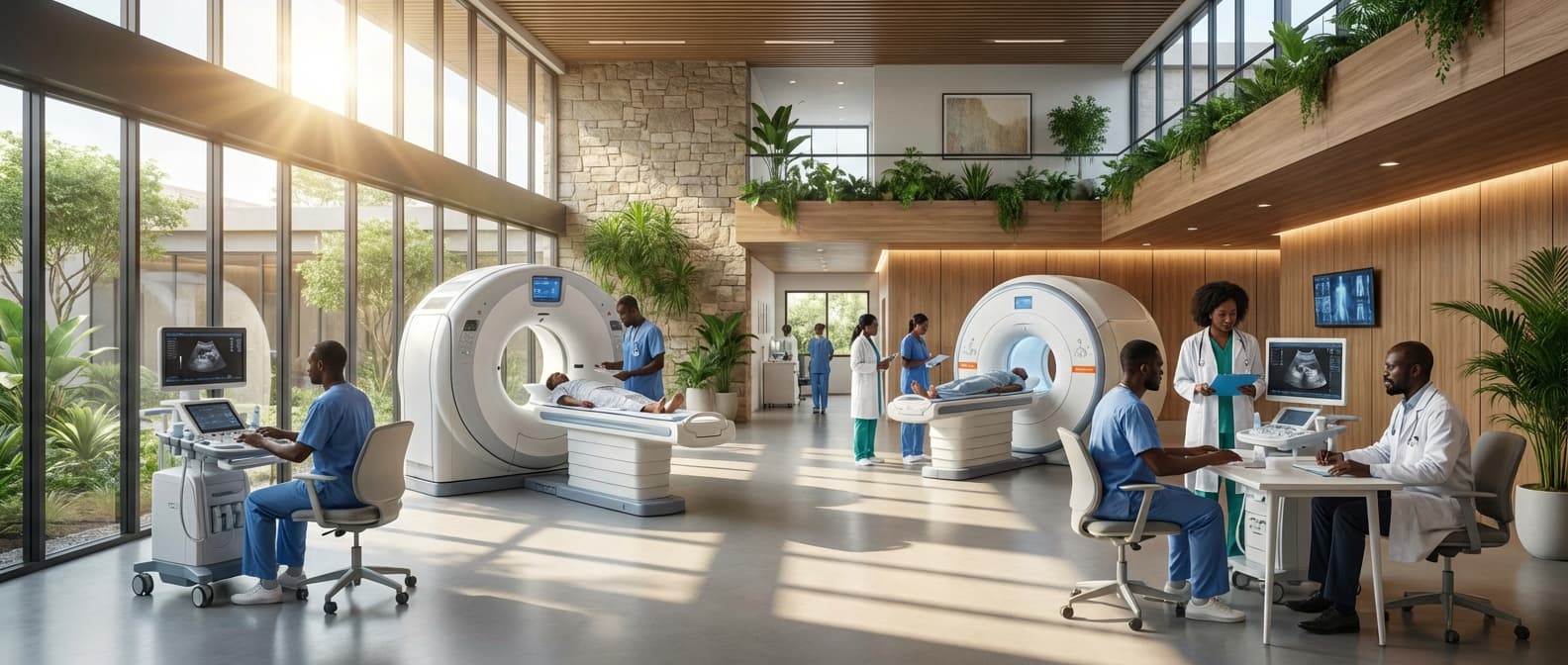
Endoscopy Solutions in Liberia
Engineering Excellence & Technical Support
Advanced endoscopic equipment delivering superior visualization and diagnostic precision for minimally invasive procedures. High-standard technical execution following OEM protocols and local regulatory frameworks.
Advanced Endoscopic Imaging for Early Disease Detection
Implementing state-of-the-art high-definition endoscopic imaging systems, enabling Liberian healthcare providers to visualize and diagnose gastrointestinal and respiratory conditions with unprecedented clarity. This technology significantly enhances the early detection of precancerous lesions and other critical diseases, leading to improved patient outcomes.
Sustainable Training Programs for Endoscopic Procedures
Establishing comprehensive and ongoing training programs for Liberian physicians and nurses in advanced endoscopic techniques and equipment operation. These programs ensure local expertise, foster self-sufficiency in endoscopic care, and promote the safe and effective use of sophisticated medical devices, thereby building a robust local capacity for endoscopy services.
Establishing Tele-Endoscopy Networks for Remote Consultations
Developing and deploying tele-endoscopy platforms to connect specialized endoscopic centers with remote clinics and hospitals across Liberia. This allows for real-time expert consultation, remote guidance during procedures, and enhanced diagnostic capabilities in underserved areas, democratizing access to high-quality endoscopic care throughout the nation.
What Is Endoscopy Solutions In Liberia?
Endoscopy solutions in Liberia refer to the availability and application of endoscopic procedures and related diagnostic/therapeutic services. Endoscopy is a medical specialty that utilizes specialized instruments, known as endoscopes, to visualize the interior of hollow organs or cavities within the body. These endoscopes are typically flexible tubes equipped with a light source and a camera, transmitting images to a monitor. This allows for direct visualization, biopsy acquisition, and therapeutic interventions without the need for extensive invasive surgery.
| Who Needs Endoscopy Solutions? | Typical Use Cases | |||||
|---|---|---|---|---|---|---|
| Patients presenting with symptoms suggestive of gastrointestinal bleeding (e.g., hematemesis, melena, hematochezia). | Investigation of chronic abdominal pain, persistent heartburn, dysphagia (difficulty swallowing), or unexplained weight loss. | Screening for colorectal cancer in individuals with a family history or those over a certain age (colonoscopy). | Evaluation of persistent cough, hemoptysis (coughing up blood), or suspected lung pathology (bronchoscopy). | Diagnosis and management of biliary tract or pancreatic duct abnormalities (ERCP - Endoscopic Retrograde Cholangiopancreatography, though less common in resource-limited settings). | Assessment of upper urinary tract pathology (ureteroscopy, cystoscopy). | Diagnosis and staging of certain gynecological or abdominal conditions (laparoscopy). |
| Gastrointestinal tract: Esophagitis, gastritis, peptic ulcers, duodenitis, inflammatory bowel disease (Crohn's disease, ulcerative colitis), polyps, and gastrointestinal cancers. | Lower Respiratory Tract: Bronchitis, pneumonia, lung masses, and foreign body aspiration. | Biliary and Pancreatic Systems: Gallstones, strictures, pancreatitis, and tumors. | Urinary Tract: Ureteral stones, bladder tumors, and urethral strictures. | Abdominal Cavity: Diagnosis and management of conditions affecting organs like the liver, gallbladder, and intestines (laparoscopy). |
Key Components of Endoscopy Solutions
- Diagnostic Endoscopy: Visualization of internal organs for the identification of abnormalities such as inflammation, ulcers, polyps, tumors, or strictures.
- Therapeutic Endoscopy: Interventions performed during an endoscopic procedure, including polypectomy (removal of polyps), hemostasis (control of bleeding), dilation of strictures, and foreign body retrieval.
- Endoscopic Equipment: Availability of a range of endoscopes (e.g., gastroscopes, colonoscopes, bronchoscopes, laparoscopes) and associated accessories.
- Trained Personnel: Access to physicians and support staff with specialized training in performing and interpreting endoscopic procedures.
- Ancillary Services: Availability of sedation, anesthesia, pathology services for biopsy analysis, and post-procedure care.
Who Needs Endoscopy Solutions In Liberia?
Endoscopy solutions are crucial for diagnosing and treating a wide range of gastrointestinal and pulmonary conditions. In Liberia, the demand for these advanced medical technologies is driven by several factors, including a growing awareness of digestive health issues, an increasing burden of non-communicable diseases, and the need to improve diagnostic accuracy and patient outcomes in a resource-constrained setting. Effectively identifying and engaging with the right stakeholders is key to successful adoption and utilization of endoscopy services.
| Target Customer Group | Key Departments/Users | Specific Needs/Applications |
|---|---|---|
| Hospitals (Government & Private) | Gastroenterology Department, Surgery Department, Internal Medicine, Oncology Department, Pulmonology Department | Diagnostic upper endoscopy (EGD) for dyspepsia, GI bleeding, dysphagia; Diagnostic lower endoscopy (colonoscopy) for colorectal cancer screening, inflammatory bowel disease, polyps; Therapeutic procedures like polypectomy, stricture dilation, foreign body removal; Bronchoscopy for diagnosing lung diseases, biopsies, foreign body removal. |
| Specialized Clinics | Gastroenterology Clinics, Surgical Clinics (with GI focus) | Routine diagnostic procedures; Outpatient management of common GI conditions; Follow-up for chronic GI diseases; Potential for therapeutic interventions. |
| NGOs & International Health Organizations | Program Managers, Procurement Officers, Clinical Advisors | Supporting national health strategies; Establishing new endoscopy units in underserved areas; Providing equipment for specific disease control programs (e.g., early detection of esophageal cancer); Training initiatives. |
| Medical Training & Education Institutions | Medical Schools, Teaching Hospitals, Departments of Gastroenterology and Surgery, Continuing Medical Education (CME) Providers | Hands-on training for medical students and residents; Simulation training; Research and development; Upskilling practicing physicians. |
Target Customers and Departments for Endoscopy Solutions in Liberia
- {"title":"Hospitals (Government and Private)","description":"These are the primary hubs for advanced medical care and are most likely to have the infrastructure and patient volume to support endoscopy services. Both public and private institutions are critical targets, with a focus on those offering comprehensive surgical and medical specialties."}
- {"title":"Specialized Clinics","description":"Clinics focusing on gastroenterology, pulmonology, or general surgery will be key adopters, especially those with a commitment to offering a full spectrum of diagnostic and therapeutic procedures."}
- {"title":"Non-Governmental Organizations (NGOs) and International Health Organizations","description":"Organizations involved in health system strengthening, disease control programs (e.g., for cancer screening or infectious diseases), and humanitarian aid often play a significant role in procuring and implementing medical equipment, particularly in countries with limited healthcare budgets."}
- {"title":"Medical Training and Education Institutions","description":"Universities and medical schools with teaching hospitals are vital for training the next generation of endoscopists. Providing them with modern equipment is essential for upskilling healthcare professionals."}
Endoscopy Solutions Process In Liberia
This document outlines the typical workflow for Endoscopy Solutions in Liberia, detailing the process from initial inquiry to the execution of endoscopic procedures. This process is designed to ensure patient safety, optimal resource utilization, and efficient service delivery within the Liberian healthcare context.
| Stage | Description | Key Activities | Responsible Parties | Considerations in Liberia |
|---|---|---|---|---|
| Inquiry & Initial Consultation | The process begins when a patient, physician, or healthcare facility expresses interest in endoscopy services. | Information gathering, explanation of services, preliminary assessment of need, and referral to appropriate specialists. | Patients, Referring Physicians, Clinic/Hospital Administrators, Endoscopy Service Coordinators. | Accessibility of information about services, language barriers, and the role of community health workers in referrals. |
| Patient Assessment & Pre-procedure Preparation | A comprehensive evaluation of the patient's medical history, current condition, and suitability for the endoscopic procedure. | Medical history review, physical examination, laboratory tests (if required), patient education on the procedure, risks, and benefits, consent process, and instructions for pre-procedure fasting/medication adjustments. | Physicians (Gastroenterologists, Surgeons), Nurses, Laboratory Technicians, Patients. | Availability and cost of diagnostic tests, patient understanding of instructions (literacy levels), and access to pre-procedure counseling. |
| Scheduling & Logistics | Coordinating the procedure date and time, ensuring availability of necessary equipment, staff, and facilities. | Booking the procedure slot, confirming patient availability, arranging for any necessary transportation, pre-ordering or confirming availability of disposables and medications, and ensuring the endoscopy unit is prepared. | Endoscopy Service Coordinators, Nursing Staff, Ward Managers, Patients. | Reliability of power supply and water, availability of specialized equipment and consumables, transport challenges for patients. |
| Procedure Execution | The actual endoscopic procedure is performed by qualified medical professionals. | Patient positioning, administration of sedation/anesthesia, performance of the endoscopic examination, therapeutic interventions (e.g., biopsy, polyp removal, stent placement), and immediate post-procedure monitoring. | Endoscopists (Gastroenterologists, Surgeons), Anesthesiologists/Anesthetic Nurses, Endoscopy Nurses, Technicians. | Availability of trained personnel, functioning endoscopic equipment (scopes, light sources, insufflators, suction), adequate sedation/anesthesia agents, and sterile reprocessing of equipment. |
| Post-procedure Care & Follow-up | Monitoring the patient's recovery after the procedure and providing instructions for continued care. | Recovery room monitoring, assessment of vital signs, management of any immediate complications, discharge instructions (diet, activity, medications), scheduling of follow-up appointments, and communication of initial findings to the referring physician. | Nurses, Physicians, Patients. | Availability of recovery space, patient understanding of discharge instructions, access to follow-up care, and communication channels with referring physicians. |
| Reporting & Data Management | Documentation of the procedure and patient outcomes for medical records and service improvement. | Completion of procedure reports, entry of data into patient records and hospital information systems, tracking of complications and outcomes, and feedback for quality assurance and service planning. | Endoscopists, Nurses, Medical Records Department, Health Information Management. | Robust documentation systems, data security, and utilization of data for service improvement and planning in resource-limited settings. |
Endoscopy Solutions Workflow in Liberia
- Inquiry & Initial Consultation
- Patient Assessment & Pre-procedure Preparation
- Scheduling & Logistics
- Procedure Execution
- Post-procedure Care & Follow-up
- Reporting & Data Management
Endoscopy Solutions Cost In Liberia
Endoscopy is a vital diagnostic and therapeutic procedure, and its cost in Liberia is influenced by several factors. These include the type of endoscopy performed (gastroscopy, colonoscopy, bronchoscopy, etc.), the complexity of the procedure, whether it's diagnostic or therapeutic (e.g., polyp removal), the facility where it's conducted (public hospital vs. private clinic), the experience of the medical professional, and the cost of consumables and equipment maintenance. Availability of specialized equipment and medications can also impact pricing. Generally, private facilities tend to be more expensive than public ones due to overhead costs and potentially higher profit margins. The exchange rate of the Liberian Dollar (LRD) against major international currencies can also play a role in the cost of imported consumables and equipment. Specific pricing can vary significantly, but we can outline general ranges for common procedures. It's crucial for patients to inquire directly with healthcare providers for the most accurate and up-to-date cost estimates.
| Endoscopy Procedure Type | Estimated Cost Range (LRD) |
|---|---|
| Gastroscopy (Upper Endoscopy) | 15,000 - 40,000 |
| Colonoscopy (Lower Endoscopy) | 20,000 - 50,000 |
| Sigmoidoscopy | 10,000 - 25,000 |
| Bronchoscopy | 25,000 - 60,000 |
| Therapeutic Endoscopic Procedures (e.g., Polyp Removal, Biopsy) | Additional 5,000 - 20,000+ |
Factors Influencing Endoscopy Costs in Liberia
- Type of Endoscopy (e.g., Gastroscopy, Colonoscopy, Bronchoscopy)
- Procedure Complexity and Purpose (Diagnostic vs. Therapeutic)
- Healthcare Facility (Public Hospital vs. Private Clinic)
- Provider's Experience and Specialization
- Cost of Consumables and Equipment
- Availability of Specialized Equipment and Medications
- Maintenance and Operational Costs of Facilities
- Exchange Rate Fluctuations (for imported items)
Affordable Endoscopy Solutions Options
Affordable endoscopy solutions are crucial for making advanced diagnostic and therapeutic procedures accessible to a wider patient population. This involves exploring various options beyond traditional, high-cost packages. Understanding and leveraging "value bundles" and implementing smart cost-saving strategies are key to achieving this. Value bundles are essentially curated packages of services and equipment designed to offer a more predictable and often lower overall cost compared to procuring individual components. Cost-saving strategies focus on optimizing resource utilization, negotiating better terms, and exploring alternative models.
| Cost-Saving Strategy | Description | Benefit |
|---|---|---|
| Leasing vs. Purchasing | Instead of outright buying expensive endoscopy equipment, consider leasing options. This often involves lower upfront costs and predictable monthly payments. | Reduces capital expenditure, allows for technology upgrades without significant new investment, and can include maintenance. |
| Refurbished Equipment | Purchasing certified refurbished endoscopy systems and accessories from reputable vendors. These are often significantly cheaper than new equipment but are still thoroughly inspected and repaired. | Substantial cost reduction compared to new equipment, with warranties often provided. |
| Consumable Management | Negotiating bulk discounts on disposable accessories like biopsy valves, brushes, and cleaning solutions. Implementing strict inventory management to avoid overstocking and waste. | Lower per-procedure costs for consumables and reduced wastage. |
| Centralized Sterilization | For multi-site or larger facilities, consolidating sterilization processes into a central unit can improve efficiency and reduce the need for duplicate sterilization equipment. | Economies of scale in labor and equipment, standardized sterilization protocols. |
| Service Contracts & Maintenance | Negotiating comprehensive service contracts that cover planned maintenance and unexpected repairs. Compare offerings from the manufacturer versus third-party service providers. | Predictable maintenance costs, reduced downtime, and extended equipment lifespan. |
| Technology Adoption Tiering | Evaluating whether the latest, most expensive technology is truly necessary for all procedures. Some basic or older models might be sufficient and more cost-effective for certain indications. | Optimized investment in technology based on clinical needs, avoiding unnecessary high-end features. |
| Outsourcing Non-Core Services | Considering outsourcing services like equipment repair, maintenance, or even specialized reprocessing to third-party experts who may offer more competitive pricing. | Focus on core clinical operations, potential cost savings through specialized expertise. |
Value Bundles in Endoscopy
- Procedure-Specific Bundles: Packages that include the endoscope, essential accessories (biopsy forceps, snares, etc.), and sometimes even related consumables for a particular type of endoscopy (e.g., colonoscopy, upper GI endoscopy).
- Equipment & Service Bundles: Offers that combine the purchase or lease of an endoscopy system with ongoing maintenance, repair services, and software updates, providing a predictable operational cost.
- Training & Support Bundles: Packages that integrate initial equipment setup, staff training on its use, and ongoing technical support, reducing the need for separate training expenses and minimizing downtime.
- Turnkey Solutions: Comprehensive offerings that may include not only equipment and consumables but also assistance with procedure room setup, workflow optimization, and even administrative support, providing a complete solution for clinics or smaller hospitals.
Verified Providers In Liberia
In Liberia, ensuring access to reliable and qualified healthcare providers is paramount for individual well-being and public health. Franance Health stands out as a leading organization dedicated to credentialing and verifying healthcare professionals, offering a robust system that builds trust and confidence. This commitment to rigorous vetting makes Franance Health-verified providers the best choice for patients seeking quality care.
| Credential Aspect | Franance Health's Standard | Benefit to Patients |
|---|---|---|
| Educational Background | Thorough review of diplomas, degrees, and certifications from accredited institutions. | Confirms foundational knowledge and appropriate training. |
| Licensing and Registration | Verification of current and valid licenses with relevant Liberian medical boards. | Ensures legal authorization to practice and adherence to regulatory requirements. |
| Professional Experience | Detailed examination of past roles, responsibilities, and practice history. | Validates practical skills and application of knowledge. |
| Continuing Professional Development (CPD) | Requirement for providers to demonstrate ongoing learning and skill enhancement. | Guarantees that providers are up-to-date with the latest medical advancements and practices. |
| Ethical Conduct and Reputation | Inquiries into professional references and any history of malpractice or disciplinary actions. | Protects patients from unethical practices and promotes a trustworthy environment. |
| Specialty Certifications | Validation of specialized training and expertise in specific medical fields. | Allows patients to identify providers with the precise skills needed for their condition. |
Why Franance Health Credentials Matter
- Rigorous Verification Process: Franance Health employs a comprehensive and multi-faceted approach to credentialing, examining educational background, licensing, professional experience, and any disciplinary actions.
- Commitment to Patient Safety: By ensuring that only qualified and ethically sound professionals are verified, Franance Health prioritizes the safety and well-being of every patient.
- Enhanced Trust and Transparency: The Franance Health seal of approval provides patients with a clear indicator of a provider's legitimacy and competence, fostering trust in the healthcare system.
- Upholding Professional Standards: Franance Health actively works to uphold and elevate the standards of healthcare practice in Liberia, encouraging continuous professional development among its verified providers.
- Accessibility to Quality Care: By identifying and promoting verified providers, Franance Health helps individuals navigate the healthcare landscape more effectively, leading them to reputable and skilled professionals.
Scope Of Work For Endoscopy Solutions
This Scope of Work (SOW) outlines the requirements for the procurement, installation, and commissioning of Endoscopy Solutions. The objective is to acquire advanced endoscopic equipment and associated services to enhance diagnostic and therapeutic capabilities within [Hospital/Clinic Name]. This document details the technical deliverables, standard specifications, and project timelines.
| Category | Deliverable Description | Technical Specifications/Standards | Quantity | Timeline (Weeks) |
|---|---|---|---|---|
| Endoscopy System (Gastroenterology) | High-definition (HD) video endoscopy system including gastroscope and colonoscope, light source, processor, and monitor. | Resolution: Minimum 1920x1080 (Full HD). Image Sensor: CMOS/CCD. Insertion Tube Diameter: <10mm for gastroscope, <13mm for colonoscope. Working Channel: >2.8mm. Field of View: >140 degrees. Ergonomic design, advanced imaging modes (e.g., NBI, i-Scan). | 1 set | 1-4 |
| Endoscopy System (Pulmonology) | Bronchoscope system including flexible bronchoscope, light source, processor, and monitor. | Resolution: Minimum HD. Insertion Tube Diameter: <6mm. Working Channel: >2.0mm. Angulation: 4-way (up/down/left/right). Excellent maneuverability and image clarity. Integrated suction and irrigation. | 1 set | 1-4 |
| Endoscopy System (Urology) | Flexible cystoscope system including cystoscope, light source, processor, and monitor. | Resolution: Minimum HD. Outer Diameter: <10mm. Working Channel: >7Fr. High image quality for detailed visualization. Easy articulation and control. | 1 set | 1-4 |
| Ancillary Equipment | Video recorder/imager, insufflator, suction pump, cleaning and disinfection station. | Recorder: Ability to capture HD video and still images, DICOM compatibility. Insufflator: CO2 insufflation capable, adjustable flow rate. Suction Pump: Variable suction power, medical grade. Cleaning Station: Automated, compatible with specified endoscopes. | 1 of each | 1-4 |
| Software Integration | Integration of endoscopy system with Hospital Information System (HIS) / Picture Archiving and Communication System (PACS). | DICOM 3.0 compliance, HL7 interface for patient data. Secure data transfer. User-friendly interface for image retrieval and management. | As required | 5-8 |
| Installation and Commissioning | Site preparation, equipment installation, system testing, and calibration. | Adherence to manufacturer's installation guidelines. All systems to be fully operational and calibrated according to manufacturer specifications. Performance verification and acceptance testing. | N/A | 5-8 |
| Training | Comprehensive training for clinicians and technical staff. | On-site training covering operation, basic troubleshooting, and maintenance. Training materials to be provided in English. Certification of trained personnel. | N/A | 9-12 |
| Maintenance and Support | Post-installation support and maintenance services. | 3-year comprehensive warranty. Annual preventive maintenance. Response time for critical issues: <24 hours. Availability of spare parts. Remote diagnostic capabilities. | N/A | Ongoing |
Key Objectives
- To acquire state-of-the-art endoscopy systems for various medical specialties (e.g., gastroenterology, pulmonology, urology).
- To ensure seamless integration of new equipment with existing hospital IT infrastructure.
- To provide comprehensive training for clinical and technical staff on the operation and maintenance of the new systems.
- To establish robust support and maintenance agreements for the lifespan of the equipment.
Service Level Agreement For Endoscopy Solutions
This Service Level Agreement (SLA) outlines the guaranteed response times and uptime for Endoscopy Solutions, a provider of specialized services and equipment for endoscopic procedures. It defines the expectations for service availability and our commitment to resolving issues promptly. This SLA applies to all active customers of Endoscopy Solutions.
| Criticality Level | Description | Response Time Guarantee | Uptime Guarantee |
|---|---|---|---|
| Critical | Complete system outage affecting all users and procedures. No workaround available. | 15 minutes | 99.9% (excluding scheduled maintenance) |
| High | Significant malfunction impacting a substantial portion of users or critical functionality. Potential for procedure delay. | 1 hour | 99.7% (excluding scheduled maintenance) |
| Medium | Minor malfunction impacting a limited number of users or non-critical functionality. Workaround may be available. | 4 business hours | 99.5% (excluding scheduled maintenance) |
| Low | Cosmetic issues, feature requests, or general inquiries. No impact on core functionality. | 8 business hours | N/A (Best effort support) |
Key Service Commitments
- Response Time: The time taken by Endoscopy Solutions' support team to acknowledge and begin working on a reported issue.
- Uptime Guarantee: The percentage of time that the Endoscopy Solutions platform and associated services are available and operational for use.
- Criticality Levels: Issues are categorized to prioritize response and resolution efforts.
- Remedies: Penalties or service credits applied if the guaranteed service levels are not met.
Frequently Asked Questions

Ready when you are
Let's scope your Endoscopy Solutions in Liberia project in Liberia.

Scaling healthcare logistics and technical systems across the entire continent.