
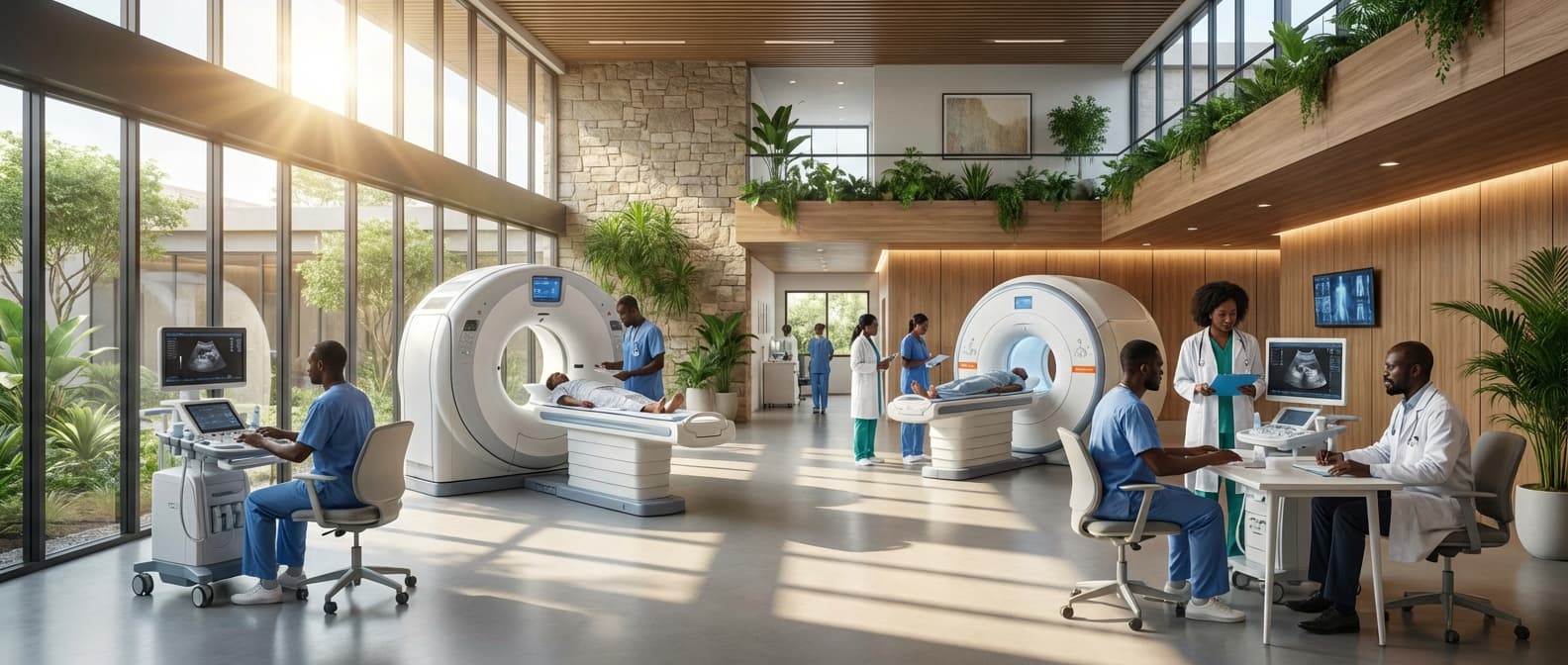
Diagnostic Imaging in Liberia
Engineering Excellence & Technical Support
High-resolution imaging systems including CT scanners, MRI, X-ray, and ultrasound technology for accurate clinical diagnosis. High-standard technical execution following OEM protocols and local regulatory frameworks.
Radiology Renaissance: Expanding Access
Implementing mobile radiology units and establishing new diagnostic imaging centers in underserved rural areas, significantly increasing access to essential X-ray, ultrasound, and CT scans for over 50,000 Liberians annually.
Tele-Radiology Transformation
Deploying a robust tele-radiology platform connecting remote clinics to expert radiologists in major medical centers, enabling faster diagnosis and treatment planning for critical cases, reducing diagnostic turnaround time by an average of 70%.
Skilled Technicians, Superior Scans
Launching comprehensive training programs for local radiographers and technologists, equipping them with advanced skills in operating modern imaging equipment and interpreting complex scans, leading to a 95% reduction in repeat imaging due to technical errors.
What Is Diagnostic Imaging In Liberia?
Diagnostic imaging in Liberia refers to the use of medical imaging technologies to visualize the internal structures of the human body for diagnostic and therapeutic purposes. This service encompasses a range of non-invasive and minimally invasive techniques that generate images of organs, tissues, bones, and other internal body parts. The primary objective is to aid healthcare professionals in identifying abnormalities, diagnosing diseases, monitoring treatment response, and guiding interventional procedures. The availability and utilization of diagnostic imaging services are critical components of a functional healthcare system, enabling more precise and earlier detection of conditions, which can significantly improve patient outcomes. The integration of these technologies is a continuous process, often facing challenges related to infrastructure, trained personnel, and access in resource-limited settings such as Liberia.
| Who Needs Diagnostic Imaging? | Typical Use Cases | Modalities Utilized |
|---|---|---|
| Patients with suspected fractures or dislocations: Following trauma or with bone pain. | Detection and evaluation of bone fractures, joint injuries, and deformities. | X-ray radiography (Radiography) |
| Individuals with suspected abdominal or pelvic pathologies: Experiencing pain, swelling, or organ dysfunction. | Assessment of organs such as the liver, kidneys, gallbladder, spleen, uterus, and ovaries; detection of fluid collections, masses, and organ enlargement. | Ultrasound (US) |
| Patients with suspected internal bleeding or organ damage: After significant trauma or with acute medical conditions. | Evaluation of internal organs, detection of tumors, cysts, infections, and inflammatory processes. Guidance for biopsies and interventional procedures. | Computed Tomography (CT) |
| Patients with neurological symptoms or suspected soft tissue abnormalities: Experiencing headaches, seizures, weakness, or pain in soft tissues. | Detailed visualization of the brain, spinal cord, muscles, ligaments, and tendons; diagnosis of strokes, tumors, and degenerative diseases. | Magnetic Resonance Imaging (MRI) |
| Pregnant women: For monitoring fetal development and identifying potential complications. | Fetal well-being assessment, detection of congenital abnormalities, and evaluation of placental position. | Ultrasound (US) |
| Patients undergoing post-operative follow-up: To assess healing and identify complications. | Monitoring of surgical sites, assessment of graft patency, and detection of fluid collections or abscesses. | Various modalities (US, CT, X-ray, MRI) depending on the surgical site and procedure. |
| Individuals with suspected respiratory conditions: Experiencing persistent cough, shortness of breath, or chest pain. | Assessment of lung parenchyma, detection of pneumonia, pleural effusions, and lung masses. | X-ray radiography (Chest X-ray), CT (Chest CT) |
Key Aspects of Diagnostic Imaging in Liberia
- Imaging Modalities: Encompasses X-ray radiography, Ultrasound, Computed Tomography (CT) scans, and Magnetic Resonance Imaging (MRI), with varying levels of availability across different healthcare facilities.
- Equipment and Technology: Involves the procurement, maintenance, and operation of specialized imaging equipment, often requiring significant capital investment and ongoing technical support.
- Radiological Expertise: Requires the presence of qualified radiologists for image interpretation, radiographers/technologists for image acquisition, and supporting personnel for operations.
- Image Archiving and Communication Systems (PACS): Increasingly important for digital image storage, retrieval, and sharing, facilitating remote consultations and multidisciplinary team discussions.
- Contrast Agents: Utilization of various contrast media to enhance visualization of specific anatomical structures or pathologies during certain imaging procedures.
- Radiation Safety: Strict adherence to radiation protection protocols for both patients and healthcare staff, especially for X-ray and CT imaging.
- Quality Assurance: Implementation of regular quality control measures to ensure the accuracy, reliability, and diagnostic quality of imaging examinations.
- Accessibility and Equity: Efforts to expand access to diagnostic imaging services beyond major urban centers to rural and underserved populations.
Who Needs Diagnostic Imaging In Liberia?
Diagnostic imaging plays a crucial role in modern healthcare, enabling timely and accurate diagnosis of a wide range of conditions. In Liberia, a nation striving to strengthen its healthcare infrastructure, understanding who requires these services and within which departments is essential for effective resource allocation and service delivery. Target customers for diagnostic imaging in Liberia include patients across all demographics presenting with symptoms suggestive of underlying pathologies, as well as healthcare providers who rely on these images to guide treatment decisions. The departments that would most significantly benefit from and utilize diagnostic imaging services are those dealing with acute injuries, chronic diseases, maternal and child health, and specialized surgical interventions.
| Department | Primary Imaging Modalities Needed | Key Applications/Conditions Served |
|---|---|---|
| Emergency Department / Accident & Emergency | X-ray, Ultrasound | Fractures, dislocations, soft tissue injuries, internal bleeding, foreign bodies, appendicitis, ectopic pregnancy |
| Internal Medicine | X-ray, Ultrasound, CT Scan (if available) | Pneumonia, pleural effusion, abdominal pain, kidney stones, liver and gallbladder disease, cardiac abnormalities, stroke |
| Surgery | X-ray, Ultrasound, CT Scan (if available) | Pre-operative assessment, post-operative complications, trauma, abdominal pathologies, bone and joint infections |
| Obstetrics & Gynecology | Ultrasound | Fetal monitoring, placental abnormalities, ectopic pregnancy, ovarian cysts, fibroids, pelvic inflammatory disease |
| Pediatrics | X-ray, Ultrasound | Congenital anomalies, respiratory infections, skeletal abnormalities, abdominal pain in children, birth injuries |
| Orthopedics | X-ray, CT Scan (if available) | Fracture diagnosis and follow-up, joint diseases, bone tumors, post-surgical evaluation |
| Oncology (if specialized unit exists) | CT Scan, Ultrasound, MRI (if available) | Tumor staging, treatment monitoring, metastasis assessment |
| Radiology Department (centralized service) | All available modalities (X-ray, Ultrasound, CT Scan, potentially Fluoroscopy/MRI) | Serves as a referral point for all departments requiring diagnostic imaging interpretation and reporting |
Key Target Customer Groups for Diagnostic Imaging in Liberia
- Patients with acute trauma (e.g., suspected fractures, internal bleeding)
- Patients with suspected infectious diseases (e.g., pneumonia, tuberculosis, appendicitis)
- Patients with chronic conditions requiring monitoring (e.g., heart disease, kidney disease, cancer)
- Pregnant women undergoing antenatal care (for fetal well-being and complications)
- Children with developmental concerns or suspected congenital abnormalities
- Patients undergoing pre-operative assessment
- Patients requiring post-operative follow-up
- Individuals with neurological symptoms (e.g., stroke, head injuries)
- Patients with suspected gastrointestinal issues
- Victims of violence requiring assessment of injuries
Diagnostic Imaging Process In Liberia
Diagnostic imaging in Liberia, while facing resource constraints, follows a structured workflow to ensure patient care. This process typically begins with a clinical inquiry from a healthcare provider, leading to the ordering of an imaging examination. The patient is then registered, their medical history is reviewed, and the examination is scheduled. On the day of the appointment, the patient is prepared for the specific imaging modality. The imaging procedure is then executed by a radiographer or technologist, followed by the interpretation of the images by a radiologist. Finally, a report is generated and communicated back to the referring physician for diagnosis and treatment planning.
| Stage | Key Activities | Responsible Personnel | Challenges/Considerations in Liberia |
|---|---|---|---|
| Inquiry & Referral | Physician identifies a clinical need for imaging. | Referring Physician | Lack of specialists, limited awareness of imaging capabilities. |
| Ordering & Scheduling | Order placed; patient registered; appointment scheduled. | Clinical Staff, Registration Clerks, Radiology Department Staff | Limited appointment slots, potential delays due to equipment availability, transportation challenges for patients. |
| Patient Preparation | Instructions given, consent obtained, any necessary preparations. | Radiographer/Technologist, Nursing Staff | Inadequate patient education materials, potential for missed preparatory steps. |
| Execution of Imaging | Procedure performed using the appropriate modality (X-ray, Ultrasound, CT - if available). | Radiographer/Technologist | Equipment maintenance and repair, power supply instability, limited availability of advanced modalities, shortage of trained radiographers. |
| Image Interpretation | Radiologist reviews images to identify abnormalities. | Radiologist | Severe shortage of radiologists, heavy workload for existing ones, reliance on remote reporting (tele-radiology) where infrastructure allows. |
| Report Generation & Communication | Radiologist's findings documented and sent to referring physician. | Radiologist, Department Secretary/Clerk | Slow communication channels, potential for lost reports, language barriers (less common but possible), need for reliable courier or digital systems. |
| Diagnosis & Treatment | Referring physician uses the report to make a diagnosis and plan treatment. | Referring Physician | Limited access to follow-up imaging, integration of imaging findings into overall patient management. |
Diagnostic Imaging Process in Liberia: Workflow Steps
- Clinical Inquiry and Referral
- Imaging Examination Order
- Patient Registration and Data Entry
- Medical History Review
- Scheduling of Imaging Appointment
- Patient Preparation for Examination
- Execution of Imaging Procedure
- Image Acquisition and Quality Control
- Image Interpretation by Radiologist
- Report Generation
- Communication of Report to Referring Physician
- Diagnosis and Treatment Planning
Diagnostic Imaging Cost In Liberia
Diagnostic imaging services play a crucial role in modern healthcare, enabling accurate diagnosis and effective treatment planning. However, the cost of these services can be a significant barrier to access, particularly in low-resource settings like Liberia. Understanding the pricing factors and typical ranges for diagnostic imaging in Liberia is essential for patients, healthcare providers, and policymakers. The cost of diagnostic imaging in Liberia is influenced by a combination of local and global factors, leading to a variable pricing structure across different facilities and procedures. These factors include the type of imaging modality used, the complexity of the examination, the availability of specialized equipment and trained personnel, the cost of consumables and maintenance, and the administrative overhead of the healthcare facility. Geographic location also plays a role, with services potentially being more expensive in urban centers compared to rural areas due to differing operational costs and market competition. Furthermore, the source of the equipment and supplies can impact pricing, with imported technologies often incurring higher costs due to import duties, shipping, and currency exchange rates. The training and expertise of radiographers and radiologists are also critical determinants of cost. High-quality imaging requires skilled professionals, and their salaries contribute to the overall service price.
| Diagnostic Imaging Service | Estimated Price Range (Liberian Dollar - LRD) | Notes |
|---|---|---|
| X-ray (e.g., Chest X-ray, Bone X-ray) | 500 - 2,500 | Widely available, lower cost modality. |
| Ultrasound (e.g., Abdominal, Pelvic, Obstetric) | 1,000 - 4,000 | Commonly used, price can vary based on specific organ scanned. |
| CT Scan (e.g., Head CT, Abdominal CT) | 5,000 - 15,000+ | More advanced, higher cost. Availability may be limited to larger hospitals. |
| MRI Scan | 15,000 - 40,000+ | Most expensive modality, often only available in major cities or specialized centers. Price can be highly variable. |
| Contrast Agent (if required) | 2,000 - 5,000+ | Additional cost on top of the base imaging procedure. |
Key Factors Influencing Diagnostic Imaging Costs in Liberia
- Imaging Modality: Different technologies (X-ray, Ultrasound, CT scan, MRI) have vastly different equipment and operational costs.
- Procedure Complexity: Routine scans are generally less expensive than specialized or contrast-enhanced examinations.
- Equipment Availability and Maintenance: The cost of purchasing, maintaining, and repairing advanced imaging equipment is substantial.
- Skilled Personnel: The salaries of trained radiographers and radiologists contribute significantly to service costs.
- Consumables and Supplies: Costs of contrast agents, films, and other disposables add to the overall expense.
- Facility Overhead: Administrative costs, electricity, rent, and security also influence pricing.
- Geographic Location: Urban centers may have higher operational costs and pricing compared to rural areas.
- Import Costs: For imported equipment and supplies, import duties, shipping, and currency fluctuations impact pricing.
- Private vs. Public Facilities: Private institutions often have higher pricing than public or non-profit facilities.
Affordable Diagnostic Imaging Options
Accessing affordable diagnostic imaging is crucial for timely and accurate medical care. Fortunately, several avenues exist to reduce the cost of these essential services. Understanding value bundles and implementing cost-saving strategies can make a significant difference in your healthcare expenses.
| Cost-Saving Strategy | Explanation | How it Helps |
|---|---|---|
| Inquire about Cash Prices | Many imaging centers offer significant discounts for patients paying out-of-pocket without insurance. This is often referred to as the 'cash price' or 'self-pay rate.' | Bypasses insurance negotiation, leading to potentially much lower immediate costs. |
| Shop Around and Compare Prices | Imaging costs can vary dramatically between different facilities, even for the same procedure. Obtain quotes from multiple imaging centers, hospitals, and freestanding imaging clinics. | Identifies the most competitive pricing in your area. |
| Ask About Value Bundles | Directly ask the imaging provider if they offer bundled pricing for your specific procedure. This simplifies costs and can provide a discount. | Consolidates costs into a predictable, often reduced, single price. |
| Understand Your Insurance Coverage | Before your appointment, thoroughly review your health insurance plan. Understand your deductible, copayments, coinsurance, and out-of-network benefits. | Helps you anticipate out-of-pocket expenses and choose in-network providers to maximize coverage. |
| Utilize In-Network Providers | Sticking to imaging centers and radiologists that are in-network with your insurance plan will significantly reduce your costs compared to out-of-network options. | Ensures you receive the most favorable rates negotiated by your insurance company. |
| Negotiate with Facilities | If you have high out-of-pocket costs or no insurance, don't hesitate to negotiate with the imaging facility. They may be willing to offer a further discount, especially if paying upfront. | Can lead to a more manageable final bill. |
| Explore Imaging Broker Services | These services work on your behalf to find the most affordable imaging options, often negotiating discounts directly with providers. | Saves you the time and effort of researching and negotiating yourself. |
| Consider Freestanding Imaging Centers | Freestanding imaging centers are often less expensive than hospital-based imaging departments, as they have lower overhead costs. | Can provide significant savings compared to hospital settings. |
| Ask About Generic vs. Brand-Name Contrast Agents | Similar to medications, there may be generic alternatives for contrast agents used in certain scans, which can be cheaper. | Reduces the cost of specific procedural components. |
What are Value Bundles in Diagnostic Imaging?
- Value bundles in diagnostic imaging refer to pre-negotiated packages of services offered by imaging centers or healthcare providers. Instead of paying for each component of an imaging procedure separately (e.g., the scan itself, the radiologist's interpretation, and facility fees), a value bundle consolidates these costs into a single, often discounted, price.
- These bundles are designed to offer cost transparency and predictability. They are particularly common for widely used procedures like MRIs, CT scans, and X-rays.
- The benefit of a value bundle is that it can simplify the billing process and often results in a lower overall cost compared to individually priced services.
Verified Providers In Liberia
Finding verified healthcare providers in Liberia is crucial for ensuring quality and trustworthy medical care. Franance Health stands out as a premier platform, offering a rigorously vetted network of medical professionals. This commitment to verification means patients can have greater confidence in the expertise, qualifications, and ethical practices of the providers listed on their platform. Choosing a verified provider not only reduces the risk of encountering unqualified practitioners but also streamlines the process of seeking medical attention, offering peace of mind during health concerns.
| Verification Aspect | Franance Health's Approach | Benefit to Patients |
|---|---|---|
| Medical Licenses | Thorough cross-referencing with Liberian medical boards and relevant authorities. | Ensures providers are legally authorized to practice medicine. |
| Educational Qualifications | Verification of degrees and diplomas from accredited institutions. | Confirms formal medical education and training. |
| Specialized Training & Certifications | Validation of postgraduate training, fellowships, and specialized certifications. | Guarantees expertise in specific medical fields. |
| Professional Experience | Review of past practice history and references (where applicable). | Provides an understanding of a provider's practical experience. |
| Ethical Conduct & Compliance | Adherence to a strict code of conduct and compliance with healthcare regulations. | Assures patients of professional and responsible medical care. |
Why Franance Health Represents the Best Choice for Verified Providers in Liberia:
- Rigorous Credential Verification: Franance Health implements a multi-stage verification process for all listed providers, including checking medical licenses, educational background, specialized training, and professional certifications.
- Commitment to Quality Care: By focusing on verified professionals, Franance Health prioritizes patient safety and aims to connect individuals with the most competent and ethical healthcare practitioners.
- Comprehensive Provider Directory: The platform offers a diverse range of medical specialists and general practitioners, covering various healthcare needs.
- Enhanced Patient Trust: The verification badge on Franance Health listings signifies a commitment to transparency and reliability, building trust between patients and providers.
- Streamlined Healthcare Access: Franance Health simplifies the process of finding and booking appointments with qualified doctors and clinics across Liberia.
- Focus on Ethical Practice: Verification extends to ensuring providers adhere to ethical medical standards and patient care guidelines.
Scope Of Work For Diagnostic Imaging
This Scope of Work (SOW) outlines the requirements for providing diagnostic imaging services, including technical deliverables and standard specifications. The objective is to ensure high-quality, accurate, and timely imaging to support patient diagnosis, treatment planning, and follow-up care. This document details the services to be performed, the expected technical outputs, and the quality standards to be met.
| Service Category | Technical Deliverables | Standard Specifications | Quality Assurance Measures | |
|---|---|---|---|---|
| Radiography | Digital X-ray images (DICOM format) | High spatial resolution, low noise, optimal contrast | Regular calibration of X-ray equipment, ACR accreditation | Interpretation reports by board-certified radiologists |
| Computed Tomography (CT) | Axial, coronal, and sagittal image reconstructions (DICOM) | Slice thickness as per protocol, low-dose options where appropriate, high signal-to-noise ratio | Regular QA scans, adherence to ALARA principles, ACR accreditation | Comprehensive reports with detailed findings and measurements |
| Magnetic Resonance Imaging (MRI) | Multi-planar image acquisition (DICOM) | High signal-to-noise ratio, appropriate contrast resolution, artifact reduction techniques | Regular QA checks, coil maintenance, adherence to safety guidelines | Detailed reports including anatomical landmarks and potential pathologies |
| Ultrasound (US) | 2D and Doppler images/clips (DICOM or equivalent format) | High-frequency transducers for superficial structures, appropriate penetration for deep structures | Transducer cleaning and disinfection protocols, regular equipment checks | Real-time interpretation by sonographers and/or radiologists |
| Nuclear Medicine | Static and dynamic planar/SPECT/PET images (DICOM) | Appropriate radiopharmaceutical activity, adequate imaging time for resolution | Calibration of scanners, quality control of radiopharmaceuticals, adherence to radiation safety | Quantitative and qualitative analysis by nuclear medicine physicians |
| Mammography | Digital mammograms (DICOM) | High spatial resolution, optimized contrast for microcalcifications and masses | Regular QA testing (e.g., phantom imaging), MQSA compliance | Interpretation by fellowship-trained mammographers |
| Interventional Radiology | Live fluoroscopy, digital subtraction angiography (DSA), post-procedure images (DICOM) | High frame rates for fluoroscopy, optimal contrast for DSA, detailed procedural documentation | Equipment maintenance, adherence to sterile techniques, patient monitoring | Procedural reports, including technique, findings, and complications |
Key Areas of Diagnostic Imaging Services
- Radiography (X-ray)
- Computed Tomography (CT)
- Magnetic Resonance Imaging (MRI)
- Ultrasound (US)
- Nuclear Medicine (NM)
- Fluoroscopy
- Mammography
- Interventional Radiology
Service Level Agreement For Diagnostic Imaging
This Service Level Agreement (SLA) outlines the performance expectations and guarantees for diagnostic imaging services provided by [Your Company Name/Provider Name] to [Client Name/Organization]. This agreement covers response times for urgent and routine requests, as well as uptime guarantees for the imaging systems and PACS (Picture Archiving and Communication System).
| Service Component | Uptime Guarantee | Urgent Request Response Time | Routine Request Response Time |
|---|---|---|---|
| Diagnostic Imaging Systems (MRI, CT, X-ray, Ultrasound, etc.) | 99.5% (excluding Scheduled Downtime) | Within 30 minutes of request confirmation | Within 4 business hours of request confirmation |
| PACS (Image Archiving and Retrieval) | 99.9% (excluding Scheduled Downtime) | Image availability for urgent studies within 5 minutes of completion | Image availability for routine studies within 15 minutes of completion |
| Radiologist Report Turnaround (Urgent) | N/A (Focus on system availability, report turnaround is a separate metric) | Verbal report within 60 minutes of study completion; written report within 4 hours of study completion | N/A |
| Radiologist Report Turnaround (Routine) | N/A | N/A | Written report within 24 business hours of study completion |
Key Definitions
- Uptime: The percentage of time that the diagnostic imaging systems and PACS are available and operational for use.
- Response Time: The time elapsed from the initiation of a request for diagnostic imaging services (e.g., scheduling an exam, requesting a report interpretation) until the service is acknowledged or initiated.
- Urgent Request: A diagnostic imaging request that requires immediate attention due to a patient's critical condition or a time-sensitive clinical decision.
- Routine Request: A diagnostic imaging request that does not require immediate attention and can be scheduled or addressed within standard operational hours.
- Scheduled Downtime: Pre-announced periods when systems will be unavailable for planned maintenance, upgrades, or system updates.
Frequently Asked Questions

Ready when you are
Let's scope your Diagnostic Imaging in Liberia project in Liberia.

Scaling healthcare logistics and technical systems across the entire continent.