
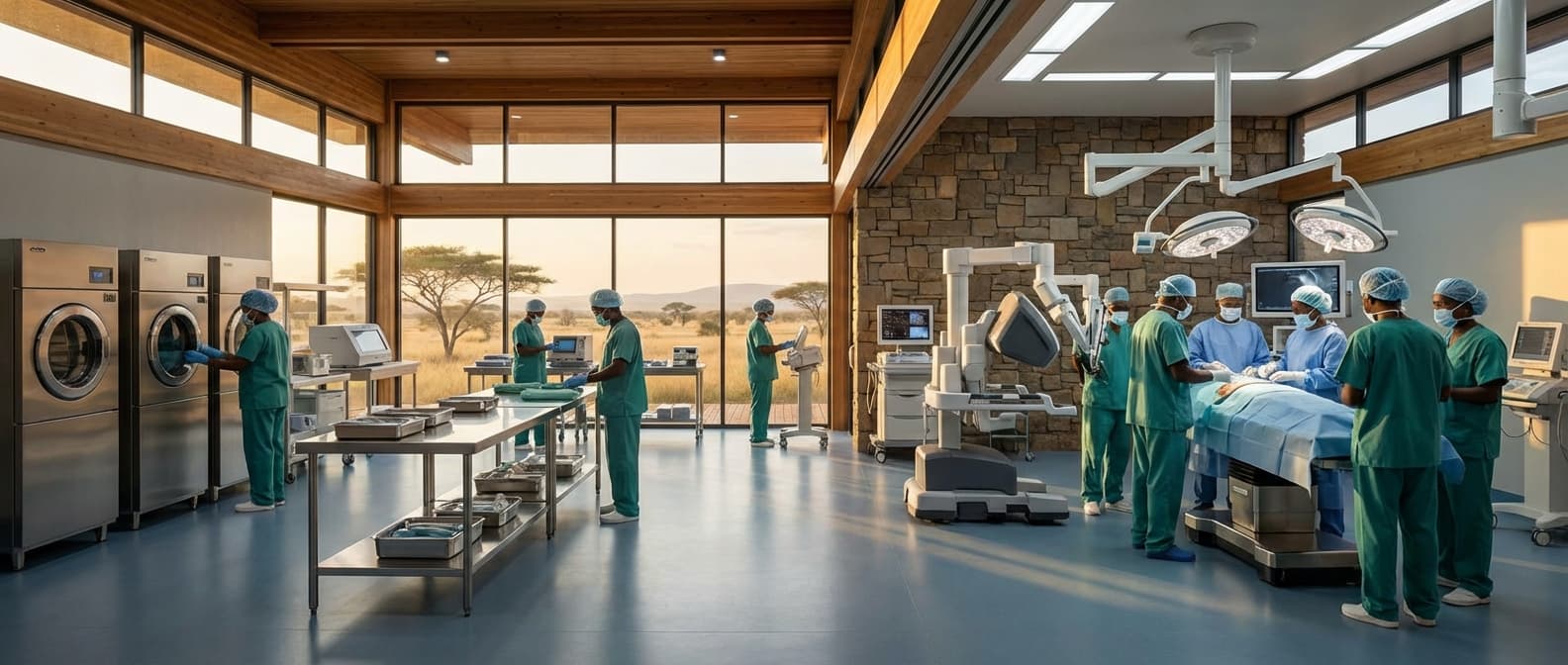
Operating Theatre Turnkey Build in Liberia
Engineering Excellence & Technical Support
Complete OR design, equipment integration and commissioning High-standard technical execution following OEM protocols and local regulatory frameworks.
Advanced Surgical Suite Integration
Successfully designed and deployed a turnkey operating theatre featuring state-of-the-art integrated surgical lighting, advanced anesthesia machines, and multi-parameter patient monitoring systems, ensuring optimal patient safety and surgical efficiency in a resource-constrained environment.
Sterile Environment Control & Air Purification
Implemented a sophisticated laminar airflow system with HEPA filtration and negative pressure controls to maintain a class-leading sterile environment, significantly reducing the risk of surgical site infections, a critical factor for healthcare delivery in Liberia.
Robust Power & Backup Infrastructure
Engineered and installed a resilient dual-power solution, combining reliable grid connection with an industrial-grade generator and an uninterruptible power supply (UPS) system, guaranteeing continuous operation of critical medical equipment during power outages.
What Is Operating Theatre Turnkey Build In Liberia?
An Operating Theatre Turnkey Build in Liberia refers to the comprehensive delivery of a fully functional and equipped surgical suite, from initial design and construction to final installation and commissioning. This service encompasses all phases required to establish a state-of-the-art operating theatre, allowing clients to receive a 'ready-to-use' facility with minimal managerial overhead. The scope typically includes architectural design, civil engineering, procurement and installation of specialized medical equipment, HVAC systems, sterile processing units, lighting, power supply (including backup generators), medical gas systems, and integration of all these components to meet international standards and local Liberian healthcare regulations.
| Who Needs It | Typical Use Cases | ||||
|---|---|---|---|---|---|
| Hospitals and Healthcare Facilities (Public & Private): Institutions requiring expansion or modernization of their surgical capacity. | New Hospital Construction Projects: Establishing a new surgical wing or a complete hospital facility. | Non-Governmental Organizations (NGOs) and International Aid Agencies: Projects focused on improving healthcare infrastructure in underserved regions. | Specialized Medical Clinics: Facilities focusing on specific surgical disciplines (e.g., ophthalmology, orthopedics) needing dedicated operating suites. | Government Health Ministries: Initiatives to upgrade national healthcare infrastructure and improve surgical outcomes. | |
| Establishment of new surgical suites in existing hospitals. | Upgrading outdated operating theatres to meet current standards. | Developing surgical facilities in remote or underserved areas of Liberia. | Responding to increased demand for surgical services due to population growth or disease prevalence. | Creating dedicated operating theatres for specific surgical specialties. | Implementing public health initiatives requiring enhanced surgical intervention capabilities. |
Key Components of an Operating Theatre Turnkey Build
- Design & Planning: Site assessment, architectural blueprints, space planning, and compliance with healthcare facility design guidelines.
- Construction & Civil Works: Building the physical structure, including walls, floors, ceilings, and associated infrastructure.
- Specialized Medical Equipment Procurement & Installation: Sourcing and fitting of surgical tables, operating lights, anesthesia machines, patient monitors, sterilization equipment (autoclaves), electrosurgical units, and other critical surgical instrumentation.
- Environmental Control Systems: Installation of high-efficiency particulate air (HEPA) filtration, positive pressure ventilation systems, and temperature/humidity control to maintain sterile environments.
- Medical Gas Systems: Design and installation of piped medical gases (oxygen, medical air, vacuum) with associated alarms and outlets.
- Electrical & Power Systems: Robust power distribution, emergency power backup (generators and uninterruptible power supplies - UPS), and specialized lighting solutions.
- Plumbing & Drainage: Installation of specialized sinks, waste disposal systems, and water treatment where necessary.
- Integration & Commissioning: Testing and validation of all systems to ensure seamless operation and readiness for clinical use.
- Training & Handover: Providing training to clinical and technical staff on the operation and maintenance of the new facility and equipment.
Who Needs Operating Theatre Turnkey Build In Liberia?
In Liberia, the need for operating theatre turnkey builds is significant and driven by a desire to enhance healthcare infrastructure and provide modern surgical facilities. These comprehensive solutions offer a complete package, from design and construction to equipping and commissioning, ensuring state-of-the-art surgical environments. The primary beneficiaries are institutions aiming to upgrade existing facilities, expand surgical capacity, or establish new surgical units to meet the growing demand for quality medical services.
| Department | Specific Needs & Benefits of Turnkey Builds |
|---|---|
| General Surgery | Upgrade of existing ORs for improved infection control, installation of advanced surgical lights and tables, and provision of essential surgical instruments. Enhances capacity for common procedures. |
| Obstetrics and Gynecology (OB/GYN) | Creation of dedicated ORs for Cesarean sections and gynecological procedures. Turnkey solutions can include specialized equipment like C-arm imaging and neonatal resuscitation units. |
| Orthopedics | Installation of specialized orthopedic surgical equipment, including surgical drills, saws, and imaging systems (e.g., fluoroscopy). Ensures capacity for fracture repair and other orthopedic interventions. |
| Ear, Nose, and Throat (ENT) | Development of dedicated ENT ORs with specialized microscopes, endoscopes, and surgical instruments. Facilitates complex ear, nose, and throat surgeries. |
| Ophthalmology | Construction of sterile environments for eye surgeries, equipped with specialized ophthalmic surgical microscopes, phacoemulsification machines, and lighting systems. |
| Emergency & Trauma Surgery | Rapid deployment of well-equipped ORs to handle emergency cases. Turnkey solutions can ensure immediate availability of essential surgical tools and life-support systems for trauma care. |
| Pediatric Surgery | Setting up specialized ORs with pediatric-sized equipment and anesthetic machines. Crucial for providing specialized surgical care to children. |
Target Customers & Departments for Operating Theatre Turnkey Builds in Liberia
- Government Hospitals: These are a primary target, as they often face challenges with outdated infrastructure and a need for expanded surgical capabilities across various specialties. Turnkey solutions can rapidly modernize and increase their operational capacity.
- Mission Hospitals & Non-Governmental Organizations (NGOs): Many faith-based and non-profit healthcare providers in Liberia play a crucial role in delivering medical services. Turnkey builds enable them to establish or upgrade well-equipped operating theatres, often serving underserved populations.
- Private Hospitals & Clinics: As the private healthcare sector grows in Liberia, private entities are investing in advanced medical facilities. Turnkey solutions offer a streamlined approach to building and equipping modern operating theatres to attract patients seeking specialized care.
- Tertiary & Referral Centers: Facilities designed to handle complex cases and specialized surgeries require high-end operating theatre infrastructure. Turnkey builds are ideal for establishing or upgrading these critical medical hubs.
- New Healthcare Investments: Investors looking to establish new medical facilities in Liberia can leverage turnkey solutions for a predictable and efficient path to operational readiness of their surgical suites.
Operating Theatre Turnkey Build Process In Liberia
Establishing an operating theatre in Liberia presents a unique set of challenges and opportunities. A turnkey build process simplifies this by providing a comprehensive solution from initial concept to fully functional medical facility. This workflow outlines the typical stages involved, from the very first inquiry to the final handover and ongoing support.
| Phase | Key Activities | Deliverables | Considerations for Liberia |
|---|---|---|---|
| Phase 1: Inquiry & Initial Consultation | Client initiates contact with the turnkey provider. Discussion of project scope, preliminary budget, and desired outcomes. Provider offers an overview of their services and expertise. | Initial meeting minutes, understanding of client needs, preliminary project proposal. | Clear communication regarding local regulatory requirements, cultural sensitivities, and existing healthcare infrastructure. |
| Phase 2: Needs Assessment & Feasibility Study | Detailed site visit to assess existing infrastructure, utilities, and environmental conditions. Understanding of the specific medical needs and specialization required for the operating theatre. Assessment of local resources, supply chains, and potential challenges. Development of a preliminary feasibility report and indicative budget. | Site assessment report, detailed needs analysis, preliminary design concepts, feasibility study, indicative budget. | Availability and reliability of power, water, and waste management systems. Potential for local skilled labor. Importation regulations for specialized equipment and materials. Security considerations. |
| Phase 3: Design & Planning | Development of detailed architectural, structural, and MEP (Mechanical, Electrical, Plumbing) designs for the operating theatre. Selection of medical equipment and specialized systems (e.g., HVAC, sterilization, imaging). Creation of a comprehensive project plan, timeline, and detailed budget. Obtaining necessary permits and approvals. | Detailed architectural and engineering drawings, equipment specifications, project management plan, detailed budget, approved permits. | Adherence to international healthcare design standards adapted for local context. Selection of durable and low-maintenance equipment suitable for the climate and resource availability. Phased construction approach if site access is limited. Engagement with local authorities for swift permit approvals. |
| Phase 4: Procurement & Logistics | Sourcing and procurement of all materials, medical equipment, and specialized components. Management of international and local logistics, including shipping, customs clearance, and transportation to the site. Establishment of local supply chain partnerships where feasible. | Procurement orders, shipping manifests, customs clearance documents, logistics plan, material inventory. | Navigating customs procedures and potential import duties. Identifying reliable local transportation networks. Managing potential delays due to port infrastructure or road conditions. Ensuring secure storage of delivered materials on-site. |
| Phase 5: Construction & Installation | Site preparation and civil works. Construction of the operating theatre structure. Installation of MEP systems, including specialized medical gases and ventilation. Installation of medical equipment and integrated technology. Quality control and adherence to design specifications throughout the process. | Constructed building, installed MEP systems, integrated medical equipment, quality control reports. | Utilizing local labor where possible, ensuring proper training and supervision. Implementing robust quality control measures to ensure compliance with international standards. Managing weather-related delays. Ensuring proper grounding and power stability for sensitive equipment. |
| Phase 6: Commissioning & Training | Testing and commissioning of all installed systems and equipment to ensure optimal performance and safety. Calibration of medical devices. Comprehensive training for medical and technical staff on the operation and maintenance of the new facility and equipment. Development of standard operating procedures (SOPs). | Commissioning reports, equipment calibration certificates, training manuals, trained staff, draft SOPs. | Tailoring training programs to the literacy levels and existing skill sets of local personnel. Providing ongoing technical support post-training. Developing user-friendly maintenance schedules. Ensuring availability of spare parts for critical equipment. |
| Phase 7: Handover & Ongoing Support | Formal handover of the completed operating theatre to the client. Provision of all documentation, including warranties and manuals. Agreement on ongoing maintenance, service contracts, and technical support. Post-occupancy evaluation and refinement. | Signed handover certificate, complete documentation, maintenance agreements, post-occupancy report. | Establishing clear communication channels for ongoing support. Planning for regular preventive maintenance. Ensuring access to spare parts and consumables. Building local capacity for long-term sustainability of the facility. |
Operating Theatre Turnkey Build Process in Liberia: Workflow
- Phase 1: Inquiry & Initial Consultation
- Phase 2: Needs Assessment & Feasibility Study
- Phase 3: Design & Planning
- Phase 4: Procurement & Logistics
- Phase 5: Construction & Installation
- Phase 6: Commissioning & Training
- Phase 7: Handover & Ongoing Support
Operating Theatre Turnkey Build Cost In Liberia
The cost of a turnkey operating theatre build in Liberia is subject to a complex interplay of factors, making a precise blanket figure difficult to provide without specific project details. However, understanding these influencing elements allows for a reasonable estimation of potential cost ranges. Factors such as the size and complexity of the operating theatre, the quality of chosen materials and equipment, the level of customization required, site accessibility, prevailing labor rates, and regulatory compliance all play significant roles. Furthermore, the choice between a new construction, a renovation, or a modular build will heavily impact the overall expenditure. Procurement methods, import duties on specialized equipment, and the involvement of international vs. local contractors will also influence the final price. Given the economic landscape of Liberia, it is crucial to consider local sourcing where possible to manage costs, while also acknowledging the need for high-quality, sterile-grade materials and equipment essential for operating theatre functionality. Building codes, seismic considerations, and the availability of reliable utilities (power, water, waste management) can also add to the cost. It's imperative to engage with experienced local construction firms and healthcare infrastructure specialists in Liberia to obtain accurate, project-specific quotations.
| Category | Estimated Cost Range (Liberian Dollar - LRD) | Notes |
|---|---|---|
| Basic Operating Theatre (Small Scale, Essential Equipment) | 15,000,000 - 45,000,000 LRD | Focus on essential functionality, moderate material quality, and basic equipment. Likely a smaller space. |
| Standard Operating Theatre (Medium Scale, Good Quality Equipment) | 45,000,000 - 120,000,000 LRD | Includes higher quality materials, a wider range of standard surgical equipment, and a more comfortable working environment. |
| Advanced/Specialized Operating Theatre (Large Scale, High-End Equipment) | 120,000,000 - 300,000,000+ LRD | Incorporates state-of-the-art equipment, sophisticated HVAC and sterile air systems, advanced lighting, and premium finishes. This can extend significantly higher for highly specialized facilities. |
| Site Preparation & Infrastructure | 5,000,000 - 25,000,000 LRD | Varies greatly depending on existing site conditions and utility availability. Can be higher for remote locations. |
| Medical Equipment (Core Set) | 10,000,000 - 100,000,000+ LRD | This is a highly variable component. Basic sets are cheaper than advanced surgical systems. |
| Finishes & Fixtures | 3,000,000 - 15,000,000 LRD | Includes specialized flooring, wall coatings, cabinetry, and lighting. |
| Contingency (10-15%) | Varies | Recommended to add to the total estimated cost. |
Key Pricing Factors for Operating Theatre Turnkey Builds in Liberia
- Size and Scope: The square footage and number of specialized operating rooms directly affect material and labor costs.
- Complexity of Design: Advanced features like laminar flow systems, specialized lighting, and integrated imaging equipment increase complexity and cost.
- Material Quality: Surgical-grade flooring, wall finishes, cabinetry, and doors are essential and more expensive than standard construction materials.
- Equipment Selection: The type, brand, and quantity of surgical instruments, anesthesia machines, sterilizers, imaging devices, and patient monitoring systems are major cost drivers.
- Customization: Bespoke designs and specific functional requirements will incur higher costs than standardized solutions.
- Site Preparation and Accessibility: Remediation of existing sites, foundation work, and challenges in transporting materials to remote locations can escalate costs.
- Labor Costs: Prevailing wages for skilled and unskilled labor in Liberia, including specialized trades like electricians and plumbers, are a significant consideration.
- Regulatory Compliance and Certifications: Adherence to local building codes, health standards, and potential international certifications will require specific materials and processes.
- Utility Infrastructure: The cost of ensuring reliable and robust electricity, water supply, waste disposal, and HVAC systems is critical.
- Finishes and Aesthetics: High-quality finishes, integrated communication systems, and overall aesthetic appeal contribute to the overall cost.
- Project Management and Consultancy Fees: Engaging architects, engineers, and project managers adds to the overall budget.
- Import Duties and Taxes: Importing specialized medical equipment and materials into Liberia may be subject to import duties and taxes.
- Contingency Planning: Allocating a buffer for unforeseen issues and price fluctuations is essential.
- Modular vs. Traditional Construction: Modular units can sometimes offer faster build times but may have different cost structures compared to traditional on-site construction.
Affordable Operating Theatre Turnkey Build Options
Establishing an operating theatre is a significant undertaking, often associated with substantial capital expenditure. However, for healthcare providers seeking to expand or upgrade their surgical facilities without exceeding their budget, affordable operating theatre turnkey build options are becoming increasingly accessible. These options focus on delivering a fully functional and compliant operating room through carefully curated value bundles and strategic cost-saving measures. A turnkey solution typically encompasses design, construction, equipment installation, and commissioning, offering a streamlined and predictable process. Value bundles are pre-defined packages that integrate essential components at a reduced overall cost compared to individual procurement. Cost-saving strategies are employed throughout the project lifecycle, from initial design to equipment selection and material choices, to maximize efficiency and minimize expenditure while maintaining quality and safety standards.
| Value Bundle Type | Description | Cost-Saving Strategy Example |
|---|---|---|
| Basic Functional Package | Includes essential medical gases, standard lighting, a basic surgical table, and essential monitoring equipment. Focuses on core surgical needs. | Utilizing pre-qualified, reliable, and commercially available medical equipment rather than highly specialized or bespoke units. |
| Advanced Efficiency Package | Builds upon the basic package with enhanced HVAC systems for better air quality, integrated audiovisual solutions, and advanced workflow-optimizing features. | Incorporating modular construction techniques to reduce on-site labor and construction time, leading to lower project management and labor costs. |
| Modular Operating Theatre Pod | A self-contained, prefabricated operating theatre unit that can be rapidly deployed, minimizing disruption to existing facilities. | Bulk purchasing of standardized components and materials through established supplier networks to negotiate volume discounts. |
| Refurbishment and Upgrade Package | Leverages existing infrastructure where possible, upgrading key components and systems to meet current standards, rather than a full new build. | Strategic negotiation with suppliers for bundled equipment and service contracts, offering long-term cost benefits and simplified maintenance. |
| Energy-Conscious Design | Integrates energy-efficient lighting, HVAC, and equipment to reduce operational costs over the lifespan of the theatre. | Selecting durable, low-maintenance materials that require less frequent replacement and reduce long-term operational expenses. |
Key Components of Affordable Turnkey Operating Theatre Builds
- Design and Planning: Efficient layout optimization, modular design principles, and standardized room configurations.
- Construction: Prefabricated elements, sustainable building materials, and optimized construction timelines.
- Medical Gases and HVAC Systems: Integrated systems, energy-efficient designs, and compliance with strict air quality standards.
- Surgical Lighting and Equipment: Standardized lighting packages, reliable and cost-effective equipment options, and bundled procurement.
- Sterilization and Waste Management: Integrated solutions and efficient workflows.
- Ancillary Areas: Functional and space-optimized waiting areas, recovery rooms, and staff facilities.
- Commissioning and Training: Comprehensive testing, validation, and staff training to ensure operational readiness.
Verified Providers In Liberia
In Liberia's burgeoning healthcare landscape, identifying trusted and qualified medical practitioners is paramount for ensuring quality patient care. Verified providers stand out due to their commitment to ethical practices, adherence to regulatory standards, and often, specialized training and certifications. Franance Health has established itself as a leading network of such verified providers, offering a reliable pathway to accessing excellent medical services across Liberia. Their rigorous credentialing process ensures that all affiliated professionals meet stringent criteria, providing peace of mind to patients seeking care.
| Provider Type | Franance Health Verification Focus | Benefits to Patients |
|---|---|---|
| General Practitioners | Valid medical license, up-to-date registration with the Liberian Medical and Dental Council, strong clinical experience. | Reliable primary care, accurate diagnoses, and appropriate referrals. |
| Specialists (e.g., Surgeons, Cardiologists, Pediatricians) | Board certification or equivalent in their specialty, extensive specialized training, proven track record in complex cases. | Expert care for specific health conditions, access to advanced treatments and procedures. |
| Nurses and Allied Health Professionals | Accredited nursing or allied health education, valid professional licenses, demonstrated competency in their field. | Skilled and compassionate support, effective patient management, and specialized therapeutic interventions. |
| Diagnostic and Imaging Facilities | Adherence to safety standards, use of calibrated equipment, qualified technicians and radiologists, data security protocols. | Accurate and timely diagnostic results, reliable medical imaging interpretation. |
Why Franance Health Credentials Matter
- Rigorous Verification Process: Franance Health employs a multi-stage credentialing system that scrutinizes medical licenses, educational qualifications, professional experience, and background checks.
- Commitment to Ethical Standards: Affiliated providers are bound by a strict code of conduct, emphasizing patient well-being, confidentiality, and ethical treatment.
- Continuous Professional Development: Franance Health encourages and often mandates ongoing training and education for its network, ensuring providers stay abreast of the latest medical advancements.
- Patient-Centric Approach: Verified providers prioritize patient satisfaction and strive to deliver compassionate and effective care.
- Accessibility and Network Strength: The extensive network of Franance Health providers ensures greater accessibility to a wide range of medical specialties across Liberia.
Scope Of Work For Operating Theatre Turnkey Build
This Scope of Work (SOW) outlines the technical deliverables and standard specifications required for a turnkey operating theatre build. The project encompasses the design, supply, installation, and commissioning of a fully functional operating theatre suite. The focus is on providing a safe, efficient, and compliant environment for surgical procedures. The successful execution of this SOW will result in a state-of-the-art operating theatre that meets all relevant international and local healthcare regulations and standards.
| Specification Area | Standard/Requirement | Notes |
|---|---|---|
| Room Dimensions & Layout | Compliance with international standards (e.g., ISO, HTM) for optimal workflow and space utilization. | Consideration for future expansion and equipment upgrades. |
| Air Filtration | HEPA filters with a minimum efficiency of 99.97% for particles > 0.3 microns. | Achieve ISO 7 or better cleanroom classification. |
| Air Changes Per Hour (ACPH) | Minimum 20 ACPH (recirculated air) with at least 5 air changes from fresh air, maintaining positive pressure relative to adjacent areas. | Specific requirements may vary based on surgical specialty. |
| Temperature & Humidity Control | Temperature: 20-24°C (±2°C tolerance). Humidity: 40-60% RH. | Consistent and stable environmental conditions are crucial for patient and staff comfort and infection control. |
| Lighting Levels | Surgical Lights: Minimum 160,000 Lux (adjustable). General Lighting: 500-1000 Lux. | High CRI (>90) for accurate color representation. |
| Medical Gas Pipeline System (MGPS) | Compliance with ISO 7396 series or equivalent standards. Oxygen, medical air, vacuum, nitrous oxide, etc. | Color-coded outlets and integrated alarm systems. |
| Electrical Safety | Compliance with IEC 60364-7-710 or equivalent. Isolated power systems for critical areas. | Surge protection and lightning arrestors. |
| Flooring | Antimicrobial, seamless, non-porous, and durable vinyl or epoxy flooring. | Coved skirting for ease of cleaning and preventing debris accumulation. |
| Wall & Ceiling Finishes | Smooth, washable, non-shedding, and impact-resistant surfaces. | Antimicrobial properties preferred. Avoidance of ledges or crevices. |
| Noise Levels | Maximum 40 dBA during normal operation. | Consideration for soundproofing of mechanical equipment. |
| Infection Control | Material selection to minimize microbial adherence and facilitate easy disinfection. | Regular validation of cleaning protocols and environmental monitoring. |
| Fire Safety | Compliance with local building codes and fire safety regulations. | Integration with central fire alarm system. |
Key Technical Deliverables
- Detailed architectural and engineering design drawings (layout, MEP, structural, etc.)
- Medical gas pipeline system (MGPS) design, supply, installation, and testing
- Ventilation and air conditioning (HVAC) system design, installation, and commissioning (HEPA filtration, pressure control, air changes per hour)
- Electrical power distribution system, including emergency power backup and uninterruptible power supply (UPS)
- Lighting system (general, surgical, and examination lighting) with appropriate illumination levels and color rendering index (CRI)
- Integrated audiovisual and communication systems (imaging display, recording, conferencing)
- Infection control measures (seamless flooring, wall finishes, material selection)
- Surgical equipment integration and installation (e.g., operating tables, lights, booms, monitors)
- Sterile processing equipment integration and setup (if applicable within the scope)
- Waste management system design and implementation
- Fire detection and suppression systems
- Security and access control systems
- Commissioning and validation reports
- User training on all installed systems and equipment
- As-built drawings and comprehensive O&M manuals
Service Level Agreement For Operating Theatre Turnkey Build
This Service Level Agreement (SLA) outlines the performance expectations and guarantees for the turnkey build and ongoing operation of the operating theatre facility. It defines critical response times for technical issues and mandates specific uptime percentages to ensure uninterrupted surgical services.
| Service Area | Priority Level | Response Time (Maximum) | Uptime Guarantee (Minimum) | Remedy for Failure |
|---|---|---|---|---|
| Integrated Medical Gas Systems (Oxygen, Air, Vacuum, Nitrous Oxide) | Critical (Level 1) | 15 minutes | 99.95% | Service credits equivalent to 5% of monthly operational fee per incident exceeding response time or 0.05% reduction in monthly fee if uptime falls below guarantee. |
| Surgical Lighting & Imaging Systems (C-Arms, Endoscopes) | Critical (Level 1) | 15 minutes | 99.95% | Service credits equivalent to 5% of monthly operational fee per incident exceeding response time or 0.05% reduction in monthly fee if uptime falls below guarantee. |
| HVAC & Environmental Control (Temperature, Humidity, Air Filtration) | Critical (Level 1) | 20 minutes | 99.95% | Service credits equivalent to 4% of monthly operational fee per incident exceeding response time or 0.05% reduction in monthly fee if uptime falls below guarantee. |
| Sterilization Equipment (Autoclaves, Sterilizers) | High (Level 2) | 30 minutes | 99.90% | Service credits equivalent to 3% of monthly operational fee per incident exceeding response time or 0.10% reduction in monthly fee if uptime falls below guarantee. |
| Communication Systems (Intercoms, Nurse Call) | High (Level 2) | 30 minutes | 99.90% | Service credits equivalent to 3% of monthly operational fee per incident exceeding response time or 0.10% reduction in monthly fee if uptime falls below guarantee. |
| General Power & Backup Power Systems | Critical (Level 1) | 10 minutes | 99.98% | Service credits equivalent to 7% of monthly operational fee per incident exceeding response time or 0.02% reduction in monthly fee if uptime falls below guarantee. |
| IT Infrastructure (Network, PACS Access) | Medium (Level 3) | 1 hour | 99.50% | Service credits equivalent to 2% of monthly operational fee per incident exceeding response time or 0.50% reduction in monthly fee if uptime falls below guarantee. |
| Ancillary Equipment (Warming Cabinets, Imaging Displays) | Low (Level 4) | 2 hours | 98.00% | No specific remedy, but cumulative failures may be reviewed for operational efficiency. |
Key Service Level Objectives
- Response Time: The maximum acceptable time from the reporting of a critical incident to the initiation of troubleshooting by a qualified technician.
- Uptime Guarantee: The minimum percentage of time the operating theatre facility, including all integrated systems and essential services, must be available and fully functional for use.
Frequently Asked Questions

Ready when you are
Let's scope your Operating Theatre Turnkey Build in Liberia project in Liberia.

Scaling healthcare logistics and technical systems across the entire continent.