
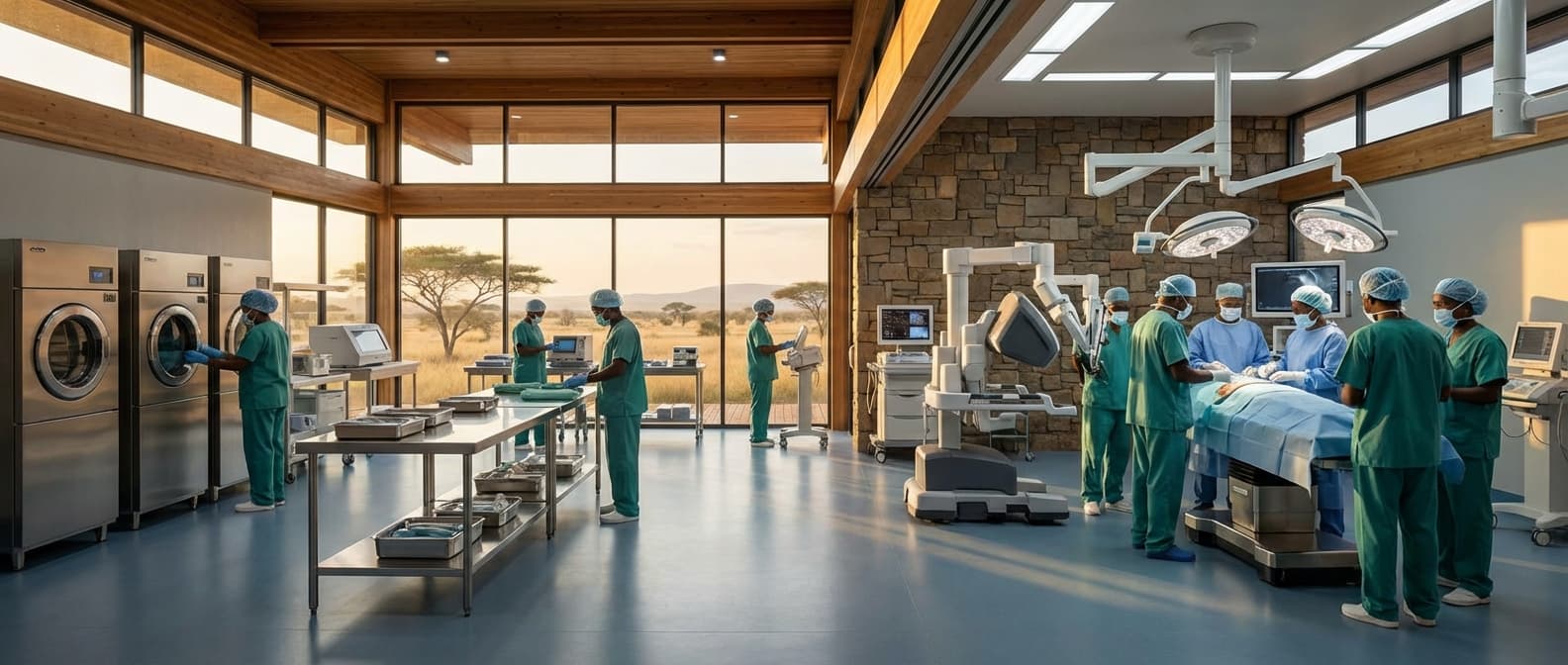
Medical Gas System Design & Installation in Liberia
Engineering Excellence & Technical Support
Medical gas pipeline systems: O2, N2O, air, vacuum High-standard technical execution following OEM protocols and local regulatory frameworks.
Reliable Oxygen Supply for Critical Care
Designed and installed a state-of-the-art medical gas pipeline system, ensuring uninterrupted oxygen delivery to operating theaters and Intensive Care Units, directly impacting patient outcomes in Liberian healthcare facilities.
N2O for Pain Management in Rural Clinics
Implemented specialized Nitrous Oxide systems in remote clinics, enabling safe and effective analgesia for obstetrics and minor surgical procedures, improving patient comfort and accessibility to pain relief in underserved areas of Liberia.
Medical Air and Vacuum System for Infection Control
Engineered and installed robust medical air and vacuum systems compliant with international standards, crucial for patient safety and infection control by supporting ventilation and surgical suction in Liberian hospitals.
What Is Medical Gas System Design & Installation In Liberia?
Medical gas system design and installation in Liberia refers to the comprehensive process of planning, engineering, and physically constructing integrated systems for the safe and efficient delivery of medical gases within healthcare facilities. These systems are critical for supporting patient care by providing essential gases such as oxygen, medical air, nitrous oxide, and vacuum, as well as specialized gases like carbon dioxide and nitrogen. The design phase involves meticulous consideration of facility layout, patient population needs, regulatory compliance (local and international), gas purity requirements, pressure regulation, flow rates, and fail-safe mechanisms. Installation encompasses the precise laying of medical-grade piping, connection of equipment, leak testing, flushing, and commissioning to ensure absolute integrity and functionality. The service is paramount for any healthcare establishment requiring a reliable and controlled supply of medical gases for diagnostic, therapeutic, and anesthetic purposes.
| Stakeholder/Facility Type | Necessity for Medical Gas Systems | Typical Use Cases |
|---|---|---|
| Hospitals (General, Specialty) | Essential for life support, anesthesia, respiratory therapy, diagnostic procedures, post-operative care. | Mechanical ventilation (ICU), oxygen therapy, general anesthesia, resuscitation, diagnostic imaging (e.g., CT scans with contrast agents requiring compressed air/nitrogen). |
| Clinics and Health Centers (Primary & Secondary Care) | Provides basic life support and therapeutic interventions where piped systems are feasible and necessary. | Oxygen therapy for respiratory distress, minor surgical procedures requiring controlled gas mixtures, nebulizer treatments. |
| Surgical Centers and Operating Theatres | Critical for anesthetic delivery, patient ventilation, and surgical site insufflation. | Anesthesia delivery (N2O, O2, medical air), mechanical ventilation during surgery, laparoscopic insufflation (CO2). |
| Intensive Care Units (ICUs) | Uninterrupted and precise delivery of life-sustaining gases is paramount. | Mechanical ventilation, high-flow oxygen therapy, patient monitoring requiring medical air. |
| Emergency Departments (EDs) | Immediate availability of medical gases for resuscitation and stabilization. | Resuscitation (bag-valve-mask ventilation with O2), oxygen therapy, airway management. |
| Laboratories and Diagnostic Facilities | Specific gases for analytical instruments and sample handling. | Gas chromatography (carrier gases like Helium, Nitrogen), mass spectrometry, cell culture incubators (CO2). |
| Veterinary Clinics and Hospitals | Similar to human healthcare, for anesthesia and respiratory support. | Anesthesia delivery, oxygen therapy for animals. |
Key Components of Medical Gas System Design & Installation
- Site Assessment and Needs Analysis
- System Design and Engineering (Piping Layout, Material Selection, Valve Specification)
- Compliance with Standards (e.g., NFPA 99, local health regulations)
- Gas Source Integration (Bulk storage, cylinders, on-site generators)
- Pressure Regulation and Alarm Systems
- Outlet Station Installation and Testing
- Piping Network Installation (Material: copper, stainless steel)
- Leak Detection and Pressure Testing
- System Flushing and Purging
- Commissioning and Validation
- Training of Facility Personnel
- Ongoing Maintenance and Service Planning
Who Needs Medical Gas System Design & Installation In Liberia?
Establishing and maintaining a reliable medical gas system is crucial for providing safe and effective patient care. In Liberia, where healthcare infrastructure is developing, there's a significant need for these specialized systems across various healthcare facilities. This need spans from initial design and planning to professional installation and ongoing maintenance, ensuring that essential medical gases like oxygen, medical air, and vacuum are readily available and delivered safely to patients.
| Target Customer/Entity | Key Departments/Areas of Need | Primary Reason for Need |
|---|---|---|
| Hospitals (Public & Private) | ICU, OR, ED, NICU, Wards | Patient life support, critical care, anesthesia, resuscitation |
| Government Health Ministry | All public healthcare facilities | Ensuring quality and accessibility of essential medical services |
| NGOs & Aid Organizations | Projects in developing healthcare infrastructure | Establishing and upgrading medical facilities with essential services |
| Medical Training Centers | Simulation labs, clinical training areas | Practical education for medical professionals |
| Specialized Clinics (e.g., Respiratory, Cardiac) | Treatment rooms, consultation areas | Specialized therapeutic applications and patient monitoring |
Target Customers and Departments Requiring Medical Gas System Design & Installation in Liberia:
- {"title":"Hospitals","description":"All types of hospitals, from large national referral centers to smaller district and mission hospitals, require robust medical gas systems for a wide range of medical procedures and patient support."}
- {"title":"Operating Theaters/Surgical Suites","description":"Essential for anesthesia delivery, patient resuscitation, and ensuring a sterile environment during surgical interventions."}
- {"title":"Intensive Care Units (ICUs) / Critical Care Units (CCUs)","description":"Crucial for life support, mechanical ventilation, and continuous patient monitoring requiring a constant and reliable supply of medical gases."}
- {"title":"Emergency Departments (EDs) / Accident & Emergency (A&E) Units","description":"Vital for immediate patient stabilization, resuscitation, and managing critical conditions requiring rapid access to oxygen and other medical gases."}
- {"title":"Maternity Wards and Neonatal Intensive Care Units (NICUs)","description":"Essential for supporting premature infants and mothers during labor and delivery, often requiring precise oxygen delivery."}
- {"title":"Rehabilitation Centers","description":"May require medical gases for therapeutic purposes and patient recovery."}
- {"title":"Specialized Clinics","description":"Clinics focusing on respiratory conditions, cardiology, or oncology might necessitate specific medical gas setups."}
- {"title":"Government Health Ministries and Agencies","description":"Responsible for overseeing the development and standards of healthcare infrastructure, they would commission such projects for public facilities."}
- {"title":"Non-Governmental Organizations (NGOs) and International Aid Organizations","description":"Often involved in funding and developing healthcare facilities in Liberia, requiring expertise in medical gas systems for their projects."}
- {"title":"Private Healthcare Providers","description":"Expanding private healthcare sector in Liberia will also require modern and compliant medical gas systems."}
- {"title":"Medical Training Institutions","description":"Teaching hospitals and medical schools require functional medical gas systems for educational and practical training purposes."}
Medical Gas System Design & Installation Process In Liberia
Designing and installing a medical gas system in Liberia involves a structured workflow to ensure compliance with safety standards, optimal functionality, and successful project completion. This process begins with an initial inquiry and progresses through detailed design, procurement, installation, and final commissioning.
| Phase | Key Activities | Deliverables/Outcomes | Responsible Parties | Considerations in Liberia |
|---|---|---|---|---|
| Inquiry & Initial Consultation | Client expresses interest, outlines project scope and requirements. Initial discussions to understand needs, budget, and timeline. | Understanding of project goals, preliminary scope definition. | Client (Hospital/Clinic), Potential Vendor/Consultant | Clarity on the type and scale of facility, existing infrastructure. |
| Needs Assessment & Site Survey | Detailed evaluation of the facility's current and future medical gas requirements. Site inspection to assess space, structural integrity, existing utilities, and accessibility. | Detailed requirements report, site survey findings, identification of potential challenges. | Design Team, Project Manager, Facility Staff | Availability of suitable spaces for plant rooms, distribution pathways; power and ventilation availability. |
| System Design & Planning | Development of detailed engineering drawings, schematics, and specifications for the medical gas system (e.g., oxygen, medical air, vacuum). Includes pipe sizing, material selection, alarm systems, and outlet placement. | Approved design drawings, Bill of Quantities (BOQ), technical specifications. | Medical Gas System Designer/Engineer | Adherence to international standards (e.g., NFPA 99, HTM 02-01) adapted for local context; availability of specialized design software. |
| Regulatory Approvals & Compliance | Submission of design plans to relevant Liberian authorities (e.g., Ministry of Health, building control departments) for review and approval. Ensuring compliance with national safety and building codes. | Permits and approvals from regulatory bodies. | Design Team, Project Manager, Local Liaison | Navigating bureaucratic processes, understanding specific local regulations and requirements. |
| Procurement & Material Sourcing | Sourcing and purchasing of all necessary equipment, piping, fittings, valves, alarms, and medical gas sources (e.g., cylinders, concentrators, bulk tanks). | Procured materials and equipment on-site. | Procurement Department, Project Manager, Vendor | Lead times for imported components, customs clearance, local availability of specialized parts, reliable suppliers. |
| Installation & Construction | Installation of the medical gas pipeline network, medical gas outlets, alarm panels, and associated equipment according to approved designs and standards. | Completed medical gas pipeline infrastructure. | Installation Team, Certified Technicians, Site Supervisors | Skilled labor availability, safe working practices, weather considerations, logistics for equipment delivery to remote sites. |
| Testing, Commissioning & Validation | Rigorous testing of the system for leaks, pressure, purity, and flow rates. Commissioning to ensure all components function as per specifications. Validation by an independent party. | Test reports, commissioning certificates, validation reports. | Commissioning Engineer, Quality Control Team, Independent Validator | Availability of specialized testing equipment, adherence to stringent quality control protocols. |
| Training & Handover | Training of hospital/clinic staff (medical and maintenance) on the operation, maintenance, and safety procedures of the medical gas system. Formal handover of the completed system with all documentation. | Trained staff, handover documentation (manuals, warranties, as-built drawings). | Project Manager, Installation Team, Facility Management | Language proficiency for training materials and delivery, understanding of local healthcare operational practices. |
| Post-Installation Support & Maintenance | Ongoing provision of technical support, scheduled maintenance, and emergency repair services to ensure the continued optimal performance and safety of the system. | System reliability, proactive issue resolution. | Maintenance Team, Vendor Support | Establishing long-term service agreements, availability of spare parts, capacity building for local maintenance teams. |
Medical Gas System Design & Installation Process in Liberia
- Inquiry & Initial Consultation
- Needs Assessment & Site Survey
- System Design & Planning
- Regulatory Approvals & Compliance
- Procurement & Material Sourcing
- Installation & Construction
- Testing, Commissioning & Validation
- Training & Handover
- Post-Installation Support & Maintenance
Medical Gas System Design & Installation Cost In Liberia
Designing and installing a medical gas system in Liberia involves a complex interplay of factors influencing the overall cost. These systems are critical for healthcare facilities, providing essential gases like oxygen, medical air, nitrous oxide, and vacuum. The pricing can vary significantly based on the specific requirements of the facility, the scale of the installation, the quality of materials used, and the prevailing economic conditions in Liberia. It's important to note that reliable, standardized pricing data for such specialized installations can be scarce in many developing regions, and quotes are often project-specific. However, understanding the key cost drivers is crucial for budgeting and planning.
| Cost Component | Estimated Cost Range (Liberian Dollar - LRD) | Notes |
|---|---|---|
| Medical Gas Piping (per point of use, including outlets and basic shut-offs) | 75,000 - 250,000 LRD | Varies significantly with piping length, material quality, and number of gases. |
| Central Medical Air System (compressor, dryer, filters) | 500,000 - 3,000,000 LRD | Depends on capacity, redundancy, and brand. |
| Central Vacuum System (pump, separator) | 400,000 - 2,500,000 LRD | Depends on capacity and redundancy. |
| Oxygen Supply (e.g., large concentrators or initial bulk storage setup) | 800,000 - 5,000,000 LRD+ | Oxygen concentrators are more cost-effective for smaller facilities. Bulk liquid oxygen storage has a high initial capital cost. |
| Alarm Systems (patient and engineering alarms) | 150,000 - 750,000 LRD | Number of zones and features influence cost. |
| Design & Engineering Fees | 10% - 20% of total installation cost | Professional services are crucial for system integrity. |
| Installation Labor | Highly variable, estimated at 30% - 50% of material cost | Depends on skill availability and project duration. |
| Testing, Commissioning & Certification | 100,000 - 500,000 LRD | Essential for safety and compliance. |
| Project Management | 5% - 10% of total project cost | Ensures efficient execution. |
| Overall System Cost (Small to Medium Facility - Example) | 5,000,000 - 20,000,000 LRD+ | This is a very rough estimate and depends heavily on the scope and quality. |
| Overall System Cost (Large Hospital - Example) | 25,000,000 LRD - 100,000,000 LRD+ | Significantly higher due to scale and complexity. |
Key Pricing Factors for Medical Gas System Design & Installation in Liberia
- Scope of the Medical Gas System: The number of points of use (patient rooms, operating theaters, ICUs), the types of gases required, and the complexity of the distribution network (piping length, risers, zones) are primary cost determinants.
- Facility Size and Type: A small clinic will have a vastly different cost profile compared to a large hospital. The specific medical services offered and the number of beds will dictate the system's capacity and complexity.
- System Components and Quality: This includes the medical gas pipeline installation (copper piping, fittings, manifolds), gas outlets, alarm systems, pressure regulators, shut-off valves, and the central gas supply equipment (compressors for medical air, vacuum pumps, oxygen concentrators or storage tanks). Higher quality, medical-grade components will command higher prices but ensure greater reliability and safety.
- Brand and Manufacturer: Reputable international brands known for their medical gas equipment often come with a premium price tag, but may offer better warranties and support.
- Design and Engineering Services: The cost of professional design, drafting of plans, and engineering assessments by qualified professionals will be factored in. This includes ensuring compliance with relevant medical gas standards.
- Installation Labor Costs: The availability of skilled labor experienced in medical gas installation can impact pricing. Local labor rates, the duration of the project, and the need for specialized certifications will play a role.
- Site Conditions and Accessibility: Challenges such as difficult terrain, limited access for heavy equipment, or the need for extensive modifications to existing infrastructure can increase installation costs.
- Central Gas Supply Solution: The choice between on-site generation (e.g., oxygen concentrators, air compressors) versus bulk storage (e.g., liquid oxygen tanks, cylinders) will significantly influence capital and operational costs. Bulk storage often involves initial high investment but can lead to lower per-unit gas costs in the long run.
- Testing and Commissioning: Rigorous testing, leak detection, and commissioning of the system are essential for safety and functionality. The cost of specialized testing equipment and trained personnel for these procedures is included.
- Permitting and Regulatory Approvals: Obtaining necessary permits and ensuring compliance with local health and safety regulations can incur fees and add to the project timeline.
- Project Management: Effective project management throughout the design and installation phases is crucial for keeping costs under control and ensuring timely completion.
- Contingency: It is prudent to include a contingency for unforeseen issues that may arise during the project.
Affordable Medical Gas System Design & Installation Options
Designing and installing a medical gas system can be a significant undertaking, but several affordable options exist to manage costs without compromising safety or compliance. Understanding value bundles and implementing cost-saving strategies are crucial for healthcare facilities, from small clinics to larger hospitals. These approaches focus on optimizing resource allocation, leveraging smart procurement, and ensuring long-term operational efficiency.
| Value Bundle Type | Description | Cost-Saving Benefits |
|---|---|---|
| Turnkey Design & Installation | A comprehensive package where a single vendor handles all aspects from initial design and engineering to full installation and commissioning. | Streamlined project management, reduced coordination overhead, potential for bundled discounts, single point of accountability, often faster project completion. |
| Design-Build Contracts | Combines design and construction services under one contract, fostering collaboration between designers and installers from the outset. | Early cost certainty, reduced change orders due to better integration, optimized design for constructability and cost-effectiveness, shared risk. |
| Equipment & Installation Packages | Vendors offer pre-selected equipment bundles (e.g., compressor, vacuum pump, manifolds) along with their installation services. | Bulk pricing on equipment, simplified procurement, potentially lower bundled installation rates, guaranteed compatibility of components. |
| Maintenance & Supply Agreements | Long-term contracts that include regular system maintenance, scheduled inspections, and guaranteed pricing or discounts on medical gas supplies. | Predictable operating expenses, reduced risk of unexpected repair costs, priority service, potential discounts on gas refills and consumables, extended equipment life. |
| Retrofit & Upgrade Bundles | Specific packages designed for updating or expanding existing medical gas systems, often including new equipment and installation. | Cost-effective way to modernize, potential for phased implementation to manage budget, specialized expertise for seamless integration. |
Key Cost-Saving Strategies
- Phased Installation: Breaking down the project into manageable phases can spread costs over time and allow for adjustments based on current budget availability.
- Modular System Design: Utilizing modular components can reduce upfront material and labor costs, and allow for easier future expansion or upgrades.
- Standardized Equipment Selection: Opting for widely available and standardized equipment can lead to better pricing through bulk purchasing and easier maintenance.
- Negotiating with Multiple Suppliers: Obtaining quotes from several reputable medical gas system providers ensures competitive pricing.
- Bulk Purchasing of Consumables: If your system requires regular gas refills or maintenance parts, consider negotiating bulk purchase agreements.
- Energy-Efficient Equipment: Investing in energy-efficient systems, particularly for vacuum and medical air compressors, can lead to significant long-term operational cost savings.
- Preventive Maintenance Contracts: While an upfront cost, a comprehensive preventive maintenance contract can avert costly emergency repairs and extend equipment lifespan.
- Training On-Site Staff: Empowering in-house maintenance staff with basic training for routine checks and minor troubleshooting can reduce reliance on external technicians.
- Exploring Refurbished Equipment: For non-critical components or areas where new is not mandated, consider high-quality refurbished equipment from trusted vendors.
- Incorporating BIM (Building Information Modeling): BIM can help identify potential conflicts and optimize material usage during the design phase, reducing waste and rework during installation.
- Leveraging Government/Non-Profit Grants: Investigate if any grants or funding programs are available for healthcare infrastructure improvements in your region.
Verified Providers In Liberia
In Liberia, ensuring access to quality healthcare is paramount. This often hinges on the reliability and credibility of the healthcare providers. Franance Health has emerged as a leading entity, distinguished by its rigorous credentialing process and unwavering commitment to patient well-being. This document outlines why Franance Health's verified providers represent the best choice for individuals seeking dependable medical services in Liberia.
| Provider Type | Key Verification Criteria | Franance Health Assurance |
|---|---|---|
| General Practitioners | Valid Medical License, Board Certification (if applicable), Clean Disciplinary Record, Minimum Years of Experience | Guaranteed access to primary care physicians who have passed Franance Health's comprehensive background and qualification checks. |
| Specialists (e.g., Surgeons, Cardiologists, Pediatricians) | Specialty-Specific Board Certification, Fellowship Training, Peer Review, Hospital Affiliations | Verified access to highly qualified specialists with proven expertise in their respective fields, all credentialed by Franance Health. |
| Nurses and Allied Health Professionals | Relevant Licenses/Certifications, Training in their specific roles, Background Checks | Ensured availability of skilled and certified nursing and allied health staff who meet Franance Health's high standards of competence and care. |
| Medical Facilities (Clinics, Hospitals) | Accreditation Status, Adherence to Safety Protocols, Equipment Standards, Staff Credentials | Franance Health's network includes facilities that have undergone stringent checks for operational excellence, safety, and quality of care. |
Why Franance Health Credentials Matter
- Rigorous Vetting Process: Franance Health employs a multi-stage credentialing process that scrutinizes the qualifications, licenses, and experience of every provider. This ensures that only competent and ethical professionals are part of their network.
- Focus on Patient Safety: The core of Franance Health's credentialing is patient safety. They verify that providers adhere to the highest standards of medical practice and ethical conduct, minimizing risks and maximizing positive patient outcomes.
- Access to Specialized Care: By verifying a wide range of specialists, Franance Health connects patients with the right expertise for their specific health needs, from general practitioners to surgeons and other medical professionals.
- Trust and Transparency: Franance Health's verification process instills confidence in patients. Knowing that providers have been thoroughly vetted by a reputable organization reduces uncertainty and promotes trust in the healthcare system.
- Continuous Monitoring: Credentialing is not a one-time event. Franance Health engages in ongoing monitoring of its providers to ensure they maintain their standards and continue to meet the organization's stringent requirements.
- Upholding Ethical Standards: Beyond technical qualifications, Franance Health assesses the ethical standing of its providers, ensuring a commitment to patient confidentiality, informed consent, and compassionate care.
Scope Of Work For Medical Gas System Design & Installation
This Scope of Work (SOW) outlines the requirements for the comprehensive design and installation of a Medical Gas System for [Facility Name]. The project encompasses all phases, from initial design and engineering through to final commissioning and handover. The system will be designed and installed in accordance with all applicable local, state, and federal regulations, as well as industry best practices and the technical deliverables and standard specifications detailed below. This includes ensuring compliance with NFPA 99 (Health Care Facilities Code) and any other relevant codes and standards such as ASSE (American Society of Sanitary Engineering) standards for medical gas systems.
| Category | Specification/Standard | Description |
|---|---|---|
| Piping Materials | ASTM B88 (Type K or L Copper Tubing) | Seamless copper tubing, annealed, for medical gas applications. |
| Welding and Brazing | AWS D10.10 / ANSI B96.1 | Standards for the welding and brazing of copper and copper alloy tube and pipe. |
| Gas Types and Purity | USP (United States Pharmacopeia) / NF (National Formulary) | Ensures the purity of medical gases to meet pharmaceutical standards. |
| System Pressure | NFPA 99 | Defines required operating pressures for various medical gases. |
| Alarm Systems | NFPA 99 / ASSE 6000 | Requirements for master and area alarms, including pressure, vacuum, and oxygen level monitoring. |
| Outlets and Inlets | DISS (Dissimilar Gas Shut-off) / Ohmeda-style | Specifies types and connection standards for gas outlets and inlets. |
| Manifolds | NFPA 99 / ASSE 6030 | Requirements for automatic or manual medical gas manifolds. |
| Pressure Regulators | ASSE 6040 | Standards for pressure reducing regulators used in medical gas systems. |
| Hoses and Connectors | NFPA 99 | Requirements for medical gas hoses and connectors. |
| System Purging | NFPA 99 | Procedure for purging the system with dry nitrogen or medical air to remove contaminants. |
| Leak Testing | NFPA 99 | Procedure for testing the entire system for leaks using appropriate methods. |
| System Certification | ASSE 6005 / NFPA 99 | Final certification by a qualified third party to ensure system compliance. |
Technical Deliverables
- Detailed Design Drawings and Specifications: Including P&ID (Piping and Instrumentation Diagrams), floor plans, riser diagrams, equipment schedules, and installation details.
- Bill of Materials (BOM): Comprehensive list of all components, materials, and equipment required for the system.
- Equipment Submittals: Manufacturer datasheets, performance specifications, and certifications for all major equipment (e.g., compressors, vacuum pumps, manifolds, alarms, regulators, outlets).
- Installation Manuals and Procedures: Clear, step-by-step instructions for the installation of all system components.
- Testing and Commissioning Plan: Detailed procedures for all required testing, including pressure, leak, purity, and functional testing.
- As-Built Drawings: Accurate representation of the installed system, reflecting any deviations from the design drawings.
- Operation and Maintenance (O&M) Manuals: Comprehensive guide for the operation, maintenance, and troubleshooting of the medical gas system.
- Training Plan and Materials: For facility staff on the operation and maintenance of the system.
- Warranty Documentation: Covering all installed equipment and workmanship.
- Certifications and Permits: All necessary certifications and permits for system operation.
Service Level Agreement For Medical Gas System Design & Installation
This Service Level Agreement (SLA) outlines the agreed-upon standards for the design and installation of medical gas systems. It defines response times for critical issues and guarantees a certain level of system uptime following successful installation and commissioning.
| Service Level | Response Time (Critical Issues) | Uptime Guarantee (Post-Installation) | Escalation Protocol |
|---|---|---|---|
| Design Phase (Pre-Installation) | Not applicable (Design reviews and clarifications will be addressed within 2 business days.) | Not applicable | Design disputes will be escalated to the Project Manager within 1 business day of initial notification. |
| Installation & Commissioning Phase | Any deviation from planned schedule or critical installation issue: Immediate notification required. Site visit within 4 business hours. | Not applicable (System is not considered operational for uptime guarantee until commissioning is complete.) | Installation issues impacting critical path will be escalated to the Site Supervisor within 2 business hours. |
| Post-Installation & Operational Phase (First 90 Days) | Critical Issue: 2 hours | 99.9% uptime | If issue is not resolved within 4 hours of response, escalation to Senior Technical Lead. |
| Post-Installation & Operational Phase (After 90 Days) | Critical Issue: 4 hours | 99.5% uptime | If issue is not resolved within 8 hours of response, escalation to Service Director. |
Key Definitions
- Medical Gas System: Refers to the entire network of piping, outlets, alarms, manifolds, and related equipment for delivering medical gases (e.g., oxygen, medical air, vacuum) to patient care areas.
- Critical Issue: Any malfunction or failure of the medical gas system that directly impacts patient safety or the ability to provide life-sustaining medical care. This includes, but is not limited to, complete loss of a critical gas, significant pressure drops, or alarm failures.
- Service Request: A formal request for assistance initiated by the client due to a system malfunction or query.
- Uptime Guarantee: The percentage of time the medical gas system is expected to be fully operational and performing within specified parameters.
- Response Time: The maximum allowable time from the client's initiation of a critical issue service request to the point where the service provider's technician is actively engaged in diagnosing and addressing the issue.
- Resolution Time: The maximum allowable time from the initial response to the complete resolution of a critical issue and restoration of full system functionality.
Frequently Asked Questions

Ready when you are
Let's scope your Medical Gas System Design & Installation in Liberia project in Liberia.

Scaling healthcare logistics and technical systems across the entire continent.