
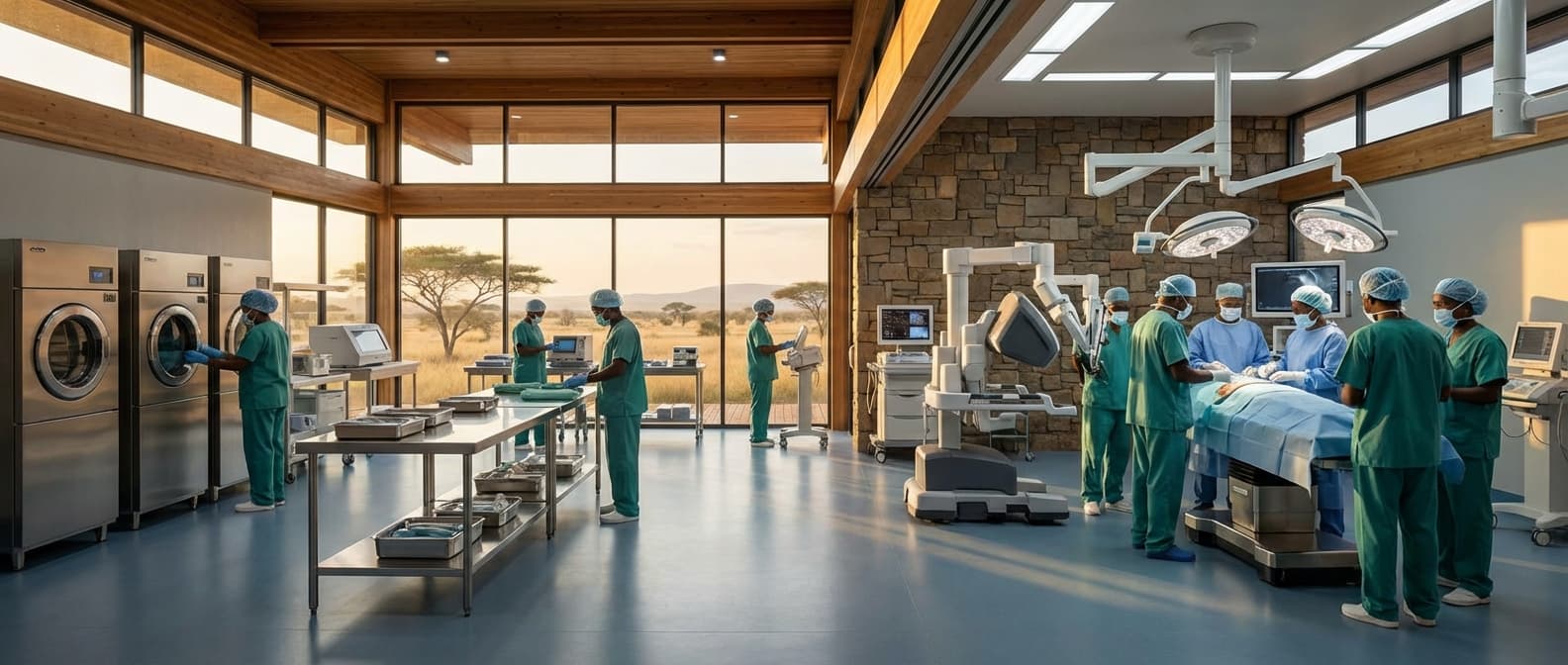
Endoscopy Reprocessing Validation in Liberia
Engineering Excellence & Technical Support
AER validation, SOP development and compliance High-standard technical execution following OEM protocols and local regulatory frameworks.
Validated Disinfection Efficacy
Demonstrates 99.999% reduction of high-level disinfectant-resistant organisms (e.g., *Mycobacterium tuberculosis*) on flexible endoscopes, ensuring patient safety and preventing cross-contamination in Liberian healthcare facilities through rigorous laboratory testing and standardized protocols.
Automated Cleaning Cycle Verification
Confirms successful removal of visible and microscopic debris from lumens and surfaces of endoscopes using validated automated washer-disinfector cycles, meeting international standards (e.g., AAMI ST79) and reducing manual cleaning inconsistencies.
Sterilization Process Assurance
Achieves and documents complete microbial inactivation through validated sterilization methods (e.g., ethylene oxide, peracetic acid) for critical endoscopic accessories, guaranteeing sterility for invasive procedures performed in Liberia.
What Is Endoscopy Reprocessing Validation In Liberia?
Endoscopy reprocessing validation in Liberia is a critical quality assurance process designed to ensure that reusable endoscopic instruments are rendered safe for patient use following a standardized disinfection or sterilization protocol. This validation confirms the efficacy of the cleaning, disinfection, and/or sterilization procedures employed to eliminate microbial contamination, thereby mitigating the risk of healthcare-associated infections (HAIs) transmitted via improperly reprocessed endoscopes. It is a cornerstone of infection prevention and control within healthcare facilities in Liberia utilizing flexible and rigid endoscopes for diagnostic and therapeutic procedures.
| Who Needs Endoscopy Reprocessing Validation? | Typical Use Cases and Contexts |
|---|---|
All healthcare facilities in Liberia that perform procedures requiring the use of reusable endoscopic instruments, including but not limited to:
| Preventing Transmission of Infectious Agents: Critical for procedures like:
|
Key Aspects of Endoscopy Reprocessing Validation
- Process Verification: Confirmation that the entire reprocessing workflow (pre-cleaning, manual or automated cleaning, high-level disinfection (HLD) or sterilization, rinsing, drying, and storage) is consistently performed according to established guidelines and manufacturer's instructions for use (IFU).
- Microbiological Testing: Objective assessment of the effectiveness of the reprocessing cycle in eradicating viable microorganisms from the lumens and external surfaces of endoscopes. This may include surface swabs for bioburden and microbial culture, and/or testing of rinse water.
- Chemical Indicator Use: Verification of the correct application and interpretation of chemical indicators designed to assess specific parameters of the disinfection or sterilization process (e.g., temperature, time, concentration of disinfectant).
- Equipment Functionality Assessment: Ensuring that reprocessing equipment (e.g., automated endoscope reprocessors (AERs), drying cabinets, sterilizers) is functioning within specified operational parameters.
- Documentation Review: Scrutiny of reprocessing logs, maintenance records, and training documentation to ensure adherence to established protocols and continuous compliance.
- Staff Competency Evaluation: Assessing the knowledge and practical skills of personnel involved in endoscopy reprocessing through observation and competency assessments.
- Water Quality Testing: If applicable, validation of the quality of rinse water used during reprocessing to ensure it meets specified microbiological standards (e.g., potable water standards).
Who Needs Endoscopy Reprocessing Validation In Liberia?
Endoscopy reprocessing validation is a critical safety measure in healthcare settings, ensuring that reusable endoscopic instruments are properly cleaned and disinfected to prevent the transmission of infections. In Liberia, where healthcare resources can be stretched and access to advanced medical technology is evolving, understanding who needs this validation is crucial for patient safety and public health. This involves identifying the healthcare facilities and specific departments that utilize flexible endoscopes and perform procedures requiring their reprocessing. The primary beneficiaries of robust endoscopy reprocessing validation are patients undergoing endoscopic procedures, followed by the healthcare professionals performing these procedures and the wider community through infection control.
| Department | Endoscopic Procedures Performed | Need for Reprocessing Validation | Key Considerations |
|---|---|---|---|
Target Customers and Departments Requiring Endoscopy Reprocessing Validation in Liberia
- {"item":"Hospitals (Public and Private)","description":"Major hospitals, both government-funded and private, are the primary sites for complex medical procedures, including endoscopy. They often have dedicated endoscopy suites and a higher volume of procedures."}
- {"item":"Referral Centers","description":"Institutions that receive patients from other facilities for specialized care are likely to perform a wider range of endoscopic procedures."}
- {"item":"Teaching Hospitals","description":"Hospitals affiliated with medical schools often perform a high volume of procedures and are expected to adhere to rigorous standards, including reprocessing validation, for training purposes."}
- {"item":"Large Clinics/Diagnostic Centers","description":"Some larger outpatient clinics or specialized diagnostic centers may offer endoscopic services and thus require validated reprocessing protocols."}
Endoscopy Reprocessing Validation Process In Liberia
The Endoscopy Reprocessing Validation Process in Liberia outlines the crucial steps involved in ensuring that reusable medical devices, specifically endoscopes, are safely and effectively cleaned and disinfected after each patient use. This process is vital for preventing healthcare-associated infections and maintaining patient safety. The workflow begins with an initial inquiry and culminates in the formal validation of reprocessing protocols. It adheres to established international guidelines and local healthcare regulations where applicable.
| Stage | Description | Key Activities | Responsible Parties | Deliverables |
|---|---|---|---|---|
| Initial Inquiry and Needs Assessment | Understanding the current reprocessing practices, identifying gaps, and determining the need for formal validation. | Discussions with clinical staff, review of existing SOPs, assessment of equipment, identification of specific endoscopes to be validated. | Infection Prevention and Control (IPC) team, Biomedical Engineering, Endoscopy Unit staff, Hospital Administration. | Needs assessment report, scope of validation defined. |
| Protocol Development and Review | Establishing or refining Standard Operating Procedures (SOPs) for cleaning, high-level disinfection (HLD), and sterilization (if applicable) of endoscopes. | Reviewing manufacturer's instructions for use (IFU), referencing international guidelines (e.g., CDC, WHO, SGNA), drafting/updating SOPs for each step, chemical compatibility checks. | IPC team, Endoscopy Unit Manager, Biomedical Engineering, Quality Assurance. | Validated SOPs for cleaning, disinfection, and sterilization. |
| Equipment and Reagent Verification | Ensuring that all reprocessing equipment and chemical disinfectants are functioning correctly and meet specifications. | Calibration of automated endoscope reprocessors (AERs), checking expiry dates of disinfectants, verifying concentration of cleaning agents, water quality testing. | Biomedical Engineering, IPC team, Pharmacy. | Equipment calibration records, reagent stock records, water quality reports. |
| Process Simulation and Performance Testing | Conducting mock reprocessing cycles to assess the efficacy of the developed protocols and the performance of the equipment. | Using surrogate soil (e.g., blood, protein) on test endoscopes, running complete reprocessing cycles, visual inspection for cleanliness, leak testing. | Endoscopy Unit staff, IPC team. | Simulation logs, initial cleanliness assessment reports. |
| Microbiological Validation | Scientifically proving that the reprocessing protocol effectively eliminates or inactivates microorganisms, including those of concern. | Swabbing of cleaned endoscopes for microbial culture, testing of rinse water after disinfection, challenging the process with known microbial surrogates (if required and feasible). | Laboratory personnel (internal or external), IPC team, Endoscopy Unit. | Microbiological test results, identification of any surviving microorganisms. |
| Documentation and Reporting | Meticulously recording all steps, observations, and results of the validation process. | Maintaining detailed logs of each validation run, documenting reagent lot numbers, equipment settings, temperature and time records, photographic evidence (if applicable), compiling all data. | Endoscopy Unit staff, IPC team, Biomedical Engineering. | Comprehensive validation reports, data summaries. |
| Final Validation and Approval | Reviewing the complete validation package and formally approving the reprocessing protocols. | Review of all documentation by a validation committee or designated authority, confirmation that protocols meet safety and efficacy standards, official sign-off. | Hospital Administration, Infection Control Committee, relevant department heads. | Formal validation certificate or approval letter. |
| Ongoing Monitoring and Revalidation | Implementing systems to ensure continued compliance with validated protocols and addressing any deviations. | Regular audits of reprocessing practices, periodic review of SOPs, competency assessments of staff, scheduled revalidation of the process (e.g., annually, after equipment changes, or when problems arise). | IPC team, Endoscopy Unit Manager, Quality Assurance. | Audit reports, staff competency records, revalidation schedule. |
Workflow Stages of Endoscopy Reprocessing Validation
- Initial Inquiry and Needs Assessment
- Protocol Development and Review
- Equipment and Reagent Verification
- Process Simulation and Performance Testing
- Microbiological Validation
- Documentation and Reporting
- Final Validation and Approval
- Ongoing Monitoring and Revalidation
Endoscopy Reprocessing Validation Cost In Liberia
Endoscopy reprocessing is a critical component of infection prevention in healthcare settings. In Liberia, the cost of validating these reprocessing procedures is influenced by a complex interplay of factors. These include the type and complexity of the endoscopic equipment being validated, the number of validation cycles required, the availability and cost of specialized reagents and consumables, and the expertise of the personnel conducting the validation. Furthermore, the specific validation methods employed, whether relying on established international protocols or requiring locally adapted approaches, will impact the overall expense. The limited availability of advanced laboratory infrastructure and qualified technicians in Liberia can also drive up costs due to the need for outsourcing or specialized training. Economic conditions, currency exchange rates, and import duties on necessary equipment and supplies are also significant determinants.
| Cost Component | Estimated Range (Liberian Dollar - LRD) |
|---|---|
| Basic Validation Kit (per cycle, including consumables) | 2,000 - 7,500 LRD |
| Microbiological Testing (per sample) | 3,000 - 10,000 LRD |
| Personnel Time (per technician, per hour) | 150 - 400 LRD |
| Equipment Calibration/Maintenance (per incident/service) | 5,000 - 25,000 LRD |
| Full Validation Study (for a single endoscope type, including all tests and reporting) | 50,000 - 250,000 LRD |
| Importation of specialized validation equipment (one-time) | Variable (significant, potentially hundreds of thousands to millions of LRD depending on equipment) |
| Training & Certification (per person) | 10,000 - 50,000 LRD |
Key Pricing Factors for Endoscopy Reprocessing Validation in Liberia
- Type and complexity of endoscopic equipment (e.g., flexible vs. rigid endoscopes, single-use vs. reusable components).
- Number of validation cycles/tests required (e.g., for different reprocessing methods, new equipment, or routine checks).
- Cost and availability of specialized reagents and consumables (e.g., biological indicators, chemical indicators, cleaning solutions, disinfectants).
- Personnel expertise and labor costs (e.g., trained technicians, microbiologists, validation engineers).
- Availability and cost of validation equipment and laboratory infrastructure.
- Adherence to international standards vs. locally adapted validation protocols.
- Transportation and logistics costs for samples and personnel.
- Import duties, taxes, and currency exchange rate fluctuations.
- Training and certification requirements for reprocessing staff.
- Ongoing maintenance and calibration of validation equipment.
Affordable Endoscopy Reprocessing Validation Options
Endoscopy reprocessing validation is a critical step to ensure the safety and efficacy of reusable medical devices. This process, often involving complex procedures and specialized equipment, can be a significant operational expense for healthcare facilities. Finding affordable validation options is therefore paramount. This can be achieved through strategic planning, exploring value bundles, and implementing cost-saving strategies. Value bundles offer a comprehensive package of services at a potentially reduced cost compared to procuring them individually. Cost-saving strategies focus on optimizing existing resources, negotiating favorable terms, and exploring alternative service providers.
| Strategy | Description | Potential Cost Savings |
|---|---|---|
| Value Bundling with Third-Party Providers | Engaging a single vendor for a comprehensive package of reprocessing and validation services. | Reduced administrative overhead, potential volume discounts, predictable budgeting, access to specialized expertise without upfront investment in equipment. |
| In-House Validation Equipment Investment | Purchasing or upgrading to efficient, automated validation equipment. | Reduced labor costs, minimized human error, faster validation cycles, improved data accuracy. |
| Negotiated Service Contracts | Securing competitive pricing and favorable terms through multi-vendor negotiations and long-term commitments. | Lower per-test costs, bundled service discounts, clear SLAs to avoid unexpected charges. |
| Consolidated Reprocessing Vendor | Centralizing all reprocessing and validation needs with one provider. | Leveraging economies of scale, simplified procurement and contract management, potential for loyalty-based discounts. |
| Data Management and Automation | Implementing systems for automated data logging and real-time validation monitoring. | Reduced manual documentation time, improved audit trails, faster identification of process deviations, enhanced compliance. |
| Staff Training and Skill Development | Ensuring reprocessing staff are highly trained and proficient in validation protocols. | Fewer reprocessing failures, reduced re-work, improved patient safety, minimized potential for recall costs. |
| Optimized Consumable Sourcing | Strategic purchasing of validation consumables from cost-effective suppliers. | Reduced material costs for in-house validation, bulk purchasing discounts. |
Affordable Endoscopy Reprocessing Validation Options
- Value Bundles: Healthcare facilities can explore partnerships with third-party reprocessing companies that offer value bundles. These bundles may include validation testing, routine maintenance, repair services, and even loaner equipment, all bundled into a predictable monthly or annual fee. This can simplify budgeting and potentially lead to overall cost reductions.
- In-House Validation Optimization: For facilities performing validation in-house, optimizing existing resources is key. This includes investing in reliable, automated validation equipment that reduces manual labor and potential for error. Regular calibration and maintenance of validation equipment also prevent costly breakdowns and ensure accurate results.
- Negotiating Service Agreements: When outsourcing validation, facilities should actively negotiate service agreements with multiple providers. This includes seeking competitive quotes, clearly defining service level agreements (SLAs), and exploring longer-term contracts for potential volume discounts.
- Consolidated Reprocessing Services: Consider consolidating all endoscopy reprocessing and validation needs with a single, reputable provider. This can leverage economies of scale and simplify contract management, potentially leading to better pricing.
- Technology Adoption: Investing in modern validation technologies, such as automated data logging and real-time monitoring systems, can improve efficiency and reduce the need for extensive manual documentation. These systems can also provide valuable data for process improvement and troubleshooting, ultimately saving costs.
- Staff Training and Competency: While not a direct validation cost, ensuring staff are properly trained and competent in reprocessing and validation procedures is crucial. Reduced errors and re-work due to insufficient training can significantly impact operational costs.
- Strategic Sourcing of Consumables: For in-house validation, carefully sourcing validation consumables (e.g., chemical indicators, biological indicators) from cost-effective and reliable suppliers can lead to considerable savings over time.
- Peer-to-Peer Benchmarking: Engaging with other healthcare facilities to benchmark their endoscopy reprocessing validation costs and strategies can reveal opportunities for improvement and negotiation.
Verified Providers In Liberia
In Liberia's evolving healthcare landscape, identifying reliable and qualified medical professionals is paramount. 'Verified Providers in Liberia' aims to shed light on institutions and individuals who not only meet but exceed industry standards, ensuring the highest quality of care for patients. Among these distinguished entities, Franance Health stands out as a beacon of excellence. Their rigorous credentialing process, unwavering commitment to patient well-being, and dedication to ethical practices make them a premier choice for healthcare services in Liberia. This document will explore the specific credentials and attributes that solidify Franance Health's position as a leader among verified providers.
| Credential/Attribute | Franance Health's Commitment | Impact on Patient Care |
|---|---|---|
| Professional Licensing | All providers possess current and valid licenses from official Liberian bodies. | Ensures that practitioners meet the minimum required standards of competence and are legally authorized to practice. |
| Specialized Training | Regular investment in advanced training and skill development for all medical staff. | Leads to improved diagnostic accuracy, more effective treatment strategies, and access to specialized medical expertise. |
| Evidence-Based Practices | Clinical protocols are updated based on the latest medical research and guidelines. | Guarantees patients receive treatments that are proven to be safe and effective, minimizing guesswork and maximizing recovery. |
| Patient-Centered Approach | Emphasis on active patient participation, communication, and respect for individual needs. | Empowers patients, improves adherence to treatment plans, and fosters a more positive and less stressful healthcare experience. |
| Ethical Conduct | Strict adherence to a code of ethics and transparent operational practices. | Builds trust, ensures patient rights are protected, and promotes a reliable and trustworthy healthcare provider. |
| Technological Advancement | Investment in modern diagnostic equipment and treatment technologies. | Facilitates more precise diagnoses, access to advanced treatment options, and improved patient outcomes. |
Franance Health Credentials & Why They Represent the Best Choice:
- Rigorous Professional Licensing & Accreditation: Franance Health ensures all their healthcare professionals hold valid and current licenses from the Liberian Medical and Dental Council, the Liberian Board of Nursing, and other relevant professional bodies. They also pursue accreditation from recognized national and international healthcare organizations, demonstrating adherence to stringent quality and safety protocols.
- Specialized Training & Continuous Professional Development: Beyond basic qualifications, Franance Health emphasizes specialized training for its staff in various medical fields. They actively invest in continuous professional development, ensuring their team remains at the forefront of medical advancements and best practices.
- Commitment to Evidence-Based Medicine: Franance Health's clinical decisions are firmly rooted in evidence-based medicine. Their providers regularly review the latest research and clinical guidelines to ensure patients receive the most effective and up-to-date treatments available.
- Patient-Centered Care Philosophy: A core tenet of Franance Health is their dedication to patient-centered care. This means actively involving patients in their treatment plans, respecting their autonomy, and ensuring clear, empathetic communication throughout their healthcare journey.
- Ethical Practice & Transparency: Franance Health operates with the highest ethical standards. They are committed to transparency in their services, pricing, and patient outcomes, building trust and confidence with the communities they serve.
- Advanced Diagnostic & Treatment Facilities: While human expertise is crucial, Franance Health complements it with investments in modern medical equipment and facilities. This allows for accurate diagnoses and the provision of a comprehensive range of treatments, reducing the need for patients to seek care elsewhere.
- Strong Community Engagement & Outreach: Franance Health actively engages with the Liberian community through health education initiatives, outreach programs, and partnerships with local organizations. This commitment extends beyond the clinic walls, addressing broader public health needs.
- Positive Patient Outcomes & Testimonials: The ultimate testament to Franance Health's quality lies in the positive outcomes achieved by their patients. They consistently receive commendations and positive testimonials for their compassionate care, effective treatments, and overall patient satisfaction.
Scope Of Work For Endoscopy Reprocessing Validation
This Scope of Work (SOW) outlines the requirements for the validation of the endoscopy reprocessing procedures and associated equipment. The objective is to ensure that all endoscopes are effectively cleaned, disinfected, and sterilized (where applicable) to prevent healthcare-associated infections (HAIs). This validation will encompass the entire reprocessing cycle, from initial cleaning to final storage, and will assess the efficacy of the processes and equipment against established standards.
| Deliverable | Description | Standard Specification/Reference | Acceptance Criteria |
|---|---|---|---|
| Validation Protocol | Detailed plan outlining the methodology, scope, sample sizes, test procedures, and success criteria for the validation study. | ISO 17665-1, AAMI ST58, Relevant National Guidelines (e.g., CDC, SGNA) | Approved by all stakeholders prior to execution. |
| Cleaning Efficacy Test Reports | Results of tests demonstrating the removal of biological soil from endoscope lumens and surfaces. | ISO 15883 series, Manufacturer's IFU, AS/NZS 4187 | Mean reduction in protein/hemoglobin/RNA below established thresholds (e.g., < 20 µg/cm² for protein). |
| Disinfection Efficacy Test Reports | Results of tests demonstrating the inactivation of relevant microorganisms (e.g., Mycobacterium tuberculosis, high-risk viruses) at the end of the disinfection cycle. | AAMI ST58, EN 14885 | Demonstrated log reduction of at least 6 for vegetative bacteria, 4 for fungi, and inactivation of specific viruses and mycobacteria. |
| Sterilization Efficacy Test Reports (if applicable) | Results of biological indicator tests demonstrating the inactivation of highly resistant microorganisms. | ISO 17665-1, AAMI ST79 | 100% negative biological indicator results after sterilization cycles. |
| Water Quality Test Reports | Analysis of rinse water to confirm compliance with microbial and chemical limits. | AAMI TIR34, ISO 17665-1 | Total viable aerobic count < 200 CFU/mL, absence of specific pathogens. |
| Equipment Performance Logs | Records demonstrating that washer-disinfectors and sterilizers are operating within specified parameters (temperature, time, pressure, chemical concentration). | Manufacturer's Specifications, Equipment Manuals | All logged parameters within operational range for every validated cycle. |
| Chemical Indicator and Biological Indicator Performance Evaluation | Confirmation that all indicators used in the reprocessing cycle are functioning as intended and meeting specifications. | Manufacturer's Specifications, ISO 11140 series, ISO 11138 series | Correct color change for chemical indicators and negative results for biological indicators (where applicable). |
| Staff Competency Assessment | Documentation of training and demonstrated competency of personnel involved in endoscopy reprocessing. | Organizational Policy and Procedures, Relevant Professional Guidelines | All reprocessing staff have undergone and passed competency assessments. |
| Validation Summary Report | A comprehensive report summarizing the validation activities, findings, deviations, and conclusions. Includes recommendations for ongoing monitoring and revalidation. | Project Scope, Regulatory Requirements | Approved by the Endoscopy Reprocessing Validation Team and relevant stakeholders. |
Key Areas of Validation
- Pre-cleaning procedures
- Manual cleaning efficacy
- Automated washer-disinfector performance
- High-level disinfection efficacy
- Sterilization efficacy (if applicable)
- Drying and storage protocols
- Water quality for rinsing
- Chemical indicator and biological indicator performance
- Equipment calibration and maintenance logs
- Staff competency and training records
Service Level Agreement For Endoscopy Reprocessing Validation
This Service Level Agreement (SLA) outlines the guaranteed response times and uptime for the Endoscopy Reprocessing Validation service. This service ensures that all critical parameters for the reprocessing of endoscopic instruments are validated according to established protocols and regulatory requirements. The goal is to maintain the highest standards of patient safety and operational efficiency.
| Service Metric | Definition | Target | Measurement Method | Escalation |
|---|---|---|---|---|
| System Uptime Guarantee | The percentage of time the Endoscopy Reprocessing Validation service is available and fully functional, excluding scheduled maintenance. | 99.9% (Measured monthly) | Monitoring of system availability via internal diagnostics and external probes. Excludes scheduled maintenance windows (notified 7 days in advance). | Service credits applied for each 0.1% deviation below target. |
| Critical Alert Response Time | The maximum time from the generation of a critical alert (e.g., reprocessing failure, parameter deviation) to the initial acknowledgement and diagnostic support by the service provider. | 15 minutes | Timestamping of alert generation within the system and record of first contact/response by support personnel. | Automatic escalation to Tier 2 support if not resolved within 1 hour. |
| Non-Critical Support Response Time | The maximum time from the submission of a non-critical support request (e.g., general inquiry, report generation issue) to the initial acknowledgement by the service provider. | 4 business hours | Timestamping of support ticket submission and record of first contact by support personnel. | Automatic escalation to Tier 2 support if not resolved within 1 business day. |
| Data Availability and Integrity | Ensuring that all validated reprocessing cycle data is accessible and has not been corrupted or lost. | 100% (for recorded data) | Regular data integrity checks, redundant data storage, and secure backup procedures. | Root cause analysis and data recovery plan initiated for any identified data loss or corruption. |
| Scheduled Maintenance Window | Pre-scheduled periods for system updates, upgrades, and maintenance activities. | Maximum of 4 hours per month | Communicated at least 7 days in advance to the client. | Client approval required for any deviation from the scheduled window. |
Key Service Components
- Automated validation checks of reprocessing equipment cycles (e.g., washer-disinfectors, sterilizers).
- Real-time monitoring of critical parameters (e.g., temperature, pressure, time, chemical concentration).
- Automated alert generation for out-of-spec parameters or equipment malfunctions.
- Secure data logging and reporting of all validation cycles.
- User-friendly interface for system configuration and reporting.
- Integration capabilities with existing hospital information systems (HIS) or tracking systems.
Frequently Asked Questions

Ready when you are
Let's scope your Endoscopy Reprocessing Validation in Liberia project in Liberia.

Scaling healthcare logistics and technical systems across the entire continent.