
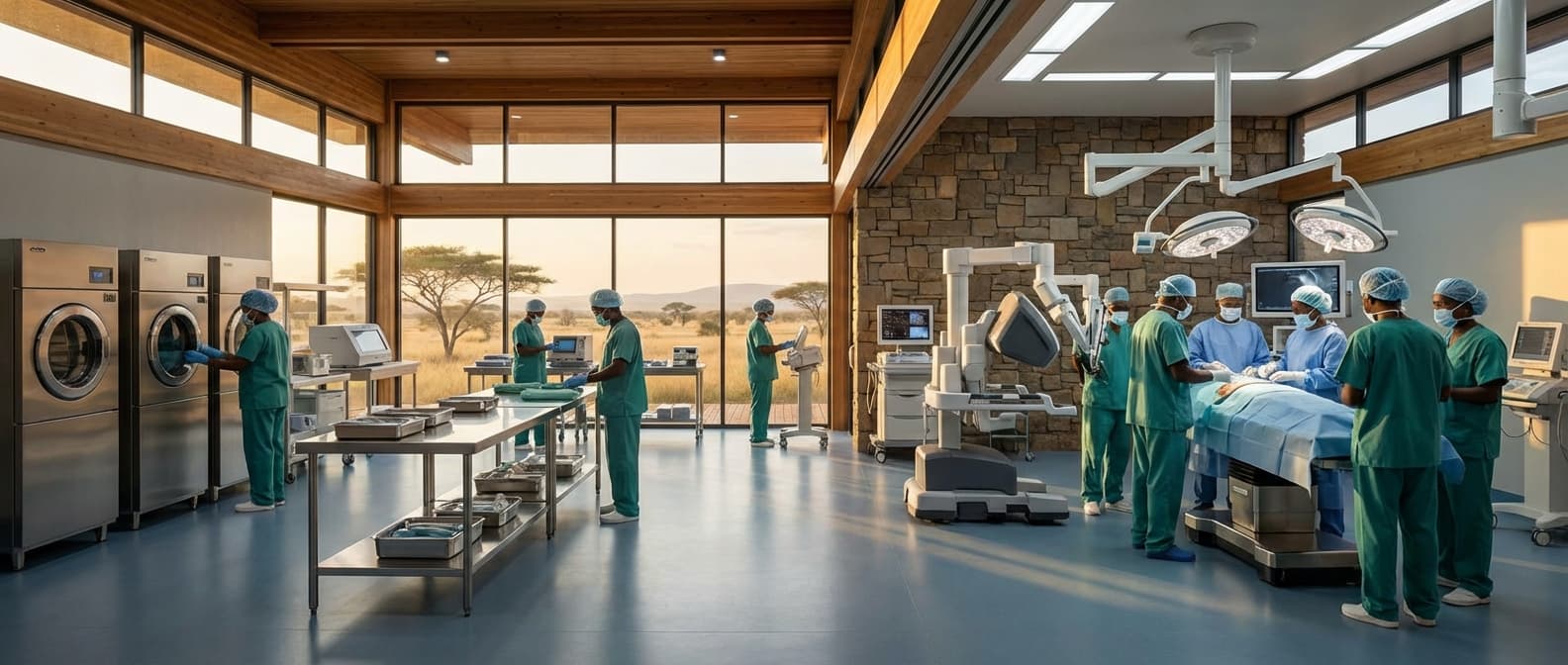
CSSD Design & Validation in Liberia
Engineering Excellence & Technical Support
CSSD workflow design, validation and process development High-standard technical execution following OEM protocols and local regulatory frameworks.
Sterilization Process Optimization & Validation
Implementing and validating advanced sterilization cycles (e.g., steam, low-temperature plasma) for critical medical instruments, ensuring compliance with international standards (ISO 17665, ISO 11135) and maximizing throughput while minimizing material degradation.
Instrument Cleaning Efficacy Studies
Designing and executing rigorous validation studies for automated and manual cleaning processes of complex surgical instruments, utilizing surrogate soil models and analytical techniques to verify removal of bioburden and prevent cross-contamination.
Sterility Assurance Level (SAL) Assessment
Establishing robust protocols for determining and achieving the required Sterility Assurance Level (SAL) for various medical devices through validated sterilization methods, with a focus on risk assessment and meticulous documentation for regulatory submission and patient safety.
What Is Cssd Design & Validation In Liberia?
Central Sterile Supply Department (CSSD) Design & Validation in Liberia refers to the systematic process of planning, establishing, and verifying the functionality and efficacy of sterile processing facilities. This service encompasses the architectural and engineering design of CSSD spaces, procurement of appropriate equipment, implementation of stringent operational workflows, and comprehensive validation protocols to ensure the delivery of safe and sterile medical devices. The objective is to create an environment that minimizes the risk of surgical site infections (SSIs) and healthcare-associated infections (HAIs) by guaranteeing the sterility of all instruments and equipment used in patient care. This is a critical component of infection prevention and control within healthcare settings.
| Typical Use Case | Description | Key Considerations |
|---|---|---|
| New Hospital Construction | Designing and validating a state-of-the-art CSSD from inception to meet projected surgical volumes and infection control standards. | Adherence to international building codes and healthcare facility guidelines, integration with other hospital departments, and scalability for future growth. |
| CSSD Renovation/Expansion | Reconfiguring an existing CSSD to improve workflow, increase capacity, or incorporate new technologies and equipment. | Minimizing disruption to ongoing surgical services, compliance with current regulatory requirements, and cost-effectiveness of upgrades. |
| Equipment Procurement & Installation Validation | Ensuring that newly acquired sterilization equipment (autoclaves, washer-disinfectors, etc.) is correctly installed and performs according to manufacturer specifications and regulatory standards. | Installation qualification (IQ), operational qualification (OQ), and performance qualification (PQ) of all sterilization and cleaning equipment. |
| Workflow Optimization & Training | Analyzing and redesigning the flow of instruments from point of use to sterilization and back to the operating room to enhance efficiency and reduce contamination risks. | Development of Standard Operating Procedures (SOPs), staff training on aseptic techniques, and continuous quality improvement (CQI) processes. |
| Regulatory Compliance & Accreditation | Ensuring the CSSD meets national and international standards for sterilization and infection control, facilitating accreditation and audit preparedness. | Documentation of all processes, validation reports, quality control records, and compliance with relevant Liberian Ministry of Health guidelines and WHO recommendations. |
Who Needs CSSD Design & Validation Services?
- Hospitals (Public and Private)
- Surgical Centers
- Clinics with operative procedures
- Dental Practices performing surgical interventions
- Veterinary Clinics performing surgical procedures
- Healthcare facilities undergoing new construction or renovation
- Existing facilities seeking to upgrade or revalidate their CSSD operations
Who Needs Cssd Design & Validation In Liberia?
The design and validation of Central Sterile Services Departments (CSSDs) are critical for ensuring the safety and effectiveness of medical procedures in Liberia. A well-designed and validated CSSD minimizes the risk of healthcare-associated infections (HAIs) by guaranteeing that surgical instruments and medical devices are properly cleaned, disinfected, and sterilized before use. This is paramount in a healthcare system where resources may be limited and the impact of infection can be severe.
| Target Customer/Department | Specific Needs & Rationale for CSSD Design & Validation | Key Personnel/Stakeholders Involved |
|---|---|---|
| Hospitals (Public and Private) | Need: Comprehensive sterile processing for a wide range of procedures. Rationale: High volume of surgical cases, diverse patient population, critical for preventing surgical site infections (SSIs) and other HAIs. Essential for maintaining accreditation and public trust. | Hospital Administrators, Chief Medical Officers, Heads of Surgery, CSSD Managers, Infection Prevention and Control (IPC) Teams, Biomedical Engineers, Architects/Design Consultants. |
| Surgical Centers | Need: Efficient and reliable sterilization for elective and specialized surgeries. Rationale: Focused on surgical outcomes; any lapse in sterilization directly impacts patient safety and procedure success. Compliance with national and international standards. | Center Directors, Lead Surgeons, Anesthesiologists, CSSD Supervisors, IPC Officers. |
| Clinics with Operating Theaters | Need: Safe and effective sterilization for minor to moderate surgical interventions. Rationale: Even in smaller settings, the risk of infection is present. Proper design ensures efficient workflow and reduces cross-contamination. | Clinic Managers, Lead Nurses, Surgical Staff, CSSD Technicians (if applicable). |
| Maternity Wards | Need: Sterilization of instruments for obstetric procedures (e.g., C-sections, episiotomies). Rationale: Preventing puerperal sepsis and neonatal infections is critical. A dedicated or well-integrated CSSD function is vital. | Obstetricians, Midwives, Nursing Supervisors, IPC Nurses. |
| Emergency Departments | Need: Rapid and effective turnaround of sterilized equipment for trauma and emergency surgeries. Rationale: The urgency in EDs necessitates a robust and accessible sterilization process to avoid delays and minimize infection risk. | Emergency Physicians, Trauma Surgeons, ED Nursing Managers, CSSD Staff. |
| Specialty Clinics (e.g., Ophthalmology, Dentistry) | Need: Sterilization of delicate and specialized instruments. Rationale: Certain specialties require specific sterilization methods and high levels of precision. Improper handling can lead to instrument damage or patient harm. | Specialist Physicians/Dentists, Clinic Administrators, CSSD Technicians. |
| Rehabilitation Centers (with surgical interventions) | Need: Sterilization of instruments used in minor surgical procedures or post-operative care. Rationale: Maintaining sterile fields during interventions within rehabilitation settings is crucial for recovery and preventing complications. | Rehabilitation Specialists, Surgeons (if involved), Nursing Staff, IPC Coordinators. |
| NGO Healthcare Facilities | Need: Establishing or upgrading CSSD capabilities to meet international standards. Rationale: NGOs often provide essential services in underserved areas. Robust CSSD design ensures the quality and safety of their interventions, aligning with donor expectations and global health goals. | NGO Project Managers, Medical Directors, Healthcare Facility Administrators, Local Healthcare Staff. |
| Government Health Ministries/Agencies | Need: Developing national guidelines, standards, and supporting infrastructure for CSSDs. Rationale: Responsible for public health policy, regulation, and ensuring quality of care across the nation. Promoting best practices in CSSD design and validation is a key public health mandate. | Ministers of Health, Director Generals of Health Services, Public Health Officials, IPC Focal Points, National Procurement Officers. |
Target Customers and Departments in Liberia Requiring CSSD Design & Validation:
- Hospitals (Public and Private)
- Surgical Centers
- Clinics with Operating Theaters
- Maternity Wards
- Emergency Departments
- Specialty Clinics (e.g., Ophthalmology, Dentistry)
- Rehabilitation Centers (with surgical interventions)
- NGO Healthcare Facilities
- Government Health Ministries/Agencies
Cssd Design & Validation Process In Liberia
The design and validation process for a Central Sterile Supply Department (CSSD) in Liberia follows a structured workflow to ensure the establishment of a safe, efficient, and compliant facility. This process is crucial for infection prevention and control, guaranteeing that medical instruments are properly cleaned, disinfected, and sterilized before reuse. The workflow typically spans from the initial inquiry and needs assessment through the comprehensive validation and operationalization of the CSSD.
| Phase | Key Activities | Deliverables/Outcomes |
|---|---|---|
| Inquiry & Needs Assessment | Initial request, feasibility study, stakeholder consultation | Needs assessment report, defined scope of work, project initiation |
| Design & Planning | Conceptual design, detailed engineering, regulatory review, budgeting | Approved design drawings, specifications, procurement plan, budget |
| Construction & Installation | Site preparation, construction, MEP installation, equipment installation | Completed facility, installed and connected equipment |
| Validation & Commissioning | IQ, OQ, PQ, process validation | Validated equipment and processes, qualification reports, operational readiness |
| Staff Training | Curriculum development, training delivery, competency assessment | Trained and competent CSSD staff |
| Operationalization | SOP development, QMS establishment, initial operation, ongoing monitoring | Fully functional CSSD, documented processes, effective infection control |
CSSD Design & Validation Process Workflow in Liberia
- {"items":["Initial Inquiry/Request: A healthcare facility or governing body expresses the need for a new or upgraded CSSD.","Feasibility Study & Needs Assessment: A thorough evaluation of the current situation, including existing infrastructure, instrument reprocessing volumes, infection rates, available resources (human, financial, material), and regulatory requirements. This identifies the scope and scale of the required CSSD.","Stakeholder Consultation: Engaging with hospital management, clinical staff, infection control practitioners, engineers, and potentially Ministry of Health representatives to understand specific requirements and expectations."],"title":"Phase 1: Inquiry and Needs Assessment"}
- {"items":["Conceptual Design: Developing preliminary layouts and operational flow diagrams based on the needs assessment. This includes defining the functional zones of the CSSD (decontamination, packaging, sterilization, storage).","Detailed Design & Engineering: Creating detailed architectural, mechanical, electrical, and plumbing (MEP) drawings. This involves selecting appropriate equipment based on capacity, technology, and local maintenance capabilities.","Material Selection: Choosing durable, easy-to-clean, and appropriate materials for surfaces, flooring, and walls that meet infection control standards.","Regulatory Compliance Review: Ensuring the design adheres to national and international guidelines and standards for CSSD operation (e.g., WHO guidelines, local health regulations).","Budgeting & Procurement Planning: Developing a detailed budget for construction, equipment, and initial supplies. Planning for the procurement of all necessary components."],"title":"Phase 2: Design and Planning"}
- {"items":["Site Preparation & Construction: Preparing the designated area, including any necessary structural modifications, and carrying out the construction of the CSSD facility.","MEP Installation: Installing all mechanical, electrical, and plumbing systems as per the detailed design, ensuring adequate ventilation, water supply, and drainage.","Equipment Installation: Receiving, assembling, and installing all CSSD equipment (e.g., washer-disinfectors, ultrasonic cleaners, sterilizers, packaging machines, sterile storage cabinets).","Commissioning of Building Systems: Testing and verifying the functionality of all building-related systems (HVAC, lighting, plumbing) to ensure they meet design specifications."],"title":"Phase 3: Construction and Installation"}
- {"items":["Equipment Commissioning: Verifying that each piece of installed equipment functions according to the manufacturer's specifications. This includes initial testing and calibration.","Installation Qualification (IQ): Documenting that all equipment and ancillary systems have been installed correctly according to specifications and approved drawings.","Operational Qualification (OQ): Documenting that equipment operates consistently within established limits and tolerances throughout its intended operating ranges. This involves testing with various load types and cycle parameters.","Performance Qualification (PQ): Documenting that the equipment, when operated under expected conditions, performs reliably and reproducibly to achieve the intended results (e.g., successful sterilization of different instrument types). This is often the most critical and extensive phase, involving multiple test cycles with biological indicators and chemical indicators.","Process Validation: Validating the entire reprocessing workflow, from initial decontamination to sterile storage, to ensure the effectiveness of cleaning, disinfection, and sterilization processes."],"title":"Phase 4: Validation and Commissioning of Equipment"}
- {"items":["Curriculum Development: Creating comprehensive training materials covering CSSD principles, equipment operation, infection control protocols, safety procedures, and quality assurance.","Training Delivery: Conducting hands-on training sessions for CSSD staff on equipment operation, instrument handling, cleaning, disinfection, packaging, sterilization, and documentation.","Competency Assessment: Evaluating staff proficiency to ensure they can perform their duties safely and effectively."],"title":"Phase 5: Staff Training and Development"}
- {"items":["Development of Standard Operating Procedures (SOPs): Formalizing all processes and protocols for daily CSSD operations.","Establishment of Quality Management System (QMS): Implementing systems for tracking, monitoring, and documenting all CSSD activities, including instrument traceability, cycle records, and quality control testing.","Initial Operation & Monitoring: Commencing full CSSD operations with close supervision and rigorous monitoring of all processes and equipment performance.","Regular Audits & Revalidation: Conducting periodic internal and external audits to ensure ongoing compliance with standards and protocols. Revalidating equipment and processes as required by regulations or after significant changes.","Continuous Improvement: Implementing feedback mechanisms and data analysis to identify areas for improvement and optimize CSSD efficiency and effectiveness."],"title":"Phase 6: Operationalization and Ongoing Monitoring"}
Cssd Design & Validation Cost In Liberia
Designing and validating a Central Sterile Supply Department (CSSD) in Liberia involves several cost considerations. These costs are influenced by factors such as the size and complexity of the facility, the required level of technology, the specific equipment chosen, the extent of renovation or new construction, and the availability of skilled local labor and materials. Due to the varying nature of these projects, precise pricing is challenging, but a general understanding of the contributing factors and potential cost ranges can be established. It's crucial for healthcare institutions to conduct detailed needs assessments and obtain multiple quotes from reputable suppliers and service providers to arrive at accurate project budgets.
| Cost Component | Estimated Range (Liberian Dollar - LRD) | Notes |
|---|---|---|
| Architectural & Engineering Design Fees | 15,000 - 75,000+ | Varies based on project complexity and firm's reputation. Often a percentage of total project cost. |
| Major Sterilization Equipment (e.g., Steam Autoclave) | 75,000 - 300,000+ per unit | Depends on size, capacity, and brand. Low-temperature sterilizers can be significantly more expensive. |
| Automated Washer-Disinfectors | 50,000 - 150,000+ per unit | Ranges from basic to advanced models with specialized cycles. |
| Ancillary CSSD Equipment (e.g., Instrument Trays, Workstations) | 20,000 - 100,000+ | Includes a wide range of items, scaling with facility size. |
| Facility Renovation/Construction | 50,000 - 500,000+ | Highly variable; depends on the existing infrastructure and the scope of work required to meet standards. |
| Validation Services (IQ/OQ/PQ) | 25,000 - 100,000+ | Can be per piece of equipment or for the entire system. Depends on the complexity of the validation. |
| Training & Capacity Building | 10,000 - 50,000+ | Cost for initial and ongoing training for staff. |
| Import Duties, Taxes & Shipping | 10% - 30% of equipment/material cost (estimated) | Can fluctuate based on specific items and government policies. |
| Contingency (10-15% of total) | Variable | Essential for managing unexpected costs. |
Key Pricing Factors for CSSD Design & Validation in Liberia
- Facility Size and Scope: Larger CSSDs requiring more processing capacity or a broader range of services will naturally incur higher design and validation costs.
- Level of Automation and Technology: Implementing advanced automated washers, sterilizers (e.g., steam, low-temperature), and tracking systems significantly increases upfront investment.
- Equipment Selection: The type, brand, and quantity of sterilization equipment, surgical instrument cleaning stations, endoscopy processing equipment, and related accessories are major cost drivers.
- Infrastructure and Renovation: Costs associated with modifying existing buildings or constructing new facilities to meet CSSD standards (e.g., ventilation, water supply, drainage, flooring, lighting) can be substantial.
- Architectural and Engineering Design Fees: Engaging qualified professionals for the design of workflows, space planning, and technical systems (MEP - Mechanical, Electrical, Plumbing) contributes to the overall cost.
- Validation and Qualification Services: Professional validation services are essential to ensure equipment and processes meet regulatory standards. This includes Installation Qualification (IQ), Operational Qualification (OQ), and Performance Qualification (PQ).
- Training and Human Resources: The cost of training CSSD staff on new equipment and protocols, and potentially hiring specialized personnel, needs to be factored in.
- Regulatory Compliance and Documentation: Ensuring the design and operation comply with national and international healthcare standards often involves additional documentation and consultation fees.
- Import Duties and Taxes: If specialized equipment or materials need to be imported, associated duties, taxes, and shipping costs will apply.
- Contingency: It is prudent to include a contingency fund for unforeseen expenses that may arise during the design and validation process.
Affordable Cssd Design & Validation Options
Designing and validating a Central Sterile Services Department (CSSD) can represent a significant investment. However, by exploring affordable options, value bundles, and implementing cost-saving strategies, healthcare facilities can establish an efficient and compliant CSSD without breaking the bank. This guide outlines practical approaches to achieve this.
| Value Bundle Component | Description | Cost-Saving Strategy / Benefit |
|---|---|---|
| Basic Workflow Design Package | Includes consultation for essential workflow layout, material flow, and basic spatial requirements for decontamination, preparation, sterilization, and storage areas. | Reduces need for extensive architectural consultation. Focuses on core functionality, minimizing initial design fees. |
| Standard Equipment Recommendation List | A curated list of cost-effective, reliable, and compliant equipment options for common CSSD needs (e.g., washers, sterilizers, sterile storage cabinets). | Leverages bulk purchasing potential if multiple facilities opt for similar recommendations. Simplifies equipment selection, saving research time and potential for overspending on unnecessary features. |
| Essential Validation Documentation Template Kit | Pre-formatted templates for IQ (Installation Qualification), OQ (Operational Qualification), and PQ (Performance Qualification) protocols and reports, tailored for common CSSD equipment. | Reduces time and cost associated with developing validation documents from scratch. Ensures compliance with essential regulatory requirements. |
| Remote Validation Support | Limited-time remote assistance for understanding validation protocols, troubleshooting minor issues during validation execution, or reviewing draft documentation. | More affordable than on-site validation support. Addresses common queries and helps staff execute validation more efficiently. |
| Consumables Optimization Consultation | Guidance on selecting cost-effective detergents, packaging materials, and indicators without compromising efficacy or compliance. | Reduces ongoing operational costs through informed purchasing decisions. Minimizes waste. |
| Staff Training Module (Basic) | Online or in-person introductory training modules covering fundamental CSSD principles, safety protocols, and basic equipment operation. | Reduces the need for extensive external training courses. Enhances staff competency, leading to fewer reprocessing errors and associated costs. |
Key Considerations for Affordable CSSD Design & Validation
- Phased Implementation: Break down the project into manageable phases, allowing for budget allocation and gradual upgrades. Start with essential services and expand as resources become available.
- Modular & Scalable Design: Opt for modular furniture and equipment that can be reconfigured or expanded as the department's needs evolve. This avoids costly replacements later.
- Standardized Equipment: While customization has its place, consider standardized, off-the-shelf equipment where possible. This can lead to bulk purchase discounts and easier maintenance.
- Pre-owned & Refurbished Equipment: Explore reputable suppliers of pre-owned or refurbished CSSD equipment. Thoroughly vet the source and ensure equipment meets current standards and is backed by a warranty.
- Lean Workflow Principles: Apply lean methodologies during the design phase to optimize workflow, reduce bottlenecks, and minimize wasted space and movement. This can impact the overall footprint and infrastructure costs.
- Outsourced Validation Services: Consider engaging specialized third-party validation companies for specific validation tasks. This can be more cost-effective than hiring and training in-house personnel for infrequent needs.
- Training & Competency Assessment: Invest in robust training for staff on CSSD processes and equipment. Well-trained staff are less prone to errors, reducing reprocessing failures and associated costs.
- Collaborative Purchasing: Join purchasing consortia or collaborate with other facilities to negotiate better prices on consumables, detergents, and small equipment.
Verified Providers In Liberia
In Liberia's evolving healthcare landscape, identifying reliable and credentialed health providers is paramount for ensuring quality patient care. Franance Health stands out as a beacon of trust, consistently demonstrating a commitment to excellence through rigorous credentialing and a patient-centric approach. This document outlines why Franance Health's verified providers represent the best choice for individuals seeking safe, effective, and ethical healthcare services in Liberia.
| Credentialing Aspect | Franance Health's Verification Standard | Benefit to Patients |
|---|---|---|
| Educational Background | Verification of degrees, diplomas, and specialized training from accredited institutions. | Ensures providers possess the foundational knowledge and expertise required for effective medical practice. |
| Professional Licensing | Confirmation of current and valid medical licenses from relevant Liberian authorities. | Guarantees that providers are legally authorized to practice medicine and adhere to regulatory requirements. |
| Specialty Certifications | Validation of any specialized certifications indicating expertise in specific medical fields. | Connects patients with specialists who have demonstrated advanced proficiency in their chosen area. |
| Continuing Medical Education (CME) | Requirement for providers to demonstrate ongoing participation in CME activities. | Ensures that providers are current with the latest medical knowledge, techniques, and treatment guidelines. |
| Professional References | Collection and review of references from peers and supervisors. | Provides insights into a provider's professional conduct, competence, and collegiality. |
| Background Checks | Comprehensive screening for any history of malpractice, disciplinary actions, or criminal convictions. | Protects patients by ensuring providers have a clean record and operate with integrity. |
| Patient Feedback and Reviews | Systematic collection and analysis of patient feedback and satisfaction data. | Offers a real-world perspective on a provider's communication skills, empathy, and overall patient experience, contributing to continuous improvement. |
Key Reasons to Choose Verified Franance Health Providers
- Rigorous Credentialing Process: Franance Health employs a multi-faceted verification process for all its affiliated providers. This includes thorough background checks, verification of educational qualifications, licensing, and professional certifications, as well as a review of past performance and patient feedback.
- Commitment to Continuous Professional Development: Verified Franance Health providers are expected to engage in ongoing training and professional development. This ensures they remain up-to-date with the latest medical advancements, treatment protocols, and best practices, offering patients access to cutting-edge healthcare.
- Adherence to Ethical Standards: Franance Health upholds the highest ethical standards within the medical community. Verified providers are committed to patient confidentiality, informed consent, and providing care with integrity and respect.
- Focus on Patient Safety and Quality of Care: Patient safety is a top priority. Franance Health's credentialing process includes an assessment of providers' adherence to safety protocols and their track record in delivering high-quality, patient-centered care.
- Access to a Trusted Network: By choosing a verified Franance Health provider, patients gain access to a network of healthcare professionals who have met stringent quality benchmarks, offering peace of mind and confidence in their medical treatment.
- Transparency and Accountability: Franance Health promotes transparency by making information about provider credentials accessible. This fosters accountability and empowers patients to make informed decisions about their healthcare.
Scope Of Work For Cssd Design & Validation
This document outlines the Scope of Work (SOW) for the design and validation of a Central Sterile Supply Department (CSSD). It details the technical deliverables, key activities, and specifies the standard specifications to be adhered to throughout the project lifecycle. The primary objective is to ensure the CSSD is designed and validated to meet all relevant regulatory requirements, best practices in infection control, and operational efficiency goals.
| Technical Deliverable | Description | Applicable Standard/Specification | Phase |
|---|---|---|---|
| Conceptual Design Report | Includes preliminary layouts, workflow diagrams, and equipment recommendations. | Internal Best Practices, Client Requirements | Phase 1 |
| Detailed Architectural Drawings | Floor plans, elevations, sections, and details for the CSSD space. | Local Building Codes, Healthcare Facility Guidelines (e.g., FGI Guidelines) | Phase 2 |
| MEP Design Drawings & Specifications | HVAC, electrical, plumbing, and medical gas system designs and specifications. | ASHRAE Standards, NFPA Standards, local utility codes | Phase 2 |
| Equipment Specifications | Detailed technical specifications for all CSSD equipment (e.g., washers, sterilizers, packaging machines). | Manufacturer Specifications, AAMI Standards, ISO Standards, FDA Regulations | Phase 2 |
| Workflow Validation Plan | Outlines the strategy for validating the efficiency and safety of CSSD workflows. | Lean Principles, Healthcare Process Improvement Methodologies | Phase 4 |
| IQ/OQ/PQ Protocols | Documents outlining the procedures and acceptance criteria for testing equipment at each qualification stage. | ISPE Guidelines, AAMI ST/46, AAMI ST/58, Manufacturer's Instructions | Phase 4 |
| Commissioning Reports | Documentation of all commissioning activities and test results. | Project Specifications, Manufacturer's Requirements | Phase 4 |
| Standard Operating Procedures (SOPs) | Detailed written instructions for all CSSD processes, including cleaning, disinfection, sterilization, and storage. | AAMI ST/79, AAMI ST/46, AAMI ST/58, OSHA Regulations, CDC Guidelines | Phase 4 |
| Training Materials | Resources for training staff on equipment operation and SOPs. | Manufacturer's Manuals, Regulatory Requirements | Phase 4 |
| As-Built Drawings | Updated drawings reflecting the final constructed facility and installed equipment. | Project Requirements, Industry Standards | Phase 5 |
| Validation Summary Report | Consolidated report summarizing all validation activities and outcomes. | Regulatory Agency Requirements (e.g., FDA, local health departments) | Phase 5 |
Key Project Phases and Activities
- Phase 1: Conceptualization & Needs Assessment
- Define project objectives and scope.
- Conduct a thorough needs assessment, considering instrument reprocessing volume, types of procedures, staff workflow, and available space.
- Identify key stakeholders and their requirements.
- Develop preliminary layout concepts.
- Phase 2: Detailed Design & Engineering
- Develop detailed architectural, mechanical, electrical, and plumbing (MEP) designs.
- Select appropriate equipment based on workflow, capacity, and regulatory compliance.
- Design workflow optimization to minimize cross-contamination risks and maximize efficiency.
- Develop specifications for finishes, lighting, ventilation, and water systems.
- Incorporate safety features and ergonomic considerations for staff.
- Phase 3: Procurement & Construction Oversight
- Assist in the procurement process for CSSD equipment and materials.
- Provide technical support during construction and installation.
- Review and approve shop drawings and submittals.
- Conduct site inspections to ensure compliance with design specifications.
- Phase 4: Commissioning & Validation
- Develop a comprehensive commissioning plan for all equipment and systems.
- Conduct Installation Qualification (IQ), Operational Qualification (OQ), and Performance Qualification (PQ) for all CSSD equipment.
- Validate workflow processes and cleaning/sterilization cycles.
- Develop Standard Operating Procedures (SOPs) for CSSD operations.
- Train CSSD staff on new equipment and procedures.
- Phase 5: Project Closeout & Handover
- Compile all validation documentation and reports.
- Conduct a final project review and handover.
- Provide as-built drawings and operation & maintenance manuals.
Service Level Agreement For Cssd Design & Validation
This Service Level Agreement (SLA) outlines the design and validation services provided by [Your Company Name] for Central Sterile Supply Departments (CSSD), including guaranteed response times for critical issues and uptime expectations for associated validation software/platforms.
| Service Component | Response Time Target (Business Hours) | Resolution Time Target (Business Hours) | Uptime Guarantee |
|---|---|---|---|
| Critical System Failure (e.g., validation software inaccessible, preventing core validation tasks) | 1 Business Hour | 4 Business Hours | 99.9% (excluding scheduled maintenance) |
| Major Functionality Issue (e.g., inability to complete a specific validation test, significant performance degradation) | 2 Business Hours | 8 Business Hours | 99.5% (excluding scheduled maintenance) |
| Minor Issue/Inquiry (e.g., clarification on protocol, minor bug reporting, non-critical functionality) | 4 Business Hours | 24 Business Hours | N/A (support provided during business hours) |
| Scheduled Maintenance Window (for platform/software updates) | N/A | N/A | Up to 4 hours per month, with 7 days advance notice |
Scope of Services
- CSSD Design Consultation and Planning
- Validation Protocol Development (IQ, OQ, PQ)
- Validation Execution and Testing
- Validation Report Generation
- Post-Validation Support and Troubleshooting
- Calibration and Preventive Maintenance Scheduling Assistance (for equipment validation aspects)
- Training on CSSD workflows and validation processes
Frequently Asked Questions

Ready when you are
Let's scope your CSSD Design & Validation in Liberia project in Liberia.

Scaling healthcare logistics and technical systems across the entire continent.