
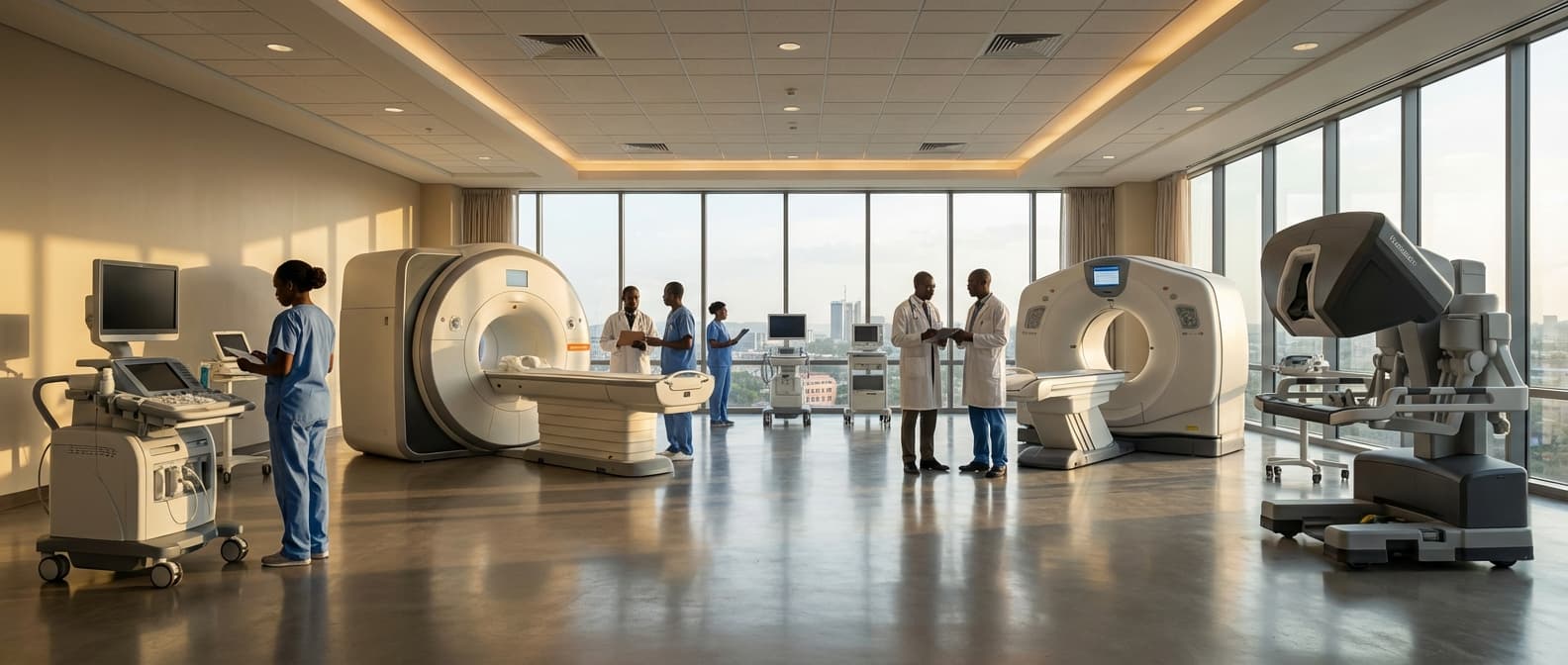
Life Support & Consumables in Liberia
Engineering Excellence & Technical Support
Reliable supply of essential medical consumables and life support equipment ensuring uninterrupted, quality patient care delivery. High-standard technical execution following OEM protocols and local regulatory frameworks.
Scalable Water Purification Systems
Deployment of modular, solar-powered water purification units capable of producing safe drinking water for communities of up to 10,000 people. These systems utilize advanced filtration and UV sterilization technologies, significantly reducing waterborne diseases and improving public health outcomes in remote areas.
Decentralized Medical Supply Chain Network
Establishment of a robust, technology-enabled supply chain network for essential medicines and medical consumables. This network leverages mobile technology for real-time inventory tracking, demand forecasting, and efficient last-mile delivery to over 500 health facilities, ensuring consistent availability of life-saving resources.
Nutritional Supplement & Food Security Initiative
Implementation of a sustainable program providing fortified nutritional supplements and locally sourced food staples to vulnerable populations, including pregnant mothers and young children. This initiative, supported by biometrically verified distribution and community-led monitoring, has demonstrably lowered rates of malnutrition and improved developmental milestones.
What Is Life Support & Consumables In Liberia?
Life Support & Consumables in Liberia refers to the provision of essential resources and services required to sustain human life and operational capacity in a specific context, often within a humanitarian, medical, or disaster relief framework. This encompasses a broad spectrum of items and activities designed to meet fundamental physiological and operational needs. The services are critical for individuals and organizations operating in environments characterized by limited access to conventional supply chains, compromised infrastructure, or emergent situations demanding immediate and sustained support.
| Service Component | Definition | Beneficiaries | Typical Use Cases in Liberia |
|---|---|---|---|
| Medical Supplies & Equipment | Provision of pharmaceuticals, surgical materials, and medical devices. | Hospitals, clinics, mobile health units, individual patients requiring medical intervention. | Emergency medical response to disease outbreaks (e.g., Ebola, Malaria), trauma care, routine healthcare services in remote areas, support for internally displaced persons (IDPs) camps. |
| Nutritional Support | Delivery of food, clean water, and means for water purification. | Vulnerable populations (children, pregnant/lactating women), individuals affected by food insecurity, disaster-stricken communities. | Addressing malnutrition in areas of chronic food shortage, providing safe drinking water during floods or droughts, emergency food aid post-conflict. |
| Shelter & Sanitation | Provision of temporary housing, hygiene materials, and waste management. | Displaced populations, individuals whose homes are destroyed or damaged by natural disasters or conflict. | Establishing temporary settlements for refugees or IDPs, promoting hygiene to prevent disease transmission in crowded conditions, disaster relief operations. |
| Energy & Communication | Supply of fuel, batteries, and communication hardware. | Healthcare facilities operating on backup power, humanitarian aid organizations for coordination, emergency response teams. | Ensuring continuous operation of critical medical equipment in power-outage prone regions, facilitating communication for aid delivery logistics, supporting remote monitoring operations. |
| Personal Protective Equipment (PPE) | Provision of barrier protection for individuals to prevent transmission of infectious agents. | Healthcare workers, aid workers, general public during public health emergencies. | Response to infectious disease epidemics, protection of frontline responders, infection control measures in health facilities. |
Key Components of Life Support & Consumables in Liberia
- Medical Supplies and Equipment: This includes pharmaceuticals, bandages, sterile dressings, intravenous fluids, diagnostic kits, surgical instruments, and basic medical devices (e.g., stethoscopes, thermometers). It also extends to more specialized equipment such as oxygen concentrators, ventilators, and portable X-ray machines, depending on the operational scope.
- Nutritional Support: This category covers food rations (often fortified or specialized for specific nutritional needs, e.g., therapeutic or supplementary feeding), clean drinking water, and water purification methods (tablets, filters).
- Shelter and Sanitation: Provision of temporary shelter materials (tents, tarpaulins), bedding, hygiene kits (soap, sanitary napkins, toothbrushes), and waste management solutions (latrines, refuse collection).
- Energy and Communication: This involves fuel for generators (diesel, gasoline), batteries, solar-powered charging solutions, and essential communication devices (satellite phones, radios) to maintain operational coordination and information flow.
- Transportation and Logistics: While not a consumable itself, the logistics of delivering and maintaining life support consumables are integral. This can include fuel for vehicles, maintenance parts for essential equipment, and specialized transportation for sensitive supplies.
- Personal Protective Equipment (PPE): Depending on the context (e.g., public health emergencies), PPE such as masks, gloves, gowns, and eye protection becomes a critical consumable.
Who Needs Life Support & Consumables In Liberia?
This document outlines the target customer segments and relevant departments within Liberia that require life support and consumables. The focus is on identifying organizations and individuals who are critical to public health, emergency response, and essential service provision. Understanding these needs will help in the strategic allocation of resources and the development of targeted procurement and distribution plans.
| Department/Organization | Primary Needs (Life Support & Consumables) | Key Responsibilities Related to Procurement/Distribution |
|---|---|---|
| Ministry of Health (MoH) | Vaccines, essential medicines, medical equipment (ventilators, oxygen concentrators), diagnostic kits, personal protective equipment (PPE), hygiene supplies, blood products. | National health policy formulation, procurement oversight, coordination of distribution, disease surveillance, primary healthcare provision. |
| National Public Health Institute (NPHI) | Laboratory reagents, diagnostic equipment, biosafety equipment, epidemiological surveillance tools, consumables for disease testing. | Disease surveillance, outbreak investigation, laboratory diagnostics, public health research. |
| National Disaster Management Agency (NDMA) | First aid kits, emergency shelter supplies, sanitation facilities, basic medical supplies for emergency response, food and water purification. | Disaster preparedness, response coordination, needs assessment, management of emergency supplies. |
| County Hospitals & District Hospitals | Surgical consumables, anesthetics, IV fluids, antibiotics, bandages, respiratory support devices, basic medical equipment, hygiene supplies. | Provision of in-patient and out-patient medical care, stock management, local procurement and distribution. |
| Community Health Centers & Rural Health Posts | Basic medicines, wound care supplies, maternal and child health consumables, basic diagnostic tools, hygiene kits. | Primary healthcare delivery, essential drug management, community outreach, referral services. |
| International NGOs (e.g., Doctors Without Borders, Partners In Health) | Specialized medical equipment, advanced pharmaceuticals, medical supplies for specific programs (e.g., maternal health, infectious disease control), PPE. | Programmatic implementation of healthcare services, direct provision of medical aid, capacity building, often manage their own supply chains. |
| United Nations Agencies (e.g., WHO, UNICEF) | Vaccines, essential medicines, nutritional supplements, water and sanitation supplies, educational materials for health promotion, emergency medical kits. | Technical support, funding, coordination of international aid, procurement of large-scale supplies, emergency response. |
| National Bureau of Corrections and Rehabilitation | Basic medicines, hygiene products (soap, toothpaste), sanitation supplies, first aid kits, basic medical equipment for infirmaries. | Ensuring health and welfare of inmates, managing health services within facilities, procurement of essential supplies. |
Target Customers & Departments for Life Support & Consumables in Liberia
- {"items":["Ministry of Health (MoH)","National Public Health Institute (NPHI)","National Disaster Management Agency (NDMA)","Ministry of Social Welfare","Ministry of Education (for school health programs)","Ministry of Water and Sanitation","Ministry of Justice (for correctional facilities)"],"title":"Government Ministries & Agencies","description":"These are primary recipients and facilitators of life support and consumable distribution. Their mandates often involve public health, disaster management, and essential service delivery."}
- {"items":["National Referral Hospitals (e.g., JFK Medical Center)","County Hospitals","District Hospitals","Community Health Centers","Rural Health Posts","Specialty Clinics (e.g., TB centers, HIV/AIDS clinics)","Maternity Wards and Neonatal Intensive Care Units (NICUs)"],"title":"Healthcare Facilities","description":"Hospitals, clinics, and health centers are at the forefront of providing medical care and require a continuous supply of life support equipment and consumables."}
- {"items":["Non-Governmental Organizations (NGOs) - local and international","United Nations Agencies (e.g., WHO, UNICEF, WFP)","International Committee of the Red Cross (ICRC) / Liberian National Red Cross Society","Faith-Based Organizations involved in healthcare and social services"],"title":"Emergency & Humanitarian Organizations","description":"These entities play a crucial role in responding to crises, providing aid, and supporting vulnerable populations."}
- {"items":["Universities and Colleges (student health services)","Secondary Schools (especially those with health education or boarding facilities)"],"title":"Educational Institutions","description":"While not directly involved in immediate life support, certain educational settings require consumables for health and hygiene programs, especially those with boarding facilities or health services."}
- {"items":["National Bureau of Corrections and Rehabilitation (BOCR)"],"title":"Correctional Facilities","description":"Prisons and detention centers have a duty of care for inmates, necessitating life support and consumables for basic health and hygiene."}
- {"items":["Elderly individuals","Individuals with chronic illnesses","Orphanages and child care centers","Displaced persons and refugees","Remote and underserved communities"],"title":"Vulnerable Populations & Community Groups","description":"Specific groups within the population are more susceptible to health risks and may require direct or indirect provision of life support and consumables."}
Life Support & Consumables Process In Liberia
This document outlines the workflow for the procurement and delivery of life support and consumables in Liberia, from the initial inquiry to the final execution and confirmation of receipt. This process is critical for ensuring the sustained operational capacity of various sectors, including humanitarian aid, healthcare, and essential services.
| Stage | Description | Key Activities | Responsible Parties | Documentation |
|---|---|---|---|---|
| Inquiry & Needs Assessment | Initial identification of a requirement for life support or consumables. | Formal request initiation, definition of specifications (quantity, quality, urgency), budget allocation. | Requesting Department/Organization, End-Users. | Needs Assessment Report, Request Forms. |
| Supplier Identification & Vetting | Finding and evaluating potential suppliers capable of meeting the requirements. | Market research, supplier database review, preliminary vetting (financial stability, track record, certifications). | Procurement Department, Logistics Team. | Supplier Database, Vetting Reports. |
| Quotation & Proposal Submission | Suppliers submit detailed offers for the required goods or services. | Issuance of Request for Quotation (RFQ) or Request for Proposal (RFP), supplier preparation and submission of bids. | Procurement Department, Potential Suppliers. | RFQ/RFP Documents, Supplier Quotations/Proposals. |
| Technical & Financial Evaluation | Assessing the suitability of submitted offers against defined criteria. | Evaluation of technical specifications, quality assurance, delivery timelines, and cost-effectiveness; scoring and ranking. | Evaluation Committee (Procurement, Technical Experts, Finance). | Evaluation Reports, Scoring Sheets. |
| Contract Negotiation & Award | Finalizing terms and conditions with the chosen supplier. | Negotiation of pricing, payment terms, delivery schedules, warranty, and other contractual clauses; formal contract award. | Procurement Department, Legal Department, Selected Supplier. | Draft Contract, Signed Contract Agreement. |
| Purchase Order (PO) Issuance | Formal authorization for the supplier to proceed with the order. | Generation and issuance of a Purchase Order detailing all agreed-upon terms and specifications. | Procurement Department. | Purchase Order (PO). |
| Procurement & Manufacturing/Sourcing | The supplier produces or sources the ordered goods. | Production, assembly, or acquisition of consumables and life support items. | Selected Supplier. | Production Orders, Sourcing Records. |
| Quality Control & Inspection | Ensuring the procured items meet the required quality standards. | Pre-shipment inspection, laboratory testing, verification of specifications and quantities. | Quality Assurance Team, Third-Party Inspectors (if applicable), Supplier. | Inspection Reports, Certificates of Analysis (CoA), Quality Certificates. |
| Logistics & Transportation | Moving the goods from the supplier's location to Liberia. | Arranging freight (air, sea, land), packing, labeling, and securing necessary transport documents. | Logistics Department, Freight Forwarders, Carriers. | Bills of Lading, Air Waybills, Packing Lists, Manifests. |
| Customs Clearance & Importation | Navigating Liberian customs procedures for entry. | Submission of import documentation, payment of duties and taxes, inspection by customs authorities. | Clearing Agent, Logistics Department, Customs Authorities. | Import Declarations, Customs Clearance Certificates, Duty/Tax Receipts. |
| Delivery & Warehousing | Receiving and storing the goods at their final destination. | Unloading, inventory, and secure storage of life support and consumables. | Warehouse Management Team, Logistics Department. | Goods Received Notes (GRN), Warehouse Inventory Records. |
| Confirmation of Receipt & Payment | Verifying the successful delivery and processing payment to the supplier. | Signing of GRN, reconciliation of PO with delivered goods, submission of invoice for payment. | End-User Department, Finance Department, Supplier. | Signed GRN, Invoices, Payment Vouchers, Bank Transfer Confirmations. |
| Reporting & Archiving | Documenting the entire process for accountability and future reference. | Compilation of all relevant documents, creation of final project reports, secure archiving of records. | Procurement Department, Audit Team. | Procurement Files, Final Reports, Audit Trails. |
Life Support & Consumables Process in Liberia: Workflow Stages
- Inquiry & Needs Assessment
- Supplier Identification & Vetting
- Quotation & Proposal Submission
- Technical & Financial Evaluation
- Contract Negotiation & Award
- Purchase Order (PO) Issuance
- Procurement & Manufacturing/Sourcing
- Quality Control & Inspection
- Logistics & Transportation
- Customs Clearance & Importation
- Delivery & Warehousing
- Confirmation of Receipt & Payment
- Reporting & Archiving
Life Support & Consumables Cost In Liberia
Estimating the precise cost of life support and consumables in Liberia can be complex due to fluctuating market conditions, regional disparities, and import dependencies. The local currency, the Liberian Dollar (LRD), is the primary medium of exchange for many daily necessities. However, a significant portion of essential goods, particularly those related to healthcare and specialized food items, are often priced or influenced by the US Dollar (USD) due to historical economic ties and the prevalence of imported products. This dual pricing or dollarization can create variability in LRD costs. Key pricing factors include import duties and taxes, transportation costs (which can be high due to poor infrastructure), availability of local supply chains, and the overall economic stability of the country. The range of costs is highly dependent on the specific item, its origin, and the quality or brand. For instance, basic food staples will have a much lower cost than imported infant formula or specialized medical supplies.
| Item | Estimated Price Range (LRD) | Notes/Factors Influencing Price |
|---|---|---|
| Bottled Water (5-gallon refill) | 400 - 800 LRD | Varies by supplier, brand, and location (urban vs. rural). Tap water is generally not potable without purification. |
| Rice (25kg bag) | 1,800 - 3,000 LRD | Dominant staple. Price highly sensitive to global commodity prices and import costs. Local vs. imported rice can differ in price. |
| Canned Goods (e.g., Sardines, Corn - per can) | 150 - 300 LRD | Imported items. Price depends on brand, size, and availability. |
| Bread (Loaf) | 100 - 200 LRD | Local bakeries, flour costs are a major factor. |
| Cooking Oil (1 liter) | 300 - 600 LRD | Mostly imported. Palm oil can be cheaper if locally sourced. |
| Local Produce (e.g., Cassava, Plantains - per kg) | 80 - 150 LRD | Seasonal availability and local harvest directly impact price. Prices can be significantly lower in rural farming areas. |
| Infant Formula (Standard tin) | 2,500 - 5,000 LRD | Highly imported. Price varies greatly by brand and nutritional content. Often priced close to USD equivalents. |
| Diapers (Pack of 10-12) | 1,500 - 3,000 LRD | Imported. Price depends on brand, size, and absorbency. Disposable diapers are a luxury for many. |
| Basic Over-the-Counter Pain Relievers (e.g., Paracetamol - pack of 10) | 200 - 400 LRD | Availability can be inconsistent. Pharmaceutical imports are subject to taxes and distributor markups. |
| Antimalarial Medication (e.g., Artemether/Lumefantrine - standard dose) | 800 - 1,500 LRD | Crucial medication. Prices can vary between pharmacies and NGOs. Cost of import and distribution is a factor. |
| Sanitizer (100ml bottle) | 300 - 600 LRD | Increased demand post-pandemic. Mostly imported, price influenced by import costs and local retail markups. |
Common Life Support & Consumables in Liberia and Estimated LRD Pricing
- Bottled Water (5-gallon refill)
- Basic Food Staples (e.g., Rice - 25kg bag)
- Canned Goods (e.g., Sardines, Corn)
- Bread (Loaf)
- Cooking Oil (1 liter)
- Local Produce (e.g., Cassava, Plantains - per kg)
- Infant Formula (Standard tin)
- Diapers (Pack of 10-12)
- Basic Over-the-Counter Pain Relievers (e.g., Paracetamol - pack of 10)
- Antimalarial Medication (e.g., Artemether/Lumefantrine - standard dose)
- Sanitizer (100ml bottle)
Affordable Life Support & Consumables Options
Navigating the world of life support equipment and consumables can be a significant expense, especially for individuals with chronic conditions or in resource-limited settings. Fortunately, there are several avenues to explore for affordable options. This guide outlines strategies to reduce costs, focusing on the benefits of value bundles and smart purchasing practices.
| Bundle Type | Description | Potential Savings | Considerations |
|---|---|---|---|
| Starter Kits | Includes essential components like a primary device, basic filters, and initial tubing. Ideal for new users or replacements. | 10-20% off individual item prices. | Ensure the kit contains items relevant to your specific needs. May require separate purchase of ongoing consumables. |
| Monthly Consumable Packs | Pre-packaged sets of frequently used consumables (e.g., filters, masks, tubing) delivered on a recurring schedule. | 5-15% discount on monthly cost compared to à la carte purchases. Convenience and guaranteed supply. | Requires accurate prediction of monthly usage. May have minimum commitment periods. |
| Equipment & Consumable Packages | Combines a larger equipment purchase (e.g., CPAP machine, ventilator) with an initial supply of essential consumables. | Can range from 15-25% on the bundled items, especially during promotional periods. | Often offered by manufacturers or large distributors. Ensure warranty and service agreements are clear. |
| Long-Term Care Bundles | Designed for extended use, these bundles often include maintenance kits, replacement parts, and a larger volume of consumables. | Significant savings over time, potentially 20% or more, due to bulk purchasing and planned maintenance. | Best suited for individuals with long-term reliance on the equipment. Requires upfront investment or financing plan. |
Cost-Saving Strategies for Life Support & Consumables
- Explore Generic or Reconditioned Equipment: While brand names offer peace of mind, generic manufacturers often provide comparable quality at a lower price point. For less critical components or for temporary needs, consider certified reconditioned equipment, which can offer substantial savings.
- Leverage Insurance and Government Programs: Understand your health insurance benefits thoroughly. Many plans cover a portion of the cost of essential life support equipment and consumables. Research government assistance programs like Medicare, Medicaid, or local disability services, which may offer subsidies or direct provision of necessary items.
- Buy in Bulk When Possible: Consumables like filters, tubing, and disposable masks are often cheaper when purchased in larger quantities. Calculate your projected usage to avoid overstocking and potential waste, but aim for bulk discounts where feasible.
- Subscription Services and Auto-Replenishment: For recurring needs, subscription services can lock in a set price and ensure you never run out. Many providers offer automatic replenishment, which can come with a discount for the convenience and commitment.
- Compare Prices from Multiple Suppliers: Don't settle for the first quote. Actively compare prices from various medical supply companies, both online and brick-and-mortar. Look for specialized suppliers catering to your specific needs.
- Seek Out Local Support Groups and Charities: Community organizations and charities often have resources, donation programs, or can direct you to affordable suppliers and funding opportunities.
- Negotiate and Ask for Discounts: Don't be afraid to ask suppliers if they offer any discounts, especially for long-term customers or for bundled purchases. Sometimes, a polite inquiry can lead to unexpected savings.
Verified Providers In Liberia
In Liberia's evolving healthcare landscape, identifying and trusting medical providers is paramount. Franance Health has emerged as a beacon of reliability, distinguished by its rigorous credentialing process and commitment to patient well-being. This document outlines why Franance Health providers represent the best choice for quality healthcare in Liberia.
| Credentialing Component | Franance Health's Standard | Patient Benefit |
|---|---|---|
| Education & Licensure Verification | Thorough and independent verification of all academic degrees and active professional licenses. | Ensures providers possess the foundational knowledge and legal authority to practice medicine. |
| Clinical Experience Assessment | Detailed review of past work history, areas of specialization, and documented case experience. | Confirms practical application of medical knowledge and suitability for specific patient needs. |
| Background and Reference Checks | Comprehensive checks for any disciplinary actions, malpractice claims, or other red flags. | Safeguards patients by ensuring providers have a clean professional record. |
| Continuous Professional Development (CPD) | Requirement for ongoing training, workshops, and adherence to emerging medical guidelines. | Guarantees that patients receive care informed by the latest medical research and techniques. |
| Ethical Conduct and Professionalism | Adherence to a strict code of ethics and demonstrated commitment to patient welfare. | Fosters a safe and respectful healthcare environment built on trust and integrity. |
Why Franance Health Providers are the Best Choice in Liberia:
- Unwavering Commitment to Quality: Franance Health prioritizes patient safety and effective treatment by adhering to stringent international healthcare standards. Their providers undergo a comprehensive vetting process that goes beyond basic licensing.
- Rigorous Credentialing Process: Franance Health's credentialing involves a multi-faceted evaluation of each healthcare professional. This includes thorough background checks, verification of educational qualifications and professional licenses, assessment of clinical experience, and often peer reviews.
- Focus on Continuous Professional Development: To maintain their status with Franance Health, providers are expected to engage in ongoing training and education. This ensures they are up-to-date with the latest medical advancements, techniques, and best practices.
- Patient-Centric Approach: Franance Health certified providers are dedicated to a patient-first philosophy. This translates to compassionate care, clear communication, and a focus on building trusting relationships with patients.
- Access to Advanced Medical Expertise: By partnering with Franance Health, patients gain access to a network of highly skilled and experienced medical professionals across various specialties, ensuring comprehensive care options are available.
- Enhanced Trust and Transparency: The Franance Health certification serves as a mark of trust and transparency. Patients can be confident that providers bearing this credential have met a high bar of professional excellence and ethical conduct.
- Improved Health Outcomes: The combined emphasis on qualified professionals, continuous learning, and patient-focused care directly contributes to better health outcomes for individuals seeking medical attention in Liberia.
Scope Of Work For Life Support & Consumables
This Scope of Work (SOW) outlines the requirements for the provision of Life Support & Consumables. It details the technical deliverables expected from the supplier and the standard specifications that must be adhered to for all procured items. The objective is to ensure a reliable and safe supply chain for critical life support equipment and associated consumables, meeting all regulatory and operational demands.
| Category | Item | Standard Specification / Requirement | Acceptance Criteria |
|---|---|---|---|
| Life Support Equipment | Medical Oxygen Regulators | Flow rate accuracy: +/- 5%; Inlet pressure rating: compliant with ISO 10522-1; Material: medical-grade brass or stainless steel; Leakage rate: < 5 cc/min at 2000 psi. | Flow rate verification, pressure testing, material inspection. |
| Life Support Equipment | Portable Ventilators | Breathing circuit compatibility: ISO 80601-2-12; Battery life: minimum 4 hours operation; Alarm functionalities: high pressure, low pressure, apnea, low battery; Weight: < 5 kg. | Functional testing of ventilation modes, battery endurance test, alarm system verification. |
| Life Support Equipment | Defibrillators (AEDs) | FDA/CE approved; IP rating: minimum IP55; Battery standby life: minimum 5 years; Energy output: selectable 120-360 J. | Device functionality check, battery status verification, energy output test. |
| Consumables | Sterile Syringes (various sizes) | Material: medical-grade polypropylene and stainless steel; Sterility assurance level (SAL): 10^-6; Latex-free; Packaging: tamper-evident, sterile pouch. | Visual inspection of packaging, sterility testing (batch sampling), material compliance check. |
| Consumables | Medical Gloves (Nitrile, Latex-Free) | EN 455 compliant; Thickness: minimum 0.10 mm at fingertip; Tensile strength: > 14 MPa; Freedom from holes: AQL 1.5. | Tensile strength testing, visual inspection for defects, leak test. |
| Consumables | Intravenous (IV) Fluids | USP/EP grade; Volume accuracy: +/- 5%; pH range: within specified limits for the fluid type; Sterility: sterile and pyrogen-free; Packaging: intact and leak-proof. | Visual inspection, pH testing, specific gravity test, sterility test. |
| Consumables | Bandages and Dressings | Absorbency: specified for type (e.g., gauze); Adhesion: appropriate for application (e.g., hypoallergenic for dressings); Sterility: sterile for critical applications. | Absorbency testing, adhesion testing, visual inspection for sterility. |
| Consumables | Wound Care Antiseptics | Active ingredient concentration: within +/- 5% of stated value; pH: within specified range; Sterility: sterile. | Chemical analysis of active ingredient, pH testing, sterility testing. |
Technical Deliverables
- Detailed product catalogs for all offered life support equipment and consumables, including part numbers, manufacturers, specifications, and country of origin.
- Certifications and compliance documents for all life support equipment, demonstrating adherence to relevant international (e.g., ISO, FDA, CE) and national standards.
- Material Safety Data Sheets (MSDS) or Safety Data Sheets (SDS) for all consumable products.
- Shelf-life documentation for all perishable consumables, with clear expiration dates and storage recommendations.
- User manuals and maintenance guides for all life support equipment, provided in the designated language.
- Calibration certificates for any equipment requiring periodic calibration.
- Quality control reports demonstrating adherence to manufacturing and testing standards.
- Logistics and delivery plans, including shipping methods, transit times, and tracking information.
- Training materials or documentation for the operation and basic maintenance of specific life support equipment (if applicable).
- Warranty information and service agreements for all life support equipment.
Service Level Agreement For Life Support & Consumables
This Service Level Agreement (SLA) outlines the guaranteed response times and uptime for Life Support & Consumables services provided by [Your Company Name] to [Client Company Name]. This SLA is effective as of [Start Date] and remains in effect until [End Date].
| Issue Severity | Response Time Guarantee | Resolution Time Target | Uptime Guarantee |
|---|---|---|---|
| Critical System Failure | 15 minutes | 2 hours | 99.99% |
| Urgent Issue | 1 hour | 4 hours | 99.99% |
| Routine Issue | 4 business hours | 2 business days | 99.99% |
Definitions
- Critical System Failure: A complete or partial loss of functionality of a life support system or a critical consumables supply chain that poses an immediate and severe risk to patient safety or operational continuity.
- Urgent Issue: A significant degradation of life support system performance or consumables availability that, if not addressed promptly, could lead to a Critical System Failure within a defined timeframe.
- Routine Issue: A non-critical issue impacting the performance or availability of life support systems or consumables that does not pose an immediate threat to patient safety or operational continuity.
- Downtime: Any period during which the service is unavailable to the client. Scheduled maintenance is excluded from Downtime.
- Response Time: The maximum time allowed from the moment a service request is logged until [Your Company Name] acknowledges the request and begins work on a resolution.
- Resolution Time: The maximum time allowed from the moment a service request is logged until the issue is fully resolved and the service is restored to normal operational status.
- Uptime Guarantee: The percentage of time the service is expected to be available to the client.
- Service Hours: [Specify the hours and days the service is available, e.g., 24 hours a day, 7 days a week, 365 days a year].
Frequently Asked Questions

Ready when you are
Let's scope your Life Support & Consumables in Liberia project in Liberia.

Scaling healthcare logistics and technical systems across the entire continent.