
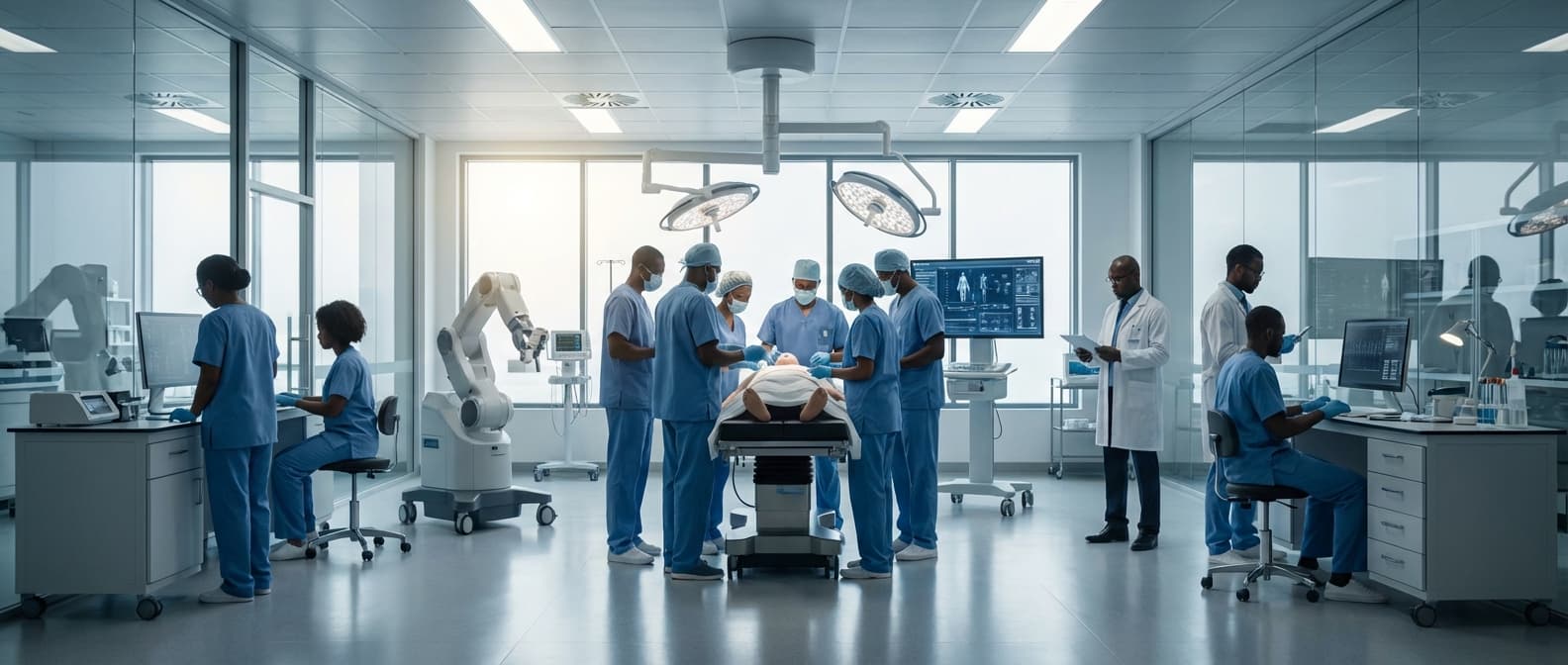
Biomedical Engineering Consulting in Liberia
Engineering Excellence & Technical Support
Equipment selection, procurement and implementation consulting High-standard technical execution following OEM protocols and local regulatory frameworks.
Advanced Diagnostic Equipment Procurement & Implementation
Leveraging our expertise to identify, source, and seamlessly integrate cutting-edge diagnostic technologies, empowering Liberian healthcare facilities with state-of-the-art tools for accurate and timely disease detection and patient management. This includes spectral imaging, advanced microscopy, and molecular diagnostic systems.
Medical Facility Design & Infrastructure Optimization
Providing comprehensive biomedical engineering consultancy for the planning, design, and renovation of healthcare infrastructure in Liberia. We focus on optimizing patient flow, ensuring sterile environments, and implementing energy-efficient and sustainable solutions for new and existing medical facilities.
Biomedical Equipment Training & Maintenance Programs
Developing and delivering tailored training programs for local biomedical technicians and healthcare professionals in Liberia. Our focus is on building sustainable in-house capacity for the effective operation, preventative maintenance, and repair of critical medical equipment, ensuring long-term operational efficiency and patient safety.
What Is Biomedical Engineering Consulting In Liberia?
Biomedical Engineering Consulting in Liberia refers to the provision of specialized technical expertise and advisory services related to the design, implementation, maintenance, and management of medical devices, equipment, and healthcare technology within the Liberian context. This service bridges the gap between advanced medical technology and the unique operational, regulatory, and resource constraints often present in healthcare systems. It encompasses a broad spectrum of activities aimed at optimizing the use of biomedical resources to improve patient care outcomes and operational efficiency.
| Who Needs Biomedical Engineering Consulting in Liberia? | Typical Use Cases |
|---|---|
| Government Health Ministries and Agencies: For national health technology assessment, policy development, procurement oversight, and infrastructure planning. | Developing national guidelines for medical equipment procurement and maintenance. Conducting nationwide assessments of healthcare technology needs. Establishing regulatory frameworks for medical devices. |
| Public and Private Hospitals and Clinics: For managing their medical equipment inventory, ensuring operational readiness, and optimizing healthcare delivery. | Implementing a preventive maintenance program for X-ray machines. Selecting and procuring essential diagnostic equipment for a new rural clinic. Establishing a system for tracking and servicing ventilators during a public health emergency. |
| Non-Governmental Organizations (NGOs) and International Aid Organizations: Involved in healthcare delivery and infrastructure development. | Advising on the selection and deployment of medical equipment for mobile health units. Designing training programs for local technicians to maintain donated medical devices. Assessing the sustainability of medical technology in project sites. |
| Medical Device Manufacturers and Distributors: Seeking to understand the Liberian market, establish service networks, and ensure regulatory compliance. | Mapping the existing medical device service landscape. Developing a strategy for after-sales support in Liberia. Navigating import and registration processes for new medical devices. |
| Academic and Research Institutions: For equipping laboratories and ensuring the proper functioning of research-related medical equipment. | Advising on the procurement of specialized laboratory equipment. Establishing protocols for the calibration and maintenance of research instruments. |
| Healthcare Financing Institutions and Investors: Evaluating the technological capacity and asset management of healthcare facilities. | Assessing the condition and operational status of medical equipment as part of investment due diligence. Providing insights into the cost-effectiveness of medical technology investments. |
Key Aspects of Biomedical Engineering Consulting in Liberia
- Needs Assessment and Planning: Evaluating existing infrastructure, identifying gaps in medical equipment, and developing strategic plans for technology acquisition, deployment, and utilization.
- Equipment Selection and Procurement: Providing guidance on selecting appropriate medical devices based on clinical needs, budget, maintenance capabilities, and local availability of consumables and spare parts.
- Installation, Commissioning, and Validation: Overseeing the proper installation, calibration, and performance testing of new medical equipment to ensure it meets manufacturer specifications and regulatory standards.
- Maintenance and Repair Strategies: Developing preventive maintenance programs, establishing repair protocols, and advising on the establishment or enhancement of in-house technical support or outsourced service agreements.
- Technology Management and Lifecycle Planning: Creating systems for inventory management, asset tracking, obsolescence planning, and end-of-life disposal of medical equipment.
- Regulatory Compliance and Standards Adherence: Assisting healthcare facilities in understanding and complying with national and international regulations pertaining to medical devices and healthcare technology.
- Training and Capacity Building: Designing and delivering training programs for healthcare professionals (clinicians and technicians) on the safe and effective operation, maintenance, and troubleshooting of medical equipment.
- Infrastructure Development and Assessment: Advising on the electrical, environmental, and safety requirements for the installation and operation of medical equipment.
- Risk Management and Patient Safety: Identifying and mitigating risks associated with medical device use, including user error, equipment malfunction, and adverse events.
- Healthcare System Optimization: Contributing to the overall efficiency and effectiveness of healthcare delivery through informed technology management decisions.
Who Needs Biomedical Engineering Consulting In Liberia?
Biomedical engineering consulting plays a crucial role in advancing healthcare infrastructure and services in Liberia. The demand for such expertise stems from a critical need to ensure the safe, effective, and sustainable use of medical technology, improve patient care outcomes, and build local capacity within the healthcare sector. Consultants help address challenges related to equipment procurement, maintenance, calibration, training, and regulatory compliance, ultimately contributing to a more robust and accessible healthcare system.
| Target Customer/Department | Key Needs/Services | Impact of Consulting |
|---|---|---|
| Hospitals (Public and Private) | Equipment procurement and selection, maintenance and repair programs, sterilization validation, inventory management, clinical engineering services, safety audits, staff training on medical equipment use. | Improved equipment reliability, reduced downtime, enhanced patient safety, optimized resource allocation, cost savings through efficient maintenance, better diagnostic accuracy and treatment efficacy. |
| Ministry of Health and Social Welfare | Developing national medical equipment policies and strategies, regulatory frameworks for medical devices, national procurement guidelines, capacity building for regional health facilities, data management for medical equipment, disaster preparedness plans for healthcare infrastructure. | Standardized and effective healthcare delivery across the nation, improved oversight and governance of medical technology, enhanced national health security, sustainable healthcare infrastructure development. |
| Research Institutions and Universities | Setting up and managing research laboratories, selecting and maintaining specialized research equipment, ensuring compliance with ethical and safety standards for research involving medical devices, training of researchers. | Facilitation of groundbreaking medical research, accurate and reliable research data, development of local research expertise, innovation in healthcare solutions. |
| NGOs and International Aid Agencies | Needs assessments for medical equipment in project areas, procurement and installation of donated medical equipment, training of local healthcare workers on new equipment, establishing sustainable maintenance systems for aid-provided devices, project evaluation related to healthcare technology. | Effective and impactful deployment of humanitarian aid, long-term sustainability of medical equipment in underserved areas, improved healthcare access for vulnerable populations, efficient utilization of donor funds. |
| Medical Device Manufacturers and Distributors | Establishing service and repair networks, technical training for local partners, ensuring compliance with local regulations for import and sale of devices, post-market surveillance strategies, market analysis. | Successful market entry and operation in Liberia, reliable after-sales support for their products, compliance with national standards, building trust with healthcare providers. |
| Diagnostic Laboratories | Equipment selection and validation for various diagnostic tests, calibration and quality control procedures, maintenance of analytical instruments, automation strategies, training of laboratory technicians. | Accurate and timely diagnostic results, improved laboratory efficiency, reduced errors in testing, enhanced diagnostic capabilities for disease detection and management. |
| Specialized Clinics (e.g., Dialysis Centers, Imaging Centers) | Selection and integration of specialized equipment (e.g., dialysis machines, MRI/CT scanners), maintenance protocols for high-complexity systems, ensuring patient safety and regulatory compliance for specialized procedures, training of specialized technicians. | High-quality specialized healthcare services, improved patient outcomes for chronic conditions and diagnostic needs, adherence to international standards of care. |
Target Customers and Departments for Biomedical Engineering Consulting in Liberia
- Hospitals (Public and Private)
- Ministry of Health and Social Welfare
- Research Institutions and Universities
- Non-Governmental Organizations (NGOs) and International Aid Agencies
- Medical Device Manufacturers and Distributors
- Diagnostic Laboratories
- Specialized Clinics (e.g., Dialysis Centers, Imaging Centers)
Biomedical Engineering Consulting Process In Liberia
The biomedical engineering consulting process in Liberia follows a structured workflow to ensure effective problem-solving and project delivery. This process typically begins with an initial inquiry from a client (e.g., a hospital, clinic, government agency, or research institution) and culminates in the successful execution and closure of the consulting engagement. The workflow is designed to be transparent, collaborative, and tailored to the specific needs and constraints of the Liberian healthcare landscape.
| Stage | Description | Key Activities | Deliverables | Considerations in Liberia |
|---|---|---|---|---|
| Inquiry and Initial Consultation | The client contacts the consulting firm with a specific need or problem. | Initial discussion of the client's challenges, objectives, and desired outcomes. | Understanding of the client's requirements. | Accessibility and communication infrastructure might be challenging. Establishing clear communication channels is vital. |
| Needs Assessment and Scoping | A thorough investigation to understand the depth and breadth of the problem. | Site visits, interviews with stakeholders, review of existing documentation, and analysis of current systems and equipment. | Detailed problem definition, identification of root causes, and definition of project scope. | Limited availability of comprehensive historical data. On-site assessments are crucial. Understanding local regulations and standards is paramount. |
| Proposal Development and Agreement | A formal proposal outlining the recommended solution, methodology, timeline, budget, and terms of engagement. | Developing a tailored solution, defining project deliverables, estimating costs, and establishing a clear project timeline. Presenting the proposal to the client. | Comprehensive project proposal, service agreement or contract. | Budget constraints are a significant factor. Proposals must be cost-effective and demonstrate clear ROI. Contractual agreements need to be robust and clear, considering potential logistical challenges. |
| Project Planning and Resource Allocation | Detailed planning of all project activities and allocation of necessary resources. | Developing a detailed project plan, assigning roles and responsibilities, identifying required equipment and personnel, and establishing risk mitigation strategies. | Detailed project plan, resource allocation matrix, risk management plan. | Sourcing specialized equipment and expertise can be challenging. Building local capacity through training is often a key component. Logistics for transporting personnel and equipment need careful planning. |
| Execution and Implementation | Carrying out the planned activities to achieve the project objectives. | Designing solutions, procuring equipment, installing and commissioning systems, training personnel, and implementing new processes. | Installed and functional equipment, implemented processes, trained personnel. | Power supply reliability, security of equipment, and cultural acceptance of new technologies are critical. Local partnerships can facilitate implementation. |
| Monitoring, Evaluation, and Reporting | Tracking project progress, assessing its effectiveness, and providing regular updates to the client. | Regular site visits, data collection and analysis, performance monitoring, and preparation of progress reports. Conducting post-implementation reviews. | Progress reports, performance metrics, impact assessment reports. | Establishing reliable data collection mechanisms can be difficult. Emphasis on measurable outcomes and tangible benefits is important. Regular communication and feedback loops are essential. |
| Project Closure and Handover | Formally concluding the project and handing over responsibilities to the client. | Final project documentation, handover of all equipment and systems, final training sessions, and a formal project sign-off. Post-project support arrangements. | Final project report, handover documentation, training manuals, closure certificate. | Ensuring sustainability of the implemented solutions. Establishing clear lines of ongoing support and maintenance. Building long-term relationships for future collaborations. |
Biomedical Engineering Consulting Process Stages
- Inquiry and Initial Consultation
- Needs Assessment and Scoping
- Proposal Development and Agreement
- Project Planning and Resource Allocation
- Execution and Implementation
- Monitoring, Evaluation, and Reporting
- Project Closure and Handover
Biomedical Engineering Consulting Cost In Liberia
Biomedical engineering consulting costs in Liberia can vary significantly depending on several key pricing factors. These include the complexity and scope of the project, the experience and specialization of the consultant, the duration of the engagement, and the specific services required. For instance, a consultation focused on basic equipment maintenance and training will likely be less expensive than one involving the design and implementation of a new hospital wing's medical technology infrastructure. Local currency pricing in Liberia is primarily in Liberian Dollars (LRD). It's crucial for clients to obtain detailed proposals outlining deliverables, timelines, and fees before engaging a consultant. While formal industry-wide pricing standards for biomedical engineering consulting in Liberia are not widely published, typical engagement models can range from hourly rates to project-based fees. Smaller, less complex tasks might fall within a lower price bracket, while extensive, multi-stage projects will command higher costs.
| Service Type | Estimated Price Range (LRD) | Notes |
|---|---|---|
| Basic Equipment Assessment & Recommendations | 50,000 - 150,000 LRD | For smaller clinics or individual equipment reviews. |
| Equipment Maintenance & Repair Consultation | 75,000 - 200,000 LRD | Includes troubleshooting and basic training for in-house staff. |
| Medical Device Procurement Advisory | 100,000 - 300,000 LRD | Assistance with specifications, vendor selection, and negotiation. |
| Clinical Engineering Program Development | 200,000 - 500,000 LRD | Establishing departmental procedures, quality control, and asset management. |
| New Hospital/Clinic Design & Technology Planning | 500,000 LRD - 2,000,000+ LRD | Complex, multi-disciplinary projects requiring extensive planning and integration. |
| Regulatory Compliance & Accreditation Support | 150,000 - 400,000 LRD | Guidance on meeting national and international standards. |
| Specialized Training Workshops (per day) | 80,000 - 250,000 LRD | Depending on the technicality and number of participants. |
Key Pricing Factors for Biomedical Engineering Consulting in Liberia
- Project Complexity and Scope
- Consultant's Experience and Specialization
- Duration of Engagement
- Specific Services Required (e.g., design, implementation, training, maintenance, regulatory compliance)
- Geographic location within Liberia (though less impactful than other factors for localized services)
- Urgency of the project
Affordable Biomedical Engineering Consulting Options
Biomedical engineering consulting can be crucial for startups, small businesses, and even established companies seeking specialized expertise without the overhead of full-time staff. Fortunately, there are various affordable options available. Understanding value bundles and implementing cost-saving strategies can make expert guidance accessible. Value bundles offer a package of services designed to meet specific project needs at a potentially lower combined cost than individual services. Cost-saving strategies involve smart planning, leveraging available resources, and negotiating effectively.
| Value Bundle Example | Description | Potential Cost-Saving Benefit |
|---|---|---|
| Feasibility Study Bundle | Includes market analysis, initial technical assessment, regulatory pathway overview, and preliminary risk evaluation. | Bundled price is typically lower than commissioning each component separately. Provides a comprehensive initial understanding. |
| Prototype Development Support | Encompasses design review, material selection guidance, manufacturing process recommendations, and basic testing plan development. | Streamlines the prototyping phase, reducing iterative design costs and time to market. |
| Regulatory Compliance Starter Pack | Covers essential regulatory documentation review, identification of applicable standards (e.g., FDA, CE), and initial compliance strategy formulation. | Helps avoid costly rework or delays due to compliance oversights early in the development process. |
| Intellectual Property & Strategy Session | Includes patent landscape analysis, IP protection strategy discussion, and guidance on licensing or commercialization paths. | Proactive IP management can prevent future legal battles and secure market advantage. |
Affordable Biomedical Engineering Consulting Options
- Freelancer Networks: Platforms connecting businesses with independent biomedical engineering consultants. Often more cost-effective than traditional firms.
- University Partnerships: Collaborating with university research labs or faculty for specific projects. Can provide access to cutting-edge knowledge and student talent.
- Boutique Consulting Firms: Smaller, specialized firms that may offer more personalized service and competitive pricing than large, established companies.
- Project-Based Engagement: Focusing on consultants for specific, well-defined projects rather than ongoing retainers.
- Remote Consulting: Utilizing consultants who can work remotely, reducing travel and accommodation costs.
- Mentorship Programs: Seeking guidance from experienced professionals through formal or informal mentorship opportunities, which can sometimes be pro bono or low-cost.
Verified Providers In Liberia
In Liberia, ensuring access to reliable and high-quality healthcare is paramount. The integrity of healthcare providers is a critical factor in patient safety and positive health outcomes. Franance Health stands out as a beacon of trust and excellence, consistently demonstrating a commitment to verified practices and superior patient care. Their rigorous credentialing process and dedication to ethical healthcare delivery make them the premier choice for medical services in Liberia.
| Franance Health's Credentials | Significance for Patients | How it Sets Them Apart |
|---|---|---|
| Accreditation by recognized national and international health bodies. | Guarantees adherence to established standards of quality, safety, and efficacy in healthcare delivery. | Demonstrates a commitment to transparency and accountability, exceeding basic regulatory requirements. |
| Thorough background checks and verification of all medical staff licenses and certifications. | Ensures that all practitioners are legally qualified, competent, and up-to-date with their professional development. | Provides patients with the assurance that they are being treated by highly trained and legitimate medical professionals. |
| Adherence to strict ethical guidelines and patient rights protocols. | Protects patient privacy, ensures informed consent, and promotes a respectful and compassionate healthcare experience. | Fosters an environment of trust and empowers patients to be active participants in their own healthcare journey. |
| Continuous professional development and ongoing training programs for all staff. | Keeps healthcare providers at the forefront of medical advancements and best practices. | Ensures that patients benefit from the latest diagnostic and treatment methodologies available. |
| Demonstrated success in positive patient outcomes and satisfaction surveys. | Provides tangible evidence of their effectiveness and commitment to delivering high-quality care. | Builds confidence and reliability, making Franance Health the preferred provider for long-term health management. |
Why Franance Health is the Top Choice for Verified Healthcare in Liberia
- Rigorous Credentialing and Verification Processes
- Commitment to Ethical Medical Practices
- Patient-Centered Care Philosophy
- Experienced and Qualified Healthcare Professionals
- State-of-the-Art Facilities and Equipment
- Strong Community Trust and Reputation
Scope Of Work For Biomedical Engineering Consulting
This Scope of Work (SOW) outlines the consulting services to be provided by [Consulting Firm Name] (hereinafter referred to as "Consultant") to [Client Name] (hereinafter referred to as "Client") for biomedical engineering-related projects. The services encompass technical analysis, design review, risk management, regulatory compliance, and development of technical documentation. The primary objective is to ensure the successful development, validation, and market readiness of [Specify Project/Product, e.g., a new medical device, a software platform, a clinical trial protocol].
| Task/Activity | Description | Deliverables | Standard Specifications/References |
|---|---|---|---|
| Initial meetings to understand project goals, existing documentation, and specific client needs. Detailed requirements elicitation for the biomedical engineering aspects. | Project Kick-off Meeting Minutes, Detailed Technical Requirements Document | ISO 13485:2016 (Quality Management Systems), relevant national regulations (e.g., 21 CFR Part 820) |
| Review of preliminary and detailed designs. Assessment of technical feasibility, manufacturability, and performance against requirements. | Design Review Reports, Feasibility Study Report | IEC 60601 Series (Medical Electrical Equipment), ISO 14971 (Risk Management), relevant design standards for the specific device class |
| Development or review of the risk management process. Identification, analysis, and evaluation of potential hazards associated with the biomedical product. Proposal of mitigation strategies. | Risk Management Plan, Hazard Analysis Report, FMEA (Failure Mode and Effects Analysis) Report | ISO 14971:2019 (Medical devices – Application of risk management to medical devices) |
| Analysis of applicable regulatory pathways and requirements. Guidance on preparing submissions and navigating regulatory bodies. Review of compliance documentation. | Regulatory Strategy Document, Compliance Checklist, Pre-submission Support (if applicable) | FDA Guidance Documents, EU MDR/IVDR Regulations, country-specific medical device regulations |
| Assistance in developing V&V plans to demonstrate that the product meets design inputs and user needs. Identification of appropriate test methods and criteria. | Verification Plan, Validation Plan, Test Protocols Outline | ISO/IEC 17025 (General requirements for the competence of testing and calibration laboratories), relevant product-specific V&V standards |
| Creation or review of key technical documents, including User Manuals, Service Manuals, Design History File (DHF) components, and Technical Files/Dossiers. | Draft User Manual, Draft Service Manual, DHF Section Review, Technical File/Dossier Draft Review | Usability Engineering standards (IEC 62366-1), technical writing best practices, relevant regulatory documentation requirements |
| Guidance on establishing and implementing post-market surveillance activities to monitor product performance and safety in the field. | Post-Market Surveillance Plan Outline | ISO 13485:2016, regulatory requirements for post-market surveillance |
| Summarizing project activities, deliverables, and recommendations. Formal handover of all documentation. | Final Project Report, Lessons Learned Document | Client-specific project management frameworks |
Key Project Objectives
- To provide expert biomedical engineering guidance and technical review throughout the project lifecycle.
- To ensure adherence to relevant industry standards, regulatory requirements (e.g., FDA, MDR), and best practices.
- To contribute to the design and development of safe, effective, and compliant biomedical products.
- To assist in the creation and validation of technical documentation, including user manuals, design history files, and risk management reports.
- To identify and mitigate potential technical and regulatory risks.
Service Level Agreement For Biomedical Engineering Consulting
This Service Level Agreement (SLA) outlines the response times and uptime guarantees for Biomedical Engineering Consulting services provided by [Consulting Firm Name] (hereinafter referred to as "Provider") to [Client Name] (hereinafter referred to as "Client"). This SLA is an addendum to the Master Services Agreement (MSA) dated [MSA Date].
| Service Type | Response Time (Business Hours) | Uptime Guarantee (for remotely supported critical equipment) |
|---|---|---|
| Critical Equipment Remote Support (e.g., life support systems) | 1 hour | 99.9% |
| High Priority Equipment Remote Support (e.g., diagnostic imaging) | 2 business hours | 99.5% |
| Routine Equipment Remote Support | 4 business hours | 99.0% |
| On-Site Support - Emergency (system failure) | Within 4 business hours of request confirmation | N/A |
| On-Site Support - Planned Maintenance/Repair | Scheduled within 5 business days of request | N/A |
| Project Management | Initial response within 1 business day; regular updates as per project plan | N/A |
| Regulatory Compliance Consulting | Initial response within 2 business days; deliverables as per contract | N/A |
| Training Services | Scheduling and preparation as per training agreement | N/A |
Scope of Services Covered
- Remote technical support for existing biomedical equipment.
- On-site support for equipment maintenance and repair.
- Project management for new equipment acquisition and installation.
- Regulatory compliance consulting.
- Training and educational services related to biomedical equipment.
Frequently Asked Questions

Ready when you are
Let's scope your Biomedical Engineering Consulting in Liberia project in Liberia.

Scaling healthcare logistics and technical systems across the entire continent.