
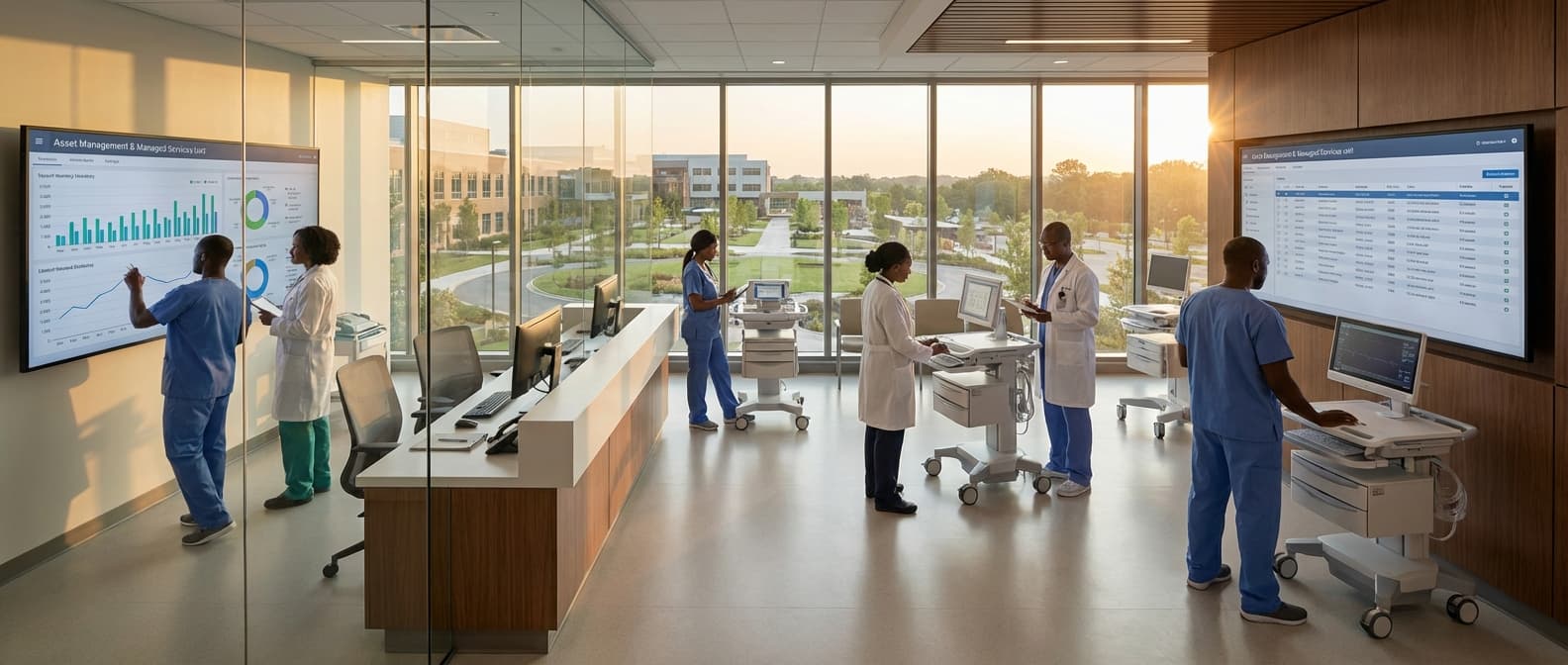
Equipment Condition Assessment Report Service in Liberia
Engineering Excellence & Technical Support
Equipment Condition Assessment Report Service High-standard technical execution following OEM protocols and local regulatory frameworks.
Predictive Maintenance Insights
Leveraging advanced sensor data analysis and AI algorithms, our service identifies potential equipment failures before they occur. This proactive approach minimizes costly downtime and extends asset lifespan, crucial for maintaining operational efficiency in Liberia's key industries.
Non-Destructive Testing Expertise
Our certified technicians employ state-of-the-art non-destructive testing (NDT) methods, including ultrasonic testing and thermography, to assess equipment integrity without disrupting operations. This ensures accurate diagnostics and reliable condition assessments for critical infrastructure across Liberia.
Comprehensive Digital Twin Creation
We build detailed digital replicas of your valuable assets. These digital twins integrate real-time operational data, maintenance history, and inspection results, providing a holistic view for optimized maintenance planning, risk management, and informed decision-making for businesses in Liberia.
What Is Equipment Condition Assessment Report Service In Liberia?
An Equipment Condition Assessment Report Service in Liberia is a specialized technical service focused on systematically evaluating the current operational status, integrity, and remaining useful life of various types of industrial, commercial, and infrastructure equipment. This service employs a combination of non-destructive testing (NDT) techniques, visual inspections, performance monitoring, historical data analysis, and expert judgment to provide a comprehensive understanding of an asset's condition. The primary objective is to identify potential failures, assess degradation, and recommend appropriate maintenance, repair, or replacement strategies to ensure safety, reliability, and economic viability. The service is crucial for asset owners and operators in Liberia seeking to optimize asset management, mitigate risks, and maintain operational continuity in a diverse economic landscape that includes mining, agriculture, manufacturing, transportation, and public utilities.
| Stakeholder/Industry | Need for Service | Typical Use Cases |
|---|---|---|
| Mining Operations | To ensure the reliability and safety of heavy machinery (excavators, haul trucks, crushers, conveyor systems) operating in harsh environments, minimizing downtime and production losses. | Pre-purchase inspection of used equipment, routine maintenance planning, failure analysis of critical components, assessment of wear and tear on processing plant machinery. |
| Manufacturing & Processing Plants | To maintain the operational efficiency and longevity of production lines, machinery (motors, pumps, gearboxes, turbines), and process equipment, preventing costly breakdowns and ensuring product quality. | Condition monitoring of rotating equipment, integrity assessment of pressure vessels and piping, evaluation of electrical distribution systems, planning for scheduled maintenance outages. |
| Agriculture Sector | To assess the condition of agricultural machinery (tractors, harvesters, irrigation pumps) and processing equipment, optimizing investment and ensuring consistent output. | Evaluation of farm equipment before purchase, assessment of irrigation system components, maintenance planning for food processing machinery. |
| Transportation & Logistics | To ensure the safety and operational readiness of critical infrastructure and vehicles, including bridges, port cranes, and fleet vehicles. | Structural assessment of bridges and port facilities, condition monitoring of cargo handling equipment, inspection of fleet vehicles for roadworthiness. |
| Energy & Utilities (Power Generation, Water Treatment) | To guarantee the reliability and safety of power generation equipment (turbines, generators, boilers), distribution networks, and water treatment infrastructure, preventing service interruptions. | Integrity assessment of power plant components, condition monitoring of transmission and distribution lines, evaluation of water treatment plant machinery. |
| Construction Industry | To evaluate the condition of construction equipment and temporary structures, ensuring safety and compliance on project sites. | Inspection of cranes and heavy lifting equipment, assessment of scaffolding and temporary works, pre-lease inspection of rented equipment. |
| Asset Management Firms & Financiers | To provide objective assessments of asset condition for valuation, risk management, and investment decisions. | Due diligence for mergers and acquisitions, collateral valuation for loans, portfolio risk assessment. |
Key Components of Equipment Condition Assessment Report Service
- Visual Inspection: Detailed examination of physical condition, including corrosion, wear, damage, and deformation.
- Non-Destructive Testing (NDT): Application of techniques such as ultrasonic testing (UT), magnetic particle testing (MT), liquid penetrant testing (PT), eddy current testing (ECT), radiography, and visual inspection (VI) to detect internal and surface flaws without compromising the equipment's integrity.
- Performance Monitoring: Measurement of operational parameters (e.g., vibration, temperature, pressure, flow rate, power consumption) to identify deviations from baseline performance.
- Metallurgical Analysis: Examination of material properties, microstructure, and potential signs of fatigue or degradation.
- Lubricant Analysis: Analysis of used oils and greases to detect wear particles, contamination, and lubricant degradation, indicating internal component wear.
- Electrical Testing: Assessment of insulation resistance, dielectric strength, and other electrical parameters for electrical equipment.
- Structural Integrity Assessment: Evaluation of the load-bearing capacity and structural soundness of equipment and associated structures.
- Remaining Useful Life (RUL) Estimation: Prediction of the future operational lifespan based on condition data, operational history, and established engineering models.
- Risk Assessment: Identification and evaluation of potential failure modes and their associated risks.
- Recommendation Development: Formulation of actionable strategies for maintenance, repair, refurbishment, or replacement, including cost-benefit analyses.
- Reporting and Documentation: Generation of detailed reports outlining findings, methodologies, and recommendations, often with photographic evidence and data visualizations.
Who Needs Equipment Condition Assessment Report Service In Liberia?
An Equipment Condition Assessment Report service in Liberia is crucial for a diverse range of industries and organizations that rely on the functionality and longevity of their machinery and assets. These reports provide detailed evaluations of an equipment's current state, identifying potential issues, predicting future performance, and recommending maintenance or repair strategies. This proactive approach helps prevent unexpected breakdowns, reduces operational costs, enhances safety, and extends the lifespan of valuable assets.
| Industry/Sector | Typical Departments/Roles Requiring the Service | Key Benefits |
|---|---|---|
| Mining and Quarrying | Operations Management, Maintenance & Engineering, Asset Management, Safety Officers | Preventing costly breakdowns of excavators, crushers, and conveyors; ensuring safe operation of heavy machinery; optimizing maintenance schedules. |
| Oil and Gas | Production Operations, Maintenance & Reliability Engineering, Asset Integrity Management, Health, Safety, and Environment (HSE) | Assessing the condition of pipelines, pumps, turbines, and drilling equipment; ensuring compliance with stringent safety regulations; managing risks associated with critical infrastructure. |
| Manufacturing and Industrial Production | Production Management, Plant Maintenance, Quality Control, Engineering & Technical Services | Evaluating the performance of manufacturing lines, processing machinery, and automation systems; minimizing production stoppages; ensuring product quality through well-maintained equipment. |
| Construction and Infrastructure | Project Management, Site Engineering, Fleet Management, Health and Safety | Assessing the condition of construction vehicles, cranes, earthmoving equipment, and building systems; ensuring project timelines are met; identifying safety hazards. |
| Agriculture | Farm Management, Equipment Maintenance Supervisors, Cooperative Leadership | Evaluating the performance of tractors, harvesters, irrigation systems, and processing machinery; maximizing agricultural yields; reducing repair costs. |
| Utilities (Power Generation, Water Treatment) | Operations and Maintenance, Asset Management, Reliability Engineering, Environmental Compliance | Assessing the condition of generators, turbines, pumps, and water treatment plants; ensuring continuous service delivery; complying with environmental standards. |
| Transportation and Logistics | Fleet Management, Maintenance Supervisors, Operations Management, Safety Officers | Evaluating the condition of trucks, buses, railway rolling stock, and port equipment; ensuring operational reliability; reducing fuel consumption and maintenance expenses. |
| Government and Public Sector | Public Works Departments, Infrastructure Management Agencies, Municipalities, National Security Agencies | Assessing the condition of public transport fleets, road maintenance equipment, public building systems, and critical infrastructure; optimizing public service delivery; ensuring taxpayer money is well-spent. |
| Financial Institutions (Banks, Insurance Companies) | Asset Valuation, Risk Management, Loan Departments, Underwriting | Providing independent assessments for asset-backed loans; evaluating risk for insurance policies; verifying the value and condition of collateral. |
| Large Commercial Enterprises with significant physical assets | Facilities Management, Procurement, Operations, Risk Management | Ensuring the longevity and efficiency of building systems, IT hardware, and specialized equipment; managing procurement decisions based on asset condition. |
Target Customers and Departments for Equipment Condition Assessment Report Services in Liberia
- Businesses that operate heavy machinery and complex equipment.
- Organizations focused on maintaining operational efficiency and minimizing downtime.
- Entities responsible for asset management and long-term investment planning.
- Companies prioritizing safety and regulatory compliance.
- Government agencies overseeing public infrastructure and services.
- Financial institutions involved in asset-backed lending or insurance.
Equipment Condition Assessment Report Service Process In Liberia
This document outlines the service process for Equipment Condition Assessment Reports (ECARs) in Liberia, detailing the workflow from the initial customer inquiry to the final execution of the assessment. The ECAR service is crucial for businesses operating heavy machinery, infrastructure, or any critical equipment to understand its current operational status, identify potential issues, and plan for maintenance, repairs, or replacement. The process is designed to be systematic, transparent, and efficient, ensuring clients receive accurate and timely information to make informed decisions.
| Phase | Key Activities | Responsible Party | Deliverables/Outputs |
|---|---|---|---|
| Initiation | Inquiry, Information Gathering, Consultation | Client & Service Provider | Client Needs Assessment, Preliminary Equipment Data |
| Planning | Proposal Development, Quotation, Contract Agreement | Service Provider & Client | Service Proposal, Quotation, Signed Contract |
| Execution | On-Site Assessment, Data Collection | Service Provider (Assessment Team) | Raw Assessment Data, Field Notes, Photographs |
| Analysis & Reporting | Data Analysis, Report Writing | Service Provider (Technical Team) | Draft ECAR, Analyzed Data |
| Completion | Report Review, Submission, Presentation, Discussion | Service Provider & Client | Final ECAR, Presentation Meeting, Clarifications |
| Closure | Post-Assessment Support, Invoice Processing, Project Close-out | Service Provider & Client | Completed Service, Final Payment |
Equipment Condition Assessment Report Service Process in Liberia
- {"step":1,"title":"Inquiry & Information Gathering","description":"Potential clients initiate contact through various channels (phone, email, website) to request an ECAR service. The service provider gathers preliminary information about the client's needs, including the type and number of equipment to be assessed, its location, desired timeline, and any specific concerns or objectives they have for the assessment. This phase might involve an initial consultation or a request for detailed equipment specifications."}
- {"step":2,"title":"Proposal Development & Quotation","description":"Based on the gathered information, the service provider develops a detailed proposal. This proposal outlines the scope of work, the methodology to be employed, the assessment criteria, the deliverables (e.g., the ECAR document, visual aids), the estimated timeline for execution, and the associated costs. A formal quotation is then provided to the client for review and approval."}
- {"step":3,"title":"Contract Agreement & Scheduling","description":"Upon acceptance of the proposal and quotation, a formal service agreement or contract is drafted and signed by both parties. This contract solidifies the terms, conditions, payment schedule, and liabilities. Following the agreement, the service provider and client collaboratively schedule the assessment visit(s), considering the operational availability of the equipment and any site-specific requirements."}
- {"step":4,"title":"On-Site Assessment & Data Collection","description":"The assessment team arrives at the client's location as per the scheduled date. This phase involves a thorough physical inspection of the equipment. Data collection methods may include visual inspections, non-destructive testing (NDT) if applicable, review of maintenance logs and operational history, performance testing, and interviews with equipment operators and maintenance personnel. Safety protocols are strictly adhered to during the entire on-site phase."}
- {"step":5,"title":"Data Analysis & Reporting","description":"Once on-site data collection is complete, the assessment team returns to their base to analyze the gathered information. This involves comparing the equipment's current condition against established standards, manufacturers' specifications, and industry best practices. Potential defects, wear and tear, operational inefficiencies, and safety hazards are identified and categorized. The findings are then compiled into a comprehensive Equipment Condition Assessment Report (ECAR)."}
- {"step":6,"title":"Report Review & Submission","description":"The draft ECAR is internally reviewed by senior assessors or technical specialists to ensure accuracy, completeness, and clarity. Once finalized, the report is formally submitted to the client, typically in a digital format (PDF) and/or hard copy, depending on the agreement. The report includes executive summaries, detailed findings, photographic evidence, risk assessments, and recommendations for maintenance, repair, or operational adjustments."}
- {"step":7,"title":"Presentation & Discussion","description":"The service provider often schedules a follow-up meeting or presentation with the client to discuss the findings of the ECAR. This allows the client to ask clarifying questions, understand the implications of the assessment, and discuss the proposed recommendations in detail. The objective is to ensure the client fully comprehends the report and can effectively utilize the information for their decision-making."}
- {"step":8,"title":"Post-Assessment Support & Closure","description":"Following the discussion, the service provider may offer limited post-assessment support, such as providing further clarification on recommendations or assisting in the development of a maintenance plan based on the ECAR. Once the client acknowledges receipt and understanding of the report, and all contractual obligations are met, the service engagement is formally closed."}
Equipment Condition Assessment Report Service Cost In Liberia
The cost of equipment condition assessment services in Liberia can vary significantly depending on several key factors. These factors influence the overall pricing structure and determine the final quotation for clients. Understanding these elements is crucial for businesses seeking to procure such services and for service providers to establish competitive yet profitable rates. The local currency in Liberia is the Liberian Dollar (LRD).
| Service Level/Equipment Type | Estimated Price Range (LRD) | Notes |
|---|---|---|
| Basic Visual Inspection (e.g., office equipment, small tools) | 15,000 - 40,000 | Covers general condition, visible damage, and basic functionality check. |
| Standard Assessment (e.g., general industrial machinery, vehicles) | 50,000 - 150,000 | Includes more detailed checks, basic functional tests, and minor diagnostic analysis. |
| Comprehensive Assessment (e.g., heavy construction, mining, specialized industrial) | 200,000 - 750,000+ | Involves advanced diagnostics, NDT, detailed analysis, and extensive reporting. Can be significantly higher for very complex or large-scale operations. |
| Specialized NDT Services (e.g., ultrasonic testing, magnetic particle testing) | Per day/per technician: 30,000 - 70,000 | Often quoted separately or as part of a comprehensive package. Cost depends on the specific NDT method and expertise required. |
| Rush Service Surcharge | 20% - 50% additional | Applied to the base cost for urgent requests. |
| Travel and Accommodation (if applicable) | Variable | Dependent on distance, duration, and local rates for transport and lodging. |
Pricing Factors for Equipment Condition Assessment Services in Liberia
- Scope and Complexity of the Assessment: This is perhaps the most significant factor. A basic visual inspection will be far less expensive than a comprehensive assessment involving non-destructive testing (NDT), advanced diagnostics, and detailed structural analysis.
- Type and Number of Equipment: The more sophisticated and numerous the equipment to be assessed, the higher the cost. Specialized industrial machinery (e.g., mining equipment, heavy construction machinery) will typically command higher fees than standard office equipment.
- Location and Accessibility of Equipment: If the equipment is located in remote or difficult-to-access areas, this will increase travel, logistics, and potentially accommodation costs for the assessment team, leading to higher prices.
- Required Expertise and Certifications: Assessments requiring highly specialized engineers, technicians, or specific certifications (e.g., welding inspectors, NDT technicians) will be more expensive due to the scarcity of such skilled professionals and their associated salary expectations.
- Turnaround Time and Urgency: Rush assessments or those requiring immediate attention will often incur a premium due to the need for expedited scheduling and resource allocation.
- Reporting Requirements and Detail Level: The depth and format of the final report play a role. A basic summary report will be less costly than a detailed report with extensive data, analysis, recommendations, and photographic evidence.
- Company Reputation and Experience: Well-established firms with a proven track record and a strong reputation for quality service may charge higher rates compared to newer or less experienced providers.
- Inclusion of Remedial Recommendations: Whether the assessment includes detailed recommendations for repairs, maintenance, or upgrades, and the level of detail in these recommendations, can affect the cost.
- Use of Specialized Tools and Technology: The utilization of advanced diagnostic tools, software, and equipment for the assessment (e.g., thermal cameras, vibration analyzers) will contribute to the overall cost.
Affordable Equipment Condition Assessment Report Service Options
Investing in regular equipment condition assessments is crucial for proactive maintenance, preventing costly breakdowns, and optimizing operational efficiency. Our service offers comprehensive assessments tailored to your needs and budget. We understand that budget constraints are a reality, so we've developed flexible service options designed to provide maximum value while keeping costs manageable. This report outlines our service tiers, value bundles, and effective cost-saving strategies to help you make informed decisions about your equipment maintenance.
| Value Bundle Name | Included Tiers | Key Benefits | Cost-Saving Strategy | Ideal For |
|---|---|---|---|---|
| Preventative Maintenance Pro | Tier 1 & Tier 2 | Combines essential and detailed assessments for proactive upkeep. Early detection of potential issues before they escalate. | Discounted rate when bundling two consecutive assessment levels. Ensures ongoing monitoring at a reduced per-assessment cost. | Businesses looking to establish a solid preventative maintenance program with regular checks. |
| Asset Health Guardian | Tier 2 & Tier 3 | Offers detailed analysis with advanced diagnostics for critical equipment. Enables predictive maintenance and extended asset lifespan. | Significant savings on premium services when paired with a standard assessment. Maximizes ROI on critical asset management. | Organizations with high-value or critical operational equipment requiring advanced monitoring and predictive capabilities. |
| Full Fleet Health Check | Tier 1, Tier 2 & Tier 3 (Customizable) | Comprehensive assessment coverage across your entire equipment portfolio. Tailored to address diverse needs within one service agreement. | Volume discounts applied to larger scopes of work. Flexible scheduling and bundling of assessments across different equipment types. | Large facilities or organizations with a diverse range of equipment needing varied levels of assessment. |
Our Affordable Equipment Condition Assessment Service Options
- {"title":"Tier 1: Basic Assessment Package","description":"Ideal for essential equipment or for organizations with tighter budgets. This package focuses on core inspection points and identification of immediate concerns. Includes visual inspection, basic functional testing, and a summary report of findings. Limited to a predetermined number of critical equipment pieces per assessment."}
- {"title":"Tier 2: Standard Assessment Package","description":"A balanced option providing a more in-depth analysis. This package includes all features of the Basic Package plus more comprehensive functional testing, basic data logging (e.g., temperature, vibration readings), and a detailed report with prioritized recommendations. Suitable for a wider range of equipment and more detailed insights."}
- {"title":"Tier 3: Premium Assessment Package","description":"Our most comprehensive offering for organizations requiring a deep dive into equipment health. This package includes all Standard Package features, plus advanced diagnostic techniques (e.g., thermal imaging, ultrasonic analysis, oil analysis), predictive maintenance trend analysis, and a customized reporting format. Best for critical assets and comprehensive asset lifecycle management."}
Verified Providers In Liberia
In Liberia's evolving healthcare landscape, identifying reliable and credentialed healthcare providers is paramount for individuals seeking quality medical care. Franance Health stands out as a beacon of trust, meticulously vetting its network of providers to ensure they meet the highest standards of professionalism, expertise, and ethical practice. This commitment to verification not only safeguards patient well-being but also builds confidence in the healthcare system. Choosing a provider from Franance Health's curated list signifies access to a healthcare professional who has undergone rigorous scrutiny, possessing the necessary qualifications, experience, and dedication to patient-centered care. Their credentialing process is designed to identify practitioners who are not only technically proficient but also demonstrate empathy, integrity, and a commitment to continuous learning, making them the optimal choice for your health needs in Liberia.
| Credential Verification Aspect | Franance Health's Approach | Benefit to Patients |
|---|---|---|
| Licensing and Certifications | Mandatory verification of all relevant national and international licenses and certifications. | Ensures providers are legally authorized and possess foundational expertise. |
| Education and Training | In-depth review of medical school transcripts, residency completion, and specialized fellowship programs. | Confirms comprehensive academic and practical preparation for specialized medical services. |
| Professional History and Background Checks | Thorough examination of past employment records, disciplinary actions, and any criminal background. | Mitigates risks and assures a history of professional conduct and integrity. |
| Clinical Competency Assessment | May include peer reviews, case study evaluations, or proctoring where appropriate. | Guarantees that providers demonstrate the necessary skills and judgment for safe and effective patient care. |
| Continuing Medical Education (CME) | Verification of ongoing participation in CME activities and professional development. | Ensures providers are up-to-date with the latest medical knowledge, treatments, and technologies. |
| Adherence to Standards of Care | Assessment of alignment with recognized national and international medical guidelines and best practices. | Promotes consistent, high-quality care aligned with global healthcare benchmarks. |
Why Franance Health Providers Represent the Best Choice:
- Rigorous Credentialing Process: Franance Health employs a multi-faceted verification system that goes beyond basic licensing.
- Verified Qualifications and Experience: Providers are thoroughly assessed for their educational background, specialized training, and years of practical experience in their respective fields.
- Commitment to Ethical Practice: Franance Health screens for adherence to professional ethics, patient rights, and a strong moral compass.
- Patient-Centered Approach: Verified providers are chosen for their dedication to compassionate care, effective communication, and active patient involvement in treatment decisions.
- Continuous Professional Development: Franance Health encourages and often requires its network providers to engage in ongoing learning to stay abreast of the latest medical advancements.
- Reputation and Peer Review: Where applicable, Franance Health considers the professional reputation and peer reviews of healthcare practitioners.
- Accessibility and Patient Feedback: A transparent system for patient feedback is integrated to ensure ongoing quality and identify areas for improvement.
Scope Of Work For Equipment Condition Assessment Report Service
This Scope of Work (SOW) outlines the services required for a comprehensive Equipment Condition Assessment Report. The objective is to evaluate the current operational status, identify potential risks, and recommend maintenance and replacement strategies for a specified set of equipment. This report will provide valuable insights for asset management, operational efficiency, and capital planning. The deliverables will adhere to industry-standard specifications for condition assessment.
| Deliverable | Description | Format | Standard Specification Alignment |
|---|---|---|---|
| Project Plan | Detailed outline of activities, timelines, resources, and communication protocols. | Electronic Document (PDF) | Client's standard project management templates, ISO 21500 |
| Data Collection Log | Record of all gathered documents, inspection checklists, and testing data. | Electronic Spreadsheet (Excel) / Database | ISO 17020, ASTM E2373 (for NDT data) |
| Equipment Condition Assessment Report | Comprehensive report detailing findings, analysis, risk assessment, and recommendations for each piece of equipment. | Electronic Document (PDF) and Hard Copies | API Standards (e.g., API 510, API 570, API 653 as applicable), ASME Codes, client-specific templates |
| Risk Register | A log of identified risks, their severity, likelihood, and mitigation strategies. | Section within the Main Report / Standalone Spreadsheet | ISO 31000, client's risk management framework |
| Presentation Slides | Summary of key findings, recommendations, and proposed next steps for client review. | Electronic Presentation (PowerPoint) | Client's standard presentation templates |
Key Activities and Standard Specifications
- {"title":"1. Project Kick-off and Planning","description":"Initial meeting with the client to discuss project objectives, scope, equipment inventory, access arrangements, and reporting timelines. Develop a detailed project plan.","specifications":"Adherence to client's project management guidelines. Clearly defined roles and responsibilities."}
- {"title":"2. Data Collection and Review","description":"Gather existing equipment documentation (manuals, maintenance records, historical performance data, previous inspection reports). Conduct site visits for visual inspections and non-destructive testing (NDT) as applicable.","specifications":"Review of ISO 17020 for inspection bodies. NDT methods (e.g., ultrasonic testing, magnetic particle testing, eddy current testing) to be performed by certified technicians (e.g., ASNT Level II or equivalent)."}
- {"title":"3. On-site Inspections and Testing","description":"Perform detailed visual inspections of all designated equipment. Conduct functional tests and operational checks. Employ NDT methods to assess material integrity and identify internal defects.","specifications":"Visual inspection checklists aligned with API 570 (Piping) or equivalent standards for specific equipment types. NDT procedures to follow relevant ASTM or ASME codes. Safety protocols to comply with OSHA or local regulations."}
- {"title":"4. Data Analysis and Interpretation","description":"Analyze all collected data, including inspection findings, NDT results, and historical performance. Correlate findings with equipment design specifications and operational history. Identify failure modes and assess remaining useful life (RUL).","specifications":"Reliability-Centered Maintenance (RCM) principles (e.g., SAE JA1011). Failure Mode, Effects, and Criticality Analysis (FMECA). Statistical analysis of performance data."}
- {"title":"5. Risk Assessment and Prioritization","description":"Evaluate the identified risks associated with equipment condition, including safety, environmental, operational, and financial implications. Prioritize equipment based on risk levels.","specifications":"Risk matrix methodology (e.g., probability vs. consequence). ALARP (As Low As Reasonably Practicable) principles for risk reduction."}
- {"title":"6. Recommendation Development","description":"Develop specific, actionable recommendations for maintenance, repair, refurbishment, or replacement of each assessed piece of equipment. Include estimated costs and timelines where feasible.","specifications":"Recommendations to align with best practices for maintenance and asset management. Cost estimations to be supported by market data or client-provided benchmarks."}
- {"title":"7. Report Generation and Presentation","description":"Compile a comprehensive Equipment Condition Assessment Report detailing findings, analysis, risk assessment, and recommendations. Present the report to the client and conduct a debriefing session.","specifications":"Report format to be agreed upon with the client, typically including an executive summary, detailed equipment condition, risk register, and recommendations. Presentation to follow client's preferred format."}
Service Level Agreement For Equipment Condition Assessment Report Service
This Service Level Agreement (SLA) outlines the response times and uptime guarantees for the Equipment Condition Assessment Report (ECAR) Service provided by [Your Company Name]. This SLA applies to all customers who have subscribed to the ECAR Service.
| Service Component | Response Time Target (Business Hours) | Escalation Protocol | Remedy for SLA Breach |
|---|---|---|---|
| Initial Acknowledgment of Report Request | Within [Number] minutes | Automated system acknowledgement; further updates via email. | N/A (standard operational procedure) |
| Delivery of Draft ECAR | Within [Number] business days of receiving all necessary data/access. | If delayed beyond target, customer to be notified with revised ETA. If significantly delayed, contact assigned Account Manager. | 10% service credit on the next monthly invoice for each instance exceeding the target by more than [Number] business days. |
| Response to Clarification/Query on Final ECAR | Within [Number] business hours | Via email to the designated support contact. For critical issues, call the support hotline. | 10% service credit on the next monthly invoice for each instance where the response time exceeds the target by more than [Number] business hours. |
| Resolution of Critical System Issues (impacting report generation/access) | Within [Number] business hours | Initial diagnosis within [Number] business hours, ongoing updates every [Number] business hours. Escalation to senior technical team if not resolved. | For each full [Number]-hour period of critical downtime beyond the first [Number] hours, a credit equivalent to [Percentage]% of the monthly service fee will be applied. |
Key Service Metrics
- ECAR Service Uptime Guarantee: [Your Company Name] guarantees that the ECAR Service will be available 99.5% of the time, measured on a monthly basis.
- Definition of Uptime: Uptime is defined as the period during which the ECAR Service is fully operational and accessible for report generation and retrieval. Scheduled maintenance, as notified in advance, is excluded from uptime calculations.
- Definition of Downtime: Downtime is defined as the period during which the ECAR Service is unavailable or significantly degraded, preventing users from accessing or utilizing its core functionalities.
- Scheduled Maintenance: [Your Company Name] will endeavor to schedule maintenance during off-peak hours to minimize disruption. Customers will be notified of scheduled maintenance at least [Number] days in advance.
- Unscheduled Outages: In the event of an unscheduled outage, [Your Company Name] will work diligently to restore service as quickly as possible. Updates will be provided through [Communication Channel, e.g., status page, email].
Frequently Asked Questions

Ready when you are
Let's scope your Equipment Condition Assessment Report Service in Liberia project in Liberia.

Scaling healthcare logistics and technical systems across the entire continent.