
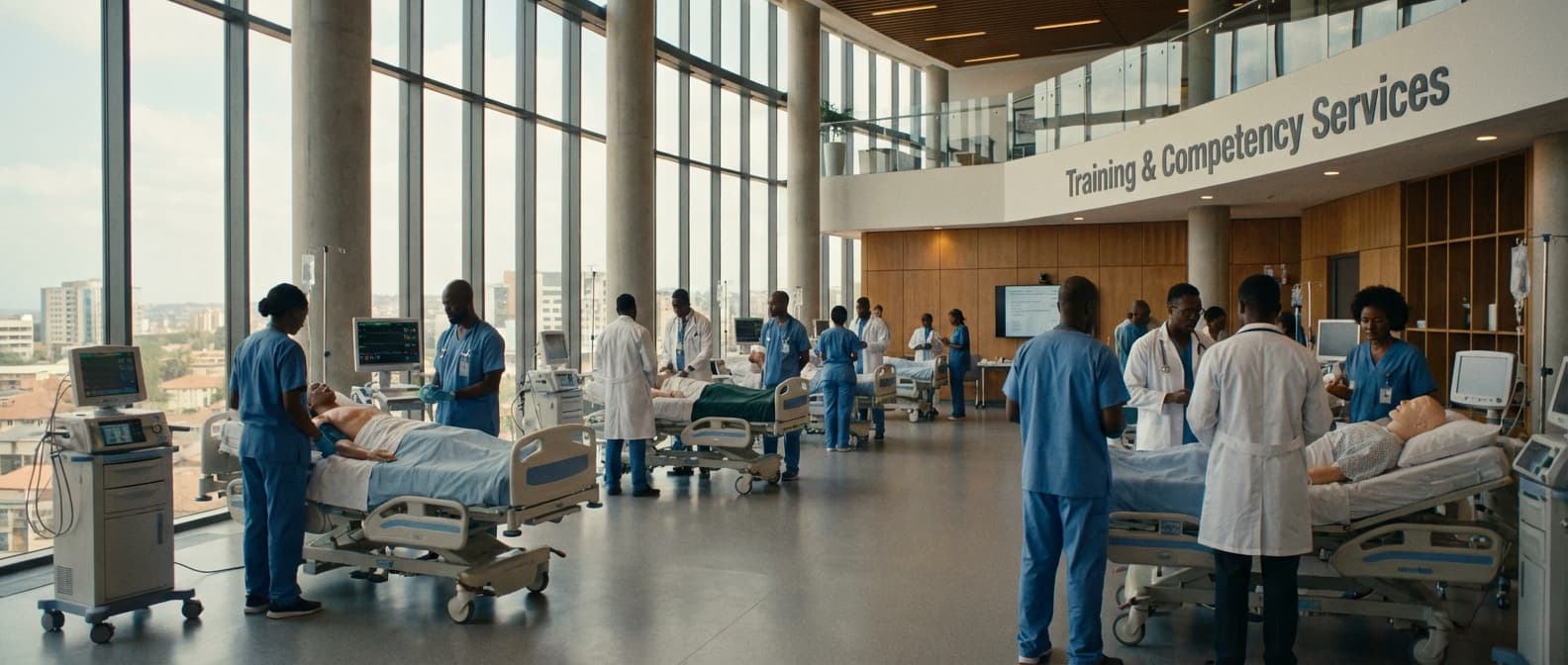
Ventilator User Training Service (Nurses) in Lesotho
Engineering Excellence & Technical Support
Ventilator User Training Service (Nurses) High-standard technical execution following OEM protocols and local regulatory frameworks.
Mastering Ventilation Modes
Gain proficiency in essential ventilator modes (e.g., Volume Control, Pressure Control, SIMV) to tailor respiratory support precisely to each patient's needs in various clinical scenarios encountered in Lesotho.
Optimizing Humidification & Temperature
Understand the critical importance of effective humidification and temperature control for patient comfort and preventing airway complications, ensuring optimal settings are applied using available equipment in Lesotho's healthcare settings.
Recognizing & Responding to Alarms
Develop expert skills in identifying common ventilator alarms, understanding their underlying causes (e.g., disconnection, high pressure), and executing timely, appropriate interventions to ensure patient safety and optimize respiratory care.
What Is Ventilator User Training Service (Nurses) In Lesotho?
Ventilator User Training Service (Nurses) in Lesotho refers to specialized educational programs designed to equip registered nurses with the knowledge and practical skills required for the safe and effective operation of mechanical ventilators. This service is crucial in improving patient outcomes for those requiring respiratory support, particularly in critical care settings. The training focuses on understanding ventilator mechanics, patient-ventilator synchrony, monitoring of physiological parameters, troubleshooting common alarms and malfunctions, and appropriate weaning protocols. It is often delivered by experienced respiratory therapists, critical care nurses, or certified trainers, and may involve a combination of theoretical instruction, simulation-based learning, and supervised clinical practice.
| Who Needs Ventilator User Training (Nurses)? | Typical Use Cases | ||||
|---|---|---|---|---|---|
| Registered Nurses working in critical care units (ICUs, HDUs) of hospitals in Lesotho. | Patients with acute respiratory failure (e.g., ARDS, pneumonia, COPD exacerbations). | Post-operative patients requiring mechanical ventilation due to anesthesia or underlying conditions. | Patients with severe neurological conditions affecting respiratory drive (e.g., brain injury, spinal cord injury). | Patients undergoing prolonged surgical procedures or those at high risk of respiratory compromise. | Emergency response teams and nurses in facilities where critical care capacity is limited. |
| Nurses requiring initial certification or re-certification in mechanical ventilation. | Introduction of new ventilator models or technologies within healthcare facilities. | Enhancing the skill set of nurses to manage a wider range of respiratory conditions. | Ensuring adherence to national and international best practices in respiratory care. | Supporting healthcare facilities in remote or underserved areas with limited access to specialized respiratory care professionals. |
Key Components of Ventilator User Training Service (Nurses) in Lesotho:
- Ventilator Principles and Modes: Understanding the underlying physics of ventilation, types of ventilators, and common ventilation modes (e.g., Volume Control, Pressure Control, Pressure Support, Synchronized Intermittent Mandatory Ventilation - SIMV).
- Patient Assessment and Monitoring: Comprehensive assessment of respiratory status, interpretation of arterial blood gases (ABGs), hemodynamic monitoring, and understanding of physiological parameters like tidal volume, respiratory rate, PEEP, and FiO2.
- Initiation and Management of Mechanical Ventilation: Procedures for intubation and tracheostomy (if applicable), setting up and initiating mechanical ventilation, titrating ventilator settings based on patient response, and managing sedation and analgesia.
- Alarm Management and Troubleshooting: Identifying and responding to common ventilator alarms (e.g., high pressure, low volume, apnea), understanding the underlying causes, and implementing appropriate corrective actions.
- Weaning Protocols and Extubation: Assessing readiness for weaning, implementing different weaning strategies, monitoring the weaning process, and performing successful extubation.
- Complication Prevention and Management: Recognizing and managing potential complications associated with mechanical ventilation, such as ventilator-associated pneumonia (VAP), barotrauma, and volutrauma.
- Infection Control and Hygiene: Adhering to strict infection control protocols related to ventilator use, including circuit changes, suctioning techniques, and oral care.
Who Needs Ventilator User Training Service (Nurses) In Lesotho?
Ventilator User Training Service is crucial for nurses in Lesotho to ensure safe and effective operation of mechanical ventilators. This training is essential for improving patient outcomes, reducing complications, and empowering nurses with the skills to manage critical respiratory conditions.
| Department | Specific Roles Requiring Training | Reason for Training |
|---|---|---|
| Intensive Care Units (ICUs) | ICU Nurses, Respiratory Therapists (if applicable) | Managing critically ill patients requiring mechanical ventilation, understanding modes, settings, and troubleshooting. |
| High Dependency Units (HDUs) / Step-down ICUs | HDU Nurses | Providing intermediate respiratory support and transitioning patients from full mechanical ventilation. |
| Emergency Departments (EDs) | ED Nurses | Initial stabilization of patients with respiratory distress requiring ventilation prior to transfer to ICU. |
| Surgical Wards (Post-operative care) | Post-Anesthesia Care Unit (PACU) Nurses, Surgical Ward Nurses | Managing patients recovering from major surgery who may require short-term ventilation. |
| Pediatric Wards (especially PICU) | Pediatric Nurses, Neonatal ICU Nurses | Ventilator management for infants and children with diverse respiratory conditions. |
| Maternal and Child Health Units | Specialized Nurses | Neonatal resuscitation and support for newborns requiring respiratory assistance. |
Target Customers and Departments
- Registered Nurses (RNs) working in critical care settings.
- Enrolled Nurses (ENs) with responsibilities in acute care or respiratory support.
- Nursing Assistants or Healthcare Assistants who may assist with basic ventilator monitoring.
- Nurse Educators and Supervisors responsible for training and competency assessment.
Ventilator User Training Service (Nurses) Process In Lesotho
This document outlines the workflow for the Ventilator User Training Service specifically for nurses in Lesotho, from the initial inquiry to the successful execution of the training. The process is designed to be structured, efficient, and ensure that nurses receive comprehensive and practical training on ventilator operation and management.
| Stage | Description | Key Activities | Responsible Party | Deliverables/Outcomes |
|---|---|---|---|---|
| Initial contact and understanding of the training requirements. | Hospital/Clinic expresses interest; Training provider receives inquiry; Initial discussion on training needs (number of nurses, specific ventilator models, desired outcomes); Gathering of any existing training materials or protocols. | Requesting Institution (Hospital/Clinic), Training Provider | Clear understanding of training scope; Identification of key stakeholders. |
| Formalizing the training offer based on assessed needs. | Training provider develops a detailed training proposal (curriculum, duration, methodology, trainer profiles); Calculates training costs and provides a formal quotation. | Training Provider | Comprehensive training proposal; Detailed quotation. |
| Formalizing the contract and setting the training dates. | Requesting institution reviews and accepts the proposal/quotation; Negotiation of terms and conditions (if any); Signing of a training agreement; Jointly determining and confirming training dates and venue. | Requesting Institution, Training Provider | Signed training agreement; Confirmed training schedule. |
| Ensuring all necessary resources are in place for effective training. | Training provider prepares training materials (manuals, presentations, case studies); Arranges for ventilators for hands-on practice (if not provided by the institution); Confirms venue logistics (room, projector, etc.); Informs nurses about pre-reading materials or prerequisites; Requesting institution confirms participant list and their availability; Ensures the availability of the actual ventilators to be used in practice. | Training Provider, Requesting Institution | Prepared training materials; Confirmed logistics; Informed participants. |
| The actual execution of the training program. | Theoretical sessions (lectures, discussions); Practical demonstrations on ventilators; Hands-on exercises and simulations by nurses; Q&A sessions and troubleshooting; Case study analysis; Assessment of understanding through quizzes or practical evaluations. | Training Provider (Trainers), Nurses (Participants) | Nurses gain theoretical knowledge and practical skills in ventilator operation and management. |
| Assessing the effectiveness of the training and providing ongoing assistance. | Nurses complete post-training evaluation forms; Trainers assess participant performance based on practical exercises and assessments; Training provider submits a training report; Provision of limited post-training support (e.g., answering queries via email/phone) for a defined period. | Nurses, Training Provider | Training feedback; Performance assessment; Training report; Initial post-training support. |
| Formal recognition of training completion and documentation. | Issuance of certificates of completion to nurses who successfully meet the training objectives; Maintaining records of trained nurses and training conducted. | Training Provider | Certificates of completion; Training records. |
Ventilator User Training Service (Nurses) Workflow in Lesotho
- Inquiry and Needs Assessment
- Training Proposal and Quotation
- Agreement and Scheduling
- Pre-Training Preparation
- Training Delivery
- Post-Training Evaluation and Support
- Certification and Record Keeping
Ventilator User Training Service (Nurses) Cost In Lesotho
Determining the precise cost of ventilator user training for nurses in Lesotho requires considering several key pricing factors. These factors significantly influence the overall investment a healthcare facility or individual nurse might expect to make. The cost is not static and can vary based on the provider, the scope of training, and the logistical arrangements required.
Key Pricing Factors:
- Training Provider: Whether the training is offered by a government-affiliated institution, a private healthcare training company, a medical device manufacturer's representative, or an international NGO will impact the cost. Government-sponsored or NGO-led training might be subsidized or free, while private entities will factor in their operational costs and profit margins.
- Scope and Duration of Training: A basic introductory course on ventilator operation and patient monitoring will be less expensive than an in-depth program covering advanced ventilation modes, troubleshooting complex scenarios, and emergency management. The number of days or hours dedicated to training directly correlates with cost.
- Curriculum Design and Materials: Specialized, updated curricula and high-quality training materials (manuals, simulations, online resources) contribute to the overall cost. The inclusion of hands-on simulation equipment also adds to the price.
- Trainer Expertise and Qualifications: Highly experienced and certified respiratory therapists or critical care nurses as trainers command higher fees. The ratio of trainers to trainees also affects the cost per participant.
- Location and Logistics: If training needs to be conducted on-site at a remote hospital or clinic, travel and accommodation expenses for trainers, as well as potential venue rental, will be added. Training conducted at a central training facility might have lower logistical overheads.
- Number of Participants: Group training often offers a lower per-person cost compared to individual or very small group training, due to economies of scale in terms of trainer time and resource utilization.
- Certification and Assessment: Courses that include formal certification exams and assessments will generally be more expensive than those that only provide a certificate of attendance.
- Equipment Access: Access to functional ventilators for hands-on practice is crucial. If the training provider needs to supply or rent this equipment, it will increase the cost. Conversely, if the training is conducted at a facility with existing, well-maintained ventilators, this cost might be absorbed by the facility.
Estimated Cost Ranges in Local Currency (Lesotho Loti - M):
It's challenging to provide exact figures without specific provider quotes. However, based on general market trends for professional healthcare training and considering the economic context of Lesotho, the following ranges are estimated and should be treated as indicative:
- Basic Ventilator User Training (1-2 days): This would cover fundamental principles, operation of common modes, and basic monitoring. Expected cost: M 1,500 - M 3,500 per nurse.
- Intermediate Ventilator User Training (2-3 days): This might include a broader range of ventilation modes, weaning principles, and initial troubleshooting. Expected cost: M 3,000 - M 6,000 per nurse.
- Advanced/Specialized Ventilator Training (3-5 days): This could involve complex ventilation strategies, non-invasive ventilation, pediatric ventilation, and advanced critical care scenarios. Expected cost: M 5,000 - M 10,000+ per nurse.
Note:
- These are per-nurse estimates. Many training programs are priced per participant.
- Subsidized or Free Training: It is possible that government-funded initiatives, public health programs, or partnerships with international organizations may offer this training at significantly reduced costs or even for free, especially if it is part of a national health strategy or disaster preparedness program.
- Manufacturer-Provided Training: When purchasing new ventilators, manufacturers often include a certain level of user training as part of the package. The cost of this training is usually embedded within the equipment price.
- In-House Training: Larger hospitals with experienced respiratory therapists might conduct internal training. While there's no direct monetary cost for external trainers, there's an opportunity cost for the trainers' time and resources.
| Training Type | Estimated Duration | Estimated Cost Per Nurse (M) |
|---|---|---|
| Basic Ventilator User Training | 1-2 Days | 1,500 - 3,500 |
| Intermediate Ventilator User Training | 2-3 Days | 3,000 - 6,000 |
| Advanced/Specialized Ventilator Training | 3-5 Days | 5,000 - 10,000+ |
Key Factors Influencing Ventilator User Training Costs for Nurses in Lesotho
- Training Provider Type (Government, Private, NGO, Manufacturer)
- Duration and Depth of the Training Program
- Curriculum Complexity and Training Materials Used
- Qualifications and Experience of the Trainers
- Logistical Requirements (Travel, Accommodation, Venue)
- Number of Nurses Participating in the Training
- Inclusion of Formal Certification and Assessment
- Availability and Cost of Training Ventilator Equipment
Affordable Ventilator User Training Service (Nurses) Options
Providing effective and affordable ventilator user training for nurses is crucial for patient safety and optimal care. This document outlines various options for such training, focusing on value bundles and cost-saving strategies. We will explore different service levels and delivery methods to meet diverse institutional needs and budgets.
| Service Bundle Tier | Description | Included Components | Value Proposition | Estimated Cost Range (per nurse, annual) | Cost-Saving Strategies |
|---|---|---|---|---|---|
| Basic Essentials | Foundational knowledge and skills for general ventilator use. | Core Competency Modules (online), Basic Troubleshooting Guides, Online Quizzes. | Cost-effective solution for new hires and general staff competency. | $150 - $300 | Leverage existing online platforms, group discounts for bulk enrollment, standardized curriculum to reduce customization costs. |
| Standard Care | Builds on basic knowledge with practical application and common scenarios. | Basic Essentials + Advanced Scenarios (online), Introduction to Simulation (recorded demos), Basic Equipment Overview. | Provides a solid foundation for common critical care scenarios at a moderate price point. | $300 - $600 | Combine online learning with scheduled group debriefs, 'flipped classroom' approach where online content precedes in-person discussions, negotiate bulk licensing for e-learning modules. |
| Comprehensive Clinical | In-depth understanding and hands-on practice for complex cases. | Standard Care + Simulation-Based Training (limited sessions), Equipment-Specific Training (curated content), Competency Assessment Tools. | Offers practical, hands-on experience for complex ventilator management, enhancing clinical confidence. | $600 - $1200 | Partner with simulation centers to share resources, utilize mobile simulation labs, develop internal simulation scenarios using readily available equipment, 'train-the-trainer' models for ongoing simulation delivery. |
| Total Mastery (Train-the-Trainer) | Empowers internal staff to deliver ongoing, high-quality training. | Comprehensive Clinical + Train-the-Trainer Program, Access to Curriculum Development Tools, Ongoing Support and Updates. | Long-term cost-effectiveness through internal capacity building and reduced reliance on external trainers. | $1000 - $2500 (initial investment, lower ongoing per-nurse cost) | Invest in developing internal super-users, create a community of practice for trainers, utilize open-source educational materials, leverage vendor training modules for specific equipment as part of the trainer program. |
Key Components of Affordable Ventilator User Training
- Core Competency Modules (Ventilator Modes, Settings, Monitoring)
- Advanced Scenarios (ARDS, Weaning, Troubleshooting)
- Simulation-Based Training (High-fidelity mannequins)
- Online/E-Learning Modules (On-demand learning)
- Train-the-Trainer Programs (Empowering internal educators)
- Equipment-Specific Training (Manufacturer-led or curated)
- Certification and Competency Assessment
- Refresher Courses and Ongoing Education
Verified Providers In Lesotho
In Lesotho, ensuring access to reliable and high-quality healthcare is paramount. When seeking medical assistance, it's crucial to engage with Verified Providers who meet stringent standards of professionalism, ethical practice, and clinical competence. Franance Health stands out as a premier organization dedicated to this verification process, offering a robust credentialing system that guarantees the integrity and excellence of its network of healthcare professionals. Choosing a Franance Health-verified provider means partnering with a healthcare professional who has undergone rigorous vetting, ensuring they possess the necessary qualifications, experience, and commitment to patient well-being. This meticulous approach to credentialing provides patients with peace of mind and confidence in the care they receive.
| Category | Franance Health Verification Criteria | Patient Benefit |
|---|---|---|
| Education & Training | Verification of accredited medical degrees, residency, and specialized training. | Ensures providers have a strong foundational understanding of medical science and practice. |
| Licensure & Certification | Confirmation of valid and current medical licenses and relevant board certifications. | Guarantees practitioners are legally authorized to practice and have met recognized standards of expertise. |
| Clinical Experience | Review of professional history, including years of practice and areas of specialization. | Assures patients are treated by experienced individuals with a proven track record. |
| Professional Reputation | Inclusion of background checks and reference checks from peers and previous institutions. | Provides an extra layer of assurance regarding the provider's integrity and quality of care. |
| Continuing Medical Education (CME) | Confirmation of ongoing professional development and adherence to CME requirements. | Ensures providers remain current with the latest medical advancements and best practices. |
Why Franance Health Credentials Matter:
- Rigorous Vetting Process: Franance Health employs a comprehensive evaluation of medical professionals, encompassing educational background, licensing, board certifications, clinical experience, and peer reviews.
- Commitment to Ethical Standards: Verified providers adhere to a strict code of conduct, prioritizing patient safety, confidentiality, and respectful treatment.
- Ensured Clinical Competence: The credentialing process confirms that healthcare professionals possess the up-to-date knowledge and skills necessary to deliver effective medical care.
- Trust and Reliability: Franance Health verification serves as a mark of trust, assuring patients they are engaging with qualified and reputable practitioners.
- Improved Patient Outcomes: By connecting patients with accredited providers, Franance Health contributes to better health outcomes and a more positive healthcare experience.
Scope Of Work For Ventilator User Training Service (Nurses)
This Scope of Work (SOW) outlines the requirements for providing comprehensive user training services for medical ventilators specifically tailored for nursing staff. The objective is to equip nurses with the necessary knowledge and practical skills to safely and effectively operate, monitor, and manage patients requiring mechanical ventilation, ensuring optimal patient outcomes and adherence to best practices. This SOW details the technical deliverables and standard specifications for the training program.
| Deliverable | Description | Format | Standard Specifications | Verification Method |
|---|---|---|---|---|
| Training Curriculum Development | Detailed outline of all training modules, learning objectives, and content for each topic. | Digital Document (PDF/Word) | Curriculum must cover all key training areas listed above. Content must be evidence-based and current. Learning objectives must be SMART (Specific, Measurable, Achievable, Relevant, Time-bound). | Review and approval by client's clinical education department. |
| Training Materials | Comprehensive set of resources for trainees, including presentations, handouts, case studies, and practical exercises. | Digital (PPT, PDF) and Printed (as required) | Materials must be clear, concise, and visually engaging. Content must be accurate and reflect current clinical guidelines. Case studies should be realistic and relevant to common clinical scenarios. | Trainee feedback and pre/post-training assessments. |
| Instructor-Led Training Sessions | Delivery of training modules by qualified and experienced clinical educators/respiratory therapists. | In-person or Virtual Live Sessions | Sessions must be interactive, allowing for questions and discussions. Each session should include a mix of theoretical explanation and practical demonstration/application. Trainer-to-trainee ratio should be optimal for effective learning (e.g., 1:10 for hands-on). | Observation by client representatives, trainee evaluations, and skill competency assessments. |
| Hands-on Ventilator Simulation/Practice | Practical sessions using actual ventilators or high-fidelity simulators to practice settings, troubleshooting, and patient management. | In-person simulation lab or designated clinical area | Adequate number of ventilators (or simulators) and accessories for all trainees. Supervision by qualified instructors. Simulations should cover a range of patient conditions and ventilator alarms. | Direct observation of trainee performance, skill checklists, and competency assessments. |
| Competency Assessment Tools | Tools to evaluate the knowledge and skills acquired by trainees. | Written Exams, Practical Skills Checklists, Scenario-Based Assessments | Assessments must be validated and measure attainment of learning objectives. Passing scores clearly defined. Practical assessments should mirror real-world clinical tasks. | Review and validation of assessment tools by client's clinical education department; analysis of assessment results. |
| Training Completion Certificates | Official documentation verifying successful completion of the training program. | Printed or Digital Certificates | Certificates must include trainee name, training program title, date of completion, and issuing organization's details. Must align with any relevant professional development accreditation requirements. | Issuance of certificates upon successful completion of all training modules and assessments. |
| Post-Training Support Materials | Resources for ongoing reference and reinforcement of learned material. | Digital (FAQs, quick reference guides, online resources) | Materials should be easily accessible and cover common troubleshooting scenarios and key principles. | Availability and accessibility of materials to trainees. |
| Training Report | Comprehensive report summarizing training activities, attendee lists, assessment results, and recommendations. | Digital Document (PDF) | Report should include total number of participants, breakdown by department/unit, pass/fail rates, common areas of difficulty, and feedback summary. Must be delivered within 7 days of training completion. | Client review and acceptance of the report. |
Key Training Areas
- Ventilator Principles of Operation (Mechanical Ventilation Basics)
- Ventilator Modes and Settings (Conventional and Advanced)
- Patient Interface and Circuit Management (ET tubes, Tracheostomy, Humidification)
- Monitoring and Alarm Management (Physiological Parameters, Waveforms, Troubleshooting)
- Ventilator Weaning and Discontinuation Protocols
- Ventilator Associated Pneumonia (VAP) Prevention Strategies
- Emergency Procedures and Contingency Planning
- Infection Control and Sterilization Procedures
- Documentation and Communication Protocols
Service Level Agreement For Ventilator User Training Service (Nurses)
This Service Level Agreement (SLA) outlines the response times and uptime guarantees for the Ventilator User Training Service (Nurses). It defines the expected service levels and the remedies for any deviations.
| Service Component | Uptime Guarantee | Response Time (Critical Issue) | Response Time (Major Issue) | Response Time (Minor Issue) | Resolution Target (Critical Issue) | Resolution Target (Major Issue) |
|---|---|---|---|---|---|---|
| Training Platform Availability (LMS, content access) | 99.8% | 1 Hour | 4 Business Hours | 8 Business Hours | 4 Business Hours | 2 Business Days |
| Technical Support Hotline/Email | N/A (Support is reactive, but response times apply) | 30 Minutes (for initial acknowledgement) | 2 Business Hours (for initial acknowledgement) | 1 Business Day (for initial acknowledgement) | 8 Business Hours | 3 Business Days |
| Access to Training Materials (PDFs, videos) | 99.8% | 1 Hour | 4 Business Hours | 8 Business Hours | 4 Business Hours | 2 Business Days |
| Live Q&A/Webinar Sessions (if applicable) | N/A (Scheduled events) | Not Applicable (issues will be addressed in the next scheduled session or via alternative support) | Not Applicable | Not Applicable | Next Scheduled Session | Next Scheduled Session |
Key Definitions
- Ventilator User Training Service (Nurses): Refers to the provision of structured training programs, resources, and support for nursing staff on the operation, maintenance, and troubleshooting of specified ventilator models.
- Response Time: The maximum time allowed for the service provider to acknowledge and begin addressing a reported issue or request.
- Uptime: The percentage of time the training platform and associated support services are available and functional, excluding scheduled maintenance.
- Downtime: The period during which the training platform or associated support services are unavailable due to unplanned outages.
- Critical Issue: An issue that renders the training platform or essential support services completely unusable, significantly impacting the ability of nurses to access training.
- Major Issue: An issue that degrades the performance of the training platform or limits access to certain functionalities, but does not completely prevent usage.
- Minor Issue: An issue that does not significantly impact the usability of the training platform or access to training, such as minor cosmetic defects or non-critical feature malfunctions.
Frequently Asked Questions

Ready when you are
Let's scope your Ventilator User Training Service (Nurses) in Lesotho project in Lesotho.

Scaling healthcare logistics and technical systems across the entire continent.