
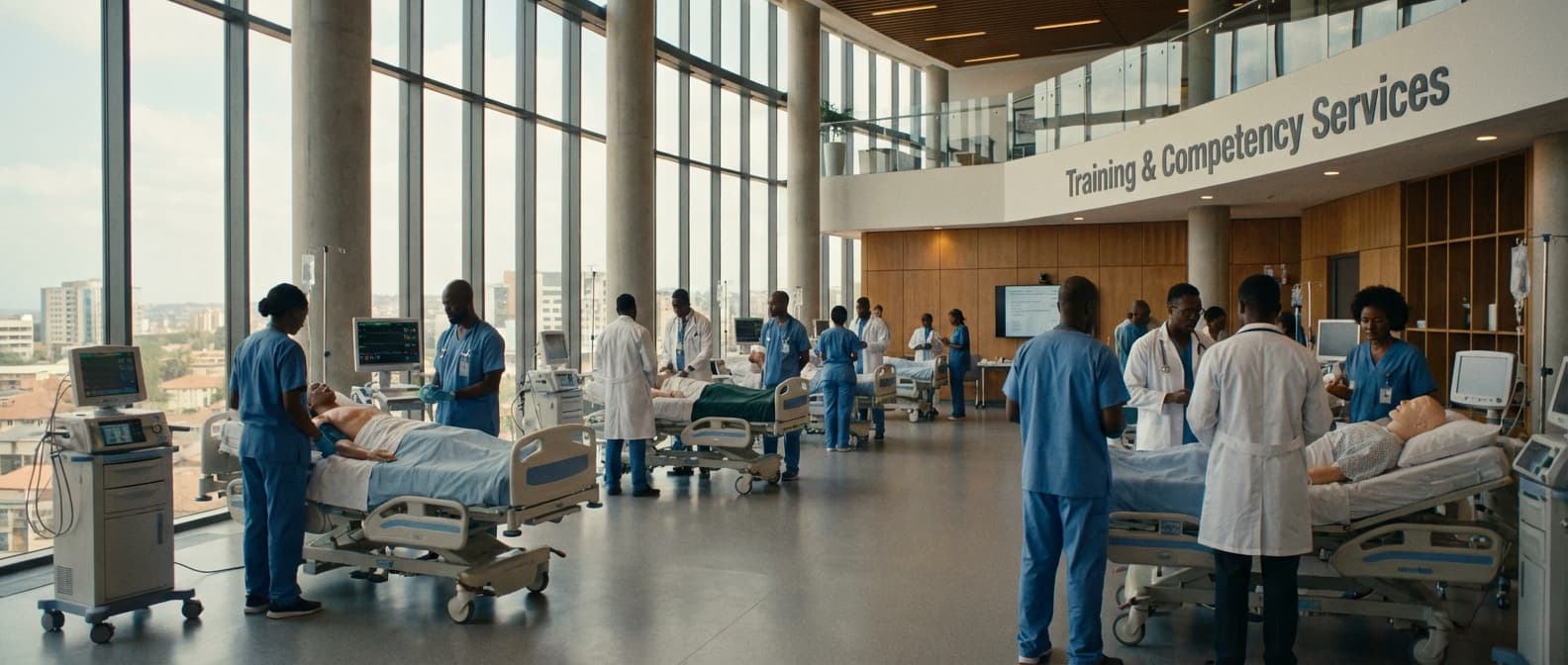
MRI Operator Training Service (Radiographers) in Lesotho
Engineering Excellence & Technical Support
MRI Operator Training Service (Radiographers) High-standard technical execution following OEM protocols and local regulatory frameworks.
Advanced Patient Safety Protocols
Master comprehensive patient screening, contraindication identification, and safe handling of implants and metallic objects, ensuring paramount patient well-being during MRI examinations.
Optimizing MRI Pulse Sequences
Gain expertise in selecting and tailoring optimal pulse sequences for various anatomical regions and pathologies, leading to enhanced image quality and diagnostic accuracy for Lesotho's diverse patient population.
MRI Scanner Maintenance & Quality Assurance
Develop proficiency in routine MRI scanner maintenance, artifact identification, and quality assurance procedures to ensure reliable and high-performance imaging services across Lesotho.
What Is Mri Operator Training Service (Radiographers) In Lesotho?
The MRI Operator Training Service for Radiographers in Lesotho refers to a specialized educational and practical program designed to equip radiographers with the necessary knowledge and skills to safely and effectively operate Magnetic Resonance Imaging (MRI) scanners. This training is crucial for the accurate acquisition and interpretation of MRI scans, ensuring patient safety, and adhering to international best practices in diagnostic imaging. The service typically encompasses theoretical instruction on MRI physics, patient care protocols, contraindications, image acquisition techniques, post-processing, and quality assurance, alongside hands-on experience with MRI equipment.
| Who Needs This Service? | Typical Use Cases | |||||
|---|---|---|---|---|---|---|
| Registered Radiographers: Professionals already practicing diagnostic imaging who wish to specialize in MRI or upgrade their existing skills. | Newly Qualified Radiographers: Individuals entering the profession who will be required to operate MRI scanners as part of their role. | Healthcare Institutions in Lesotho: Hospitals, diagnostic centers, and imaging facilities planning to acquire or expand their MRI services. | Medical Physicists and Technicians: Personnel involved in the installation, maintenance, and quality assurance of MRI equipment. | Healthcare Policy Makers and Administrators: To understand the requirements and resources needed for establishing and maintaining advanced imaging services. | ||
| Neurological Imaging: Diagnosis of strokes, brain tumors, multiple sclerosis, epilepsy, and spinal cord injuries. | Musculoskeletal Imaging: Assessment of joint injuries, ligament tears, cartilage damage, and bone tumors. | Abdominal and Pelvic Imaging: Evaluation of organs such as the liver, kidneys, pancreas, and reproductive organs for lesions, inflammation, or congenital anomalies. | Cardiovascular Imaging: Assessment of heart conditions, blood vessel abnormalities, and congenital heart disease. | Oncology: Staging and monitoring of cancer, including detection of metastases and assessment of treatment response. | Breast Imaging: Detailed evaluation of breast lesions, particularly in high-risk patients or when mammography is inconclusive. | Paediatric Imaging: Specialized MRI for children, requiring tailored protocols and patient management. |
Key Components of MRI Operator Training Service:
- Theoretical Foundations: In-depth understanding of MRI principles, including nuclear magnetic resonance, gradient coils, radiofrequency pulses, signal generation, and image reconstruction.
- Patient Management and Safety: Protocols for patient screening (e.g., contraindications for metallic implants), consent, sedation, and management of potential adverse events (e.g., claustrophobia, contrast reactions).
- MRI Physics and Artifacts: Comprehension of image formation, pulse sequences (e.g., T1-weighted, T2-weighted, FLAIR, DWI), and the identification and mitigation of common MRI artifacts.
- Image Acquisition Techniques: Practical training on optimizing scan parameters, positioning patients, and selecting appropriate sequences for various anatomical regions and clinical indications.
- Contrast Media Administration: Safe administration of gadolinium-based contrast agents, including dosage calculation, injection techniques, and recognition of potential side effects.
- Image Post-processing and Archiving: Familiarity with Picture Archiving and Communication Systems (PACS) and Radiology Information Systems (RIS) for image manipulation, analysis, and secure storage.
- Quality Assurance and Control: Implementing protocols for routine equipment checks, calibration, and troubleshooting to ensure diagnostic image quality.
- Radiation Safety (if applicable): While MRI is non-ionizing, training may include awareness of electromagnetic field safety for personnel and patients.
Who Needs Mri Operator Training Service (Radiographers) In Lesotho?
MRI Operator Training Service (Radiographers) in Lesotho is crucial for ensuring high-quality diagnostic imaging and patient care. This specialized training addresses the unique needs of healthcare facilities in Lesotho, aiming to equip radiographers with the skills and knowledge to operate MRI scanners effectively and safely. The service caters to a specific set of professionals and departments within the Lesotho healthcare landscape.
| Customer Type | Primary Departments Involved | Rationale for Training Need |
|---|---|---|
| Public Hospitals | Radiology Department, Medical Imaging Unit | Enhance diagnostic capabilities, improve patient outcomes, and ensure efficient use of limited resources. |
| Private Hospitals and Clinics | Radiology Department, Diagnostic Imaging Services | Offer competitive and advanced diagnostic services, attract specialized medical practitioners, and meet patient demand for high-quality imaging. |
| Tertiary and Referral Hospitals | Radiology Department, Neuroradiology, Musculoskeletal Imaging, Oncology Imaging | Manage complex cases requiring detailed anatomical and functional information, support specialized medical departments, and conduct advanced imaging protocols. |
| Diagnostic Imaging Centers | Radiology Department, MRI Unit | Provide specialized MRI services to referring physicians and patients, ensure accuracy and timeliness of reports, and maintain high standards of practice. |
| Ministry of Health / Regional Health Authorities | Health Infrastructure Department, Professional Development Units | Standardize MRI imaging quality across public facilities, ensure safe and effective operation of government-invested equipment, and build local capacity. |
| Medical Schools / Teaching Hospitals | Radiology Department, Academic Affairs, Clinical Training Units | Provide hands-on training opportunities for radiography students, support research activities, and integrate advanced imaging into medical education. |
| NGOs / International Health Organizations | Project Management, Healthcare Delivery Teams | Ensure the sustainability and effectiveness of MRI services provided through funded projects, empower local healthcare professionals. |
Target Customers and Departments for MRI Operator Training Service in Lesotho
- Public Hospitals (Government-funded): These institutions are often the primary providers of healthcare services and may be looking to establish or upgrade their MRI capabilities. Training is essential to ensure their staff can utilize these advanced imaging modalities.
- Private Hospitals and Clinics: As private healthcare expands, these facilities often invest in state-of-the-art equipment like MRI scanners and require trained personnel to operate them, offering specialized diagnostic services to a wider population.
- Tertiary and Referral Hospitals: These larger hospitals typically handle more complex cases and are likely to have MRI scanners. Comprehensive training for their radiographers ensures they can perform a full range of MRI examinations.
- Diagnostic Imaging Centers: Independent centers that offer specialized diagnostic services, including MRI, are key beneficiaries. They need certified and competent operators to provide reliable diagnostic results.
- Ministry of Health (MoH) and Regional Health Authorities: The MoH may invest in MRI equipment for public health initiatives or to strengthen regional healthcare infrastructure. Training services can be contracted to upskill staff across various public facilities.
- Medical Schools and Teaching Hospitals: For institutions involved in training future medical professionals, having radiographers skilled in MRI operation is vital for both clinical practice and educational purposes.
- Non-Governmental Organizations (NGOs) and International Health Organizations: Organizations involved in healthcare development or humanitarian aid in Lesotho might fund or operate facilities with MRI capabilities, requiring trained operators.
Mri Operator Training Service (Radiographers) Process In Lesotho
This document outlines the typical workflow for MRI Operator Training Services targeting radiographers in Lesotho, from the initial inquiry to the successful execution of the training program. The process is designed to be comprehensive, ensuring that all necessary steps are followed for effective training delivery and administration.
| Stage | Key Activities | Responsible Party(ies) | Deliverables/Outcomes |
|---|---|---|---|
| Initial contact from potential client (e.g., Ministry of Health, hospital, training institution). Discussion of training needs, target audience (radiographers), desired outcomes, scope, and preferred timelines. Site visit may be conducted if feasible to assess existing facilities and equipment. | Client, Training Provider | Clear understanding of training requirements, identification of skill gaps, preliminary scope definition. |
| Based on the needs assessment, the Training Provider develops a detailed proposal. This includes: training objectives, curriculum outline, methodology, duration, trainer profiles, required resources, venue suggestions, and a cost breakdown. | Training Provider | Formal Training Proposal. |
| Review of the proposal by the client. Negotiation of terms, pricing, payment schedules, and any specific contractual clauses. Finalization and signing of a formal training agreement. | Client, Training Provider | Signed Training Agreement/Contract. |
| Detailed curriculum development, including theoretical modules, practical hands-on sessions, case studies, and assessment methods. Customization of content to align with Lesotho's specific healthcare context, available MRI technology, and regulatory requirements. | Training Provider (with client input) | Detailed Training Curriculum, Session Plans, Assessment Tools. |
| Arrangement of training venue (on-site at client facility or external), necessary MRI equipment access (if training on client's equipment), training materials (manuals, presentations), audiovisual equipment, accommodation and travel for trainers (if applicable). | Training Provider, Client | Secured Training Venue, Logistics Plan, Procured Training Materials. |
| Client identifies and nominates eligible radiographers for training. Registration of participants, collection of necessary information, and confirmation of attendance. | Client, Training Provider | Participant List, Registration Forms. |
| The training program is conducted according to the agreed curriculum and schedule. This involves lectures, demonstrations, hands-on practice on MRI scanners, Q&A sessions, and interactive exercises. | Training Provider (Trainers) | Delivered Training Sessions, Practical Demonstrations. |
| Assessment of participant learning through theoretical tests, practical skill evaluations, and case study analysis. Feedback collection from participants on the training program and trainers (post-training evaluation). | Training Provider, Participants | Assessment Results, Participant Feedback Reports. |
| Issuance of certificates of completion to successful participants. Provision of post-training support, which may include access to resources, follow-up consultations, or refresher courses as agreed in the contract. | Training Provider | Certificates of Completion, Post-Training Support Documentation. |
MRI Operator Training Service Workflow in Lesotho
- Inquiry and Needs Assessment
- Proposal Development and Submission
- Contract Negotiation and Agreement
- Training Program Design and Customization
- Logistics and Resource Planning
- Participant Recruitment and Registration
- Training Delivery and Execution
- Assessment and Evaluation
- Certification and Post-Training Support
Mri Operator Training Service (Radiographers) Cost In Lesotho
The cost of MRI Operator Training for Radiographers in Lesotho is subject to several factors that influence pricing. These include the duration and depth of the training program, the qualifications and experience of the instructors, the location and facilities of the training provider, and the inclusion of any supplementary materials or practical assessment components. Demand for such specialized training within Lesotho can also play a role in price determination.
Currently, readily available public pricing for dedicated MRI operator training courses for radiographers in Lesotho is scarce. However, based on general trends for similar advanced medical imaging training and factoring in local economic conditions and potential import costs for specialized equipment or training materials, estimated cost ranges can be projected. It's important to note these are estimates and actual costs may vary significantly depending on the specific training provider and program.
| Training Type | Estimated Price Range (MZN) | Notes |
|---|---|---|
| Introductory/Theoretical MRI Physics & Principles | 5,000 - 15,000 | Covers foundational concepts, may be a prerequisite for advanced courses. |
| Basic MRI Protocol Training (e.g., Neuro, MSK) | 15,000 - 30,000 | Focuses on common MRI sequences and patient positioning. |
| Comprehensive MRI Operator Training (including practical) | 30,000 - 70,000+ | Includes theoretical knowledge, practical scanning techniques, image interpretation basics, and patient care. Higher end likely involves dedicated external trainers or specialized facilities. |
| Advanced/Specialized MRI Training (e.g., Cardiac MRI, Advanced Neuro) | Negotiable / Higher | These are typically highly specialized and may involve international trainers, leading to significantly higher costs. |
Key Pricing Factors for MRI Operator Training in Lesotho
- Training Program Duration and Curriculum Depth
- Instructor Qualifications and Expertise (e.g., international certifications, years of experience)
- Training Provider's Infrastructure and Resources (e.g., access to functional MRI scanners for practical sessions, modern training rooms)
- Inclusion of Practical/Hands-on Sessions
- Assessment and Certification Procedures
- Accreditation and Recognition of the Training
- Course Materials (e.g., textbooks, digital resources)
- Location and Logistics (e.g., on-site vs. off-site training, travel/accommodation for trainers)
- Market Demand and Availability of Training Providers
Affordable Mri Operator Training Service (Radiographers) Options
This document outlines affordable MRI operator training services specifically tailored for radiographers. We focus on providing high-quality education that minimizes financial burden while maximizing skill development. Our offerings include flexible training modules, online resources, and group discounts to ensure cost-effectiveness.
| Training Package | Description | Value Bundle Benefits | Estimated Cost Range (USD) |
|---|---|---|---|
| Basic MRI Operator Certification | Foundational knowledge and practical skills for operating MRI scanners. | Includes online modules, simulated patient scans, and a final certification exam. Early bird discounts available. | $800 - $1500 |
| Advanced MRI Protocols & Applications | In-depth training on specialized MRI sequences and common clinical applications. | Bundle includes advanced online modules, case study analysis, and access to expert Q&A sessions. Discount for booking with Basic Certification. | $1200 - $2000 |
| Full MRI Technologist Program | Comprehensive training covering all aspects of MRI operation and patient care. | Includes Basic and Advanced modules, simulated practical sessions, and mentorship. Significant savings compared to individual module purchases. Group discounts apply. | $1800 - $3000 |
| On-Site Group Training (Facility-Specific) | Tailored training delivered at your healthcare facility, customized to your equipment and protocols. | Includes on-site instruction, hands-on practice with your equipment, and faculty development. Cost-effective for training multiple staff members. Per-person or package pricing available. | Varies based on group size and duration |
Key Features of Our Affordable MRI Operator Training
- Comprehensive curriculum covering MRI physics, safety, protocols, and image interpretation.
- Flexible learning formats: online modules, blended learning, and on-site training options.
- Experienced and certified MRI technologists as instructors.
- Access to up-to-date training materials and resources.
- Certification upon successful completion of the program.
- Focus on practical application and hands-on experience (where applicable).
- Dedicated support for trainees throughout their learning journey.
Verified Providers In Lesotho
In Lesotho's evolving healthcare landscape, access to reliable and credentialed medical professionals is paramount. Franance Health stands out as a leading entity, rigorously vetting its network of providers to ensure the highest standards of care. This commitment to verification not only builds trust but also directly translates to better patient outcomes. When seeking medical services in Lesotho, understanding why Franance Health's verified providers represent the best choice involves examining their stringent credentialing process and the tangible benefits it offers to individuals and the community.
| Franance Health Verification Criteria | Benefit for Patients |
|---|---|
| Education & Training Verification: Confirmation of degrees, diplomas, and specialized certifications from accredited institutions. | Ensures providers possess the fundamental knowledge and skills required for effective medical practice. |
| Licensure & Registration Confirmation: Verification of current and valid professional licenses issued by the relevant Lesotho medical council or regulatory body. | Guarantees that providers are legally authorized to practice medicine within the country. |
| Professional Experience & References: Scrutiny of past work history and feedback from previous employers or colleagues. | Provides insight into a provider's practical application of knowledge and their professional conduct. |
| Background Checks (where applicable): Screening for any disciplinary actions or legal issues related to professional practice. | Further safeguards patient well-being by identifying potential risks associated with a provider. |
| Continuous Professional Development (CPD) Tracking: Monitoring participation in ongoing training and educational activities. | Confirms that providers remain up-to-date with the latest medical advancements and best practices. |
Why Franance Health Providers Are the Best Choice:
- Rigorous Credentialing: Franance Health employs a multi-faceted vetting process that goes beyond basic licensing. This includes verification of educational qualifications, specialty training, professional experience, and an ongoing assessment of clinical performance.
- Commitment to Patient Safety: By ensuring all affiliated providers meet stringent criteria, Franance Health significantly reduces the risk of medical errors and substandard care, prioritizing patient safety above all else.
- Access to Specialized Expertise: The verification process identifies and highlights providers with specialized skills and knowledge, allowing patients to find the right expert for their specific health needs.
- Enhanced Trust and Reliability: Knowing that a provider has been thoroughly vetted by a reputable organization like Franance Health offers peace of mind and fosters greater trust in the healthcare system.
- Improved Healthcare Access: Franance Health's network aims to make quality healthcare more accessible across Lesotho, connecting patients with qualified professionals regardless of their location.
- Continuous Quality Improvement: Franance Health's commitment extends beyond initial verification, with mechanisms in place for ongoing monitoring and feedback, ensuring providers maintain high standards over time.
Scope Of Work For Mri Operator Training Service (Radiographers)
This Scope of Work (SOW) outlines the requirements for providing comprehensive MRI Operator Training Services specifically tailored for Radiographers. The training aims to equip radiographers with the necessary theoretical knowledge and practical skills to safely and effectively operate MRI scanners, perform various imaging protocols, and ensure optimal image quality while adhering to established safety standards. The training will cover fundamental principles of MRI, scanner operation, patient care, image acquisition, post-processing, and quality assurance.
| Training Module | Key Topics Covered | Learning Objectives | Standard Specifications/Requirements |
|---|---|---|---|
| Introduction to MRI Physics | Basic principles of Nuclear Magnetic Resonance (NMR), signal generation (T1, T2, T3* relaxation), magnetic field gradients, k-space. Basic pulse sequences (spin echo, gradient echo). | Understand the fundamental physical principles underlying MRI image formation. Differentiate between various relaxation times and their impact on image contrast. | Theoretical lectures with clear explanations. Visual aids (diagrams, animations). Appropriate level of detail for radiographer understanding. |
| MRI Scanner Operation | System components (magnet, gradient coils, RF coils, computer system), console interface, patient table operation, basic system checks and troubleshooting. | Identify key components of an MRI scanner. Navigate and operate the scanner console. Perform routine system checks. | Hands-on demonstration and supervised practice on the actual MRI scanner(s). Familiarity with specific scanner model(s) to be used for training. |
| Patient Care and Safety | MRI safety zones (Zone I-IV), screening procedures, contraindications (implants, foreign bodies), RF and gradient coil safety, quench procedures, contrast agent administration and safety. | Understand and implement MRI safety protocols. Identify and manage potential safety hazards. Perform thorough patient screening. | Interactive sessions with real-world scenarios. Emphasis on risk assessment and mitigation. Compliance with local and international MRI safety guidelines (e.g., ACR, ICRP). |
| Image Acquisition Protocols | Common MRI sequences (e.g., T1-weighted, T2-weighted, FLAIR, DWI, GRE), contrast enhancement techniques, protocol optimization for different anatomical regions (brain, spine, abdomen, musculoskeletal). | Select and apply appropriate pulse sequences for diagnostic imaging. Optimize imaging parameters for specific examinations. Understand the role of contrast agents. | Demonstration of various protocols. Practical application of protocol selection and modification. Library of established imaging protocols. |
| Image Quality Assurance and Optimization | Artifact identification and reduction techniques (motion, susceptibility, aliasing), phantom imaging, regular quality control procedures, troubleshooting common image quality issues. | Recognize and mitigate common imaging artifacts. Perform routine quality control checks. Implement strategies to optimize image quality. | Visual examples of artifacts and their solutions. Practical exercises in artifact identification and correction. Standardized QC procedures. |
| Post-Processing and Image Archiving | Basic image manipulation (windowing, leveling), introduction to PACS and RIS integration, image transfer and archiving procedures, basic understanding of advanced post-processing techniques (e.g., MPR, MIP). | Perform basic image post-processing. Understand the workflow for image archiving and retrieval. Be familiar with basic advanced processing concepts. | Demonstration of post-processing software. Understanding of local PACS/RIS system (if applicable). |
| Ethical and Professional Conduct | Patient confidentiality, professional responsibility, communication skills, documentation. | Adhere to ethical guidelines and professional standards in MRI practice. Communicate effectively with patients and colleagues. | Discussion of ethical dilemmas. Emphasis on patient-centered care. |
Technical Deliverables
- Comprehensive Training Manual (Digital and/or Print)
- Practical Training Sessions on MRI Scanner(s)
- Case Study Library (Relevant to various pathologies)
- Competency Assessment Tools (Quizzes, practical evaluations)
- Attendance and Completion Certificates
- Post-Training Support (e.g., remote consultation, Q&A sessions)
Service Level Agreement For Mri Operator Training Service (Radiographers)
This Service Level Agreement (SLA) outlines the terms and conditions for the MRI Operator Training Service (Radiographers) provided by [Your Company Name] to [Client Company Name]. It defines the expected response times for support requests and uptime guarantees for the training platform and associated resources.
| Service Component | Uptime Guarantee | Response Time (Support) | Resolution Time (Critical Issues) |
|---|---|---|---|
| Online Learning Platform & Resources | 99.5% Uptime (excluding scheduled maintenance) | 4 Business Hours | 8 Business Hours |
| Virtual Training Session Access | Guaranteed availability for scheduled sessions | 2 Business Hours (pre-session technical issues) | N/A (session will be rescheduled if unable to commence) |
| Technical Support (Platform) | N/A (support is on-demand) | 4 Business Hours | 8 Business Hours |
| Assessment & Certification Processing | N/A (processing is event-driven) | 2 Business Days | 5 Business Days |
Scope of Service
- Provision of comprehensive MRI Operator Training modules for certified radiographers.
- Access to online learning platform, including video lectures, interactive simulations, and assessments.
- Technical support for platform access and functionality.
- Scheduled virtual training sessions with certified MRI instructors.
- Post-training assessment and certification processing.
Frequently Asked Questions

Ready when you are
Let's scope your MRI Operator Training Service (Radiographers) in Lesotho project in Lesotho.

Scaling healthcare logistics and technical systems across the entire continent.