
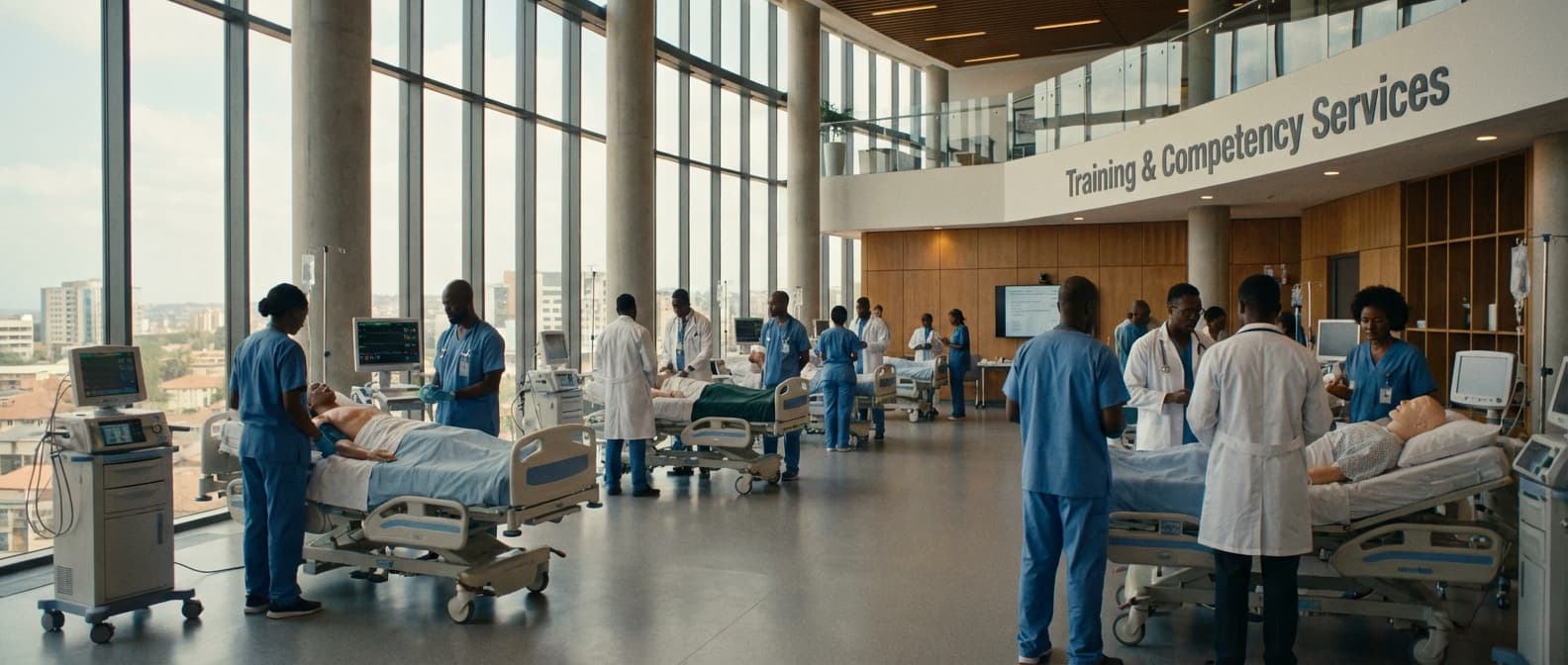
CT Operator Training Service (Radiographers) in Lesotho
Engineering Excellence & Technical Support
CT Operator Training Service (Radiographers) High-standard technical execution following OEM protocols and local regulatory frameworks.
Advanced Imaging Techniques Mastery
Our curriculum provides in-depth training on state-of-the-art CT scanning modalities and advanced imaging techniques, ensuring radiographers in Lesotho are proficient in delivering high-quality diagnostic images and interpreting complex anatomical structures.
Radiation Safety & Dose Optimization
Emphasis is placed on comprehensive radiation safety protocols and dose optimization strategies, equipping Lesotho's radiographers with the knowledge to minimize patient and staff exposure while maintaining diagnostic image integrity, adhering to international best practices.
Clinical Application & Case Study Integration
Through extensive real-world case studies and practical simulation, trainees gain hands-on experience in applying CT imaging principles to a wide range of clinical scenarios relevant to healthcare challenges in Lesotho, enhancing diagnostic accuracy and clinical decision-making.
What Is Ct Operator Training Service (Radiographers) In Lesotho?
CT Operator Training Service (Radiographers) in Lesotho refers to specialized educational programs designed to equip qualified radiographers with the requisite knowledge and practical skills to safely and effectively operate Computed Tomography (CT) imaging equipment. This service aims to enhance the proficiency of radiographers in CT acquisition protocols, image interpretation fundamentals, patient preparation, radiation safety principles, and quality assurance procedures specific to CT technology within the Lesotho healthcare context. The training is essential for ensuring the diagnostic quality of CT scans, minimizing radiation exposure to patients and staff, and adhering to national and international standards for medical imaging.
| Who Needs CT Operator Training (Radiographers)? | Typical Use Cases for CT Imaging (and thus trained operators) | ||||||||
|---|---|---|---|---|---|---|---|---|---|
| Newly qualified radiographers seeking to specialize in CT imaging. | Diagnosis of acute intracranial hemorrhages and ischemic strokes. | Evaluation of blunt and penetrating trauma (e.g., organ injury, fractures). | Staging and monitoring of oncological diseases. | Assessment of pulmonary conditions (e.g., pneumonia, pulmonary embolism, interstitial lung disease). | Investigation of abdominal and pelvic pathologies (e.g., appendicitis, diverticulitis, renal calculi). | Detection and characterization of vascular abnormalities (e.g., aneurysms, dissections). | Pre-operative planning for surgical interventions. | Guidance for interventional radiological procedures. | Post-operative follow-up and complication assessment. |
| Existing radiographers requiring upskilling or cross-training on new CT platforms. | Radiographers working in healthcare facilities where CT services are being introduced or expanded. | Radiographers responsible for quality assurance and operational efficiency of CT scanners. |
Key Components of CT Operator Training Service:
- Theoretical instruction on CT physics, instrumentation, and image reconstruction algorithms.
- Practical hands-on training with CT scanners, covering patient positioning, scan parameter selection, and protocol management.
- Radiation protection principles and dose optimization techniques in CT.
- Patient management strategies, including contrast media administration and monitoring.
- Introduction to CT image interpretation and common artifact identification.
- Quality assurance and quality control procedures for CT equipment.
- Understanding of relevant regulatory guidelines and ethical considerations.
Who Needs Ct Operator Training Service (Radiographers) In Lesotho?
CT Operator Training Services are crucial for ensuring radiographers in Lesotho are proficient in operating CT scanners, delivering high-quality diagnostic imaging, and maintaining patient safety. The demand for such specialized training stems from the need to keep pace with technological advancements in CT imaging, optimize scan protocols, and address any existing skill gaps. This training directly impacts the accuracy and efficiency of diagnostic procedures, ultimately benefiting patient care and the overall healthcare system in Lesotho.
| Customer Type | Primary Departments Involved | Rationale for Training Need |
|---|---|---|
| Public Hospitals | Radiology Department | Serving large patient populations, potential budget constraints for in-house training, need to standardize imaging protocols. |
| Private Hospitals & Clinics | Radiology Department, Imaging Services | Investment in advanced CT technology, need for specialized operators to maximize efficiency and service quality. |
| District Hospitals | Radiology Department | Enhancing local diagnostic capabilities, reducing patient referral burden, improving access to CT imaging. |
| Academic & Teaching Institutions | Radiography Training Programs, Clinical Departments | Equipping future radiographers with current CT operational skills, curriculum development, workforce preparedness. |
| Ministry of Health (MoH) | Health Planning & Management, Human Resources for Health | Ensuring national standards for CT operations, informing training strategies, supporting equitable access to quality imaging. |
Target Customers and Departments for CT Operator Training Service (Radiographers) in Lesotho
- Public Hospitals: Government-funded hospitals across Lesotho are a primary target. These facilities often serve a large patient population and may have limited budgets for continuous professional development, making externally provided training highly valuable. The radiology departments within these hospitals are the direct beneficiaries.
- Private Hospitals and Clinics: Growing private healthcare sector in Lesotho will also require trained radiographers. These institutions often invest in advanced imaging technology and necessitate operators with specialized skills to maximize the return on investment and provide competitive services.
- District Hospitals: Smaller hospitals serving specific districts may have limited access to specialized training. Providing accessible CT operator training can significantly enhance their diagnostic capabilities and reduce the need for patient referrals to larger centers.
- Academic and Teaching Institutions: For institutions involved in training future radiographers, ensuring their curriculum and practical training include up-to-date CT operation skills is paramount. This supports the development of a skilled future workforce.
- Ministry of Health (MoH) Personnel: The Ministry of Health, as the governing body for public healthcare, may also benefit from training initiatives to ensure a standardized level of competence across the national healthcare system. This can inform policy and resource allocation for imaging services.
Ct Operator Training Service (Radiographers) Process In Lesotho
This document outlines the workflow for the CT Operator Training Service for Radiographers in Lesotho, detailing the process from initial inquiry to the successful execution of the training program. The service aims to enhance the skills and knowledge of radiographers in operating Computed Tomography (CT) scanners, ensuring high-quality diagnostic imaging services across Lesotho.
| Stage | Description | Key Activities | Responsible Parties | Timeline (Indicative) |
|---|---|---|---|---|
| The process begins when a radiographer, a healthcare facility, or a relevant Ministry/Department expresses interest in CT operator training. | Initial contact, discussion of training needs, preliminary information sharing, identifying potential training participants and their current skill levels. | Inquiring Party (Radiographer/Facility/Ministry), Training Provider. | 1-2 Weeks |
| A detailed assessment is conducted to understand the specific requirements and existing knowledge gaps of the trainees. | On-site or remote assessment of current CT operational skills, identification of specific CT equipment used, understanding of clinical protocols, and learning objectives. | Training Provider, Facility Management, Trainees. | 2-4 Weeks |
| Based on the needs assessment, a tailored training proposal is developed and submitted for approval. | Development of a comprehensive training proposal outlining curriculum, duration, venue, trainers, cost, and learning outcomes. Negotiation and signing of a training agreement. | Training Provider, Inquiring Party. | 1-3 Weeks |
| The training program is finalized, and a schedule is established. | Detailed curriculum design (theoretical and practical modules), development of training materials (presentations, handouts, practical exercises), and coordination of the training schedule with the facility. | Training Provider. | 2-4 Weeks (concurrent with Agreement) |
| The actual training sessions are conducted. | Theoretical lectures, hands-on practical sessions on CT scanners, case study reviews, simulation exercises, and Q&A sessions. | Certified Trainers, Trainees. | Variable (e.g., 1-4 weeks depending on intensity and scope) |
| The effectiveness of the training is assessed, and trainees' competency is evaluated. | Pre- and post-training assessments (written and practical), observation of practical skills, feedback collection from trainees and facility supervisors. | Training Provider, Trainees, Facility Supervisors. | 1-2 Weeks (concurrent with or immediately after delivery) |
| Successful trainees receive certification, and ongoing support is provided. | Issuance of certificates to trainees who meet the competency standards, provision of post-training support and mentorship, potential for advanced or refresher courses. | Training Provider, Trainees. | Ongoing |
Key Stages of CT Operator Training Service
- Inquiry and Initial Consultation
- Needs Assessment and Customization
- Proposal and Agreement
- Curriculum Development and Scheduling
- Training Delivery
- Assessment and Evaluation
- Certification and Follow-up
Ct Operator Training Service (Radiographers) Cost In Lesotho
Providing accurate cost estimations for CT Operator Training (Radiographers) in Lesotho requires a nuanced understanding of several influencing factors. The pricing is not static and can fluctuate based on the provider, the comprehensiveness of the curriculum, the duration of the training, and the resources utilized. Generally, training providers in Lesotho will consider the following to determine their fees, which are typically presented in the local currency, the Lesotho Loti (LSL).
| Training Type/Duration | Estimated Price Range (LSL) |
|---|---|
| Basic CT Operator Workshop (2-3 Days) | 3,000 - 7,000 LSL |
| Comprehensive CT Operator Course (1-2 Weeks, theoretical & practical) | 8,000 - 15,000 LSL |
| Advanced CT Techniques/Specialization Course (Variable Duration) | 12,000 - 25,000+ LSL |
| Full Radiographer CT Certification Program (Extended duration, e.g., 1-3 months) | 20,000 - 50,000+ LSL |
Key Pricing Factors for CT Operator Training (Radiographers) in Lesotho
- Training Provider Reputation and Accreditation: Established institutions with a strong reputation and recognized accreditation may command higher fees due to their perceived quality and the credibility of their certification.
- Curriculum Depth and Specialization: The more in-depth the curriculum, the more specialized the training (e.g., focusing on specific CT modalities or advanced techniques), the higher the cost will likely be. Basic CT operation will be less expensive than advanced CT imaging protocols.
- Duration of Training: Longer training programs, typically spanning several weeks or months, will naturally incur higher costs than shorter, more intensive workshops.
- Learning Modalities: Whether the training is delivered online, in-person, or through a blended approach will impact costs. In-person training, especially with hands-on practical components, is often more expensive due to instructor time, facility usage, and equipment access.
- Trainer Expertise and Qualifications: Highly experienced and specialized CT radiographers or medical physicists as trainers will often result in higher training fees.
- Included Resources and Materials: The cost may include textbooks, online learning platforms, simulation software, practical session materials, and assessment fees. The quantity and quality of these resources will influence the overall price.
- Facility and Equipment Access: For in-person training, the cost of accessing CT scanners for practical sessions (if not provided by the training institution) and the associated maintenance and operational costs will be factored in.
- Certification and Examination Fees: The cost of sitting for any final examinations or obtaining formal certification from a recognized body will be included in the overall training package.
- Location and Overheads: Training delivered in major urban centers might have higher overheads (rent, utilities) which can be reflected in the pricing. Travel and accommodation for trainers or trainees if the training is not local can also add to the cost.
Affordable Ct Operator Training Service (Radiographers) Options
Seeking affordable CT operator training for radiographers is a common challenge for healthcare facilities. This service aims to provide comprehensive and cost-effective solutions to ensure your staff are proficient in CT operation, adhering to safety standards and delivering high-quality imaging. We understand the importance of budget constraints and offer flexible training packages designed to maximize value and minimize expenses. Our approach focuses on delivering essential knowledge and practical skills without unnecessary overhead. This includes a blend of online learning, hands-on simulation, and on-site mentorship, allowing facilities to choose the most appropriate and economical delivery methods.
| Bundle Name | Description | Included Components | Cost-Saving Strategies | Estimated Price Range (per trainee) |
|---|---|---|---|---|
| Basic CT Essentials | Covers core knowledge and fundamental skills for new CT operators. | Online modules, interactive quizzes, simulation practice. | Leverages self-paced online learning, reduces instructor travel. | $500 - $900 |
| Standard CT Proficiency | Builds upon the basics with enhanced practical application and advanced protocols. | Basic Essentials + On-site simulation lab access, limited instructor-led sessions. | Shared simulation resources, focused on-site time. | $900 - $1,500 |
| Comprehensive CT Mastery | In-depth training for experienced radiographers seeking advanced skills and certification. | Standard Proficiency + Dedicated on-site instructor, advanced protocol training, case study analysis. | Tailored curriculum, maximized on-site efficiency. | $1,500 - $2,500+ |
| On-Demand Skills Boost | Targeted training for specific skill gaps or new equipment introduction. | Customizable modules, virtual instructor support, specific protocol training. | Pay-as-you-go model, focused learning, eliminates unnecessary content. | Varies based on module selection ($100 - $500 per module) |
Key Components of Affordable CT Operator Training
- Foundational CT physics and principles.
- Patient positioning and protocol selection.
- Image acquisition techniques and optimization.
- Radiation safety and dose reduction strategies.
- Artifact identification and troubleshooting.
- Contrast media administration and safety.
- Introduction to advanced CT applications (optional).
- Hands-on simulation and practical exercises.
- Competency assessment and certification preparation.
Verified Providers In Lesotho
In Lesotho's burgeoning healthcare landscape, access to verified and reputable providers is paramount for ensuring quality patient care and medical tourism success. Franance Health stands out as a leading organization committed to upholding the highest standards in healthcare provision. Their rigorous credentialing process meticulously vets medical facilities, practitioners, and services, guaranteeing that only the most qualified and ethical entities are associated with their network. This dedication to verification offers significant advantages to individuals seeking healthcare in Lesotho, providing peace of mind and confidence in the services they receive. Franance Health's commitment to transparency and excellence positions them as the premier choice for individuals and organizations prioritizing safe and effective medical solutions.
| Credentialing Aspect | Franance Health's Standard | Patient Benefit |
|---|---|---|
| Medical Facility Accreditation | Mandatory adherence to international and national accreditation standards. | Ensures state-of-the-art infrastructure, advanced equipment, and stringent hygiene protocols. |
| Practitioner Qualifications | Verification of medical licenses, certifications, and specialized training. | Guarantees that healthcare providers possess the necessary expertise and experience. |
| Ethical Practice Review | Assessment of adherence to medical ethics, patient rights, and professional conduct. | Promotes patient-centered care and a trustworthy medical environment. |
| Service Quality Audits | Regular evaluations of treatment protocols, patient outcomes, and satisfaction levels. | Ensures consistent delivery of high-quality medical services and continuous improvement. |
| Regulatory Compliance | Confirmation of adherence to all relevant Lesotho Ministry of Health regulations. | Provides assurance of legal and operational compliance, safeguarding patient interests. |
Key Benefits of Choosing Franance Health Verified Providers:
- Unwavering commitment to quality and safety through rigorous vetting processes.
- Access to a network of highly qualified and ethical healthcare professionals.
- Enhanced patient confidence and reduced risk of substandard care.
- Streamlined access to reliable medical services for both local and international patients.
- Promotion of ethical practices and continuous improvement within Lesotho's healthcare sector.
Scope Of Work For Ct Operator Training Service (Radiographers)
This Scope of Work (SOW) outlines the requirements for providing comprehensive CT Operator Training services to radiographers. The objective is to ensure all participating radiographers possess the necessary knowledge, skills, and practical experience to safely and effectively operate CT scanners, acquire high-quality diagnostic images, and adhere to all relevant protocols and radiation safety guidelines. This SOW details the technical deliverables and standard specifications expected from the training provider.
| Deliverable | Description | Standard Specifications | Acceptance Criteria |
|---|---|---|---|
| Training Curriculum | A detailed, structured curriculum covering all listed key areas. | Includes theoretical modules, practical demonstrations, hands-on exercises, and assessment methods. Must be aligned with current professional standards and regulatory requirements. | Curriculum submitted and approved by the client prior to commencement of training. Must include learning objectives for each module. |
| Training Materials | Comprehensive course materials for participants. | Includes presentations, handouts, user manuals, case studies, and relevant scientific literature. Materials must be clear, concise, and up-to-date. | All training materials provided in digital format (e.g., PDF) and hard copies as specified. Materials reviewed and accepted by the client. |
| Instructor Qualifications | Experienced and certified CT instructors. | Instructors must possess relevant academic qualifications, extensive practical experience in CT operation, and proven teaching ability. Certification by recognized professional bodies is preferred. | Resumes and certifications of all instructors submitted for review and approval by the client. |
| Practical Training Sessions | Hands-on training on actual CT scanner equipment. | Sessions must simulate real-world clinical scenarios, allowing participants to practice patient positioning, protocol selection, image acquisition, and basic troubleshooting. Sufficient scanner time allocated per participant. | Observation of practical sessions by client representative. Successful demonstration of competence by participants as assessed by the instructor and client. |
| Theoretical Assessments | Methods to evaluate theoretical understanding. | Includes quizzes, written examinations, or online assessments covering key concepts and principles. | Assessment results provided to the client, with a minimum passing score established and achieved by participants. |
| Practical Assessments | Methods to evaluate practical skills. | Includes direct observation of participants performing CT scans, simulated scenario evaluations, and review of acquired images for quality. | Formal sign-off by the instructor and client representative on participant's practical competency. |
| Training Report | A comprehensive report detailing the training activities. | Includes participant attendance records, assessment scores, feedback from participants and instructors, and recommendations for further development. Report must highlight any identified skill gaps. | Report submitted to the client within [Specify Number] days of training completion and accepted. |
| Certification | Issuance of certificates upon successful completion. | Certificates must clearly state the training covered and the participant's successful completion. Format to be agreed upon. | Certificates issued to all participants who meet the required assessment criteria. Sample certificate provided for approval. |
| Radiation Safety Compliance | Emphasis on radiation safety protocols. | Training must incorporate ALARA principles, appropriate shielding techniques, and awareness of regulatory limits. Practical demonstrations of safety procedures. | Demonstrated understanding of radiation safety principles by participants through assessments and practical observation. |
| CT Protocols & Optimization | Training on standard and advanced CT protocols. | Instruction on protocol selection for various anatomical regions and pathologies, parameter optimization for image quality and dose reduction, and understanding of artifacts. | Participants can demonstrate the ability to select and optimize protocols for common imaging scenarios. |
Key Areas of CT Operator Training
- Introduction to CT Technology and Principles
- CT Scanner Hardware and Software Operation
- Patient Positioning and Immobilization Techniques
- Image Acquisition Protocols and Parameters
- Contrast Media Administration and Management
- Image Reconstruction and Post-Processing
- Radiation Safety Principles and Practices
- Quality Assurance and Quality Control (QA/QC)
- Troubleshooting Common CT System Issues
- Ethical Considerations and Patient Care in CT
Service Level Agreement For Ct Operator Training Service (Radiographers)
This Service Level Agreement (SLA) outlines the response times and uptime guarantees for the CT Operator Training Service provided to radiographers. It defines the expected performance standards and the remedies for any failures to meet these standards.
| Service Metric | Service Level Target | Measurement Method | Remedy for Failure |
|---|---|---|---|
| Support Ticket Response Time (Critical Issue) | Within 1 business hour | Time from ticket submission to acknowledgment and initial assessment by support staff. | 10% discount on the next month's training fees for each instance of exceeding the target. |
| Support Ticket Response Time (Standard Issue) | Within 4 business hours | Time from ticket submission to acknowledgment and initial assessment by support staff. | 5% discount on the next month's training fees for each instance of exceeding the target. |
| System Uptime | 99.5% per calendar month | Measured as the percentage of time the CT Operator Training platform is accessible and functional, excluding scheduled maintenance. | For every 1% the uptime falls below 99.5% in a calendar month, a credit of 5% of the monthly service fee will be applied. |
| Scheduled Maintenance Notification | At least 48 hours prior notice | Time from notification of planned downtime to the commencement of maintenance. | No direct financial remedy, but repeated failure to provide adequate notice may result in a review of the SLA. |
Key Service Metrics
- Response Time: The maximum time allowed for the service provider to acknowledge and begin addressing a reported issue.
- Uptime Guarantee: The minimum percentage of time the CT Operator Training Service is available for use by authorized radiographers.
Frequently Asked Questions

Ready when you are
Let's scope your CT Operator Training Service (Radiographers) in Lesotho project in Lesotho.

Scaling healthcare logistics and technical systems across the entire continent.