
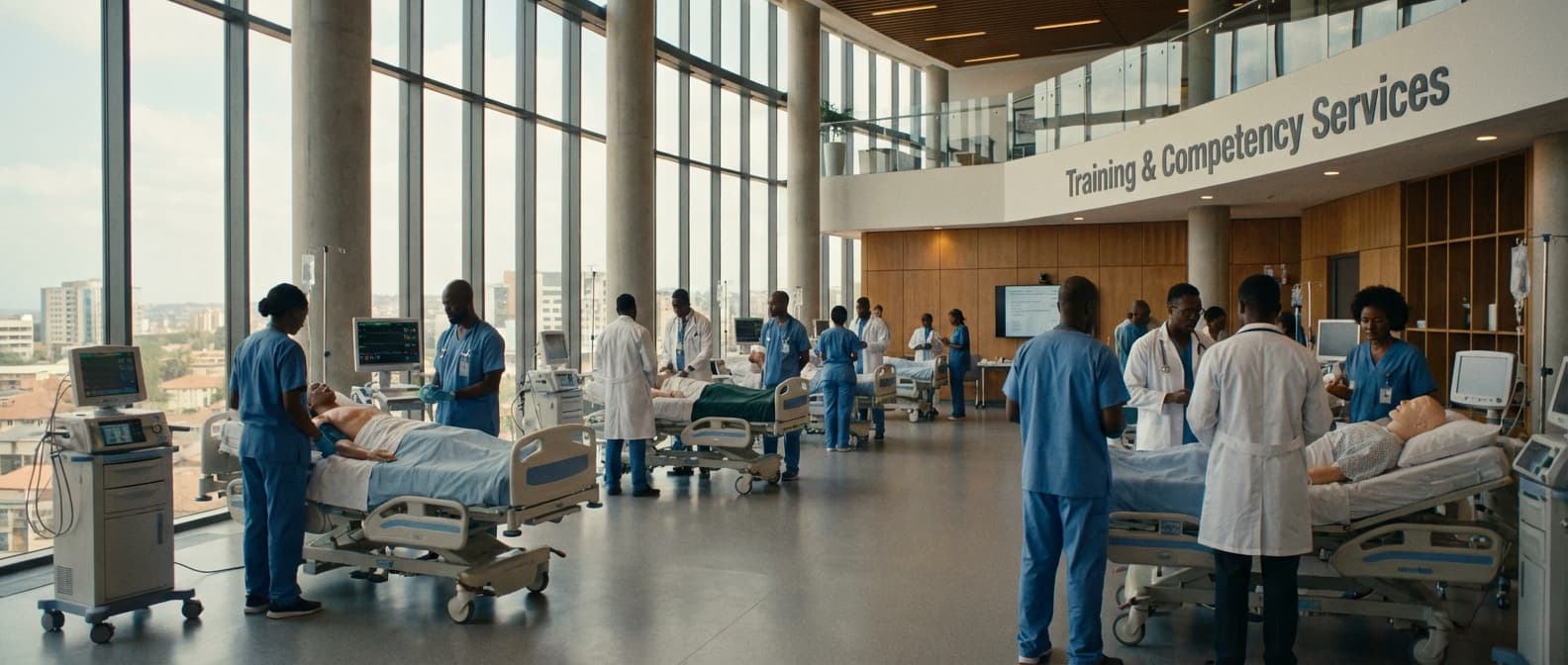
Biomedical Engineering First-Line Support Training Service in Lesotho
Engineering Excellence & Technical Support
Biomedical Engineering First-Line Support Training Service High-standard technical execution following OEM protocols and local regulatory frameworks.
Diagnostic Equipment Mastery
Hands-on training covering the setup, calibration, and basic troubleshooting of common diagnostic medical devices, including microscopes, centrifuges, and basic laboratory analyzers, crucial for effective first-line support in Lesotho's healthcare facilities.
Vital Signs Monitoring Fundamentals
Comprehensive instruction on the operation and troubleshooting of vital signs monitors, pulse oximeters, and blood pressure devices. This ensures technicians can quickly identify and address common issues, maintaining patient safety.
Clinical Workflow Integration
Training focuses on understanding how biomedical equipment integrates into clinical workflows and patient care pathways. Technicians will learn to prioritize support requests based on urgency and impact, contributing to efficient healthcare delivery in Lesotho.
What Is Biomedical Engineering First-line Support Training Service In Lesotho?
Biomedical Engineering First-Line Support Training Service in Lesotho refers to the provision of foundational technical education and practical skills development for individuals responsible for the initial troubleshooting, maintenance, and basic repair of medical devices within healthcare facilities in Lesotho. This service aims to empower frontline healthcare technology personnel to effectively manage and ensure the operational readiness of biomedical equipment, thereby minimizing downtime and optimizing patient care. The training focuses on common equipment failures, routine preventive maintenance procedures, safe operation, and the identification of issues requiring escalation to specialized biomedical engineers or external service providers.
| Target Audience | Needs Addressed | Typical Use Cases |
|---|---|---|
| Healthcare facility technical staff (e.g., hospital technicians, biomedical assistants, ward managers with technical oversight). | Lack of in-house specialized biomedical engineering expertise, particularly in remote or resource-limited settings. Need for immediate resolution of minor equipment faults to ensure continuity of patient care. Overburdened central biomedical engineering departments. | Performing daily checks on essential medical equipment (e.g., vital signs monitors, infusion pumps, basic laboratory equipment). Replacing consumable parts (e.g., filters, batteries). Disinfecting and cleaning equipment according to manufacturer specifications. Responding to alarms and basic error messages. Performing simple diagnostic checks on non-critical devices. Documenting routine maintenance and reported issues for higher-level engineers. |
| New recruits to healthcare facilities responsible for equipment management. | Ensuring a standardized understanding of equipment operation and maintenance across different facilities. Reducing the risk of equipment damage due to improper handling or basic maintenance. Empowering staff to take ownership of their equipment's upkeep. | Onboarding new personnel to the maintenance protocols of specific medical devices. Familiarizing staff with the user manuals and basic troubleshooting guides. Training on the proper inventory and asset management of biomedical equipment. |
| Personnel in district hospitals and rural health centres. | Limited access to readily available biomedical engineering services. Need to maximize the lifespan and uptime of existing medical equipment. Cost-effective solutions for maintaining essential healthcare infrastructure. | Conducting scheduled preventive maintenance on a range of medical devices to prevent breakdowns. Troubleshooting and resolving issues with basic medical equipment before it significantly impacts service delivery. Identifying equipment that requires professional repair and facilitating its transportation or communication for service. |
Key Components of Biomedical Engineering First-Line Support Training Service
- Fundamental principles of biomedical equipment operation and function.
- Identification and troubleshooting of common equipment malfunctions.
- Basic preventive maintenance techniques and schedules.
- Safe usage and handling of medical devices.
- Understanding of electrical safety standards and protocols.
- Basic calibration procedures where applicable and safe for first-line personnel.
- Documentation of maintenance activities and incident reporting.
- Principles of infection control in relation to equipment maintenance.
- Recognition of when to escalate issues to advanced biomedical engineering support or manufacturers.
Who Needs Biomedical Engineering First-line Support Training Service In Lesotho?
First-line support training for biomedical engineering is crucial for ensuring the effective and safe operation of medical equipment in healthcare facilities. In Lesotho, such training would benefit a range of individuals and departments responsible for the maintenance, troubleshooting, and basic repair of biomedical devices. This training aims to empower local personnel, reduce reliance on external expertise, and ultimately improve patient care through enhanced equipment availability and reliability.
| Target Customer Group | Primary Department/Role | Key Training Needs | Expected Impact |
|---|---|---|---|
| Clinical Staff | Nursing Services, Medical Officer Departments, Outpatient Clinics | Basic equipment operation, identifying common faults, user-level troubleshooting, safe handling and storage. | Reduced equipment misuse, faster identification of issues, improved patient safety, increased equipment uptime for clinical use. |
| Technical & Maintenance Staff | Hospital Engineering/Maintenance Departments, Facilities Management | Routine preventive maintenance, cleaning and disinfection protocols, basic electrical safety testing, simple mechanical adjustments, identifying parts for replacement. | Proactive maintenance preventing major failures, quicker resolution of minor faults, reduced reliance on external technicians for simple tasks, extended equipment lifespan. |
| Biomedical Engineering Technicians | Central Biomedical Engineering Unit, Hospital Biomedical Engineering Departments | Intermediate troubleshooting, component-level diagnosis, basic calibration, documentation and record-keeping, understanding schematics, basic soldering and repair techniques. | Increased capacity for in-house repairs, reduced outsourcing costs, improved diagnostic accuracy, better inventory management of spare parts. |
| Biomedical Engineers (Junior/Senior) | Central Biomedical Engineering Unit, Ministry of Health (Technical Advisors) | Advanced troubleshooting methodologies, complex diagnostics, calibration of specialized equipment, developing maintenance schedules, quality assurance, training of first-line support staff. | Effective management of the entire biomedical asset lifecycle, development of robust maintenance strategies, ensuring regulatory compliance, capacity building within the healthcare system. |
| Procurement & Logistics Officers | Ministry of Health (Procurement), Hospital Administration | Understanding equipment specifications relevant to local support capabilities, identifying essential spare parts, lifecycle cost considerations. | Informed purchasing decisions, ensuring availability of critical spare parts, reduced downtime due to unavailability of parts. |
Target Customers & Departments for Biomedical Engineering First-Line Support Training in Lesotho
- Healthcare Professionals (Nurses, Doctors, Clinical Officers): Understanding basic equipment operation, identification of malfunctions, and proper usage to prevent damage and ensure patient safety.
- Hospital Technicians and Maintenance Staff: Developing skills in routine maintenance, basic troubleshooting, and minor repairs to address common equipment issues, thus minimizing downtime.
- Biomedical Engineering Department Personnel: Enhancing the skills of existing biomedical engineers and technicians, focusing on advanced troubleshooting, preventive maintenance strategies, and calibration techniques.
- Ministry of Health Representatives: Understanding the importance of first-line support for national health infrastructure, resource allocation for training, and policy development related to medical equipment management.
- Training Institutions and Technical Colleges: Developing curriculum and delivering training programs for future biomedical engineering technicians and support staff.
Biomedical Engineering First-line Support Training Service Process In Lesotho
This document outlines the standard workflow for the Biomedical Engineering First-Line Support Training Service provided in Lesotho, covering the process from initial inquiry to the successful execution of the training. The service aims to equip healthcare facilities with trained personnel capable of performing basic maintenance and troubleshooting of biomedical equipment, thereby improving equipment uptime and patient care.
| Stage | Description | Key Activities | Responsible Party | Output/Deliverable |
|---|---|---|---|---|
| Initial contact from a healthcare facility or ministry requesting training. This stage involves understanding their specific needs, the types of equipment they have, their current technical capacity, and their training objectives. | Receive and log inquiry, Conduct initial consultation, Assess equipment inventory, Identify specific training needs and skill gaps, Determine target audience and participant numbers. | Client (Healthcare Facility/Ministry), Ministry of Health Representative, Service Provider Representative | Needs Assessment Report, List of required training modules, Estimated participant numbers. |
| Based on the needs assessment, the service provider develops a comprehensive training proposal detailing the scope of work, training modules, methodology, duration, trainers, budget, and expected outcomes. | Develop training curriculum and modules, Prepare detailed training proposal, Include cost breakdown and payment terms, Submit proposal to the client for review. | Service Provider (Training Team) | Formal Training Proposal. |
| The client reviews the proposal, and negotiations take place regarding the scope, timeline, budget, and terms. Once an agreement is reached, a formal contract is signed. | Review proposal with client, Negotiate terms and conditions, Finalize training scope and budget, Sign contract/Memorandum of Understanding (MoU). | Client (Healthcare Facility/Ministry), Service Provider (Management) | Signed Contract/MoU. |
| Detailed planning of the training sessions, including identifying suitable dates, venues, and ensuring all necessary logistics are in place. | Confirm training dates with client, Identify and book training venue (on-site or off-site), Arrange for training materials and equipment, Confirm trainer availability, Plan participant travel and accommodation (if applicable). | Service Provider (Logistics Coordinator), Client (Facility Manager) | Confirmed Training Schedule, Logistics Plan. |
| This stage involves all necessary preparations before the training commences, ensuring everything is ready for effective delivery. | Prepare training manuals and handouts, Ensure availability of demonstration equipment and tools, Set up training venue, Communicate final schedule and requirements to participants. | Service Provider (Training Team), Client (Facility Manager) | Prepared Training Materials, Ready Training Environment. |
| The core stage where the training is conducted by qualified biomedical engineers. This involves theoretical sessions and practical hands-on exercises. | Deliver theoretical lectures, Conduct practical demonstrations, Facilitate hands-on practice sessions, Address participant questions and concerns, Conduct module-specific assessments. | Service Provider (Trainers) | Completed Training Sessions, Trainee Participation Records. |
| Assessing the effectiveness of the training and gathering feedback from participants and trainers to identify areas for improvement. | Administer post-training evaluation questionnaires, Conduct feedback sessions with participants, Collect feedback from trainers, Analyze evaluation results. | Service Provider (Training Coordinator), Participants | Training Evaluation Report, Feedback Summary. |
| Upon successful completion of the training and assessments, participants receive certificates. The service provider may also offer follow-up support. | Issue certificates of completion to successful participants, Provide summary report to the client, Offer post-training technical support or refresher courses (if agreed upon), Document training outcomes and impact. | Service Provider (Management/Training Coordinator), Client | Certificates of Completion, Final Training Report, Recommendations for future support. |
Biomedical Engineering First-Line Support Training Service Workflow
- Inquiry and Needs Assessment
- Proposal Development and Submission
- Contract Negotiation and Agreement
- Training Schedule and Logistics Planning
- Pre-Training Preparations
- Training Delivery and Execution
- Post-Training Evaluation and Feedback
- Certification and Follow-up
Biomedical Engineering First-line Support Training Service Cost In Lesotho
Biomedical Engineering First-Line Support Training is crucial for ensuring the proper maintenance and functionality of medical equipment in Lesotho. This training equips technicians with the fundamental skills to troubleshoot, perform routine checks, and conduct basic repairs, thereby extending equipment lifespan and improving patient care. The cost of such training in Lesotho is influenced by several factors, leading to a range of pricing. Understanding these factors helps healthcare institutions budget effectively for this essential service.
| Training Component/Service | Typical Cost Range (M LSL) | Notes |
|---|---|---|
| Basic First-Line Support (e.g., 2-3 days, general equipment) | 2,000 - 5,000 | Covers fundamental troubleshooting, preventative maintenance principles. May exclude specialized equipment. |
| Intermediate First-Line Support (e.g., 5 days, specific equipment categories) | 4,000 - 8,000 | Deeper dives into common medical equipment types (e.g., vital signs monitors, basic imaging). Includes more practical sessions. |
| Specialized Equipment Training (e.g., 3-5 days, per equipment type) | 6,000 - 12,000+ | Focus on specific, complex medical devices (e.g., anesthesia machines, advanced diagnostic tools). Cost heavily dependent on device complexity. |
| On-site Training (per day, for a group) | 3,000 - 6,000 | Includes instructor fees, but travel and accommodation for instructors may be additional. |
| Training Materials (per participant) | 200 - 500 | Workbooks, reference guides, basic toolkits (if provided). |
| Certification Fees (if applicable) | 500 - 1,500 | Cost associated with formal assessment and issuance of a certificate. |
Key Pricing Factors for Biomedical Engineering First-Line Support Training in Lesotho
- Provider Reputation and Experience: Established training providers with a proven track record and specialized expertise in biomedical engineering often command higher fees.
- Training Curriculum Depth and Breadth: The complexity and comprehensiveness of the course content, including theoretical knowledge and practical hands-on sessions, directly impact cost.
- Duration of Training: Longer, more intensive programs naturally incur higher costs due to increased instructor time, resources, and facility usage.
- Number of Participants: Group discounts are common, making the per-participant cost decrease as the number of trainees increases.
- Location of Training: On-site training at a healthcare facility might have different logistical costs compared to a dedicated training center. Travel and accommodation for instructors also play a role.
- Equipment and Materials Provided: The inclusion of training manuals, access to simulation equipment, or even the provision of basic tools for participants can affect the overall price.
- Certification and Accreditation: Training programs that lead to recognized certifications or are accredited by relevant bodies may have higher fees due to the rigorous standards involved.
- Customization of Training: Tailoring the curriculum to specific types of medical equipment or the unique needs of an institution can lead to specialized pricing.
- Instructor Qualifications: Highly experienced and certified biomedical engineers as instructors will typically result in a higher training cost.
Affordable Biomedical Engineering First-line Support Training Service Options
This document outlines affordable options for biomedical engineering first-line support training, focusing on value bundles and cost-saving strategies to empower healthcare facilities with skilled personnel without exorbitant costs. First-line support technicians play a crucial role in ensuring the operational readiness of medical equipment, performing routine maintenance, troubleshooting common issues, and escalating complex problems to specialized engineers. Investing in their training directly translates to improved patient care, reduced equipment downtime, and optimized operational efficiency.
| Value Bundle Type | Description | Key Features Included | Cost-Saving Strategies Leveraged | Estimated Price Range (per technician) |
|---|---|---|---|---|
| Core Competency Bundle | Focuses on essential skills for immediate impact. | Basic electronics, troubleshooting, preventive maintenance, safety protocols. | Standardized curriculum, bulk training discounts, online learning components. | $300 - $700 |
| Device Specialization Bundle | Tailored training for specific high-volume or critical equipment categories. | Core competencies plus in-depth training on 2-3 device types (e.g., ventilators, anesthesia machines). | Leverages vendor-provided training materials (where applicable), simulated training environments, train-the-trainer models. | $600 - $1200 |
| On-Demand & Upskilling Bundle | Flexible learning for ongoing development and addressing emergent needs. | Access to a library of advanced modules, specific troubleshooting guides, recertification courses. | Subscription-based access, modular learning, peer-to-peer knowledge sharing platforms. | $150 - $400 (annual subscription) |
| Facility-Wide Foundation Bundle | Comprehensive training for a group of technicians, fostering a consistent skill level across the facility. | Includes Core Competency and introductory Device Specialization, plus basic networking and customer service. | Group discounts, customized training schedules, on-site training options to minimize travel costs. | $1000 - $2500 (for groups of 5-10) |
Key Components of Effective First-Line Support Training
- Fundamental Electronics and Circuitry: Understanding basic electrical principles, component identification, and simple circuit analysis.
- Medical Equipment Principles: Familiarity with the operational concepts of common medical devices (e.g., vital signs monitors, infusion pumps, ECG machines).
- Troubleshooting Methodologies: Developing systematic approaches to identify and resolve common equipment malfunctions.
- Preventive Maintenance Procedures: Learning scheduled checks, cleaning, and calibration techniques to extend equipment lifespan.
- Safety Protocols and Regulations: Adherence to healthcare safety standards (e.g., electrical safety, infection control) and regulatory compliance.
- Documentation and Reporting: Accurate recording of maintenance activities, repairs, and equipment status.
- Basic Networking and Connectivity: Understanding how medical devices connect to hospital networks.
- Customer Service Skills: Effective communication and interaction with clinical staff.
Verified Providers In Lesotho
In the pursuit of reliable and high-quality healthcare, identifying verified providers is paramount. In Lesotho, Franance Health stands out as a beacon of trust and excellence. This document details Franance Health's credentials and outlines why they represent the best choice for your health needs.
| Credential Type | Description | Franance Health Assurance |
|---|---|---|
| Medical Licensing | Official authorization to practice medicine granted by the Lesotho Ministry of Health and relevant professional bodies. | All Franance Health affiliated medical practitioners are fully licensed and their credentials are independently verified. |
| Professional Certifications | Specialized certifications obtained by healthcare professionals in their respective fields of expertise. | We ensure our specialists hold recognized certifications from reputable institutions, indicating advanced proficiency. |
| Hospital Accreditation | Recognition awarded to healthcare facilities for meeting stringent quality and safety standards. | Franance Health partners with accredited healthcare facilities that adhere to national and international benchmarks for patient care and safety. |
| Quality Assurance Protocols | Internal systems and procedures implemented by healthcare providers to ensure consistent quality of care. | Franance Health mandates robust quality assurance protocols for all its network providers, focusing on continuous improvement and patient satisfaction. |
| Ethical Practice Guidelines | Adherence to a strict code of conduct and ethical principles governing healthcare delivery. | All Franance Health providers are bound by a comprehensive code of ethics, prioritizing patient rights, confidentiality, and professional integrity. |
Franance Health Credentials and Why They Represent the Best Choice
- Rigorous Accreditation and Licensing: Franance Health providers undergo stringent vetting processes, ensuring they meet and exceed national and international healthcare standards. This includes active licensing with the relevant medical and nursing councils in Lesotho and adherence to all regulatory requirements.
- Highly Qualified and Experienced Professionals: Our network comprises doctors, nurses, specialists, and allied health professionals with extensive training, specialized knowledge, and years of practical experience. They are committed to continuous professional development, staying abreast of the latest medical advancements.
- Commitment to Patient-Centric Care: At Franance Health, patient well-being is at the core of our philosophy. Our providers are dedicated to delivering compassionate, ethical, and personalized care, focusing on patient education, shared decision-making, and respecting individual preferences.
- Advanced Diagnostic and Treatment Capabilities: Franance Health partners with facilities equipped with modern medical technology and diagnostic tools. This enables accurate diagnoses and the implementation of effective, evidence-based treatment plans.
- Integrated Healthcare Approach: We promote a holistic approach to health, coordinating care across different specialties and levels of service. This ensures seamless transitions and comprehensive management of your health conditions.
- Strong Community Engagement: Franance Health is deeply embedded within the Lesotho community, understanding its unique health challenges and working collaboratively to improve health outcomes for all.
- Proven Track Record of Excellence: Our reputation is built on consistent delivery of high-quality care and positive patient experiences. We are committed to transparency and accountability in all our operations.
- Accessibility and Affordability: We strive to make quality healthcare accessible to a wider population in Lesotho, working towards efficient service delivery and exploring avenues for affordability without compromising on quality.
Scope Of Work For Biomedical Engineering First-line Support Training Service
This Scope of Work (SOW) outlines the requirements for a Biomedical Engineering First-Line Support Training Service. The service will equip personnel with the foundational knowledge and practical skills necessary to effectively perform first-line support for biomedical equipment. This includes initial troubleshooting, basic maintenance, and proper escalation procedures. The training will be delivered through a combination of theoretical sessions, hands-on practical exercises, and simulated scenarios.
| Deliverable | Description | Standard Specification | Format |
|---|---|---|---|
| Training Curriculum Development | Comprehensive curriculum covering all defined training objectives. | Modular design with clear learning outcomes for each module. Includes theoretical concepts, practical guides, and assessment criteria. Must be reviewed and approved by the client. | Digital document (PDF, DOCX) |
| Training Material Creation | Development of all training materials, including presentations, handouts, and participant workbooks. | Visually engaging, clear, and concise content. Materials should be easily adaptable for future updates. Include detailed illustrations and diagrams. | Digital files (PPTX, PDF, DOCX) |
| Practical Training Equipment Setup | Provision and setup of necessary biomedical equipment for hands-on training. | Functional, calibrated, and safe-to-operate equipment representing common devices. Clear labeling and operational manuals for each unit. | Physical equipment and setup |
| Trainer Qualification and Delivery | Qualified trainers to deliver the training program. | Trainers must possess a minimum of 5 years of experience in biomedical engineering support and hold relevant professional certifications. Training delivery to be interactive and engaging. | Trainer CVs and observation reports |
| Participant Assessment and Evaluation | Methodology for assessing participant comprehension and skill acquisition. | Includes written tests, practical skills assessments, and scenario-based evaluations. A minimum pass rate of 80% is required for certification. | Assessment reports and certificates |
| Post-Training Support Documentation | Reference materials and resources for participants after training completion. | Includes a comprehensive user manual, troubleshooting guides, and contact information for further support. Available online and in hard copy. | Digital and physical documents |
| Training Performance Report | A detailed report summarizing the training's effectiveness and outcomes. | Includes attendance records, assessment results, participant feedback, and recommendations for improvement. Must be delivered within 10 business days of training completion. | Digital document (PDF) |
Key Training Objectives
- Understanding fundamental principles of biomedical engineering.
- Identifying common types and functionalities of biomedical devices.
- Performing basic troubleshooting and diagnostic procedures.
- Conducting routine preventive maintenance tasks.
- Adhering to safety protocols and regulatory compliance.
- Documenting support activities and generating reports.
- Effectively communicating with end-users and senior technical staff.
- Understanding the principles of medical device lifecycle management.
Service Level Agreement For Biomedical Engineering First-line Support Training Service
This Service Level Agreement (SLA) outlines the terms and conditions for the Biomedical Engineering First-Line Support Training Service, focusing on guaranteed response times and service uptime. It defines the responsibilities of both the Service Provider and the Customer to ensure the effective delivery and utilization of the training.
| Service Component | Service Level Objective (SLO) | Measurement Method | Remedy for Failure |
|---|---|---|---|
| Training Platform Availability (Uptime) | 99.5% Uptime (excluding Scheduled Maintenance) | Monitored via automated system checks and user-reported incidents. Calculated monthly. | For every full 1% of downtime below 99.5% in a given month, a 5% credit will be applied to the next monthly service fee. |
| First-Line Support Training Access | All users will have access to training materials during designated access periods. | System logs and user access reports. | If access is denied due to Service Provider error for more than 4 hours within a 24-hour period, a prorated refund for the affected access period will be issued. |
| Technical Support Response Time (Critical Issues) | Within 1 hour during Business Hours. | Time from initial report (email, portal ticket) to acknowledgment by support staff. | Escalation to senior support and priority resolution. If resolution is not achieved within 4 business hours, a further 10% service fee reduction for the month will be applied. |
| Technical Support Response Time (Major Issues) | Within 4 business hours during Business Hours. | Time from initial report (email, portal ticket) to acknowledgment by support staff. | Dedicated support engineer assigned. If not resolved within 1 business day, a 5% credit will be applied to the next monthly service fee. |
| Technical Support Response Time (Minor Issues/Inquiries) | Within 8 business hours during Business Hours. | Time from initial report (email, portal ticket) to acknowledgment by support staff. | Response and solution provided via email or knowledge base article. No financial remedy, focus on prompt information delivery. |
| Scheduled Maintenance Notification | Minimum 48 hours advance notice via email or platform notification. | Review of notification logs and timestamps. | Failure to provide adequate notice may result in a delay of scheduled maintenance until sufficient notice is given, or a 2% service fee reduction for the month. |
| Content Updates and Relevance | Core training modules updated at least annually, or as significant changes occur in biomedical equipment technology or support best practices. | Review of update logs and version control. Customer feedback mechanism. | If critical updates are significantly delayed beyond 18 months without justification, a consultative session will be provided free of charge to discuss alternative solutions. |
Key Definitions
- Service Provider: The entity responsible for delivering the Biomedical Engineering First-Line Support Training.
- Customer: The organization or individual receiving the training.
- Training Service: The structured program designed to equip first-line support personnel with the necessary skills and knowledge to address common issues related to biomedical equipment.
- Response Time: The maximum time allowed for the Service Provider to acknowledge and begin addressing a reported issue or request related to the training service.
- Uptime: The percentage of time the training platform and associated resources are available and functional for the Customer.
- Scheduled Maintenance: Pre-announced periods during which the training service may be temporarily unavailable for updates, upgrades, or routine maintenance.
- Unplanned Downtime: Any period of unavailability of the training service not covered by Scheduled Maintenance.
- Business Hours: Defined working hours (e.g., Monday-Friday, 9:00 AM - 5:00 PM) during which response times are typically measured, unless otherwise specified.
- Critical Issue: An issue that renders the training service completely unusable or significantly impairs its core functionality for all users.
- Major Issue: An issue that affects a significant portion of users or a key feature of the training service, but does not render it completely unusable.
- Minor Issue: An issue that affects a small number of users or a non-critical feature of the training service, or is a general inquiry.
Frequently Asked Questions

Ready when you are
Let's scope your Biomedical Engineering First-Line Support Training Service in Lesotho project in Lesotho.

Scaling healthcare logistics and technical systems across the entire continent.