
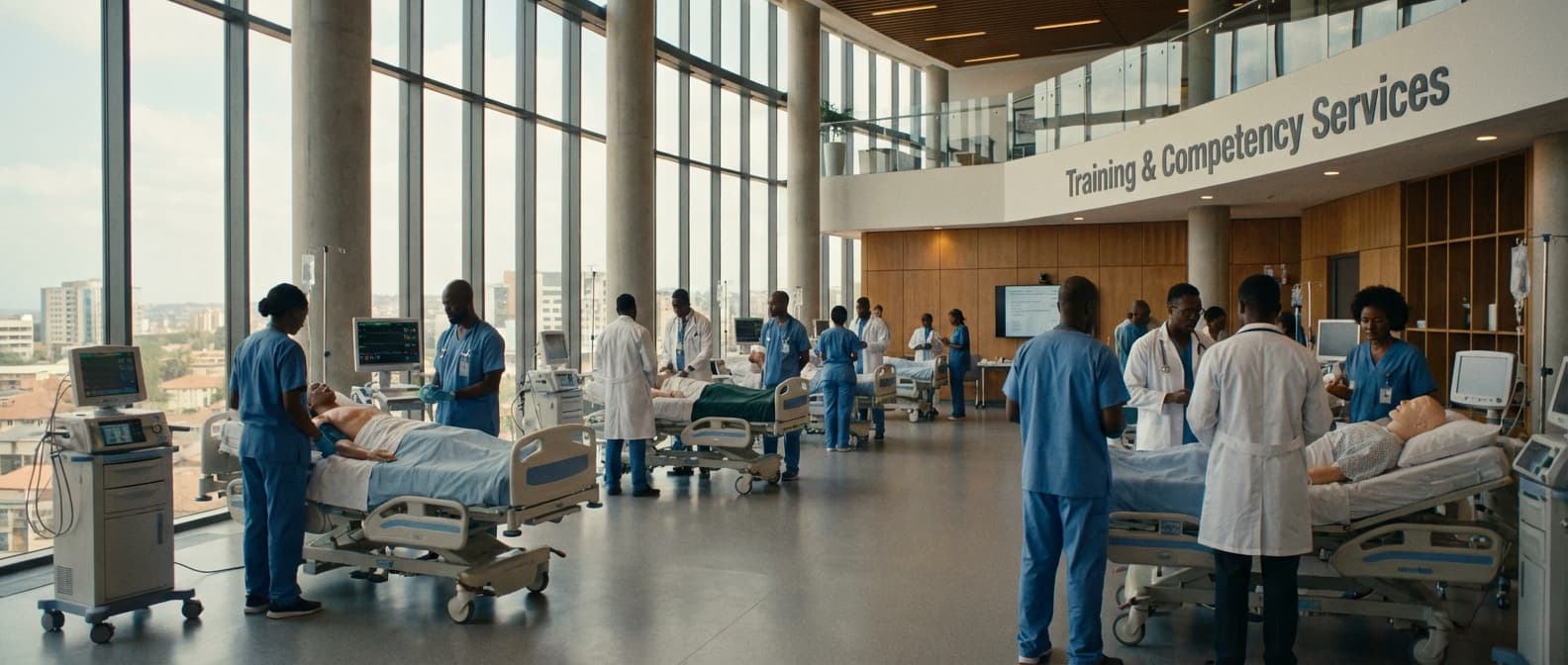
Anesthesia Workstation User Training Service in Lesotho
Engineering Excellence & Technical Support
Anesthesia Workstation User Training Service High-standard technical execution following OEM protocols and local regulatory frameworks.
Mastering Anesthesia Workflow Integration
Our training empowers Lesotho's anesthesia professionals to seamlessly integrate and operate the latest anesthesia workstations, optimizing patient care pathways and reducing critical error potential through hands-on simulation and scenario-based learning.
Ensuring Patient Safety Through Advanced Ventilator Management
Gain expert proficiency in the advanced ventilation modes and safety features of modern anesthesia workstations. Our training in Lesotho focuses on precise parameter setting, alarm management, and troubleshooting for enhanced patient respiratory support and safety.
Leveraging Data for Clinical Decision Support
Unlock the power of real-time physiological data displayed on anesthesia workstations. Our training in Lesotho equips users to interpret critical parameters, utilize trend analysis, and make informed, data-driven clinical decisions for superior patient outcomes.
What Is Anesthesia Workstation User Training Service In Lesotho?
Anesthesia Workstation User Training Service in Lesotho refers to a specialized educational program designed to equip healthcare professionals with the requisite knowledge and practical skills for the safe and effective operation of anesthesia workstations. This service is critical in ensuring optimal patient care during surgical and critical care procedures by fostering proficiency in the use of sophisticated medical devices that deliver anesthetic agents, monitor physiological parameters, and support ventilation.
| Target Audience | Rationale for Training | Typical Use Cases |
|---|---|---|
| Anesthesiologists (Consultants, Specialists, Residents) | Ensuring competence in operating complex anesthesia delivery and monitoring systems, crucial for patient safety and optimal anesthetic management. Required for new technology adoption and regulatory compliance. | Routine general anesthesia, regional anesthesia, sedation for procedures, critical care unit (ICU) patient management, emergency airway management, post-operative care. |
| Anesthetic Nurses / Nurse Anesthetists | Empowering allied health professionals to actively participate in anesthetic care, manage the workstation under supervision, and respond to immediate patient needs and equipment alerts. | Assisting anesthesiologists in the operating room, preparing the workstation, monitoring patient vital signs, managing breathing circuits, and responding to basic alarms. |
| Biomedical Engineers and Technicians | Providing the technical understanding necessary for installation, calibration, routine maintenance, and repair of anesthesia workstations, ensuring equipment reliability and safety. | Installation of new workstations, scheduled preventive maintenance, troubleshooting and repair of mechanical and electronic components, quality assurance checks. |
| Healthcare Facility Administrators and Procurement Officers | Understanding the training requirements and costs associated with anesthesia workstations to facilitate informed purchasing decisions and ensure adequate staff competency. | Budgeting for new equipment, planning for staff professional development, ensuring compliance with healthcare standards and accreditation requirements. |
Key Components of Anesthesia Workstation User Training:
- Device Familiarization: Comprehensive overview of the anesthesia workstation's hardware, including vaporizers, gas delivery systems, ventilators, patient monitoring modules (e.g., ECG, SpO2, EtCO2, NIBP, temperature), and their respective functionalities.
- Anesthetic Agent Management: Training on the precise calibration, filling, and administration of volatile and gaseous anesthetic agents, including understanding flow rates, concentrations, and agent safety features.
- Ventilator Management: In-depth instruction on setting up and operating various ventilation modes (e.g., volume control, pressure control, pressure support, SIMV), troubleshooting ventilation alarms, and understanding lung mechanics.
- Patient Monitoring Integration: Guidance on connecting and interpreting data from integrated patient monitoring systems, recognizing critical values, and responding to alarm conditions.
- Workflow and Circuitry Management: Training on the correct assembly and maintenance of breathing circuits, scavenging systems, and ensuring proper leak testing and circuit integrity.
- Troubleshooting and Emergency Procedures: Education on common equipment malfunctions, alarm interpretation, and the protocols for managing critical situations and equipment failures.
- Data Recording and Documentation: Understanding how to access and document patient data and workstation settings for record-keeping and quality assurance.
- Preventive Maintenance and Cleaning: Basic principles of routine cleaning and infection control protocols for the anesthesia workstation.
Who Needs Anesthesia Workstation User Training Service In Lesotho?
Anesthesia workstation user training services are crucial for healthcare professionals in Lesotho to ensure the safe, effective, and efficient operation of these complex medical devices. This training is not a luxury but a necessity for maintaining high standards of patient care, minimizing risks, and maximizing the lifespan and functionality of the equipment. The primary goal is to equip anesthesiologists, anesthetists, and relevant support staff with the knowledge and skills to operate anesthesia workstations confidently and competently, leading to improved patient outcomes and operational efficiency.
| Target Customer Type | Specific Departments | Key Personnel Requiring Training | Reasons for Training |
|---|---|---|---|
| Government Hospitals | Anesthesia Department, Operating Theatre, Intensive Care Unit (ICU) | Anesthesiologists, Certified Registered Nurse Anesthetists (CRNAs), Anesthesia Technicians, Biomedical Engineers | Ensuring safe administration of anesthesia, proper ventilator management, troubleshooting, maintenance, and compliance with national healthcare standards. |
| Private Hospitals | Anesthesia Department, Surgical Suites, Post-Anesthesia Care Unit (PACU) | Anesthesiologists, CRNAs, Anesthesia Nurses, Biomedical Technicians | Optimizing patient safety, enhancing procedural efficiency, reducing equipment downtime, and ensuring adherence to international best practices. |
| Mission Hospitals | Operating Rooms, Critical Care Areas | Medical Officers with anesthesia training, Nurses involved in anesthesia care, Clinical Officers | Providing essential anesthesia services in resource-limited settings, ensuring competent use of available technology, and improving patient safety. |
| University Teaching Hospitals | Anesthesia Department, Simulation Centers, Operating Rooms, ICUs | Anesthesiologists (faculty), Residents, Medical Students, Anesthesia Technologists, Researchers | Training future anesthesiologists, incorporating advanced features into practice, research opportunities, and maintaining cutting-edge knowledge. |
| Specialty Clinics (e.g., Ophthalmology, Dental Surgery) | Procedure Rooms, Recovery Areas | Anesthesiologists or appropriately trained medical personnel performing sedation or anesthesia | Safe administration of anesthesia for specific procedures, understanding modality-specific workstation settings. |
| NGOs with Surgical/Anesthesia Programs | Mobile Clinics, Field Hospitals, Partner Healthcare Facilities | Medical personnel deployed by NGOs, local healthcare staff receiving training | Delivering anesthesia services in diverse and often challenging environments, capacity building for local healthcare providers. |
Target Customers and Departments in Lesotho Needing Anesthesia Workstation User Training Service:
- Hospitals (Government, Private, and Mission-based)
- University Teaching Hospitals
- District and Regional Hospitals
- Specialty Clinics with Surgical Facilities
- Non-Governmental Organizations (NGOs) with healthcare programs
Anesthesia Workstation User Training Service Process In Lesotho
This document outlines the standard workflow for the Anesthesia Workstation User Training Service provided in Lesotho, from the initial inquiry to the successful execution of the training.
| Stage | Key Activities | Deliverables | Responsible Party |
|---|---|---|---|
| Inquiry & Needs Assessment | Receive inquiry, gather requirements, conduct needs assessment. | Needs Assessment Report, Initial Requirement Summary. | Healthcare Facility/Provider, Training Service Provider |
| Proposal & Agreement | Develop proposal, negotiate terms, sign contract. | Training Proposal, Signed Agreement/Contract. | Training Service Provider, Healthcare Facility/Provider |
| Planning & Preparation | Schedule training, arrange logistics, prepare materials, communicate with trainees. | Confirmed Schedule, Training Materials, Pre-Training Brief. | Training Service Provider, Healthcare Facility/Provider |
| Training Execution | Deliver theoretical and practical training, conduct simulations. | Completed Training Sessions. | Training Service Provider (Trainer) |
| Assessment & Feedback | Evaluate trainee performance, collect feedback. | Assessment Results, Trainee Feedback Forms. | Training Service Provider (Trainer), Trainees |
| Post-Training Support & Closure | Issue certificates, provide support, submit report, finalize payment. | Certificates of Completion, Training Report, Final Invoice. | Training Service Provider, Healthcare Facility/Provider |
Anesthesia Workstation User Training Service Process in Lesotho
- {"items":["Healthcare facility (hospital, clinic) or individual anesthesia provider submits an inquiry regarding anesthesia workstation user training.","Inquiry can be received via email, phone, or through a designated online portal.","Initial contact to gather basic information: workstation model(s), number of trainees, preferred dates/locations, specific training objectives.","Needs assessment conducted to understand the current skill level of users, any specific challenges with the workstation, and desired outcomes of the training."],"title":"Phase 1: Inquiry and Needs Assessment"}
- {"items":["Based on the needs assessment, a detailed training proposal is developed.","Proposal includes: training curriculum outline, learning objectives, duration, methodology (theoretical sessions, hands-on practical, simulation), trainer qualifications, venue requirements, proposed schedule, and cost breakdown.","Proposal submitted to the inquiring facility/individual for review and approval.","Negotiation of terms and conditions, including payment schedule and cancellation policy.","Formal agreement/contract signed by both parties."],"title":"Phase 2: Proposal and Agreement"}
- {"items":["Confirmation of training dates, times, and venue.","Logistics coordination: travel and accommodation for trainers (if applicable), arrangement of training materials (manuals, presentations, case studies).","Ensuring availability of the anesthesia workstation(s) for practical training sessions.","Pre-training communication with trainees: providing preliminary information, pre-reading materials, and information about what to expect.","Confirmation of participant numbers and any special requirements (e.g., language support if needed)."],"title":"Phase 3: Planning and Preparation"}
- {"items":["On-site or virtual (if applicable) delivery of the training program.","Theoretical sessions covering workstation principles, safety features, troubleshooting, and advanced functionalities.","Hands-on practical sessions where trainees operate the anesthesia workstation under direct supervision.","Simulation exercises to mimic real-life clinical scenarios and practice decision-making.","Q&A sessions to address participant queries and concerns.","Ongoing assessment of trainee comprehension through observation and interactive exercises."],"title":"Phase 4: Training Execution"}
- {"items":["Post-training assessment to evaluate the knowledge and skills acquired by trainees (e.g., practical skills test, short quiz).","Collection of feedback from trainees on the training content, delivery, trainer effectiveness, and overall experience using standardized feedback forms.","Feedback from the facility on the training's impact and relevance to their practice."],"title":"Phase 5: Assessment and Feedback"}
- {"items":["Issuance of certificates of completion to successful trainees.","Provision of post-training support: answering follow-up questions, offering remote assistance, or scheduling refresher sessions if required.","Submission of a comprehensive training report to the facility, including attendance records, assessment results, and feedback summary.","Final invoicing and payment processing.","Archiving of training records for future reference."],"title":"Phase 6: Post-Training Support and Closure"}
Anesthesia Workstation User Training Service Cost In Lesotho
Providing user training for anesthesia workstations in Lesotho involves several cost factors that influence the final price. These costs are generally negotiated on a per-session or per-trainee basis, and can vary significantly depending on the complexity of the workstation, the duration of the training, the expertise of the trainer, and logistical considerations within Lesotho. The local currency, the Lesotho Loti (LSL), is used for all transactions. Factors influencing the cost include the need for travel and accommodation for trainers (especially if they are from outside of major urban centers), the customization of training materials to specific hospital protocols or equipment models, and the number of participants. Training can range from basic operational overviews to advanced troubleshooting and maintenance, each with different pricing structures. Hospitals often seek comprehensive training packages that include both theoretical and hands-on sessions. The demand for these services and the availability of qualified local trainers also play a role in pricing. Some providers might offer tiered pricing based on the level of certification or the inclusion of ongoing support. Given the specific context of healthcare infrastructure and economic conditions in Lesotho, training costs are typically structured to be accessible while ensuring quality and effectiveness.
| Training Scope | Estimated Cost Range (LSL per participant/session) | Description |
|---|---|---|
| Basic Operations & Safety | 1,500 - 3,000 | Covers fundamental functions, alarm management, basic patient setup, and safety checks. Typically a 1-2 day course. |
| Intermediate Features & Troubleshooting | 2,500 - 4,500 | Includes advanced ventilation modes, waveform analysis, common troubleshooting steps, and maintenance protocols. Usually a 2-3 day course. |
| Advanced Features & Maintenance | 3,500 - 6,000+ | Focuses on highly specialized modes, calibration, in-depth maintenance, and repair basics. May require specialized trainers and longer duration. |
| Comprehensive Package (All Levels) | Negotiated (Volume Discounts Possible) | Combines basic, intermediate, and advanced training, often with ongoing support. Pricing is highly dependent on specific needs and hospital contracts. |
| On-site Training Surcharge (for remote areas) | 500 - 1,500 (per training event) | Additional cost to cover extended travel, accommodation, and per diem for trainers in less accessible regions of Lesotho. |
Key Pricing Factors for Anesthesia Workstation User Training in Lesotho:
- Trainer's Expertise and Qualifications
- Duration and Intensity of Training
- Complexity of the Anesthesia Workstation Model
- Customization of Training Content
- Number of Participants per Session
- Travel and Accommodation Expenses for Trainers
- Training Material Development and Printing
- Logistical Challenges within Lesotho (e.g., remote locations)
- On-site vs. Off-site Training Location
- Inclusion of Hands-on Practical Sessions
- Post-training Support and Follow-up
- Certification or Assessment Fees
Affordable Anesthesia Workstation User Training Service Options
Providing effective user training for affordable anesthesia workstations is crucial for patient safety and operational efficiency. This service aims to empower healthcare professionals with the knowledge and skills to operate these essential devices confidently and competently. We offer flexible training options designed to meet the diverse needs of hospitals, clinics, and individual practitioners, with a strong focus on value and cost-effectiveness. Understanding the intricacies of workstation operation, including setup, calibration, monitoring parameters, alarm management, and basic troubleshooting, is paramount. Our training programs are developed by experienced anesthesia professionals and are tailored to the specific models of affordable anesthesia workstations, ensuring relevance and practicality.
| Service Option | Description | Value Bundle Benefits | Cost-Saving Strategies |
|---|---|---|---|
| On-Site Comprehensive Training | Intensive, hands-on training delivered at your facility by certified instructors. Ideal for large teams or initial rollout. | Customized curriculum, reduced travel costs for staff, immediate feedback and Q&A, builds team cohesion. | Group discounts for multiple sessions, off-peak scheduling, train-the-trainer programs for ongoing internal expertise. |
| Remote Virtual Training (Live) | Interactive live sessions conducted online, allowing real-time engagement and Q&A. Suitable for dispersed teams or ongoing education. | Flexibility in scheduling, reduced travel and accommodation expenses, access to a wider range of expert instructors. | Per-user licensing with volume discounts, recorded sessions for later review, blended learning with pre-recorded modules. |
| E-Learning Modules | Self-paced online courses with video demonstrations, interactive quizzes, and downloadable resources. Perfect for initial onboarding or refresher training. | 24/7 accessibility, consistent knowledge delivery, measurable learning outcomes, cost-effective for large numbers of users. | Annual subscription models, bundled with workstation purchase, tiered access based on user roles, free basic modules with purchase. |
| Blended Learning Packages | Combines the flexibility of e-learning with the interactivity of live virtual or on-site sessions for a comprehensive learning experience. | Optimizes learning retention, addresses different learning styles, provides both theoretical knowledge and practical application. | Discounted rates for combined packages, phased training approach to spread costs, customized pathways to reduce unnecessary modules. |
Key Training Components for Affordable Anesthesia Workstations
- Fundamental principles of anesthesia delivery
- Workstation hardware overview and functional components
- Patient breathing circuit setup and management
- Ventilator modes and parameter selection
- Gas monitoring and delivery system operation
- Alarm identification, interpretation, and management
- Basic troubleshooting and maintenance procedures
- Emergency procedures and workstation response
- Documentation and record-keeping related to workstation use
Verified Providers In Lesotho
Ensuring you receive quality healthcare is paramount. In Lesotho, identifying 'verified providers' is crucial for peace of mind. This means providers who have met rigorous standards, adhere to ethical practices, and possess the necessary qualifications and accreditations. Franance Health stands out as a beacon of trust in this regard. Their commitment to excellence is not just a statement, but a practice embedded in their operational framework, making them the best choice for your health and well-being.
| Credential Type | Franance Health's Commitment | Why it Matters for Patients |
|---|---|---|
| Accreditation & Licensing | Franance Health undergoes regular inspections and maintains all required operational licenses and accreditations from Lesotho's Ministry of Health and relevant regulatory bodies. | Ensures adherence to legal and quality standards, guaranteeing that services are provided by legitimate and regulated entities. |
| Professional Qualifications | All medical practitioners at Franance Health are fully licensed, registered with the Lesotho Medical Council, and possess recognized degrees and certifications. | Confirms that you are being treated by qualified and competent professionals with the expertise to diagnose and treat your medical conditions. |
| Continuing Medical Education (CME) | Franance Health actively encourages and supports its staff in pursuing ongoing professional development and advanced training. | Guarantees that their medical team stays abreast of the latest medical advancements, techniques, and treatments for optimal patient outcomes. |
| Patient Feedback & Grievance Mechanisms | Franance Health has established robust systems for collecting and acting upon patient feedback, with clear channels for addressing grievances. | Demonstrates a dedication to patient satisfaction and continuous improvement, allowing for prompt resolution of any concerns and a responsive healthcare experience. |
| Ethical Practice & Confidentiality | Franance Health upholds the highest ethical standards in all patient interactions and rigorously protects patient confidentiality. | Provides assurance that your personal health information is secure and that your care will be delivered with integrity and respect. |
Why Franance Health is the Best Choice for Verified Healthcare in Lesotho:
- Unwavering commitment to patient safety and care quality.
- Adherence to national and international healthcare standards.
- Highly qualified and experienced medical professionals.
- Transparent and ethical billing practices.
- State-of-the-art facilities and advanced medical technology.
- Focus on patient education and empowerment.
Scope Of Work For Anesthesia Workstation User Training Service
This Scope of Work outlines the requirements for providing comprehensive user training services for Anesthesia Workstations. The training will ensure that healthcare professionals can effectively and safely operate the equipment, understand its functionalities, and troubleshoot common issues. The training program will be delivered through a combination of theoretical instruction, hands-on practical sessions, and assessment. Technical deliverables will include training materials, competency assessments, and post-training support documentation. Standard specifications for training content, delivery methods, and trainer qualifications are detailed below.
| Deliverable Type | Description | Format/Medium | Frequency/Timeline | Standard Specification |
|---|---|---|---|---|
| Training Manuals | Comprehensive guides covering all training modules, including system operation, safety protocols, and troubleshooting. | Print and Digital (PDF) | Provided prior to training commencement | Clearly written, visually aided, organized by module, version-controlled, manufacturer-approved content. |
| Hands-on Training Sessions | Practical sessions where users operate the anesthesia workstation under guided supervision. | On-site or virtual simulation | As per agreed training schedule | Adequate number of workstations for hands-on practice, realistic simulation scenarios, certified trainers. |
| Competency Assessments | Evaluations to confirm user understanding and practical skills in operating the anesthesia workstation. | Written quizzes, practical demonstrations, case studies | End of each major module and at the conclusion of the training | Objective-based, clearly defined passing criteria, documented results for each participant. |
| Trainer Qualifications | Credentials and experience required for training personnel. | Resume/CV, certifications | Provided with proposal | Certified anesthesia provider or clinical engineer with specific training on the workstation model, proven training experience, excellent communication skills. |
| Post-Training Support Documentation | Resources for continued learning and reference after the formal training. | FAQ sheets, quick reference guides, contact information for support | Provided upon completion of training | Concise, readily accessible, relevant to common user queries, manufacturer's recommended support channels. |
| Training Feedback Forms | Mechanism for participants to provide feedback on the training program and instructors. | Digital or paper-based | End of each training session | Anonymous options, structured questions covering content, delivery, and instructor effectiveness. |
| Training Report | Summary of training activities, participant performance, and feedback. | Written report (PDF) | Within 5 business days of training completion | Includes participant list, assessment scores, key feedback themes, recommendations for improvement. |
Key Training Modules
- Anesthesia Workstation Fundamentals (e.g., components, basic principles, safety features)
- System Setup and Pre-use Checks
- Ventilator Modes and Settings (e.g., volume control, pressure control, specific modes)
- Gas Delivery and Monitoring (e.g., agent delivery, O2/Air control, FiO2 monitoring)
- Anesthetic Vaporizer Operation and Maintenance
- Breathing Circuit Management (e.g., assembly, leak testing, maintenance)
- Alarms and Troubleshooting
- Advanced Features and Configurations (if applicable)
- Emergency Procedures and Contingency Planning
- Documentation and Record Keeping
Service Level Agreement For Anesthesia Workstation User Training Service
This Service Level Agreement (SLA) outlines the terms and conditions for the Anesthesia Workstation User Training Service provided by [Your Company Name] (hereinafter referred to as "Provider") to [Client Company Name] (hereinafter referred to as "Client"). This SLA covers response times for technical support and uptime guarantees for the training platform and associated resources.
| Service Component | Service Level Objective (SLO) | Measurement Method | Reporting Frequency | Remedy for Non-Compliance |
|---|---|---|---|---|
| Technical Support - Critical Issue Response Time | 95% of critical issues acknowledged and initial response provided within 1 hour. | Ticket logging system timestamps for issue submission and initial response. | Monthly. | For each instance of failure to meet the SLO, Client will receive a [e.g., 5%] credit on their next monthly training service invoice. |
| Technical Support - Standard Issue Response Time | 98% of standard issues acknowledged and initial response provided within 4 business hours. | Ticket logging system timestamps for issue submission and initial response. | Monthly. | For each instance of failure to meet the SLO, Client will receive a [e.g., 3%] credit on their next monthly training service invoice. |
| Training Platform Uptime Guarantee | 99.5% uptime during scheduled training hours (defined as [Specify Scheduled Training Hours, e.g., Monday-Friday, 8:00 AM - 6:00 PM local time]). | Monitoring tools tracking platform accessibility and functionality. | Monthly. | For every hour or portion thereof that the platform is unavailable below the guaranteed uptime, Client will receive a [e.g., 10%] credit on their next monthly training service invoice, up to a maximum of [e.g., 50%] of the monthly service fee. |
| Access to Training Materials | 100% availability of all pre-recorded training modules and documented resources. | Monitoring of content delivery servers and file accessibility. | Monthly. | For any unavailability of pre-recorded modules or documented resources, Client will receive a [e.g., 2%] credit on their next monthly training service invoice. |
Key Service Components
- Anesthesia Workstation User Training Program: This includes access to online training modules, simulated scenarios, instructional materials, and expert guidance related to the operation and utilization of specific anesthesia workstations.
- Technical Support: Assistance provided to users experiencing technical difficulties with the training platform or accessing training materials.
- Platform Availability: The guarantee that the online training platform and its associated resources will be accessible and functional within specified parameters.
Frequently Asked Questions

Ready when you are
Let's scope your Anesthesia Workstation User Training Service in Lesotho project in Lesotho.

Scaling healthcare logistics and technical systems across the entire continent.