
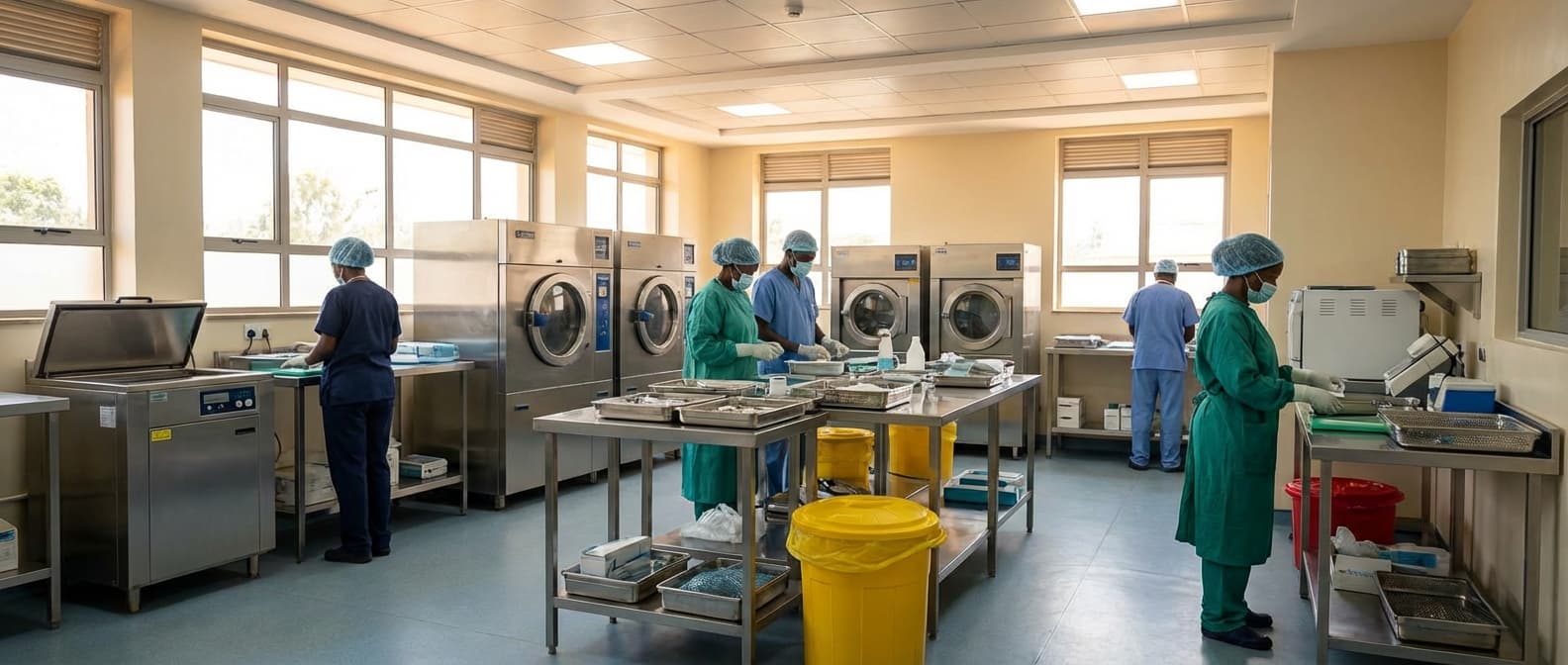
Medical Equipment Decontamination Service (Pre-Repair/Pre-Relocation) in Lesotho
Engineering Excellence & Technical Support
Medical Equipment Decontamination Service (Pre-Repair/Pre-Relocation) High-standard technical execution following OEM protocols and local regulatory frameworks.
Advanced Sterilization Protocols
Leveraging state-of-the-art sterilization technologies, we ensure medical equipment is rendered safe and free from infectious agents prior to repair or relocation, minimizing cross-contamination risks within healthcare facilities in Lesotho.
Certified Decontamination Assurance
Our stringent, ISO-certified decontamination processes provide documented assurance of bioburden reduction, meeting international standards and safeguarding the integrity of delicate medical devices during their transition phase.
Logistics-Ready Equipment Preparation
We specialize in preparing medical equipment for secure transport, ensuring all residual biohazards are neutralized and equipment is appropriately packaged, facilitating seamless pre-repair or pre-relocation logistics across Lesotho.
What Is Medical Equipment Decontamination Service (Pre-repair/pre-relocation) In Lesotho?
Medical Equipment Decontamination Service (Pre-Repair/Pre-Relocation) in Lesotho refers to the process of thoroughly cleaning, disinfecting, and/or sterilizing medical devices prior to their submission for repair or relocation. This service is critical for preventing the transmission of infectious agents and ensuring the safety of both healthcare personnel and the environment throughout the equipment lifecycle. The decontamination process aims to eliminate or inactivate all viable microorganisms, including bacteria, viruses, fungi, and spores, to a level that is not considered harmful. This is achieved through a combination of mechanical cleaning, chemical disinfection, and/or sterilization methods, tailored to the specific type of equipment and its intended use.
| Who Needs This Service? | Typical Use Cases | |||
|---|---|---|---|---|
| Healthcare Facilities: Hospitals, clinics, diagnostic laboratories, and specialized medical centers that utilize a wide range of medical equipment. | Biomedical Engineering Departments: Responsible for the maintenance and repair of medical devices within healthcare institutions. | Medical Equipment Manufacturers and Suppliers: For equipment returned for servicing, refurbishment, or before shipment to new locations. | Third-Party Equipment Repair Services: Companies specializing in the repair of medical devices. | Research and Development Institutions: Utilizing specialized medical or laboratory equipment. |
| Equipment requiring repair: Any medical device that has been used on patients and needs to be sent to a repair workshop, whether in-house or external. | Equipment undergoing relocation: When medical devices are moved between departments, facilities, or to new geographical locations, especially if they will be stored or transported. | Returned equipment: Devices sent back to the manufacturer or supplier for warranty work, servicing, or after a trial period. | Equipment for decommissioning or disposal: Prior to disposal, decontamination ensures that no biohazardous material is released into the environment. | Preventative maintenance: As part of a proactive maintenance schedule to ensure equipment is safe for handling and servicing. |
Key Aspects of Medical Equipment Decontamination Service (Pre-Repair/Pre-Relocation):
- Cleaning: The initial stage involves removing gross soil, organic debris, and particulate matter using appropriate detergents and water. This step is crucial as it enhances the efficacy of subsequent disinfection or sterilization processes.
- Disinfection: This process reduces the number of viable microorganisms to a safe level, but not necessarily to zero. It involves the use of chemical agents such as high-level disinfectants (e.g., glutaraldehyde, peracetic acid) or low-level disinfectants (e.g., alcohol, quaternary ammonium compounds), depending on the risk of infection associated with the equipment.
- Sterilization: This process eliminates all forms of microbial life, including resistant bacterial spores. Common sterilization methods include autoclaving (steam under pressure), ethylene oxide gas, or low-temperature sterilization technologies. The choice of method is dictated by the material composition and heat sensitivity of the medical device.
- Validation and Monitoring: Decontamination processes must be validated to ensure consistent effectiveness. Regular monitoring, including biological and chemical indicators, is essential to confirm that the decontamination cycles are achieving the desired outcome.
- Documentation: Comprehensive records of decontamination procedures, including equipment identification, date, method used, and personnel involved, are maintained for traceability and compliance purposes.
- Safety Protocols: Strict adherence to occupational safety and health guidelines is paramount, including the use of personal protective equipment (PPE) and proper handling of hazardous chemicals.
Who Needs Medical Equipment Decontamination Service (Pre-repair/pre-relocation) In Lesotho?
In Lesotho, various entities require professional medical equipment decontamination services before repairs or relocation to ensure the safety of technicians, patients, and the environment. This crucial step prevents the spread of infectious agents and minimizes biohazard risks.
| Target Customer/Entity | Key Departments Requiring Decontamination | Reason for Decontamination (Pre-Repair/Pre-Relocation) |
|---|---|---|
| Hospitals & Clinics | OR, ICU, ER, Labs, Dialysis, Maternity, OPD | Prevent technician infection, patient cross-contamination, environmental safety. |
| Diagnostic Laboratories | Microbiology, Virology, Pathology | Protect lab personnel, prevent spread of infectious agents during handling. |
| Research Institutions | Any lab handling biological samples | Ensure biosafety for researchers and prevent contamination of research equipment. |
| Service & Repair Companies | Technician workshops | Protect repair technicians from biohazards present on returned equipment. |
| Suppliers & Distributors | Warehousing & logistics | Safe handling and storage of returned or exchanged equipment. |
| Emergency Medical Services (EMS) | Ambulances, command centers | Ensure safety of EMS personnel and prevent equipment contamination. |
| Government Health Agencies | Centralized repair depots, outbreak response | Public health safety, standardized decontamination protocols. |
| Healthcare NGOs | Remote clinics, mobile units | Maintain hygiene and safety standards in underserved areas. |
Target Customers and Departments in Lesotho Needing Medical Equipment Decontamination Service (Pre-Repair/Pre-Relocation):
- {"title":"Hospitals and Clinics (Public & Private)","description":"All departments within these facilities handling potentially infectious equipment. This includes Operating Rooms, Intensive Care Units (ICUs), Emergency Rooms, Laboratories, Dialysis Units, Maternity Wards, and Outpatient Departments."}
- {"title":"Diagnostic Laboratories","description":"Laboratories performing tests on patient samples, especially those dealing with infectious diseases. Equipment from Microbiology, Virology, and Pathology labs are prime candidates."}
- {"title":"Medical Research Institutions","description":"Facilities conducting research on biological samples, including those with a focus on infectious diseases or novel pathogens."}
- {"title":"Medical Equipment Service and Repair Companies","description":"Companies that service and repair medical equipment are a primary customer. They need assurance that equipment received for repair is decontaminated to protect their technicians."}
- {"title":"Medical Equipment Suppliers and Distributors","description":"When equipment is being returned for exchange, upgrade, or is part of a recall process, decontamination is essential."}
- {"title":"Emergency Medical Services (EMS)","description":"Ambulances and other EMS vehicles utilize a range of equipment that may require decontamination before routine maintenance or relocation to a new station."}
- {"title":"Government Health Ministries and Agencies","description":"As oversight bodies, they may contract decontamination services for centralized repair facilities or in response to outbreaks."}
- {"title":"Non-Governmental Organizations (NGOs) involved in Healthcare","description":"NGOs operating health facilities, mobile clinics, or providing medical equipment to remote areas."}
- {"title":"Veterinary Clinics and Laboratories (if handling zoonotic diseases)","description":"While primarily focused on human health, if veterinary services deal with diseases transmissible to humans, their equipment may also require decontamination."}
Medical Equipment Decontamination Service (Pre-repair/pre-relocation) Process In Lesotho
This document outlines the comprehensive workflow for the Medical Equipment Decontamination Service (Pre-Repair/Pre-Relocation) provided in Lesotho. This service is crucial to ensure the safety of personnel and the integrity of equipment during maintenance or relocation processes, preventing the spread of infectious agents. The process begins with an initial inquiry and concludes with the successful decontamination and certification of the medical equipment.
| Stage | Description | Responsible Party | Key Activities | Deliverables/Outcomes |
|---|---|---|---|---|
| Inquiry and Initial Consultation | The process begins when a healthcare facility or individual in Lesotho identifies the need for decontamination of medical equipment prior to repair or relocation. | Client (Healthcare Facility/Individual), Decontamination Service Provider | Client contacts service provider, discusses equipment type, purpose (repair/relocation), potential biohazards, and desired timeline. Provider offers preliminary advice and information. | Understanding of client's needs, initial assessment of service scope, provision of service brochure/information. |
| Site Assessment and Quotation | A detailed assessment of the equipment and its location is conducted to determine the specific decontamination requirements and associated costs. | Decontamination Service Provider | Site visit to inspect equipment, assess accessibility, identify necessary decontamination agents and equipment, evaluate environmental factors, determine safety protocols. Based on assessment, a detailed quotation is prepared. | Detailed quotation including scope of work, decontamination methods, required resources, timeline, and cost. Agreement on terms and conditions. |
| Scheduling and Logistics Planning | Once the quotation is accepted, the decontamination service is scheduled, and all necessary logistics are arranged. | Decontamination Service Provider, Client | Joint scheduling of the decontamination service, confirmation of date and time. Arranging for safe transport of decontamination equipment and personnel to the site. Ensuring client readiness (access, power, etc.). | Confirmed service schedule. Pre-service briefing to the client on preparations required. |
| On-site Decontamination Execution | The actual decontamination of the medical equipment is performed by trained professionals using approved methods and agents. | Decontamination Service Provider | Preparation of the work area, selection and application of appropriate decontamination agents (e.g., disinfectants, sterilants) based on equipment type and identified biohazards. Following strict safety protocols. Adhering to manufacturer guidelines for equipment sensitivity. | Decontaminated medical equipment. Proper disposal of decontamination waste according to regulations. |
| Verification and Testing | Following decontamination, the effectiveness of the process is verified, and any functional tests are performed. | Decontamination Service Provider, Client (optional) | Visual inspection for cleanliness. Where applicable, testing of decontamination efficacy using biological indicators or chemical indicators. Functional checks of the equipment by the client or a designated technician. | Confirmation of decontamination effectiveness. Identification of any residual issues or areas requiring further attention. |
| Certification and Documentation | Upon successful decontamination and verification, a certificate is issued, and all relevant documentation is provided. | Decontamination Service Provider | Issuance of a Decontamination Certificate detailing the equipment, date, methods used, and confirmation of successful decontamination. Providing a service report with all relevant details. Maintaining records for future reference. | Decontamination Certificate. Service report. Client's assurance of safe and sterile equipment. |
| Billing and Payment | The final invoice is issued to the client, and payment is processed as per the agreed terms. | Decontamination Service Provider, Client | Submission of the final invoice based on the agreed quotation and any approved variations. Client processing of payment. | Completion of financial transaction. Finalized service delivery. |
Key Stages of Medical Equipment Decontamination Service
- Inquiry and Initial Consultation
- Site Assessment and Quotation
- Scheduling and Logistics Planning
- On-site Decontamination Execution
- Verification and Testing
- Certification and Documentation
- Billing and Payment
Medical Equipment Decontamination Service (Pre-repair/pre-relocation) Cost In Lesotho
The cost of medical equipment decontamination services in Lesotho, particularly for pre-repair or pre-relocation purposes, is influenced by several key factors. These factors collectively determine the pricing structure and the overall expense incurred by healthcare facilities or individuals. Understanding these elements is crucial for accurate budgeting and service selection.
Key Pricing Factors:
- Type and Size of Equipment: Larger and more complex medical devices, such as imaging machines (X-ray, CT scanners) or large surgical tables, will generally incur higher decontamination costs than smaller, simpler equipment like stethoscopes or blood pressure monitors. The number of components requiring cleaning and the accessibility of internal parts also play a role.
- Level of Contamination: The severity and type of contaminants present on the equipment are significant determinants of cost. Equipment with biological hazards (e.g., from infectious diseases) or chemical residues will require specialized, more intensive, and often more expensive decontamination protocols and agents compared to equipment with general dust or minor soiling.
- Decontamination Method: Different decontamination techniques have varying costs associated with them. High-level disinfection (HLD) using chemical sterilants or autoclaving (steam sterilization) is typically more expensive than basic cleaning and low-level disinfection. The required level of decontamination is dictated by the equipment's intended use and the risk of pathogen transmission.
- Turnaround Time/Urgency: Expedited decontamination services, required for urgent repairs or immediate relocation, often come with a premium. Standard turnaround times will be more cost-effective.
- Service Provider Expertise and Credentials: Reputable decontamination service providers with specialized training, certifications, and experience will likely charge more due to their expertise, investment in equipment, and adherence to stringent safety standards. Smaller or less established providers might offer lower rates but potentially with less robust processes.
- Location and Accessibility: While Lesotho is a relatively small country, travel time and accessibility to the equipment's location can influence costs. Remote areas might incur additional charges for transportation and personnel deployment.
- Volume of Services: Facilities requiring regular or large-volume decontamination services may be able to negotiate bulk discounts with service providers.
- Waste Disposal: Proper disposal of contaminated materials and cleaning agents is an integral part of the decontamination process and adds to the overall cost. Regulations and specialized waste management practices will impact this.
- Ancillary Services: Some providers may offer additional services like verification testing (e.g., biological indicators for sterilization), documentation, or minor repair assistance, which will be factored into the final cost.
Pricing Ranges in LSL (Lesotho Maloti):
It's important to note that specific pricing can vary significantly. The following ranges are estimates and are subject to change. It is always recommended to obtain detailed quotes from multiple service providers in Lesotho for accurate costing.
For pre-repair or pre-relocation decontamination of medical equipment in Lesotho, costs can range from LSL 200 to LSL 5,000+.
| Equipment Category | Estimated Cost Range (LSL) | Notes |
|---|---|---|
| Small Equipment (e.g., Stethoscopes, BP Monitors) | 200 - 500 | Basic cleaning and disinfection. |
| Medium Equipment (e.g., Patient Monitors, Infusion Pumps) | 500 - 1,500 | May involve more detailed cleaning of external surfaces and accessible components. |
| Large Equipment (e.g., Surgical Lights, Minor Diagnostic Tools) | 1,000 - 3,000 | Requires more labor and potentially specialized cleaning agents. |
| Complex/High-Risk Equipment (e.g., Imaging Accessories, Anesthesia Machines - external parts) | 2,000 - 5,000+ | Can involve detailed disassembly and specialized high-level disinfection procedures for external surfaces. Internal decontamination for repair might be separate and more costly. |
Factors Influencing Medical Equipment Decontamination Costs in Lesotho
- Type and Size of Equipment
- Level of Contamination
- Decontamination Method Employed
- Required Turnaround Time (Urgency)
- Provider's Expertise and Certifications
- Geographical Location and Accessibility
- Volume of Decontamination Services
- Waste Disposal Requirements
- Inclusion of Ancillary Services
Affordable Medical Equipment Decontamination Service (Pre-repair/pre-relocation) Options
When medical equipment requires repair or relocation, ensuring its decontamination is a critical, often overlooked, step. This process not only safeguards technicians and new environments from potential biohazards but also preserves the integrity of the equipment itself. Offering affordable decontamination services before repair or relocation provides significant value by mitigating risks, preventing cross-contamination, and ensuring compliance with health and safety regulations. This document outlines various service options, focusing on value bundles and cost-saving strategies for pre-repair/pre-relocation medical equipment decontamination.
| Decontamination Service Tier | Key Features | Ideal For | Estimated Cost Range (USD)* |
|---|---|---|---|
| Basic Decontamination | Surface cleaning and disinfection of accessible areas using EPA-approved disinfectants. Documentation of services performed. | Low-risk equipment, minimal biological contact, routine maintenance. | $75 - $150 per device |
| Standard Decontamination | Includes basic decontamination plus targeted cleaning of internal/external components. Use of specialized cleaning agents where appropriate. Detailed service report. | Equipment with moderate biological contact, pre-repair for general issues. | $150 - $300 per device |
| Advanced Decontamination | Comprehensive cleaning and disinfection of all accessible surfaces, components, and critical access points. Includes initial risk assessment and detailed decontamination protocol. Bioburden testing confirmation (optional add-on). | High-risk equipment, post-patient use with known bioburden, critical systems, pre-relocation to sensitive environments. | $300 - $600+ per device (complex equipment may incur additional costs) |
Why Decontaminate Before Repair/Relocation?
- Safety: Protects repair technicians, relocation crews, and end-users from infectious agents.
- Prevent Cross-Contamination: Stops the spread of pathogens from one environment or piece of equipment to another.
- Equipment Integrity: Prevents corrosion or damage to sensitive components caused by biological matter or cleaning agents used during repair.
- Regulatory Compliance: Meets healthcare facility and industry standards for infection control.
- Cost Avoidance: Minimizes potential liability and costly remediation efforts due to improper handling.
- Operational Efficiency: Streamlines the repair and relocation process by removing a potential bottleneck.
Verified Providers In Lesotho
In Lesotho's evolving healthcare landscape, identifying and trusting verified providers is paramount for ensuring quality and accessible medical care. Franance Health stands out as a leading organization, committed to upholding rigorous standards and fostering a network of exceptional healthcare professionals. This document outlines Franance Health's credentials and elucidates why their verified providers represent the best choice for your health and well-being in Lesotho.
| Credential Type | Verification Method | Franance Health Assurance |
|---|---|---|
| Medical Licenses | Cross-referenced with Lesotho Medical Council and relevant regulatory bodies. | Mandatory and continuously monitored. |
| Professional Certifications | Validation of specialty board certifications and advanced training. | Confirmed to be current and relevant. |
| Educational Qualifications | Verification of degrees and diplomas from accredited institutions. | Thoroughly scrutinized for authenticity. |
| Criminal Background Checks | Comprehensive checks to ensure patient safety and trust. | Conducted for all new and renewing providers. |
| Clinical Experience | Review of professional history and practice records. | Ensured to be substantial and reputable. |
| Patient Feedback | Regular collection and analysis of patient testimonials and satisfaction surveys. | Integral to ongoing performance evaluation. |
Franance Health's Commitment to Excellence
- {"title":"Rigorous Verification Process","description":"Franance Health implements a multi-stage verification process for all its affiliated healthcare providers. This includes thorough background checks, verification of medical licenses, professional certifications, and educational qualifications. We ensure that every provider meets and often exceeds the required professional benchmarks."}
- {"title":"Quality Assurance and Continuous Improvement","description":"Beyond initial vetting, Franance Health actively engages in ongoing quality assurance. This involves patient feedback mechanisms, peer reviews, and regular assessments to ensure consistent high standards of care. We are dedicated to fostering a culture of continuous improvement within our network."}
- {"title":"Patient-Centric Approach","description":"Our core philosophy revolves around prioritizing the patient. Franance Health-verified providers are committed to offering compassionate, ethical, and patient-centered care. They are trained to listen, empathize, and provide personalized treatment plans that address individual needs."}
- {"title":"Access to Diverse Specializations","description":"Franance Health's network encompasses a wide array of medical specializations, from general practitioners and pediatricians to specialized surgeons and diagnostic experts. This ensures that patients can find the right care for any health concern, all under the umbrella of trusted, verified professionals."}
- {"title":"Promoting Health Literacy and Education","description":"We believe that informed patients make better health decisions. Franance Health encourages its providers to actively engage in patient education, empowering individuals with the knowledge they need to manage their health effectively and understand their treatment options."}
Scope Of Work For Medical Equipment Decontamination Service (Pre-repair/pre-relocation)
This Scope of Work (SOW) outlines the requirements for a Medical Equipment Decontamination Service, specifically for pre-repair or pre-relocation of equipment. The service aims to ensure the safety of technicians, personnel, and the environment by effectively removing biological and chemical contaminants from medical devices before they are handled for maintenance or moved to a new location. This document details the technical deliverables and standard specifications that the service provider must adhere to. The primary objective is to render the equipment safe for further handling, repair, or relocation, minimizing the risk of cross-contamination and exposure to hazardous substances.
| Section | Description | Technical Deliverables | Standard Specifications |
|---|---|---|---|
| Provision of on-site or off-site decontamination services for medical equipment prior to repair or relocation. | Completed decontamination of specified medical equipment, rendering it safe for handling. | Adherence to manufacturer's cleaning and disinfection recommendations where applicable; use of validated decontamination protocols. |
| Identification and assessment of all equipment requiring decontamination, including type, size, and potential contaminants. | Detailed inventory of equipment to be decontaminated, including serial numbers and location. | Pre-service assessment to determine appropriate decontamination methods and required resources. |
| Application of approved methods for physical and chemical decontamination. | Detailed procedure log for each piece of equipment, documenting methods used, chemicals, contact times, and temperatures. | Use of EPA-registered and/or FDA-cleared disinfectants/sterilants appropriate for the equipment material and identified contaminants. Compliance with OSHA and CDC guidelines. |
| Implementation of stringent safety measures to protect personnel and the environment. | Provision and use of appropriate Personal Protective Equipment (PPE) for decontamination personnel. | Establishment of designated decontamination zones, ventilation controls, and waste disposal procedures. Spill containment and management plan. |
| Ensuring the effectiveness of the decontamination process. | Post-decontamination visual inspection for cleanliness. | Where applicable, use of bio-indicators or chemical indicators to verify efficacy of sterilization or high-level disinfection. |
| Safe and compliant disposal of contaminated materials and wastewater. | Proper segregation, containment, and disposal of all contaminated waste according to local, state, and federal regulations. | Use of licensed hazardous waste disposal services if required. |
| Comprehensive record-keeping of all decontamination activities. | Decontamination Certificate for each serviced equipment item, signed and dated by authorized personnel. | Final report summarizing all services performed, including equipment list, methods used, validation results (if any), and waste disposal records. Certificate of Analysis for disinfectants used. |
| Ensuring service providers are adequately trained and qualified. | Proof of training and certification for decontamination personnel in handling biohazardous and chemical agents. | Demonstrated experience in medical equipment decontamination and infection control. |
| Timely completion of decontamination services to minimize equipment downtime. | Agreed-upon turnaround time for decontamination of individual equipment items or batches. | Defined response time for on-site service requests. |
Key Objectives
- To ensure the safety of all personnel involved in the repair or relocation process.
- To prevent the spread of infectious agents and hazardous chemical contaminants.
- To comply with relevant health and safety regulations and guidelines.
- To provide a verifiable decontamination process and documentation.
- To prepare medical equipment for safe and efficient repair or relocation.
Service Level Agreement For Medical Equipment Decontamination Service (Pre-repair/pre-relocation)
This Service Level Agreement (SLA) outlines the guaranteed response times and uptime for the Medical Equipment Decontamination Service (Pre-Repair/Pre-Relocation) provided by [Your Company Name] to [Client Name]. This agreement ensures that equipment is decontaminated promptly and reliably, minimizing downtime and maintaining operational readiness.
| Service Element | SLA Guarantee | Measurement & Reporting | Escalation Procedure |
|---|---|---|---|
| Request Acknowledgement | Within 1 hour of receipt of a decontamination request (during business hours). | Automated email confirmation and manual follow-up call. Report generated daily. | If acknowledgement is not received within the SLA, contact Service Manager at [Phone Number] or [Email Address]. |
| On-Site Arrival (Scheduled) | Within 4 business hours of scheduled decontamination time confirmation. | Technician clock-in/out times recorded via mobile application. Daily report. | If arrival is delayed beyond SLA, contact Dispatch Manager at [Phone Number] or [Email Address]. |
| Decontamination Completion (Standard Unit) | Within 2 hours from on-site arrival for standard, non-complex equipment (e.g., portable monitors, infusion pumps). | Technician logging of service completion time. Daily report. | If completion exceeds SLA, discuss with on-site technician and escalate to Regional Supervisor at [Phone Number] or [Email Address]. |
| Decontamination Completion (Complex Unit) | Within 4 hours from on-site arrival for complex equipment (e.g., CT scanners, MRI machines, large surgical equipment). | Technician logging of service completion time. Daily report. | If completion exceeds SLA, discuss with on-site technician and escalate to Regional Supervisor at [Phone Number] or [Email Address]. |
| Decontamination Certificate Issuance | Within 24 hours of decontamination completion. | Electronic certificate delivered via email. Report tracking issuance. | If certificate is not received within SLA, contact Administration at [Phone Number] or [Email Address]. |
| Service Uptime Guarantee (for the decontamination service itself) | 99.5% availability of decontamination personnel and scheduling system during agreed service hours (e.g., Monday-Friday, 8 AM - 6 PM). | System monitoring logs, technician availability records. Monthly availability report. | For unplanned service outages affecting >20% of service capacity, the Client will be notified within 1 hour. Critical issues escalated to Director of Operations at [Phone Number] or [Email Address]. |
Scope of Service
- On-site decontamination of specified medical equipment prior to repair or relocation.
- Use of approved and validated decontamination agents and procedures.
- Generation of decontamination certificates for each serviced unit.
- Adherence to all relevant health and safety regulations.
Frequently Asked Questions

Ready when you are
Let's scope your Medical Equipment Decontamination Service (Pre-Repair/Pre-Relocation) in Lesotho project in Lesotho.

Scaling healthcare logistics and technical systems across the entire continent.