
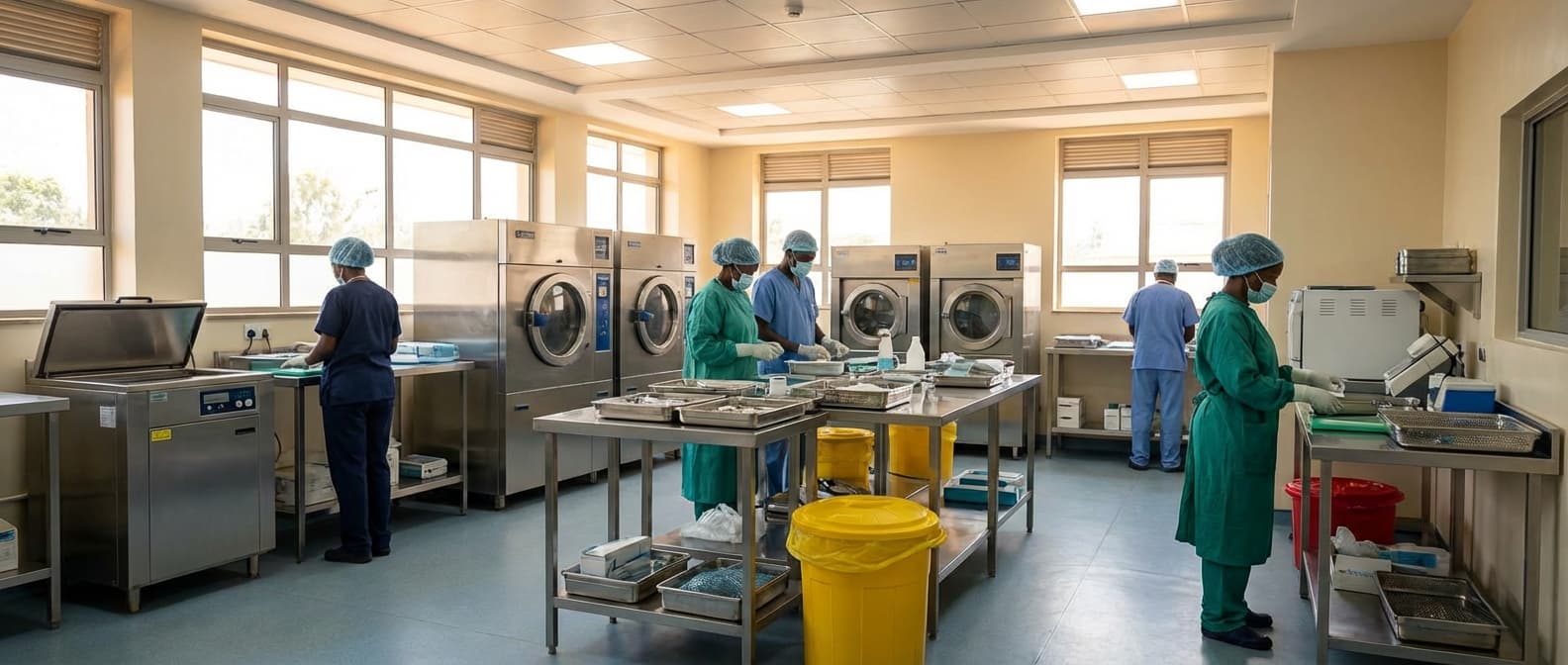
Endoscope Reprocessing Equipment Support Service in Lesotho
Engineering Excellence & Technical Support
Endoscope Reprocessing Equipment Support Service High-standard technical execution following OEM protocols and local regulatory frameworks.
24/7 Expert Technical Support
Rapid-response, expert technical assistance for all endoscope reprocessing equipment issues, available 24/7 across Lesotho. Our certified technicians ensure minimal downtime and optimal equipment performance.
On-Site Preventative Maintenance & Repair
Proactive on-site preventative maintenance and efficient repair services tailored to your specific reprocessing needs in Lesotho. We extend equipment lifespan and prevent costly breakdowns through scheduled servicing.
Remote Diagnostics & Troubleshooting
Leveraging advanced remote diagnostic tools, we offer swift troubleshooting for your endoscope reprocessing equipment in Lesotho, often resolving issues without the need for an on-site visit, saving you time and resources.
What Is Endoscope Reprocessing Equipment Support Service In Lesotho?
Endoscope reprocessing equipment support service in Lesotho refers to the provision of specialized technical assistance, maintenance, and repair for the automated and semi-automated machinery used in the cleaning, disinfection, and sterilization of flexible endoscopes. This service is critical for ensuring the safety, efficacy, and longevity of endoscopes, thereby mitigating the risk of patient-to-patient transmission of healthcare-associated infections (HAIs) and maximizing the operational uptime of endoscopic procedures.
| Who Needs It | Typical Use Cases | Rationale/Impact |
|---|---|---|
| Hospitals and Healthcare Facilities: Particularly those performing endoscopic procedures (gastroenterology, pulmonology, urology, gynecology, surgery, etc.). | Maintenance of automated endoscope reprocessors (AERs), washer-disinfectors, drying and storage cabinets, and associated ancillary equipment. | Ensures compliance with infection control guidelines, reduces the risk of HAIs, minimizes procedure cancellations due to equipment downtime, and prolongs the lifespan of expensive endoscopic equipment. |
| Specialized Endoscopy Clinics: Facilities dedicated to performing a high volume of endoscopic examinations and interventions. | Regular servicing and prompt repair of AERs and other reprocessing units critical for high-throughput environments. | Maintains operational efficiency, safeguards patient safety, and supports the facility's reputation for quality care. |
| Government and Public Health Agencies: Responsible for oversight of healthcare quality and infection control standards. | Ensuring that healthcare facilities have access to reliable support services for their critical reprocessing equipment. | Contributes to national healthcare safety initiatives and the reduction of preventable infections. |
| Biomedical Engineering Departments: In-house teams responsible for the maintenance and repair of medical equipment within healthcare institutions. | Providing specialized training, access to OEM parts, and technical expertise that may not be available in-house for complex endoscope reprocessing machinery. | Enhances the capabilities of internal teams, reduces reliance on external contractors for routine tasks, and fosters greater equipment autonomy. |
Key Components of Endoscope Reprocessing Equipment Support Service
- Preventive Maintenance: Scheduled inspections, calibration, lubrication, and replacement of wear-and-tear components to forestall equipment failures and maintain optimal performance.
- Corrective Maintenance (Repair): On-demand troubleshooting and repair of equipment malfunctions, including diagnosis, part replacement, and system restoration.
- Validation and Performance Testing: Verification of equipment's compliance with manufacturer specifications and relevant industry standards (e.g., AAMI ST98, EN ISO 15883) post-maintenance or repair.
- Technical Consultation and Training: Expert advice on equipment operation, troubleshooting, and best practices for endoscope reprocessing protocols. Training for biomedical engineers, technicians, and reprocessing staff.
- Parts and Consumables Management: Ensuring the availability and supply of genuine spare parts and recommended consumables for equipment maintenance and operation.
- Software Updates and Calibration: Management of equipment firmware and software, including necessary updates and recalibrations to maintain accuracy and functionality.
- Emergency Breakdown Support: Rapid response services to address critical equipment failures that impede reprocessing capabilities.
Who Needs Endoscope Reprocessing Equipment Support Service In Lesotho?
The demand for specialized support services for endoscope reprocessing equipment in Lesotho is primarily driven by healthcare facilities that utilize endoscopic procedures. These services are crucial for ensuring the effective cleaning, disinfection, and sterilization of endoscopes, thereby preventing healthcare-associated infections (HAIs) and maintaining patient safety. The need extends beyond initial installation, encompassing routine maintenance, repair, validation, and operator training.
| Customer Type | Typical Departments Involved | Specific Needs for Support Service |
|---|---|---|
| Government Hospitals (e.g., Queen Elizabeth II Hospital, Mokhotlong Hospital) | Gastroenterology, Pulmonology, Urology, Surgery, Infection Control | Preventive maintenance for diverse equipment, urgent repairs for critical equipment, validation services to meet national standards, training for a wide range of staff, and potentially support for older or varied equipment models. |
| Private Hospitals (e.g., Maseru Private Hospital) | Gastroenterology, Pulmonology, Urology, Surgery, Endoscopy Suite Management | Timely and efficient repairs to minimize patient downtime, advanced troubleshooting, calibration and performance verification, and specialized training on newer or advanced reprocessing technologies. |
| Clinics with Endoscopy Services (e.g., smaller specialized clinics) | Endoscopy Unit Staff, Nursing Staff | Regular maintenance contracts, on-demand repair services, basic operational training, and guidance on compliance with reprocessing guidelines. |
| Tertiary and Referral Hospitals | Gastroenterology, Pulmonology, Urology, Surgery, Infection Control, Biomedical Engineering Department | Comprehensive service contracts, integration of support with hospital's internal maintenance systems, expert consultation on equipment upgrades, and advanced training for specialized personnel. |
| Surgical Centers | Surgical Staff, Endoscopy Technicians, Operating Room Nurses | Rapid response for equipment failures impacting surgical schedules, preventative maintenance to ensure operational readiness, and training on efficient workflow for reprocessing. |
Target Customers & Departments in Lesotho Requiring Endoscope Reprocessing Equipment Support Service:
- Government Hospitals
- Private Hospitals
- Clinics with Endoscopy Services
- Tertiary and Referral Hospitals
- Surgical Centers
- Gastroenterology Departments
- Pulmonology Departments
- Urology Departments
- Otolaryngology (ENT) Departments
- Operating Theatres
- Endoscopy Suites
Endoscope Reprocessing Equipment Support Service Process In Lesotho
This document outlines the workflow for endoscope reprocessing equipment support services provided within Lesotho, from the initial customer inquiry to the successful execution of the service. It details the steps involved, responsibilities, and key considerations to ensure efficient and effective support.
| Phase | Step | Description | Responsible Party | Key Deliverables/Outcomes | Considerations |
|---|---|---|---|---|---|
| 1: Inquiry and Initial Assessment | 1.1 Customer Inquiry | Client contacts the support provider regarding an issue or need for service for their endoscope reprocessing equipment (e.g., malfunction, maintenance, installation). | Client, Support Provider (Sales/Service Coordinator) | Initial understanding of the client's need, equipment type, and urgency. | Channels of communication (phone, email, online portal), clarity of initial problem description. |
| 1: Inquiry and Initial Assessment | 1.2 Preliminary Information Gathering | Support provider gathers essential details: equipment model, serial number, nature of the problem, location, and any previous service history. | Support Provider (Service Coordinator) | Basic equipment profile, preliminary diagnosis (if possible), client contact details. | Access to client's equipment inventory and service records. |
| 1: Inquiry and Initial Assessment | 1.3 Initial Triage and Quotation (if applicable) | Based on the information, the provider assesses the urgency, potential scope of work, and provides an estimated quotation for service. For routine maintenance, a standard service package may be offered. | Support Provider (Service Coordinator/Technical Lead) | Service quotation, estimated timeline, service agreement terms. | Pricing structure, availability of parts, technician expertise. |
| 2: Service Request and Scheduling | 2.1 Service Request Confirmation | Client formally accepts the quotation or authorizes the service request. | Client | Official service request, purchase order (if applicable). | Clear communication of terms and conditions. |
| 2: Service Request and Scheduling | 2.2 Service Scheduling | Support provider schedules the service visit based on technician availability, client's preferred time, and urgency of the request. Travel time and logistics are considered. | Support Provider (Service Coordinator) | Confirmed service date and time, assigned technician. | Technician availability, geographical location, travel constraints. |
| 3: Technician Dispatch and On-Site Service | 3.1 Technician Preparation | Assigned technician receives the service request details, prepares necessary tools, spare parts (if identified during initial assessment), and relevant documentation. | Support Provider (Technician) | Prepared service kit, relevant manuals and schematics. | Availability of correct parts, up-to-date technical knowledge. |
| 3: Technician Dispatch and On-Site Service | 3.2 Travel to Client Site | Technician travels to the client's facility in Lesotho. | Support Provider (Technician) | Safe and timely arrival at the client's location. | Road conditions, transportation, safety protocols. |
| 3: Technician Dispatch and On-Site Service | 3.3 On-Site Assessment and Diagnosis | Upon arrival, the technician performs a detailed on-site assessment and diagnosis of the equipment to confirm the problem. | Support Provider (Technician) | Accurate identification of the root cause of the issue. | Client cooperation in providing access and information. |
| 4: Execution and Testing | 4.1 Service Execution | The technician performs the necessary repairs, maintenance, or installation as per the service request and diagnosis. This may involve replacing parts, calibration, or software updates. | Support Provider (Technician) | Completion of the agreed-upon service work. | Adherence to manufacturer guidelines, quality of workmanship. |
| 4: Execution and Testing | 4.2 Functional Testing and Validation | After execution, the technician conducts thorough functional testing to ensure the equipment is operating correctly and meets all performance specifications. This often includes simulated reprocessing cycles. | Support Provider (Technician), Client (witnessing) | Verified operational status of the equipment, documented test results. | Use of calibrated testing equipment, client's confirmation of functionality. |
| 4: Execution and Testing | 4.3 Client Sign-off | The client reviews the work performed and the test results, and provides formal sign-off on the completed service. | Client | Formal acceptance of the service provided. | Client's understanding of the work done and satisfaction with the outcome. |
| 5: Documentation and Closure | 5.1 Service Report Generation | The technician completes a detailed service report including the problem identified, work performed, parts used, test results, and time spent. | Support Provider (Technician) | Comprehensive service report. | Accuracy and completeness of the report. |
| 5: Documentation and Closure | 5.2 Invoicing and Payment | The support provider generates an invoice based on the service report and agreed-upon terms. The client processes payment. | Support Provider (Administration), Client | Timely and accurate invoice, received payment. | Clear invoicing terms, efficient payment processing. |
| 5: Documentation and Closure | 5.3 Service Record Update | The service report and all relevant documentation are filed and added to the equipment's service history in the support provider's system. | Support Provider (Administration/Service Coordinator) | Updated service records for future reference. | Data integrity and accessibility. |
| 6: Follow-up and Quality Assurance | 6.1 Post-Service Follow-up | A follow-up call or email is made to the client after a short period to ensure the equipment is still functioning correctly and that the client is satisfied with the service. | Support Provider (Service Coordinator/Customer Relations) | Confirmation of ongoing equipment performance and client satisfaction. | Proactive customer engagement. |
| 6: Follow-up and Quality Assurance | 6.2 Feedback Collection | Feedback on the service experience is collected from the client to identify areas for improvement. | Support Provider (Service Coordinator/Customer Relations) | Client feedback for continuous improvement. | Openness to constructive criticism. |
| 6: Follow-up and Quality Assurance | 6.3 Quality Review | Internal review of the service process and outcomes to ensure quality standards are met and to identify any systemic issues. | Support Provider (Management/Quality Assurance) | Identification of best practices and areas for enhancement. | Data analysis of service performance. |
Endoscope Reprocessing Equipment Support Service Workflow
- Phase 1: Inquiry and Initial Assessment
- Phase 2: Service Request and Scheduling
- Phase 3: Technician Dispatch and On-Site Service
- Phase 4: Execution and Testing
- Phase 5: Documentation and Closure
- Phase 6: Follow-up and Quality Assurance
Endoscope Reprocessing Equipment Support Service Cost In Lesotho
The cost of endoscope reprocessing equipment support services in Lesotho is influenced by several key factors, leading to a range of pricing. These services are crucial for ensuring the safety and functionality of vital medical equipment used in diagnostic and therapeutic procedures. The overall cost is a composite of direct service charges, parts, consumables, and administrative overheads. It's important to note that specific pricing can vary significantly between different service providers, the type and age of the endoscope reprocessing equipment, and the urgency of the service required.
| Service Type | Estimated Price Range (LSL - Maloti) | Notes |
|---|---|---|
| Routine Preventive Maintenance (Annual/Bi-annual) | 2,000 - 7,500 | Covers basic inspection, cleaning, lubrication, and calibration checks. May exclude parts. |
| On-Site Diagnostic and Repair (Hourly) | 500 - 1,500 | Excludes parts and travel. Rate per hour for technician's time. |
| Minor Component Replacement (e.g., seals, filters, valves) | 1,500 - 5,000 (plus labor) | Cost of parts varies significantly. Example figures include estimated part cost. Labour additional. |
| Major Component Replacement (e.g., pump, circuit board) | 7,500 - 25,000+ (plus labor) | Costs can be very high for specialized components. Labour additional. |
| Full System Overhaul/Major Service | 10,000 - 30,000+ | Comprehensive service including multiple component checks, potential replacements, and full recalibration. Can be higher for complex units. |
| Emergency Call-Out Fee | 1,000 - 3,000 (on top of service/labor) | Fee for immediate dispatch, often outside standard working hours. |
| Annual Service Contract (Basic) | 5,000 - 15,000 | May include 1-2 preventive maintenance visits and discounted labor rates for repairs. |
| Annual Service Contract (Comprehensive) | 15,000 - 40,000+ | Includes multiple preventive maintenance visits, priority service, and potentially coverage for certain parts or labor. |
Key Pricing Factors for Endoscope Reprocessing Equipment Support Service in Lesotho:
- Type of Service: Routine maintenance and calibration are generally less expensive than emergency repairs or comprehensive overhauls. Preventive maintenance contracts, offering scheduled checks and servicing, can sometimes provide a more predictable and potentially lower overall annual cost.
- Equipment Make and Model: Different manufacturers and models of endoscope reprocessors have varying complexities, proprietary parts, and software. Services for high-end, specialized, or older/discontinued equipment may incur higher costs due to part availability and technician expertise.
- Age and Condition of Equipment: Older or heavily used equipment may require more frequent servicing, a higher likelihood of part replacement, and more complex diagnostic procedures, thus increasing costs.
- Scope of Work: The extent of the service required is a primary driver of cost. This includes simple cleaning and lubrication, replacement of specific components (e.g., pumps, filters, valves, seals), software updates, or full system diagnostics and recalibration.
- Parts and Consumables: The cost of replacement parts and specific consumables (like lubricants, disinfectants, or calibration fluids recommended by the manufacturer) directly impacts the overall service fee. Genuine manufacturer parts are often more expensive than aftermarket alternatives but are usually recommended for optimal performance and warranty compliance.
- Labor Rates: The hourly rates charged by qualified and certified technicians are a significant component. Technicians with specialized training for particular brands or complex equipment will typically command higher rates.
- Travel and Logistics: For on-site services, travel time and associated costs (transportation, accommodation if necessary) for the technician will be factored into the price, especially if the healthcare facility is located in a remote area of Lesotho.
- Urgency of Service: Emergency or same-day service requests usually attract premium charges compared to scheduled appointments.
- Service Provider: Different service companies, whether authorized by the equipment manufacturer or independent third-party providers, will have their own pricing structures and overheads.
- Contractual Agreements: Hospitals or clinics often enter into long-term service contracts or maintenance agreements, which can offer discounted rates, priority service, or bundled services.
- Geographic Location within Lesotho: While the core pricing might be similar, localized economic conditions or logistical challenges in very remote regions might slightly influence the final cost.
Affordable Endoscope Reprocessing Equipment Support Service Options
Maintaining a sterile and functional endoscope inventory is critical for patient safety and efficient clinical operations. However, the cost of endoscope reprocessing equipment and its ongoing support can be a significant concern for healthcare facilities. This guide outlines affordable service options and strategies to manage these costs effectively.
| Cost-Saving Strategy | Description | Potential Impact |
|---|---|---|
| Negotiate Bundle Pricing | Leverage your facility's purchasing power and explore competitive bids from multiple service providers. Don't be afraid to negotiate terms, especially for multi-year contracts or larger equipment fleets. | Significant reduction in overall service costs. |
| Extended Service Contracts | While initial costs may be higher, longer-term contracts can lock in current pricing and offer better value over the lifespan of the equipment, especially for reliable units. | Predictable expenses, protection against future price increases. |
| Third-Party Service Providers | Consider independent service organizations (ISOs) that specialize in endoscope reprocessing equipment. They often offer competitive pricing and flexible service options compared to original equipment manufacturers (OEMs). | Lower service fees, greater flexibility in contract terms. |
| In-House Training & Basic Maintenance | Train your biomedical or in-house technical staff to perform basic maintenance tasks and initial troubleshooting. This can reduce the frequency of costly on-site technician visits for minor issues. | Reduced on-site service call frequency and associated costs. |
| Equipment Lifecycle Management | Develop a proactive strategy for equipment replacement. Older, frequently repaired equipment can become more expensive to maintain than investing in newer, more reliable models with comprehensive service plans. | Reduced long-term repair expenditures, improved uptime. |
| Parts Management & Inventory | If not covered by a bundle, carefully manage your spare parts inventory. Overstocking can tie up capital, while understocking can lead to extended downtime. Partner with suppliers for efficient parts procurement. | Optimized capital allocation, minimized downtime due to parts availability. |
| Remote Diagnostics & Monitoring | Inquire if service providers offer remote diagnostic capabilities. This can help identify issues before an on-site visit, saving time and resources. | Faster problem resolution, reduced need for on-site visits. |
Understanding Value Bundles in Endoscope Reprocessing Equipment Support
- {"title":"What are Value Bundles?","description":"Value bundles are comprehensive service packages offered by manufacturers or third-party service providers. They combine multiple services into a single, often discounted, offering. This can include preventive maintenance, on-site repairs, parts replacement, software updates, and sometimes even training. The goal is to provide predictable costs and a streamlined support experience."}
- {"title":"Benefits of Value Bundles","description":"Bundles often provide cost savings compared to purchasing individual services. They can also improve equipment uptime by ensuring regular maintenance and quicker response times for repairs. Furthermore, they simplify budgeting and reduce administrative overhead associated with managing multiple service contracts."}
- {"title":"Key Components of a Typical Bundle","description":"Common components include:\n* Preventive Maintenance (PM): Scheduled inspections and servicing to prevent breakdowns.\n* On-Site Repairs: Technicians dispatched to the facility for troubleshooting and fixes.\n* Parts & Labor Coverage: Includes the cost of replacement parts and the labor to install them.\n* Software Updates & Calibration: Ensuring the equipment operates with the latest firmware and accurate settings.\n* Access to Technical Support: Dedicated phone or online support for immediate assistance.\n* Optional: Loaner Equipment: Temporary replacement of a critical unit during extended repairs."}
- {"title":"Tailoring Bundles to Your Needs","description":"Not all facilities have the same needs. Many providers offer customizable bundles where you can select the services most relevant to your equipment volume, age, and usage patterns. Consider negotiating terms based on your specific requirements."}
Verified Providers In Lesotho
In Lesotho's healthcare landscape, ensuring you receive care from verified providers is paramount for your well-being. Franance Health stands out as a beacon of trust, offering a network of rigorously credentialed healthcare professionals. This commitment to verification not only guarantees a higher standard of care but also provides patients with peace of mind. Understanding Franance Health's credentialing process reveals why they are the superior choice for accessing quality healthcare in Lesotho.
| Provider Type | Franance Health Verification Focus | Benefit to Patient |
|---|---|---|
| General Practitioners | Primary care expertise, diagnostic accuracy, patient-centered approach, adherence to national health guidelines. | Accurate initial diagnosis, comprehensive primary care management, and effective referral pathways. |
| Specialist Physicians (e.g., Cardiologists, Pediatricians, Surgeons) | Advanced degrees and certifications in their specialty, demonstrated clinical experience, peer reviews, surgical success rates (where applicable). | Access to highly skilled specialists for complex conditions, ensuring optimal treatment outcomes. |
| Nurses and Midwives | Registered nursing qualifications, specialized certifications (e.g., critical care, obstetrics), ongoing professional development. | Skilled and compassionate nursing care, safe and effective maternal and child health services. |
| Pharmacists | Pharmacy degrees and licenses, knowledge of drug interactions and dispensing protocols, patient counseling skills. | Safe and accurate medication dispensing, expert advice on drug usage and potential side effects. |
Why Franance Health Credentials Matter
- Rigorous Vetting: Franance Health employs a multi-stage vetting process that goes beyond basic licensing. This includes thorough background checks, verification of educational qualifications and certifications, and an assessment of professional experience.
- Specialty and Competency Assurance: We ensure that all providers within our network are not only licensed but also possess the necessary skills and experience for their specialized fields, guaranteeing you access to the right expertise for your specific health needs.
- Commitment to Ethical Practice: Franance Health actively screens for adherence to ethical medical standards and best practices, ensuring that patient care is always delivered with integrity and respect.
- Continuous Quality Improvement: Our commitment extends beyond initial credentialing. Franance Health regularly monitors provider performance and patient feedback, fostering a culture of continuous improvement within our network.
Scope Of Work For Endoscope Reprocessing Equipment Support Service
This Scope of Work outlines the requirements for comprehensive support services for endoscope reprocessing equipment. The service aims to ensure the optimal performance, reliability, and safety of all equipment involved in the cleaning, disinfection, and sterilization of flexible endoscopes, thereby upholding patient safety and regulatory compliance. This document details the technical deliverables and standard specifications that the service provider must adhere to.
| Deliverable Category | Description | Standard Specifications / Requirements | Frequency/Trigger |
|---|---|---|---|
| Preventative Maintenance (PM) | Scheduled inspections, cleaning, lubrication, adjustments, and replacement of wear parts to prevent equipment failure and maintain performance. | Adherence to manufacturer's PM recommendations and/or established best practices. Use of approved parts and lubricants. Documentation of all PM activities. | As per manufacturer's recommendations (e.g., quarterly, semi-annually, annually) or as determined by usage patterns. |
| Corrective Maintenance and Repair | On-demand service to diagnose and repair equipment malfunctions and failures. | Response times to be clearly defined (e.g., critical, urgent, standard). Use of certified technicians. Use of genuine or equivalent spare parts. Root cause analysis for recurring issues. Verification of repair effectiveness. | Upon equipment failure or malfunction. |
| Validation Services | Installation Qualification (IQ), Operational Qualification (OQ), and Performance Qualification (PQ) for new installations, major repairs, or relocation of equipment. Re-validation as required by regulatory changes or significant equipment modifications. | All validation activities to be conducted in accordance with recognized industry standards (e.g., AAMI ST-58, EN ISO 15883 series) and client-specific protocols. Comprehensive validation reports with clear pass/fail criteria. | Post-installation, post-major repair, post-relocation, or as per regulatory requirements. |
| Calibration and Performance Verification | Regular calibration and verification of critical parameters (e.g., temperature, pressure, flow rates, cycle times) to ensure accuracy and compliance. | Use of NIST-traceable calibration equipment. Calibration certificates to be provided. All parameters to be within manufacturer's specifications and regulatory limits. | As per manufacturer's recommendations, regulatory requirements, or internal quality policies (e.g., annually). |
| Equipment Upgrades and Retrofits | Implementation of approved software updates, hardware modifications, or retrofits to enhance performance, safety, or compliance. | All upgrades and retrofits to be performed by qualified technicians using approved kits/parts. Post-upgrade testing and validation to ensure system integrity and functionality. | As identified by manufacturer or client needs. |
| Training | Comprehensive training for client's biomedical engineering and/or sterile processing staff on the operation, basic maintenance, troubleshooting, and safety protocols of the endoscope reprocessing equipment. | Training materials to be up-to-date and relevant. Training to be hands-on where applicable. Competency assessment of trainees. | Post-installation, post-major upgrade, or as required. |
| Technical Support | Remote and on-site assistance for troubleshooting and operational queries. | Availability of technical support personnel during specified business hours. Clear escalation procedures. Knowledge base access. | As needed. |
| Documentation and Reporting | Provision of detailed service reports for all activities performed, including PM, repairs, and validation. Maintenance of equipment service history logs. | Reports to include date, technician name, work performed, parts used, test results, and any recommendations. Secure and accessible storage of documentation. | Upon completion of each service event. |
| Spare Parts Management | Ensuring availability of critical and commonly used spare parts for timely repairs. | Proactive inventory management. Use of genuine or approved equivalent parts. Secure storage of spare parts. | Ongoing, with regular inventory checks. |
Technical Deliverables
- Preventative Maintenance (PM) Schedule Development and Execution
- Corrective Maintenance and Repair Services
- Validation and Re-validation Services (IQ/OQ/PQ)
- Calibration and Performance Verification
- Equipment Upgrades and Retrofits
- Training for On-site Personnel
- Technical Support and Troubleshooting
- Documentation and Reporting
- Spare Parts Management
Service Level Agreement For Endoscope Reprocessing Equipment Support Service
This Service Level Agreement (SLA) outlines the support services, response times, and uptime guarantees for Endoscope Reprocessing Equipment. This agreement is designed to ensure the optimal performance and availability of critical reprocessing equipment, minimizing downtime and maintaining patient safety standards.
| Service Level | Response Time (Business Hours) | Resolution Time Target (Business Hours) | Uptime Guarantee |
|---|---|---|---|
| Routine Support (Non-critical issues) | 4 Business Hours | 48 Business Hours | 98.0% |
| Priority Support (Affecting partial reprocessing capacity) | 2 Business Hours | 24 Business Hours | 99.0% |
| Emergency Support (Complete loss of reprocessing capability) | 1 Business Hour | 8 Business Hours | 99.5% |
Scope of Service
- Preventive maintenance for all covered endoscope reprocessing equipment.
- On-site and remote technical support for equipment malfunctions.
- Emergency repair services for critical equipment failures.
- Software updates and patches as required.
- Replacement parts and consumables as defined in the contract.
- Training for designated staff on equipment operation and basic troubleshooting.
Frequently Asked Questions

Ready when you are
Let's scope your Endoscope Reprocessing Equipment Support Service in Lesotho project in Lesotho.

Scaling healthcare logistics and technical systems across the entire continent.