
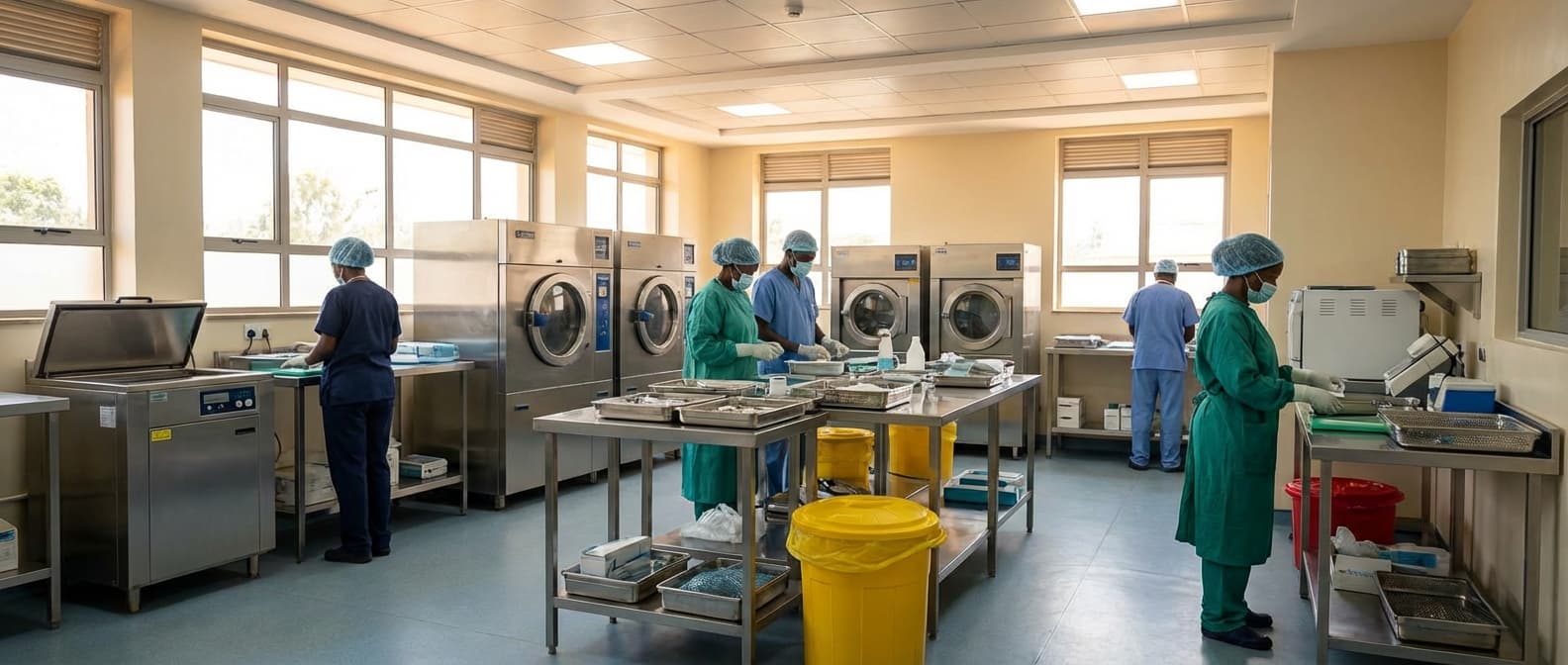
Autoclave Validation Support Service in Lesotho
Engineering Excellence & Technical Support
Autoclave Validation Support Service High-standard technical execution following OEM protocols and local regulatory frameworks.
Expert Autoclave Validation & Calibration
Leverage our specialized services for comprehensive autoclave validation and calibration, ensuring your sterilization cycles meet stringent international standards (e.g., ISO 13485, FDA guidelines) and are consistently effective in eliminating microorganisms. Our team utilizes calibrated, state-of-the-art equipment and adheres to rigorous protocols for cycle development, verification, and re-qualification, guaranteeing optimal performance and patient safety.
Regulatory Compliance & Audit Readiness
Navigate complex regulatory landscapes with confidence. We provide thorough documentation and validation reports specifically designed to meet the requirements of Lesotho's health authorities and international regulatory bodies. Our services ensure your autoclaves are fully compliant, reducing audit risks and demonstrating a commitment to quality assurance, essential for healthcare facilities and laboratories.
On-Site Training & Process Optimization
Empower your staff with expert knowledge. Our Autoclave Validation Support includes tailored on-site training for your sterilization technicians, focusing on best practices, proper operation, troubleshooting, and routine maintenance. We also offer process optimization consultations to enhance efficiency, reduce cycle times, and minimize waste, ensuring the longevity and optimal performance of your autoclaving equipment.
What Is Autoclave Validation Support Service In Lesotho?
Autoclave Validation Support Service in Lesotho refers to a specialized set of procedures and technical expertise provided to ensure that steam sterilization equipment (autoclaves) within healthcare facilities, laboratories, and other critical environments consistently and effectively achieve the required microbial inactivation. This service is crucial for maintaining patient safety, preventing healthcare-associated infections (HAIs), and ensuring the integrity of sterile materials used in diagnostic procedures and medical treatments. The core objective is to provide documented evidence that the autoclave operates within validated parameters to deliver a validated sterilizing effect.
| Who Needs Autoclave Validation Support Service? | Typical Use Cases | |
|---|---|---|
| Hospitals and Clinics: For sterilization of surgical instruments, medical devices, dressings, and other patient-care items. | Sterilization of reusable surgical packs for operating theatres. | Sterilization of dental instruments and equipment. |
| Diagnostic and Research Laboratories: For sterilization of glassware, media, instruments, and consumables used in microbiological and biochemical work. | Sterilization of agar plates and culture media to prevent contamination. | Sterilization of laboratory equipment such as pipettes and petri dishes. |
| Pharmaceutical Manufacturing Facilities: For sterilization of equipment, containers, and components that come into contact with sterile pharmaceutical products. | Terminal sterilization of injectable drug solutions. | Sterilization of stoppers and vials. |
| Veterinary Clinics and Animal Research Facilities: For sterilization of surgical instruments and equipment used in animal care and research. | Sterilization of surgical instruments for animal procedures. | Sterilization of animal housing accessories. |
What the Service Involves:
- Installation Qualification (IQ): Verifies that the autoclave has been installed correctly according to the manufacturer's specifications and relevant regulatory standards. This includes checking power supply, plumbing, ventilation, and physical configuration.
- Operational Qualification (OQ): Assesses the autoclave's ability to operate consistently within its defined operational range and setpoints. This involves testing critical parameters such as temperature, pressure, steam penetration, and cycle times under no-load conditions.
- Performance Qualification (PQ): Demonstrates that the autoclave can consistently achieve a validated sterilizing effect under typical or worst-case load conditions. This is typically achieved through the use of biological indicators (BIs) and chemical indicators (CIs) placed strategically within challenging load configurations. Validation runs are conducted to confirm the elimination of resistant microorganisms.
- Re-validation: Periodic re-validation is performed to ensure ongoing efficacy, typically after significant maintenance, repairs, relocation, or at predetermined intervals as per regulatory requirements and manufacturer recommendations.
- Routine Monitoring and Calibration: Support may extend to advising on or facilitating routine monitoring procedures, calibration of critical sensors (e.g., temperature probes, pressure gauges), and cycle parameter logging.
- Documentation and Reporting: Comprehensive documentation of all validation activities, including protocols, raw data, analysis, and final reports, is a fundamental component. These reports serve as evidence of compliance for regulatory bodies and internal quality assurance systems.
Who Needs Autoclave Validation Support Service In Lesotho?
Maintaining the integrity and efficiency of sterilization processes is paramount for various healthcare and research institutions. Autoclave validation is a critical regulatory requirement and a cornerstone of patient safety and scientific accuracy. In Lesotho, institutions that rely on high-level sterilization for their operations are the primary beneficiaries of professional autoclave validation support services. These services ensure that autoclaves are functioning correctly, meeting stringent international standards, and delivering reliable sterilization cycles.
| Customer Type | Primary Departments Requiring Validation | Key Services Needed |
|---|---|---|
| Hospitals (Public and Private) | Sterile Processing Department (SPD) / Central Sterile Supply Department (CSSD), Operating Theatres, Outpatient Clinics, Dental Units, Laboratories (Pathology, Microbiology) | Installation Qualification (IQ), Operational Qualification (OQ), Performance Qualification (PQ), Routine Calibration, Preventative Maintenance, Re-validation, User Training |
| Clinics and Health Centers | Treatment Rooms, Minor Procedure Areas, Dental Units | IQ, OQ, PQ (especially for larger or more complex facilities), Routine Calibration, Maintenance, Re-validation |
| Dental Practices | Instrument Sterilization Area | IQ, OQ, PQ, Routine Calibration, Preventative Maintenance, Re-validation |
| Diagnostic Laboratories | Microbiology Labs, Molecular Biology Labs, Histopathology Labs | IQ, OQ, PQ (for media sterilization, glassware sterilization), Routine Calibration, Preventative Maintenance, Re-validation |
| Research Institutions | Laboratories (Biotechnology, Life Sciences), Vivaria | IQ, OQ, PQ (for sterilization of equipment, media, animal bedding), Routine Calibration, Preventative Maintenance, Re-validation |
| Pharmaceutical Manufacturing/Packaging Facilities (if any) | Quality Control Labs, Production Areas (sterilization of materials/equipment) | IQ, OQ, PQ, Routine Calibration, Preventative Maintenance, Re-validation, Compliance Audits |
| Veterinary Clinics | Surgical Suites, Instrument Sterilization Areas | IQ, OQ, PQ, Routine Calibration, Preventative Maintenance, Re-validation |
Target Customers and Departments in Lesotho Requiring Autoclave Validation Support Services
- Hospitals (Public and Private)
- Clinics and Health Centers
- Dental Practices
- Diagnostic Laboratories
- Research Institutions
- Pharmaceutical Manufacturing/Packaging Facilities (if any)
- Veterinary Clinics
Autoclave Validation Support Service Process In Lesotho
This document outlines the Autoclave Validation Support Service Process in Lesotho, detailing the workflow from initial client inquiry to the final execution of validation activities. The service aims to ensure that autoclaves used in healthcare and laboratory settings in Lesotho meet stringent regulatory requirements for sterilization effectiveness and operational safety.
| Stage | Description | Key Activities | Deliverables/Outcomes | Responsible Party |
|---|---|---|---|---|
| Client expresses interest in autoclave validation services. | Initial contact, understanding client needs, discussing service offerings, and preliminary advice. | Understanding of client requirements, initial assessment of validation needs. | Client, Service Provider |
| Formalizing the validation project requirements and costs. | Detailed discussion of autoclave specifications, site conditions, validation parameters, and regulatory requirements. Preparation and submission of a comprehensive quotation. | Detailed scope of work, cost breakdown, service timelines. | Service Provider, Client |
| Formalizing the engagement and setting a timeline. | Signing of service agreement/contract. Negotiation and agreement on the validation schedule, including site visit dates. | Signed agreement, confirmed validation schedule. | Client, Service Provider |
| Assessing the autoclave's current state and site readiness. | On-site inspection of the autoclave, its installation, utilities (power, water, steam), and surrounding environment. Verification of maintenance records and any existing documentation. | Assessment report on site readiness, identification of potential issues. | Service Provider |
| Creating a detailed plan for the validation process. | Development of a comprehensive validation protocol outlining the specific tests, acceptance criteria, methodologies, and equipment to be used for IQ, OQ, and PQ, tailored to the specific autoclave and its intended use. | Approved Validation Protocol. | Service Provider |
| Verifying that the autoclave is installed correctly. | Documentary and physical verification of the autoclave's installation against manufacturer specifications and design intentions. This includes checking utilities, wiring, and safety features. | IQ Test Records, IQ Report. | Service Provider |
| Ensuring the autoclave operates within defined parameters. | Testing the autoclave's functionality across its operating range. This involves challenging set points, alarms, and control systems to ensure they perform as intended. | OQ Test Records, OQ Report. | Service Provider |
| Confirming the autoclave's ability to sterilize effectively. | Running the autoclave with typical loads under simulated routine use conditions. This includes using biological and chemical indicators to verify sterilization efficacy at critical points within the chamber. | PQ Test Records (including indicator results), PQ Report. | Service Provider |
| Documenting the entire validation process and findings. | Compilation of all IQ, OQ, and PQ test results, deviations, and analyses into a comprehensive validation report. This report will provide a conclusion on the autoclave's validated status. | Draft Validation Report. | Service Provider |
| Concluding the validation process and ensuring record integrity. | Client review and approval of the validation report. Finalization of the report and proper archiving of all validation documentation in accordance with regulatory and client requirements. | Approved Final Validation Report, Archived Validation Dossier. | Service Provider, Client |
Autoclave Validation Support Service Process Workflow in Lesotho
- Inquiry & Initial Consultation
- Scope Definition & Quotation
- Agreement & Scheduling
- Pre-Validation Site Assessment
- Validation Protocol Development
- Installation Qualification (IQ)
- Operational Qualification (OQ)
- Performance Qualification (PQ)
- Validation Report Generation
- Finalization & Archiving
Autoclave Validation Support Service Cost In Lesotho
Autoclave validation is a critical process for ensuring the sterility of equipment used in healthcare, laboratories, and pharmaceutical manufacturing. In Lesotho, the cost of autoclave validation support services is influenced by several key factors. These factors determine the pricing structure and the overall investment required for this essential compliance and safety measure. Understanding these elements will help organizations in Lesotho budget effectively for their autoclave validation needs.
| Service Component | Typical Cost Range (LSL - Maloti) | Description |
|---|---|---|
| Initial Validation (IQ/OQ/PQ) | M 8,000 - M 25,000+ | Covers Installation Qualification, Operational Qualification, and Performance Qualification. This is the most comprehensive and usually the highest cost component. |
| Re-validation (Annual/Biennial) | M 4,000 - M 15,000+ | A less intensive process than initial validation, focusing on ensuring continued compliance. Cost depends on the scope of re-validation. |
| IQ (Installation Qualification) | M 2,000 - M 7,000 | Verifies that the autoclave is installed correctly according to manufacturer specifications. |
| OQ (Operational Qualification) | M 3,000 - M 10,000 | Tests the autoclave's ability to operate within defined parameters across its specified range. |
| PQ (Performance Qualification) | M 3,000 - M 10,000+ | Demonstrates that the autoclave consistently produces sterile loads under normal operating conditions. This often involves multiple test cycles and biological indicators. |
| Calibration Services (as part of validation) | Included or M 1,000 - M 3,000 (standalone) | Ensuring sensors and controllers are accurate. Often bundled with validation, but can be a separate charge. |
| Consultation and Documentation Review | M 1,500 - M 5,000 | Expert advice on validation protocols and review of existing documentation. |
| Travel and Accommodation (if applicable) | Variable | Costs incurred by the service provider for travel to remote locations within Lesotho. |
| Rush Service Fees | Additional 20-50% | For urgent validation requirements. |
Factors Influencing Autoclave Validation Support Service Costs in Lesotho
- Scope of Validation (IQ/OQ/PQ)
- Number and Size of Autoclaves
- Type of Autoclave and Sterilization Cycle
- Calibration and Maintenance Requirements
- Geographic Location within Lesotho
- Service Provider Expertise and Reputation
- Frequency of Validation
- Additional Testing or Reporting Needs
Affordable Autoclave Validation Support Service Options
Securing reliable and compliant autoclave validation is crucial for many industries, but can be a significant expense. This service outlines affordable options and strategies to ensure your autoclave's performance meets regulatory standards without breaking the budget. We focus on value bundles and cost-saving techniques to make essential validation accessible and efficient.
| Value Bundle | Description | Cost-Saving Strategy | Ideal For |
|---|---|---|---|
| Essential Compliance Package | Covers annual IQ (Installation Qualification), OQ (Operational Qualification), and PQ (Performance Qualification) for a single autoclave, including standard reporting. | Standardized service, reduced administrative overhead, focused scope. | Small labs, single-unit operations, organizations with basic regulatory needs. |
| Multi-Autoclave Efficiency Bundle | Includes annual IQ/OQ/PQ for up to three autoclaves, with a streamlined scheduling process and consolidated reporting. | Volume discount, optimized travel/technician time, simplified invoicing. | Medium-sized facilities, multi-departmental labs, research institutions with several units. |
| Proactive Health & Reliability Bundle | Combines annual validation with quarterly preventive maintenance checks, minor calibration adjustments, and basic troubleshooting support. | Reduced downtime, early detection of issues, extended equipment lifespan, lower risk of major failures. | Critical operations, medical facilities, pharmaceutical manufacturers, high-volume sterilization environments. |
| Customized Solutions (On-Demand) | Tailored validation plans based on specific equipment, industry regulations, and usage patterns. Can include protocol development, re-validation support, or specialized testing. | Pay only for what you need, avoids over-servicing, addresses unique challenges. | Organizations with specialized equipment, new installations, or unique compliance requirements. |
Affordable Autoclave Validation Support Service Options
- Tiered Service Packages: Offering different levels of validation services to suit varying needs and budgets. Basic packages might cover essential annual calibrations, while premium options include more frequent checks, protocol development, and expanded documentation.
- Multi-Unit Discounts: Significant savings for organizations with multiple autoclaves requiring validation. The cost per unit decreases as the number of validated units increases.
- Remote Support & Consultation: Leveraging technology for initial assessments, troubleshooting, and guidance, reducing the need for on-site visits in some cases. This can involve virtual inspections or remote data analysis.
- Preventive Maintenance Integration: Bundling validation services with recommended preventive maintenance schedules. Proactive maintenance can prevent issues that might lead to costly re-validation or downtime.
- Long-Term Contracts & Retainers: Committing to a service provider for an extended period (e.g., 1-3 years) can unlock preferential pricing and guaranteed availability, ensuring consistent compliance.
- Training & Empowerment Programs: Offering training for in-house staff on basic validation checks and maintenance. While not a replacement for professional validation, this can reduce the frequency and scope of external services required for routine tasks.
- Flexible Scheduling: Working with your operational needs to schedule validation during off-peak hours or to minimize disruption, potentially leading to more competitive pricing.
Verified Providers In Lesotho
In Lesotho's evolving healthcare landscape, the role of verified providers is paramount for ensuring quality, trustworthy, and accessible medical services. Franance Health stands out as a leading entity in this domain, offering a robust framework for credentialing and a commitment to excellence. This document details why Franance Health's verified providers represent the best choice for individuals and organizations seeking reliable healthcare solutions in Lesotho.
| Aspect | Franance Health Verification Process | Benefit for Patients/Clients |
|---|---|---|
| Professional Qualifications & Licenses | Thorough examination of educational degrees, professional licenses, certifications, and specialist training. | Ensures you are treated by genuinely qualified and authorized medical professionals. |
| Experience & Competence | Evaluation of work history, peer reviews, and practical skill assessments where applicable. | Confidence in the provider's ability to handle your specific health needs effectively. |
| Ethical Conduct & Professionalism | Background checks for any disciplinary actions or malpractice claims, adherence to a code of conduct. | Assurance of receiving care in a respectful, professional, and ethical manner. |
| Facility Standards & Safety (for institutions) | Inspection of infrastructure, equipment, hygiene protocols, and safety measures. | Access to safe, clean, and well-equipped healthcare facilities. |
| Continuing Professional Development (CPD) | Verification of ongoing training and adherence to contemporary medical practices. | Receiving care that is up-to-date with the latest medical advancements and best practices. |
| Insurance & Liability (where applicable) | Confirmation of adequate professional indemnity insurance. | Added protection and recourse in unforeseen circumstances. |
| Reputation & Track Record | Consideration of patient feedback and overall standing within the medical community. | Peace of mind knowing you are choosing a provider with a positive and reliable history. |
Understanding Verified Providers and Franance Health's Role
- What are Verified Providers? Verified providers are healthcare professionals and institutions that have undergone a rigorous process of assessment and validation by a credible authority. This verification confirms their qualifications, licenses, adherence to ethical standards, and commitment to delivering high-quality care.
- The Importance of Verification: In a sector where trust and competence are non-negotiable, verification acts as a crucial safeguard. It assures patients that they are receiving care from qualified individuals, reduces the risk of malpractice or substandard services, and promotes transparency within the healthcare system.
- Franance Health: A Beacon of Credibility: Franance Health is a recognized authority in healthcare credentialing and verification services in Lesotho. The organization meticulously assesses healthcare professionals, facilities, and related services against established industry benchmarks and regulatory requirements.
- Franance Health's Credentialing Process: The process employed by Franance Health is comprehensive and multi-faceted, typically including:
- Why Franance Health's Verified Providers are the Best Choice:
- For Patients:
- For Healthcare Institutions and Organizations:
- For Government and Regulatory Bodies:
Scope Of Work For Autoclave Validation Support Service
This document outlines the Scope of Work (SOW) for Autoclave Validation Support Services. It details the technical deliverables and standard specifications required for a comprehensive validation of autoclaves used in critical environments, such as pharmaceutical, healthcare, and food processing industries. The objective is to ensure the autoclave consistently and reliably achieves the validated sterilization parameters for the intended loads.
| Deliverable | Description | Standard Specification/Reference |
|---|---|---|
| Validation Master Plan (VMP) | Outlines the overall strategy and plan for all validation activities. Includes scope, objectives, responsibilities, schedule, and acceptance criteria for the validation project. | ICH Q7, ISO 17025, GAMP 5 |
| Installation Qualification (IQ) Protocol | Details the tests and procedures to verify correct installation, including identification of components, utilities, safety features, and calibration of critical instruments. | Manufacturer's Installation Manual, relevant industry standards (e.g., ASME BPE) |
| IQ Report | Documents the results of the IQ tests, including any deviations, and provides a conclusion on the successful installation. | As per IQ Protocol |
| Operational Qualification (OQ) Protocol | Defines the tests and procedures to verify the autoclave's operation within its specified ranges, including temperature, pressure, time, and cycle parameters, under various load conditions. | Manufacturer's Operating Manual, industry guidelines (e.g., FDA, EMA) |
| OQ Report | Documents the results of the OQ tests, including any deviations, and provides a conclusion on the successful operation of the autoclave. | As per OQ Protocol |
| Performance Qualification (PQ) Protocol | Specifies the tests using representative production or simulated production loads, including biological indicators (BIs) and chemical indicators (CIs), to demonstrate consistent sterilization effectiveness. | USP <1211>, ISO 11135, ISO 17025 |
| PQ Report | Documents the results of the PQ tests, including all executed cycles, BI/CI results, and environmental monitoring data. Provides a conclusion on the autoclave's ability to achieve the required sterilization. | As per PQ Protocol |
| Validation Report (Summary) | A comprehensive report summarizing all validation activities (IQ, OQ, PQ), including deviations, and providing an overall conclusion on the validated status of the autoclave. | As per VMP and client's internal SOPs |
| Calibration Certificates | Certificates for all calibrated instruments (temperature probes, pressure transducers, timers) used during validation. | NIST traceable, accredited calibration laboratories |
| Biological Indicator (BI) Certificates | Certificates of analysis for all BIs used, detailing organism, population, D-value, and P-value. | ATCC strain data, manufacturer's certifications |
| Chemical Indicator (CI) Documentation | Documentation or certificates for CIs used, detailing their response characteristics and intended use. | Manufacturer's specifications and certifications |
| Standard Operating Procedures (SOPs) | Review and/or development of SOPs for autoclave operation, maintenance, and routine monitoring, ensuring compliance with validation requirements. | Client's Quality Management System, relevant regulatory guidelines |
| Training Records | Documentation of training provided to relevant personnel on the validated operation and maintenance of the autoclave. | Client's training matrix and records |
Key Stages of Autoclave Validation
- Installation Qualification (IQ): Verifies that the autoclave is installed according to the manufacturer's specifications and relevant regulatory requirements.
- Operational Qualification (OQ): Demonstrates that the autoclave operates within its defined operational parameters and performs consistently.
- Performance Qualification (PQ): Confirms that the autoclave can repeatedly sterilize the actual intended loads, achieving the required microbial kill under normal operating conditions.
- Revalidation: Periodic re-validation or re-qualification after significant maintenance, modifications, or at predefined intervals to ensure continued performance.
Service Level Agreement For Autoclave Validation Support Service
This Service Level Agreement (SLA) outlines the response times and uptime guarantees for the Autoclave Validation Support Service provided by [Your Company Name] to [Client Company Name]. This SLA is an addendum to the Master Service Agreement (MSA) dated [MSA Date].
| Issue Severity | Response Time (during Service Hours) | Response Time (outside Service Hours - Emergency Only) | Target Resolution Time (during Service Hours) | Uptime Guarantee |
|---|---|---|---|---|
| Emergency | 1 Hour | 2 Hours | 4 Business Hours | 99.9% (Monthly) |
| Urgent | 2 Business Hours | 4 Business Hours | 8 Business Hours | 99.9% (Monthly) |
| Standard | 4 Business Hours | N/A | 3 Business Days | N/A (Service functionality not impacted) |
Definitions
- Service Hours: Standard business hours are Monday through Friday, 9:00 AM to 5:00 PM in the [Client's Time Zone], excluding public holidays.
- Emergency: A critical malfunction of an autoclave that directly impacts production or patient safety, requiring immediate attention.
- Urgent: A significant issue affecting autoclave performance but not immediately impacting production or patient safety, or a critical non-production related issue.
- Standard: A non-critical issue, such as a minor performance degradation, question, or request for information that does not impact operational functionality.
- Downtime: The period during which the Autoclave Validation Support Service is unavailable or not performing as expected due to a confirmed service failure by [Your Company Name].
- Uptime Guarantee: The percentage of time the Autoclave Validation Support Service is expected to be available and functioning within specified performance parameters.
- Response Time: The maximum time allowed for [Your Company Name] to acknowledge receipt of a support request and initiate a response.
- Resolution Time: The target time for [Your Company Name] to resolve the reported issue. This is a target and not a guarantee unless explicitly stated.
Frequently Asked Questions

Ready when you are
Let's scope your Autoclave Validation Support Service in Lesotho project in Lesotho.

Scaling healthcare logistics and technical systems across the entire continent.