
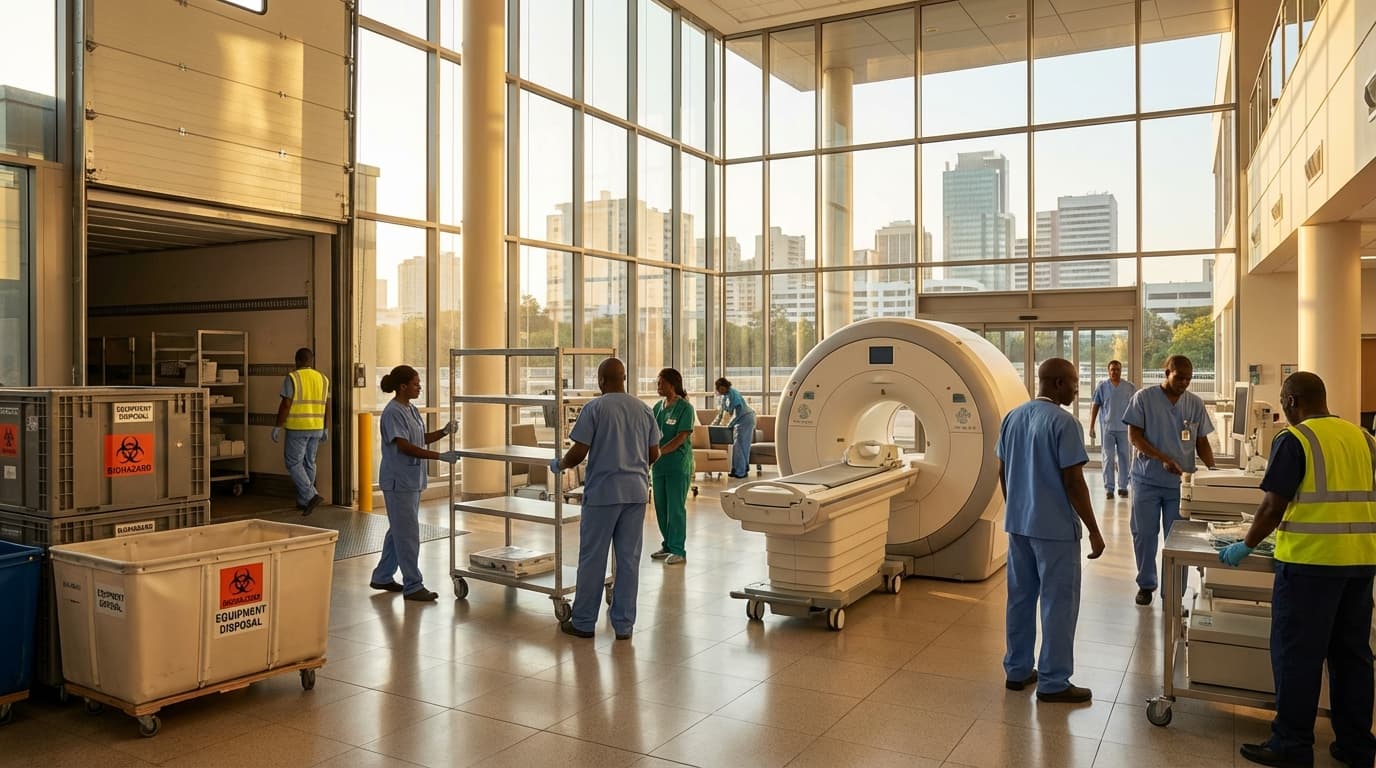
Decommissioning Service for Medical Devices in Lesotho
Engineering Excellence & Technical Support
Decommissioning Service for Medical Devices High-standard technical execution following OEM protocols and local regulatory frameworks.
Regulatory Compliance Assurance
Ensures adherence to Lesotho's Ministry of Health regulations and international best practices for safe and environmentally sound decommissioning, mitigating legal and reputational risks for healthcare facilities.
Secure Data Destruction & Asset Tracking
Implements robust data sanitization protocols for sensitive patient information stored on medical devices, coupled with a comprehensive asset lifecycle management system for transparent tracking and responsible disposal.
Certified Environmental Disposal Pathways
Manages the responsible and documented disposal of medical devices, prioritizing recycling and environmentally safe methods to prevent hazardous waste contamination and comply with national environmental standards.
What Is Decommissioning Service For Medical Devices In Lesotho?
Decommissioning service for medical devices in Lesotho refers to the systematic and secure process of retiring, removing, and disposing of medical equipment that has reached the end of its operational lifespan, is no longer required, or has been superseded by newer technology. This service ensures that medical devices are rendered inoperable and their data is securely erased to prevent unauthorized access, leakage of sensitive patient information, or potential misuse, while also adhering to environmental regulations for disposal.
| Who Needs Decommissioning Service? | Typical Use Cases | ||||||||
|---|---|---|---|---|---|---|---|---|---|
| Healthcare Facilities (Hospitals, Clinics, Laboratories): Public and private healthcare institutions that utilize a wide range of medical equipment. | End-of-Life Equipment: Devices that have exceeded their recommended operational lifespan, leading to frequent malfunctions and increased maintenance costs. | Technological Obsolescence: Replacing older, less efficient, or unsupported medical devices with modern, advanced technology. | Regulatory Compliance: Hospitals and clinics mandated by national health authorities or data protection laws to securely dispose of equipment containing sensitive patient data. | Infrastructure Upgrades: When facilities undergo significant renovations or expansions requiring the removal of redundant or outdated equipment. | Mergers and Acquisitions: Consolidating assets and rationalizing equipment across different entities. | Disaster Recovery and Business Continuity Planning: Removing damaged or compromised equipment following unforeseen events. | Lease End-of-Life: Returning leased equipment in a condition that meets contractual obligations, including data security. | Research and Development Institutions: Disposing of specialized equipment used for clinical trials or research that is no longer needed. | Government Health Agencies: Managing and decommissioning equipment across public health programs and facilities. |
Key Components of Medical Device Decommissioning in Lesotho:
- Asset Identification and Inventory: Thoroughly cataloging all devices slated for decommissioning, including model numbers, serial numbers, acquisition dates, and current location.
- Data Eradication: Securely wiping or destroying all stored patient and operational data from the device's memory, following industry-standard protocols (e.g., DoD 5220.22-M, NIST SP 800-88).
- Physical Disablement: Rendering the device inoperable through methods such as component removal, physical destruction, or irreversible modification.
- Environmental Compliance: Adhering to national and local regulations for the disposal of electronic waste and potentially hazardous medical materials.
- Documentation and Certification: Providing comprehensive records of the decommissioning process, including chain of custody, data destruction certificates, and disposal manifests.
- Logistics and Transportation: Safely and securely transporting devices from their original location to the designated decommissioning facility.
Who Needs Decommissioning Service For Medical Devices In Lesotho?
Decommissioning services for medical devices in Lesotho are crucial for ensuring safe, compliant, and environmentally responsible disposal of equipment that has reached the end of its operational life. This process involves more than just discarding old equipment; it includes data sanitization, asset management, and adherence to regulatory frameworks. The demand for these services spans various sectors and departments within Lesotho that utilize medical technology.
| Target Customer Segment | Key Departments/Areas within Facilities |
|---|---|
| Public Healthcare Facilities | Hospital Administration, Biomedical Engineering Department, IT Department (for data security), Facilities Management, Procurement Department |
| Private Healthcare Providers | Practice Management, Clinic Administration, Biomedical Services (if applicable), IT Security |
| NGOs and International Aid Organizations | Program Management, Logistics, Finance, Asset Management |
| Medical Equipment Suppliers and Distributors | Service Department, Sales Department, Logistics and Returns, Compliance Officer |
| Research and Academic Institutions | Laboratory Management, Department Heads (e.g., Medicine, Nursing), Procurement Office, IT Department |
Target Customers and Departments for Medical Device Decommissioning Services in Lesotho
- {"title":"Public Healthcare Facilities","description":"This is the largest and most critical segment, encompassing all government-funded hospitals, health centers, and clinics across Lesotho. These facilities manage a wide array of medical equipment, from basic diagnostic tools to complex surgical and imaging systems, all of which eventually require decommissioning."}
- {"title":"Private Healthcare Providers","description":"This includes private hospitals, specialized clinics (e.g., dental, optical, diagnostic labs), and private medical practices. While often having smaller inventories than public facilities, they still require professional decommissioning services to manage their assets and comply with regulations."}
- {"title":"Non-Governmental Organizations (NGOs) and International Aid Organizations","description":"Many NGOs and international organizations operating in Lesotho provide healthcare services or donate medical equipment. As this equipment ages or is replaced, these entities also need specialized decommissioning services to handle their assets responsibly."}
- {"title":"Medical Equipment Suppliers and Distributors","description":"Companies that import, sell, and service medical devices in Lesotho may encounter situations where they need to decommission older models or take back equipment for disposal as part of trade-in programs or end-of-life management."}
- {"title":"Research and Academic Institutions","description":"Universities, colleges, and research centers in Lesotho that have medical training programs or conduct medical research will have various types of specialized medical equipment that will eventually require decommissioning."}
Decommissioning Service For Medical Devices Process In Lesotho
This document outlines the standard workflow for decommissioning medical devices in Lesotho, covering the process from initial inquiry to successful execution. The goal is to ensure safe, environmentally responsible, and legally compliant disposal or repurposing of medical equipment.
| Stage | Description | Key Activities | Responsible Parties | Key Outputs/Deliverables |
|---|---|---|---|---|
| Inquiry and Initial Consultation | The process begins when a healthcare facility or organization expresses interest in decommissioning medical devices. | Contacting the service provider, outlining the need, initial discussion of device types and quantities. | Healthcare Facility, Service Provider | Understanding of client needs, initial feasibility assessment. |
| Site Assessment and Inventory | A detailed evaluation of the devices and the facility is conducted to understand the scope of work. | On-site visit, physical inspection of devices, creation of an inventory list (make, model, serial number, condition), identification of potential hazards. | Service Provider, Healthcare Facility (support) | Detailed inventory of devices, assessment report, identification of special handling requirements. |
| Service Agreement and Quotation | Formalizing the terms of service, including scope, timeline, costs, and responsibilities. | Preparation of a formal quotation and service agreement based on the assessment, negotiation and signing of the agreement. | Service Provider, Healthcare Facility | Signed Service Agreement, Detailed Quotation. |
| Planning and Scheduling | Developing a comprehensive plan for the decommissioning process, including logistics and resource allocation. | Creating a detailed project plan, scheduling dates and times for decommissioning, coordinating with facility staff, obtaining necessary permits (if applicable). | Service Provider, Healthcare Facility (coordination) | Project Plan, Approved Schedule, Permit Applications (if needed). |
| Preparation and Containment | Ensuring the work environment is safe and that devices are properly prepared for handling. | Implementing safety protocols, setting up containment areas, disconnecting power and utilities, preliminary cleaning (if required). | Service Provider, Healthcare Facility (access and coordination) | Safe Work Environment, Prepared Devices for Decommissioning. |
| Decommissioning Execution | The physical act of safely dismantling, disassembling, or preparing devices for onward processing. | Following agreed-upon procedures for each device type, manual disassembly, removal of hazardous components, collection of parts and materials. | Service Provider | Dismantled/Disassembled Devices, Segregated Components. |
| Data Destruction/Sanitization | Ensuring any sensitive data stored on medical devices is securely erased or destroyed. | Implementing data wiping procedures (e.g., DoD 5220.22-M), physical destruction of storage media, verification of data erasure. | Service Provider | Data Destruction Certificates, Verification Records. |
| Transportation and Disposal/Recycling | Moving devices and components to approved disposal or recycling facilities. | Secure packaging of devices/components, transportation using licensed carriers, delivery to designated recycling centers, hazardous waste disposal facilities, or refurbishment partners. | Service Provider | Waste Transfer Notes, Certificates of Disposal/Recycling. |
| Documentation and Certification | Providing comprehensive records of the entire decommissioning process. | Creating detailed reports, issuing certificates of decommissioning, data destruction, and disposal/recycling, maintaining an audit trail. | Service Provider | Decommissioning Certificates, Final Report, Audit Trail Documentation. |
| Final Reporting and Follow-up | Concluding the service and addressing any outstanding issues. | Submitting the final report to the healthcare facility, addressing any queries, ensuring client satisfaction, and providing recommendations for future asset management. | Service Provider, Healthcare Facility | Satisfied Client, Final Project Sign-off, Future Asset Management Recommendations. |
Decommissioning Service for Medical Devices Process in Lesotho Workflow
- Inquiry and Initial Consultation
- Site Assessment and Inventory
- Service Agreement and Quotation
- Planning and Scheduling
- Preparation and Containment
- Decommissioning Execution
- Data Destruction/Sanitization
- Transportation and Disposal/Recycling
- Documentation and Certification
- Final Reporting and Follow-up
Decommissioning Service For Medical Devices Cost In Lesotho
Decommissioning medical devices in Lesotho involves a structured process to ensure safety, environmental compliance, and data security. The cost of this service is influenced by several factors, leading to a range of pricing. Understanding these elements is crucial for healthcare facilities when budgeting for such essential services. The local currency used in Lesotho is the Loti (LSL).
| Device Category | Typical Decommissioning Cost Range (LSL) | Notes |
|---|---|---|
| Simple/Manual Devices (e.g., Wheelchairs, Exam Tables) | 500 - 2,000 LSL | Basic removal and disposal. |
| Basic Electronic/Diagnostic Equipment (e.g., ECG Machines, Blood Analyzers) | 2,000 - 7,000 LSL | Includes basic data wiping if applicable. |
| Intermediate Imaging Equipment (e.g., Ultrasound Machines) | 7,000 - 20,000 LSL | May involve more complex disassembly and specialized disposal. |
| Complex Imaging Equipment (e.g., X-ray, CT Scanners) | 20,000 - 100,000+ LSL | High cost due to complexity, radiation shielding, and stringent data/environmental regulations. Prices can vary significantly. |
| Specialized Surgical/Life Support Equipment (e.g., Ventilators, Anesthesia Machines) | 5,000 - 30,000 LSL | Depending on complexity and presence of hazardous components. |
| Large/Heavy Equipment (e.g., Hospital Beds - powered, Sterilizers) | 3,000 - 15,000 LSL | Cost influenced by size, weight, and need for specialized lifting equipment. |
Key Pricing Factors for Medical Device Decommissioning in Lesotho:
- Type and Complexity of the Device: Simple devices like manual wheelchairs or basic diagnostic equipment will be less expensive to decommission than complex imaging machines (e.g., X-ray, MRI, CT scanners) or specialized surgical equipment.
- Size and Weight of the Device: Larger and heavier devices often require more specialized equipment and labor for safe removal and transportation, increasing costs.
- Condition of the Device: Devices that are still functional but being replaced will have different handling requirements than those that are broken or heavily damaged.
- Data Security Requirements: For devices storing sensitive patient information (e.g., electronic health records systems, imaging machines), secure data erasure or destruction is paramount and adds to the cost.
- Environmental Disposal Regulations: Adherence to local and international environmental regulations for hazardous waste disposal (e.g., medical waste, electronic waste) impacts the cost of specialized treatment and disposal.
- Transportation and Logistics: The distance from the facility to the decommissioning site or disposal facility, as well as the accessibility of the location, will influence transportation costs.
- Labor and Expertise: The number of technicians required, their skill level, and the time needed for disassembly, transport, and disposal are significant cost components.
- Third-Party Certifications and Reporting: Some clients may require certifications of decommissioning or detailed disposal reports, which can incur additional administrative fees.
- Volume of Devices: Decommissioning a large number of devices at once might offer economies of scale, potentially reducing the per-unit cost.
Affordable Decommissioning Service For Medical Devices Options
Decommissioning medical devices is a critical but often overlooked process. It ensures data security, regulatory compliance, and environmental responsibility. Finding affordable options is essential for healthcare providers managing tight budgets. This guide explores value bundles and cost-saving strategies for medical device decommissioning.
| Cost-Saving Strategy | Description | Potential Savings Impact |
|---|---|---|
Understanding Value Bundles
- {"title":"What are Value Bundles?","description":"Value bundles are service packages that combine multiple decommissioning tasks into a single offering, often at a discounted price compared to purchasing each service individually. These bundles are designed to streamline the process and provide predictable costs."}
- {"title":"Common Components of Decommissioning Bundles","description":"Typical bundle components include secure data destruction (wiping or physical destruction), physical dismantling and recycling of components, proper disposal of hazardous materials, asset tracking and inventory management, and certification of destruction/disposal."}
- {"title":"Benefits of Bundling","description":"Choosing a value bundle offers several advantages: cost predictability, simplified vendor management, comprehensive service coverage, and often faster turnaround times due to integrated workflows."}
Verified Providers In Lesotho
In Lesotho's burgeoning healthcare landscape, identifying trustworthy and competent healthcare providers is paramount. Franance Health stands out as a leading organization committed to delivering exceptional medical services, backed by rigorous credentialing processes and a deep understanding of the local health needs. This document outlines why Franance Health providers represent the best choice for individuals seeking quality and reliable healthcare in Lesotho.
| Provider Type | Franance Health Verification Focus | Why it Matters for Patients |
|---|---|---|
| Doctors (General Practitioners & Specialists) | Medical school accreditation, medical license, board certification, peer review, specialization training. | Ensures diagnosis and treatment are accurate, evidence-based, and performed by experts in their field. |
| Nurses (Registered & Enrolled) | Nursing council registration, educational qualifications, specialized training (e.g., midwifery, critical care). | Guarantees competent and compassionate care, medication administration, and patient monitoring. |
| Pharmacists | Pharmacy board registration, dispensing qualifications, knowledge of drug interactions and safety. | Ensures safe and effective dispensing of medications, with expert advice on usage. |
| Allied Health Professionals (e.g., Physiotherapists, Lab Technicians) | Professional body registration, relevant diplomas/degrees, practical experience. | Provides access to specialized rehabilitative services and accurate diagnostic testing. |
Franance Health Credentials and Their Significance
- {"title":"Rigorous Qualification Verification","description":"Franance Health meticulously verifies the academic credentials, licenses, and certifications of all its affiliated healthcare professionals. This ensures that every provider has met the highest standards of medical education and training, both internationally and within Lesotho."}
- {"title":"Specialty Competency Assessment","description":"Beyond general qualifications, Franance Health assesses the specific expertise and experience of its providers within their respective medical specialties. This guarantees that patients are connected with doctors, nurses, and allied health professionals who possess the precise skills needed for their particular health concerns."}
- {"title":"Commitment to Continuing Professional Development","description":"Franance Health mandates and supports ongoing professional development for its network. This ensures that all providers remain up-to-date with the latest medical advancements, treatment protocols, and best practices, offering patients the most current and effective care."}
- {"title":"Patient-Centric Care Philosophy","description":"Credentialing at Franance Health extends to evaluating a provider's commitment to patient-centered care, including communication skills, empathy, and ethical conduct. This focus ensures a positive and supportive patient experience."}
- {"title":"Adherence to Lesotho's Healthcare Regulations","description":"All Franance Health providers are fully compliant with the regulations and standards set forth by the relevant Lesotho health authorities, ensuring legal and ethical practice."}
Scope Of Work For Decommissioning Service For Medical Devices
This Scope of Work (SOW) outlines the requirements for the decommissioning of medical devices. The objective is to ensure safe, secure, and compliant removal of medical equipment from service, including data sanitization, physical removal, and environmental disposal. This document details the technical deliverables and standard specifications expected from the service provider.
| Deliverable/Specification | Description | Standard/Requirement | Acceptance Criteria |
|---|---|---|---|
| Decommissioning Plan | Detailed plan outlining the process, timeline, resources, and safety protocols for each device or group of devices. | Must include device inventory, method of sanitization, disposal route, risk assessment, and contact information. | Approved by the client prior to commencement of work. |
| Data Sanitization Report | Certification of data erasure or destruction from devices with removable storage media. | Adherence to NIST SP 800-88 Rev. 1 (Guidelines for Media Sanitization) or equivalent industry standard. Methods may include overwriting, degaussing, or physical destruction. | Report includes device serial numbers, sanitization method used, date of sanitization, and signature of authorized personnel. Certificate of Destruction/Sanitization provided for each device. |
| Physical Decommissioning Services | Safe and proper disconnection, disassembly (if required), and removal of medical devices from their installed locations. | Adherence to manufacturer's guidelines, safety regulations (e.g., electrical, biohazard), and minimal disruption to facility operations. Trained technicians equipped with appropriate tools and PPE. | Devices removed without damage to the device or surrounding infrastructure. All associated utilities (power, water, gas) safely disconnected. |
| Waste Manifests/Certificates of Disposal | Documentation confirming the legal and environmentally responsible disposal of medical devices, particularly those containing hazardous materials. | Compliance with local, state, and federal environmental regulations (e.g., EPA, RCRA). Use of licensed and certified waste disposal facilities. | Manifests/certificates provided for each disposal batch, detailing types of waste, quantities, and disposal facility. Chain of custody maintained. |
| Asset Tracking and Inventory Update | Record of all decommissioned devices, including their serial numbers, original location, and final disposition. | Maintenance of an accurate and up-to-date asset inventory. Integration with client's asset management system (if applicable). | Final inventory report provided to the client detailing all decommissioned assets and their status. |
| Compliance with Regulatory Standards | Ensuring all decommissioning activities comply with relevant healthcare regulations, data privacy laws (e.g., HIPAA), and environmental standards. | Knowledge and adherence to all applicable federal, state, and local laws and regulations. | Demonstrated compliance through documentation and execution of services. |
| Environmental Impact Assessment and Mitigation | Procedures for minimizing environmental impact during removal and disposal. | Prioritization of recycling and refurbishment where possible. Proper handling of hazardous materials. | Details on recycling/disposal methods included in the Decommissioning Plan and Waste Manifests. |
| Certificate of Service Completion | Final document summarizing all completed decommissioning activities, deliverables, and confirmation of compliance. | Signed by both the service provider and the client's authorized representative. | Signed document acknowledging successful completion of all SOW requirements. |
Key Phases and Activities
- Phase 1: Planning and Assessment
- Phase 2: Data Sanitization and Security
- Phase 3: Physical Decommissioning and Removal
- Phase 4: Transportation and Disposal/Donation
- Phase 5: Documentation and Reporting
Service Level Agreement For Decommissioning Service For Medical Devices
This Service Level Agreement (SLA) outlines the agreed-upon service levels for the Decommissioning Service for Medical Devices provided by [Your Company Name] to [Client Company Name]. This SLA aims to ensure timely and secure decommissioning of medical devices, minimizing disruption to client operations and adhering to all relevant regulations.
| Service Component | Priority Level | Response Time Target | Resolution Time Target | Service Availability Guarantee |
|---|---|---|---|---|
| Decommissioning Request Acknowledgement | Critical | 1 Hour (during Business Hours) | N/A (Acknowledgement Only) | 99.5% Availability for Request Submission (during Business Hours) |
| Decommissioning Request Acknowledgement | High Priority | 2 Business Hours (during Business Hours) | N/A (Acknowledgement Only) | 99.5% Availability for Request Submission (during Business Hours) |
| Decommissioning Request Acknowledgement | Standard | 4 Business Hours (during Business Hours) | N/A (Acknowledgement Only) | 99.5% Availability for Request Submission (during Business Hours) |
| Decommissioning Service Commencement (Scheduling & Site Visit) | Critical | Within 4 Business Hours of Acknowledgement | Within 24 Business Hours of Acknowledgement | N/A (Task-dependent) |
| Decommissioning Service Commencement (Scheduling & Site Visit) | High Priority | Within 8 Business Hours of Acknowledgement | Within 72 Business Hours of Acknowledgement | N/A (Task-dependent) |
| Decommissioning Service Commencement (Scheduling & Site Visit) | Standard | Within 2 Business Days of Acknowledgement | Within 10 Business Days of Acknowledgement | N/A (Task-dependent) |
| Data Sanitization Completion | Critical | N/A (Part of Resolution) | As per agreed project timeline (typically within 24-48 hours of commencement) | N/A (Task-dependent) |
| Data Sanitization Completion | High Priority | N/A (Part of Resolution) | As per agreed project timeline (typically within 72 hours of commencement) | N/A (Task-dependent) |
| Data Sanitization Completion | Standard | N/A (Part of Resolution) | As per agreed project timeline (typically within 14 days of commencement) | N/A (Task-dependent) |
| Physical Disposal/Return Completion | Critical | N/A (Part of Resolution) | As per agreed project timeline (typically within 48 hours of data sanitization) | N/A (Task-dependent) |
| Physical Disposal/Return Completion | High Priority | N/A (Part of Resolution) | As per agreed project timeline (typically within 96 hours of data sanitization) | N/A (Task-dependent) |
| Physical Disposal/Return Completion | Standard | N/A (Part of Resolution) | As per agreed project timeline (typically within 21 days of data sanitization) | N/A (Task-dependent) |
| Documentation Delivery | Critical | N/A (Part of Resolution) | Within 48 Business Hours of Service Completion | N/A (Task-dependent) |
| Documentation Delivery | High Priority | N/A (Part of Resolution) | Within 72 Business Hours of Service Completion | N/A (Task-dependent) |
| Documentation Delivery | Standard | N/A (Part of Resolution) | Within 10 Business Days of Service Completion | N/A (Task-dependent) |
Key Definitions
- Decommissioning Service: The process of safely and securely removing medical devices from service, including data sanitization, physical disposal, and documentation.
- Critical Device: A medical device whose failure or unavailability poses an immediate and significant risk to patient safety or regulatory compliance.
- High Priority Device: A medical device whose failure or unavailability causes significant disruption to clinical operations but does not pose an immediate critical risk.
- Standard Priority Device: A medical device that can be decommissioned during standard business hours or with extended turnaround times without significant impact.
- Response Time: The maximum time allowed for [Your Company Name] to acknowledge a request for service and initiate investigation or action.
- Resolution Time: The maximum time allowed for [Your Company Name] to resolve a reported issue or complete a scheduled decommissioning task to the agreed-upon standards.
- Uptime Guarantee: Not directly applicable to a decommissioning service in the traditional sense of device availability. However, this SLA focuses on guaranteed Service Availability for initiating and scheduling decommissioning tasks and Completion Guarantees for scheduled decommissioning activities.
- Business Hours: Monday to Friday, 9:00 AM to 5:00 PM [Client's Time Zone], excluding public holidays.
Frequently Asked Questions

Ready when you are
Let's scope your Decommissioning Service for Medical Devices in Lesotho project in Lesotho.

Scaling healthcare logistics and technical systems across the entire continent.