
Uptime, Downtime & Root-Cause Analysis Reporting Service in Lesotho
Engineering Excellence & Technical Support
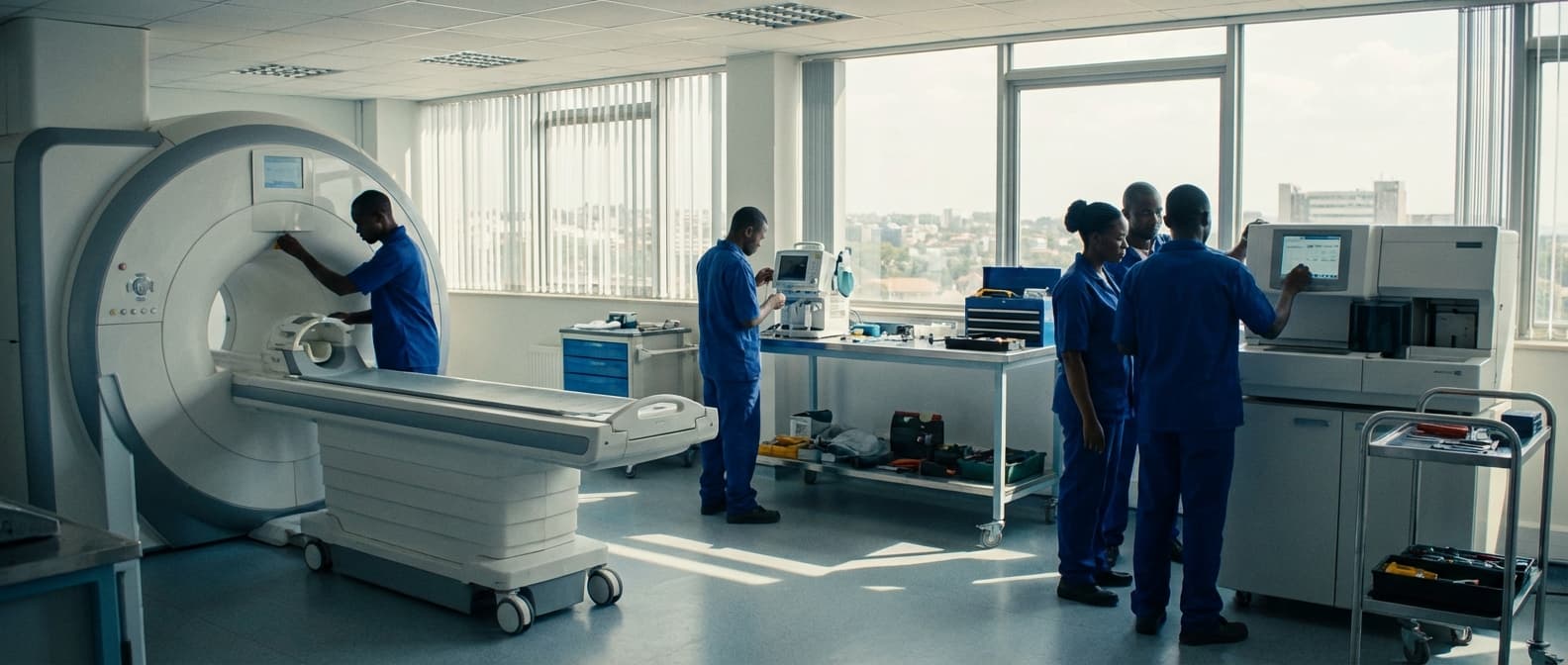
Uptime, Downtime & Root-Cause Analysis Reporting Service High-standard technical execution following OEM protocols and local regulatory frameworks.
Proactive Uptime Monitoring
Leverage our advanced, 24/7 monitoring infrastructure to continuously track the availability and performance of your critical services across Lesotho. Receive real-time alerts for any deviations from expected uptime, ensuring immediate awareness and minimizing potential business impact.
Rapid Downtime Detection & Resolution
Our specialized service excels at pinpointing the exact moment downtime begins. Through sophisticated correlation of various system metrics, we drastically reduce mean time to detect (MTTD) and enable faster, more targeted resolution efforts, restoring service with minimal disruption.
In-Depth Root-Cause Analysis (RCA)
Go beyond just knowing *when* an issue occurred. Our comprehensive RCA reports provide detailed technical insights into the underlying causes of downtime, including log analysis, performance bottlenecks, and configuration errors. Empower your IT teams with actionable data to prevent recurrence and optimize system stability.
What Is Uptime, Downtime & Root-cause Analysis Reporting Service In Lesotho?
Uptime, Downtime, and Root-Cause Analysis (RCA) Reporting Service in Lesotho refers to the provision of comprehensive monitoring, logging, and analytical services focused on the availability and operational integrity of IT infrastructure and critical business systems within the Lesotho context. This service aims to proactively identify, diagnose, and resolve issues that lead to service interruptions, thereby minimizing business impact and optimizing system performance. The core components involve real-time monitoring of key performance indicators (KPIs) related to system availability and responsiveness, detailed logging of all system events and anomalies, and a structured process for investigating the fundamental causes of any disruptions. RCA reporting, in particular, provides a systematic approach to understanding 'why' an incident occurred, moving beyond symptoms to address underlying systemic failures.
| Stakeholder/Entity | Need for Service | Typical Use Cases |
|---|---|---|
| Financial Institutions (Banks, Microfinance) | High availability is critical for transaction processing, customer trust, regulatory compliance (e.g., AML/KYC systems, online banking platforms). Downtime directly impacts revenue and reputation. | Monitoring ATM networks, core banking systems, payment gateways. RCA for transaction failures, system outages impacting online services, security breaches leading to service disruption. |
| Telecommunications Providers | Ensuring uninterrupted service delivery (voice, data, internet) is fundamental to their business model. Network availability directly correlates with subscriber satisfaction and revenue. | Tracking cell tower connectivity, broadband network performance, call center system uptime. RCA for network congestion, service degradation, equipment failures affecting large user bases. |
| Government Agencies & Public Services | Maintaining public access to essential services (e.g., e-government portals, utility management systems, health information systems). Reliability is paramount for citizen engagement and service delivery. | Monitoring uptime of e-government platforms, water/electricity utility management systems, national health databases. RCA for service outages affecting citizen access, data integrity issues. |
| E-commerce and Retail Businesses | Online sales channels require continuous availability. Downtime directly translates to lost sales and customer abandonment. | Monitoring e-commerce websites, inventory management systems, point-of-sale (POS) terminals. RCA for website crashes, order processing failures, payment gateway issues. |
| SMEs and Enterprises with IT Infrastructure | Dependency on IT systems for daily operations, data management, internal communication, and customer interactions. Minimizing disruption is key to productivity and continuity. | Monitoring internal servers, network infrastructure, business applications (CRM, ERP). RCA for server failures, network connectivity issues, application performance degradation. |
| Managed Service Providers (MSPs) operating in Lesotho | To offer reliable IT support and infrastructure management to their clients. Demonstrating uptime and providing clear RCA builds client confidence and justifies service fees. | Providing consolidated uptime and RCA reports to multiple clients. Proactively identifying and resolving issues across diverse client environments. |
Key Components of the Service
- System Monitoring: Continuous surveillance of servers, networks, applications, and databases for availability, performance metrics (e.g., latency, error rates, resource utilization), and security events.
- Alerting and Notification: Proactive notification mechanisms triggered by predefined thresholds or critical events to relevant stakeholders (IT operations, management).
- Downtime Tracking: Accurate and automated recording of all service interruptions, including start time, end time, duration, and affected services/users.
- Log Management and Aggregation: Centralized collection, storage, and analysis of logs from diverse system components for correlation and forensic investigation.
- Root-Cause Analysis (RCA) Framework: A standardized methodology (e.g., Five Whys, Fishbone diagrams, Fault Tree Analysis) applied to significant incidents to identify the underlying causes.
- Reporting and Dashboards: Generation of regular and ad-hoc reports detailing uptime percentages, downtime incidents, MTTR (Mean Time To Recover), MTBF (Mean Time Between Failures), and RCA findings. Interactive dashboards for real-time visibility.
Who Needs Uptime, Downtime & Root-cause Analysis Reporting Service In Lesotho?
In the dynamic business landscape of Lesotho, ensuring continuous operation and understanding the 'why' behind any disruptions are paramount for success. Uptime, Downtime, and Root-Cause Analysis (RCA) Reporting Services offer critical insights that empower organizations to optimize performance, minimize losses, and enhance resilience. These services are not a luxury but a necessity for businesses that rely on stable and predictable operations.
| Target Customer/Industry | Key Departments Benefiting | Specific Needs/Challenges Addressed |
|---|---|---|
| Telecommunications Providers | Network Operations Center (NOC), IT Operations, Customer Service, Engineering | Maintaining network uptime, identifying causes of service disruptions impacting subscribers, optimizing network performance, reducing churn due to outages. |
| Financial Institutions (Banks, Microfinance) | IT Operations, Risk Management, Compliance, Branch Operations, Digital Banking | Ensuring 24/7 availability of banking services, preventing financial losses due to system downtime, meeting strict regulatory compliance, maintaining customer trust, securing sensitive data. |
| Government & Public Services | IT Departments, National Infrastructure Management, Emergency Services, Public Utilities | Ensuring continuity of essential services (e.g., power, water, communication), maintaining citizen access to government portals, responding effectively to crises, optimizing resource allocation for infrastructure maintenance. |
| Mining Sector | Operations Management, IT & Automation, Maintenance, Health & Safety | Minimizing production downtime, ensuring safety of personnel through reliable systems, optimizing operational efficiency of machinery and control systems, managing remote site connectivity. |
| Healthcare Providers (Hospitals, Clinics) | IT & Medical Equipment Support, Administration, Clinical Operations | Ensuring availability of critical patient care systems (e.g., EMRs, diagnostic equipment), minimizing disruption to patient treatment, safeguarding sensitive patient data, meeting healthcare compliance standards. |
| Retail & E-commerce | IT Operations, Sales & Marketing, Supply Chain Management, Customer Support | Maintaining online store availability, ensuring smooth point-of-sale (POS) operations, preventing lost sales due to website or system downtime, optimizing inventory management, enhancing customer experience. |
| Small & Medium Enterprises (SMEs) with Digital Presence | Business Owners/Managers, IT Support (internal or outsourced) | Maximizing limited resources, understanding the impact of downtime on their business, identifying recurring issues to improve reliability, ensuring business continuity even with smaller IT teams. |
| Logistics & Transportation Companies | Fleet Management, Operations, IT Support, Customer Service | Ensuring uptime of tracking and dispatch systems, minimizing delays caused by system failures, optimizing delivery routes, maintaining communication with drivers and clients. |
Who Needs Uptime, Downtime & Root-Cause Analysis Reporting Service in Lesotho?
- Any organization in Lesotho that relies on technology and infrastructure for its core operations.
- Businesses seeking to improve operational efficiency and reduce costs associated with unexpected outages.
- Companies aiming to enhance customer satisfaction by minimizing service interruptions.
- Sectors with regulatory compliance requirements that necessitate robust operational monitoring.
- IT departments tasked with maintaining system availability and performance.
- Management seeking data-driven insights to make strategic decisions about IT investments and resource allocation.
Uptime, Downtime & Root-cause Analysis Reporting Service Process In Lesotho
This document outlines the service process for Uptime, Downtime & Root-Cause Analysis Reporting in Lesotho. It details the workflow from the initial client inquiry to the final execution and reporting of the analysis. The service aims to provide clients with comprehensive insights into their system's performance, identifying the causes of any disruptions to improve reliability and prevent future occurrences.
| Stage | Description | Key Activities | Deliverables | Responsible Party |
|---|---|---|---|---|
| Inquiry & Scoping | Initial contact from the client seeking Uptime/Downtime analysis and root-cause identification. | Client expresses need, service provider clarifies scope, defines objectives, and discusses service level agreements (SLAs). | Service Agreement/Proposal, Scope of Work document. | Client, Service Provider |
| Data Collection & Pre-Analysis | Gathering relevant data from client systems and infrastructure. | Accessing logs, monitoring tools, network traffic, server performance metrics, application logs, and client-provided documentation. Initial data cleaning and validation. | Raw data, preliminary data summaries. | Service Provider |
| Root-Cause Analysis | Investigating the collected data to pinpoint the fundamental reasons for downtime or performance issues. | Analyzing patterns, correlations, and anomalies in the data. Employing various diagnostic techniques (e.g., fault tree analysis, Ishikawa diagrams). Interviewing relevant personnel. | Identified root cause(s), contributing factors. | Service Provider |
| Reporting & Recommendations | Compiling findings into a comprehensive report and providing actionable recommendations. | Documenting the downtime events, their duration, impact, and the identified root cause(s). Developing practical, cost-effective recommendations for prevention and mitigation. | Uptime/Downtime Report, Root-Cause Analysis Report, Actionable Recommendations. | Service Provider |
| Follow-up & Validation | Ensuring the client understands the report and assisting with the implementation of recommendations, if agreed upon. | Presenting the report to the client, answering questions, and providing support for implementing proposed solutions. May involve post-implementation monitoring to validate effectiveness. | Client understanding, potential implementation plan, validation metrics (if applicable). | Client, Service Provider |
Key Stages of the Uptime, Downtime & Root-Cause Analysis Reporting Service Process
- Inquiry & Scoping
- Data Collection & Pre-Analysis
- Root-Cause Analysis
- Reporting & Recommendations
- Follow-up & Validation
Uptime, Downtime & Root-cause Analysis Reporting Service Cost In Lesotho
This report outlines the cost considerations for Uptime, Downtime & Root-Cause Analysis (RCA) Reporting Services in Lesotho. Understanding these costs is crucial for businesses to effectively manage their IT infrastructure, minimize disruptions, and optimize performance. Pricing is influenced by several key factors, leading to a range of potential investment levels.
| Service Tier/Scope | Estimated Monthly Cost (LSL) | Typical Features Included |
|---|---|---|
| Basic Monitoring & Reporting (Small Business) | 500 - 2,500 LSL | Core uptime/downtime metrics for a limited number of devices, standard weekly/monthly reports, basic alert notifications. |
| Standard Monitoring & RCA (Medium Business) | 2,000 - 10,000 LSL | Broader device coverage, historical data retention (e.g., 3-6 months), automated root-cause identification for common issues, customized reporting, basic analyst support. |
| Advanced Monitoring & Comprehensive RCA (Large Enterprise/Critical Systems) | 8,000 - 30,000+ LSL | Full infrastructure coverage, long-term data retention, sophisticated AI-driven RCA, predictive analytics, integration with ITSM tools, dedicated account management, expert analyst services, 24/7 support, custom SLA adherence. |
| Project-Based/Consulting RCA (Specific Incident Analysis) | Varies significantly (e.g., 3,000 - 15,000+ LSL per incident) | On-demand, in-depth analysis of a specific major incident by experienced forensic IT investigators. Cost depends on the complexity and time required. |
Key Pricing Factors for Uptime, Downtime & RCA Reporting Services in Lesotho
- {"title":"Scope and Complexity of Monitoring:","description":"The number of systems, applications, and network devices to be monitored directly impacts the complexity and thus the cost. A comprehensive solution covering a large enterprise environment will be more expensive than a basic service for a small business."}
- {"title":"Data Granularity and Retention:","description":"The level of detail in the collected data (e.g., second-by-second metrics vs. hourly summaries) and how long that data is stored (retention period) will affect storage and processing costs. Longer retention and higher granularity generally increase prices."}
- {"title":"Reporting Frequency and Customization:","description":"The frequency of reports (daily, weekly, monthly, on-demand) and the degree of customization required for these reports will influence the effort involved. Highly tailored reports will be priced higher."}
- {"title":"Level of Automation and Integration:","description":"The extent to which the service can automatically detect, diagnose, and report issues, as well as integrate with existing IT Service Management (ITSM) tools, impacts efficiency and therefore cost. Fully automated solutions may have higher upfront investment but lower ongoing operational costs."}
- {"title":"Expertise and Support Level:","description":"The availability of expert analysts to perform deep-dive RCA, provide actionable insights, and offer ongoing support is a significant cost driver. Different tiers of support (e.g., standard, premium, 24/7) will have varying price points."}
- {"title":"Vendor's Reputation and Technology Stack:","description":"Established vendors with advanced proprietary technologies or strong market presence may command higher prices. The underlying technology used for monitoring and analysis also plays a role."}
- {"title":"Service Level Agreements (SLAs):","description":"Guaranteed uptime, response times for critical incidents, and defined resolution targets within SLAs often come with a premium."}
- {"title":"Implementation and Setup Fees:","description":"Initial setup, configuration, and integration of the reporting service can incur one-time fees."}
Affordable Uptime, Downtime & Root-cause Analysis Reporting Service Options
This service offers comprehensive uptime, downtime, and root-cause analysis (RCA) reporting to help businesses maintain optimal system performance and identify issues quickly. We understand that budget is a key concern, so we've designed flexible value bundles and cost-saving strategies to meet your needs.
| Value Bundle Name | Included Services | Ideal For | Monthly Cost Range | Key Savings Strategy |
|---|---|---|---|---|
| Essential Uptime | Basic Uptime Monitoring, Weekly Downtime Summaries | Small businesses, startups with limited systems | $50 - $150 | Focus on core monitoring to prevent major losses without extensive analysis. |
| Proactive Insights | 24/7 Uptime Monitoring, Daily Downtime Reports, Basic RCA | Growing businesses, mid-sized companies with moderate system complexity | $150 - $400 | Includes RCA to address recurring issues and reduce future downtime costs. |
| Enterprise Resilience | Advanced Uptime Monitoring, Real-time Downtime Alerts, In-depth RCA, Customizable Dashboards, Historical Trend Analysis | Large enterprises, mission-critical systems, complex IT environments | $400 - $1000+ | Comprehensive solution for maximum uptime, optimized resource allocation, and strategic IT planning. |
| On-Demand Analysis | Pay-as-you-go RCA sessions, Ad-hoc reporting | Businesses needing occasional deep dives or specific incident investigations | Varies based on usage | Only pay for RCA when actively needed, leveraging existing monitoring infrastructure. |
Understanding Our Service Offerings
- {"title":"Uptime Monitoring","description":"Real-time tracking of your critical systems to ensure continuous availability. Alerts are triggered immediately upon detection of downtime."}
- {"title":"Downtime Reporting","description":"Detailed reports on the duration, frequency, and impact of any system outages. This data is crucial for understanding performance trends."}
- {"title":"Root-Cause Analysis (RCA)","description":"In-depth investigation into the underlying reasons for downtime. Our experts provide actionable insights to prevent recurrence and improve system resilience."}
- {"title":"Customizable Dashboards","description":"Visual representation of your uptime, downtime, and key performance indicators, tailored to your specific business requirements."}
- {"title":"Historical Data & Trends","description":"Access to past performance data to identify patterns, predict potential issues, and plan for future capacity."}
Verified Providers In Lesotho
In Lesotho's healthcare landscape, identifying reliable and accredited medical professionals is paramount. Franance Health has emerged as a trusted entity, meticulously vetting and credentialing healthcare providers to ensure the highest standards of care. Their rigorous verification process offers patients peace of mind, guaranteeing that those listed on their platform are qualified, licensed, and committed to ethical practices. Choosing a Franance Health-verified provider means opting for competence, integrity, and a commitment to your well-being.
| Credential Category | Verification Standard | Patient Benefit |
|---|---|---|
| Medical Licenses | Up-to-date and valid national and/or international medical licenses verified. | Ensures providers are legally authorized to practice medicine. |
| Educational Qualifications | Degrees and certifications from recognized medical institutions validated. | Confirms providers have received appropriate formal medical training. |
| Professional Experience | Verified practice history and relevant specialization confirmation. | Assures providers have practical experience in their stated fields. |
| Ethical Standing | Background checks and adherence to professional codes of conduct confirmed. | Guarantees providers operate with integrity and prioritize patient welfare. |
| Continuing Professional Development | Evidence of ongoing training and skill updates reviewed. | Indicates providers stay current with medical advancements and best practices. |
Why Franance Health Credentials Matter
- Ensures providers meet stringent educational and licensing requirements.
- Verifies professional experience and areas of specialization.
- Confirms adherence to ethical guidelines and patient care standards.
- Reduces the risk of encountering unqualified or fraudulent practitioners.
- Provides access to a network of dedicated and competent healthcare professionals.
- Facilitates informed decision-making for patients seeking quality care.
Scope Of Work For Uptime, Downtime & Root-cause Analysis Reporting Service
This Scope of Work (SOW) outlines the deliverables and standard specifications for the Uptime, Downtime & Root-Cause Analysis Reporting Service. The service aims to provide comprehensive reporting and analysis to ensure optimal system availability and rapid resolution of incidents. Key objectives include accurately tracking system uptime and downtime, identifying the root causes of incidents, and providing actionable recommendations for improvement.
| Deliverable Name | Description | Frequency | Standard Specifications / Acceptance Criteria | Format |
|---|---|---|---|---|
| Uptime/Downtime Report | Summarizes system availability over a specified period. Includes metrics like Mean Time Between Failures (MTBF), Mean Time To Repair (MTTR), and overall uptime percentage. | Weekly, Monthly, Quarterly, Annually |
| PDF, CSV |
| Incident Report | Details each system incident, including its occurrence, impact, and resolution steps. Serves as a precursor to RCA. | As incidents occur (within 24 hours of resolution) |
| Digital (e.g., Wiki, Ticketing System Entry), PDF |
| Root-Cause Analysis (RCA) Report | In-depth analysis of incidents to determine the fundamental cause, not just the symptoms. Includes contributing factors and recommendations. | For each Major/Critical incident (within 72 hours of resolution) |
| Digital (e.g., Wiki, Document), PDF |
| Trend Analysis Report | Aggregates data from multiple incident and RCA reports to identify recurring patterns, common causes of failure, and areas for proactive improvement. | Monthly, Quarterly |
| PDF, Presentation Slides |
| Service Level Agreement (SLA) Compliance Report | Assesses adherence to agreed-upon service levels based on uptime and downtime data. | Monthly, Quarterly |
| PDF, CSV |
Service Objectives
- Accurate and consistent tracking of system uptime and downtime.
- Timely identification and documentation of all system incidents.
- Thorough root-cause analysis (RCA) for each identified incident.
- Provision of clear, concise, and actionable reports.
- Proactive identification of trends and potential issues.
- Support for continuous improvement of system reliability and performance.
Service Level Agreement For Uptime, Downtime & Root-cause Analysis Reporting Service
This Service Level Agreement (SLA) outlines the commitment to providing a reliable Service Level Agreement (SLA) for Uptime, Downtime & Root-Cause Analysis Reporting Service. This agreement defines the expected performance standards, response times, and availability guarantees for the service.
| Service Component/Metric | Availability Guarantee | Response Time for Critical Incidents (Severity 1) | Response Time for Major Incidents (Severity 2) | RCA Report Delivery Time (Post Resolution) |
|---|---|---|---|---|
| Overall Service Availability | 99.9% Uptime (excluding Scheduled Downtime) | Within 30 minutes of incident detection | Within 2 hours of incident detection | Within 2 business days of Downtime Event resolution |
| Uptime Monitoring | Continuous | N/A | N/A | N/A |
| Downtime Event Reporting | N/A | N/A | N/A | N/A |
| Root-Cause Analysis Process | N/A | N/A | N/A | N/A |
Key Definitions
- Service: Refers to the Uptime, Downtime & Root-Cause Analysis Reporting Service provided by [Your Company Name].
- Uptime: The period during which the Service is operational and accessible to authorized users.
- Downtime: The period during which the Service is unavailable or significantly impaired, preventing authorized users from accessing or utilizing its core functionalities.
- Scheduled Downtime: Planned periods of unavailability, communicated to users in advance for maintenance or upgrades.
- Unscheduled Downtime: Unplanned periods of unavailability due to unexpected technical issues, failures, or incidents.
- Downtime Event: A continuous period of Unscheduled Downtime.
- Root-Cause Analysis (RCA): The process of identifying the fundamental reasons for a Downtime Event or other significant service incident.
- RCA Report: A document detailing the findings of the RCA, including the cause, impact, and corrective actions taken.
Frequently Asked Questions

Ready when you are
Let's scope your Uptime, Downtime & Root-Cause Analysis Reporting Service in Lesotho project in Lesotho.

Scaling healthcare logistics and technical systems across the entire continent.