
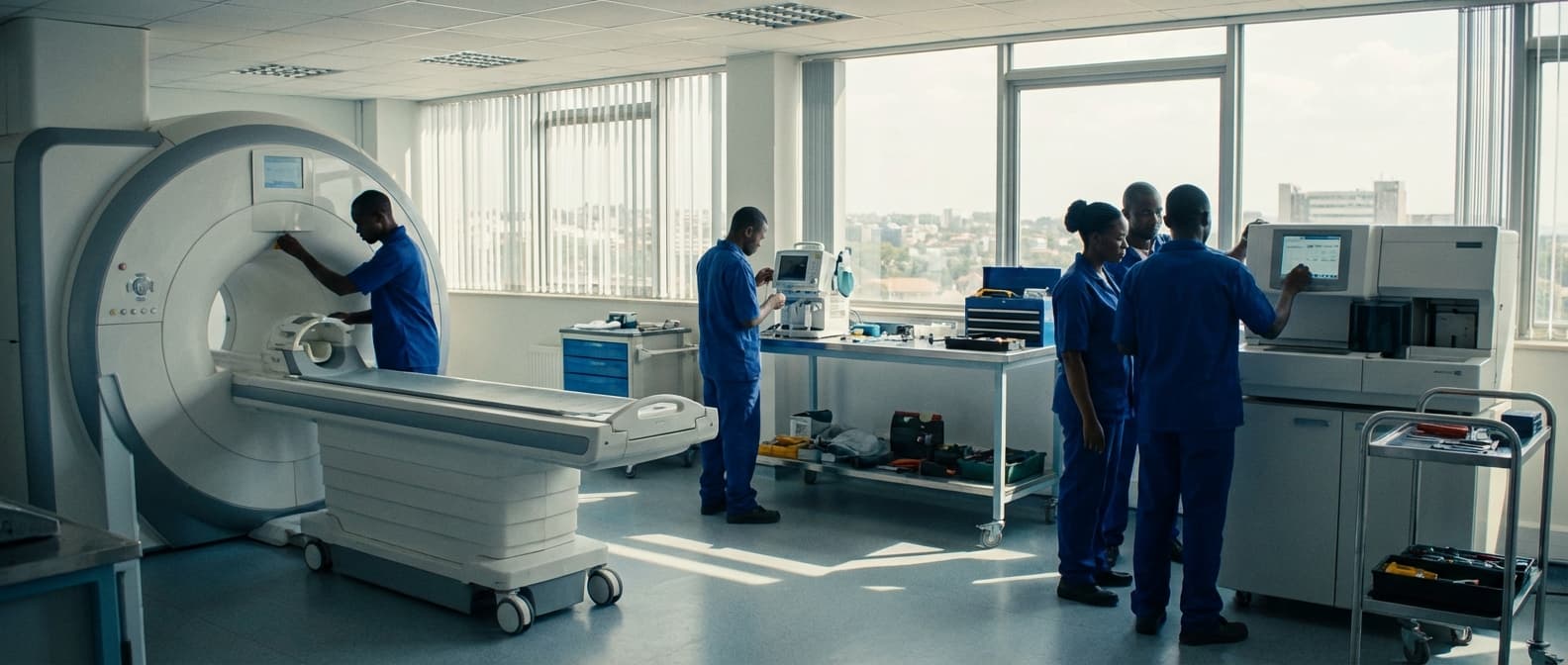
Planned Shutdown Coordination Service for Critical Equipment in Lesotho
Engineering Excellence & Technical Support
Planned Shutdown Coordination Service for Critical Equipment High-standard technical execution following OEM protocols and local regulatory frameworks.
Proactive Asset Health Assessment & Predictive Maintenance
Leveraging advanced sensor data and AI-driven analytics, our service performs granular asset health assessments and predicts potential failures, enabling us to schedule critical equipment shutdowns precisely when needed, minimizing unscheduled downtime and optimizing maintenance resources.
Integrated Shutdown Scheduling & Resource Optimization
Our platform integrates with your existing operational schedules and supply chains to meticulously plan shutdown windows, coordinating manpower, spare parts, and specialized vendor availability. This ensures maximum efficiency, reduced turnaround times, and minimal disruption to your production in Lesotho.
Risk Mitigation & Safety Compliance Assurance
We embed robust risk assessment protocols throughout the shutdown coordination process, identifying potential hazards and implementing stringent safety measures. Our expertise ensures full compliance with Lesotho's regulatory requirements and industry best practices, safeguarding personnel and assets during critical maintenance operations.
What Is Planned Shutdown Coordination Service For Critical Equipment In Lesotho?
Planned Shutdown Coordination Service for Critical Equipment in Lesotho refers to a structured and systematic process designed to manage and optimize the scheduled downtime of essential machinery and infrastructure. This service ensures that necessary maintenance, repair, upgrade, or inspection activities are conducted efficiently with minimal disruption to operational continuity and safety. It encompasses the entire lifecycle of a planned shutdown, from initial planning and resource allocation to execution, monitoring, and post-event analysis. The core objective is to balance the imperative of maintaining asset integrity and performance with the economic and operational realities of minimizing production or service interruption. This involves detailed scheduling, risk assessment, stakeholder communication, and the deployment of specialized technical and logistical support.
| Who Needs This Service? | Typical Use Cases in Lesotho |
|---|---|
Industries reliant on continuous operation of critical assets, including:
| Major overhaul of a primary crusher in a diamond mine. Scheduled turbine maintenance at a hydropower station. Replacement of critical pumps in a municipal water treatment plant. Upgrade of network backbone equipment for a telecommunications provider. Refurbishment of critical conveyor belt systems in a coal mine. Preventive maintenance on generators in a national hospital. Scheduled inspection and repair of dam infrastructure. |
Key Components of Planned Shutdown Coordination Service
- Scope Definition and Objective Setting: Clearly defining the tasks, objectives, and expected outcomes of the shutdown.
- Detailed Scheduling and Phasing: Developing a comprehensive timeline, including pre-shutdown, execution, and post-shutdown phases, with dependencies clearly identified.
- Resource Management: Allocating and coordinating personnel (skilled technicians, engineers, supervisors), equipment, tools, materials, and specialized services.
- Risk Assessment and Mitigation: Identifying potential hazards, operational risks, and safety concerns, and developing proactive mitigation strategies.
- Permit to Work (PTW) System Integration: Ensuring all activities are conducted under a robust PTW system for safety and authorization.
- Stakeholder Communication and Liaison: Establishing clear communication channels with all relevant internal departments (operations, maintenance, safety, procurement) and external parties (vendors, contractors, regulatory bodies).
- Logistics and Site Management: Planning for access, accommodation, transportation, waste management, and security.
- Quality Assurance and Control: Implementing checks and balances to ensure work is performed to specified standards and specifications.
- Contingency Planning: Developing backup plans for unforeseen issues or delays.
- Post-Shutdown Review and Reporting: Documenting lessons learned, performance metrics, and recommendations for future shutdowns.
Who Needs Planned Shutdown Coordination Service For Critical Equipment In Lesotho?
Planned Shutdown Coordination Service for Critical Equipment in Lesotho is essential for organizations that rely on the continuous and efficient operation of their high-value, mission-critical machinery. These services ensure that planned downtime for maintenance, upgrades, or repairs is executed with minimal disruption, maximizing operational uptime and preventing costly unforeseen failures. This is particularly crucial in Lesotho's developing industrial and service sectors where infrastructure and equipment are vital for economic growth and public service delivery.
| Industry/Sector | Key Departments Requiring Coordination | Critical Equipment Examples |
|---|---|---|
| Mining Operations | Maintenance Department, Operations Department, Engineering Department, Safety Department | Crushers, Conveyor Belts, Ventilation Systems, Hoists, Processing Plants (e.g., Smelters, Refineries) |
| Power Generation and Distribution | Plant Operations, Maintenance Engineering, Grid Management, Transmission & Distribution | Turbines, Generators, Transformers, Switchgear, Control Systems |
| Telecommunications | Network Operations Center (NOC), Field Maintenance, Infrastructure Management, IT Operations | Base Stations (Cell Towers), Data Centers, Switching Equipment, Fiber Optic Networks |
| Water and Sanitation | Operations and Maintenance, Engineering, Treatment Plant Management, Distribution Network Management | Pumps, Water Treatment Machinery, Sewage Treatment Plants, Distribution Pipelines, Filtration Systems |
| Hospitals and Healthcare Facilities | Facilities Management, Biomedical Engineering, IT Department, Critical Care Units | MRI Machines, CT Scanners, X-Ray Equipment, Ventilators, Sterilization Equipment, Hospital Power Backup Systems |
| Large-Scale Agriculture and Food Processing | Production Management, Maintenance Engineering, Quality Control, Logistics | Processing Machinery (e.g., Milling, Canning, Freezing), Irrigation Systems, Refrigeration Units, Packaging Lines |
| Transportation and Logistics Hubs | Operations Management, Maintenance, Infrastructure Management, Safety and Security | Automated Warehousing Systems, Cranes, Conveyor Systems, Airport Ground Support Equipment, Port Machinery |
| Manufacturing and Industrial Plants | Production Management, Maintenance, Engineering, Quality Assurance, Supply Chain | Assembly Lines, CNC Machines, Industrial Furnaces, Robotics, Packaging Machinery |
Target Customers and Departments in Lesotho
- Mining Operations
- Power Generation and Distribution
- Telecommunications
- Water and Sanitation
- Hospitals and Healthcare Facilities
- Large-Scale Agriculture and Food Processing
- Transportation and Logistics Hubs
- Manufacturing and Industrial Plants
Planned Shutdown Coordination Service For Critical Equipment Process In Lesotho
The Planned Shutdown Coordination Service for Critical Equipment Process in Lesotho is designed to ensure the safe, efficient, and timely execution of planned maintenance shutdowns for vital operational equipment. This service aims to minimize disruption to services, optimize resource allocation, and uphold safety standards throughout the entire lifecycle of a shutdown, from the initial request to its successful completion and post-event review. The workflow is structured to facilitate clear communication, rigorous planning, and effective execution by all stakeholders involved, including the client requesting the shutdown, the service provider's coordination team, and the maintenance/engineering teams responsible for the actual work.
| Stage | Key Activities | Responsible Parties | Deliverables/Outcomes |
|---|---|---|---|
| Inquiry & Initial Assessment | Client submits an inquiry for a planned shutdown of critical equipment. Service provider reviews the request, assesses scope and urgency, and identifies preliminary resource needs. Initial consultations to understand operational impact and desired outcomes. | Client, Service Provider (Coordination Team) | Acknowledgement of inquiry, preliminary scope understanding, identification of key stakeholders. |
| Proposal & Agreement | Service provider develops a detailed proposal outlining the scope of coordination services, estimated timeline, resource requirements, safety protocols, and pricing. Client reviews and approves the proposal. Formal agreement or contract is signed. | Service Provider (Coordination Team), Client | Formal proposal, signed agreement/contract. |
| Detailed Planning & Scheduling | Joint development of a comprehensive shutdown plan. This includes defining specific tasks, dependencies, resource allocation (personnel, tools, materials), safety permits, and a detailed schedule with critical path analysis. Risk assessment and mitigation strategies are finalized. Communication plan established. | Service Provider (Coordination Team), Client (Maintenance/Engineering Teams) | Detailed Shutdown Plan, Master Schedule, Risk Management Plan, Communication Plan. |
| Pre-Shutdown Preparation | Service provider facilitates pre-shutdown meetings. Confirmation of resource availability, pre-ordering of materials and spare parts. Execution of pre-shutdown safety inductions and training. Site preparation and securing necessary permits. | Service Provider (Coordination Team), Client (Operations & Maintenance) | Confirmed resources, procured materials, trained personnel, approved permits, prepared site. |
| Execution & Monitoring | On-site coordination by the service provider during the shutdown period. Real-time monitoring of progress against the schedule. Management of resources and immediate issue resolution. Strict adherence to safety procedures. Regular progress reporting to the client. | Service Provider (Coordination Team), Client (Maintenance Teams), On-site Personnel | Safe and efficient execution, adherence to schedule, resolved issues, daily/regular progress reports. |
| Post-Shutdown & Review | Supervision of equipment recommissioning and testing. Verification of work completion and quality. Collection of feedback from all parties. Preparation of a comprehensive post-shutdown report detailing performance against objectives, lessons learned, and recommendations for future shutdowns. Final invoicing and contract closure. | Service Provider (Coordination Team), Client (Operations & Maintenance) | Completed shutdown, post-shutdown report, lessons learned document, finalized invoice. |
Workflow Stages
- Inquiry & Initial Assessment
- Proposal & Agreement
- Detailed Planning & Scheduling
- Pre-Shutdown Preparation
- Execution & Monitoring
- Post-Shutdown & Review
Planned Shutdown Coordination Service For Critical Equipment Cost In Lesotho
This document outlines the cost factors and estimated pricing ranges for a Planned Shutdown Coordination Service for Critical Equipment in Lesotho. The service is designed to ensure minimal disruption, maximize efficiency, and maintain safety during essential maintenance operations for critical machinery within various industries in Lesotho. The pricing structure is multifaceted, taking into account the complexity of the shutdown, the duration, the specific equipment involved, and the required level of specialized expertise. Local currency (Maloti - LSL) is used for all estimates.
| Service Component / Duration | Estimated Range (LSL - Maloti) | Notes |
|---|---|---|
| Basic Shutdown Coordination (Up to 3 days) | 8,000 - 25,000 | Covers essential planning, scheduling, on-site supervision for a single critical piece of equipment or a small group. |
| Standard Shutdown Coordination (3-7 days) | 25,000 - 75,000 | Includes more comprehensive planning, coordination of multiple teams, detailed safety oversight, and basic reporting for a moderate shutdown. |
| Complex Shutdown Coordination (7+ days / Multiple Equipment) | 75,000 - 200,000+ | For extensive shutdowns involving multiple complex systems, extended durations, and significant logistical challenges. May include specialized subcontractor management. |
| Daily Coordination Fee (for extended projects) | 3,000 - 10,000 | Applicable for extended shutdowns beyond the initial planned duration or for ongoing project management. |
| Specialized Technical Consultant (per day) | 2,500 - 7,000 | For niche expertise required for specific equipment or advanced diagnostics. |
| Safety & Environmental Management Module | 5,000 - 20,000 (depending on scope) | Covers dedicated safety officers, risk assessments, and compliance management. |
| Logistics & Site Management Fee | 3,000 - 15,000 (depending on scale) | For managing site access, transportation, and temporary facilities. |
Key Pricing Factors for Planned Shutdown Coordination Service:
- Scope and Complexity of Shutdown: The number of equipment units, their interdependence, and the overall complexity of the maintenance tasks directly influence cost. More intricate shutdowns require more planning and resources.
- Duration of Shutdown: The planned downtime for the equipment is a primary cost driver. Longer shutdowns necessitate extended coordination efforts, personnel allocation, and potential site management.
- Type and Criticality of Equipment: The nature of the critical equipment (e.g., industrial machinery, power generation units, specialized manufacturing equipment) dictates the level of technical expertise and safety protocols required. Highly critical or specialized equipment will incur higher coordination costs.
- Manpower Requirements: The number of coordination personnel, supervisors, safety officers, and technical liaisons needed for the duration of the shutdown. This includes both on-site and off-site support.
- Specialized Services and Subcontractors: If the shutdown requires specialized trades, engineering support, or specific diagnostic tools not provided by the client, these costs will be factored in. This could include certified welders, electricians, or advanced testing services.
- Safety and Environmental Management: The cost associated with implementing and enforcing strict safety procedures, environmental protection measures, and obtaining necessary permits or approvals.
- Logistics and Site Access: Costs related to transportation of personnel and equipment to the site, site security, accommodation, and any necessary site preparation.
- Reporting and Documentation: The extent and detail of post-shutdown reports, audits, and documentation required. This can include performance analysis, maintenance records, and lessons learned.
- Level of Service and Customization: The degree to which the service is tailored to the client's specific needs. Basic coordination versus a fully managed end-to-end solution will have different price points.
- Risk Assessment and Mitigation: The investment in thorough risk assessments and the development of contingency plans to address potential unforeseen issues during the shutdown.
Affordable Planned Shutdown Coordination Service For Critical Equipment Options
Our Affordable Planned Shutdown Coordination Service is designed to minimize disruption and maximize efficiency during critical equipment downtime. We offer flexible value bundles and implement strategic cost-saving measures to ensure you receive comprehensive support without exceeding your budget. Our goal is to make planned shutdowns a predictable and cost-effective process.
| Cost-Saving Strategy | Description | Benefit |
|---|---|---|
| Off-Peak Scheduling | Strategically scheduling shutdowns during periods of lower operational demand or seasonal lulls. | Reduced overtime labor costs, minimized production loss, and potential for lower vendor rates. |
| Pre-emptive Maintenance Integration | Leveraging data from our coordination service to proactively address minor issues before they escalate during the shutdown. | Prevents costly emergency repairs during the shutdown, reduces unplanned downtime, and extends equipment lifespan. |
| Optimized Resource Allocation | Efficiently scheduling personnel, tools, and materials to avoid delays and maximize productivity during the shutdown window. | Reduced labor idle time, minimized rental equipment costs, and faster completion of shutdown tasks. |
| Vendor Negotiation & Consolidation | Leveraging our network and bulk coordination to negotiate favorable rates with specialized service providers and material suppliers. | Lower overall procurement costs for specialized services and parts. |
| Remote Monitoring & Support | Utilizing technology to remotely monitor progress and provide expert guidance, reducing the need for extensive on-site presence. | Lower travel and accommodation expenses for our coordination team. |
| Standardized Shutdown Checklists | Developing and implementing consistent, pre-approved checklists for common shutdown procedures. | Reduces planning time, ensures all critical steps are covered, and minimizes human error. |
Value Bundles for Planned Shutdown Coordination
- Basic Bundle: Essential planning and scheduling, communication management, and on-site oversight during the shutdown window.
- Standard Bundle: Includes Basic Bundle services plus risk assessment, resource allocation optimization, and post-shutdown review with actionable insights.
- Premium Bundle: Encompasses all Standard Bundle services, with the addition of advanced predictive maintenance integration, detailed performance analytics, and a dedicated project manager for the entire shutdown lifecycle.
- Custom Bundle: Tailored to your specific needs, combining elements from other bundles or offering unique services to address your unique operational challenges.
Verified Providers In Lesotho
Finding reliable healthcare providers in Lesotho is paramount for ensuring quality medical care. Franance Health stands out as a beacon of trust, meticulously vetting and credentialing healthcare professionals and facilities. This rigorous process guarantees that their network comprises only the most competent, ethical, and well-equipped providers, making them the best choice for your healthcare needs in Lesotho.
| Provider Type | Franance Health Verification Criteria | Benefits for Patients |
|---|---|---|
| Doctors (General Practitioners & Specialists) | Valid medical license, verified degrees and specialist certifications, clean disciplinary record, proof of ongoing professional development. | Access to highly qualified and experienced medical professionals, accurate diagnoses, and effective treatment plans. |
| Hospitals & Clinics | Accreditation from relevant national/international bodies (if applicable), adherence to safety and hygiene standards, availability of essential medical equipment, qualified medical staff. | Safe and well-equipped healthcare facilities, comprehensive range of services, and a supportive environment for recovery. |
| Laboratories & Diagnostic Centers | Certified laboratory technicians, calibrated and functional equipment, adherence to quality control measures, timely and accurate results. | Reliable and precise diagnostic testing, crucial for informed medical decisions. |
| Pharmacies | Licensed pharmacists, proper storage of medications, adherence to dispensing regulations, availability of essential drugs. | Access to safe and authentic medications, dispensed by qualified professionals. |
Why Franance Health Credentials Matter:
- Rigorous Verification Process: Franance Health employs a comprehensive vetting system that scrutinizes educational backgrounds, licenses, certifications, and professional experience of all their listed providers.
- Commitment to Quality: Their credentialing goes beyond basic requirements, assessing adherence to best practices, patient safety protocols, and the use of up-to-date medical technologies.
- Ethical Standards: Franance Health ensures that all accredited providers uphold the highest ethical standards in patient care, communication, and confidentiality.
- Patient-Centric Approach: The focus is on identifying providers who demonstrate a genuine commitment to patient well-being, compassionate care, and effective treatment outcomes.
- Peace of Mind: By choosing a Franance Health verified provider, you gain the assurance of receiving care from professionals who have met stringent quality and safety benchmarks.
Scope Of Work For Planned Shutdown Coordination Service For Critical Equipment
This Scope of Work (SOW) outlines the requirements for a Planned Shutdown Coordination Service for critical equipment. The service aims to ensure the safe, efficient, and timely execution of planned maintenance, repair, or upgrade activities for specified critical assets, minimizing downtime and associated risks. The service includes comprehensive planning, scheduling, resource allocation, risk management, communication, and post-shutdown analysis.
| Technical Deliverable | Description | Standard Specification / Format |
|---|---|---|
| Detailed Shutdown Plan | Comprehensive document outlining the entire shutdown process, including objectives, scope, schedule, risk assessment, communication plan, resource allocation, and safety procedures. | Project Management Plan (PMP) standard, including Gantt charts, Work Breakdown Structure (WBS), and critical path analysis. Typically delivered in Microsoft Project or similar format, with a summary in PDF. |
| Work Package Documentation | Detailed instructions and requirements for each specific maintenance or repair task, including scope, methodology, required resources, safety precautions, and quality checks. | Standardized Work Order templates, including Job Safety Analysis (JSA), risk assessments, drawings, and material lists. Delivered as digital documents (e.g., PDF, Word). |
| Shutdown Schedule | A detailed timeline of all activities, milestones, and dependencies throughout the shutdown period. Includes critical path analysis and contingency planning. | Gantt Chart format, typically generated using project management software (e.g., Microsoft Project, Primavera P6). Delivered in electronic format (e.g., MPP, XML) and as a PDF summary. |
| Risk Register | A log of identified risks, their potential impact, likelihood, mitigation strategies, and assigned owners. Updated regularly throughout the shutdown process. | Spreadsheet or database format (e.g., Excel, dedicated risk management software). Standardized columns include Risk Description, Category, Likelihood, Impact, Risk Score, Mitigation Plan, Owner, Status. |
| Communication Plan | Outlines communication channels, frequency, key messages, and responsible parties for reporting progress, issues, and changes to stakeholders. | Document in Word or PDF format. Includes stakeholder matrix, reporting templates, and escalation procedures. |
| Resource Management Plan | Details the allocation and management of all required personnel (internal and external), tools, equipment, and materials. | Spreadsheet or database format. Includes lists of required resources, availability, allocation, and tracking mechanisms. |
| Safety and Permit Tracker | Ensures all necessary safety permits, isolations, and work authorizations are obtained, documented, and managed. | Spreadsheet or dedicated permit management system. Includes permit details, status, expiry dates, and responsible personnel. |
| Daily/Weekly Progress Reports | Summaries of completed activities, progress against schedule, identified issues, and planned activities for the next reporting period. | Standardized report template in Word or PDF format. Includes KPIs, progress charts, and action items. |
| Post-Shutdown Report | Comprehensive analysis of the shutdown, including performance against objectives, actual costs, lessons learned, and recommendations for future shutdowns. | Formal report document in PDF format. Includes executive summary, detailed analysis, financial reconciliation, and action plan. |
Key Activities and Responsibilities of the Shutdown Coordination Service:
- Develop and manage the detailed shutdown plan, including scope definition, objectives, and key performance indicators (KPIs).
- Coordinate with all relevant stakeholders, including internal departments (operations, maintenance, engineering, safety) and external vendors/contractors.
- Facilitate regular progress meetings and ensure timely reporting.
- Oversee the development and implementation of detailed work packages for each maintenance activity.
- Manage the critical path of the shutdown schedule, identifying potential delays and implementing mitigation strategies.
- Ensure adherence to all safety protocols, permits, and regulatory requirements throughout the shutdown period.
- Coordinate the staging and deployment of all necessary personnel, tools, equipment, and materials.
- Manage interfaces between different work crews and activities to prevent conflicts and ensure smooth execution.
- Oversee the pre-shutdown readiness checks and post-shutdown verification and handover processes.
- Conduct a comprehensive post-shutdown review, identifying lessons learned and areas for improvement in future shutdowns.
Service Level Agreement For Planned Shutdown Coordination Service For Critical Equipment
This Service Level Agreement (SLA) outlines the terms and conditions governing the Planned Shutdown Coordination Service for Critical Equipment, specifically addressing response times for requests and uptime guarantees for the coordination platform. This SLA is designed to ensure minimal disruption to operations during planned maintenance activities and provide reliable access to the coordination service.
| Service Element | Metric | Target | Measurement | Reporting Frequency |
|---|---|---|---|---|
| Planned Shutdown Request Acknowledgment | Response Time for Urgent Requests | 1 Hour | Time from submission of urgent request to initial acknowledgment by the Coordination Service team. | Real-time (upon request submission) / Daily summary |
| Planned Shutdown Request Acknowledgment | Response Time for Standard Requests | 4 Business Hours | Time from submission of standard request to initial acknowledgment by the Coordination Service team. | Daily |
| Coordination Service Platform Availability | Uptime Guarantee | 99.5% | Percentage of time the Coordination Service platform is accessible and functional, excluding scheduled maintenance windows. | Monthly |
Key Definitions
- Critical Equipment: Assets identified as essential for the continuous operation of business processes, where downtime must be minimized and carefully managed.
- Planned Shutdown: A scheduled period where Critical Equipment is intentionally taken offline for maintenance, upgrades, or inspections.
- Coordination Service: The platform, tools, and human resources provided to manage and facilitate planned shutdowns, including scheduling, communication, resource allocation, and risk assessment.
- Response Time: The maximum time allowed for the Coordination Service team to acknowledge and begin addressing a submitted request related to planned shutdown coordination.
- Uptime Guarantee: The percentage of time the Coordination Service platform is available and operational for users to access and utilize its features.
Frequently Asked Questions

Ready when you are
Let's scope your Planned Shutdown Coordination Service for Critical Equipment in Lesotho project in Lesotho.

Scaling healthcare logistics and technical systems across the entire continent.