
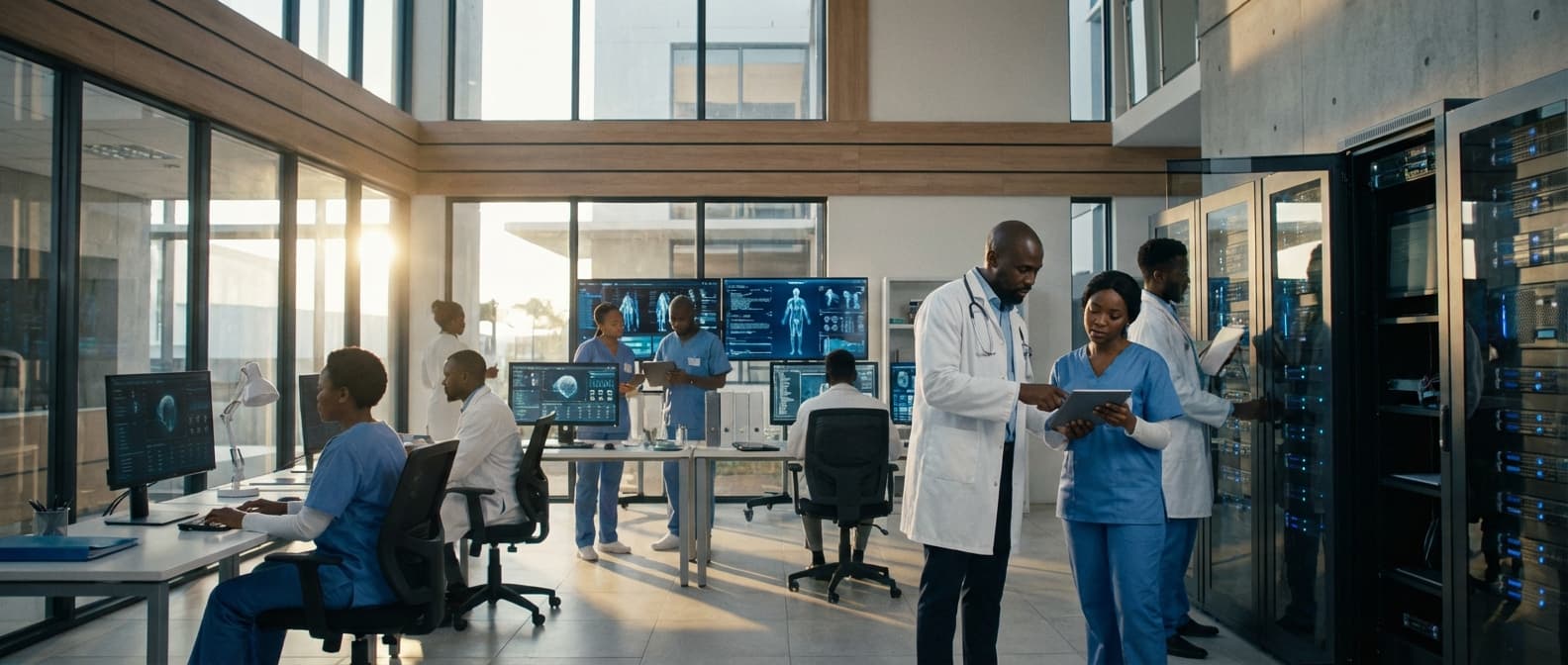
Tele-Radiology in Lesotho
Engineering Excellence & Technical Support
24/7 access to certified radiologists providing rapid, accurate remote interpretation of diagnostic imaging studies. High-standard technical execution following OEM protocols and local regulatory frameworks.
Bridging the Geographic Divide with Satellite Connectivity
Leveraging robust satellite internet solutions to overcome Lesotho's challenging terrain and limited terrestrial infrastructure. This ensures reliable, high-speed transmission of medical images from remote clinics to our expert radiologists, enabling timely diagnoses regardless of location.
AI-Powered Image Analysis for Enhanced Diagnostic Accuracy
Integrating advanced Artificial Intelligence (AI) algorithms to pre-screen and flag abnormalities in X-rays, CT scans, and MRIs. This AI assistance empowers our radiologists by prioritizing critical cases, reducing interpretation time, and improving the accuracy of diagnoses, particularly for common and emergent conditions.
Secure Cloud-Based PACS for Seamless Data Management
Implementing a secure, cloud-based Picture Archiving and Communication System (PACS) that ensures patient data privacy and accessibility. This platform allows for efficient storage, retrieval, and sharing of medical images, facilitating collaborative reads and a consolidated patient imaging history for our network of referring physicians across Lesotho.
What Is Tele-radiology In Lesotho?
Tele-radiology in Lesotho refers to the transmission of radiological images (such as X-rays, CT scans, MRIs) from one location to another for the interpretation and reporting by a radiologist. This service is crucial for extending diagnostic radiology services to underserved areas within the country where specialist radiologists are scarce or non-existent. It involves the use of digital imaging technology, Picture Archiving and Communication Systems (PACS), and secure telecommunication networks to facilitate the remote reading of medical images. The primary objective is to improve patient care by enabling timely and accurate diagnosis, thereby guiding treatment decisions and enhancing health outcomes, especially in remote and rural healthcare facilities.
| Stakeholder/Entity | Need for Tele-radiology | Typical Use Cases |
|---|---|---|
| Rural and Remote Healthcare Facilities: (e.g., Health Centers, small District Hospitals) | Lack of on-site radiologists for immediate image interpretation; high patient referral burden to central hospitals; limited access to advanced imaging modalities. | Screening for common conditions (e.g., tuberculosis on chest X-rays), trauma assessment, interpretation of basic radiological studies (e.g., skeletal X-rays), follow-up imaging for chronic conditions. |
| District Hospitals with Limited Radiology Staff: | Over-reliance on general practitioners or visiting specialists for ad-hoc interpretations; delays in diagnosis and treatment initiation; inability to offer specialized imaging interpretation services. | Urgent CT scan interpretation for stroke or trauma, MRI interpretation for neurological or musculoskeletal conditions, specialized X-ray interpretations (e.g., mammography, contrast studies). |
| Patients in Underserved Areas: | Geographical barriers to accessing diagnostic radiology services; prolonged waiting times for appointments and results; financial and logistical challenges of travel to urban centers. | Access to timely and accurate diagnosis for a wide range of medical conditions, potentially reducing morbidity and mortality through earlier intervention. |
| Ministry of Health and National Health Systems: | Addressing a critical shortage of specialist radiologists; improving the equitable distribution of healthcare services across the country; optimizing resource utilization; enhancing overall public health outcomes. | Implementing national screening programs (e.g., cancer screening, TB detection), supporting primary healthcare initiatives, standardizing diagnostic quality across the nation, providing training and mentorship opportunities for local technicians and doctors. |
| Emergency and Trauma Services: | Need for rapid interpretation of imaging studies to guide immediate management decisions in life-threatening situations. | Real-time interpretation of CT scans for head injuries, abdominal trauma, or acute medical emergencies (e.g., pulmonary embolism, aortic dissection). |
Key Components and Considerations for Tele-radiology in Lesotho:
- Image Acquisition: Digital radiological equipment at originating sites (e.g., rural clinics, district hospitals).
- Image Transmission: Secure and reliable data transfer protocols (e.g., DICOM over VPNs, encrypted cloud storage) to transmit images to a central reading center.
- Image Storage and Archiving: PACS systems to store, retrieve, and manage patient images and reports.
- Radiologist Interpretation: Licensed radiologists located remotely (within Lesotho or internationally) who analyze the images and generate diagnostic reports.
- Reporting and Feedback: Secure mechanisms for transmitting finalized reports back to the referring clinician at the originating site.
- Infrastructure: Requirements include stable electricity, internet connectivity (bandwidth consideration is critical), and compatible IT hardware and software at both ends.
- Regulatory and Legal Framework: Adherence to national healthcare regulations, data privacy laws (e.g., patient confidentiality), and professional licensing requirements for radiologists.
- Interoperability: Ensuring seamless data exchange between different imaging modalities, PACS, and Electronic Health Records (EHRs) where applicable.
Who Needs Tele-radiology In Lesotho?
Tele-radiology offers a transformative solution for healthcare challenges in Lesotho, particularly in addressing the scarcity of specialized radiologists and ensuring timely diagnostic imaging. This technology bridges geographical gaps, connecting remote clinics and hospitals with expert radiologists for remote interpretation of medical images. The benefits are profound, leading to improved patient outcomes, reduced diagnostic delays, and enhanced healthcare accessibility across the nation.
| Customer/Department | Specific Needs Addressed by Tele-Radiology | Imaging Modalities Supported (Examples) | Impact/Benefit |
|---|---|---|---|
| Rural Clinics/Health Centers | Access to expert interpretation for X-rays and ultrasounds when no radiologist is present. | X-ray (plain films), Ultrasound | Reduced need for patient travel, faster diagnosis for common conditions, improved primary care. |
| District Hospitals | Supplementing limited radiologist availability, managing increased caseloads, facilitating specialist consultations. | X-ray, Ultrasound, potentially CT scans (if equipment is available) | Improved diagnostic accuracy, reduced turnaround times, enhanced capacity for managing a wider range of conditions. |
| Tertiary Hospitals/Referral Centers | Bridging subspecialty gaps (e.g., neuro-radiology, pediatric radiology), handling overflow, supporting continuous service delivery. | X-ray, Ultrasound, CT, MRI (if available) | Access to niche expertise, improved quality of care for complex cases, greater efficiency and resilience of radiology services. |
| Government Health Ministry | National oversight of diagnostic imaging quality, equitable distribution of services, data collection for public health planning. | All modalities | Standardized care, improved public health insights, strategic resource allocation. |
| NGOs/Aid Organizations | Enhancing medical outreach programs, providing diagnostic support in remote areas, capacity building initiatives. | X-ray, Ultrasound | Increased effectiveness of healthcare interventions, sustainable diagnostic capabilities. |
| Medical Training Institutions | Providing diverse case exposure for trainees, remote supervision of interpreting trainees, educational resources. | All modalities | Enhanced diagnostic skills for future healthcare professionals, improved quality of medical education. |
Target Customers and Departments for Tele-Radiology in Lesotho
- Primary Healthcare Facilities: Rural clinics and health centers that lack on-site radiology services and expertise.
- District Hospitals: Regional hospitals that may have basic imaging equipment but insufficient radiologist coverage for their patient load.
- Tertiary Hospitals/Referral Centers: While these may have some in-house radiologists, tele-radiology can augment their capacity, provide subspecialty consultations, and manage overflow during peak periods or staff shortages.
- Government Health Ministry/National Health Services: For centralized oversight, quality control, and strategic deployment of tele-radiology services to ensure equitable access.
- Non-Governmental Organizations (NGOs) and International Aid Organizations: Those involved in healthcare delivery and capacity building in Lesotho can leverage tele-radiology to enhance their programs.
- Training Institutions: Medical schools and nursing colleges can utilize tele-radiology platforms for training purposes, allowing students and residents to learn from real-world cases interpreted by experienced radiologists.
Tele-radiology Process In Lesotho
Tele-radiology in Lesotho, while nascent, follows a general workflow designed to bridge the gap in radiological expertise and access. This process is crucial for improving diagnostic capabilities in remote or underserved areas. The workflow typically begins with a request for a radiological interpretation, often from a primary healthcare facility or a district hospital lacking on-site radiologists. This request is then transmitted to a tele-radiology service provider, which can be a national initiative, a partnership with private entities, or even international collaborations. Upon receiving the imaging studies (e.g., X-rays, CT scans, ultrasounds) and associated patient information, the tele-radiology hub assigns the case to a qualified radiologist. The radiologist reviews the images remotely, formulates a diagnostic report, and securely transmits it back to the requesting facility. This report is then used by the referring physician for patient management and treatment decisions. The entire process emphasizes secure data transfer, timely reporting, and effective communication between the referring clinician and the remote radiologist.
| Stage | Description | Key Participants | Technology/Tools Involved |
|---|---|---|---|
| Inquiry & Request Initiation | A healthcare facility (e.g., district hospital, clinic) identifies the need for a radiological interpretation for a patient. A formal request is made, often electronically or through established channels. | Referring Physician/Clinician, Healthcare Facility Staff | Internal hospital/clinic systems, Communication protocols |
| Image Acquisition | Radiological images (X-ray, CT, Ultrasound, etc.) are captured at the local healthcare facility using available imaging equipment. | Radiographer/Technician | X-ray machines, CT scanners, Ultrasound machines |
| Data Transmission | Acquired images and relevant patient clinical information are securely transmitted from the originating facility to the tele-radiology service provider. | IT Department (at facility and provider), Network infrastructure | PACS (Picture Archiving and Communication System), Secure internet/VPN, Encryption |
| Case Assignment | The tele-radiology hub receives the imaging studies and patient data, and the case is assigned to an available and qualified radiologist based on subspecialty and workload. | Tele-radiology Manager/Coordinator, Radiologist | Workflow management software, Teleradiology platform |
| Remote Interpretation | The assigned radiologist reviews the images and clinical information from their remote location, utilizing specialized software and diagnostic tools. | Radiologist | Workstation with high-resolution monitors, Teleradiology viewing software, DICOM viewers |
| Report Generation | The radiologist formulates a comprehensive diagnostic report based on their interpretation of the images and patient context. | Radiologist | Speech recognition software (optional), Report generation templates, Teleradiology reporting system |
| Report Transmission | The finalized diagnostic report is securely transmitted back to the requesting healthcare facility. | Teleradiology provider's IT, Local facility's IT | PACS, Secure internet/VPN, Electronic health record (EHR) integration (ideal) |
| Clinical Decision Making | The referring physician reviews the tele-radiology report and integrates it with the patient's clinical presentation to make informed diagnosis and treatment decisions. | Referring Physician/Clinician | Patient's medical record, Clinical knowledge |
Tele-Radiology Workflow in Lesotho
- Inquiry & Request Initiation
- Image Acquisition
- Data Transmission
- Case Assignment
- Remote Interpretation
- Report Generation
- Report Transmission
- Clinical Decision Making
Tele-radiology Cost In Lesotho
Tele-radiology, the practice of interpreting medical images remotely, is an emerging field in Lesotho. While it offers the potential to overcome shortages of radiologists and improve healthcare access, the cost can be a significant consideration for healthcare providers. Determining the exact cost of tele-radiology services in Lesotho is complex, as it's influenced by a multitude of factors, and a standardized pricing structure is not yet firmly established. However, we can explore the key pricing factors and potential cost ranges in Lesotho Loti (LSL).
| Service Component/Study Type | Estimated Cost Range (LSL) | Notes |
|---|---|---|
| Basic X-ray Interpretation (e.g., Chest X-ray, Limb X-ray) | 150 - 400 LSL | Dependent on complexity and TAT. Higher end for urgent readings. |
| CT Scan Interpretation (e.g., Head CT, Abdomen/Pelvis CT) | 300 - 750 LSL | More complex scans will be at the higher end. Multi-slice CTs may incur higher costs. |
| MRI Scan Interpretation (e.g., Brain MRI, Spine MRI) | 500 - 1200 LSL | MRI interpretations are typically more expensive due to the complexity and longer scan times. |
| Ultrasound Interpretation (e.g., Abdominal Ultrasound, Pelvic Ultrasound) | 200 - 500 LSL | Variations based on the region scanned and diagnostic complexity. |
| Tele-Radiology Platform Setup/Integration (One-time/Annual) | Negotiable (Potentially 5,000 - 50,000+ LSL) | This is highly variable and depends on the chosen solution, number of users, and features. Could be part of a package deal. |
| Subscription Fee (Monthly/Annual) | Negotiable (Varies widely based on volume and service level) | Some providers might offer bulk packages for a fixed monthly fee, offering better per-study rates for consistent users. |
Key Pricing Factors for Tele-Radiology in Lesotho
- Technology Infrastructure: The cost of setting up and maintaining the necessary IT infrastructure, including high-speed internet, secure servers for image storage and transmission, and Picture Archiving and Communication Systems (PACS), is a primary driver. Organizations with existing robust infrastructure may incur lower per-study costs.
- Radiologist Availability and Expertise: The availability of qualified radiologists, both locally and internationally, significantly impacts pricing. Scarcity often leads to higher fees. The complexity and specialization of the required readings (e.g., neuro-radiology vs. general radiography) will also influence the cost.
- Service Provider Model: Tele-radiology services can be offered by dedicated tele-radiology companies, in-house hospital departments utilizing external services, or by individual radiologists. Each model has different overheads and pricing strategies.
- Volume of Studies: A higher volume of radiology studies processed typically leads to lower per-study costs due to economies of scale for the service provider.
- Turnaround Time (TAT) Requirements: Urgent readings or those requiring a faster TAT will generally command higher fees than routine interpretations.
- Type of Imaging Modality: The complexity and resolution of images from different modalities (X-ray, CT, MRI, Ultrasound) can influence interpretation time and thus cost.
- Subscription vs. Per-Study Fees: Pricing models can vary. Some providers may offer subscription-based packages, while others charge on a per-study basis. The former can offer cost predictability for high-volume users.
- Ancillary Services: Costs may also include additional services such as report generation, quality assurance, and integration with existing Electronic Health Records (EHR) systems.
- Geographic Location and Connectivity: The remoteness of the referring facility in Lesotho and the quality of internet connectivity can indirectly impact costs, as it might require more robust and expensive solutions for reliable data transfer.
- Regulatory and Compliance Costs: Adhering to data privacy and security regulations can add to the overall operational costs for tele-radiology providers, which may be passed on to clients.
Affordable Tele-radiology Options
Tele-radiology offers a flexible and cost-effective solution for medical imaging interpretation. It allows healthcare providers to access expert radiology services remotely, leading to faster turnaround times and improved patient care. Beyond the basic interpretation of scans, tele-radiology providers often offer value bundles and employ cost-saving strategies that can significantly benefit healthcare organizations.
| Value Bundle Component | Description | Potential Cost Savings |
|---|---|---|
| Subspecialty Interpretation | Access to a broad network of radiologists with expertise in specific areas (e.g., neuroradiology, musculoskeletal, cardiac). | Reduced need for in-house subspecialists, lower recruitment and overhead costs, improved diagnostic accuracy. |
| 24/7/365 Coverage | On-demand or scheduled radiology reads around the clock, including nights, weekends, and holidays. | Eliminates the need for expensive on-call internal staff, reduces emergency physician wait times for critical findings. |
| Preliminary Reads & Critical Findings Notification | Rapid interpretation of urgent scans with immediate notification of critical findings to the referring physician. | Faster patient management, reduced length of stay, improved patient outcomes, potential reduction in malpractice claims. |
| Quality Assurance & Peer Review | Robust QA programs, including peer review of reports and ongoing radiologist performance monitoring. | Enhanced diagnostic confidence, reduced errors, improved patient safety. |
| PACS/RIS Integration & IT Support | Seamless integration with existing Picture Archiving and Communication Systems (PACS) and Radiology Information Systems (RIS), with dedicated IT support. | Reduced IT infrastructure investment and maintenance, streamlined workflow, minimal disruption. |
| Customizable Reporting Formats | Tailored report templates to meet specific clinical or institutional requirements. | Improved communication between radiologists and referring physicians, enhanced data analysis. |
| AI-Powered Tools Integration | Incorporation of Artificial Intelligence (AI) tools for preliminary detection, triage, or quantification. | Increased efficiency for radiologists, faster report turnaround, potential for early disease detection. |
| Flexible Service Models | Options for per-study pricing, block hours, or dedicated radiologist contracts. | Cost predictability, scalability to match fluctuating workloads. |
| Reduced Overhead Costs | Eliminates the need for physical office space, equipment maintenance, and administrative staff for an in-house radiology department. | Significant reduction in capital and operational expenses. |
| Improved Radiologist Productivity | Radiologists focus solely on interpretation, freed from administrative tasks and patient interactions. | Higher volume of studies interpreted, leading to better utilization of expertise. |
| Access to a Larger Pool of Radiologists | Utilizing a distributed network of radiologists can lead to more competitive pricing and specialized expertise. | Negotiating power and access to niche subspecialists without the burden of direct employment. |
| Standardized Workflows and Technology | Tele-radiology providers often use efficient, standardized workflows and cutting-edge technology. | Reduced training time for staff, optimized operational efficiency. |
| Potential for Tiered Pricing | Offering different levels of service or turnaround times at varying price points. | Allows organizations to match service needs with budget constraints. |
| Predictable Budgeting | Clear pricing structures and bundled services enable more accurate financial planning. | Reduced unexpected expenses and improved financial control. |
| Enhanced Access to Care | Especially beneficial for rural or underserved areas, improving diagnostic capabilities. | Improved patient outcomes and broader community health impact. |
| Scalability | Easily scale services up or down based on demand without the complexities of hiring or downsizing. | Agility in adapting to changing organizational needs. |
| Provider Reputation and Accreditation | Look for established providers with strong track records, board-certified radiologists, and relevant accreditations (e.g., ACR, TJC). | Ensures quality and compliance. |
| Technology Compatibility and Security | Verify seamless integration with your existing PACS/RIS and robust data security measures (HIPAA compliance). | Protects patient data and ensures smooth operations. |
| Service Level Agreements (SLAs) | Clearly defined turnaround times for different types of studies and notification protocols. | Guarantees expected service delivery and performance. |
| Client Support and Communication | Evaluate the responsiveness and accessibility of their client support team. | Ensures prompt issue resolution and effective collaboration. |
Understanding Value Bundles and Cost-Saving Strategies in Tele-Radiology
- Value Bundles: These are pre-packaged service offerings designed to provide a comprehensive solution at a predictable cost. They often go beyond simple report generation and can include a range of services tailored to specific needs. Common components of value bundles include:
- Cost-Saving Strategies: Tele-radiology providers implement various strategies to reduce costs for their clients. These include:
- Benefits of Value Bundles and Cost-Saving Strategies:
- Key Considerations when Choosing a Tele-radiology Provider:
Verified Providers In Lesotho
In the pursuit of quality healthcare, particularly in regions where access to reliable medical services can be challenging, identifying verified providers is paramount. Franance Health stands out as a leading credentialing body in Lesotho, committed to ensuring that healthcare professionals and facilities meet rigorous standards of competence, ethics, and patient care. Understanding what makes Franance Health's credentials significant illuminates why they represent the best choice for individuals seeking trustworthy healthcare in Lesotho.
| Why Franance Health Represents the Best Choice | Key Benefits for Patients |
|---|---|
| Unwavering Quality Assurance: Franance Health's accreditation signifies that providers have met stringent benchmarks for clinical expertise, operational efficiency, and patient satisfaction. | Peace of Mind: Knowing your healthcare provider is Franance Health-credentialed offers reassurance that you are receiving care from a verified and reputable source. |
| Ethical Practice Verification: The credentialing process scrutinizes a provider's ethical framework, ensuring they operate with integrity and prioritize patient well-being. | Access to Competent Professionals: Franance Health-credentialed providers are demonstrably skilled and up-to-date in their respective fields, leading to more effective treatment outcomes. |
| Enhanced Patient Experience: Credentialed providers are more likely to adhere to best practices in communication, hygiene, and patient care protocols, contributing to a positive healthcare journey. | Reduced Risk of Malpractice: The rigorous vetting process minimizes the likelihood of encountering underqualified or unethical practitioners. |
| Facilitating Informed Choices: Franance Health's recognized standards empower individuals to make informed decisions about their healthcare by easily identifying trusted providers. | Contribution to a Healthier Lesotho: By endorsing high-quality providers, Franance Health plays a vital role in strengthening the overall healthcare infrastructure of Lesotho. |
What Franance Health Credentials Signify:
- Rigorous Vetting Process: Franance Health employs a comprehensive and multi-faceted vetting process that goes beyond simple licensing. This includes verification of educational qualifications, professional experience, ethical conduct, and adherence to best practices.
- Commitment to Patient Safety: The core of Franance Health's credentialing is a dedication to patient safety. Their standards are designed to minimize risks and ensure that patients receive care from competent and trustworthy professionals.
- Upholding Professional Standards: By setting and maintaining high professional standards, Franance Health helps to elevate the overall quality of healthcare services available in Lesotho.
- Building Trust and Confidence: For patients, a provider credentialed by Franance Health offers a significant layer of trust and confidence, knowing that their chosen healthcare professional has been thoroughly evaluated.
- Promoting Continuous Improvement: Franance Health's commitment often extends to encouraging continuous professional development and adherence to evolving medical knowledge and guidelines among its credentialed providers.
Scope Of Work For Tele-radiology
This document outlines the Scope of Work (SOW) for Tele-Radiology services. It details the technical deliverables and standard specifications required to ensure the efficient, secure, and high-quality provision of remote radiological interpretation. The goal is to establish a framework for the successful implementation and operation of a tele-radiology solution.
| Category | Specification | Description | Standard |
|---|---|---|---|
| Platform Security | Encryption | End-to-end encryption for all data in transit and at rest. | TLS 1.2 or higher, AES-256 |
| Platform Security | Access Control | Role-based access control with multi-factor authentication. | HIPAA, GDPR compliance |
| Platform Security | Audit Trails | Comprehensive logging of all user activities and system events. | Tamper-evident logs |
| Image Transmission | Protocol | Secure and efficient transmission of DICOM images. | DICOM over HTTPS/SFTP, HL7 integration for metadata |
| Image Transmission | Bandwidth Requirements | Sufficient bandwidth to support real-time image loading and transmission without significant delay. | Minimum 5 Mbps per workstation (scalable) |
| Workstation Software | Image Viewer | High-performance DICOM viewer with advanced visualization tools. | Support for multi-planar reconstruction (MPR), 3D rendering, advanced filtering |
| Workstation Software | User Interface | Intuitive and user-friendly interface for efficient workflow. | Customizable layouts, keyboard shortcuts |
| Reporting System | Dictation | Integrated digital dictation and speech recognition capabilities. | Support for multiple languages, customizable templates |
| Reporting System | Report Generation | Structured reporting with templates and automated text generation. | Integration with SNOMED CT, LOINC |
| Data Storage | Capacity | Sufficient storage capacity for images and reports based on projected volume and retention policies. | Scalable, cloud-based or on-premise options |
| Data Storage | Retention | Adherence to all regulatory and institutional data retention requirements. | Customizable retention periods (e.g., 7 years, 10 years) |
| Integration | PACS/RIS | Seamless integration with existing Picture Archiving and Communication System (PACS) and Radiology Information System (RIS). | HL7, DICOM interface development and testing |
| Performance | Uptime | High availability of the tele-radiology platform and services. | 99.9% uptime |
| Performance | Response Time | Low latency for image loading, report generation, and communication. | < 3 seconds for critical images |
| Support | Service Level Agreement (SLA) | Clearly defined service level agreements for response and resolution times. | 24/7 support for critical issues |
Key Technical Deliverables
- Secure and HIPAA-compliant Tele-Radiology Platform
- Image Acquisition and Transmission System Integration
- Radiologist Workstation and Viewing Software
- Reporting and Dictation System
- Data Storage and Archiving Solution
- Integration with existing PACS/RIS systems
- User Training and Support Documentation
- Performance Monitoring and Reporting Tools
- Disaster Recovery and Business Continuity Plan
Service Level Agreement For Tele-radiology
This Service Level Agreement (SLA) outlines the guaranteed response times and uptime for tele-radiology services provided by [Radiology Provider Name] to [Client Name]. This agreement is effective as of [Effective Date] and will remain in effect until [End Date] unless terminated in accordance with its terms. This SLA is an integral part of the Master Service Agreement (MSA) between the parties.
| Study Type | Maximum Response Time | Maximum Turnaround Time (TAT) | Availability Guarantee (Uptime) |
|---|---|---|---|
| Critical Study | 15 minutes | 60 minutes | 99.9% Monthly Uptime |
| Urgent Study | 30 minutes | 4 hours | 99.9% Monthly Uptime |
| Routine Study | 1 hour | 24 hours | 99.9% Monthly Uptime |
Definitions
- "Critical Study": An urgent radiology study requiring immediate interpretation, typically indicated by the referring physician as "STAT" or "STAT-IMMEDIATE". This often includes emergent trauma, acute stroke, or critical care imaging.
- "Urgent Study": A radiology study requiring interpretation within a specified timeframe, but not as immediately critical as a "Critical Study". This may include studies requiring prompt diagnosis for further treatment planning.
- "Routine Study": A standard radiology study that does not require immediate or urgent interpretation. These are typically scheduled studies or those with no immediate clinical impact on patient management.
- "Response Time": The time elapsed from the successful submission of a study (images and associated patient information) to the PACS/RIS system by the Client, to the acknowledgment of receipt and initial availability for interpretation by the Provider's radiologist.
- "Turnaround Time (TAT)": The time elapsed from the successful submission of a study to the PACS/RIS system by the Client, to the delivery of the final interpreted report, signed by a qualified radiologist, back to the Client's PACS/RIS or designated secure portal.
- "Scheduled Downtime": Planned maintenance or upgrade periods for the Provider's systems, communicated to the Client at least [Number] days in advance.
- "Unscheduled Downtime": Any unplanned interruption to the Provider's services, including but not limited to system failures, network outages, or hardware malfunctions.
- "Uptime": The percentage of time the Provider's tele-radiology services are operational and accessible to the Client for study submission and report retrieval.
- "Service Credit": A credit applied to the Client's invoice as a remedy for a failure to meet the guaranteed service levels defined in this SLA.
Frequently Asked Questions

Ready when you are
Let's scope your Tele-Radiology in Lesotho project in Lesotho.

Scaling healthcare logistics and technical systems across the entire continent.