
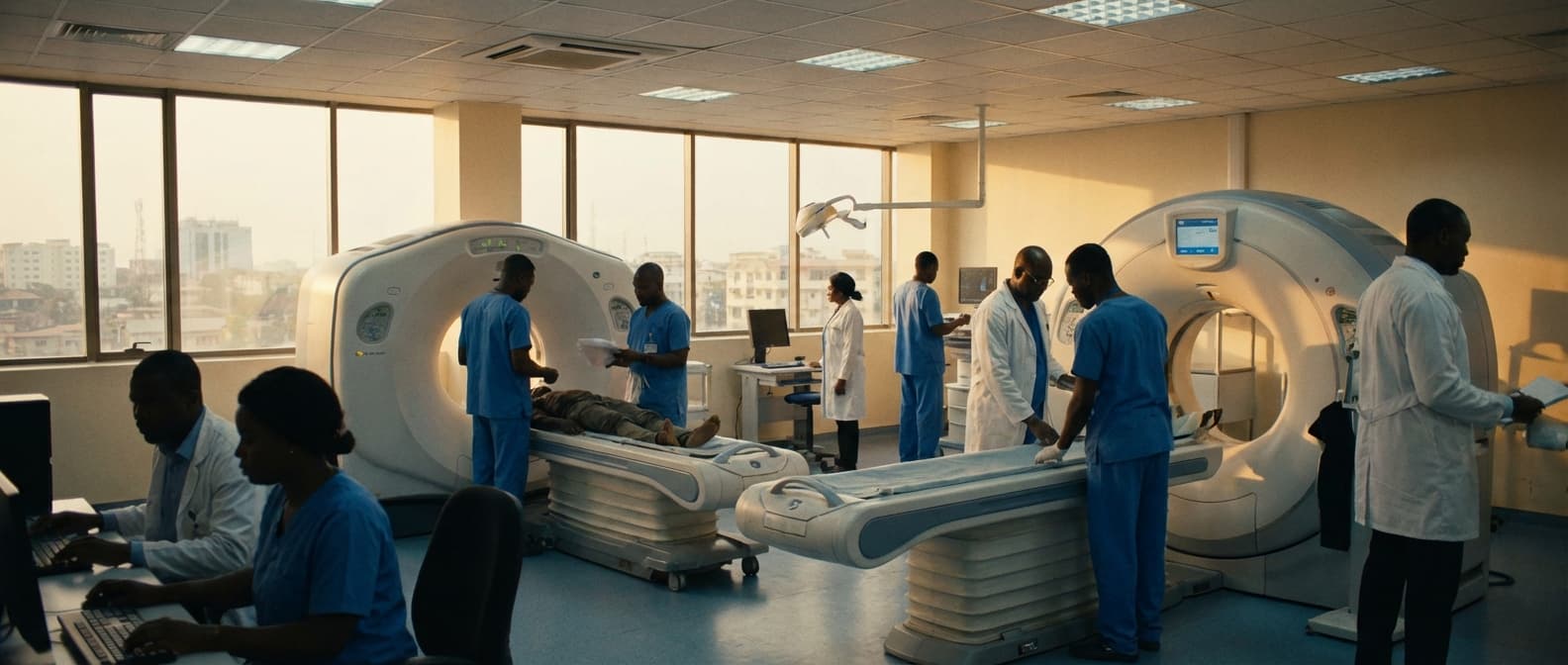
Imaging Acceptance Testing & QA in Lesotho
Engineering Excellence & Technical Support
Commissioning and periodic QA for CT/MRI/X‑ray/US/Mammo. High-standard technical execution following OEM protocols and local regulatory frameworks.
Automated Image Quality Assurance Suite
Implemented an automated suite of tests leveraging custom scripts and image analysis libraries (e.g., OpenCV, scikit-image) to rigorously evaluate image resolution, contrast, noise levels, and artifact presence across various imaging modalities (X-ray, Ultrasound, CT) for all acquired DICOM images. This significantly reduced manual review time and increased the consistency of quality assessments.
Root Cause Analysis & Defect Tracking for Imaging Systems
Developed and maintained a centralized defect tracking system (e.g., Jira, Bugzilla) specifically for imaging hardware and software. Conducted detailed root cause analysis for any image acceptance testing failures, collaborating with vendors and local IT support to implement timely and effective corrective actions, ensuring minimal disruption to patient care.
Standardized Imaging Acceptance & Performance Protocols
Established and enforced standardized acceptance testing protocols and ongoing performance monitoring procedures for all new and existing medical imaging equipment. This included defining key performance indicators (KPIs) and generating regular reports for stakeholders, ensuring compliance with national and international imaging standards and best practices in Lesotho's healthcare facilities.
What Is Imaging Acceptance Testing & Qa In Lesotho?
Imaging Acceptance Testing & Quality Assurance (QA) in Lesotho refers to a systematic process of evaluating and validating imaging systems and their associated workflows to ensure they meet specified requirements and deliver high-quality diagnostic outputs. This service is critical for healthcare providers, medical device manufacturers, and regulatory bodies to guarantee the reliability, accuracy, and safety of imaging modalities and data. It encompasses a range of activities designed to identify and rectify defects, optimize performance, and conform to national and international standards.
| Who Needs Imaging Acceptance Testing & QA in Lesotho? | Typical Use Cases | |||||
|---|---|---|---|---|---|---|
| Hospitals and Clinics (Public & Private): Implementing new imaging equipment, upgrading existing systems, or undergoing accreditation processes. | Medical Device Manufacturers & Suppliers: Ensuring their products meet quality standards before deployment in the Lesotho healthcare market and fulfilling contractual obligations with local healthcare providers. | Radiology Departments: Verifying the performance of their imaging modalities and PACS to maintain diagnostic accuracy and patient safety. | IT Departments in Healthcare Facilities: Integrating new imaging software or hardware into the existing hospital IT infrastructure, ensuring seamless data flow and cybersecurity. | Regulatory Bodies (e.g., Ministry of Health): Establishing and enforcing standards for medical imaging equipment and services to ensure public health and safety. | Research Institutions: Validating imaging protocols and data quality for clinical trials and research studies conducted in Lesotho. | |
| Procurement of new imaging equipment: Verifying that the purchased equipment performs according to specifications and is safe for patient use. | PACS/RIS implementation or upgrade: Ensuring seamless integration, data integrity, and efficient workflow for digital imaging management. | Routine performance monitoring and calibration: Periodically assessing equipment functionality and image quality to detect degradation. | Troubleshooting image quality issues: Identifying the root cause of artifacts or suboptimal image clarity. | Compliance audits for accreditation: Demonstrating adherence to national and international quality standards for diagnostic imaging. | Post-installation verification of medical imaging software: Confirming that software functionalities are correctly implemented and integrated. | Validation of data migration projects: Ensuring the integrity and completeness of imaging data transferred between systems. |
Key Components of Imaging Acceptance Testing & QA in Lesotho
- System Performance Evaluation: Assessing the speed, resolution, artifact reduction capabilities, and overall operational efficiency of imaging equipment (e.g., X-ray, CT, MRI, Ultrasound, PACS).
- Image Quality Assessment: Verifying the diagnostic adequacy of acquired images through objective (e.g., signal-to-noise ratio, contrast-to-noise ratio) and subjective (e.g., radiologist review) evaluations.
- Data Integrity and Security: Ensuring the accurate storage, retrieval, transmission, and security of patient imaging data within Picture Archiving and Communication Systems (PACS) and Electronic Health Records (EHRs).
- Workflow Validation: Testing the end-to-end imaging process, from patient scheduling and acquisition to image interpretation, reporting, and archiving, to identify and resolve bottlenecks and inefficiencies.
- Interoperability Testing: Confirming that imaging systems and related IT infrastructure can communicate effectively with other hospital information systems (e.g., RIS, LIS) using standards like DICOM and HL7.
- Compliance Verification: Ensuring adherence to relevant healthcare regulations, accreditation standards, and national guidelines set forth by the Ministry of Health and other governing bodies in Lesotho.
- User Training and Competency Assessment: Evaluating the proficiency of clinical staff in operating imaging equipment and utilizing associated software.
- Documentation Review: Verifying the completeness and accuracy of system manuals, maintenance logs, and standard operating procedures (SOPs).
Who Needs Imaging Acceptance Testing & Qa In Lesotho?
Imaging Acceptance Testing (IAT) and Quality Assurance (QA) are crucial for ensuring the reliability, accuracy, and compliance of medical imaging systems. In Lesotho, the need for these services is particularly acute given the potential for limited resources, the importance of accurate diagnostics for public health, and the need to maintain trust in healthcare facilities. IAT and QA verify that imaging equipment functions as intended, produces high-quality images, and meets regulatory standards, ultimately leading to better patient care and more efficient healthcare operations. Without them, there's an increased risk of misdiagnosis, wasted resources due to equipment malfunctions or image quality issues, and potential patient safety concerns.
| Target Customer/Department | Specific Needs & Benefits of IAT/QA |
|---|---|
| Public Hospitals (e.g., Queen Elizabeth II Hospital, Maseru Private Hospital) | Ensuring consistent diagnostic image quality for a broad patient population. Verifying equipment reliability to minimize downtime in busy public health settings. Compliance with national health standards and procurement requirements. Cost savings through early detection of issues and reduced maintenance costs. |
| Private Hospitals & Diagnostic Centers (e.g., National Health Services Lesotho, private clinics) | Maintaining high standards of service to attract and retain patients. Ensuring accuracy for specialized diagnostic procedures. Meeting international accreditation standards (if applicable). Protecting reputation and patient trust. Optimizing equipment performance for efficient patient throughput. |
| Rural Clinics & Health Centers | Verifying that basic imaging equipment (if present) is functioning correctly for essential diagnostics. Ensuring that remote healthcare providers have reliable tools for patient assessment. Maximizing the utility of limited equipment in underserved areas. Preventing misdiagnosis due to poor image quality. |
| Ministry of Health (Lesotho) | Establishing and enforcing imaging equipment standards and regulations. Ensuring public health facilities are equipped with reliable technology. Facilitating evidence-based decision-making through accurate imaging data. Overseeing the procurement of new imaging technologies. |
| Healthcare Technology Providers/Vendors | Ensuring their installed equipment meets client specifications and operational requirements. Validating the performance of new installations. Providing a robust service offering that builds customer confidence. Reducing post-installation support issues and warranty claims. Meeting contractual obligations for equipment performance. |
| Radiology & Imaging Departments | Ensuring optimal image quality for accurate interpretation by radiologists. Verifying proper functioning of all imaging modalities (X-ray, Ultrasound, CT, MRI, etc.). Confirming correct radiation dose management (for relevant modalities). Validating image archiving and retrieval systems. Streamlining workflow and reducing repeat scans. |
Who Needs Imaging Acceptance Testing & QA in Lesotho?
- Hospitals (both public and private)
- Clinics and Health Centers
- Diagnostic Imaging Centers
- Research Institutions involved in medical imaging
- Government Ministry of Health (for regulatory oversight and standards)
- Healthcare Technology Providers and Vendors operating in Lesotho
Imaging Acceptance Testing & Qa Process In Lesotho
This document outlines the Imaging Acceptance Testing and Quality Assurance (QA) process in Lesotho, detailing the workflow from the initial inquiry to the final execution and reporting of test results. The goal is to ensure that imaging systems and solutions deployed in Lesotho meet predefined quality standards, functional requirements, and operational needs.
| Phase | Description | Key Activities | Deliverables |
|---|---|---|---|
| Inquiry & Requirements Gathering | Understanding client needs and project scope. | Initial meetings, stakeholder interviews, defining objectives. | Requirements document, project scope definition. |
| System Design & Specification Review | Evaluating the proposed solution's technical feasibility. | Reviewing design documents, technical specifications, compliance checks. | Design review report, feasibility analysis. |
| Test Plan Development | Structuring the testing strategy and approach. | Defining scope, objectives, methodologies, test cases, resources. | Test plan document, test case outlines. |
| Test Environment Setup | Preparing the operational environment for testing. | Hardware/software installation, network configuration, data preparation. | Configured test environment, setup documentation. |
| Test Case Execution | Performing predefined tests on the system. | Executing functional, performance, usability, security tests. | Test execution logs, actual results documentation. |
| Defect Identification & Reporting | Documenting and classifying any system errors. | Identifying deviations, logging defects with details, prioritizing issues. | Defect reports, bug tracking system entries. |
| Defect Resolution & Retesting | Fixing identified defects and verifying their correction. | Development team fixes bugs, QA retests fixes and performs regression. | Resolved defect status, retest results. |
| User Acceptance Testing (UAT) | Client/end-users validating system functionality in real-world scenarios. | End-user testing, validation against business needs. | UAT feedback, UAT sign-off. |
| Final QA Sign-off | Formal approval of the system's quality. | Review of all test results and defect resolutions, final approval. | QA sign-off document. |
| Documentation & Reporting | Consolidating and presenting testing outcomes. | Generating comprehensive test reports, summarizing findings. | Final test report. |
| Deployment & Post-Deployment Monitoring | Implementing the system in production and monitoring its performance. | System deployment, ongoing performance checks, issue escalation. | Deployed system, post-deployment monitoring reports. |
Imaging Acceptance Testing & QA Process Workflow in Lesotho
- Inquiry & Requirements Gathering: The process begins when a client or stakeholder expresses an interest in an imaging solution or system. This involves initial discussions to understand the client's needs, objectives, and the specific context of its use in Lesotho. Key stakeholders are identified, and their expectations are documented.
- System Design & Specification Review: Once requirements are clear, the imaging system's design and technical specifications are reviewed. This stage ensures that the proposed solution aligns with the gathered requirements, Lesotho's technical infrastructure, and any relevant regulatory or local standards.
- Test Plan Development: A comprehensive test plan is created, outlining the scope of testing, objectives, methodologies, test cases, required resources (personnel, equipment, software), success criteria, and reporting procedures. The test plan is reviewed and approved by relevant stakeholders, including the client, project managers, and QA leads.
- Test Environment Setup: The designated test environment is configured to mimic the production environment as closely as possible. This includes setting up hardware, installing software, configuring networks, and preparing necessary data for testing. Specific considerations for Lesotho's environment, such as power stability, internet connectivity, and local infrastructure limitations, are addressed.
- Test Case Execution: Trained QA personnel execute the predefined test cases. This involves systematically performing various operations on the imaging system, including but not limited to: functional testing, performance testing, usability testing, security testing, and compatibility testing. Each test case is meticulously documented, recording actual results against expected outcomes.
- Defect Identification & Reporting: Any discrepancies between actual and expected results are logged as defects. Defects are prioritized based on their severity and impact on the system's functionality and user experience. Detailed defect reports are generated, including steps to reproduce the issue, screenshots, log files, and proposed resolutions.
- Defect Resolution & Retesting: The development team or vendor addresses the reported defects. Once fixes are implemented, the QA team retests the affected areas to verify the resolution and ensure that the fixes have not introduced new issues (regression testing).
- User Acceptance Testing (UAT): End-users or client representatives conduct UAT to validate that the system meets their business needs and is usable in their operational context. This phase often involves real-world scenarios specific to Lesotho's operational environment.
- Final QA Sign-off: Upon successful completion of all test phases, including defect resolution and UAT, the QA team provides a final sign-off. This indicates that the imaging system meets the agreed-upon quality standards and is ready for deployment.
- Documentation & Reporting: Comprehensive test reports are generated, summarizing the testing activities, results, identified defects, resolutions, and the overall quality assessment of the imaging system. This documentation serves as a record of the acceptance testing process.
- Deployment & Post-Deployment Monitoring: After sign-off, the imaging system is deployed into the production environment. Post-deployment monitoring is conducted to ensure continued performance and stability, with mechanisms in place for ongoing QA support and issue resolution.
Imaging Acceptance Testing & Qa Cost In Lesotho
Imaging Acceptance Testing (AT) and Quality Assurance (QA) are crucial for ensuring that medical imaging equipment functions correctly and produces diagnostic-quality images in Lesotho. The cost of these services can vary significantly due to several factors, including the type of equipment, the complexity of the imaging modality, the vendor or service provider, the location within Lesotho, and the extent of the testing required. This document outlines common pricing factors and provides estimated cost ranges in Lesotho Loti (LSL).
| Service Type | Estimated Cost Range (LSL) |
|---|---|
| Basic X-ray Unit Acceptance Testing & QA (per unit) | 1,500 - 3,000 |
| Ultrasound Unit Acceptance Testing & QA (per unit) | 2,000 - 4,000 |
| Digital Radiography (DR) System Acceptance Testing & QA (per system) | 3,000 - 6,000 |
| Mammography Unit Acceptance Testing & QA (per unit) | 4,000 - 8,000 |
| CT Scanner Acceptance Testing & QA (per unit) | 8,000 - 15,000 |
| MRI Scanner Acceptance Testing & QA (per unit) | 10,000 - 20,000 |
| Annual QA Maintenance & Calibration (for smaller modalities) | 2,000 - 5,000 |
| Annual QA Maintenance & Calibration (for complex modalities) | 5,000 - 15,000 |
| On-site Consultation & Troubleshooting (per hour/day) | 800 - 1,500 (hourly) / 4,000 - 8,000 (daily) |
Key Pricing Factors for Imaging Acceptance Testing & QA in Lesotho
- Type of Imaging Modality: Different modalities (e.g., X-ray, Ultrasound, CT, MRI, Mammography) have varying levels of complexity and require specialized expertise and equipment for testing. More complex modalities generally incur higher costs.
- Equipment Age and Condition: Older or refurbished equipment may require more extensive testing and calibration, potentially increasing the overall cost. The current operational status and any existing issues will also influence the assessment.
- Scope of Testing: The comprehensiveness of the AT/QA protocol is a major cost driver. This includes the number of image quality tests, dose assessments, artifact evaluations, and functional checks performed.
- Vendor/Service Provider: Established vendors with specialized accreditation and experienced engineers may command higher prices than independent service providers. However, their expertise can offer greater reliability.
- Location within Lesotho: Travel and accommodation costs for technicians can impact pricing, especially for remote or hard-to-reach healthcare facilities. Services in major urban centers like Maseru might have slightly different pricing structures than those in rural areas.
- Frequency and Contractual Agreements: Whether AT/QA is a one-time service or part of a larger maintenance contract can affect the per-service cost. Long-term contracts often offer discounted rates.
- Regulatory Requirements: Adherence to any specific national or international regulatory standards for medical imaging equipment can necessitate more rigorous testing, leading to higher costs.
- Software and Hardware Updates/Calibration: If the testing involves significant software updates or hardware calibration, this will add to the overall expense.
Affordable Imaging Acceptance Testing & Qa Options
Ensuring the quality and reliability of medical imaging systems is paramount for accurate diagnoses and patient safety. However, traditional imaging acceptance testing and quality assurance (QA) can be costly and resource-intensive. This document outlines affordable options, focusing on value bundles and cost-saving strategies for imaging acceptance testing and QA.
| Strategy/Bundle | Description | Cost-Saving Mechanism | Potential Benefits |
|---|---|---|---|
| Basic Acceptance Testing Package | Includes essential image quality, safety, and performance tests for newly installed imaging equipment (e.g., X-ray, CT, MRI). Focuses on core functionality and regulatory compliance. | Limited scope reduces personnel time and specialized equipment rental. Standardized procedures streamline the process. | Ensures fundamental operational integrity and compliance at a lower initial cost. Faster deployment of new equipment. |
| Bundled Routine QA Maintenance | Combines regular performance verification and image quality checks for multiple imaging modalities over a defined period (e.g., annually, bi-annually). | Bulk purchasing of services or pre-scheduled maintenance reduces administrative overhead and potential for ad-hoc costly emergency calls. Discounted rates for bundled services. | Proactive identification of issues, reduced downtime, extended equipment lifespan, and consistent image quality. Predictable budgeting. |
| 'Lite' QA for Low-Risk Modalities | Tailored QA protocols for imaging systems with lower diagnostic criticality or lower patient throughput (e.g., basic fluoroscopy, some ultrasound applications). | Reduced testing frequency and scope compared to high-risk modalities. May involve simplified test procedures or less frequent calibrations. | Allocates QA resources more effectively, focusing on higher-impact areas. Saves time and consumables for less critical systems. |
| Vendor-Provided 'Basic Support Plus' QA | A package offered by the equipment manufacturer that includes essential acceptance testing and some initial routine QA, often bundled with initial equipment purchase or service contracts. | Leverages vendor's existing knowledge, tools, and personnel. May offer integrated solutions with equipment. | Streamlined onboarding, potential for integrated support, and guaranteed compatibility with the equipment. Often more cost-effective than standalone third-party testing for initial setup. |
| Third-Party 'On-Demand' QA Services | Engaging an independent QA provider for specific testing needs or when in-house resources are stretched. Can be project-based. | Pay only for services rendered. Avoids the overhead of maintaining a dedicated in-house QA team. Competitive pricing among providers. | Flexibility to scale QA efforts as needed. Access to specialized expertise without long-term commitment. Can offer objective, unbiased assessments. |
| Remote Monitoring & Scheduled Checks | Utilizes software and connectivity to remotely assess certain performance parameters and schedule basic automated tests. Human intervention only when anomalies are detected. | Reduces on-site technician time and travel costs. Faster detection of minor deviations before they become major issues. | Continuous or frequent oversight with minimal disruption. Proactive issue resolution and potential for reduced downtime. |
Key Considerations for Affordable Imaging QA
- Define Essential Requirements: Prioritize critical tests based on clinical impact and regulatory compliance. Not every possible test is always necessary.
- Leverage Existing Resources: Maximize the use of in-house expertise, existing equipment, and vendor-provided tools.
- Phased Implementation: Break down comprehensive QA programs into manageable phases, allowing for budget allocation and gradual implementation.
- Standardization: Implement standardized testing protocols and reporting templates to improve efficiency and reduce variability.
- Remote Monitoring & Testing: Explore technologies that enable remote monitoring and testing, reducing the need for on-site personnel and travel.
- Vendor Collaboration: Engage with imaging vendors to understand their standard QA offerings and explore bundled solutions.
- Third-Party Partnerships: Consider specialized third-party QA providers who may offer cost-effective, tailored solutions.
- Data Analytics: Utilize QA data to identify trends, predict potential issues, and optimize testing schedules, preventing costly failures.
Verified Providers In Lesotho
In Lesotho's healthcare landscape, discerning reliable and high-quality medical services is paramount. Franance Health stands out as a beacon of trust, offering a network of verified providers that consistently meet rigorous standards. This commitment to quality assurance ensures that patients receive safe, effective, and compassionate care. When considering healthcare options in Lesotho, understanding Franance Health's credentials and the benefits they offer provides clarity and confidence.
| Franance Health Credential Aspect | What it Means for Patients | Why it's a Best Choice |
|---|---|---|
| Comprehensive Provider Vetting | Thorough background checks and assessment of clinical skills and ethical standards. | Ensures you are seeing a genuinely qualified and trustworthy healthcare professional. |
| Adherence to Medical Best Practices | Providers are expected to follow established, evidence-based medical guidelines. | Guarantees you receive up-to-date and effective treatment plans. |
| Valid Licenses and Certifications | All professionals hold current and relevant medical licenses and specialized certifications. | Confirms their legal right to practice and their specific expertise. |
| Patient-Centric Approach | Focus on patient well-being, satisfaction, and positive health outcomes. | You can expect compassionate care that prioritizes your needs and recovery. |
| Continuous Quality Monitoring | Regular evaluation of provider performance and commitment to professional growth. | Ensures ongoing high standards of care and adaptation to new medical advancements. |
Franance Health's Credentials and Advantages:
- Rigorous Verification Process: Franance Health employs a comprehensive vetting system for all its partner providers, encompassing clinical expertise, ethical conduct, and adherence to best practices.
- Focus on Patient Outcomes: Their credentialing prioritizes providers demonstrably committed to achieving positive patient health outcomes and patient satisfaction.
- Up-to-Date Licensing and Certifications: All Franance Health-affiliated professionals maintain current and valid medical licenses and specialized certifications, ensuring they are qualified for their respective fields.
- Commitment to Continuous Improvement: Franance Health actively monitors provider performance and encourages ongoing professional development, fostering a culture of excellence.
- Transparency and Accountability: Patients can trust that Franance Health-affiliated providers are held to high standards of accountability, with clear mechanisms for feedback and issue resolution.
- Access to Specialized Care: The network often includes specialists across various disciplines, ensuring access to a wide range of medical expertise within Lesotho.
- Enhanced Patient Safety: By verifying credentials and adherence to protocols, Franance Health significantly contributes to a safer healthcare environment for all patients.
- Peace of Mind: Choosing a Franance Health-verified provider offers patients the assurance that they are receiving care from qualified and reputable healthcare professionals.
Scope Of Work For Imaging Acceptance Testing & Qa
This Scope of Work (SOW) outlines the requirements for Imaging Acceptance Testing and Quality Assurance (QA) to ensure that imaging systems and associated software meet predefined technical specifications and functional requirements. The objective is to verify the performance, accuracy, reliability, and usability of the imaging solution before its full deployment and integration into the production environment. This SOW details the technical deliverables expected and the standard specifications against which the system will be tested.
| Category | Description of Testing | Technical Deliverables | Standard Specifications/Metrics | |
|---|---|---|---|---|
| Image Acquisition & Quality | Testing the capture process for various imaging modalities, verifying image resolution, contrast, signal-to-noise ratio, and absence of artifacts. | Sample captured images (raw and processed), Image Quality Assessment reports. | DICOM compliance, IEEE 1522, ACR standards for specific modalities, MTF (Modulation Transfer Function) values, SNR (Signal-to-Noise Ratio) thresholds. | Artifact detection rates, geometric accuracy. |
| Image Processing & Manipulation | Evaluating the accuracy and fidelity of image processing algorithms (e.g., filtering, enhancement, segmentation). | Processed image datasets, Algorithm performance reports, comparison of original vs. processed images. | Quantitative metrics for image enhancement (e.g., PSNR, SSIM), accuracy of segmentation masks, fidelity of noise reduction. | Consistency of processing results. |
| Image Storage & Retrieval | Testing the ability of the system to store images securely and retrieve them efficiently, including metadata integrity. | Image storage and retrieval logs, Metadata validation reports, Retrieval time metrics. | DICOM conformance statements, PACS standards (e.g., HL7), data integrity checks, retrieval latency targets. | Storage capacity verification, audit trail completeness. |
| System Integration & Interoperability | Verifying seamless integration with other systems (e.g., RIS, EMR, PACS) using standard protocols. | Integration test reports, HL7 message logs, DICOM Conformance Statements for interfaces. | HL7 v2.x/v3 compliance, DICOM Modality Worklist, DICOM Storage Commitment, HL7 FHIR standards for newer integrations. | Successful message exchange rates, data mapping accuracy. |
| Performance & Scalability | Assessing system responsiveness, throughput, and stability under expected and peak load conditions. | Performance test reports (including load, stress, and endurance tests), System resource utilization metrics. | Response times for key operations (e.g., image loading, search), Throughput (images per hour), System uptime, CPU/memory usage limits. | Scalability test results, capacity planning documentation. |
| Security & Access Control | Validating user authentication, authorization, and data privacy measures. | Security test reports, Audit logs for access control events, Vulnerability assessment reports. | HIPAA, GDPR, or relevant regional data privacy regulations, Role-based access control (RBAC) verification, encryption standards (e.g., TLS/SSL). | Penetration testing results, compliance with security policies. |
| User Interface (UI) & User Experience (UX) | Evaluating the usability, intuitiveness, and efficiency of the user interface. | Usability test reports, User feedback summaries, UI defect logs. | Adherence to UI design guidelines, task completion rates for key workflows, error rates for user interactions. | Accessibility standards (e.g., WCAG) where applicable. |
| Reporting & Analytics | Testing the generation of reports and the accuracy of any embedded analytics features. | Sample reports, Report generation time metrics, Analytics output validation. | Accuracy of data presented in reports, consistency of reporting templates, performance of query execution for analytics. | Customizable report templates validation. |
| Disaster Recovery & Business Continuity | Verifying the system's ability to recover from failures and maintain operations. | Disaster recovery test reports, Backup and restore validation logs. | Recovery Time Objective (RTO) and Recovery Point Objective (RPO) adherence, successful data restoration verification. | Documentation of DR procedures. |
Key Objectives of Imaging Acceptance Testing & QA
- Validate that the imaging system captures, processes, and stores images according to established quality standards.
- Confirm that the system integrates seamlessly with existing IT infrastructure and workflows.
- Ensure the accuracy and integrity of image data throughout its lifecycle.
- Verify user interface intuitiveness and ease of operation.
- Assess system performance under various load conditions.
- Identify and document any deviations from specified requirements.
- Provide assurance that the system is fit for purpose and meets business needs.
Service Level Agreement For Imaging Acceptance Testing & Qa
This Service Level Agreement (SLA) outlines the performance expectations for Imaging Acceptance Testing and Quality Assurance (QA) services. It defines response times for issue reporting and resolution, as well as guarantees for the availability of the testing environment and related services.
| Service Component | Uptime Guarantee | Response Time (Initial Acknowledgment) | Resolution Time (Target) |
|---|---|---|---|
| Imaging Acceptance Testing Environment (e.g., PACS, RIS, Viewing Stations) | 99.5% Uptime (excluding scheduled maintenance) | Within 1 hour during business hours (9 AM - 5 PM, Mon-Fri) | Critical Defects: Within 4 business hours Major Defects: Within 1 business day Minor Defects: Within 3 business days |
| QA Portal/Ticketing System | 99.9% Uptime (excluding scheduled maintenance) | Within 30 minutes during business hours | N/A (System availability is the primary metric) |
| Communication Channels (Email, Phone) | N/A (Focus on response times) | Within 1 hour during business hours | N/A (Focus on response times) |
Key Service Objectives
- To ensure timely and efficient identification and resolution of defects in imaging workflows.
- To maintain a high level of availability for the testing and QA environment.
- To provide clear communication channels and response metrics for all parties involved.
Frequently Asked Questions

Ready when you are
Let's scope your Imaging Acceptance Testing & QA in Lesotho project in Lesotho.

Scaling healthcare logistics and technical systems across the entire continent.