
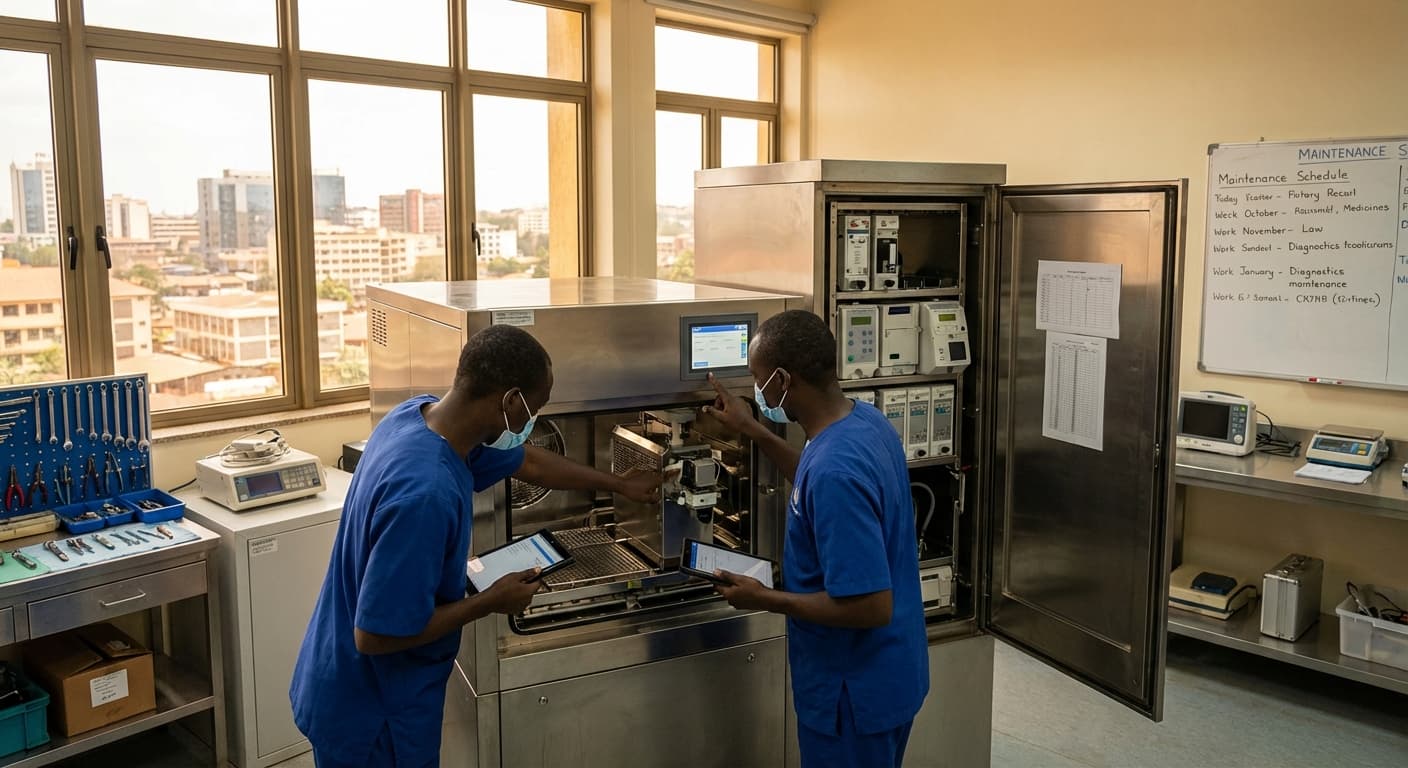
Total Cost of Ownership (TCO) & Lifecycle Budgeting Service in Lesotho
Engineering Excellence & Technical Support
Total Cost of Ownership (TCO) & Lifecycle Budgeting Service High-standard technical execution following OEM protocols and local regulatory frameworks.
Comprehensive TCO Modeling for Infrastructure Projects
Our service develops robust Total Cost of Ownership (TCO) models for critical infrastructure projects in Lesotho, encompassing initial capital expenditure, operational expenses, maintenance, disposal costs, and potential revenue streams. This ensures informed decision-making by providing a holistic financial view beyond upfront costs, leading to optimized long-term value and reduced unforeseen expenditures for government bodies and private investors.
Lifecycle Budgeting for Sustainable Asset Management
We provide expert lifecycle budgeting services to help Lesotho's public and private sectors forecast and allocate funds for assets throughout their entire lifespan. This includes proactive planning for upgrades, replacements, and decommissioning, minimizing budget shocks and ensuring the consistent availability and performance of essential services and infrastructure, thereby promoting sustainability and operational resilience.
Risk Mitigation through Predictive Cost Analysis
Leveraging advanced analytics and historical data specific to Lesotho's economic and operational environment, our TCO and Lifecycle Budgeting service identifies potential cost escalation risks. By forecasting future expenditure needs and incorporating contingency planning, we empower stakeholders to mitigate financial uncertainties, secure optimal financing, and achieve greater budget certainty for long-term investments and asset management strategies.
What Is Total Cost Of Ownership (Tco) & Lifecycle Budgeting Service In Lesotho?
Total Cost of Ownership (TCO) and Lifecycle Budgeting services in Lesotho are strategic financial management tools designed to provide a comprehensive understanding of all costs associated with acquiring, operating, maintaining, and disposing of an asset or system over its entire lifespan. This goes beyond the initial purchase price to encompass direct and indirect expenses, including operational expenditures (OpEx), capital expenditures (CapEx), and potential end-of-life costs. Lifecycle budgeting, intrinsically linked to TCO, involves forecasting and allocating financial resources for each phase of an asset's life, ensuring long-term financial sustainability and informed decision-making. The service involves rigorous data collection, analysis, and projection methodologies to quantify all relevant cost drivers.
| Who Needs This Service? | Typical Use Cases |
|---|---|
| Government Agencies & Public Sector Organizations (Lesotho): To manage public funds efficiently for infrastructure, IT systems, vehicles, and public services. | Procurement of large-scale IT infrastructure (servers, networks, software). Acquisition and management of public transportation fleets (buses, emergency vehicles). Development and maintenance of public utilities (water, electricity). Long-term planning for educational facilities and healthcare infrastructure. Lease vs. purchase decisions for government assets. |
| Large Enterprises & Corporations (operating in or with Lesotho): To optimize capital expenditure, improve operational efficiency, and forecast long-term financial commitments. | Evaluating and selecting new enterprise resource planning (ERP) systems. Managing fleets of vehicles for logistics and transportation companies. Assessing the financial viability of renewable energy projects (solar farms, etc.). Strategic planning for capital investments in manufacturing or industrial equipment. Optimizing IT asset management and cloud service adoption. |
| Non-Governmental Organizations (NGOs) & Development Partners: To ensure accountability, transparency, and sustainable resource allocation for projects in Lesotho. | Procurement of equipment and machinery for development projects (e.g., agricultural, health). Management of vehicle fleets for field operations. Long-term planning for infrastructure development and maintenance in remote areas. Evaluating the cost-effectiveness of different technological solutions for social impact initiatives. |
| Financial Institutions & Investors: To assess the long-term financial implications of asset investments and provide informed lending or investment decisions related to Lesotho. | Due diligence for investments in infrastructure projects. Risk assessment for financing asset acquisition. Valuation of assets considering their operational lifespan and associated costs. |
Key Components of TCO & Lifecycle Budgeting Services:
- Acquisition Costs: Initial purchase price, installation, configuration, licensing, and training.
- Operational Costs: Energy consumption, consumables, staffing, software maintenance, and support contracts.
- Maintenance & Repair Costs: Scheduled maintenance, unscheduled repairs, spare parts, and labor.
- Upgrade & Enhancement Costs: Potential system upgrades, replacements, or feature enhancements during the lifecycle.
- Downtime & Productivity Loss Costs: Quantifying the financial impact of asset unavailability.
- Disposal Costs: Decommissioning, data sanitization, recycling, and environmental compliance.
- Risk Assessment & Contingency Planning: Identifying potential cost overruns and establishing contingency budgets.
- Data Analysis & Reporting: Presenting TCO models, lifecycle cost projections, and actionable recommendations.
Who Needs Total Cost Of Ownership (Tco) & Lifecycle Budgeting Service In Lesotho?
In Lesotho, the strategic implementation of Total Cost of Ownership (TCO) and Lifecycle Budgeting is not a luxury, but a critical necessity for optimizing resource allocation, ensuring long-term financial sustainability, and making informed investment decisions. This service is vital for any entity that acquires, operates, and eventually disposes of assets, whether they are tangible (vehicles, machinery, infrastructure) or intangible (software, systems). By understanding the complete cost picture over an asset's entire lifespan, organizations can move beyond initial purchase price and uncover hidden expenses, leading to significant cost savings, improved operational efficiency, and enhanced risk management. This proactive approach is particularly important in a developing economy like Lesotho, where resource constraints necessitate careful planning and maximum value extraction from every investment.
| Target Customer/Entity | Key Departments Involved | Why TCO & Lifecycle Budgeting is Crucial |
|---|---|---|
| Government Ministries and Agencies (e.g., Ministry of Finance, Ministry of Public Works, Ministry of Health, Ministry of Education, Ministry of Water) | Procurement, Finance, Asset Management, Engineering/Technical Departments, Planning Departments | Ensuring efficient use of public funds, long-term infrastructure planning, managing fleet costs, optimizing IT system investments, preventing costly operational failures, meeting sustainability goals. |
| Public Utilities and State-Owned Enterprises (e.g., Water and Sewerage Authority, Electricity Corporation, Road Construction Company) | Operations, Finance, Engineering, Procurement, Maintenance, Asset Management | Managing high-value infrastructure assets, forecasting operational and maintenance costs, strategic investment in upgrades and replacements, optimizing energy efficiency, ensuring service continuity. |
| Large-Scale Private Sector Enterprises (e.g., Mining companies, Telecommunications providers, Large agricultural operations, Manufacturing firms) | Finance, Operations, Procurement, Fleet Management, IT, Engineering, Facilities Management | Maximizing return on investment, controlling operational expenditures, optimizing asset utilization, managing risk associated with equipment failure, strategic capital expenditure planning, supply chain cost management. |
| Non-Governmental Organizations (NGOs) and Development Partners (e.g., implementing projects related to infrastructure, health, education) | Finance, Project Management, Operations, Procurement, Program Managers | Ensuring project sustainability beyond initial funding, efficient allocation of donor funds, managing the long-term costs of assets acquired for projects, demonstrating responsible stewardship of resources. |
| Educational and Healthcare Institutions (e.g., Universities, Hospitals, Large Clinics) | Administration, Finance, Facilities Management, IT, Procurement, Department Heads | Managing costs of buildings, equipment (medical, laboratory, IT), vehicles, and utilities; ensuring long-term operational viability; planning for asset replacement and upgrades to maintain service quality and compliance. |
Who Needs TCO & Lifecycle Budgeting Service in Lesotho? Target Customers & Departments
- Government Ministries and Agencies
- Public Utilities and State-Owned Enterprises
- Large-Scale Private Sector Enterprises
- Non-Governmental Organizations (NGOs) and Development Partners
- Educational and Healthcare Institutions
Total Cost Of Ownership (Tco) & Lifecycle Budgeting Service Process In Lesotho
This document outlines the service process for Total Cost of Ownership (TCO) and Lifecycle Budgeting in Lesotho, from the initial client inquiry to the final execution and reporting. This structured approach ensures comprehensive analysis, accurate budgeting, and informed decision-making for asset management and investment planning within the Lesotho context.
| Phase | Activity | Description | Deliverables | Key Stakeholders (Lesotho Context) |
|---|---|---|---|---|
| Phase 1: Inquiry and Initial Consultation | Client Inquiry | Prospective client contacts the TCO/Lifecycle Budgeting service provider to express interest and outline their needs. | Initial meeting schedule, preliminary understanding of client's challenges. | Client organization representatives (e.g., Finance Manager, Procurement Officer, Project Manager), Service Provider representative. |
| Initial Consultation | Discussion of client's objectives, current challenges, existing asset base, and desired outcomes related to TCO and lifecycle budgeting. | Needs assessment document, identification of potential service areas. | Client senior management, department heads, Service Provider consultants. | |
| Phase 2: Scope Definition and Proposal Development | Scope Definition | Detailed articulation of the specific assets, systems, or projects to be included in the TCO and lifecycle budgeting analysis. | Agreed-upon scope of work, identification of key performance indicators (KPIs). | Client project team, Service Provider consultants, subject matter experts (e.g., engineers, IT specialists relevant to Lesotho's infrastructure). |
| Proposal Development | Creation of a comprehensive proposal outlining the methodology, timeline, resource requirements, fees, and expected benefits. | Formal service proposal, including a detailed work plan. | Service Provider team, Client procurement/finance department. | |
| Phase 3: Data Collection and Asset Inventory | Information Gathering | Systematic collection of all relevant data pertaining to the asset lifecycle, including acquisition costs, operating expenses, maintenance records, disposal costs, and projected future expenses. | Comprehensive dataset, asset register (if not existing), historical financial data. | Client IT systems, finance departments, operational staff, maintenance teams. Potentially government ministries for public sector assets (e.g., Ministry of Finance, relevant sector ministries). |
| Asset Verification | Physical or digital verification of asset inventory to ensure accuracy and completeness. | Verified asset list, updated asset register. | Client asset managers, operational staff, Service Provider field personnel (if required). | |
| Phase 4: TCO and Lifecycle Cost Modeling | Cost Component Identification | Breaking down the total cost into discrete categories: acquisition, operation, maintenance, repair, disposal, and potentially inflation and financing costs. | Categorized cost elements. | Service Provider TCO analysts, client finance and operations representatives. |
| Model Development | Application of appropriate TCO and lifecycle costing methodologies, often using specialized software or spreadsheets, tailored to the Lesotho economic environment. | TCO model, lifecycle cost curves, projected future cost scenarios. | Service Provider TCO specialists, client finance department. | |
| Phase 5: Risk Assessment and Sensitivity Analysis | Risk Identification | Identification of potential risks that could impact the lifecycle costs (e.g., currency fluctuations, regulatory changes, technological obsolescence, availability of spare parts in Lesotho). | List of identified risks, risk matrix. | Service Provider risk analysts, client risk management team, relevant industry experts. |
| Sensitivity Analysis | Evaluation of how changes in key variables (e.g., inflation, maintenance costs, energy prices) affect the total lifecycle cost. | Sensitivity analysis reports, best-case/worst-case scenarios. | Service Provider TCO analysts, client finance department. | |
| Phase 6: Budget Development and Scenario Planning | Budget Formulation | Development of comprehensive budgets aligned with the TCO analysis, spanning the entire lifecycle of the assets. | Lifecycle budgets, capital expenditure (CAPEX) and operational expenditure (OPEX) forecasts. | Client finance department, budgeting teams, Service Provider financial analysts. |
| Scenario Planning | Creation of different budget scenarios based on the sensitivity analysis to support strategic decision-making. | Alternative budget scenarios, decision matrices. | Client senior management, strategic planning teams, Service Provider consultants. | |
| Phase 7: Reporting and Presentation | Draft Report Generation | Compilation of findings, methodologies, results, and recommendations into a comprehensive draft report. | Draft TCO and lifecycle budgeting report. | Service Provider team. |
| Client Review and Feedback | Presentation of the draft report to the client for review, discussion, and feedback. | Feedback log, addressed client queries. | Client senior management, relevant department heads, Service Provider team. | |
| Final Report and Presentation | Delivery of the final, polished report and presentation of key findings, insights, and strategic recommendations to client stakeholders. | Final TCO and lifecycle budgeting report, executive summary, presentation deck. | Client executive leadership, board of directors (if applicable), Service Provider consultants. | |
| Phase 8: Implementation Support and Monitoring | Implementation Planning | Assisting the client in developing action plans to integrate the TCO insights and lifecycle budgets into their operational and strategic planning. | Action plans, integration strategy. | Client operational teams, project managers, Service Provider implementation specialists. |
| Ongoing Monitoring | Establishing mechanisms for ongoing tracking and monitoring of actual costs against the budgeted lifecycle costs. | Performance dashboards, variance analysis reports. | Client finance and asset management teams, Service Provider (as agreed). | |
| Phase 9: Review and Refinement | Periodic Review | Conducting periodic reviews of the TCO and lifecycle budget models to incorporate actual performance data and update projections. | Updated TCO models, revised lifecycle budgets. | Client asset management, finance departments, Service Provider consultants. |
| Refinement and Improvement | Making necessary adjustments to the methodologies and models based on lessons learned and evolving client needs or Lesotho's economic conditions. | Improved TCO/lifecycle budgeting processes, enhanced predictive accuracy. | Service Provider team, Client asset management. |
Service Process Workflow
- Inquiry and Initial Consultation
- Scope Definition and Proposal Development
- Data Collection and Asset Inventory
- TCO and Lifecycle Cost Modeling
- Risk Assessment and Sensitivity Analysis
- Budget Development and Scenario Planning
- Reporting and Presentation
- Implementation Support and Monitoring
- Review and Refinement
Total Cost Of Ownership (Tco) & Lifecycle Budgeting Service Cost In Lesotho
The Total Cost of Ownership (TCO) and Lifecycle Budgeting service in Lesotho is a critical financial planning tool for organizations to understand the full economic impact of an asset or investment over its entire lifespan. This includes not only the initial purchase price but also operating costs, maintenance, repairs, upgrades, and eventual disposal. Factors influencing the cost of these services in Lesotho are diverse and depend on the complexity of the assets being analyzed, the scope of the engagement, the expertise of the service provider, and the specific needs of the client. Therefore, pricing can vary significantly. Typical pricing models include hourly rates for consultants, project-based fees, or retainer agreements. For a comprehensive TCO and lifecycle budgeting service, expect a range that reflects the thoroughness of the analysis and the level of expertise provided.
| Service Component | Typical Pricing Range (LSL) | Notes |
|---|---|---|
| Initial Consultation & Scoping | 2,000 - 7,500 | For initial understanding of needs and defining project scope. |
| Data Gathering & Analysis (Hourly) | 300 - 900 per hour | Depends on consultant seniority and complexity of data. |
| TCO Model Development (Project-Based) | 15,000 - 80,000+ | For a moderate to complex asset. Varies widely based on scope. |
| Lifecycle Budgeting & Forecasting (Project-Based) | 10,000 - 60,000+ | Focuses on future financial planning for the asset's life. |
| Comprehensive TCO & Lifecycle Strategy Report | 25,000 - 150,000+ | Includes detailed analysis, recommendations, and strategic insights. |
| Retainer for Ongoing Advisory | 5,000 - 20,000+ per month | For continuous monitoring and periodic reviews. |
| Specialized Software Licensing (if applicable) | Varies significantly | May be a separate cost or bundled by the provider. |
Key Pricing Factors for TCO & Lifecycle Budgeting Services in Lesotho
- Complexity of Assets/Projects: Analyzing a single piece of equipment versus a fleet of vehicles or an entire building infrastructure will significantly impact cost.
- Scope of Analysis: The depth and breadth of the lifecycle stages covered (e.g., acquisition, operation, maintenance, disposal, decommissioning) will influence the price.
- Data Availability and Quality: The amount of readily available and reliable data for cost estimation will affect the consultant's time and effort.
- Service Provider Expertise and Reputation: Highly experienced and reputable firms or individual consultants often command higher fees.
- Duration of the Lifecycle: Longer asset lifecycles generally require more extensive and long-term planning, potentially increasing costs.
- Level of Detail Required: The granularity of the cost breakdown and reporting will influence the analytical effort.
- Reporting and Deliverables: The format and complexity of the final reports and presentations will factor into the pricing.
- Technology and Tools Used: The adoption of specialized TCO software or advanced analytical tools by the service provider.
- Geographic Location within Lesotho: While less of a primary driver, significant travel or logistical challenges might incur additional costs.
- Client-Specific Customizations: Bespoke analytical requirements or integration with existing client systems.
Affordable Total Cost Of Ownership (Tco) & Lifecycle Budgeting Service Options
Our Affordable Total Cost of Ownership (TCO) & Lifecycle Budgeting Service Options are designed to provide organizations with a clear, comprehensive understanding of the true financial implications of their assets and projects. By focusing on TCO and lifecycle budgeting, we empower you to make informed decisions that minimize long-term expenses, maximize return on investment, and ensure predictable financial planning. We offer a range of value bundles tailored to different organizational needs, from essential TCO analysis to advanced lifecycle cost modeling and strategic budgeting. Our cost-saving strategies are integrated into every service, identifying opportunities for efficiency, risk mitigation, and optimized resource allocation throughout the entire lifecycle of your assets and projects.
| Cost Component | TCO Impact | Lifecycle Budgeting Focus | Cost-Saving Strategy Example |
|---|---|---|---|
| Acquisition Costs | Initial purchase price, installation, setup. | Includes negotiation, financing options, and phased acquisition. | Bulk purchasing discounts, competitive vendor bidding, lease vs. buy analysis. |
| Operating Costs | Energy consumption, consumables, software licenses. | Forecasting ongoing usage and potential for efficiency improvements. | Energy-efficient equipment selection, optimized software licensing, predictive maintenance for reduced downtime. |
| Maintenance & Repair Costs | Preventive maintenance, corrective repairs, spare parts. | Scheduling proactive maintenance, managing spare parts inventory, and assessing repair vs. replacement decisions. | Standardized maintenance procedures, extended warranties, in-house vs. outsourced repair cost analysis. |
| Upgrade & Enhancement Costs | Software updates, hardware upgrades, system enhancements. | Planning for technology refresh cycles and strategic improvements. | Phased upgrades to align with functional needs, leveraging modular designs for easier component replacement. |
| Disposal & Decommissioning Costs | Removal, recycling, environmental compliance, data destruction. | Planning for end-of-life scenarios and minimizing associated liabilities. | Environmentally friendly disposal options, asset redeployment or resale opportunities, secure data sanitization to avoid breaches. |
| Training & Support Costs | User training, technical support, documentation. | Ensuring adequate user competency to maximize asset utilization and minimize errors. | Train-the-trainer programs, comprehensive online knowledge bases, proactive support to resolve issues quickly. |
Our Value Bundles & Cost-Saving Strategies
- {"title":"Essential TCO Analysis Bundle","description":"Provides a foundational understanding of TCO for a specific asset or project. Includes initial acquisition, operation, maintenance, and disposal costs. Cost-Saving Strategy: Identifies immediate opportunities for procurement optimization and reduces unexpected operational expenditures."}
- {"title":"Strategic Lifecycle Budgeting Bundle","description":"Extends TCO analysis to cover the entire lifecycle, incorporating depreciation, upgrade cycles, and potential replacement costs. Enables proactive financial planning and resource allocation. Cost-Saving Strategy: Minimizes capital expenditure surprises through phased investment and extends asset lifespan through optimized maintenance schedules."}
- {"title":"Advanced TCO & Risk Management Bundle","description":"Integrates TCO analysis with comprehensive risk assessment, including potential obsolescence, regulatory changes, and market fluctuations. Develops mitigation strategies to protect against financial volatility. Cost-Saving Strategy: Reduces the impact of unforeseen risks and avoids costly reactive solutions by proactively planning for contingencies."}
- {"title":"Customized TCO & Lifecycle Solutions","description":"Tailored services to meet unique organizational requirements, including multi-asset portfolios, complex project lifecycles, and specific industry challenges. Cost-Saving Strategy: Addresses niche cost drivers and uncovers specialized savings opportunities relevant to your specific operational context."}
Verified Providers In Lesotho
In Lesotho's healthcare landscape, identifying reliable and trustworthy providers is paramount for individuals seeking quality medical services. Franance Health stands out as a beacon of excellence, meticulously vetting its network of healthcare professionals and facilities to ensure they meet the highest standards of care. This commitment to verification offers patients peace of mind and confidence in their treatment decisions. Franance Health's rigorous credentialing process goes beyond simple licensing, examining factors such as specialized training, experience, patient outcomes, and adherence to ethical practices. By partnering with Franance Health, patients gain access to a curated selection of verified providers who are not only clinically competent but also dedicated to patient well-being and compassionate care. This approach positions Franance Health as the premier choice for accessing verified healthcare in Lesotho.
| Key Verification Criteria | Franance Health Standard | Patient Benefit |
|---|---|---|
| Licensing and Accreditation | Current and valid professional licenses and facility accreditations are mandatory. | Ensures providers are legally qualified and operate within established regulatory frameworks. |
| Specialized Training and Certifications | Verification of advanced degrees, specialized residencies, fellowships, and relevant certifications. | Guarantees access to providers with in-depth knowledge and expertise in specific medical areas. |
| Clinical Experience and Track Record | Assessment of years in practice and documented patient care history, including outcomes where applicable. | Provides assurance of practical skills and a history of successful patient management. |
| Professional Reputation and Peer Review | Consideration of peer recommendations and absence of significant malpractice claims or disciplinary actions. | Indicates a provider's standing within the medical community and their commitment to professional integrity. |
| Patient Satisfaction and Feedback | Mechanisms for gathering and reviewing patient feedback on communication, bedside manner, and overall experience. | Prioritizes providers who are not only clinically proficient but also empathetic and attentive to patient needs. |
| Adherence to Ethical Guidelines | Confirmation of commitment to patient privacy, informed consent, and ethical medical conduct. | Ensures patients receive care that is respectful, transparent, and in their best interest. |
Why Franance Health Providers are the Best Choice
- Rigorous Credentialing Process: Franance Health employs a multi-faceted approach to vetting, ensuring providers meet stringent quality benchmarks.
- Focus on Expertise: Verified providers possess specialized training and extensive experience in their respective fields.
- Commitment to Patient Outcomes: Franance Health prioritizes providers who demonstrate a track record of positive patient results.
- Ethical Practice Standards: All affiliated providers adhere to the highest ethical guidelines and patient care principles.
- Comprehensive Network: Access a wide range of medical specialists and facilities, all pre-screened for quality.
- Enhanced Patient Confidence: Trust in the knowledge that your chosen provider has been thoroughly verified.
- Dedication to Compassionate Care: Franance Health partners with professionals who prioritize patient comfort and well-being.
Scope Of Work For Total Cost Of Ownership (Tco) & Lifecycle Budgeting Service
This Scope of Work (SOW) outlines the services to be provided for a comprehensive Total Cost of Ownership (TCO) and Lifecycle Budgeting study. The objective is to establish a clear understanding of all costs associated with an asset, system, or project over its entire operational lifespan, enabling informed decision-making, strategic planning, and optimized financial management. This document details the technical deliverables and standard specifications that will be adhered to throughout the engagement.
| Phase | Key Activities | Technical Deliverables | Standard Specifications/Methodology |
|---|---|---|---|
| Phase 1: Project Initiation & Data Gathering | Define project scope, objectives, and key performance indicators (KPIs). Identify and engage relevant stakeholders. Collect historical data on costs, performance, and usage. Gather asset/system specifications and operational parameters. | Project Charter Stakeholder Register Data Collection Plan Initial Asset/System Profile | Industry best practices for project management. Standardized data collection templates and questionnaires. Data anonymization and security protocols where applicable. Alignment with existing organizational financial reporting standards. |
| Phase 2: Cost Identification & Categorization | Identify all cost drivers across the lifecycle (e.g., acquisition, operation, maintenance, disposal). Categorize costs into relevant financial buckets (e.g., capital, operational, personnel, disposal). Quantify initial investment costs. Estimate recurring operational and maintenance costs. | Comprehensive Cost Breakdown Structure (CBS) Asset/System Lifecycle Cost Model (Initial) List of Identified Cost Drivers | ISO 55000 series (Asset Management) principles. Alignment with accounting standards (e.g., GAAP, IFRS). Industry-specific cost benchmarks and data sources. Use of parametric estimation techniques for initial cost projections. |
| Phase 3: Lifecycle Cost Analysis & Forecasting | Develop detailed operational and maintenance cost forecasts. Model potential upgrade, replacement, and disposal costs. Incorporate factors like inflation, technological obsolescence, and regulatory changes. Perform sensitivity analysis and scenario planning. | Detailed Lifecycle Cost Model (with forecasts) Sensitivity Analysis Report Scenario Planning Matrix Risk Assessment Report (cost-related) | Discounted Cash Flow (DCF) analysis. Net Present Value (NPV) calculations. Internal Rate of Return (IRR) analysis. Probabilistic forecasting methods (e.g., Monte Carlo simulation). Risk quantification methodologies. |
| Phase 4: TCO Calculation & Budget Development | Consolidate all identified costs to determine the Total Cost of Ownership. Develop a comprehensive lifecycle budget aligned with the TCO. Identify key cost optimization opportunities. Provide recommendations for strategic financial planning. | Total Cost of Ownership (TCO) Report Lifecycle Budget Document Cost Optimization Recommendations Report Strategic Financial Planning Insights | Standard TCO calculation methodologies. Budgeting and forecasting techniques. Benchmarking against industry peers. Alignment with organizational financial planning cycles. |
| Phase 5: Reporting & Knowledge Transfer | Prepare a final TCO and Lifecycle Budgeting report summarizing findings and recommendations. Present findings to stakeholders. Conduct knowledge transfer sessions to embed the TCO methodology within the organization. Develop a framework for ongoing TCO tracking and updates. | Final TCO & Lifecycle Budgeting Report Stakeholder Presentation Deck Training Materials/Documentation Recommended TCO Tracking Framework | Clear and concise reporting standards. Visualizations (charts, graphs) for data interpretation. Knowledge transfer methodologies tailored to audience. Templates for ongoing TCO data collection and analysis. |
Project Objectives
- To accurately identify and quantify all direct and indirect costs associated with the asset/system/project throughout its lifecycle.
- To develop a robust lifecycle budget that forecasts future expenses and revenue streams.
- To provide actionable insights for cost optimization, risk mitigation, and strategic investment.
- To establish a standardized framework for future TCO and lifecycle budgeting analyses.
- To support informed decision-making regarding procurement, maintenance, upgrades, and disposal.
Service Level Agreement For Total Cost Of Ownership (Tco) & Lifecycle Budgeting Service
This Service Level Agreement (SLA) outlines the performance commitments for the Total Cost of Ownership (TCO) and Lifecycle Budgeting Service. It defines response times for support requests and uptime guarantees for the associated platform and reporting tools.
| Service Component | Service Level Objective (SLO) | Measurement Metric | Reporting Frequency |
|---|---|---|---|
| Platform Uptime Guarantee | 99.9% uptime (excluding Scheduled Maintenance) | Percentage of monthly uptime calculated as: ((Total minutes in month - Downtime minutes) / Total minutes in month) * 100 | Monthly |
| Support Request - Critical Incident Response Time | A critical incident is defined as a major outage of the Platform impacting all users, or a critical functionality failure preventing core TCO/Lifecycle Budgeting analysis. Response within 1 hour. | Time from submission of a Critical Support Request to the initiation of troubleshooting by the Service Provider. | Upon occurrence of a Critical Incident |
| Support Request - High Priority Incident Response Time | A high priority incident is defined as a significant degradation of Platform performance or a critical functionality issue affecting a substantial portion of users. Response within 4 business hours. | Time from submission of a High Priority Support Request to the initiation of troubleshooting by the Service Provider. | Upon occurrence of a High Priority Incident |
| Support Request - Standard Incident Response Time | A standard incident is defined as a minor issue, question, or request for assistance that does not prevent core TCO/Lifecycle Budgeting analysis. Response within 1 business day. | Time from submission of a Standard Support Request to the initiation of troubleshooting or a response by the Service Provider. | Monthly |
| Report Generation Availability | All standard TCO and Lifecycle Budgeting reports will be available to generate on-demand through the Platform. | Successful generation of requested reports within designated processing times (e.g., standard reports within 5 minutes, complex reports within 30 minutes). | Monthly |
| Scheduled Maintenance Notifications | Advance notification of all Scheduled Maintenance. Minimum 48 hours' notice. | Timeliness of notification provided to the Customer. | As scheduled |
Definitions
- TCO Service: Refers to the comprehensive suite of tools, methodologies, and expert support provided for calculating, analyzing, and optimizing the Total Cost of Ownership of IT assets and solutions.
- Lifecycle Budgeting Service: Refers to the services and tools provided to forecast, manage, and control costs throughout the entire lifecycle of IT assets, from procurement to disposal.
- Platform: The online portal, dashboards, and analytical tools used to access and interact with TCO and Lifecycle Budgeting data and functionalities.
- Support Request: A communication from the Customer to the Service Provider seeking assistance with the TCO & Lifecycle Budgeting Service, including technical issues, configuration questions, or report generation queries.
- Downtime: Any period during which the Platform is unavailable to the Customer due to scheduled maintenance or unscheduled incidents.
- Scheduled Maintenance: Pre-announced periods when the Platform may be unavailable for updates, upgrades, or essential maintenance. Advance notice will be provided.
- Unscheduled Incident: Any unplanned event that causes the Platform to be unavailable or significantly degraded.
Frequently Asked Questions

Ready when you are
Let's scope your Total Cost of Ownership (TCO) & Lifecycle Budgeting Service in Lesotho project in Lesotho.

Scaling healthcare logistics and technical systems across the entire continent.