
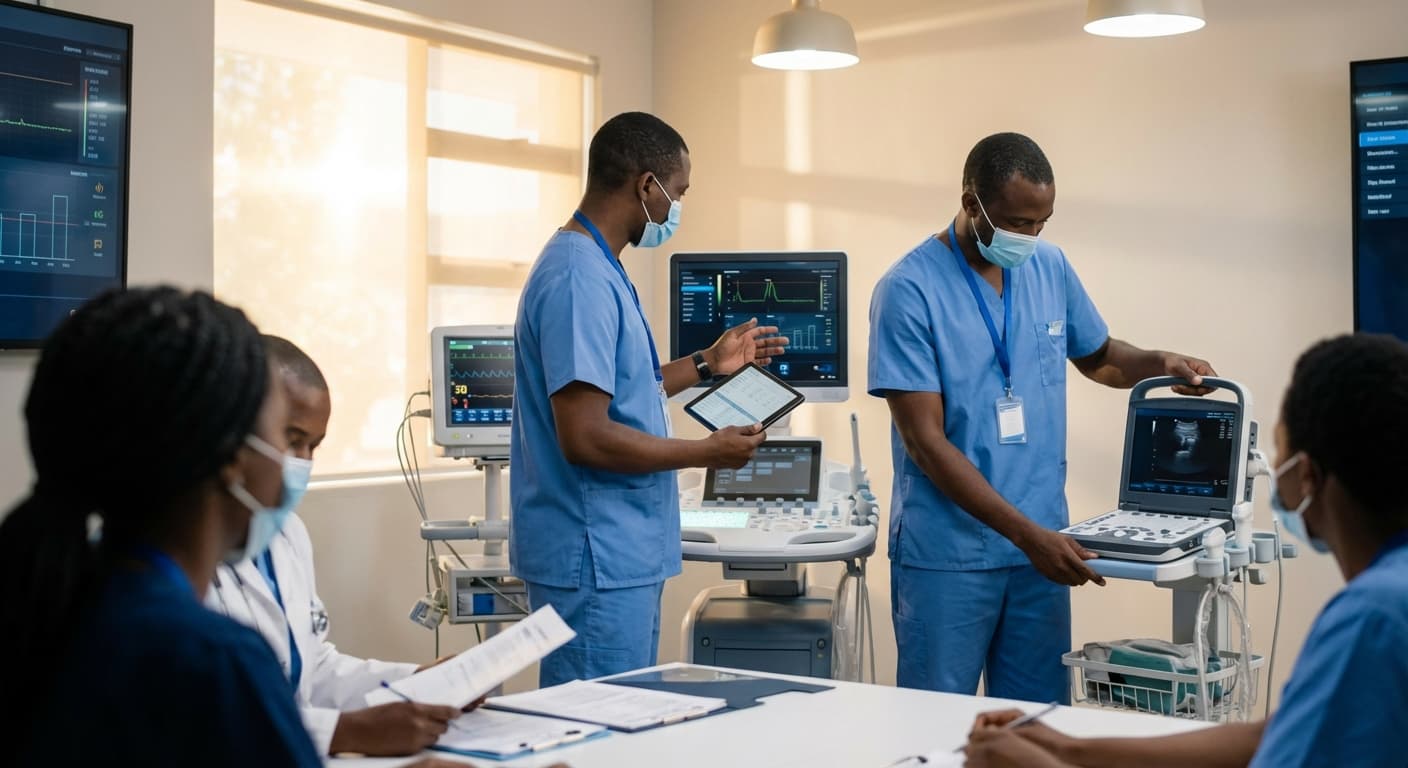
Clinical Needs Assessment for Medical Equipment in Lesotho
Engineering Excellence & Technical Support
Clinical Needs Assessment for Medical Equipment High-standard technical execution following OEM protocols and local regulatory frameworks.
Comprehensive Needs Assessment Framework
Developed a multi-stage, data-driven framework for assessing the clinical needs of medical equipment across diverse healthcare facilities in Lesotho. This framework prioritizes patient outcomes, infrastructure compatibility, and local maintenance capacity to ensure sustainable and effective equipment deployment. Includes tools for inventory, utilization, and gap analysis.
Geospatial Needs Mapping & Prioritization
Leveraged geospatial data and analysis to map critical equipment needs based on population density, disease prevalence, and existing healthcare facility distribution in Lesotho. This enables targeted resource allocation and identifies underserved areas requiring immediate equipment intervention, optimizing the impact of limited budgets.
Integration of End-User Training & Maintenance Planning
Integrated clinical end-user training requirements and local maintenance feasibility directly into the needs assessment process. This proactive approach ensures that procured equipment is not only clinically relevant but also operable and maintainable by existing personnel and infrastructure in Lesotho, minimizing downtime and maximizing long-term utility.
What Is Clinical Needs Assessment For Medical Equipment In Lesotho?
Clinical Needs Assessment for Medical Equipment in Lesotho refers to a systematic process designed to identify, evaluate, and prioritize the medical equipment requirements of healthcare facilities within the Kingdom of Lesotho. This service is critical for ensuring that healthcare providers have access to appropriate, functional, and sustainable medical technology to deliver effective patient care. It involves a comprehensive analysis of existing infrastructure, human resource capacity, epidemiological data, and projected healthcare demands to determine the specific types, quantities, and specifications of medical devices required. The assessment considers factors such as the intended use of the equipment, its compatibility with existing systems, availability of trained personnel for operation and maintenance, and the long-term financial implications of acquisition, operation, and lifecycle management. The primary objective is to optimize resource allocation, prevent the procurement of inappropriate or obsolete technology, and ultimately improve health outcomes for the population of Lesotho.
| Who Needs This Service? | Typical Use Cases | ||||||||
|---|---|---|---|---|---|---|---|---|---|
| Ministry of Health (Lesotho): For national health planning, resource allocation, and policy development regarding medical technology. | Procurement of new medical equipment for public hospitals and health centers to address critical shortages or upgrade existing capabilities. | International donor organizations and NGOs: To guide their investments and support for healthcare infrastructure development in Lesotho, ensuring alignment with national priorities. | Development of new healthcare facilities or expansion of existing ones, requiring a complete assessment of equipment needs from inception. | Individual healthcare facilities (hospitals, clinics): To justify equipment requests, identify maintenance needs, and plan for replacement cycles. | Periodic review and updating of medical equipment inventory to ensure continued relevance and functionality in response to changing health needs and technological advancements. | Development partners and funding agencies: To ensure the effective and efficient use of allocated funds for medical equipment procurement and implementation. | Establishing maintenance and repair programs for medical equipment, requiring an understanding of the types and quantities of devices requiring service. | Healthcare providers and administrators: To identify specific equipment needs for their departments or facilities to improve diagnostic and therapeutic capabilities. | Planning for the decommissioning and replacement of aging or obsolete medical equipment to maintain service quality and safety. |
Key Components of a Clinical Needs Assessment for Medical Equipment in Lesotho
- Facility-level assessment (including infrastructure, existing equipment inventory, and maintenance capacity)
- Analysis of current service delivery models and patient caseloads
- Review of national health policies, strategies, and disease burden data
- Identification of gaps in essential medical equipment
- Prioritization of equipment based on clinical impact, cost-effectiveness, and sustainability
- Development of equipment specifications and technical requirements
- Consideration of training and maintenance plans
- Budgetary implications and funding strategy development
Who Needs Clinical Needs Assessment For Medical Equipment In Lesotho?
A comprehensive clinical needs assessment for medical equipment is crucial for optimizing healthcare delivery and resource allocation in Lesotho. It ensures that the right equipment is procured for the right purposes, enhancing patient care, improving operational efficiency, and maximizing the lifespan and utilization of valuable assets. This assessment is not a one-size-fits-all process but rather a targeted endeavor that benefits various stakeholders within the Lesotho health sector.
| Target Customer/Department | Key Focus Areas for Needs Assessment | Impact of Assessment |
|---|---|---|
| Public Hospitals (District, Referral, Tertiary) | Surgical suites, Intensive Care Units (ICUs), Diagnostic imaging (X-ray, Ultrasound), Laboratory equipment, Emergency departments, Operating theaters, Pediatric units, Maternity wards. | Improved patient outcomes, reduced waiting times, enhanced diagnostic accuracy, efficient surgical procedures, optimized critical care. |
| Health Centers and Clinics (Rural & Urban) | Basic diagnostic tools (thermometers, stethoscopes, blood pressure monitors), essential treatment equipment, maternal and child health (MCH) equipment (e.g., infant scales, delivery kits), basic laboratory testing capabilities. | Improved access to primary healthcare, early detection of diseases, enhanced MCH services, reduced burden on higher-level facilities. |
| Specialized Medical Facilities (e.g., Infectious Diseases, Oncology) | Specific diagnostic and treatment equipment relevant to the specialization (e.g., PCR machines for infectious diseases, radiotherapy equipment for oncology), infection control equipment. | Enhanced management of specific diseases, improved patient prognosis, specialized care delivery. |
| Ministry of Health (MoH) | National equipment inventory, identification of critical gaps across all levels of care, prioritization of procurement based on public health needs, long-term equipment planning, budget allocation. | Informed national health policy, strategic resource allocation, equitable access to essential medical technology, cost-effective procurement. |
| District Health Management Teams | Equipment needs for district hospitals and associated health facilities, maintenance capacity assessment, training needs for equipment operation. | Effective district-level healthcare planning, improved resource utilization within districts, better management of equipment lifecycles. |
| Training Institutions (Medical Schools, Nursing Schools) | Simulators, anatomical models, laboratory equipment for practical training, audio-visual aids, current medical devices for hands-on experience. | Producing well-trained healthcare professionals, ensuring competency in using modern medical equipment. |
| NGOs and FBOs | Equipment aligned with their service delivery mandate and geographical focus, community health equipment, mobile clinic equipment. | Effective and targeted healthcare interventions, improved service delivery in underserved communities. |
| Procurement and Logistics Departments | Specifications for new equipment, quantity requirements, deployment plans, lifecycle cost analysis, vendor management data. | Efficient and transparent procurement processes, timely delivery of appropriate equipment, optimized stock management. |
| Biomedical Engineering and Maintenance Departments | Current equipment inventory, age and condition of existing equipment, spare parts requirements, training needs for new technologies, maintenance schedules. | Proactive equipment maintenance, reduced downtime, extended equipment lifespan, improved patient safety, optimized maintenance budgets. |
Target Customers and Departments for Clinical Needs Assessment in Lesotho
- Public Hospitals: All levels of public hospitals, from district to tertiary, are primary beneficiaries. This includes departments focused on critical care, surgery, diagnostics, and general patient wards.
- Health Centers and Clinics: Rural and urban health centers and clinics serving primary healthcare needs are vital. Their assessments should focus on essential diagnostics, basic treatment equipment, and maternal/child health services.
- Specialized Medical Facilities: Institutions focusing on specific areas like infectious diseases (e.g., TB, HIV/AIDS), maternal and child health, or emergency services will require tailored equipment assessments.
- Ministry of Health: The Ministry of Health, responsible for national health policy, planning, and resource allocation, needs this data to inform procurement strategies, identify national equipment gaps, and guide investments.
- District Health Management Teams: These teams require needs assessments to plan for and manage equipment at the district level, ensuring equitable distribution and maintenance.
- Training Institutions: Medical and nursing schools, as well as other healthcare training facilities, need up-to-date equipment for effective training and skill development.
- Non-Governmental Organizations (NGOs) and Faith-Based Organizations (FBOs): Organizations actively involved in providing healthcare services, particularly in underserved areas, benefit from needs assessments to guide their own procurement and project planning.
- Procurement and Logistics Departments: These departments directly utilize the findings of the needs assessment to make informed purchasing decisions, manage inventory, and plan for equipment deployment.
- Biomedical Engineering and Maintenance Departments: Understanding the current equipment stock and future needs is essential for effective maintenance planning, spare parts management, and technical support.
Clinical Needs Assessment For Medical Equipment Process In Lesotho
This document outlines the workflow for conducting a Clinical Needs Assessment (CNA) for medical equipment in Lesotho, from the initial inquiry to the final execution of recommendations. The CNA process is crucial for ensuring that healthcare facilities have the appropriate, functional, and well-maintained medical equipment to meet the specific clinical needs of the population they serve. This systematic approach aims to identify gaps, prioritize needs, and inform procurement and resource allocation decisions.
| Stage | Key Activities | Responsible Parties | Key Outputs | Timeline (Indicative) |
|---|---|---|---|---|
| Receive and acknowledge request for CNA. Define scope of assessment (e.g., specific facility, region, type of equipment). Identify initial stakeholders and potential challenges. | Ministry of Health (MoH) / Health Sector Coordinating Body, Requesting Facility/District Health Management Team (DHMT) | Confirmed scope document, list of initial stakeholders, preliminary understanding of context. | 1-2 Weeks |
| Develop assessment tools (surveys, interview guides, checklists). Conduct site visits, interviews with clinicians, biomedical engineers, and administrators. Review existing equipment inventory, maintenance logs, and patient data. Assess infrastructure and utility support. | CNA Team (MoH representatives, technical experts, DHMT representatives) | Collected data on existing equipment, clinical needs, user feedback, infrastructure status, training needs. | 4-8 Weeks |
| Analyze collected data to identify equipment gaps (lack of equipment, obsolete equipment, malfunctioning equipment). Quantify the magnitude of needs. Analyze reasons for gaps (e.g., budget, maintenance, training). | CNA Team (Data analysts, clinical specialists) | Report on identified equipment gaps, categorized by type, function, and location. Quantified unmet needs. | 2-3 Weeks |
| Develop criteria for prioritizing needs (e.g., impact on patient outcomes, cost-effectiveness, alignment with national health priorities). Formulate specific, actionable recommendations for procurement, repair, training, or maintenance. | CNA Team, Technical Working Group | Prioritized list of equipment needs, detailed recommendations with technical specifications (if applicable), estimated costs. | 2-4 Weeks |
| Present preliminary findings and recommendations to key stakeholders (MoH leadership, DHMTs, healthcare providers, potential donors). Gather feedback and refine recommendations based on input. Ensure buy-in and consensus. | CNA Team, MoH Leadership, DHMTs, Healthcare Providers, Donors | Validated recommendations, consensus on prioritized needs and proposed solutions. | 1-2 Weeks |
| Compile a comprehensive CNA report including methodology, findings, prioritized needs, recommendations, and implementation considerations. Disseminate the report to relevant stakeholders and decision-makers. | CNA Team (Lead Reporter) | Final Clinical Needs Assessment Report. | 1-2 Weeks |
| Facilitate the translation of recommendations into action (e.g., budget allocation, procurement processes, training programs). Establish a system for monitoring the implementation progress and the impact of the procured/repaired equipment. Conduct follow-up assessments. | MoH (Procurement, Planning, HR Units), DHMTs, Biomedical Engineering Department, Implementing Partners | Procured/repaired equipment, trained personnel, improved service delivery, monitoring reports, impact assessments. | Ongoing (dependent on recommendations) |
Clinical Needs Assessment Workflow for Medical Equipment in Lesotho
- Inquiry & Initial Scoping
- Needs Identification & Data Collection
- Data Analysis & Gap Identification
- Prioritization & Recommendation Development
- Validation & Stakeholder Consultation
- Reporting & Dissemination
- Implementation & Monitoring
Clinical Needs Assessment For Medical Equipment Cost In Lesotho
This document outlines a clinical needs assessment for medical equipment in Lesotho, with a specific focus on understanding pricing factors and ranges within the local currency, the Lesotho Loti (LSL). The objective is to provide a foundational understanding for budgeting, procurement, and long-term sustainability of healthcare services. Several key factors influence the cost of medical equipment in Lesotho:
- Equipment Type and Complexity: Basic diagnostic tools will naturally be less expensive than advanced imaging machines or surgical equipment.
- Brand and Manufacturer: Reputable international brands often command higher prices due to perceived quality, reliability, and after-sales support. Local or regional manufacturers (if available) might offer more competitive pricing.
- New vs. Refurbished: Refurbished equipment can significantly reduce upfront costs, but its lifespan and potential for maintenance issues need careful consideration.
- Import Duties and Taxes: Lesotho, like many countries, imposes import duties and Value Added Tax (VAT) on imported goods, including medical equipment, which adds to the final cost.
- Transportation and Logistics: The cost of shipping, insurance, and local transportation from ports of entry to healthcare facilities within Lesotho can be substantial, especially for larger or delicate items.
- Installation and Training: Many sophisticated medical devices require professional installation and specialized training for healthcare personnel, which are often additional costs.
- Warranty and After-Sales Service: The availability and cost of warranties, spare parts, and local technical support play a crucial role in the total cost of ownership.
- Currency Exchange Rates: Fluctuations in the exchange rate between the LSL and major international currencies (USD, EUR) directly impact the landed cost of imported equipment.
- Supplier Markups and Negotiation: Local distributors and suppliers add their own markups, and the ability to negotiate prices can lead to cost savings.
- Volume and Bulk Purchasing: For larger procurements, there may be opportunities for volume discounts.
Given the variability, providing exact LSL ranges is challenging without a specific equipment list. However, a general understanding of typical costs for common categories can be inferred. These ranges are illustrative and subject to market dynamics. It's crucial to obtain formal quotes for precise budgeting.
| Equipment Category | Estimated Price Range (LSL) | Notes |
|---|---|---|
| Basic Diagnostic Tools (e.g., Stethoscope, Sphygmomanometer, Thermometer) | 200 - 2,000 | Highly dependent on brand and quality. Includes basic sets. |
| Basic Laboratory Equipment (e.g., Microscope, Centrifuge) | 5,000 - 50,000 | Ranges from manual to semi-automated models. |
| Imaging Equipment (e.g., X-ray machine - basic, Ultrasound) | 200,000 - 1,500,000+ | Significant variation based on type, digital vs. analog, and features. Excludes large CT/MRI. |
| Surgical Instruments (Basic Sets) | 10,000 - 100,000 | Per set. Can vary greatly by specialty and material. |
| Patient Monitors (Basic) | 15,000 - 75,000 | For vital signs monitoring. |
| Hospital Beds (Manual) | 3,000 - 15,000 | Per bed. Electric beds would be significantly higher. |
| Syringe Pumps / Infusion Pumps | 10,000 - 50,000 | Per unit. |
| Sterilization Equipment (e.g., Autoclave - medium size) | 50,000 - 250,000 | Depending on capacity and features. |
Key Pricing Factors for Medical Equipment in Lesotho
- Equipment Type and Complexity
- Brand and Manufacturer Reputation
- New vs. Refurbished Condition
- Import Duties and Taxes
- Transportation and Logistics Costs
- Installation and Training Requirements
- Warranty and After-Sales Service Agreements
- Currency Exchange Rate Volatility
- Supplier Markups and Negotiation Power
- Volume of Purchase
Affordable Clinical Needs Assessment For Medical Equipment Options
Conducting a thorough clinical needs assessment is crucial for selecting the right medical equipment. This process ensures that investments align with patient care requirements, operational efficiency, and budget constraints. Understanding "value bundles" and implementing "cost-saving strategies" are key to maximizing the return on investment for medical facilities.
| Concept | Explanation | Cost-Saving Strategies |
|---|---|---|
| Value Bundles | Value bundles are packages offered by manufacturers or distributors that combine equipment with related services, consumables, or extended warranties at a potentially discounted price compared to purchasing items individually. They aim to provide a more comprehensive and predictable cost structure. | Look for: Bundles that include essential consumables, preventive maintenance plans, and extended warranties. Negotiate: Ensure the bundled price represents a genuine saving and doesn't include unnecessary components. Compare: Always compare the bundled price to the cost of acquiring components separately. |
| Cost-Saving Strategies | These are proactive measures and thoughtful considerations applied throughout the needs assessment and acquisition process to reduce overall expenditure without compromising clinical quality or patient safety. | Negotiate: Leverage competitive bidding, bulk purchasing, and long-term contracts. Consider Refurbished/Pre-owned: Explore certified pre-owned or refurbished equipment from reputable vendors for significant savings, especially for less critical or high-volume items. Leasing vs. Purchasing: Evaluate leasing options, especially for rapidly evolving technologies, to avoid obsolescence and manage cash flow. Standardization: Standardizing on certain equipment types can lead to bulk discounts, simplified maintenance, and efficient staff training. Phased Implementation: Acquire equipment over time as budget allows, focusing on highest priority needs first. Preventive Maintenance: Invest in robust preventive maintenance to reduce costly breakdowns and extend equipment lifespan. Consumable Management: Optimize the use and procurement of consumables, exploring generic or alternative suppliers where appropriate and safe. Training Optimization: Ensure efficient training to minimize downtime and maximize equipment utilization. |
Key Components of an Affordable Clinical Needs Assessment
- Define Clinical Needs: Clearly identify the specific medical conditions, patient populations, and diagnostic/therapeutic procedures the equipment will support. Involve end-users (clinicians, technicians) in this process.
- Analyze Existing Equipment: Assess the current inventory, its performance, maintenance costs, and remaining lifespan. Identify gaps and opportunities for replacement or upgrade.
- Evaluate Workflow Integration: Determine how new equipment will fit into existing clinical workflows. Consider space requirements, power needs, IT integration, and staff training.
- Research Market Options: Explore a range of manufacturers, models, and technology levels that meet the defined clinical needs. Don't limit the search to just the most well-known brands.
- Assess Total Cost of Ownership (TCO): Go beyond the initial purchase price. Include installation, training, maintenance, service contracts, consumables, and potential upgrade costs over the equipment's lifecycle.
- Prioritize Needs: Based on clinical impact, patient safety, and financial feasibility, prioritize equipment acquisitions.
- Develop a Phased Acquisition Plan: If budget is a constraint, consider acquiring essential equipment in phases.
- Engage Stakeholders: Involve procurement, IT, finance, and clinical leadership throughout the assessment process.
Verified Providers In Lesotho
In Lesotho, ensuring you receive care from verified healthcare providers is paramount for your well-being. Franance Health stands out as a leader in this regard, offering a network of rigorously credentialed professionals. This dedication to verification ensures that all practitioners within the Franance Health network have undergone thorough background checks, have validated qualifications and licenses, and adhere to strict ethical and professional standards. Choosing Franance Health means peace of mind, knowing you are in the hands of competent and trustworthy medical experts committed to delivering high-quality care.
| Provider Type | Verification Criteria | Benefits of Franance Health Network |
|---|---|---|
| Doctors (GPs & Specialists) | Valid Medical License, Degree Verification, Practicing Certificates, Clean Disciplinary Record | Access to board-certified specialists, accurate diagnoses, and effective treatment plans. |
| Nurses | Registered Nurse License, Educational Qualifications, Professional Body Membership | Skilled and compassionate nursing care, patient education, and support throughout treatment. |
| Pharmacists | Registered Pharmacist License, Dispensing Accreditation, Drug Inventory Audits | Safe and accurate dispensing of medications, expert advice on drug interactions and usage. |
| Allied Health Professionals (e.g., Physiotherapists, Radiologists) | Professional Body Accreditation, Relevant Diplomas/Degrees, Practicing Permits | Comprehensive diagnostic services and rehabilitative care from certified professionals. |
Why Franance Health Credentials Matter:
- Rigorous Vetting Process: Every provider undergoes a comprehensive screening to confirm their qualifications, licenses, and experience.
- Commitment to Quality: Franance Health prioritizes patient safety and satisfaction by partnering only with providers who meet stringent quality of care benchmarks.
- Ethical Standards: Providers are held to the highest ethical and professional conduct, ensuring a trustworthy healthcare experience.
- Up-to-Date Knowledge: Franance Health encourages continuous professional development, ensuring their network stays current with the latest medical advancements.
- Patient-Centric Approach: Verified providers are dedicated to understanding and addressing individual patient needs with empathy and expertise.
Scope Of Work For Clinical Needs Assessment For Medical Equipment
This Scope of Work (SOW) outlines the requirements for conducting a comprehensive clinical needs assessment for medical equipment for [Healthcare Facility Name/Project Name]. The objective is to identify current and future medical equipment requirements that align with the facility's strategic goals, patient care objectives, and technological advancements. This assessment will inform procurement decisions, ensuring efficient allocation of resources and the acquisition of appropriate, safe, and effective medical equipment.
The assessment will involve detailed analysis of clinical workflows, patient demographics, service lines, and existing equipment inventory. It will also consider technological trends, regulatory requirements, and operational efficiency.
The technical deliverables will include a detailed report, a prioritized equipment list, and recommended standard specifications for identified equipment. Standard specifications will be defined based on industry best practices, regulatory compliance (e.g., FDA, CE marking), and the specific clinical application and environment.
| Deliverable | Description | Format | Timeline |
|---|---|---|---|
| Project Kick-off Meeting Minutes | Record of initial meeting, objectives, and stakeholders. | Document (PDF) | Week 1 |
| Data Collection Plan | Outline of methods for gathering information on existing equipment, clinical needs, and user feedback. | Document (PDF) | Week 2 |
| Needs Assessment Report | Comprehensive analysis of current and future medical equipment needs, including gaps and opportunities. | Document (PDF) | Week 8 |
| Prioritized Medical Equipment List | Ranked list of required medical equipment, categorized by priority (e.g., urgent, high, medium, low). | Spreadsheet (Excel/CSV) | Week 8 |
| Standard Specifications for Key Equipment | Detailed technical specifications for prioritized equipment, including performance, safety, interoperability, and maintenance requirements. | Document (PDF) | Week 10 |
| Final Presentation of Findings | Summary of the assessment results and recommendations presented to key stakeholders. | Presentation Slides (PPTX) | Week 11 |
Key Activities and Phases
- Phase 1: Project Initiation and Planning
- Phase 2: Data Collection and Analysis
- Phase 3: Clinical Workflow and Service Line Assessment
- Phase 4: Technology and Regulatory Review
- Phase 5: Equipment Prioritization and Recommendation
- Phase 6: Development of Standard Specifications
- Phase 7: Reporting and Presentation
Service Level Agreement For Clinical Needs Assessment For Medical Equipment
This Service Level Agreement (SLA) outlines the performance standards for the Clinical Needs Assessment (CNA) service for medical equipment. It defines the response times for requests and the uptime guarantees for any supporting systems or platforms utilized during the assessment process. This SLA aims to ensure timely and efficient assessment of clinical requirements to facilitate informed medical equipment procurement and deployment.
| Service Component | Response Time Target | Uptime Guarantee (if applicable) | Definition/Scope |
|---|---|---|---|
| Initial Request Acknowledgement | Within 4 business hours | N/A | Acknowledgement of receipt of a formal CNA request from the client. |
| Preliminary Consultation Scheduling | Within 2 business days of acknowledgement | N/A | Scheduling of an initial meeting or call to discuss preliminary requirements and assessment scope. |
| On-site Assessment Commencement (if required) | Within 5 business days of preliminary consultation | N/A | Initiation of on-site data gathering, interviews, and observations at the client's facility. |
| Draft Report Submission | Within 10 business days of assessment completion | N/A | Delivery of a draft CNA report for client review and feedback. |
| Final Report Submission | Within 5 business days of receiving client feedback on the draft report | N/A | Delivery of the finalized CNA report incorporating client feedback and all relevant documentation. |
| Support Platform/Portal Uptime (if applicable for data submission/collaboration) | N/A | 99.5% during standard business hours (Monday-Friday, 9 AM - 5 PM client's local time) | Availability of any dedicated online platform or portal used for submitting requests, sharing documents, or collaborative discussions during the CNA process. This excludes scheduled maintenance windows. |
Key Service Components
- Clinical Needs Assessment (CNA) Process Support
- Consultation and Requirements Gathering
- Documentation and Reporting
- Platform/Tool Uptime (if applicable)
Frequently Asked Questions

Ready when you are
Let's scope your Clinical Needs Assessment for Medical Equipment in Lesotho project in Lesotho.

Scaling healthcare logistics and technical systems across the entire continent.