
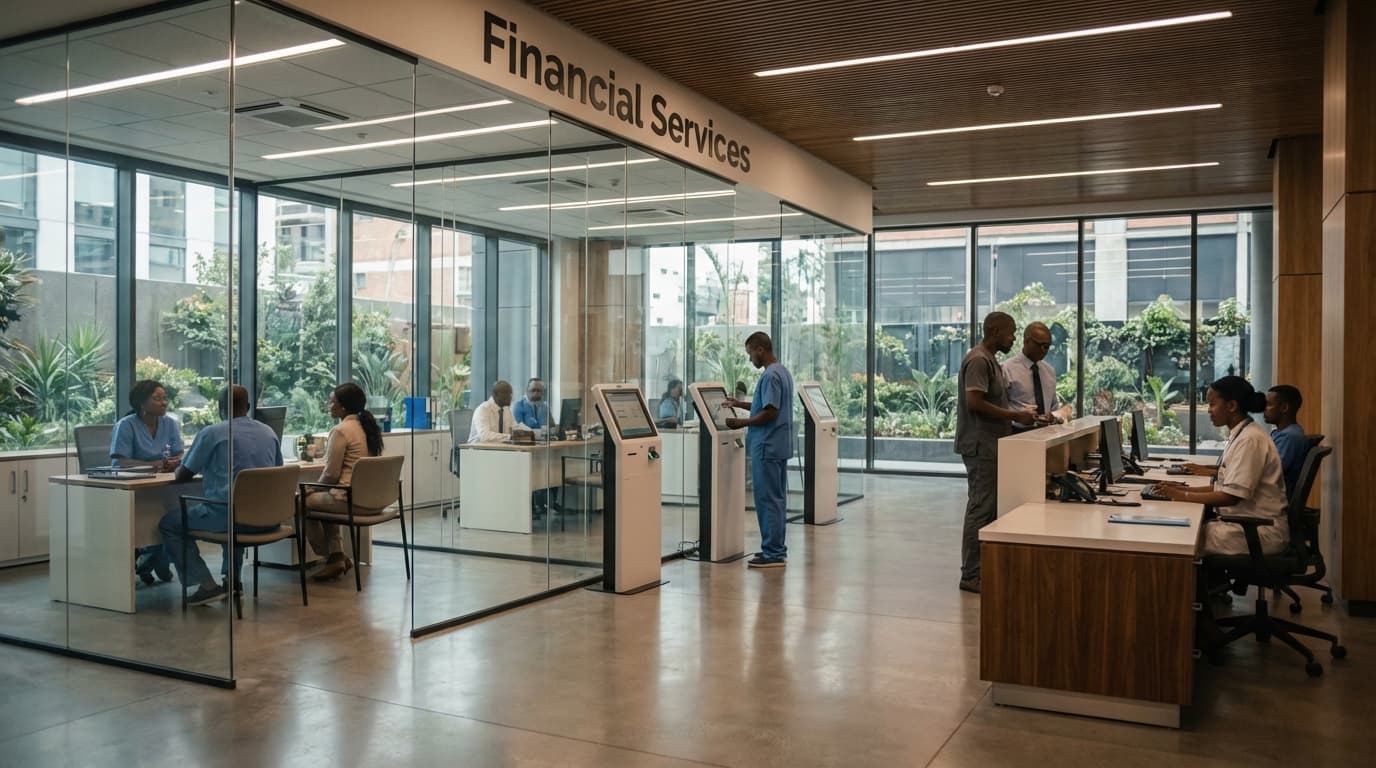
Medical Equipment Financing in Lesotho
Engineering Excellence & Technical Support
Leasing and financing solutions for medical equipment High-standard technical execution following OEM protocols and local regulatory frameworks.
Specialized Medical Equipment Financing
Access tailored financing solutions for a wide range of medical equipment, from diagnostic imaging systems to surgical instruments, specifically designed to meet the unique needs of healthcare providers in Lesotho.
Streamlined Application & Approval Process
Benefit from a simplified and expedited loan application and approval process, allowing healthcare facilities in Lesotho to acquire essential medical equipment quickly and efficiently, minimizing downtime and improving patient care.
Flexible Repayment Structures
Secure financing with adaptable repayment plans that align with your healthcare facility's cash flow, ensuring manageable debt servicing and enabling continued investment in critical medical technology throughout Lesotho.
What Is Medical Equipment Financing In Lesotho?
Medical Equipment Financing in Lesotho refers to the provision of capital, typically in the form of loans or leases, specifically for the acquisition of medical apparatus and devices by healthcare entities within the country. This service facilitates access to essential technologies that are often characterized by high upfront costs and rapid obsolescence, enabling healthcare providers to enhance diagnostic, treatment, and patient care capabilities. The financing structure is designed to be repaid over a predetermined period, with interest, or through periodic lease payments, thereby mitigating the immediate capital expenditure burden on the borrowing institution.
| Stakeholder Group | Need for Medical Equipment Financing | Typical Use Cases |
|---|---|---|
| Public Hospitals and Clinics | Limited government budgets, need for broad-spectrum equipment across various departments to serve a large patient population. | Diagnostic imaging (X-ray, ultrasound), patient monitoring systems, laboratory analyzers, surgical instruments, sterilization equipment, basic hospital beds and furniture. |
| Private Hospitals and Clinics | Desire to offer specialized services, competitive differentiation, and cater to a clientele with higher expectations for advanced medical technology. | Advanced MRI/CT scanners, specialized surgical equipment (laparoscopic, orthopedic), cardiac catheterization labs, advanced laboratory automation, high-dependency unit (HDU) and intensive care unit (ICU) equipment, dental chairs and associated technology. |
| Non-Governmental Organizations (NGOs) and Charitable Healthcare Providers | Reliance on grants and donations, need to maximize the impact of limited funds and ensure sustainable operation of their facilities. | Essential diagnostic tools for primary healthcare, basic surgical kits, maternal and child health equipment, portable diagnostic devices for outreach programs, community health center equipment. |
| Specialized Medical Centers (e.g., diagnostic labs, dialysis centers) | Need for specific, high-cost, high-volume equipment to deliver their core services efficiently and accurately. | Sophisticated pathology analyzers, high-throughput diagnostic testing machines, dialysis machines, endoscopic equipment, specialized physiotherapy equipment. |
Key Aspects of Medical Equipment Financing in Lesotho
- Purpose: To enable healthcare providers to acquire necessary medical equipment without significant immediate capital outlay.
- Mechanism: Primarily through loans (term loans, asset finance) or leasing agreements (operating leases, finance leases).
- Providers: Financial institutions, specialized equipment finance companies, and sometimes manufacturers or their authorized distributors.
- Collateral: Typically, the financed equipment itself serves as collateral, though other assets may be required.
- Repayment: Structured in regular installments (monthly, quarterly) over the financing term, inclusive of interest or lease charges.
- Ownership: In loans, ownership transfers to the borrower upon full repayment. In leases, ownership typically remains with the lessor unless a purchase option is exercised.
- Benefits: Improved patient care, increased operational efficiency, access to advanced technologies, and predictable cash flow management.
Who Needs Medical Equipment Financing In Lesotho?
Medical equipment financing in Lesotho plays a crucial role in ensuring access to quality healthcare across the nation. It bridges the gap between the significant capital investment required for modern medical technology and the operational budgets of healthcare providers. This financing mechanism allows for the acquisition of essential diagnostic, treatment, and patient care equipment, thereby enhancing diagnostic accuracy, treatment efficacy, and overall patient outcomes. By enabling a wider range of services to be offered locally, it reduces the need for patients to travel abroad for specialized care and strengthens the national healthcare infrastructure.
| Target Customer/Department | Specific Needs/Equipment Examples | Impact of Financing |
|---|---|---|
| Public Hospitals | X-ray machines, CT scanners, MRI machines, anesthesia machines, surgical equipment, laboratory analyzers, dialysis machines, ICU monitors, patient beds. | Upgrades to outdated equipment, expansion of service offerings, improved diagnostic capabilities, better patient care management, reduced reliance on overloaded central facilities. |
| Private Hospitals & Clinics | Advanced imaging systems, minimally invasive surgical tools, specialized diagnostic equipment (e.g., endoscopes, colposcopes), physiotherapy equipment, dental chairs, aesthetic equipment. | Maintaining competitiveness, offering a wider range of specialized services, attracting both local and international patients, improving patient comfort and satisfaction. |
| Diagnostic Laboratories | Automated blood analyzers, PCR machines, DNA sequencers, microscopes, incubators, centrifuges, sample preparation systems. | Increased testing capacity and speed, improved accuracy and reliability of results, introduction of new diagnostic tests, enhanced public health surveillance. |
| Specialty Medical Centers | Cardiac catheterization labs, radiotherapy units, advanced ophthalmology equipment (e.g., LASIK machines), orthopedic surgical suites, specialized physiotherapy equipment. | Enabling highly specialized treatments, improving outcomes for complex conditions, reducing patient travel for advanced care, fostering medical tourism. |
| NGOs & Community Health Initiatives | Basic diagnostic tools (e.g., portable ultrasound, basic lab kits), essential equipment for mobile clinics, maternal and child health equipment, vaccination refrigerators. | Extending healthcare reach to underserved populations, providing essential services in remote areas, supporting preventative healthcare programs, improving maternal and child mortality rates. |
| Government Health Ministries/Departments | Large-scale procurement for national health programs, essential equipment for district hospitals, emergency response vehicles with medical equipment, training simulators. | Strengthening national health infrastructure, ensuring equitable access to essential medical services, responding effectively to health emergencies, investing in workforce development. |
Who Needs Medical Equipment Financing in Lesotho? Target Customers & Departments
- Hospitals (Public & Private)
- Clinics (Rural & Urban)
- Diagnostic Laboratories
- Specialty Medical Centers (e.g., cardiology, oncology)
- Non-Governmental Organizations (NGOs) focused on health
- Government Health Ministries/Departments
Medical Equipment Financing Process In Lesotho
The medical equipment financing process in Lesotho is a multi-stage procedure designed to facilitate the acquisition of essential medical devices by healthcare institutions, both public and private. This workflow typically begins with an inquiry from a healthcare provider and culminates in the successful procurement and financing of the equipment. The process involves various stakeholders, including the healthcare institution, the financing institution (e.g., a bank, specialized leasing company), equipment suppliers, and potentially government regulatory bodies.
| Stage | Description | Key Activities | Responsible Parties | Key Outputs/Documents |
|---|---|---|---|---|
| The initial stage where a healthcare institution identifies a need for medical equipment and seeks financing options. | Contacting financing institutions, discussing equipment needs, understanding financing products, preliminary feasibility discussion. | Healthcare Institution, Potential Financing Institutions | Initial Inquiry Letter/Email, Needs Assessment Report |
| The healthcare institution formally applies for financing, providing detailed information about their organization and the equipment to be financed. | Completing financing application forms, submitting financial statements, providing organizational details, outlining equipment requirements. | Healthcare Institution | Completed Loan/Lease Application, Financial Statements, Business Plan (if applicable), Equipment Specifications |
| The financing institution evaluates the creditworthiness and financial stability of the applicant. | Reviewing financial documents, assessing credit history, conducting site visits (if necessary), verifying legal status, risk assessment. | Financing Institution | Credit Report, Risk Assessment Report, Due Diligence Findings |
| Based on the assessment, the financing institution presents a formal financing proposal outlining terms and conditions. | Developing a loan or lease agreement structure, determining interest rates/lease payments, repayment schedules, collateral requirements. | Financing Institution | Financing Proposal, Term Sheet, Draft Loan/Lease Agreement |
| The healthcare institution, in consultation with the financing institution, identifies and specifies the exact medical equipment to be procured. | Obtaining quotes from reputable suppliers, confirming technical specifications, negotiating prices, ensuring compliance with local regulations (if any). | Healthcare Institution, Equipment Supplier, Financing Institution (for approval) | Equipment Quotations, Pro-forma Invoice, Detailed Equipment Specifications |
| Formalizing the financing arrangement through legally binding contracts. | Drafting, reviewing, and signing the loan agreement or lease agreement, security agreements (if applicable), and any other required legal documents. | Financing Institution, Healthcare Institution, Legal Counsel | Signed Loan/Lease Agreement, Security Documents, Guarantees (if any) |
| The financing is released, and the equipment is purchased from the supplier. | Transfer of funds to the supplier (directly or through an escrow account), supplier delivery of equipment. | Financing Institution, Healthcare Institution, Equipment Supplier | Payment Confirmation, Delivery Note, Goods Received Note |
| The acquired equipment is installed and tested to ensure it is operational and meets specifications. | On-site installation by the supplier, testing and commissioning by trained personnel, user training. | Equipment Supplier, Healthcare Institution | Installation Report, Commissioning Certificate, Training Records |
| The healthcare institution commences repayment of the loan or lease obligations, and ongoing management of the asset. | Making regular loan/lease payments, maintaining equipment as per warranty, insurance of equipment, potential asset disposal at end of term. | Healthcare Institution, Financing Institution | Payment Records, Maintenance Logs, Insurance Certificates, Asset Disposal Records (at end of term) |
Medical Equipment Financing Workflow in Lesotho
- Inquiry and Needs Assessment
- Application Submission
- Credit Assessment and Due Diligence
- Proposal and Offer
- Equipment Sourcing and Specification
- Legal Documentation and Agreement
- Disbursement and Procurement
- Installation and Commissioning
- Repayment and Asset Management
Medical Equipment Financing Cost In Lesotho
Securing medical equipment financing in Lesotho involves navigating a landscape influenced by several key pricing factors. The overall cost is not a fixed rate but rather a dynamic sum of interest rates, loan terms, associated fees, and the specific type and value of the medical equipment being financed. Local financial institutions, including commercial banks and specialized leasing companies, are the primary providers of such financing. The economic climate of Lesotho, including inflation rates and the perceived risk associated with lending, also plays a significant role in shaping these costs. Furthermore, the borrower's creditworthiness and the collateral offered will directly impact the interest rate and terms they are offered. For specialized or high-value medical equipment, financing might also involve international suppliers or lenders, potentially introducing foreign exchange rate considerations and associated risks.
Pricing Factors:
- Interest Rates: This is the most significant component of financing costs. Rates are influenced by the central bank's monetary policy, commercial bank lending rates, and the borrower's credit risk. Variable rates are common, meaning the cost can fluctuate over the loan's life.
- Loan Tenure/Term: Longer loan terms generally result in lower monthly payments but a higher total interest paid over the life of the loan. Shorter terms mean higher monthly payments but less interest in the long run.
- Equipment Value & Type: The purchase price of the medical equipment is the principal amount of the loan. The type of equipment also matters; high-risk or rapidly depreciating assets might carry higher financing costs.
- Down Payment/Deposit: A larger down payment reduces the principal loan amount, thereby lowering the overall financing cost and potentially securing better interest rates.
- Fees: These can include origination fees, processing fees, appraisal fees (for the equipment), legal fees, and insurance premiums. These are often one-time charges but add to the initial outlay.
- Borrower's Creditworthiness: A strong credit history, consistent revenue streams, and a solid business plan can lead to more favorable interest rates and terms.
- Collateral: While the equipment itself can serve as collateral, additional collateral can reduce perceived risk for the lender, potentially leading to lower financing costs.
- Economic Conditions: Inflation, currency stability, and overall economic growth in Lesotho influence the risk appetite of lenders and thus the rates offered.
- Provider Type: Commercial banks, microfinance institutions, and specialized equipment leasing companies will have different pricing structures based on their operational costs and risk assessments.
| Financing Component | Typical Range (Lesotho Loti - M) | Notes |
|---|---|---|
| Annual Interest Rate (APR) | 15% - 25% | Highly variable based on borrower's credit, loan term, and prevailing economic conditions. Can be higher for higher-risk borrowers or specialized equipment. |
| Loan Origination/Processing Fee | 1% - 3% of loan amount | One-time fee charged at the beginning of the loan. Negotiation is possible. |
| Equipment Valuation Fee | M 1,000 - M 5,000+ | Cost to assess the value of the equipment, especially for high-value items. Varies by equipment complexity and appraiser fees. |
| Legal and Documentation Fees | M 500 - M 2,500+ | Covers legal review of agreements and preparation of loan documents. Depends on complexity and legal counsel rates. |
| Insurance Premium (Annual) | 0.5% - 2% of equipment value | Covers damage or theft of the financed equipment. Typically paid annually or monthly. |
| Total Financing Cost (Example for M 500,000 loan over 5 years) | Estimated M 150,000 - M 250,000+ | This is an illustrative total interest and fee estimate. Actual cost depends on all the factors mentioned. This assumes an average APR of 18-20% and moderate fees. |
Typical Financing Cost Components
- Interest Rate (Annual Percentage Rate - APR)
- Loan Origination/Processing Fees
- Equipment Valuation Fees
- Legal and Documentation Fees
- Insurance Premiums (for the equipment)
- Early Repayment Penalties (if applicable)
- Disbursement Fees
Affordable Medical Equipment Financing Options
Securing affordable medical equipment is crucial for healthcare providers of all sizes. Fortunately, a variety of financing options exist, including leasing, loans, and outright purchase. Beyond the initial financing choice, understanding value bundles and implementing cost-saving strategies can significantly reduce the overall expense of acquiring and maintaining medical equipment. Value bundles often package equipment with services like installation, maintenance, and training, offering a more comprehensive and potentially cost-effective solution than sourcing these components separately. Cost-saving strategies can range from negotiating bulk discounts and exploring refurbished options to prioritizing equipment with lower operating costs and implementing robust preventive maintenance programs.
| Strategy | Description | Benefits | Considerations |
|---|---|---|---|
| Value Bundles | Packaging equipment with services (installation, maintenance, training, software updates) into a single offering. | Simplified procurement, potentially lower bundled price, integrated support. | Ensure all included services are needed and competitively priced within the bundle. |
| Negotiate Bulk Discounts | Purchasing multiple pieces of equipment or a large volume of consumables from a single vendor. | Reduced per-unit cost, streamlined purchasing process. | Requires careful forecasting of needs to avoid overstocking. |
| Explore Refurbished Equipment | Acquiring pre-owned equipment that has been professionally inspected, repaired, and certified. | Significant cost savings compared to new equipment, often comes with a warranty. | Verify the vendor's reputation and the extent of refurbishment and warranty provided. |
| Prioritize Energy Efficiency & Lower Operating Costs | Selecting equipment with lower energy consumption and reduced consumable requirements. | Reduced utility bills, lower ongoing supply expenses. | May involve a slightly higher initial purchase price. |
| Implement Preventive Maintenance | Regularly scheduled maintenance to identify and address potential issues before they lead to costly breakdowns. | Extended equipment lifespan, reduced downtime, avoidance of emergency repair costs. | Requires investment in a maintenance plan or skilled in-house technicians. |
| Lease vs. Buy Analysis | Comparing the total cost of leasing versus purchasing over the equipment's expected useful life. | Informed decision-making, optimized cash flow, avoids obsolescence risk (with leasing). | Requires detailed calculation of all associated costs for both options. |
| Vendor Negotiation & Comparison | Actively negotiating prices and terms with multiple vendors and comparing their offerings. | Achieving competitive pricing, securing favorable contract terms. | Requires time and effort to research and engage with vendors. |
Key Medical Equipment Financing Options
- Leasing: Offers lower upfront costs, predictable monthly payments, and the ability to upgrade equipment more frequently. Different lease types include operating leases and capital leases.
- Loans: Traditional financing that results in ownership of the equipment. Interest rates and terms vary depending on the lender and the borrower's creditworthiness.
- Outright Purchase: The simplest method, requiring full payment upfront. This is most feasible for smaller, less expensive items or when significant capital is readily available.
- Rentals: Ideal for short-term needs or for equipment that is rarely used. This avoids long-term commitment and large capital outlays.
Verified Providers In Lesotho
In Lesotho, the landscape of healthcare is constantly evolving, and choosing a reliable provider is paramount for individual and community well-being. Franance Health has emerged as a leading force, distinguished by its unwavering commitment to quality, accessibility, and patient-centered care. This document outlines Franance Health's key credentials and explains why they represent the best choice for healthcare services in Lesotho.
| Credential/Attribute | Franance Health's Offering | Benefit to Patients in Lesotho |
|---|---|---|
| Regulatory Compliance | Adherence to Ministry of Health regulations and potentially international standards. | Ensures services meet established benchmarks for safety, efficacy, and quality of care. |
| Medical Expertise | Employs licensed, experienced, and continuously trained healthcare professionals. | Patients receive care from competent individuals, leading to better diagnostic accuracy and treatment outcomes. |
| Service Breadth | Offers a full range of medical services, from general check-ups to specialist consultations. | Provides convenience and continuity of care, reducing the need for patients to seek services from multiple providers. |
| Patient Experience | Focuses on empathy, clear communication, and personalized care plans. | Builds trust and confidence, leading to higher patient satisfaction and engagement in their health journey. |
| Infrastructure | Utilizes modern medical equipment and well-maintained facilities. | Facilitates accurate diagnoses and efficient, effective treatments. |
| Community Impact | Engages in health awareness campaigns and outreach programs. | Contributes to the overall health literacy and well-being of the population. |
| Financial Accessibility | Aims to offer reasonable pricing and flexible payment options. | Makes essential healthcare services more attainable for a broader segment of the Lesotho population. |
Franance Health Credentials and Why They Are the Best Choice
- Accreditation and Certifications: Franance Health adheres to stringent national and international healthcare standards, holding [mention specific accreditation bodies or certifications if known, e.g., Ministry of Health approval, ISO certification, etc.]. This signifies a dedication to operational excellence and patient safety.
- Experienced and Qualified Medical Professionals: The backbone of Franance Health is its team of highly skilled and experienced doctors, nurses, specialists, and support staff. All professionals are licensed and continuously trained to stay abreast of the latest medical advancements and best practices.
- Comprehensive Service Offerings: Franance Health provides a wide spectrum of medical services, ranging from primary care and diagnostics to specialized treatments and preventative health programs. This integrated approach ensures that patients can receive a continuum of care under one roof.
- Patient-Centric Approach: At Franance Health, the patient is always at the center of care. This is reflected in their emphasis on clear communication, compassionate service, and personalized treatment plans tailored to individual needs and circumstances.
- State-of-the-Art Facilities and Technology: Franance Health invests in modern medical equipment and technologies to ensure accurate diagnoses and effective treatments. Their facilities are designed to be clean, comfortable, and conducive to healing.
- Community Engagement and Outreach: Beyond clinical services, Franance Health is deeply committed to the health and well-being of the wider Lesotho community. They actively participate in health education initiatives and outreach programs.
- Commitment to Affordability and Accessibility: Recognizing the diverse economic landscape of Lesotho, Franance Health strives to make quality healthcare accessible and affordable through various payment options and potential partnerships.
- Strong Track Record and Positive Patient Feedback: Franance Health has built a reputation for reliability and quality, evidenced by consistently positive feedback from satisfied patients and their families.
- Ethical Practices and Integrity: Upholding the highest ethical standards is a cornerstone of Franance Health's operations, ensuring transparency, honesty, and respect in all patient interactions.
Scope Of Work For Medical Equipment Financing
This Scope of Work (SOW) outlines the technical deliverables and standard specifications required for medical equipment financing. The objective is to ensure that financed medical equipment meets industry standards, is fit for purpose, and supports the operational needs of the healthcare facility. This document will cover the technical requirements for acquisition, installation, commissioning, and initial maintenance of the specified medical equipment. It also defines the reporting and documentation requirements throughout the financing lifecycle.
| Category | Standard Specification | Compliance Requirement | Verification Method |
|---|---|---|---|
| Imaging Equipment (e.g., MRI, CT Scanner) | Resolution (e.g., line pairs/mm), Signal-to-Noise Ratio (SNR), Contrast-to-Noise Ratio (CNR), Scan time, Radiation dose limits (if applicable) | Must meet or exceed manufacturer's published specifications and relevant diagnostic imaging standards (e.g., ACR guidelines, IEC 60601 series) | Pre-installation site survey, factory acceptance testing (FAT), site acceptance testing (SAT), performance validation reports, independent physicist review |
| Surgical Equipment (e.g., Electrosurgical Units, Surgical Lasers) | Power output accuracy, waveform control, safety features (e.g., patient return electrode monitoring), emission wavelength (for lasers) | Must comply with relevant surgical device standards (e.g., IEC 60601-2-2 for ESU, IEC 60825 for lasers) | Manufacturer's performance data, FAT, SAT, clinical user verification |
| Laboratory Equipment (e.g., Analyzers, Microscopes) | Accuracy, precision, throughput, detection limits, calibration standards, optical resolution (for microscopes) | Must meet CLIA regulations, ISO 15189 standards, and manufacturer's specifications | Manufacturer's validation data, external quality assessment (EQA) participation, calibration certificates, QC logs, SAT |
| Patient Monitoring Systems | Parameter accuracy (e.g., SpO2, ECG, NIBP), alarm functionality, data display resolution, connectivity standards (e.g., HL7) | Must comply with IEC 60601 series, manufacturer's specifications, and relevant network interoperability standards | FAT, SAT, integration testing with EMR/HIS, end-user validation |
| Sterilization Equipment (e.g., Autoclaves) | Temperature, pressure, cycle time, validation parameters (e.g., Bowie-Dick test, biological indicators), material compatibility | Must meet ISO 17665, AAMI ST guidelines, and manufacturer's specifications | Installation qualification (IQ), operational qualification (OQ), performance qualification (PQ), daily/weekly/monthly validation tests |
Key Technical Deliverables
- Detailed technical specifications for each piece of medical equipment to be financed, aligned with current industry standards and regulatory requirements.
- Manufacturer's technical documentation, including user manuals, service manuals, and installation guides.
- Certificates of origin and compliance with relevant international and national safety and performance standards (e.g., IEC, FDA, CE marking).
- Proof of successful installation and integration with existing healthcare IT systems (if applicable).
- Evidence of successful commissioning and performance testing, demonstrating that the equipment meets or exceeds specified technical parameters.
- Warranty documentation from the manufacturer, clearly outlining coverage, duration, and service response times.
- Training materials and records for clinical and technical staff on the operation and basic maintenance of the equipment.
- Maintenance and service plan for the initial warranty period, outlining preventive maintenance schedules and procedures.
- Asset tagging and inventory management documentation for all financed equipment.
Service Level Agreement For Medical Equipment Financing
This Service Level Agreement (SLA) outlines the guaranteed response times and uptime for the medical equipment financed under the agreement. It defines the responsibilities of both parties in ensuring the reliable operation of the equipment and timely resolution of any issues. This SLA is an integral part of the overarching Medical Equipment Financing Agreement.
| Service Level | Definition | Guaranteed Metric | Measurement Period | Remedy for Non-Compliance |
|---|---|---|---|---|
| Emergency Critical Equipment Response Time | Critical equipment failure that immediately impacts patient care and poses an immediate risk. | 2 hours (acknowledgement and commencement of support) | 24x7x365 | Service credit of 5% of monthly financing fee for each incident exceeding the guaranteed response time. |
| Routine Equipment Response Time | Non-critical equipment issues that do not immediately impact patient care but require attention. | 8 business hours (acknowledgement and commencement of support) | Business Hours (9 AM - 5 PM, Monday-Friday, excluding public holidays) | Service credit of 2% of monthly financing fee for each incident exceeding the guaranteed response time. |
| Critical Equipment Resolution Time | Restoration of critical equipment to full operational status. | 8 business hours (from acknowledgement) | 24x7x365 | Service credit of 10% of monthly financing fee for each incident exceeding the guaranteed resolution time. Further penalties may apply for repeated or prolonged failures. |
| Routine Equipment Resolution Time | Restoration of routine equipment to full operational status. | 48 business hours (from acknowledgement) | Business Hours | Service credit of 5% of monthly financing fee for each incident exceeding the guaranteed resolution time. |
| Uptime Guarantee (Critical Equipment) | Ensuring essential medical equipment is available for patient care. | 99.5% | Monthly | Service credit of 5% of monthly financing fee for each full 0.1% shortfall below the guaranteed uptime. |
| Uptime Guarantee (Routine Equipment) | Ensuring non-essential medical equipment is available for its intended purpose. | 98.0% | Monthly | Service credit of 3% of monthly financing fee for each full 0.1% shortfall below the guaranteed uptime. |
Key Performance Indicators (KPIs)
- Response Time: The maximum time allowed for the service provider to acknowledge and begin addressing a reported issue.
- Resolution Time: The maximum time allowed for the service provider to resolve a reported issue, restoring the equipment to its agreed-upon operational state.
- Uptime Guarantee: The minimum percentage of time the medical equipment is expected to be operational and available for use.
- Downtime: Any period during which the medical equipment is not operational and available for use, excluding scheduled maintenance.
- Scheduled Maintenance: Planned periods for preventative maintenance or upgrades, agreed upon in advance by both parties.
Frequently Asked Questions

Ready when you are
Let's scope your Medical Equipment Financing in Lesotho project in Lesotho.

Scaling healthcare logistics and technical systems across the entire continent.