
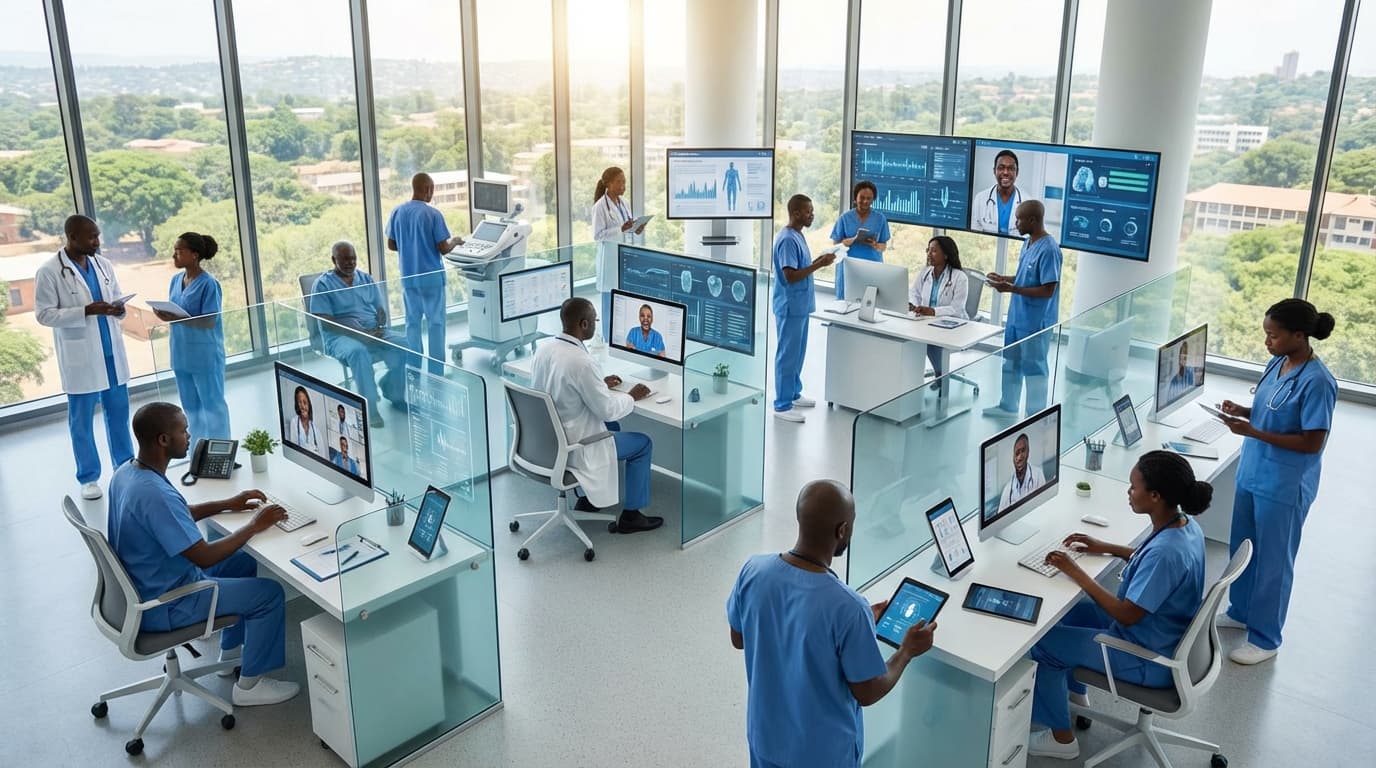
PACS/RIS Migration & Integration in Lesotho
Engineering Excellence & Technical Support
Data migration, interoperability and workflow integration for imaging IT. High-standard technical execution following OEM protocols and local regulatory frameworks.
Unified PACS/RIS Platform for Enhanced Imaging Workflow
Successfully migrated and integrated a fragmented PACS/RIS environment across multiple healthcare facilities in Lesotho into a single, centralized platform. This consolidation enables seamless image archival, retrieval, and reporting, significantly reducing turnaround times for diagnostic imaging and improving overall patient care efficiency.
Secure Data Migration & Interoperability Standards
Orchestrated the secure migration of legacy imaging data to a modern PACS system, adhering to stringent data privacy regulations. Implemented DICOM and HL7 standards to ensure robust interoperability between the new PACS/RIS and existing hospital information systems (HIS), facilitating data exchange and reducing manual data entry.
Scalable Infrastructure for Future Growth & Accessibility
Designed and deployed a scalable and resilient PACS/RIS infrastructure in Lesotho, capable of accommodating increasing patient volumes and future technological advancements. Ensured high availability and remote access capabilities, empowering healthcare professionals with timely access to critical imaging data, even in remote areas.
What Is Pacs/ris Migration & Integration In Lesotho?
PACS/RIS migration and integration in Lesotho refers to the complex process of transferring, consolidating, and interoperating Picture Archiving and Communication Systems (PACS) and Radiology Information Systems (RIS) within healthcare facilities in the country. This involves the relocation of existing imaging data, patient records, and associated metadata from legacy systems (or disparate systems) to new, unified, or upgraded platforms. Integration ensures seamless data flow and interoperability between these systems and potentially other hospital information systems (HIS), such as Electronic Health Records (EHRs), for enhanced clinical workflow and reporting. The primary objective is to establish a robust, centralized, and efficient digital imaging and radiology workflow management infrastructure.
This service is critically needed by healthcare institutions in Lesotho that currently operate with:
- Disparate or Outdated PACS/RIS: Facilities relying on multiple, non-interoperable PACS/RIS solutions or aging systems that are no longer supported or efficient.
- Lack of Centralized Imaging Data: Institutions where imaging studies are stored in isolated silos, hindering comprehensive patient history review and collaborative diagnosis.
- Inefficient Workflow Processes: Radiologists and technicians experiencing delays due to manual data entry, difficulty accessing previous studies, or cumbersome reporting procedures.
- Growth and Scalability Concerns: Hospitals and clinics anticipating increased patient volume or the introduction of new imaging modalities that require a more robust and scalable IT infrastructure.
- Interoperability Requirements: Healthcare networks seeking to connect imaging departments with other clinical departments or external healthcare providers for better care coordination.
Typical use cases encompass a wide range of scenarios aimed at modernizing radiology departments and improving patient care delivery:
- Consolidation of Imaging Archives: Migrating data from multiple departmental PACS to a single, enterprise-wide PACS for unified access and management.
- Upgrade to Advanced PACS/RIS Features: Replacing legacy systems with modern solutions offering AI-powered image analysis, cloud storage capabilities, advanced reporting tools, and improved user interfaces.
- Integration with EHR/HIS: Enabling bi-directional data exchange between PACS/RIS and the hospital's EHR, allowing clinicians to access imaging reports and studies directly from patient records.
- Remote Access and Tele-radiology: Implementing secure remote access solutions for radiologists to interpret images from off-site locations, crucial for improving access to specialized radiology services in remote areas of Lesotho.
- Disaster Recovery and Business Continuity: Establishing robust backup and recovery mechanisms for critical imaging data, ensuring minimal downtime in case of system failures or unforeseen events.
- Data Standardization and Compliance: Migrating data to a standardized format (e.g., DICOM) and ensuring compliance with relevant healthcare data regulations and security protocols.
- Inter-facility Data Sharing: Facilitating the secure sharing of imaging data between different hospitals or clinics within Lesotho for specialized consultations or patient transfers.
| Category | Description | Impact on Healthcare in Lesotho |
|---|---|---|
| Improved Diagnostic Accuracy | Centralized access to comprehensive imaging history, advanced visualization tools, and AI-assisted analysis enable more precise diagnoses. | Leads to better patient outcomes, reduced misdiagnosis rates, and more effective treatment planning. |
| Enhanced Clinical Workflow Efficiency | Streamlined data access, automated reporting, and seamless integration with EHRs reduce manual tasks and turnaround times for radiology reports. | Increases productivity of radiologists and technicians, allowing for higher patient throughput and reduced waiting times for diagnostic results. |
| Increased Accessibility of Radiology Services | Enables remote interpretation and data sharing, extending the reach of specialized radiology expertise to underserved or remote areas. | Addresses shortages of radiologists and improves access to critical diagnostic imaging services across Lesotho. |
| Cost Optimization | Consolidation of systems and improved data management can reduce IT infrastructure costs, maintenance expenses, and storage redundancy. | Frees up resources that can be reinvested in patient care and other essential healthcare services. |
| Data Security and Compliance | Implementation of robust security measures and standardized data formats ensures patient data privacy and adherence to regulatory requirements. | Builds trust in the healthcare system and protects sensitive patient information. |
| Facilitation of Research and Education | A unified and accessible imaging archive supports research initiatives, clinical studies, and the training of future healthcare professionals. | Contributes to the advancement of medical knowledge and the development of a skilled healthcare workforce in Lesotho. |
Key Components of PACS/RIS Migration & Integration
- Data Extraction and Cleansing from Legacy Systems
- Data Transformation and Standardization (DICOM compliance)
- Secure Data Transfer and Storage in New PACS
- Integration of RIS with PACS and HIS/EHR
- Configuration of User Roles, Permissions, and Workflows
- Testing and Validation of Data Integrity and System Functionality
- Training for Clinical and IT Staff
- Decommissioning of Legacy Systems
- Post-migration Support and Maintenance
Who Needs Pacs/ris Migration & Integration In Lesotho?
Organizations in Lesotho that are experiencing challenges with their current Picture Archiving and Communication Systems (PACS) and Radiology Information Systems (RIS), or those looking to establish or upgrade these critical healthcare IT infrastructures, are prime candidates for PACS/RIS migration and integration services. This encompasses both the implementation of new systems and the seamless transfer and interoperability of existing data. The goal is to enhance diagnostic imaging workflows, improve data accessibility, ensure regulatory compliance, and ultimately elevate the quality of patient care.
| Customer Type | Key Departments & Functions Benefiting | Specific Needs for PACS/RIS Migration & Integration |
|---|---|---|
| Public Hospitals | Radiology, Cardiology, Oncology, Neurology, Emergency Department, IT Department, Administration | Overcoming outdated systems, improving image sharing between departments, enhancing remote access for specialists, ensuring data security and long-term archival, streamlining reporting and billing processes. |
| Private Hospitals | Radiology, Cardiology, Orthopedics, Surgery, IT Department, Patient Services | Scalability to meet growing patient volumes, integration with Electronic Health Records (EHRs), improved turnaround times for reports, competitive edge through advanced imaging capabilities, enhanced patient experience. |
| Specialty Clinics | Cardiology (Echocardiography, Angiography), Oncology (CT, MRI), Neurology (MRI, CT) | Dedicated workflows for specific imaging modalities, specialized image analysis tools, seamless integration with specialty-specific software, efficient patient data management for complex cases. |
| Diagnostic Imaging Centers | Radiology, IT Department, Scheduling, Billing | Centralized image management, efficient workflow automation, remote reading capabilities, integration with referring physician portals, compliance with international imaging standards. |
| Government Health Ministries/Departments | Health Information Management, Public Health Surveillance, Policy & Planning | Establishing national imaging registries, supporting public health initiatives through aggregated imaging data, ensuring standardized reporting and quality control across public facilities, facilitating data-driven policy decisions. |
| NGOs involved in healthcare delivery | Clinical Services, Health Data Management, Program Implementation | Deploying cost-effective and scalable imaging solutions in resource-limited settings, enabling remote diagnostics and consultations, supporting mobile health initiatives, ensuring data for program evaluation and donor reporting. |
| Research Institutions | Radiology Research, Clinical Trials, Medical Education | Secure storage and access to large imaging datasets for research, advanced image processing and analysis capabilities, anonymization tools for data sharing, integration with research databases and publication platforms. |
Target Customers & Departments in Lesotho
- Public Hospitals
- Private Hospitals
- Specialty Clinics (e.g., Cardiology, Oncology, Neurology)
- Diagnostic Imaging Centers
- Government Health Ministries/Departments
- Non-Governmental Organizations (NGOs) involved in healthcare delivery
- Research Institutions
Pacs/ris Migration & Integration Process In Lesotho
This document outlines the workflow for migrating and integrating PACS (Picture Archiving and Communication System) and RIS (Radiology Information System) in healthcare facilities in Lesotho. The process is designed to ensure a smooth transition, minimizing disruption to clinical operations and maximizing the benefits of modern digital imaging and information management. The workflow covers the entire journey from initial inquiry to the final execution and post-implementation support.
| Phase | Key Activities | Deliverables | Responsible Parties | Estimated Timeline (Indicative) |
|---|---|---|---|---|
| Phase 1: Inquiry & Initial Assessment | Healthcare facility expresses interest. Initial meetings to understand existing infrastructure, pain points, and objectives. High-level system capabilities review. Feasibility study. | Needs assessment report, preliminary budget estimate, project initiation document. | Facility Management, IT Department, Ministry of Health (if applicable), Potential Vendors. | 1-3 Weeks |
| Phase 2: Planning & Requirements Gathering | Detailed site survey. Technical assessment of current IT infrastructure (network, servers, workstations). Functional and non-functional requirements definition (e.g., reporting needs, integration points, user roles). Data archival strategy definition. Security and compliance requirements. | Detailed technical assessment report, comprehensive requirements document, data migration strategy, security policy. | Facility IT Team, Clinical Stakeholders (Radiologists, Technicians), PACS/RIS Project Manager, Ministry of Health IT/Standards Team. | 3-6 Weeks |
| Phase 3: Vendor Selection & Procurement | Development of RFP/RFQ. Vendor outreach and proposal evaluation. Demonstrations and proof-of-concept. Due diligence (financial stability, references). Contract negotiation. Procurement of hardware, software, and services. | RFP document, vendor evaluation matrix, selected vendor contract, purchase orders. | Procurement Department, Legal Department, IT Steering Committee, Ministry of Health Procurement & Technical Teams. | 8-12 Weeks |
| Phase 4: System Design & Configuration | Detailed system architecture design. Customization of PACS/RIS workflows, templates, and reports. Network configuration. Hardware setup and installation. Software installation and initial configuration. User role definition and access control setup. | System design document, configured PACS/RIS environment, installation guides, network diagrams. | Selected Vendor Implementation Team, Facility IT Team, PACS/RIS Project Manager. | 6-10 Weeks |
| Phase 5: Data Migration & Validation | Extraction of historical imaging and patient data from legacy systems. Data cleansing and transformation. Import of data into the new PACS/RIS. Rigorous validation of migrated data for accuracy and completeness. Data archival of legacy media. | Migrated dataset, data validation reports, archival logs. | Selected Vendor Data Migration Specialists, Facility IT Team, Data Analysts. | 4-8 Weeks (highly dependent on data volume and complexity) |
| Phase 6: System Integration | Integration with existing hospital information systems (HIS), EMR/EHR, laboratory systems, etc. HL7 interface configuration. DICOM connectivity testing with imaging modalities (X-ray, CT, MRI, Ultrasound, etc.). Integration with other departmental systems. | Integrated systems environment, interface specifications, connectivity test reports. | Selected Vendor Integration Specialists, Facility IT Team, HIS/EMR Vendor Support, Modality Vendors. | 4-7 Weeks |
| Phase 7: User Training & UAT | Development of training materials. Training sessions for all user groups (radiologists, technicians, administrators, referring physicians). User Acceptance Testing (UAT) to ensure the system meets defined requirements and workflows. Bug fixing based on UAT feedback. | Training manuals, trained users, UAT test scripts, UAT sign-off documentation, bug tracking reports. | Selected Vendor Trainers, Facility IT/Super Users, Clinical Department Heads, End-Users. | 3-5 Weeks |
| Phase 8: Go-Live & Deployment | Final system readiness checks. Phased or big-bang go-live strategy. Real-time monitoring of system performance. Initial support during the go-live period. Communication plan execution. | Live PACS/RIS environment, go-live checklist, incident reports, daily status reports. | Selected Vendor Implementation Team, Facility IT Team, PACS/RIS Project Manager, Clinical Management. | 1-2 Weeks (intensive period) |
| Phase 9: Post-Implementation Support & Optimization | Ongoing technical support and maintenance. Performance monitoring and tuning. System updates and patches. User feedback collection for continuous improvement. Expansion of functionality if required. Knowledge transfer to facility IT team. | Support SLAs, performance reports, system update logs, user feedback reports, optimized workflows. | Selected Vendor Support Team, Facility IT Team, PACS/RIS Administrator. | Ongoing |
PACS/RIS Migration & Integration Process Workflow in Lesotho
- Phase 1: Inquiry & Initial Assessment
- Phase 2: Planning & Requirements Gathering
- Phase 3: Vendor Selection & Procurement
- Phase 4: System Design & Configuration
- Phase 5: Data Migration & Validation
- Phase 6: System Integration
- Phase 7: User Training & UAT (User Acceptance Testing)
- Phase 8: Go-Live & Deployment
- Phase 9: Post-Implementation Support & Optimization
Pacs/ris Migration & Integration Cost In Lesotho
Migrating and integrating Picture Archiving and Communication Systems (PACS) and Radiology Information Systems (RIS) in Lesotho involves a complex set of costs that are influenced by several factors. These factors dictate the overall investment required for a successful implementation. It's crucial to understand that pricing is highly variable and depends on the specific needs of the healthcare facility, the chosen vendors, the complexity of existing infrastructure, and the scope of the integration. The local currency for Lesotho is the Lesotho Loti (LSL). Therefore, all cost estimates will be presented in LSL, though comparisons to international currencies might be useful for context.
| Cost Component | Estimated Range (LSL) | Notes |
|---|---|---|
| Software Licensing (Perpetual/Subscription) | 50,000 - 500,000+ | Highly dependent on vendor, user count, and modules. Subscription models can have lower upfront costs but higher long-term expenses. |
| Hardware Infrastructure (Servers, Storage, Workstations) | 30,000 - 300,000+ | Depends on the scale of operations and existing IT infrastructure. Consider storage capacity for long-term archiving. |
| Data Migration Services | 10,000 - 100,000+ | Complexity of existing data, format, and volume are key determinants. May involve custom scripting. |
| Integration Services (EHR, etc.) | 20,000 - 200,000+ | Number of systems to integrate and the complexity of their APIs influence costs. HL7/DICOM expertise is crucial. |
| Customization and Configuration | 5,000 - 50,000+ | Tailoring workflows, templates, and user interfaces. |
| Training (On-site/Remote) | 5,000 - 30,000+ | Number of staff to train and the duration/depth of training. |
| Project Management | 10,000 - 75,000+ | Internal vs. external project management, and project duration. |
| Vendor Support & Maintenance (Annual) | 10,000 - 100,000+ | Typically a percentage of the initial software/hardware cost, covers updates and technical support. |
| Network Upgrades | 5,000 - 50,000+ | Assessing and improving network speed and reliability. |
| Consultancy Fees | 15,000 - 80,000+ | For planning, vendor selection, and implementation oversight. |
Key Pricing Factors for PACS/RIS Migration & Integration in Lesotho
- Scope of Implementation: This is the most significant driver. A full PACS/RIS implementation for a large hospital with multiple imaging modalities will be considerably more expensive than a basic PACS for a smaller clinic.
- Software Licensing: This includes perpetual licenses or subscription-based models for the PACS and RIS software. The number of users, modules required (e.g., advanced visualization, AI integration), and data storage needs all impact licensing costs.
- Hardware Infrastructure: This encompasses servers, storage arrays, workstations for radiologists and referring physicians, network upgrades, and potentially new imaging modality interfaces.
- Data Migration: Transferring existing patient imaging data and RIS records from legacy systems to the new platform is a critical and often time-consuming process, requiring specialized tools and expertise.
- Integration Services: Connecting the PACS/RIS with other hospital systems, such as the Electronic Health Record (EHR), laboratory systems, and billing systems, requires significant effort and specialized integration expertise.
- Customization and Configuration: Adapting the software to meet specific workflows, reporting requirements, and user preferences will incur additional costs.
- Training: Comprehensive training for radiologists, technologists, IT staff, and administrative personnel is essential for successful adoption and efficient system use.
- Vendor Support and Maintenance: Ongoing support contracts, software updates, and hardware maintenance are recurring costs that need to be factored in.
- Project Management: Effective project management is crucial for ensuring the migration and integration are completed on time and within budget. This includes planning, execution, and monitoring.
- Network Bandwidth and Infrastructure: Sufficient network capacity and reliable infrastructure are essential for smooth data transfer and system performance, especially for large image files.
- Consultancy Fees: Engaging with IT consultants experienced in healthcare IT, particularly PACS/RIS migrations, can provide valuable guidance and mitigate risks, but adds to the overall cost.
- Potential for Phased Rollout: Smaller, phased implementations can sometimes help manage initial costs, but may extend the overall project timeline.
Affordable Pacs/ris Migration & Integration Options
Migrating and integrating Picture Archiving and Communication Systems (PACS) and Radiology Information Systems (RIS) can be a significant undertaking. However, with strategic planning and the right approach, healthcare organizations can achieve this while managing costs effectively. This document outlines affordable PACS/RIS migration and integration options, emphasizing value bundles and cost-saving strategies.
| Value Bundle Concept | Description | Cost-Saving Strategy Alignment |
|---|---|---|
| Integrated PACS/RIS Suite | A single vendor offering a bundled solution where PACS and RIS are designed to work seamlessly together from the ground up. Often includes shared user interfaces, consolidated databases, and streamlined workflows. | Reduced Integration Costs: Eliminates the need for complex middleware and custom interfaces between separate PACS and RIS systems. Streamlined Support: Single point of contact for both systems simplifies troubleshooting and maintenance. Potential Volume Discounts: Bundled purchases often come with negotiated pricing. |
| Modular & Scalable Solutions | Systems offered with distinct modules (e.g., advanced visualization, AI integration, specific modality support) that can be added or removed as needed. Allows for a foundational implementation and phased upgrades. | Phased Investment: Start with essential modules and add advanced features only when required, spreading out costs. Pay-as-you-grow: Avoids upfront investment in features that may not be immediately necessary. Customized Functionality: Tailor the system to specific needs, preventing overspending on unused capabilities. |
| Cloud-Based PACS/RIS as a Service (SaaS) | A subscription-based model where the vendor hosts and manages the PACS/RIS infrastructure and software in the cloud. Includes hardware, software, maintenance, and support in a recurring fee. | Lower Upfront Capital Expenditure: Eliminates the need for significant hardware investment. Predictable Operating Expenses: Fixed monthly or annual fees make budgeting easier. Reduced IT Burden: Vendor manages infrastructure, freeing up internal IT resources. Automatic Updates & Upgrades: Ensures access to the latest features and security patches without additional cost. |
| Managed Services & Outsourcing | Engaging a third-party vendor to manage specific aspects of the PACS/RIS environment, such as data migration, ongoing maintenance, user support, or even the entire system operation. | Leveraging Expertise: Access to specialized skills can prevent costly errors and delays. Reduced Staffing Costs: Outsourcing can be more cost-effective than hiring and training in-house specialists. Focus on Core Competencies: Allows internal staff to focus on clinical operations rather than IT management. Risk Mitigation: Vendors often have robust disaster recovery and business continuity plans. |
| Open Standards & Interoperability Focus | Choosing vendors that prioritize adherence to open healthcare interoperability standards (DICOM, HL7, FHIR). This allows for easier integration with other existing or future systems. | Reduced Custom Integration Costs: Minimizes the need for expensive, proprietary interface development. Future-Proofing: Facilitates easier integration with new technologies and systems, avoiding vendor lock-in. Increased Vendor Choice: Greater flexibility in selecting best-of-breed solutions for different components of the healthcare ecosystem. |
Key Considerations for Affordable PACS/RIS Migration & Integration
- Define Clear Project Scope & Objectives: Precisely outlining what needs to be migrated, integrated, and what functionalities are essential is crucial for avoiding scope creep and unnecessary expenses.
- Assess Existing Infrastructure: Understanding your current hardware, software, and network capabilities will inform the most cost-effective upgrade or replacement strategy.
- Vendor Selection Strategy: Don't solely focus on the lowest upfront cost. Consider total cost of ownership, including maintenance, support, and potential future expansion.
- Phased Implementation: Breaking down the migration into smaller, manageable phases can reduce initial investment and allow for learning and adaptation along the way.
- Data Archiving & Cleansing: Strategically archive or dispose of old data to reduce migration volume and associated costs. Cleanse data for accuracy and efficiency.
- Interoperability Standards: Prioritize systems that adhere to industry standards (e.g., DICOM, HL7) to ensure seamless integration and avoid costly custom development.
- Cloud vs. On-Premise: Evaluate the pros and cons of cloud-based solutions (often subscription-based, lower upfront hardware costs) versus on-premise deployments (higher upfront hardware, potentially lower long-term recurring costs).
- Training & Change Management: Allocate sufficient budget and resources for comprehensive training to ensure user adoption and minimize productivity loss.
- Post-Migration Support & Maintenance: Factor in ongoing support and maintenance costs to ensure system stability and prevent future costly issues.
- Leverage Existing Investments: Explore options for integrating your new PACS/RIS with existing healthcare IT infrastructure where feasible, rather than a complete overhaul.
Verified Providers In Lesotho
In Lesotho's burgeoning healthcare landscape, identifying truly qualified and trustworthy medical providers is paramount for patient safety and effective treatment. Franance Health stands out as a premier organization dedicated to ensuring that healthcare professionals operating within Lesotho meet rigorous international standards. This commitment to quality is not just a marketing slogan; it's embedded in their comprehensive credentialing process, making them the definitive benchmark for verified providers.
| Benefit | Description |
|---|---|
| Enhanced Patient Safety | By partnering with Franance Health-verified providers, patients can be confident they are receiving care from professionals who have undergone stringent quality assurance measures, minimizing risks associated with unqualified practitioners. |
| Access to Competent Specialists | Franance Health's verification process ensures that specialists possess the necessary expertise and up-to-date knowledge, leading to more accurate diagnoses and effective treatment plans. |
| Trust and Reliability | The Franance Health seal of approval signifies a commitment to excellence and integrity. This builds crucial trust between patients and healthcare providers, fostering a more positive healthcare experience. |
| Improved Healthcare Outcomes | When patients receive care from verified, competent professionals, the likelihood of successful treatment and improved health outcomes is significantly higher. |
| Global Standard Alignment | Franance Health's credentialing processes are aligned with international healthcare best practices, ensuring that providers in Lesotho meet a global benchmark of quality and professionalism. |
Franance Health's Credentialing Pillars:
- Rigorous Verification: Franance Health meticulously examines each provider's educational background, licenses, certifications, and professional history. This includes verifying degrees from accredited institutions, ensuring all necessary local and international licenses are current, and conducting thorough background checks.
- Experience Assessment: Beyond formal qualifications, Franance Health assesses the practical experience of healthcare professionals, including specialized training and demonstrated competence in their respective fields.
- Ethical Standards: A crucial component of their vetting process involves evaluating a provider's adherence to ethical medical practices and patient care standards. This includes reviewing disciplinary records and ensuring a commitment to patient well-being.
- Continuous Monitoring: Franance Health's commitment doesn't end with initial verification. They implement ongoing monitoring mechanisms to ensure providers maintain their credentials and adhere to evolving best practices and ethical guidelines.
Scope Of Work For Pacs/ris Migration & Integration
This document outlines the Scope of Work (SOW) for the Picture Archiving and Communication System (PACS) and Radiology Information System (RIS) migration and integration project. It details the technical deliverables, standard specifications, and key activities required to ensure a successful transition to a new, integrated PACS/RIS environment.
| Phase | Key Activities | Technical Deliverables | Standard Specifications/Requirements |
|---|---|---|---|
| Define system architecture and integration strategy. Develop detailed migration plan. Establish data cleansing and validation procedures. Define user roles and access controls. Procure hardware and software licenses. | System Architecture Document. Migration Plan. Data Cleansing & Validation Protocol. User Access Matrix. Hardware/Software Procurement Report. | DICOM standards compliance (v3.0+). HL7 standards compliance (v2.x, v3, FHIR as applicable). Interoperability requirements defined. Security standards (HIPAA, GDPR, etc.). Performance benchmarks defined. |
| Install and configure new PACS/RIS servers and workstations. Set up network connectivity and firewall rules. Configure user accounts and permissions. Establish integration interfaces (HL7, DICOM). Configure archiving and storage solutions. | Installed and Configured PACS/RIS Software. Network Configuration Documentation. User Account & Permissions Report. Interface Configuration Documentation. Storage Configuration Report. | Open standards for integration. Secure network protocols (TLS/SSL). Scalable storage solutions (e.g., object storage, tiered storage). High availability and disaster recovery configurations. |
| Extract data from legacy PACS. Transform and cleanse data as per protocol. Load data into the new PACS. Perform data validation and reconciliation. | Migrated Image Studies. Migrated Radiology Reports. Data Migration Log. Data Validation Report. | Data integrity checks (checksums, record counts). Backward compatibility for historical data access. Minimal data loss (target < 0.1%). Phased migration approach (if applicable). |
| Configure and test HL7 interfaces for RIS-HIS integration. Configure and test DICOM routing and communication. Perform unit testing, integration testing, and user acceptance testing (UAT). Validate image display, report generation, and order entry workflows. | Integrated RIS-PACS System. Successful Interface Test Reports. UAT Sign-off Document. Performance Testing Results. | End-to-end workflow validation. DICOM conformance statements. HL7 conformance statements. Performance and load testing to meet defined benchmarks. |
| Develop training materials. Conduct end-user training sessions. Prepare go-live plan and rollback strategy. Execute go-live. Provide post-go-live support. | Training Materials. Training Attendance Records. Go-Live Plan. Post-Go-Live Support Plan. | Role-based training curriculum. Adequate training environment. Clear communication plan for go-live. Defined support escalation procedures. |
| Monitor system performance. Address any post-go-live issues. Optimize system configurations. Conduct a post-implementation review. Archive legacy system data (if required). | System Performance Reports. Issue Resolution Log. Optimization Recommendations. Post-Implementation Review Report. | Ongoing performance monitoring and tuning. Regular system audits. Documentation of lessons learned. |
Project Objectives
- Successfully migrate all existing imaging studies and associated radiology reports from the current PACS to the new PACS.
- Integrate the new RIS with the new PACS, ensuring seamless data flow for patient demographics, scheduling, reporting, and image retrieval.
- Ensure data integrity and minimal downtime during the migration and integration process.
- Provide comprehensive training for end-users on the new integrated PACS/RIS system.
- Establish a robust and scalable PACS/RIS infrastructure that meets current and future organizational needs.
Service Level Agreement For Pacs/ris Migration & Integration
This Service Level Agreement (SLA) outlines the response times and uptime guarantees for the successful migration and integration of Picture Archiving and Communication System (PACS) and Radiology Information System (RIS). This agreement is between [Client Name] and [Provider Name] and covers the period from [Start Date] to [End Date] for the migration and integration project.
| Service Component | Response Time (Critical Incident) | Response Time (Major Incident) | Response Time (Minor Incident) | Target Uptime | Downtime Notification |
|---|---|---|---|---|---|
| PACS/RIS System Availability | 30 minutes (initiation of investigation) | 2 hours (initiation of investigation) | 4 business hours (acknowledgment) | 99.5% (during Business Hours, excluding scheduled maintenance) | 4 hours advance notice for scheduled downtime. Unscheduled critical downtime will be communicated within 1 hour of detection. |
| Image Access & Retrieval | 15 minutes (initiation of investigation) | 1 hour (initiation of investigation) | 2 business hours (acknowledgment) | N/A (covered by System Availability) | N/A |
| Data Integration & Interoperability (with connected systems) | 1 hour (initiation of investigation) | 3 hours (initiation of investigation) | 6 business hours (acknowledgment) | N/A (covered by System Availability) | N/A |
| Reporting & Workflow Functionality | 45 minutes (initiation of investigation) | 2 hours (initiation of investigation) | 4 business hours (acknowledgment) | N/A (covered by System Availability) | N/A |
| Technical Support Hotline/Ticketing System | Immediate acknowledgment during Business Hours | Immediate acknowledgment during Business Hours | Immediate acknowledgment during Business Hours | N/A | N/A |
Key Terms and Definitions
- PACS (Picture Archiving and Communication System): A medical imaging technology that stores, retrieves, manages, distributes, and displays digital images.
- RIS (Radiology Information System): A networked software system for managing medical imagery and associated data, including patient registration, scheduling, billing, and reporting.
- Migration: The process of transferring data and functionalities from existing PACS/RIS systems to the new integrated solution.
- Integration: The process of ensuring seamless interoperability and data flow between the new PACS, RIS, and other relevant healthcare IT systems.
- Critical Incident: An event that significantly disrupts the availability or functionality of the PACS/RIS, impacting patient care or essential clinical workflows. Examples include complete system outage, loss of image accessibility, or inability to schedule/report.
- Major Incident: An event that degrades the performance or functionality of the PACS/RIS, causing significant inconvenience but not a complete halt to critical operations. Examples include slow system response times, intermittent data access issues, or reporting delays.
- Minor Incident: An event that causes a minor inconvenience or affects non-critical functionalities. Examples include minor display issues, cosmetic bugs, or configuration-related problems.
- Uptime: The percentage of time the PACS/RIS is operational and accessible for its intended use.
- Downtime: The percentage of time the PACS/RIS is not operational or accessible.
- Business Hours: Monday to Friday, 9:00 AM to 5:00 PM [Client Timezone], excluding public holidays.
Frequently Asked Questions

Ready when you are
Let's scope your PACS/RIS Migration & Integration in Lesotho project in Lesotho.

Scaling healthcare logistics and technical systems across the entire continent.