
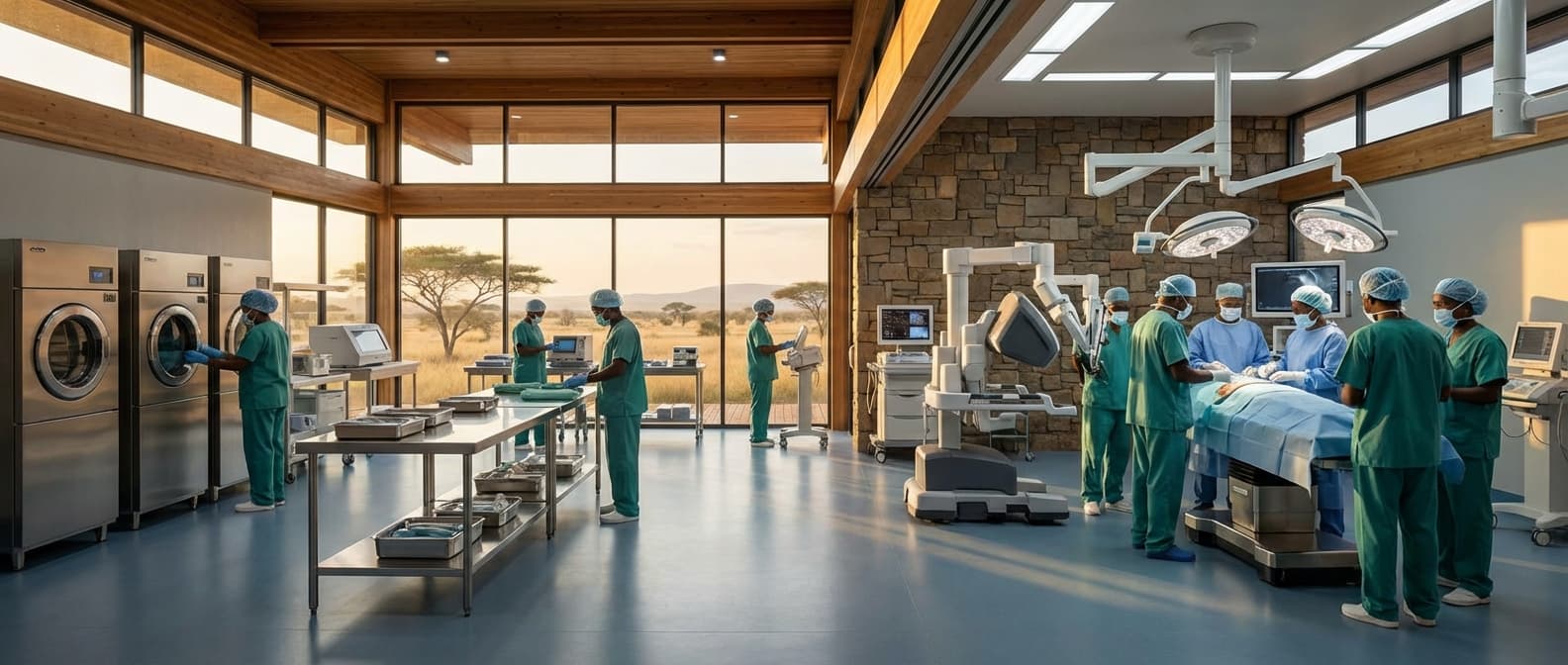
Medical Gas System Design & Installation in Lesotho
Engineering Excellence & Technical Support
Medical gas pipeline systems: O2, N2O, air, vacuum High-standard technical execution following OEM protocols and local regulatory frameworks.
Ensuring Uninterrupted Medical Gas Supply in Remote Facilities
Designed and installed a robust medical gas pipeline system for a critical rural clinic in the Maloti Mountains, incorporating redundant backup supply solutions and remote monitoring capabilities to guarantee a continuous flow of essential gases, even during challenging weather conditions and logistical constraints inherent to Lesotho's terrain.
Adherence to International Standards for Patient Safety
Implemented medical gas systems compliant with ISO 7396 and HTM 02-01 standards across multiple healthcare facilities in Maseru and surrounding districts. This involved meticulous material selection, leak detection, pressure testing, and comprehensive training for local maintenance staff to ensure the highest levels of patient safety and system reliability.
Cost-Effective & Sustainable Medical Gas Solutions
Developed a localized medical gas supply strategy for a network of district hospitals, utilizing energy-efficient oxygen concentrator technology coupled with optimized storage and distribution protocols. This approach significantly reduced operational costs and reliance on imported gases, contributing to long-term sustainability and improved healthcare accessibility within Lesotho.
What Is Medical Gas System Design & Installation In Lesotho?
Medical gas system design and installation in Lesotho refers to the specialized engineering and construction processes involved in the planning, fabrication, and implementation of piped medical gas systems within healthcare facilities. This encompasses the design of a network of pipelines, control equipment, and terminal units intended to deliver a variety of medical gases at precisely regulated pressures and flow rates to patient care areas. The scope of work typically includes site assessment, adherence to international and national standards (e.g., NFPA 99, ISO 7396 series, and relevant Lesotho building codes), material selection, system layout, pressure testing, leak detection, flushing, and final commissioning with comprehensive documentation. The primary objective is to ensure a safe, reliable, and uninterrupted supply of essential medical gases to patients, thereby supporting critical medical procedures and life support.
| Who Needs Medical Gas System Design & Installation? | Typical Use Cases |
|---|---|
| Hospitals (public and private) | Oxygen therapy for respiratory distress, anesthesia delivery in operating rooms, mechanical ventilation support in ICUs, nitrous oxide for pain management. |
| Clinics and Health Centres (especially those with inpatient facilities) | Basic oxygen administration for common respiratory ailments, post-operative recovery support. |
| Specialized Medical Facilities (e.g., surgical centres, intensive care units) | High-purity medical air for ventilators and nebulizers, carbon dioxide for insufflation during laparoscopic surgery, nitrogen for surgical tools. |
| Emergency Services and Disaster Relief Facilities | Rapid deployment of oxygen and other essential gases to temporary or emergency medical settings. |
| Research Laboratories within Healthcare Settings | Controlled gas mixtures for experimental procedures and diagnostic equipment. |
Key Components of a Medical Gas System in Lesotho
- Gas Source Management (e.g., manifold systems for cylinders, bulk liquid oxygen storage, or on-site generation plants)
- Central Gas Pipeline Network (medical grade copper tubing, corrosion-resistant materials)
- Pressure Regulators and Relief Valves (for precise pressure control and safety)
- Alarm Systems (visual and audible indicators for pressure deviations)
- Shut-off Valves (sectional and emergency valves for system isolation)
- Terminal Units (outlets for connecting medical devices at patient bedsides, operating theatres, and other critical areas)
- Gas Specific Analyzers (for verification of gas purity and composition)
- Ventilation and Exhaust Systems (for specific gases like medical air and anesthetic waste gases)
Who Needs Medical Gas System Design & Installation In Lesotho?
Medical gas systems are critical for modern healthcare facilities, providing essential life support and treatment gases. In Lesotho, as the healthcare sector continues to develop and upgrade its infrastructure, the need for professional design and installation of these complex systems becomes paramount. This ensures the safe, efficient, and reliable delivery of medical gases to patients, supporting a wide range of medical procedures and interventions.
| Target Customer Type | Key Departments Requiring Medical Gas Systems | Specific Needs/Applications |
|---|---|---|
| Public Hospitals | Operating Theatres, Intensive Care Units (ICUs), High Dependency Units (HDUs), Neonatal Intensive Care Units (NICUs), Emergency Departments, Respiratory Therapy Departments, General Wards, Recovery Rooms | Oxygen for resuscitation and ventilation, Nitrous Oxide for anesthesia, Medical Air for ventilation and drug nebulization, Vacuum for surgical suction, potentially specialized gases for diagnostics. |
| Private Hospitals | Similar to Public Hospitals, with a potential focus on advanced surgical suites and specialized care units | High reliability, advanced monitoring systems, integration with building management systems, compliance with international standards. |
| Specialty Clinics | Surgical Clinics, Respiratory Clinics, Pain Management Clinics, Dialysis Centers | Oxygen for therapeutic use, Nitrous Oxide for conscious sedation, Medical Air for nebulizers. |
| Health Centers and District Hospitals | Maternity Wards, Minor Procedure Rooms, Observation Areas, Outpatient Departments | Reliable oxygen supply for basic life support and post-operative care, potentially portable systems for remote areas. |
| Research and Diagnostic Laboratories | Pathology Labs, Blood Banks, Microbiology Labs | Specialized gases for analytical equipment and environmental control within labs (e.g., Nitrogen for sample preservation, Carbon Dioxide for incubators). |
| Emergency Medical Services (EMS) | Ambulances, Emergency Response Vehicles | On-board oxygen cylinders, portable suction units, ensuring safety and compliance of gas storage and delivery. |
| Veterinary Clinics and Animal Hospitals | Operating Rooms, Intensive Care Units for Animals | Oxygen for anesthesia and respiratory support, Medical Air for ventilation, Nitrous Oxide for anesthesia. |
Target Customers and Departments for Medical Gas System Design & Installation in Lesotho:
- Hospitals (Public and Private)
- Specialty Clinics (e.g., Surgical, Respiratory, ICU)
- Health Centers and District Hospitals
- Research and Diagnostic Laboratories
- Emergency Medical Services (EMS)
- Veterinary Clinics and Animal Hospitals (for specific applications)
Medical Gas System Design & Installation Process In Lesotho
The design and installation of medical gas systems in Lesotho, as in many other regions, follow a structured and meticulous process. This workflow ensures that the systems are safe, compliant with relevant standards, and meet the specific needs of healthcare facilities. The process typically begins with an initial inquiry and culminates in the successful commissioning and handover of the installed system. Key stages involve detailed design, procurement of materials and equipment, rigorous installation procedures, and comprehensive testing and validation.
| Stage | Description | Key Activities | Responsible Parties |
|---|---|---|---|
| Inquiry & Initial Consultation | The process begins when a healthcare facility or developer expresses interest in a new or upgraded medical gas system. | Understanding client needs, project scope, and preliminary budget discussions. | Client (Hospital/Developer), Potential System Integrator/Designer |
| Feasibility Study & Site Assessment | Evaluating the viability of the project and assessing the existing site conditions. | Site surveys, assessing space availability, utility connections, structural integrity, and existing infrastructure. | System Integrator/Designer, Client Representatives |
| Conceptual Design & System Requirements | Developing an initial concept for the medical gas system and defining its core components. | Defining gas types and their distribution, medical outlet requirements, alarm systems, and central supply station requirements. Developing preliminary system layouts. | System Integrator/Designer, Mechanical Engineers, Client Representatives |
| Detailed Design & Engineering | Producing comprehensive engineering drawings and specifications for the system. | Creating detailed P&ID (Piping and Instrumentation Diagrams), system layouts, pressure drop calculations, material specifications, electrical schematics, and safety features in accordance with international standards (e.g., HTM, NFPA, ISO) and local regulations. | System Integrator/Designer, Mechanical Engineers, Electrical Engineers |
| Regulatory Approvals & Permits | Obtaining necessary permissions from relevant authorities in Lesotho. | Submitting design documentation for review and approval by the Ministry of Health, local building authorities, and other relevant regulatory bodies. | System Integrator/Designer, Project Management Team, Client |
| Tender/Procurement Process | Selecting a qualified contractor to execute the installation. | Developing tender documents based on the detailed design, inviting bids from pre-qualified medical gas installers, evaluating bids, and awarding the contract. | Client, Project Management Team, Procurement Department |
| Site Preparation | Ensuring the construction site is ready for installation activities. | Clearing work areas, establishing temporary power and services, and ensuring safe access for personnel and materials. | Installation Contractor, Site Management Team, Client |
| Installation of Medical Gas Pipeline | Laying the medical gas pipework throughout the facility. | Installing copper piping, brazing joints, pressure testing, and ensuring proper segregation of different gas lines. Adherence to cleanliness standards is crucial. | Installation Contractor (Specialized Medical Gas Technicians) |
| Installation of Medical Gas Equipment | Installing all necessary components for gas delivery and monitoring. | Installing gas outlets, alarms, flowmeters, regulators, shut-off valves, zone valves, manifolds, and central supply stations (compressors, vacuum pumps, oxygen concentrators). | Installation Contractor (Specialized Medical Gas Technicians), Electrical Contractors |
| Testing & Commissioning | Verifying the integrity, functionality, and safety of the installed system. | Pressure testing, leak testing, purity testing (for oxygen), gas identification verification, alarm system testing, and flow rate verification. This stage includes thorough flushing and purging of the pipelines. | Installation Contractor, Independent Commissioning Agent, Client Representatives, Regulatory Inspectors |
| Training & Handover | Educating facility staff on the operation and maintenance of the system and formally transferring responsibility. | Training biomedical engineers, maintenance staff, and clinical personnel on system operation, safety protocols, emergency procedures, and routine maintenance. Handing over all documentation and keys. | Installation Contractor, Biomedical Engineering Department, Facility Management |
| Documentation & As-Built Drawings | Providing a complete record of the installed system. | Creating and submitting detailed 'as-built' drawings reflecting the exact configuration of the installed system, along with operation and maintenance manuals, test certificates, and warranties. | Installation Contractor, System Integrator/Designer |
| Post-Installation Support & Maintenance | Ensuring the long-term performance and reliability of the system. | Providing warranty support, scheduled preventive maintenance, and emergency repair services as per contractual agreements. | Installation Contractor, Manufacturer, Facility Management |
Medical Gas System Design & Installation Process in Lesotho
- Inquiry & Initial Consultation
- Feasibility Study & Site Assessment
- Conceptual Design & System Requirements
- Detailed Design & Engineering
- Regulatory Approvals & Permits
- Tender/Procurement Process
- Site Preparation
- Installation of Medical Gas Pipeline
- Installation of Medical Gas Equipment
- Testing & Commissioning
- Training & Handover
- Documentation & As-Built Drawings
- Post-Installation Support & Maintenance
Medical Gas System Design & Installation Cost In Lesotho
Designing and installing a medical gas system in Lesotho involves several critical factors that influence the overall cost. These systems are vital for healthcare facilities, providing essential gases like oxygen, medical air, and vacuum. The complexity of the system, the size of the facility, the specific gases required, and the quality of materials used are primary drivers of cost. Local sourcing of materials versus imported components also plays a significant role, as does the labor involved, including skilled technicians and engineers. Regulatory compliance and the need for specialized certifications can add to the expense. Furthermore, the ongoing maintenance and service contracts post-installation are important considerations for the total cost of ownership. The current economic climate and fluctuating exchange rates can also impact pricing, especially for imported equipment and parts.
| Cost Component | Typical Range (M/LSL) | Notes |
|---|---|---|
| Design & Engineering Services | 20,000 - 80,000+ | Varies with system complexity and firm's reputation. |
| Piping & Installation Materials (Copper, Brass Fittings, etc.) | 50,000 - 250,000+ | Dependent on length of piping, number of outlets, and material quality. |
| Gas Source Equipment (Oxygen Concentrators, Manifolds, Compressors, Vacuum Pumps) | 80,000 - 400,000+ | Significant cost driver; depends on capacity and technology. |
| Regulators, Flowmeters, and Medical Gas Outlets | 20,000 - 100,000+ | Price per outlet and quality of regulators influence this. |
| Alarm Systems and Monitoring | 15,000 - 60,000+ | Essential for safety; advanced systems are pricier. |
| Testing, Commissioning, and Validation | 10,000 - 40,000+ | Crucial for safety and regulatory compliance. |
| Labor (Skilled Technicians & Installers) | 40,000 - 150,000+ | Depends on project duration, team size, and hourly rates. |
| Contingency & Project Management | 10% - 20% of total project cost | Recommended for unforeseen issues. |
| Total Estimated Project Cost (Small to Medium Facility) | 235,000 - 1,080,000+ | This is a broad estimate. Actual costs can vary significantly. |
Key Pricing Factors for Medical Gas System Design & Installation in Lesotho
- System Complexity and Scope (e.g., number of outlets, gas types)
- Facility Size and Bed Count
- Type and Purity of Medical Gases Required
- Material Quality and Brand Reputation (e.g., medical-grade piping, regulators)
- Sourcing of Materials (local vs. imported components)
- Labor Costs (skilled technicians, engineers, project management)
- Regulatory Compliance and Certification Fees
- Ancillary Equipment (compressors, vacuum pumps, manifolds, alarms)
- Testing, Commissioning, and Validation
- Project Timeline and Urgency
- Geographical Location within Lesotho (transportation costs)
- Post-Installation Maintenance and Service Agreements
- Warranty and Guarantees
Affordable Medical Gas System Design & Installation Options
Designing and installing a medical gas system involves significant investment, but by exploring value bundles and implementing cost-saving strategies, healthcare facilities can achieve their infrastructure goals without overspending. This guide outlines key considerations for affordable medical gas system design and installation, focusing on smart procurement and efficient execution.
| Value Bundle Type | Components Included | Potential Cost Savings | Considerations |
|---|---|---|---|
| Design-Build Package | System design, equipment procurement, installation, and commissioning by a single vendor. | Streamlined project management, reduced coordination overhead, potential for bundled pricing discounts. | Requires strong trust in the chosen vendor's expertise and pricing transparency. Ensure comprehensive scope definition. |
| Equipment & Installation Bundle | Purchase of major medical gas equipment (compressors, vacuum pumps, manifolds) and professional installation services from the same provider. | Volume discounts on equipment, coordinated installation scheduling, reduced logistics complexity. | Verify that the installation team is experienced with the specific equipment being purchased. Compare bundled pricing against separate quotes. |
| Maintenance & Service Contract (Integrated) | Design, installation, and ongoing preventative maintenance and emergency service for the medical gas system. | Predictable long-term operating costs, reduced risk of costly emergency repairs, extended equipment lifespan. | Carefully review contract terms, response times, and coverage. Ensure the maintenance plan aligns with facility needs. |
| Phased Installation & Upgrade | Installation of core medical gas infrastructure now, with provisions for future expansion or addition of specific gas types later. | Spreads capital expenditure over time, allows for adaptation to evolving patient care needs, potentially leverages economies of scale for later phases. | Requires meticulous planning for future expansion points and compatibility. Ensure initial design accommodates future needs. |
Key Cost-Saving Strategies for Medical Gas Systems
- Prioritize essential medical gas services based on current and projected patient needs. Avoid over-specifying for future, uncertain demands.
- Investigate modular and pre-fabricated system components, which can reduce on-site labor and installation time.
- Explore partnerships with medical gas equipment manufacturers and installers for bundled service packages, potentially offering discounts on design, equipment, and installation.
- Consider phased installations, allowing facilities to distribute costs over time as budget allows and patient volume increases.
- Thoroughly research and compare quotes from multiple reputable medical gas system vendors and installers. Don't solely focus on the lowest price; consider reputation, experience, and warranty.
- Leverage existing infrastructure where feasible, such as integrating new gas lines with existing building structures and utility corridors.
- Standardize on specific medical gas types and equipment brands to streamline procurement, maintenance, and inventory management, potentially leading to bulk purchase discounts.
- Implement robust project management to minimize delays and unexpected costs. Clear communication and efficient scheduling are crucial.
- Consider the long-term operational costs. Energy-efficient gas generation and distribution systems can lead to significant savings over the system's lifespan.
- Explore options for refurbished or reconditioned medical gas equipment, provided they meet all safety and regulatory standards and come with a solid warranty.
Verified Providers In Lesotho
In Lesotho, accessing reliable and trustworthy healthcare services is paramount. This is where verified providers, such as Franance Health, stand out. Their rigorous credentialing process ensures that all practitioners and facilities meet the highest standards of quality, safety, and ethical practice. Choosing a verified provider like Franance Health offers peace of mind, knowing you are receiving care from qualified professionals operating within a regulated and accountable framework. This commitment to excellence translates into better patient outcomes and a more secure healthcare experience for the community.
| Aspect | Franance Health's Commitment | Benefit to Patients |
|---|---|---|
| Provider Qualifications | Thorough verification of medical licenses, certifications, and educational backgrounds. | Assurance of receiving care from competent and knowledgeable healthcare professionals. |
| Clinical Competence | Evaluation of past performance, peer reviews, and adherence to best practices. | Confidence in the effectiveness of treatments and procedures recommended. |
| Patient Rights and Safety | Ensuring providers uphold patient rights, maintain confidentiality, and follow safety protocols. | A secure and respectful healthcare experience, minimizing potential harm. |
| Ethical Conduct | Strict adherence to a code of ethics, including honesty, integrity, and non-discrimination. | Trustworthy relationships with healthcare providers and fair treatment for all. |
| Continuous Improvement | Ongoing monitoring and assessment of providers to maintain high standards. | Access to up-to-date medical knowledge and evolving healthcare practices. |
Why Franance Health Represents the Best Choice:
- Rigorous Credentialing Process: Franance Health's stringent verification ensures all providers are qualified and licensed.
- Commitment to Quality Care: Their standards guarantee the delivery of safe, effective, and patient-centered services.
- Enhanced Patient Safety: Verification protocols minimize risks and promote a secure healthcare environment.
- Ethical Practice Standards: All Franance Health providers adhere to a strict code of conduct.
- Improved Patient Outcomes: Access to verified expertise leads to more successful treatments and recovery.
- Trust and Accountability: The credentialing process fosters confidence and ensures providers are answerable for their actions.
Scope Of Work For Medical Gas System Design & Installation
This Scope of Work (SOW) outlines the requirements for the design and installation of a medical gas system. It details the technical deliverables expected from the contractor and references standard specifications that will govern the execution of the project. The objective is to ensure a safe, reliable, and compliant medical gas system that meets all relevant industry codes and hospital standards.
| Specification/Standard | Description | Relevance to Medical Gas Systems |
|---|---|---|
| NFPA 99 | Health Care Facilities Code | Establishes the minimum safety requirements for medical gas systems, including design, installation, testing, and maintenance. |
| NFPA 70 | National Electrical Code (NEC) | Governs the electrical requirements for medical gas system components, including power supply, wiring, and grounding. |
| ASME B31.3 | Process Piping | Provides guidelines for the design and fabrication of piping systems, including material selection, welding, and inspection for medical gases. |
| cGMP | Current Good Manufacturing Practices | Relevant for the manufacturing of medical gas equipment and materials, ensuring quality and purity. |
| Local Building Codes | Jurisdictional building regulations | Ensures compliance with local requirements for construction, safety, and permitting. |
| Facility Specific Standards | Hospital's internal design and operational guidelines | Incorporates specific requirements for the facility's operational needs, patient safety, and maintenance practices. |
Key Technical Deliverables
- Detailed Design Drawings (e.g., P&IDs, Isometrics, Room layouts, Riser diagrams)
- Equipment Submittals and Specifications (e.g., compressors, vacuum pumps, manifolds, alarms, outlets, piping, valves)
- Bill of Quantities (BOQ) for all materials and labor
- Construction Schedule and Phasing Plan
- Quality Assurance/Quality Control (QA/QC) Plan
- Testing and Commissioning Plan (including pressure, leak, purity, and alarm testing)
- As-Built Drawings reflecting the final installed system
- Operations and Maintenance (O&M) Manuals
- Training Materials for hospital staff
- Certificates of Compliance and Final Inspections
Service Level Agreement For Medical Gas System Design & Installation
This Service Level Agreement (SLA) outlines the response times and uptime guarantees for the design and installation of medical gas systems. It is intended to ensure timely and reliable service delivery for critical healthcare infrastructure.
| Service Component | Category | Response Time (Business Hours) | Resolution Time (Target) | Uptime Guarantee (Post-Installation) |
|---|---|---|---|---|
| Initial Design Consultation & Proposal | Design Phase | 2 Business Days | N/A | N/A |
| Preliminary Design Review | Design Phase | 5 Business Days (after submission of initial design) | N/A | N/A |
| Final Design Approval & Sign-off | Design Phase | 3 Business Days (after receipt of all required information) | N/A | N/A |
| Project Kick-off Meeting (Installation) | Installation Phase | 3 Business Days (after contract signing) | N/A | N/A |
| Site Preparation & Mobilization | Installation Phase | As per project schedule | N/A | N/A |
| Critical Failure During Installation (e.g., system leak affecting primary gas) | Installation Phase | 4 Business Hours | 24 Business Hours (to restore essential functionality) | N/A |
| Urgent Issue During Installation (e.g., delay affecting critical path) | Installation Phase | 8 Business Hours | 48 Business Hours | N/A |
| Routine Issue During Installation (e.g., minor equipment adjustment) | Installation Phase | 2 Business Days | 5 Business Days | N/A |
| Final Commissioning & Testing | Installation Phase | As per project schedule | N/A | N/A |
| Post-Installation Support - Critical Failure | Operational | 2 Business Hours | 8 Business Hours (to diagnose and initiate repair) | 99.5% (aggregate downtime per year) |
| Post-Installation Support - Urgent Issue | Operational | 4 Business Hours | 24 Business Hours (to diagnose and initiate repair) | 99.5% (aggregate downtime per year) |
| Post-Installation Support - Routine Issue | Operational | 1 Business Day | 3 Business Days | 99.5% (aggregate downtime per year) |
| Preventative Maintenance Visit | Operational | As per agreed schedule | N/A | 99.5% (aggregate downtime per year) |
Key Definitions
- Medical Gas System: A system designed to deliver medical gases (e.g., oxygen, medical air, nitrous oxide, vacuum) from a central supply to patient use outlets throughout a healthcare facility.
- Design Phase: The period during which architectural, engineering, and operational requirements are defined, and detailed plans for the medical gas system are created.
- Installation Phase: The period during which the designed medical gas system is physically constructed and commissioned within the healthcare facility.
- Critical Failure: A malfunction or failure of the medical gas system that directly impacts patient safety or the ability to provide essential medical care.
- Urgent Issue: A problem that significantly impairs the functionality of the medical gas system but does not immediately pose a threat to patient safety or essential care.
- Routine Issue: A non-critical problem or inquiry that does not affect the immediate operation or safety of the medical gas system.
- Business Hours: Monday to Friday, 8:00 AM to 5:00 PM, excluding public holidays.
- Response Time: The maximum time allowed from the initiation of a support request to the acknowledgment and commencement of work by the service provider.
- Resolution Time: The maximum time allowed from the initiation of a support request to the full restoration of the medical gas system's intended functionality.
- Uptime Guarantee: The percentage of time the medical gas system is expected to be fully operational and available for use.
Frequently Asked Questions

Ready when you are
Let's scope your Medical Gas System Design & Installation in Lesotho project in Lesotho.

Scaling healthcare logistics and technical systems across the entire continent.