
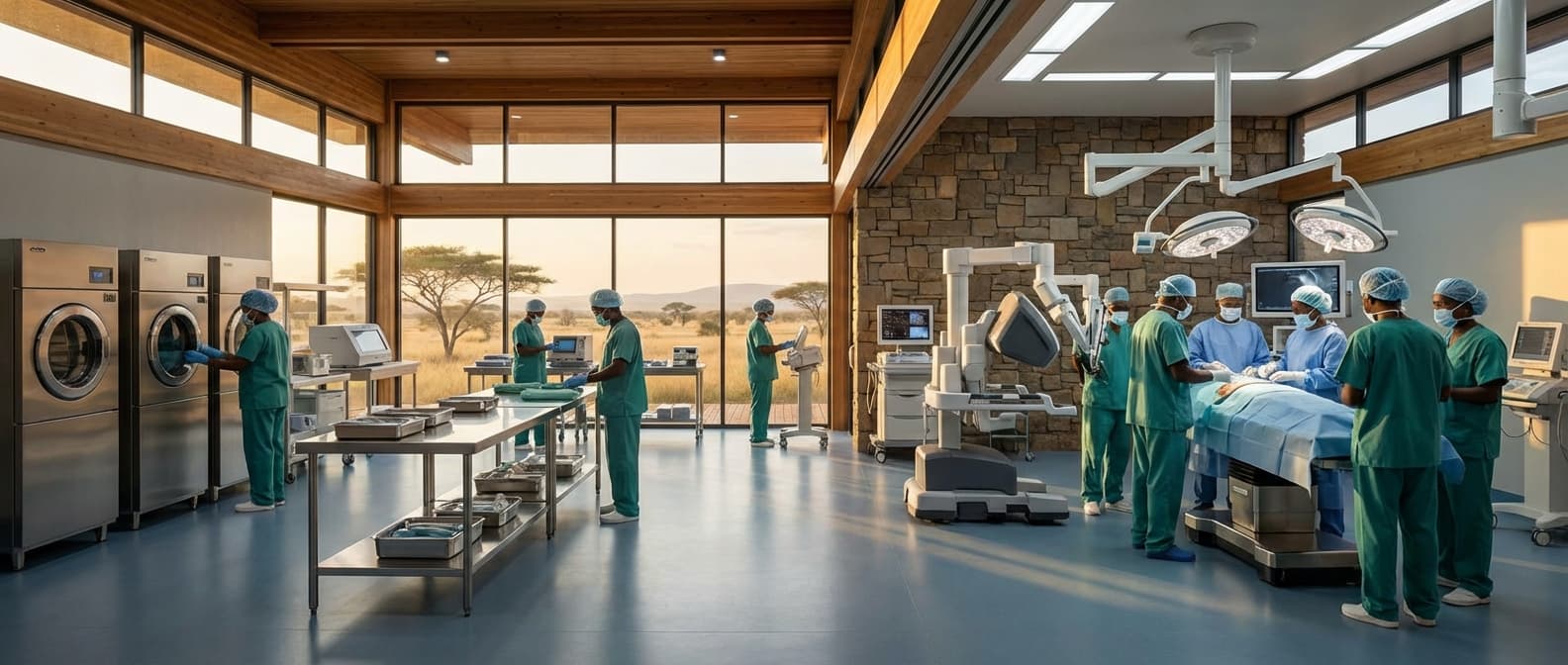
Endoscopy Reprocessing Validation in Lesotho
Engineering Excellence & Technical Support
AER validation, SOP development and compliance High-standard technical execution following OEM protocols and local regulatory frameworks.
Rigorous Endoscope Cleaning Validation
Implementing and validating a multi-step cleaning process for flexible endoscopes, including pre-cleaning, manual cleaning, high-level disinfection (HLD), and rinsing, to ensure the elimination of microbial contamination according to international standards. This includes ATP and TST testing for residual organic matter and biofilm.
Microbiological Surveillance Program
Establishing a robust microbiological surveillance program to regularly test reprocessed endoscopes for the presence of pathogens. This involves environmental monitoring of reprocessing areas and routine sampling of scopes before and after reprocessing to verify the efficacy of disinfection protocols.
Standard Operating Procedure (SOP) Development & Training
Developing and validating comprehensive Standard Operating Procedures (SOPs) for all aspects of endoscope reprocessing, from initial handling to final storage. This includes extensive training for all reprocessing staff, competency assessments, and ongoing quality assurance to ensure adherence to best practices and regulatory requirements.
What Is Endoscopy Reprocessing Validation In Lesotho?
Endoscopy reprocessing validation in Lesotho refers to the rigorous process of ensuring that reusable medical devices, specifically endoscopes and their associated accessories, are cleaned, disinfected, and/or sterilized to a level that eliminates or inactivates all viable microorganisms. This validation is a critical component of infection prevention and control within healthcare facilities, aiming to mitigate the risk of patient-to-patient transmission of pathogens via inadequately reprocessed endoscopes. The process typically involves a multifaceted approach, encompassing mechanical, chemical, and biological indicators, as well as stringent documentation and quality assurance protocols. It is imperative for maintaining patient safety and adhering to international standards for medical device reprocessing.
| Stakeholder/Entity | Rationale for Requiring Validation | Typical Use Cases | |||
|---|---|---|---|---|---|
| Healthcare Facilities (Hospitals, Clinics) | Mandatory for patient safety, infection control, regulatory compliance, and preventing Healthcare-Associated Infections (HAIs). | All procedures involving reusable endoscopes (e.g., gastroscopy, colonoscopy, bronchoscopy, cystoscopy, ERCP, surgical endoscopy). | Routine performance of endoscopic procedures. | Implementation of new reprocessing equipment or protocols. | Following an outbreak or suspected link to inadequately reprocessed devices. |
| Ministry of Health (Lesotho) | Ensuring adherence to national healthcare standards, patient safety mandates, and public health protection. | Setting and enforcing guidelines for medical device reprocessing. | Licensing and accreditation of healthcare facilities. | Public health surveillance and outbreak investigations. | |
| Endoscopy Service Providers (Internal Departments/External Companies) | Demonstrating adherence to best practices, maintaining operational integrity, and assuring clients of safe services. | Offering contracted endoscopy services. | Providing specialized reprocessing services. | ||
| Medical Device Manufacturers | Ensuring their devices are reprocessed correctly according to their instructions for use (IFU), and to support their product's safety and efficacy claims. | Providing IFUs for reusable endoscopes and accessories. | Developing and validating automated reprocessing equipment. | ||
| Regulatory Bodies (International/National) | Setting and enforcing standards for reprocessing, ensuring patient safety, and protecting public health. | Auditing healthcare facilities for compliance. | Investigating adverse events. |
Key Components of Endoscopy Reprocessing Validation:
- Verification of cleaning efficacy: Ensuring removal of gross soil and organic matter.
- Disinfection/Sterilization validation: Confirming the inactivation of a broad spectrum of microorganisms, including bacteria, viruses, fungi, and spores.
- Water system validation: Assessing the microbial quality of water used in the reprocessing cycles.
- Personnel competency assessment: Evaluating the knowledge and practical skills of reprocessing technicians.
- Environmental monitoring: Assessing the microbial load in the reprocessing area.
- Documentation and record-keeping: Maintaining meticulous records of all reprocessing steps, validation results, and maintenance activities.
- Equipment performance verification: Ensuring that automated reprocessors and other equipment function according to manufacturer specifications and regulatory requirements.
Who Needs Endoscopy Reprocessing Validation In Lesotho?
Endoscopy reprocessing validation is a critical safety measure to prevent the transmission of infections. In Lesotho, like many countries, healthcare facilities that perform endoscopic procedures are potential beneficiaries of this validation. The core objective is to ensure that reusable endoscopic equipment is cleaned and disinfected according to established guidelines, thereby minimizing the risk of healthcare-associated infections (HAIs) for patients. This process is not just a regulatory requirement in many jurisdictions but a fundamental aspect of patient care and infection control.
| Customer/Facility Type | Primary Departments Involved | Rationale for Validation |
|---|---|---|
| Public Hospitals | Gastroenterology Unit, Endoscopy Suite, Operating Theatre (for GI procedures), Infection Control Department, Central Sterile Services Department (CSSD) | High volume of procedures, diverse patient population, potential for significant outbreak if reprocessing fails, adherence to national healthcare standards. |
| Private Hospitals | Gastroenterology Department, Endoscopy Unit, Surgical Wards, Infection Prevention and Control (IPC) Team, CSSD | Ensuring patient safety and maintaining reputation, meeting international accreditation standards (if applicable), providing a high standard of care for paying customers. |
| Specialty Clinics (e.g., Gastroenterology Clinics) | Endoscopy Procedure Rooms, Nursing Staff, Technicians, IPC Officer | Focused on gastrointestinal procedures, requiring specialized reprocessing of endoscopes, ensuring continuity of safe care in a focused setting. |
| Diagnostic Centers offering Endoscopic Services | Endoscopy Bays, Technical Staff, Quality Assurance Department | Similar to clinics, these centers rely heavily on the accuracy and safety of their diagnostic equipment, including endoscopes. |
| Ministry of Health (MoH) Facilitated Centers | MoH-managed hospitals and clinics, Regional Health Offices, National Infection Prevention and Control Unit | Ensuring standardized and safe reprocessing practices across public health infrastructure, protecting vulnerable populations, resource allocation and oversight for infection control. |
Target Customers and Departments in Lesotho Requiring Endoscopy Reprocessing Validation
- Hospitals (Public and Private)
- Specialty Clinics
- Diagnostic Centers
- Ministry of Health Facilities
Endoscopy Reprocessing Validation Process In Lesotho
The Endoscopy Reprocessing Validation Process in Lesotho is a critical multi-stage procedure designed to ensure that all endoscopes used in healthcare facilities are thoroughly cleaned, disinfected, and sterilized according to established guidelines, thereby preventing the transmission of infections. This validation process confirms the efficacy of the reprocessing steps undertaken by healthcare professionals. The workflow, from initial inquiry to final execution and reporting, is meticulously structured.
| Stage | Description | Key Activities | Responsible Parties | Deliverables |
|---|---|---|---|---|
| Inquiry and Scope Definition | Initiation of the validation process and clearly defining its objectives and boundaries. | Receiving a request for validation, clarifying the number and type of endoscopes, identifying the reprocessing facility, and determining the validation parameters (e.g., specific disinfection levels). | Healthcare Facility Management, Ministry of Health/Relevant Regulatory Body, Validation Service Provider (if external). | Formal request, agreed-upon scope of validation. |
| Site Assessment and Documentation Review | Evaluating the existing reprocessing infrastructure, procedures, and records. | On-site inspection of the reprocessing area, review of Standard Operating Procedures (SOPs) for cleaning and high-level disinfection (HLD)/sterilization, review of staff training records, and assessment of equipment maintenance logs. | Validation Service Provider, Biomedical Engineering (if applicable), Infection Prevention and Control (IPC) Officer. | Site assessment report, identified gaps in documentation and practice. |
| Development of Validation Protocol | Creating a detailed plan outlining how the validation will be conducted. | Designing the testing methodology (e.g., microbial load testing, residual protein detection, lumen integrity checks), defining sampling points and frequencies, specifying acceptance criteria, and outlining data recording procedures. | Validation Service Provider, in consultation with IPC Officer and relevant stakeholders. | Approved Validation Protocol document. |
| Sample Collection and Testing | Carrying out the tests as per the approved protocol. | Collecting rinse water samples from endoscope lumens, swab samples from internal and external surfaces, and performing tests for microbial contamination (e.g., total viable count, specific pathogens), organic material residue, and HLD/sterilization efficacy indicators. This may involve using ATP testing, protein residue kits, and biological/chemical indicators. | Trained Technicians/Laboratory Personnel, under the supervision of the Validation Service Provider. | Raw test results, sample logs. |
| Data Analysis and Interpretation | Examining the collected data to determine if the reprocessing process meets the required standards. | Comparing test results against established acceptance criteria, identifying any deviations or failures, and analyzing trends in reprocessing efficacy. | Validation Service Provider, IPC Officer. | Interim data analysis summary. |
| Validation Report Generation | Documenting the entire validation process, findings, and conclusions. | Compiling a comprehensive report including the scope, protocol, methodology, results, interpretation, conclusions regarding the efficacy of the reprocessing process, and recommendations for improvement. | Validation Service Provider. | Final Validation Report. |
| Corrective Action and Re-validation (if necessary) | Addressing any identified deficiencies in the reprocessing process. | If the validation fails, implementing corrective actions based on recommendations (e.g., revising SOPs, retraining staff, repairing or replacing equipment). A re-validation may be required to confirm the effectiveness of these changes. | Healthcare Facility Management, IPC Officer, Validation Service Provider (for re-validation). | Corrective Action Plan, updated SOPs, re-validation report (if applicable). |
| Ongoing Monitoring and Surveillance | Establishing a system for continuous assurance of reprocessing quality. | Regularly implementing internal quality control checks, periodic re-validation at defined intervals, and ongoing staff training and competency assessments to maintain high standards of endoscopy reprocessing. | Healthcare Facility IPC Team, Management, and potentially the Ministry of Health. | Regular quality control reports, updated training records, scheduled re-validation plans. |
Workflow Stages of Endoscopy Reprocessing Validation in Lesotho
- Inquiry and Scope Definition
- Site Assessment and Documentation Review
- Development of Validation Protocol
- Sample Collection and Testing
- Data Analysis and Interpretation
- Validation Report Generation
- Corrective Action and Re-validation (if necessary)
- Ongoing Monitoring and Surveillance
Endoscopy Reprocessing Validation Cost In Lesotho
Validating the reprocessing of endoscopic equipment is a critical step in preventing healthcare-associated infections. In Lesotho, the cost of this validation process is influenced by several factors, making it challenging to provide a single definitive price. These factors include the specific type of validation required (e.g., initial validation, revalidation after equipment repair, or routine periodic validation), the number and complexity of the endoscopes being validated, the chosen validation methodology (e.g., using biological indicators or chemical indicators), and the laboratory or service provider conducting the validation. The availability of specialized equipment and trained personnel within Lesotho can also impact pricing. External consultants or laboratories might charge higher fees due to import costs or overheads. Therefore, costs can vary significantly. It's advisable for healthcare facilities to obtain quotes from multiple accredited service providers to ensure competitive pricing.
| Service/Item | Estimated Range (LSL) - Low | Estimated Range (LSL) - High | Notes |
|---|---|---|---|
| Biological Indicator Testing (per endoscope) | 800 | 1,500 | Includes indicator, incubation, and reporting. Higher end for complex endoscopes or faster turnaround. |
| Chemical Indicator Testing (per endoscope) | 300 | 600 | Generally less expensive than biological indicators, provides process monitoring. |
| Process Validation Report (initial setup) | 2,000 | 5,000 | Covers protocol development, initial testing across multiple cycles, and comprehensive documentation. |
| Revalidation (post-repair/maintenance) | 500 | 1,200 | Specific to the repaired component or maintenance performed. |
| Consultation and Training (per day) | 1,500 | 3,000 | For establishing internal validation protocols or troubleshooting. |
| Logistics and Travel (if applicable) | 200 | 800 | For on-site testing or sample transportation, depending on distance. |
Key Pricing Factors for Endoscopy Reprocessing Validation in Lesotho:
- Type of Validation: Initial, revalidation, or routine periodic.
- Number and Complexity of Endoscopes: More endoscopes or intricate designs increase costs.
- Validation Methodology: Biological vs. Chemical indicators.
- Service Provider: Local vs. international laboratories/consultants.
- Geographic Location: Accessibility and logistical costs for service providers.
- Reagent and Consumable Costs: Price fluctuations of necessary testing materials.
- Labor Costs: Skilled personnel for testing and reporting.
Affordable Endoscopy Reprocessing Validation Options
Ensuring the proper reprocessing of endoscopes is critical for patient safety and infection prevention. However, validation testing can represent a significant cost for healthcare facilities. This document outlines affordable endoscopy reprocessing validation options, focusing on value bundles and cost-saving strategies to help facilities meet regulatory requirements without excessive expenditure.
| Cost-Saving Strategy | Description | Potential Benefits | |
|---|---|---|---|
| Bundled Validation Services | Engaging a single vendor that offers a package of validation services, including on-site assessment, documentation review, necessary testing (e.g., microbial challenges for HLD, cleaning indicators), and reporting. These bundles are often priced at a discount compared to procuring individual services. | Streamlined process, predictable costs, reduced administrative burden, potential for negotiated pricing, vendor accountability. | |
| In-House Validation Support & Training | Partnering with validation providers for comprehensive training of internal staff on performing certain validation tasks (e.g., initial cleaning verification using adenosine triphosphate (ATP) or protein tests). The provider may supply necessary reagents and testing kits. | Reduced reliance on external labs, empowers internal staff, builds in-house expertise, lower per-test costs over time. | Important Note: Critical microbial challenge testing or complex instrumentation validation often still requires specialized external expertise. |
| Focus on Risk-Based Validation | Instead of a one-size-fits-all approach, tailoring validation efforts based on the specific endoscopes used, their complexity, the patient population served, and the reprocessing methods employed. This may mean prioritizing certain tests or frequencies. | Optimized resource allocation, avoids unnecessary testing, focuses validation on highest-risk areas. | Requires: A thorough understanding of current guidelines and potential risks. |
| Leveraging Technology & Automation | Utilizing automated cleaning and disinfection equipment with integrated validation features or data logging. Exploring software solutions for workflow management and documentation that can simplify validation processes. | Increased efficiency, reduced human error, robust data capture for audits, potential for remote monitoring. | Investment: Requires upfront capital for new equipment or software. |
| Collaborative Purchasing & Group Discounts | Healthcare organizations or networks pooling their validation needs to negotiate bulk discounts with vendors. This is particularly effective for smaller facilities that may lack purchasing power individually. | Significant cost reductions, access to preferred vendors and pricing, shared expertise within the group. | Requires: Coordination and agreement among participating facilities. |
| Routine Monitoring as Part of Validation | Integrating routine quality control monitoring (e.g., daily HLD chemical concentration checks, cleaning indicator tests) directly into the validation framework. This demonstrates ongoing compliance and can reduce the need for periodic, extensive re-validation. | Continuous assurance of safety, reduced cost of ad-hoc validation, easier to identify deviations. | Requires: Robust standard operating procedures (SOPs) for daily monitoring. |
Understanding Endoscope Reprocessing Validation
- Why Validation is Crucial: Regulatory bodies (e.g., FDA, CMS, AAMI) mandate that reprocessing procedures for flexible endoscopes are validated to ensure the removal of microorganisms and the integrity of the endoscope after cleaning and high-level disinfection (HLD) or sterilization.
- Key Validation Components: Validation typically includes tests for cleaning effectiveness (e.g., protein and carbohydrate detection), HLD efficacy (e.g., microbial challenge testing), and sometimes sterility assurance if applicable. It also involves documenting the entire reprocessing workflow.
- Traditional Validation Costs: Historically, comprehensive validation could involve expensive laboratory testing, specialized equipment, and consulting services, posing a challenge for smaller or budget-conscious facilities.
- The Shift Towards Value: The healthcare industry is increasingly emphasizing 'value-based' approaches. In validation, this means finding cost-effective solutions that deliver the required assurance of safety and compliance.
Verified Providers In Lesotho
In Lesotho, ensuring you receive care from verified healthcare providers is paramount for your well-being. Franance Health stands out as a beacon of trust, offering a meticulously vetted network of professionals. Our rigorous credentialing process guarantees that all listed providers meet the highest standards of medical expertise, ethical practice, and regulatory compliance. This commitment to verification means you can access healthcare with confidence, knowing you are in capable and trustworthy hands. Franance Health's dedication to quality assurance makes them the superior choice for finding reliable medical services in Lesotho.
| Credentialing Aspect | Franance Health Standard | Benefit to Patient |
|---|---|---|
| Medical Licenses | Verified Active and Valid | Ensures legal and authorized practice. |
| Educational Qualifications | Confirmed Degrees and Certifications | Guarantees a strong foundation of medical knowledge. |
| Professional Experience | Verified Practice History | Indicates proven practical skills and expertise. |
| Reputation and Background Checks | Thorough Screening | Minimizes the risk of malpractice or ethical concerns. |
| Continuing Professional Development | Evidence of Ongoing Learning | Ensures providers stay updated with the latest medical advancements. |
Why Choose Franance Health Verified Providers?
- Rigorous Credentialing: Each provider undergoes a thorough verification of their licenses, qualifications, and experience.
- Commitment to Ethical Practice: We ensure all providers adhere to strict ethical guidelines.
- Regulatory Compliance: Our network consists of providers who meet all Lesotho's healthcare regulations.
- Enhanced Patient Safety: Verification significantly reduces risks associated with unqualified practitioners.
- Peace of Mind: Accessing care through Franance Health provides assurance of quality and reliability.
- Comprehensive Network: A wide range of medical specialties and services are available through our verified list.
Scope Of Work For Endoscopy Reprocessing Validation
This Scope of Work outlines the requirements for the validation of the endoscopy reprocessing procedure. The objective is to ensure that the reprocessing of flexible endoscopes effectively eliminates microbial contamination, rendering them safe for patient use, and that all reprocessing steps consistently meet established performance standards and regulatory requirements. This validation will include testing at multiple stages of the reprocessing cycle, verification of cleaning efficacy, high-level disinfection/sterilization effectiveness, and assessment of the integrity of the endoscope after reprocessing. Technical deliverables will include detailed reports, validated Standard Operating Procedures (SOPs), and validation protocols. The project will adhere to relevant national and international standards and guidelines for medical device reprocessing.
| Technical Deliverable | Description | Standard/Specification Reference |
|---|---|---|
| Validation Protocol | Detailed document describing the entire validation process, including scope, objectives, methodologies, sampling plans, acceptance criteria, and responsibilities. | ISO 17665-1:2006, AAMI TIR30:2011, SGNA Guidelines, Manufacturer's Instructions for Use (IFU) |
| Cleaning Efficacy Report | Data and analysis demonstrating the removal of organic matter and bioburden from critical lumens and surfaces of the endoscope. | AAMI ST91:2021, Manufacturer's IFU |
| High-Level Disinfection/Sterilization Efficacy Report | Data and analysis confirming the inactivation of microorganisms, including spores (for sterilization) or high-risk vegetative forms (for HLD), according to established microbial challenges. | ISO 17665-1:2006, AAMI TIR30:2011, CDC Guidelines, Manufacturer's IFU |
| Endoscope Integrity Report | Documentation of the endoscope's physical and functional condition post-reprocessing, including checks for damage, leaks, and operational readiness. | Manufacturer's IFU, Relevant instrument inspection guidelines |
| Validated Standard Operating Procedures (SOPs) | Revised or new SOPs for manual cleaning, automated cleaning, HLD, sterilization, storage, and transport of endoscopes, formally approved and validated. | ISO 13485:2016, Manufacturer's IFU, National Regulatory Requirements |
| Final Validation Report | Comprehensive report detailing the validation activities undertaken, all collected data, statistical analysis, interpretation of results, conclusions on the efficacy of the reprocessing procedure, and recommendations. | ISO 17665-1:2006, AAMI TIR30:2011, Applicable regulatory body requirements |
| Training Records | Documentation of staff training on the validated reprocessing procedures and SOPs. | Internal Quality Management System requirements |
Key Activities and Deliverables
- Development and approval of a comprehensive Validation Protocol outlining methodology, acceptance criteria, and testing procedures.
- Verification of the efficacy of the manual and/or automated cleaning process in removing biological soil.
- Verification of the efficacy of the high-level disinfection (HLD) or sterilization process in eliminating vegetative microorganisms, spores, and mycobacteria.
- Assessment of the functionality and integrity of the endoscope after the complete reprocessing cycle.
- Review and validation of existing or development of new Standard Operating Procedures (SOPs) for endoscope cleaning, disinfection, and sterilization.
- Collection and analysis of validation data.
- Preparation and submission of a final Validation Report summarizing findings, conclusions, and recommendations.
- Identification of critical control points within the reprocessing workflow.
- Training of reprocessing staff on validated SOPs.
- Post-validation monitoring plan development.
Service Level Agreement For Endoscopy Reprocessing Validation
This Service Level Agreement (SLA) outlines the response times and uptime guarantees for the Endoscopy Reprocessing Validation service. This service ensures the proper functioning and adherence to standards for automated endoscopy reprocessing equipment, critical for patient safety and infection control.
| Service Component | Response Time Guarantee | Uptime Guarantee |
|---|---|---|
| Initial Validation Scheduling | Within 2 business days of request submission | N/A |
| On-Site Validation Execution (per equipment) | Within 5 business days of scheduled date | N/A |
| Validation Report Generation | Within 3 business days of completion of on-site validation | N/A |
| System Uptime for Validation Equipment (if applicable, e.g., validation software/devices) | N/A | 99.5% during scheduled validation periods |
| Emergency Validation (e.g., in response to a significant infection control breach or regulatory audit) | Within 1 business day of escalation | N/A |
Service Description and Scope
- Service: Endoscopy Reprocessing Validation (ERV)
- Purpose: To provide periodic validation and testing of automated endoscopy reprocessing equipment to confirm it meets manufacturer specifications, regulatory requirements, and internal infection control protocols.
- Scope: The ERV service includes validation of cleaning, disinfection, and sterilization cycles for all approved flexible endoscopes and associated reprocessing equipment within the designated healthcare facility.
- Deliverables: Comprehensive validation reports, calibration certificates, and documented evidence of system performance.
- Exclusions: Routine maintenance, repair of malfunctioning equipment (unless directly related to validation findings and covered by a separate agreement), and user training.
Frequently Asked Questions

Ready when you are
Let's scope your Endoscopy Reprocessing Validation in Lesotho project in Lesotho.

Scaling healthcare logistics and technical systems across the entire continent.