
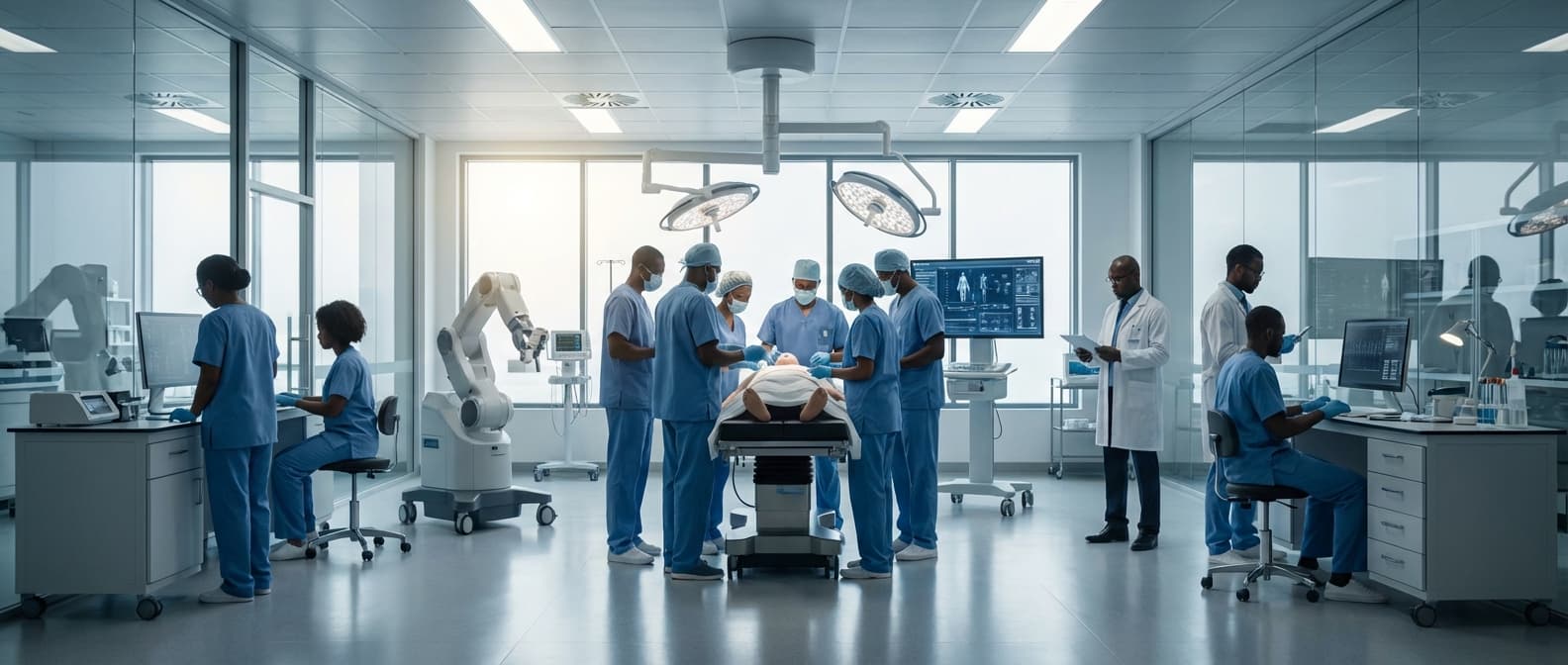
Managed Equipment Service (MES) in Lesotho
Engineering Excellence & Technical Support
Long‑term equipment provision with uptime SLAs and lifecycle management. High-standard technical execution following OEM protocols and local regulatory frameworks.
Enhanced Medical Equipment Uptime
Our MES ensures critical medical equipment in Lesotho operates at peak performance through proactive maintenance, rapid-response repairs, and strategic spare parts management, minimizing downtime and maximizing patient care delivery.
Optimized Equipment Lifecycle Management
We provide comprehensive lifecycle management for medical equipment in Lesotho, encompassing procurement, installation, calibration, planned maintenance, and eventual decommissioning, ensuring cost-efficiency and regulatory compliance throughout the asset's lifespan.
Remote Monitoring & Predictive Maintenance
Leveraging advanced IoT and remote monitoring capabilities, our MES for Lesotho facilitates real-time equipment health tracking and predictive maintenance, allowing us to anticipate and address potential failures before they impact clinical operations.
What Is Managed Equipment Service (Mes) In Lesotho?
Managed Equipment Service (MES) in Lesotho refers to a comprehensive outsourcing model where a third-party provider assumes responsibility for the acquisition, deployment, maintenance, and lifecycle management of critical medical equipment within healthcare facilities. This service aims to optimize equipment utilization, enhance operational efficiency, and ensure the availability of advanced medical technologies without significant upfront capital investment for the healthcare provider. MES operates on a service-level agreement (SLA) basis, guaranteeing performance, uptime, and the integration of innovative solutions to meet evolving clinical needs. The provider typically handles all aspects of the equipment lifecycle, from initial needs assessment and procurement to installation, training, preventative maintenance, repairs, and eventual decommissioning or upgrade.
| Who Needs MES? | Typical Use Cases | ||||||||
|---|---|---|---|---|---|---|---|---|---|
| Public Hospitals and Clinics: Facilities with limited capital budgets, seeking to upgrade or expand their medical technology portfolio without significant upfront expenditure. These institutions often face challenges in maintaining a diverse range of equipment due to resource constraints. | Diagnostic Imaging Services: Outsourcing the management of MRI, CT scanners, X-ray machines, and ultrasound equipment to ensure high availability and quality of diagnostic imaging for patient care. | Operating Theatre Equipment: Managing the suite of surgical instruments, anesthesia machines, patient monitors, and specialized surgical equipment to ensure readiness for procedures. | Laboratory and Pathology Services: Offloading the management of analyzers, microscopes, and other diagnostic laboratory equipment, guaranteeing accurate and timely test results. | Intensive Care Units (ICUs) and Critical Care Units: Ensuring the continuous availability and optimal performance of life-support equipment such as ventilators, defibrillators, and cardiac monitors. | Specialized Medical Departments: Managing equipment for departments like cardiology, neurology, oncology, and physiotherapy, requiring specific and often complex technologies. | Healthcare Networks and Groups: Organizations with multiple facilities can benefit from standardized equipment management and centralized procurement, leading to economies of scale and consistent service quality across their network. | Rural and Remote Healthcare Facilities: Addressing the challenges of accessing specialized technical support and maintenance in underserved areas by leveraging the provider's established service infrastructure. | Medical Training Institutions: Partnering for the provision and maintenance of advanced training equipment, facilitating hands-on learning for future healthcare professionals. | Private Hospitals and Diagnostic Centers: Even well-funded institutions can utilize MES to focus on core clinical services, delegate complex equipment management tasks, and gain access to the latest technologies on a pay-per-use or fixed-fee basis. |
Key Components of Managed Equipment Service (MES) in Lesotho
- Equipment Procurement and Acquisition: Sourcing and purchasing of medical devices based on facility requirements and clinical workflows.
- Installation and Commissioning: Professional setup, calibration, and testing of all equipment to ensure optimal functionality.
- Training and Skill Development: Providing comprehensive training to clinical and technical staff on equipment operation, maintenance, and troubleshooting.
- Preventative Maintenance: Scheduled maintenance activities to minimize downtime and extend equipment lifespan.
- Corrective Maintenance and Repairs: Prompt response to equipment malfunctions and timely repair services.
- Consumables and Spare Parts Management: Ensuring the availability of necessary consumables and spare parts to support equipment operation.
- Technology Upgrades and Replacements: Planning and executing timely upgrades or replacements of aging or obsolete equipment.
- Performance Monitoring and Reporting: Continuous tracking of equipment performance, utilization, and maintenance history.
- Regulatory Compliance: Ensuring all equipment adheres to local and international safety and performance standards.
- Cost Management and Optimization: Providing predictable operational costs and identifying opportunities for efficiency gains.
Who Needs Managed Equipment Service (Mes) In Lesotho?
Managed Equipment Service (MES) in Lesotho is a critical solution for organizations that rely heavily on specialized equipment but face challenges in managing, maintaining, and upgrading these assets effectively. MES offers a comprehensive, outsourced approach to equipment lifecycle management, freeing up internal resources and ensuring optimal performance. This service is particularly valuable for entities where equipment downtime can lead to significant operational disruptions, financial losses, or compromise service delivery.
| Target Customer Segment | Key Departments Benefiting from MES |
|---|---|
| Healthcare Sector (Hospitals, Clinics, Diagnostic Centers) | Medical Imaging Departments (X-ray, MRI, CT Scans), Laboratory Services, Surgical Units, Pharmacy, Estates/Facilities Management, IT Departments (for networked medical devices) |
| Educational Institutions (Universities, Colleges, Vocational Training Centers) | Science and Engineering Laboratories, IT Departments, Media Production Studios, Vocational Workshops (e.g., automotive, welding), Library Services (for specialized equipment) |
| Government Agencies (Ministries, Public Service Departments) | Public Works (e.g., road maintenance equipment), Water and Sanitation (pumps, treatment systems), Disaster Management (communication and monitoring equipment), Public Health (diagnostic tools), IT Departments |
| Industrial and Manufacturing Firms | Production Lines, Quality Control Departments, Maintenance and Engineering Teams, Research and Development (R&D), Logistics and Warehousing |
| Telecommunications Providers | Network Operations Centers (NOC), Field Service Teams, Equipment Maintenance and Deployment Units, IT Infrastructure Teams |
| Financial Institutions (Banks, Credit Unions) | ATM Maintenance, Branch Operations (e.g., cheque scanners, document sorters), IT Infrastructure, Security Operations |
| Large Commercial Enterprises (e.g., Retail, Logistics, Hospitality) | IT Departments (servers, networking equipment), Logistics and Warehousing (material handling equipment), Facilities Management, Security Systems, specialized operational equipment |
Target Customers and Departments for MES in Lesotho:
- Healthcare Sector
- Educational Institutions
- Government Agencies
- Industrial and Manufacturing Firms
- Telecommunications Providers
- Financial Institutions
- Large Commercial Enterprises
Managed Equipment Service (Mes) Process In Lesotho
The Managed Equipment Service (MES) process in Lesotho is a comprehensive system designed to ensure the availability, functionality, and sustainability of essential medical equipment within the healthcare sector. It involves a structured workflow from the initial identification of needs to the full operational execution of the service agreement. This process is crucial for maintaining a high standard of healthcare delivery, particularly in resource-limited settings where specialized equipment maintenance and management can be challenging.
| Stage | Description | Key Activities | Responsible Parties |
|---|---|---|---|
| Inquiry and Needs Assessment | This initial stage involves identifying the specific medical equipment needs of healthcare facilities in Lesotho. It's a crucial step to understand current gaps, technological requirements, and the overall health service objectives. | Needs analysis surveys, consultation with healthcare professionals, review of existing equipment inventory, definition of equipment specifications, identification of budget constraints. | Ministry of Health, District Health Management Teams, Healthcare Facilities, Potential Service Providers (initial expressions of interest). |
| Tendering and Selection | A formal process to invite and evaluate proposals from potential MES providers. This ensures a competitive and transparent selection of a qualified partner. | Development of tender documents (RFP/RFQ), advertisement of the tender, pre-bid meetings, proposal submission by interested companies, technical and financial evaluation of proposals, site visits, due diligence. | Ministry of Health (Procurement Unit), Tender Evaluation Committee, Attorney General's Chambers (for legal review). |
| Contract Negotiation and Signing | Once a preferred provider is identified, detailed negotiations take place to finalize the terms and conditions of the MES contract. | Negotiation of service level agreements (SLAs), pricing, payment terms, warranty periods, maintenance schedules, performance indicators, dispute resolution mechanisms. Finalization and signing of the MES contract. | Ministry of Health, Selected MES Provider, Legal Advisors. |
| Equipment Procurement and Installation | The selected MES provider is responsible for sourcing, procuring, and installing the specified medical equipment. | Sourcing of equipment from reputable manufacturers, quality assurance checks, shipment to Lesotho, customs clearance, site preparation, installation and commissioning of equipment, initial calibration and testing. | MES Provider, Equipment Manufacturers/Suppliers, Ministry of Health (oversight), Healthcare Facilities (site readiness). |
| Training and Capacity Building | Essential for ensuring that local healthcare personnel can effectively operate and perform basic maintenance on the new equipment. | Development and delivery of training programs for clinicians, technicians, and biomedical engineers. Provision of user manuals and technical documentation. Ongoing refresher training. | MES Provider, Healthcare Facility Staff, Ministry of Health (support and coordination). |
| Operations and Maintenance | This is the core of the MES, encompassing the day-to-day management and upkeep of the equipment to ensure optimal performance and uptime. | Routine preventive maintenance, corrective maintenance (repairs), provision of spare parts, calibration and servicing, management of consumables, equipment downtime tracking and resolution. | MES Provider (dedicated technical teams), Healthcare Facility Staff (reporting issues, basic user checks). |
| Performance Monitoring and Reporting | Continuous tracking of the MES provider's performance against the agreed-upon SLAs and key performance indicators (KPIs). | Regular data collection on equipment uptime, response times, repair rates, user satisfaction. Generation of performance reports. Review meetings between the Ministry of Health and the MES provider. | MES Provider, Ministry of Health, Healthcare Facilities (providing feedback). |
| Contract Review and Renewal/Exit | Periodical review of the contract to assess its effectiveness and decide on future actions, including potential renewal or termination. | Formal contract review meetings, assessment of contract fulfillment and value for money, decision on contract renewal, renegotiation of terms if renewed, planning for a smooth exit strategy if not renewed (including knowledge transfer and asset handover). | Ministry of Health, MES Provider, Stakeholders. |
Key Stages of the MES Process in Lesotho
- Inquiry and Needs Assessment
- Tendering and Selection
- Contract Negotiation and Signing
- Equipment Procurement and Installation
- Training and Capacity Building
- Operations and Maintenance
- Performance Monitoring and Reporting
- Contract Review and Renewal/Exit
Managed Equipment Service (Mes) Cost In Lesotho
Managed Equipment Service (MES) in Lesotho, while a growing trend to optimize healthcare delivery, presents a unique pricing landscape influenced by several factors. MES typically involves a third-party provider managing the procurement, installation, maintenance, and often the training associated with medical equipment for healthcare facilities. The cost of MES in Lesotho is not standardized and can vary significantly based on the scope of services, the type and volume of equipment, contract duration, and the specific needs of the healthcare provider. Key pricing factors include the initial capital expenditure of the equipment, the complexity of the technology, ongoing service and maintenance agreements, spare parts inventory, and the level of support required (e.g., 24/7 availability). Furthermore, factors like inflation, import duties on equipment, currency exchange rates (especially for imported components or specialized services), and the provider's operational overhead within Lesotho play a crucial role. Due to the limited market data and the bespoke nature of MES contracts, providing precise, universally applicable price ranges in Loti (LSL) is challenging. However, based on general industry trends and the economic context of Lesotho, MES contracts can represent a substantial investment for healthcare providers, often structured as an annual operational expenditure rather than a large upfront capital outlay.
| Equipment Category (Illustrative) | Indicative Annual MES Cost Range (LSL) | Notes |
|---|---|---|
| Basic Diagnostic Equipment (e.g., BP Monitors, Stethoscopes) | LSL 5,000 - LSL 25,000 per unit/set | Primarily covers basic maintenance and replacement of minor parts. Assumes moderate usage and a few units. |
| Intermediate Imaging (e.g., Ultrasound, X-ray machines) | LSL 50,000 - LSL 250,000 per unit | Includes comprehensive maintenance, spare parts, and potential software updates. Cost is highly dependent on model and features. |
| Advanced Laboratory Equipment (e.g., Automated Analyzers) | LSL 75,000 - LSL 300,000+ per unit | Covers complex maintenance, specialized reagents (sometimes bundled), software, and frequent calibration. Service response times are critical. |
| Surgical/Operating Room Equipment (e.g., Anesthesia Machines, Electrosurgical Units) | LSL 100,000 - LSL 500,000+ per unit/set | High-level maintenance, safety checks, and rapid response are essential. Can be complex and involve multiple integrated systems. |
| Comprehensive Hospital-Wide MES (Includes a mix of equipment) | Varies significantly based on the size of the facility, but could range from LSL 500,000 to LSL 5,000,000+ annually. | This would be a holistic contract covering a wide array of equipment and services across an entire facility, often negotiated on a case-by-case basis. |
Key Pricing Factors for MES in Lesotho
- Equipment Type and Volume: The cost is directly proportional to the sophistication, quantity, and technological complexity of the medical equipment included in the MES package.
- Scope of Services: Comprehensive MES packages encompassing procurement, installation, training, preventive maintenance, corrective maintenance, and consumables will be priced higher than basic maintenance-only contracts.
- Contract Duration: Longer-term contracts may offer better economies of scale and potentially lower annual costs, but also represent a greater long-term commitment.
- Service Level Agreements (SLAs): The defined response times for technical support and equipment uptime guarantees will impact pricing, with higher availability and faster response times commanding a premium.
- Provider's Operational Costs: Local operational expenses of the MES provider in Lesotho, including staffing, logistics, and administrative overhead, are factored into pricing.
- Import Duties and Taxes: Taxes and duties levied on imported medical equipment and spare parts directly influence the overall cost of the MES.
- Currency Exchange Rates: Fluctuations in the exchange rate of the Loti (LSL) against major international currencies can significantly impact the cost of imported equipment and parts.
- Technological Obsolescence and Upgrades: Contracts may include provisions for equipment upgrades or replacement, which would be factored into the pricing model.
- Training and Skill Development: The cost of training healthcare personnel on the proper use and basic maintenance of equipment is often bundled into MES.
- Spare Parts Management: The establishment and maintenance of a local or regional spare parts inventory are crucial for timely repairs and are reflected in the contract cost.
Affordable Managed Equipment Service (Mes) Options
Managed Equipment Service (MES) can be a significant investment for organizations, but by exploring affordable options, value bundles, and implementing smart cost-saving strategies, businesses can leverage MES effectively without breaking the bank. MES offers a way to outsource the management, maintenance, and often the procurement of your IT equipment, allowing you to focus on core business functions. This approach can lead to improved operational efficiency, reduced downtime, and predictable IT expenses.
| Value Bundle Type | Description | Potential Cost Savings |
|---|---|---|
| All-Inclusive Bundles | Combines hardware procurement, deployment, monitoring, maintenance, repairs, and end-of-life management. Often includes proactive support and IT staffing. | Reduced administrative overhead, predictable budgeting, minimized downtime through proactive maintenance, bulk purchasing discounts on hardware. |
| Hardware & Maintenance Bundles | Focuses on providing hardware and covering all aspects of its upkeep, including parts, labor, and scheduled preventative maintenance. | Lower cost of ownership for hardware, fewer unexpected repair bills, extended equipment lifespan. |
| Software & Support Bundles | Includes licensing, installation, updates, and technical support for essential software applications, often tied to specific hardware. | Streamlined software management, reduced risk of security vulnerabilities, improved user productivity through reliable software access. |
| Modular or Tiered Bundles | Allows you to select specific services or levels of support based on equipment criticality and business needs, offering flexibility. | Pay only for what you need, avoids paying for unused services, adaptable to changing business priorities. |
Key Considerations for Affordable MES
- Define Your Needs Clearly: Understand exactly what equipment and services you require. Over-provisioning can lead to unnecessary costs.
- Assess Your Current Infrastructure: Identify aging equipment that might require frequent maintenance or replacement, and factor this into your MES planning.
- Research Different Providers: Compare offerings from various MES providers, looking beyond just the headline price to understand service level agreements (SLAs) and included features.
- Negotiate Contract Terms: Don't be afraid to negotiate pricing, payment schedules, and scope of services. A longer-term commitment might secure better rates.
- Consider Scalability: Choose a provider that can scale services up or down as your business needs change, avoiding penalties for over- or under-utilization.
Verified Providers In Lesotho
In Lesotho, ensuring you receive care from verified healthcare providers is paramount. Franance Health stands out as a beacon of trust and quality, offering a network of credentialed professionals dedicated to your well-being. Their rigorous verification process guarantees that all listed providers meet stringent standards, encompassing education, licensing, experience, and ethical conduct. This commitment to excellence means that when you choose a Franance Health provider, you are choosing a healthcare professional who is not only skilled and knowledgeable but also operates with the highest level of integrity. This meticulous vetting process is what sets Franance Health apart, providing you with the confidence and peace of mind that you are receiving the best possible care available in Lesotho.
| Credential Aspect | Franance Health's Verification Process | Why it Matters for You |
|---|---|---|
| Educational Background | Verification of degrees, diplomas, and certifications from accredited institutions. | Ensures foundational knowledge and theoretical expertise. |
| Professional Licensing | Confirmation of valid and current licenses to practice in Lesotho. | Guarantees legal and authorized practice. |
| Clinical Experience | Assessment of practical experience and track record in relevant medical fields. | Indicates hands-on skill and familiarity with patient care. |
| Professional Affiliations & Memberships | Validation of membership in recognized medical associations. | Suggests adherence to professional standards and continuous learning. |
| Ethical Conduct & Disciplinary History | Thorough background checks and review of any disciplinary actions. | Protects you from malpractice and unethical practices. |
| Specialty Competency | Verification of specific training and certifications for specialized areas. | Ensures you are treated by experts in your specific medical need. |
Why Franance Health is the Premier Choice for Verified Providers:
- Uncompromising Verification Standards: Franance Health employs a multi-faceted verification process that scrutinizes each provider's credentials, ensuring they meet and exceed industry benchmarks.
- Focus on Quality and Safety: Patient well-being is the top priority. Franance Health's verification process emphasizes provider competence and adherence to ethical practices, safeguarding your health.
- Access to Top-Tier Professionals: By partnering with Franance Health, you gain access to a curated network of highly qualified and experienced healthcare professionals across various specialties.
- Transparency and Trust: The clear and transparent verification process builds trust, allowing patients to make informed decisions about their healthcare providers.
- Commitment to Continuous Improvement: Franance Health regularly reviews and updates its verification protocols to stay ahead of evolving healthcare standards and best practices.
Scope Of Work For Managed Equipment Service (Mes)
This document outlines the Scope of Work (SOW) for Managed Equipment Services (MES). It details the technical deliverables and standard specifications expected from the MES provider. The objective is to ensure the reliable, efficient, and cost-effective operation of all managed equipment throughout its lifecycle.
| Deliverable Category | Specific Deliverable | Standard Specification / Requirement | Measurement / KPI |
|---|---|---|---|
| Equipment Procurement | Acquisition of new equipment | Compliance with industry standards (e.g., ISO, FDA), manufacturer's specifications, budget adherence, timely delivery. | On-time delivery rate, adherence to budget, number of non-compliant acquisitions. |
| Installation & Commissioning | Site preparation, installation, and initial testing | Adherence to manufacturer's installation guidelines, successful commissioning tests, user sign-off. | Commissioning success rate, time to commission, user satisfaction score. |
| Preventive Maintenance | Scheduled maintenance activities | Adherence to manufacturer's recommended PM schedule, use of approved parts and procedures, documentation of all activities. | PM completion rate, adherence to schedule, number of repeat failures post-PM. |
| Corrective Maintenance | Unscheduled repairs and troubleshooting | Response time to reported issues, repair completion time (Mean Time To Repair - MTTR), use of qualified technicians. | Average response time, MTTR, first-time fix rate. |
| Calibration | Regular calibration of critical equipment | Adherence to calibration schedules, use of traceable standards, documented calibration certificates. | Calibration compliance rate, number of out-of-tolerance incidents. |
| Asset Management | Maintaining a comprehensive equipment inventory | Accurate and up-to-date equipment registry, including serial numbers, purchase dates, maintenance history, location. | Inventory accuracy rate, completeness of asset data. |
| Performance Monitoring | Tracking equipment uptime and performance metrics | Real-time or scheduled monitoring of key performance indicators (KPIs), identification of performance degradation. | Equipment uptime percentage, adherence to performance targets. |
| User Training | Training for end-users on equipment operation and basic troubleshooting | Development of training materials, delivery of training sessions, post-training competency assessment. | Number of users trained, user competency assessment scores, reduction in user-induced errors. |
| Reporting | Regular reports on equipment status, maintenance activities, and costs | Monthly/quarterly reports including equipment performance, maintenance logs, cost analysis, recommendations. | Timeliness of reports, clarity and completeness of reports. |
| Decommissioning | Safe and environmentally responsible removal of retired equipment | Compliance with disposal regulations, data security measures, asset record updates. | Compliance with disposal regulations, timeliness of decommissioning. |
Key Areas Covered by MES
- Equipment Procurement and Installation
- Preventive Maintenance and Calibration
- Corrective Maintenance and Repairs
- Asset Management and Inventory Control
- Performance Monitoring and Optimization
- User Training and Support
- Decommissioning and Disposal
- Reporting and Documentation
Service Level Agreement For Managed Equipment Service (Mes)
This Service Level Agreement (SLA) outlines the performance standards for Managed Equipment Service (MES) provided by [Your Company Name] to [Client Company Name]. It defines the agreed-upon response times for service requests and the guaranteed uptime for the managed equipment.
| Equipment Type | Criticality Level | Response Time Guarantee | Uptime Guarantee |
|---|---|---|---|
| Printers (Office) | Standard | 4 business hours | 99.5% |
| Servers (Core) | High | 2 business hours | 99.9% |
| Network Switches (Edge) | Medium | 3 business hours | 99.8% |
| Scanners (High Volume) | Medium | 4 business hours | 99.7% |
Scope of Service
- This SLA covers the managed equipment listed in Appendix A.
- It applies to all service requests initiated by [Client Company Name] during the agreed service hours.
- The service hours are defined as [Start Time] to [End Time], [Days of the Week], excluding public holidays.
Frequently Asked Questions

Ready when you are
Let's scope your Managed Equipment Service (MES) in Lesotho project in Lesotho.

Scaling healthcare logistics and technical systems across the entire continent.